Project organization plays a pivotal role in steering teams toward their goals efficiently. Imagine a team working on a high-stakes project with tight deadlines; confusion about roles and responsibilities can quickly derail progress. Companies are increasingly turning to built-in collaboration platforms that unify chat, document creation, calendar management, meetings, tasks, and approvals in one place. This all-in-one solution not only simplifies communication but also streamlines project organization by providing built-in tools that automate tasks and enhance collaboration. In this blog, we will explore the value of project organization and how utilizing the right tool can transform your project management efforts.
What is project organization?
Project organization refers to the systematic arrangement of resources, personnel, and tasks to achieve specific project objectives successfully. It encompasses everything from defining roles and responsibilities to and communication channels that guide the project team from the project's initiation to its completion. By structuring projects effectively, organizations can ensure that all team members are aligned with project goals, leading to improved efficiency, accountability, and better outcomes.
Effective project organization is fundamental to achieving success in any endeavor. A well-structured project creates an environment where teams can operate with clarity and purpose, significantly reducing misunderstandings and miscommunication. This clarity is crucial as it allows to:
- Allocate resources effectively, ensuring that team members have what they need to complete their tasks.
- Identify potential risks early, enabling proactive management and mitigation strategies.
- Streamline processes, enhancing workflow and overall project performance.
Additionally, a robust project organization framework and innovation by encouraging and shared goals among team members. When roles and responsibilities are clearly defined, teams can work harmoniously, leading to the timely delivery of high-quality results and ultimately, a more successful project outcome. By prioritizing project organization, businesses can set a solid foundation for their teams to thrive and achieve remarkable results.
The significance of project organization
The importance of project organization cannot be overstated, as it directly influences the success or failure of projects. Projects that lack a clear structure often face a myriad of challenges, which can lead to significant setbacks. Common issues include missed deadlines, budget overruns, and decreased team morale, all of which can jeopardize project completion and overall effectiveness. Conversely, effective project organization significantly enhances outcomes by ensuring that everyone involved understands their roles, responsibilities, and the overall . This clarity is instrumental in minimizing delays and enhancing team collaboration, resulting in and greater project success.
A well-organized project allows for:
- Clear delineation of roles: Team members who understand their responsibilities can focus on their tasks without confusion or overlap.
- Timelines and schedules: Well-defined timelines help keep teams on track, ensuring every project phase progresses as planned and milestones are achieved on time.
- Resource allocation: Properly allocating resources ensures that the right tools and personnel are available when needed, preventing bottlenecks that can disrupt workflow.
Ultimately, a well-organized project is one that clearly defines its objectives, roles, and timelines, allowing teams to work efficiently towards their goals. This structure not only reduces friction but also fosters a more collaborative and motivated team environment, leading to successful project completion and alignment with organizational objectives.
Discover how a powerful tool delivers this significance
Types of project organizational structures
Understanding different project organizational structures is essential for selecting the right framework for your team. Each organizational type influences how teams operate, interact, and achieve project goals. The four most common structures are functional, projectized, matrix, and composite. Let's explore each in detail.
Functional structure
In a functional organizational structure, teams are organized based on their specific functions or areas of expertise, such as , finance, or engineering. This structure fosters deep specialization within departments, allowing team members to develop their skills and enhance efficiency in their respective areas.
Pros:
- Increased specialization: Team members develop expertise in their functional areas, which can improve productivity and quality of work.
- Clear hierarchical structure: Employees have a defined reporting structure, which can simplify management and decision-making processes.
Cons:
- Silo effect: Departments may become isolated, leading to poor communication and collaboration between teams.
- Slow response to project changes: Functional teams may struggle to adapt quickly to new project requirements since their focus is primarily on departmental goals.
Projectized structure
The projectized structure groups team members by project, allowing for a concentrated focus on delivering results for that specific initiative. In this framework, project managers have full control over resources, timelines, and , making them crucial players in the project's success.
Pros:
- Dedicated focus: Team members can concentrate on a single project, leading to more cohesive teamwork and clearer communication.
- Flexible : Resources can be rapidly adjusted to meet the demands of the project.
Cons:
- Resource contention: Team members may be pulled into multiple projects simultaneously, creating potential conflicts over resource availability.
- Limited functional expertise: Team members might lack depth in their functional roles since they are primarily focused on project-related tasks.
Matrix structure
A matrix organizational structure combines elements of both functional and projectized formats. In this setup, team members report to both project managers and functional managers, benefiting from the strengths of both structures. This allows for a more dynamic and fluid approach to .
Pros:
- Enhanced collaboration: Promotes cross-functional teamwork and communication, enabling diverse input and ideas.
- Optimal resource utilization: Resources can be shared across projects, maximizing efficiency.
Cons:
- Confusion in : Dual reporting can lead to misunderstandings and conflicts regarding priorities and responsibilities.
- Increased management complexity: Balancing the demands of both functional and project managers can create challenges for employees, leading to stress and ambiguity.
Composite structure
The composite structure is a flexible model that may incorporate elements from various organizational types to suit specific project needs. This structure allows companies to tailor their approach based on the size of the project, resource availability, and team composition.
Pros:
- Flexibility: Organizations can adapt the structure to fit different projects and changing requirements, enhancing responsiveness.
- Best of all worlds: By drawing on strengths from different structures, teams can achieve a more balanced approach that maximizes project success.
Cons:
- Potential for conflict: Mixing elements from different structures requires careful management to avoid overlaps and conflicts.
- Risk of inconsistency: Without clear guidelines, teams may experience disorganization, leading to inefficiencies.
Choosing the right project organizational structure is crucial for achieving project objectives efficiently. Each structure—functional, projectized, matrix, and composite—has its distinct advantages and disadvantages. Organizations must carefully evaluate their specific project goals, team composition, and operational needs to determine the most suitable framework. A well-chosen structure can enhance team collaboration, streamline processes, and ultimately lead to project success.
Key roles in project organization
Successful project organization hinges on defining essential roles within the project team, as clear delineation of responsibilities is crucial for efficiency and effectiveness. Key positions in project organization include:
Project manager: The project manager is responsible for overseeing the entire project execution process. Their key duties include:
- Managing project scope, timelines, and budgets.
- Allocating resources efficiently to maximize effectiveness.
- Identifying and mitigating risks that could impede project success.
- Communicating regularly with stakeholders to provide updates and address any concerns.
Team leader: The team leader often oversees the day-to-day operations of the project team. Their responsibilities encompass:
- Guiding team members in to ensure alignment with project goals.
- Facilitating collaboration and communication among team members.
- Monitoring team performance and providing support where needed.
- Addressing any conflicts or issues that arise within the team.
Stakeholders: include a diverse group of individuals or entities, such as executives, project sponsors, and end users. Their roles involve:
- Providing critical input and perspectives during each project phase.
- Endorsing project directions and making key decisions that affect the project's trajectory.
- Offering resources, insights, or access that can enhance project outcomes.
Clarifying these roles and responsibilities upfront helps prevent overlap and confusion, allowing teams to function more effectively. When each member understands their contribution and how it fits into the larger project framework, it leads to better collaboration, smoother operations, and ultimately, greater project success.
Craft your all-in-one project organization hub
Best practices for project organization
Implementing best practices in project organization can significantly enhance project outcomes, leading to improved efficiency and higher-quality results. Here are some effective strategies for project management:
Establish channels
Setting up defined communication protocols ensures that information flows smoothly among team members, project managers, and stakeholders. This includes identifying which channels (e.g., email, chat tools, or project management software) will be used for regular updates and feedback.
By utilizing clear communication methods alongside tools like the project problem tracker template, teams can document challenges, assign them to specific team members, and keep everyone informed about the status of ongoing issues. This template is particularly useful in various contexts:
- Identifying project challenges: When teams encounter obstacles or setbacks in project execution, they can use this template to document the nature of each problem. For example, if a development team faces a technical challenge that hinders progress, they can log the issue, provide context, and specify the impact on project timelines.
- Tracking resolutions: Once issues are identified, the template allows project managers to assign team members to resolve them, set target dates for resolution, and monitor progress. This is particularly useful in agile environments, where rapid response to issues is essential for maintaining project momentum.
- Improving communication: The template among team members and stakeholders by providing a transparent overview of ongoing problems and their statuses. This visibility ensures that everyone is aware of challenges and collaborative efforts to address them, facilitating teamwork and accountability.
Utilize
Leveraging tools designed for project management, such as task boards, Gantt charts, and time tracking software, can help teams visualize their work, manage deadlines, and allocate resources effectively.
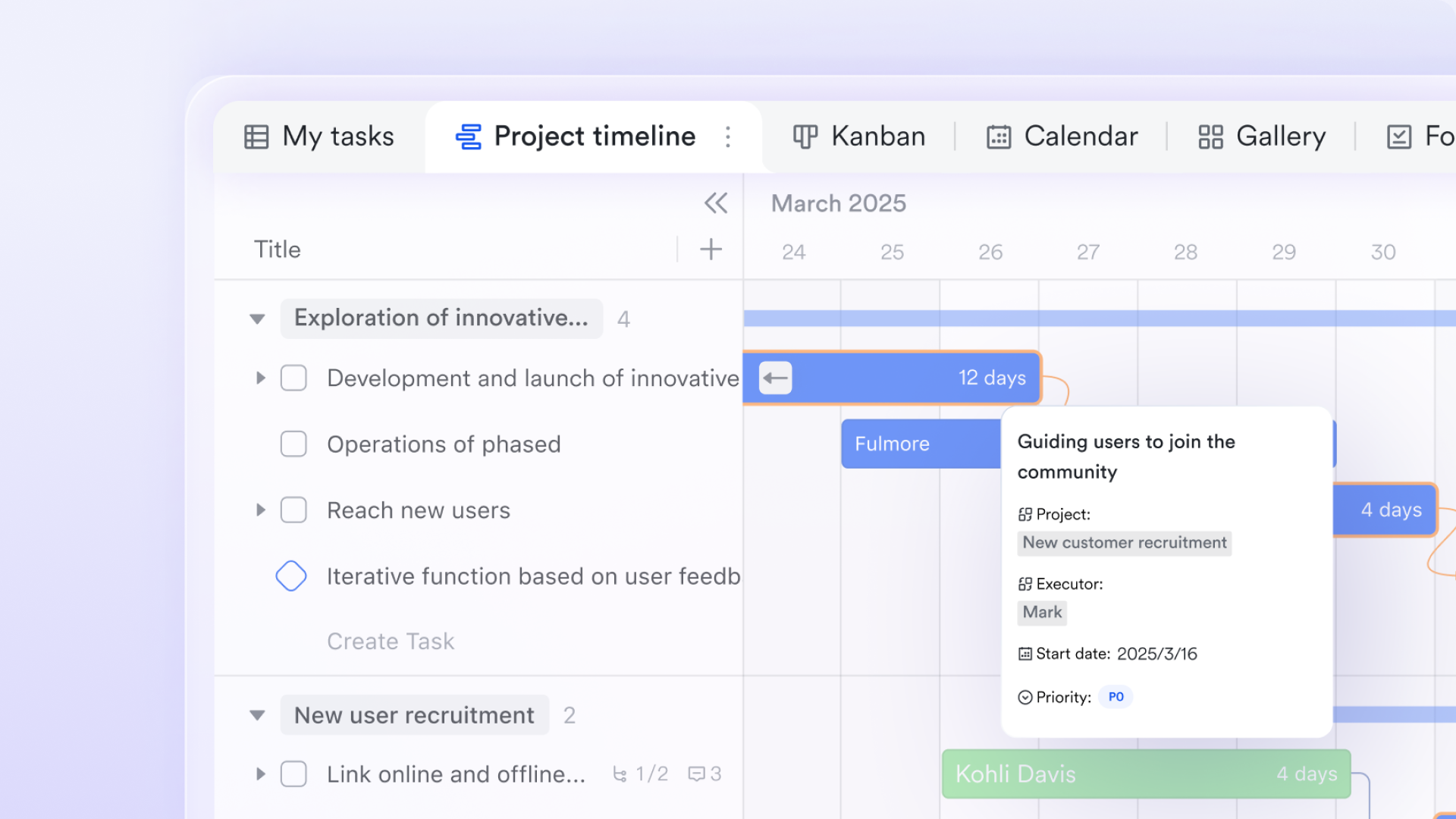
For instance, the project management Gantt chart template allows teams to outline project phases visually, breaking them down into specific tasks with start and end dates. This clarity aids in identifying task overlaps and dependencies, ensuring project timelines are adhered to. Additionally, employing task boards and document templates can provide a centralized platform for documentation, making it easier for team members to access necessary information. This template is particularly useful in various contexts:
- Planning project phases: Teams can utilize the Gantt chart to outline all phases of a project, breaking them down into specific tasks with start and end dates. For instance, a a product launch can use the Gantt chart to clearly visualize stages such as market research, campaign development, and execution efforts.
- Monitoring progress: The Gantt chart allows team members to see how tasks overlap, which helps in identifying dependencies and potential bottlenecks. By visually tracking progress against timelines, project managers can quickly assess whether the project is on schedule and make adjustments as necessary.
- Resource allocation: With a , project managers can better allocate resources by seeing who is responsible for each task and how workloads are distributed over time. This tool aids in optimizing team efficiency and preventing burnout by balancing workloads appropriately.
Foster a
Encouraging teamwork and cooperation among team members is essential for project success. Team-building activities, brainstorming sessions, and regular check-ins can foster camaraderie, enhance trust, and facilitate the sharing of ideas.
Using the project planning and implementation template, teams can define project goals, action steps, and stakeholder communication strategies, which streamlines execution and clarifies responsibilities. The use of templates facilitates brainstorming sessions and maintains a clear record of contributions, enhancing collaboration and trust within the team. This template is particularly useful in various contexts:
- Defining project goals: Teams can leverage this template to establish clear and measurable project objectives. By using defined metrics and milestones, teams can ensure that everyone involved understands the project's aims and the criteria for success. For example, a product development team might outline goals such as developing a prototype by a specific date or achieving a certain level of user engagement post-launch.
- Detailing action steps: The template encourages teams to break down their plans into actionable steps, specifying who is responsible for each task, the resources required, and the timeline for completion. This detailed planning helps streamline execution and ensures all team members are aware of their roles and responsibilities.
- Facilitating stakeholder communication: By outlining the entire project plan within this template, teams can easily communicate progress and updates to stakeholders. Regularly sharing the plan and its implementation status fosters transparency and trust, allowing for timely feedback and adjustments as needed.
Hold regular meetings and continuous updates
Scheduled meetings (e.g., daily stand-ups or weekly reviews) help keep team members aligned and informed about project progress, issues, and changes. regularly promotes accountability and keeps everyone engaged with the project.
Effective communication is the backbone of successful project organization. It's vital that teams share information openly and frequently, enabling members to address issues promptly and adapt to changes as necessary. When team members feel connected and engaged, they are more likely to contribute positively to project success. By implementing these best practices, teams can create a culture of transparency, collaboration, and responsiveness that drives projects toward successful completion.
How to facilitate project organization with an all-in-one collaboration platform
is an all-in-one collaboration platform designed to by consolidating multiple tools into a single application. This powerful suite includes built-in features for chat, document management, calendar organization, meetings, and approvals, enhancing team productivity and facilitating seamless communication throughout the project lifecycle. Lark stands out with its diverse set of functionalities that cater to various aspects of project organization. Key features include:
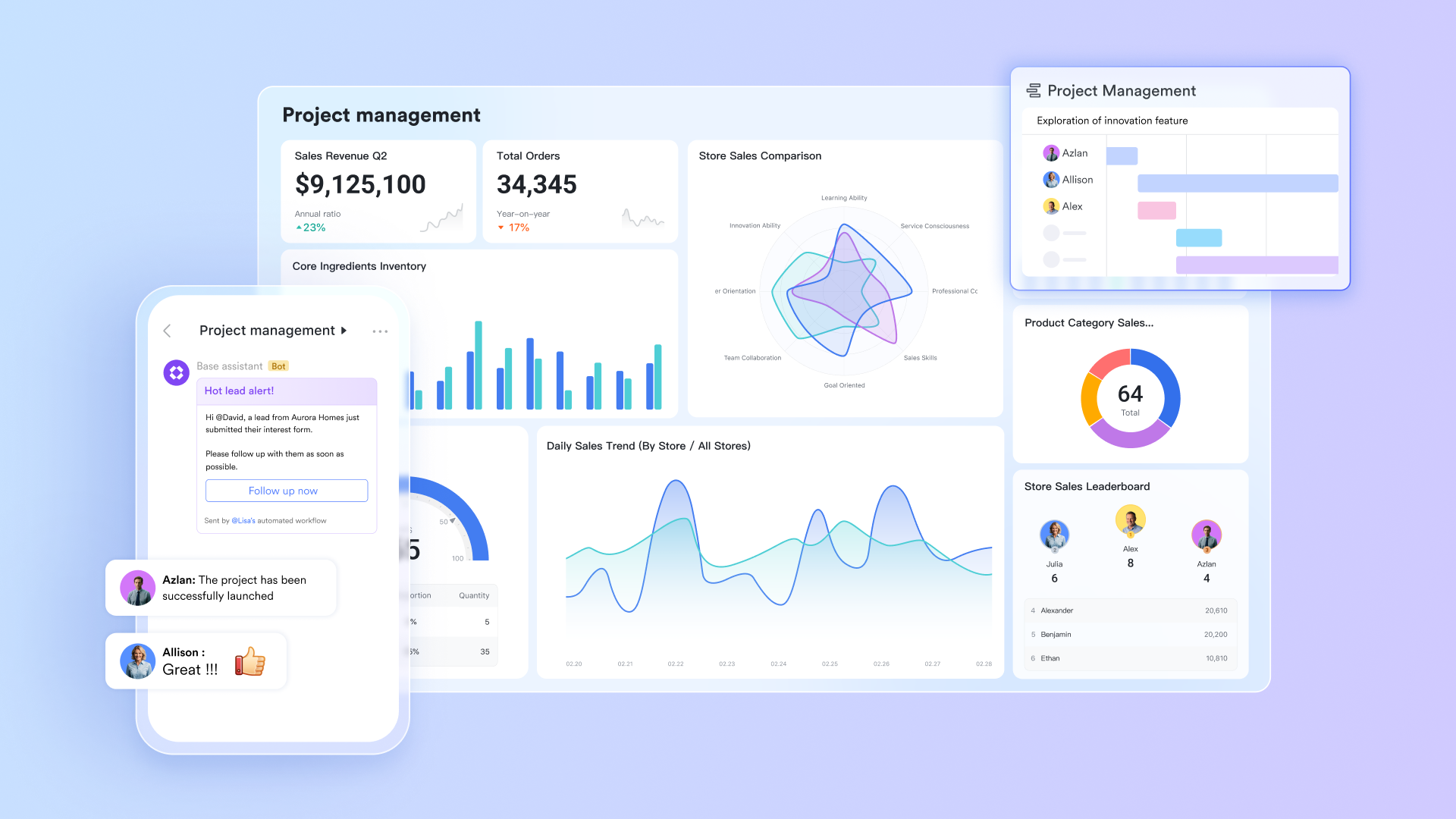
No-code database: Managing tasks across multiple projects can quickly become chaotic without a structured approach. serves as a centralized task management system that allows teams to create, assign, and track tasks within a single interface. By offering visual and customizable workflows, Lark Base enhances clarity and organization, enabling teams to prioritize tasks effectively and meet deadlines. This organized approach reduces confusion and ensures that all team members have visibility over their responsibilities and project timelines, facilitating and execution.
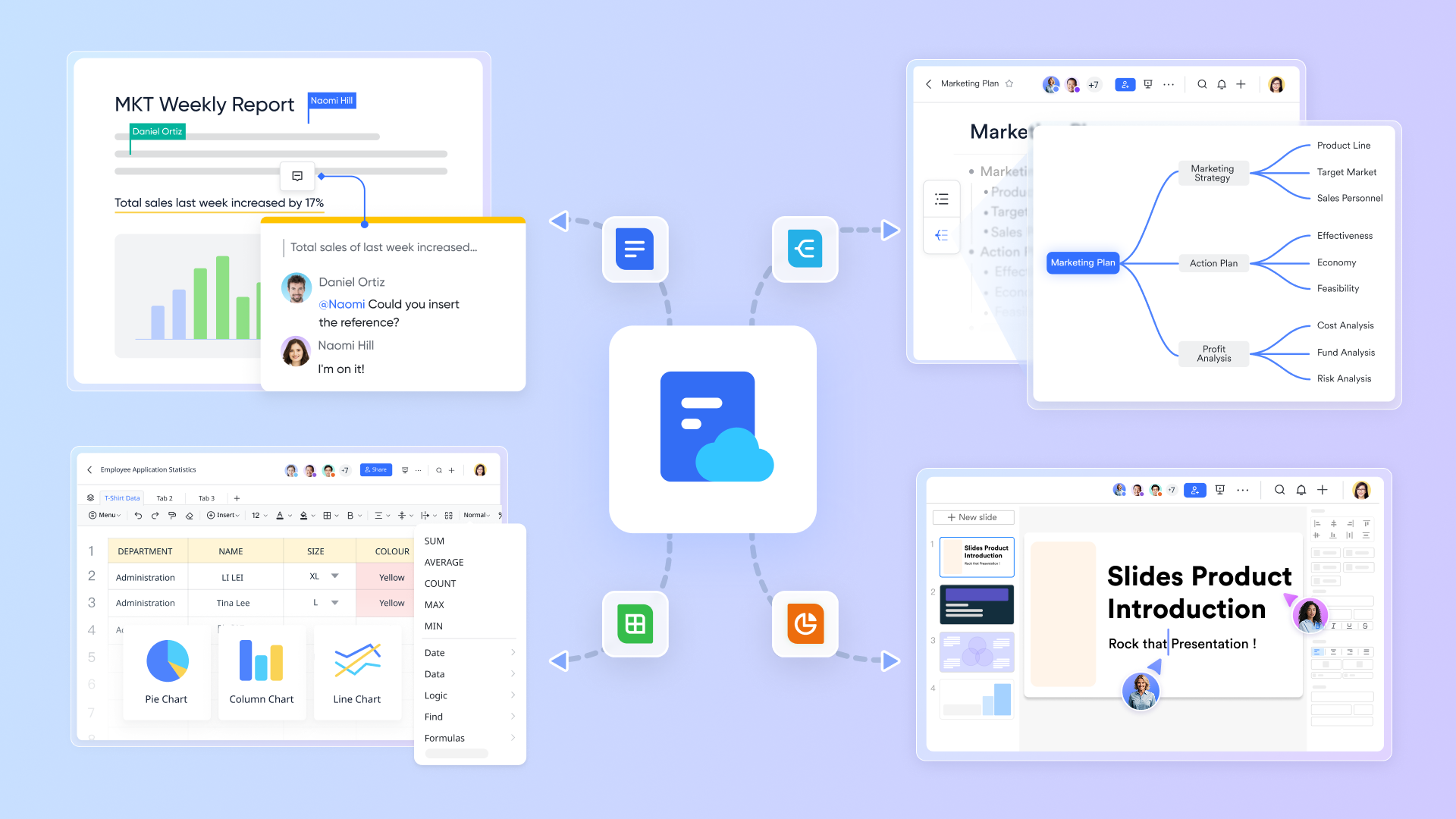
Collaborative : Inadequate document management often leads to confusion and disorganization within projects. addresses this by allowing team members to create, edit, and comment on documents in real time within the same platform. This facilitates organized documentation of project requirements, updates, and , ensuring that all team members have access to the latest information. By centralizing documents, Lark Docs minimizes the risk of issues and miscommunication, helping teams stay aligned and efficient throughout the project lifecycle.
Instant messaging and communication: Ineffective communication can disrupt project workflows and lead to misunderstandings. eliminates these issues by facilitating instant chats and directly within the project workspace. This communication tool keeps discussions relevant and organized, allowing team members to quickly , ask questions, or get approvals without losing context. By maintaining project-related conversations in one place, Lark Messenger ensures that critical information is easily accessible, which enhances coordination and minimizes delays in decision-making, ultimately driving project success.

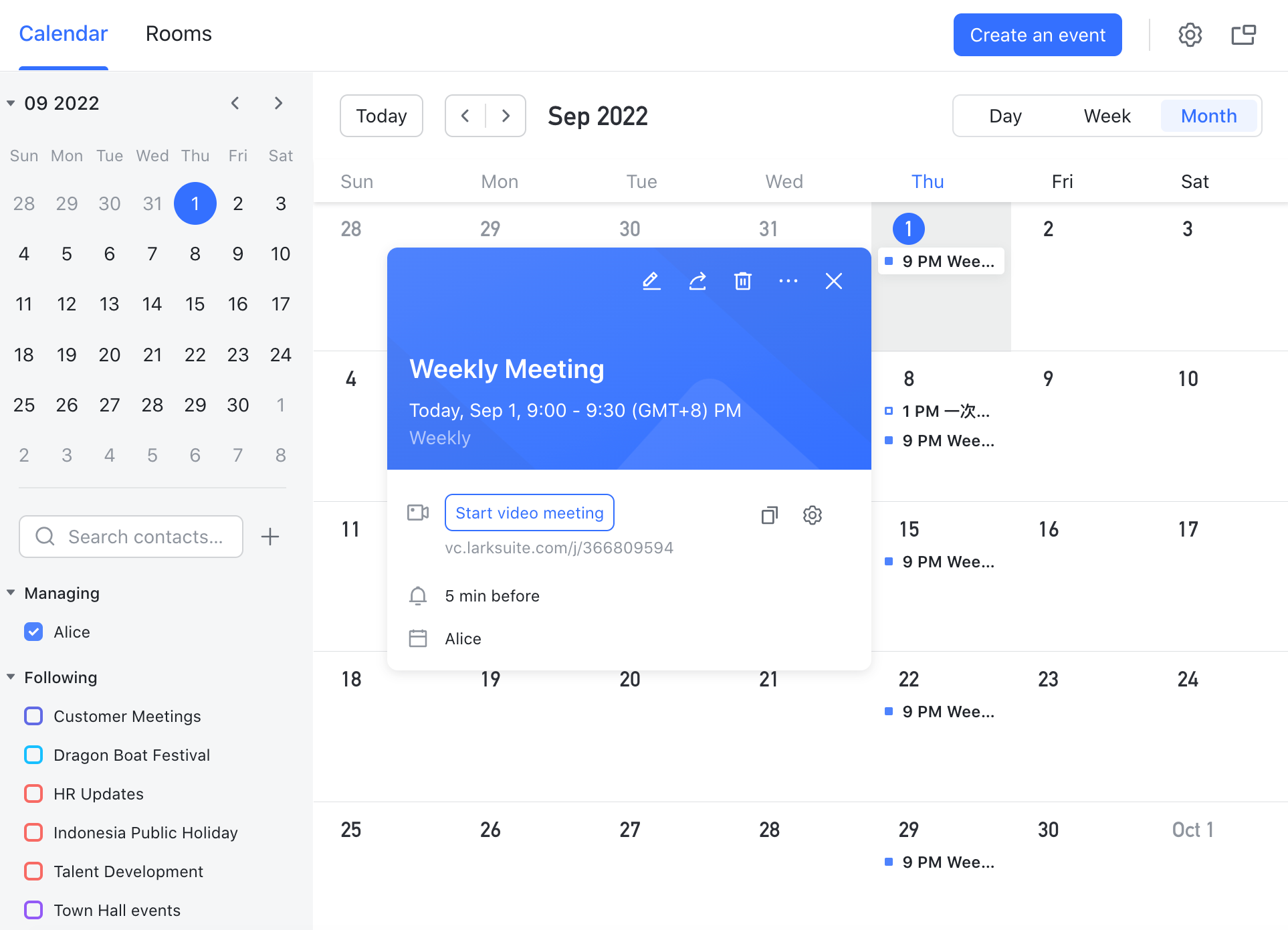
Meeting scheduling and : Coordinating meetings across different time zones and platforms can complicate project management, leading to missed connections and unproductive discussions. Lark simplifies this process by connecting scheduling and within one platform. With features like calendar synchronization, instant meeting links, screen sharing, and recording capabilities, teams can effortlessly arrange and conduct meetings, ensuring that critical project discussions are held without disruption. This organizational structure keeps all stakeholders informed and aligned, as recorded meetings serve as a reference for those who couldn't attend, thus maintaining focus on .
Approval workflows: Lark streamlines decision-making processes with built-in approval workflows. Team leaders can create for documents and tasks, ensuring that essential decisions are made promptly and tracked efficiently.
How it facilitates project organization
Lark's collection of various functionalities helps teams stay organized and productive. By providing all essential tools within one application, teams can collaborate on documents in real time, schedule meetings, and manage tasks without switching between multiple apps. This enhances communication, reduces the risk of lost information, and keeps everyone aligned with project goals. The unified platform serves as a central hub for project-related activities, making it easier to coordinate efforts, share updates, and keep all team members informed. Ultimately, this leads to higher project efficiency and effectiveness.
:
- Starter plan: Free forever plan with 11 powerful tools for up to 20 users, 100GB storage, 1,000 automation runs, AI translations, and more. No credit card needed.
- Basic plan: $6/user/month (billed annually) for up to 500 users. Includes everything in Starter plus unlimited message history, 5TB storage, 1,000 automation runs, and more. Some users may need to to purchase.
- Pro plan: $12/user/month (billed annually) for up to 500 users. Includes everything in Basic plus group calling for up to 500 attendees, 15TB storage, 50,000 automation runs, and more.
- Enterprise plan: for custom pricing. Supports unlimited users and includes advanced automation, security, compliance, and management features.
For small teams with simple communication needs

18 months message history
1000 Base automation runs/month
2000 rows per table in Base
Most POPULAR
For companies with comprehensive collaboration and management needs
Unlimited message history
500-participant video meetings
50k Base automation runs/month
20k rows per table in Base
For large companies with advanced security and organizational management needs
Get a personalized demo and pricing
Unlimited message history
500-participant video meetings
15 TB storage + 30 GB storage/user
500k Base automation runs/month
50k Base automation runs/month
Most POPULAR
For companies with comprehensive collaboration and management needs
Unlimited message history
500-participant video meetings
50k Base automation runs/month
20k rows per table in Base
: Switching to Lark's Pro plan can lead to significant cost savings— for example, a 100-employee company using Slack, Google Workspace, and Airtable could save approximately $19,800 annually by consolidating their tools with Lark.
Future trends in project organization
As organizations continue to adapt to changing work environments, several trends are shaping the future of project organization. The ongoing evolution in work culture, technology, and management practices is driving the need for more efficient, effective ways to manage projects. Here are some key trends to consider:
- Rise of : The pandemic has accelerated the shift towards remote and hybrid work models. As a result, organizations are recognizing the importance of robust digital collaboration tools. These tools facilitate seamless communication and project tracking, allowing team members to work together effectively regardless of their physical location. Organizations are likely to invest in platforms that support real-time collaboration, file sharing, and , ensuring that remote teams can remain productive and engaged.
- of processes: Automation is revolutionizing project organization by streamlining workflows and reducing manual intervention. Tools that automate task assignments, document management, and reporting can significantly improve efficiency. Teams can expect to see more integration of automation features in project management software, enabling them to spend less time on administrative tasks and more time on strategic planning and execution.
- Emphasis on agility and adaptability: Organizations are increasingly adopting agile methodologies to enhance their responsiveness to changing circumstances. Agile frameworks encourage continuous feedback and iterative progress, which is especially beneficial in dynamic environments. The future of project organization will likely see more teams adopting agile practices, which promote flexibility, collaboration, and quick adjustments to project plans as needed.
- Enhanced data-driven decision-making: With the increasing , organizations are leveraging analytics to inform their project management strategies. Future trends will focus on integrating advanced analytics into project planning and execution processes, enabling teams to analyze past performances and outcomes to make more informed decisions for future projects.
As these trends evolve, organizations must remain agile to leverage new technologies and practices that enhance their project management strategies. By embracing remote work tools, AI, automation, agile methodologies, employee well-being, sustainability, and data analytics, organizations can position themselves for success in an ever-changing landscape. Being adaptable in these areas will not only optimize project organization but also contribute to overall organizational resilience and growth.
Conclusion
In summary, effective project organization is vital for driving successful outcomes in today's complex work environments. By understanding the definition, importance, and different types of project organizational structures, teams can better navigate the challenges they face. Clarifying roles and responsibilities, implementing best practices, and utilizing the right tools are crucial for improving project management outcomes.
's built-in functionalities and extensive project management templates provide a powerful platform for enhancing project organization. By embracing these tools and strategies, organizations can not only streamline their project management processes but also foster a culture of collaboration and innovation. By implementing the right project organization strategies, teams can achieve outstanding results and drive their projects to success.
Start your project organization journey in Lark
FAQs
What is the project organization?
Project organization refers to the structure and systems used to manage and coordinate project activities, ensuring that tasks are completed efficiently and effectively. It outlines roles, responsibilities, and communication paths, facilitating collaboration to achieve project goals.
What are the four types of project organizations?
The four types of project organizations are:
- Functional Organization: Teams are grouped by function or department.
- Projectized Organization: Teams operate as independent units that focus on specific projects.
- Matrix Organization: Combines functional and projectized structures, allowing for shared resources.
- Hybrid Organization: Integrates elements from various organizational types based on project needs.
What is a project organization also known as?
A project organization is also known as a project management structure. It defines how project teams are assembled, roles allocated, and processes established to ensure efficient project execution.
What are the 4 types of organization?
The four types of organization are:
- Functional Organization: Organized by specific functions or departments.
- Divisional Organization: Categorized by product lines or geographical locations.
- Matrix Organization: Combines elements of both functional and divisional organizations.
- Network Organization: Relying on external partnerships and alliances for specific tasks.
Related reading