














Best B2B Contact Database Tools: Comparison Guide

Matthew Sia
Product Marketing Manager
Sep 18, 2026
Matthew Sia
Sep 18, 2026

14 min read


A B2B contact database is a structured collection of professional information about companies and their employees . This resource serves as the foundation for modern sales and marketing operations. It provides verified details that help businesses identify and connect with potential clients. These databases have evolved significantly from simple spreadsheets to dynamic intelligence platforms. They now offer real-time updates and integration capabilities. This transformation enables teams to work with accurate and current information.
The right contact database transforms how organizations approach market expansion. It supports targeted outreach and helps build lasting customer relationships. Understanding this tool is essential for sales success in today's competitive environment. Here are 10 B2B contact databases for your reference:
1. Lark: Unified collaboration suite with built-in contact management capabilities.
2. Saleshandy Lead Finder: B2B lead finding and cold email outreach in one platform
3. Lusha: Quick access to verified professional emails and phone numbers.
4. Cognism: GDPR-compliant global database with strong European coverage.
5. LinkedIn Sales Navigator: Professional network-powered lead and company intelligence.
6. ZoomInfo: Comprehensive B2B intelligence platform with extensive data depth.
7. Apollo.io: All-in-one sales intelligence and engagement platform.
8. LeadIQ: Efficient prospecting and list-building from web sources.
9. RocketReach: Extensive database of direct professional contact information.
10. Instantly.ai: A cold outreach and lead generation platform.
What is B2B contact database
A B2B (Business-to-Business) contact database is a centralized, structured repository of professional information about companies and the key decision-makers within them. It serves as a critical foundation for sales, marketing, and business development activities. Unlike a simple list of email addresses, a modern B2B contact database is a dynamic intelligence platform that typically includes:
- Firmographic data: Detailed information about companies, such as industry, company size, revenue, location, and technologies used.
- Professional contact details: Verified information for key employees, including names, email addresses, direct phone numbers, and links to their social media profiles.
- Hierarchical insights: Data on reporting structures and decision-making hierarchies within target organizations.
The core purpose of a B2B contact database is to help businesses efficiently identify, understand, and connect with their ideal potential clients. It moves beyond basic contact information to provide the context needed for personalized and effective outreach, ultimately streamlining the prospecting process and improving conversion rates. By transforming raw data into actionable intelligence, these databases empower organizations to target their efforts more precisely and build a stronger sales pipeline.
Strategic value of a quality B2B contact database
A high-quality B2B contact database transcends its basic function as an information repository to become a strategic asset that drives growth across multiple business functions. It transforms raw data into actionable intelligence, enabling organizations to make informed decisions, optimize resource allocation, and build sustainable competitive advantages. The strategic value manifests most prominently in three critical areas:
Enhancing sales prospecting efficiency
Sales teams experience significant time savings when using verified contact databases. The process of identifying potential clients becomes more streamlined. Representatives can focus more on selling and less on research. The accuracy of information directly impacts outreach success. Verified contact details ensure messages reach the intended recipients. This precision reduces wasted effort and improves conversion rates.
Strengthening marketing campaign precision
Marketing teams leverage these databases for highly targeted campaigns. They can segment audiences based on specific company characteristics. This approach enables personalized messaging that resonates with each segment. Campaign performance improves when based on accurate prospect information. Better targeting leads to higher engagement and conversion rates. The result is a more efficient use of marketing resources.
Informing business strategy
Beyond sales and marketing, these databases offer valuable market intelligence. They help businesses identify new opportunities and emerging trends. This information supports strategic planning and decision-making. Understanding the competitive landscape becomes more straightforward with comprehensive data. Companies can monitor competitor activities and market movements. These insights help shape effective business strategies.
For recruiters and sales teams, access to a trusted database of verified contacts significantly reduces the time spent on manual prospect research. Tools in this category surface direct emails, phone numbers, and social profiles in real time, often through a browser extension that works across LinkedIn and company websites.
The broader benefit is data reliability. Verified, regularly updated contact records reduce bounce rates and wasted outreach, and API access with CRM integrations keeps pipelines current without extra manual work.

Comparing the best B2B contact database tools
1. Lark: Unified collaboration suite with built-in contact management capabilities
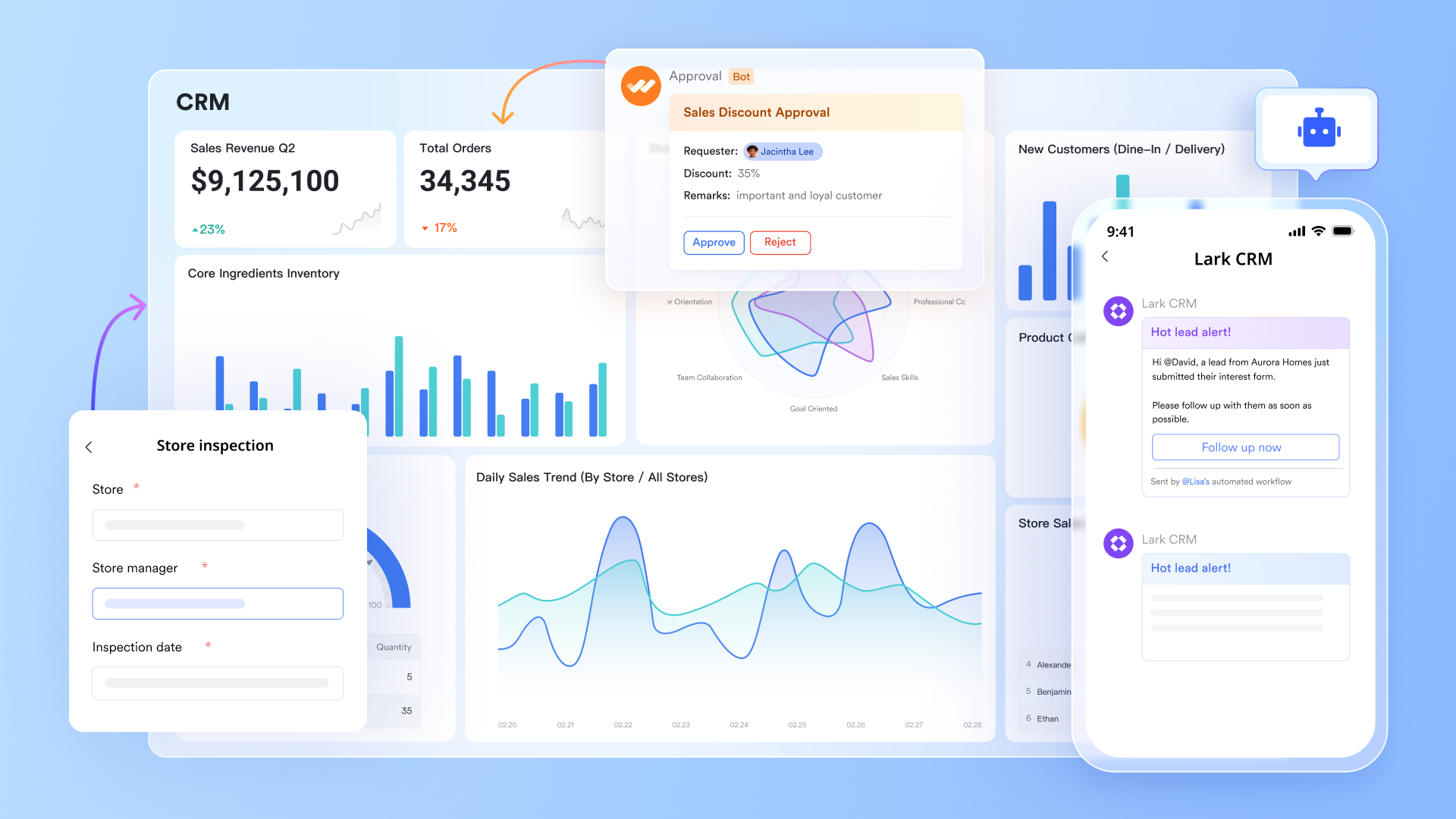
Lark is a unified collaboration platform that combines messaging, scheduling, document management, and application building into a unified workspace. Unlike traditional tools that operate in silos, Lark creates a seamless environment where teams can communicate, coordinate schedules, and manage projects without switching between different applications. The platform's core strength lies in its ability to centralize business operations, with Lark Base serving as a flexible database for building custom contact management systems and workflow applications. This makes it particularly valuable for teams that need to maintain organized customer information while collaborating effectively across departments.
📊 Lark Base: The core engine for contact data
Lark Base is far more than a simple spreadsheet tool; it can essentially function as a flexible, customizable, and powerful B2B contact database in its own right.
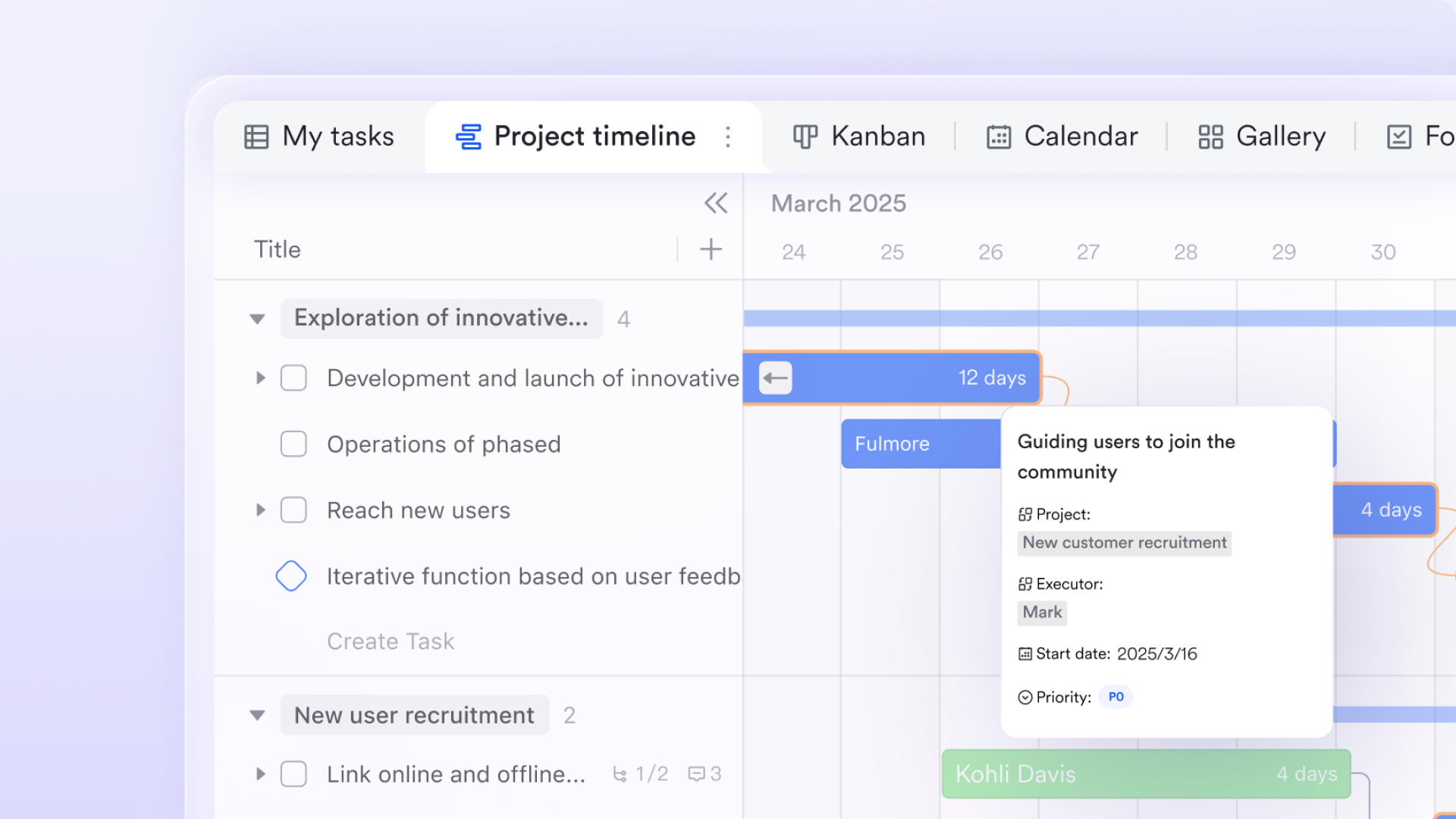
- Centralized data management: You can create a dedicated "B2B Contacts" table within Base, bringing together all client information scattered across Excel files, business cards, or employees' memories. This ensures data consistency and establishes it as the single source of truth for the entire team.
- Highly customizable structure: Using custom fields, you can store far more than just names and phone numbers for each contact record—such as industry, company size, last interaction time, and deal stage—perfectly adapting to the complex grading and follow-up needs of B2B sales.
- Multi-dimensional data views: Using the Kanban view, sales teams can visually see the stage of each sales lead (e.g., To Contact, Contacted, Need Follow-up, Closed-Won). Grid views and Gantt charts facilitate data filtering and batch operations. This flexibility allows members in different roles to work efficiently in their preferred way.
💬 Lark Messenger: The trigger for communication & data updates
Instant communication is the lifeblood of sales. Lark Messenger ensures that valuable information generated in conversations isn't lost and, instead, feeds back into the contact database.
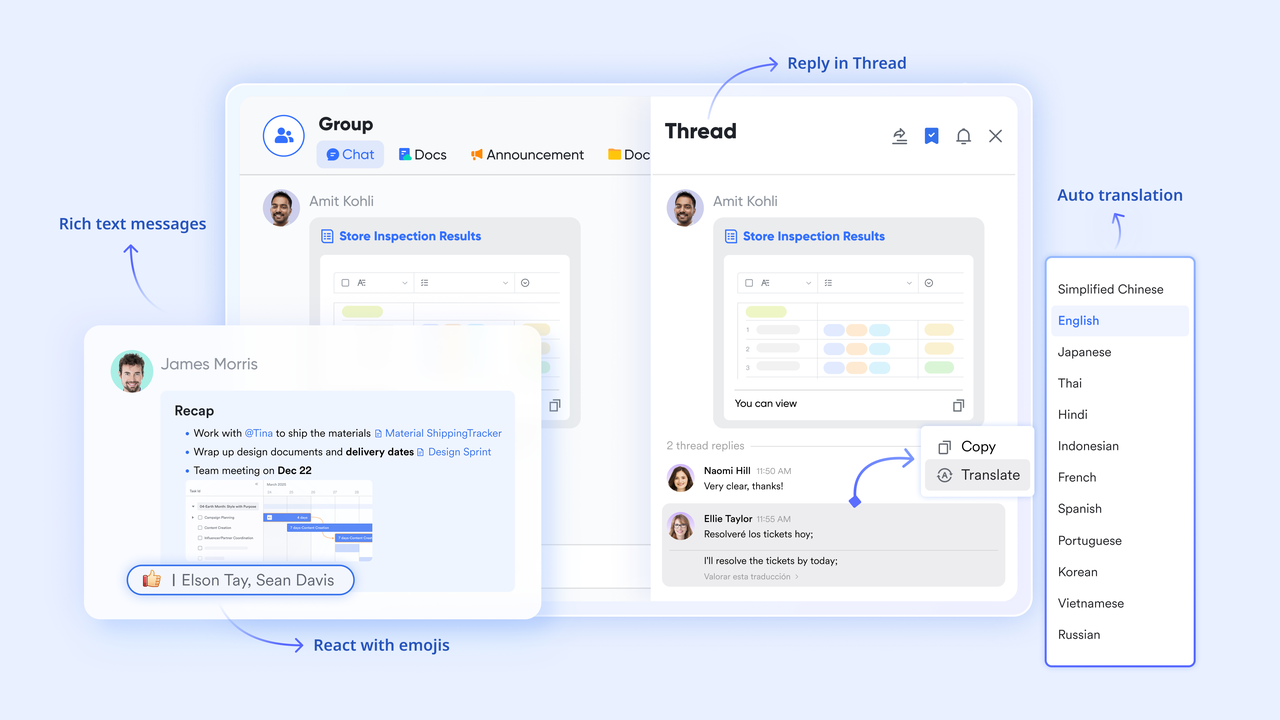
- Quickly create tasks from chats: When a next action step is identified in a group chat with a client or colleague, you can instantly convert the key message into a task and assign it to the relevant owner. This ensures follow-up items aren't missed and enriches the interaction history.
- Ensure key information isn't lost: The pin message feature allows important client decisions or contact details to be pinned to the top of the group chat for quick reference by all members. The mention function (@) ensures key responsible persons don't miss discussions relevant to them, speeding up internal response times.
- Break down internal communication walls: Its built-in real-time translation feature significantly lowers communication barriers for global sales teams managing international clients, ensuring the accuracy of information relayed.
🗓️ Lark Calendar & Lark Meetings: The relationship nurturing & interaction tracker
Every interaction with a client is valuable. Lark Calendar and Meetings features help you systematically record these interactions.
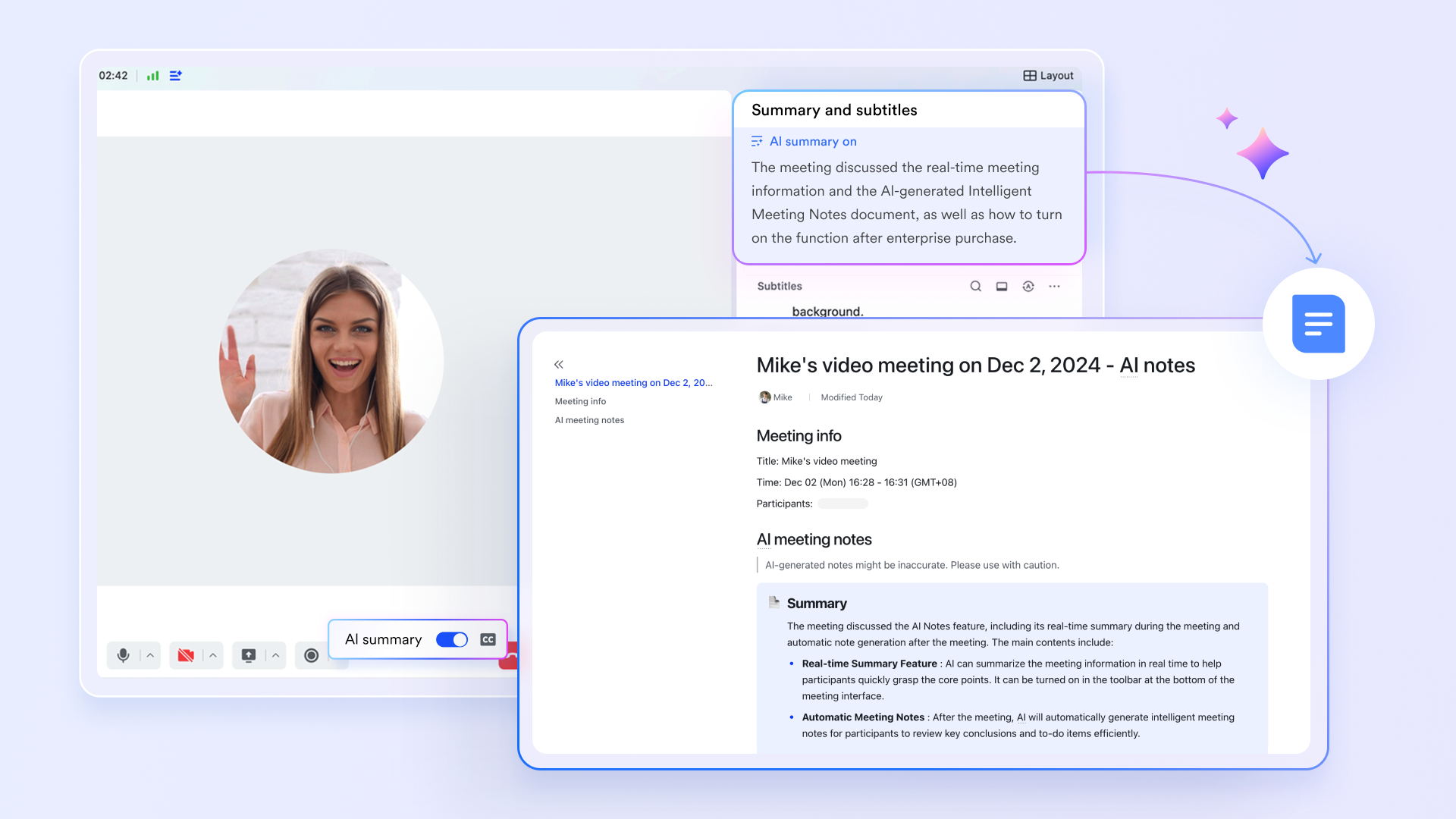
- Linking interaction records to schedules: You can create dedicated calendar events for important client contacts and set follow-up reminders. These events can be linked to contact records in Docs and meeting notes. This makes the historical communication and future plans for each contact clear and trackable.
- Efficiently scheduling cross-timezone meetings: For B2B teams serving global clients, Calendar's automatic timezone conversion is crucial, preventing miscommunication due to time differences and enhancing professionalism.
- Automatically enriching client profiles with AI Meeting Notes: Combined with Lark AI Meeting Notes, important client meetings (with consent) can be automatically recorded and summarized. These intelligently generated notes can be easily saved to an associated Lark Doc and ultimately linked to the corresponding contact record in Base, providing detailed textual context for subsequent client analysis and service.
📝 Lark Docs & Lark Wiki: The hub for customer knowledge & strategy deposition
B2B sales often involve complex solutions requiring deep customer knowledge and industry insight. Lark Docs and Wiki are the ideal places to deposit this information.
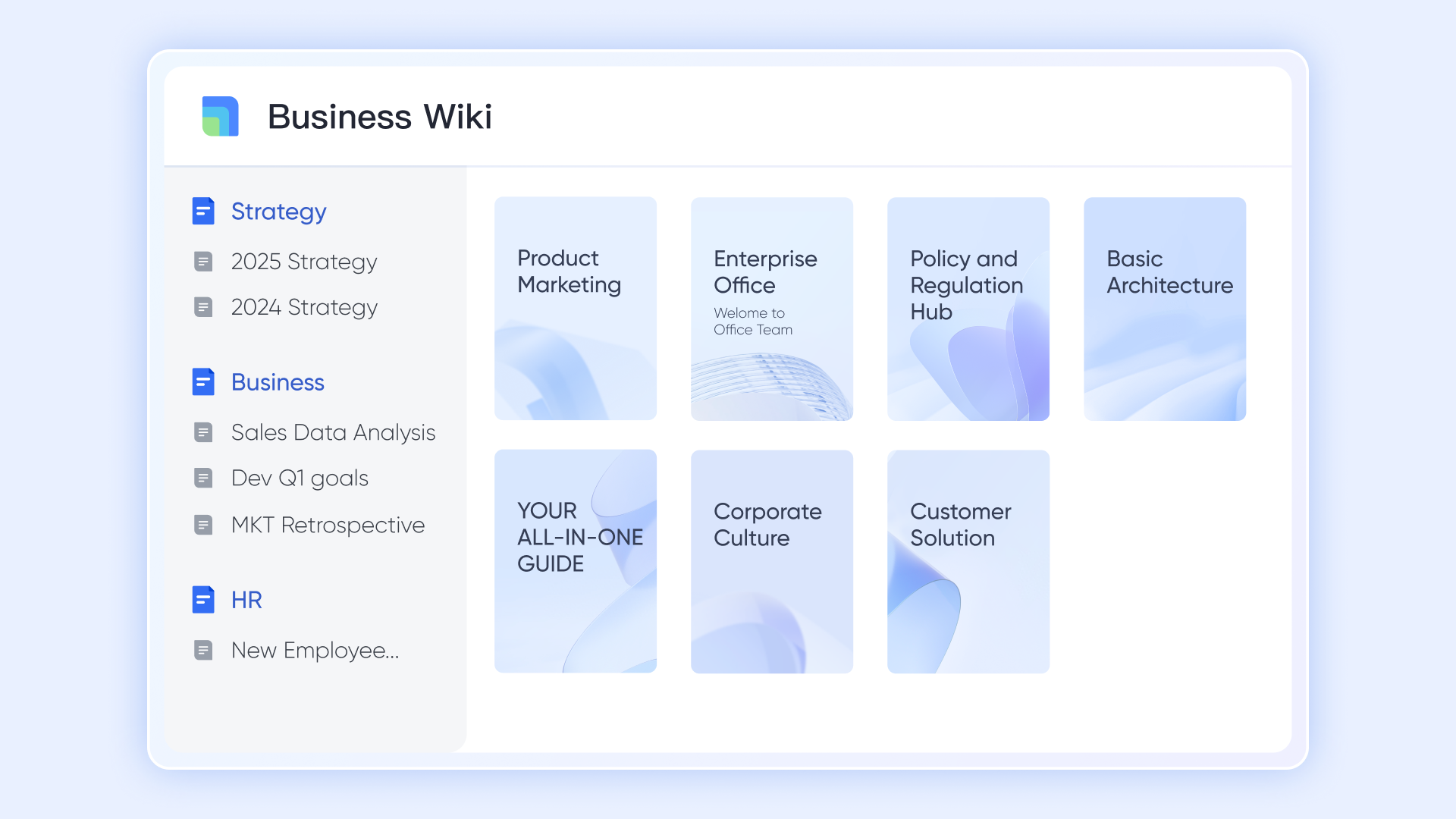
- Creating client-specific spaces: You can create a Lark Docs for each key client or project, using it for real-time collaborative proposal writing, recording client requirements, and sharing project progress. All these documents can be linked to the corresponding contact record in Base.
- Building a sales arsenal: Teams can use Lark Wiki to build sales playbooks, product Q&A libraries, and competitive intelligence repositories. When a salesperson encounters an unfamiliar question while following up with a client, they can quickly find standard answers or strategies in the Wiki, ensuring consistency and professionalism in external communications.
- Ensuring transparency & version clarity: The comment and version history features in Docs preserve internal discussions and revision processes related to client proposals, reducing rework caused by miscommunication.
✅ Lark Approval: The guardian of process standardization & data quality
Data quality is the lifeline of a B2B contact database. Lark Approval features help standardize the processes for data entry and updates.
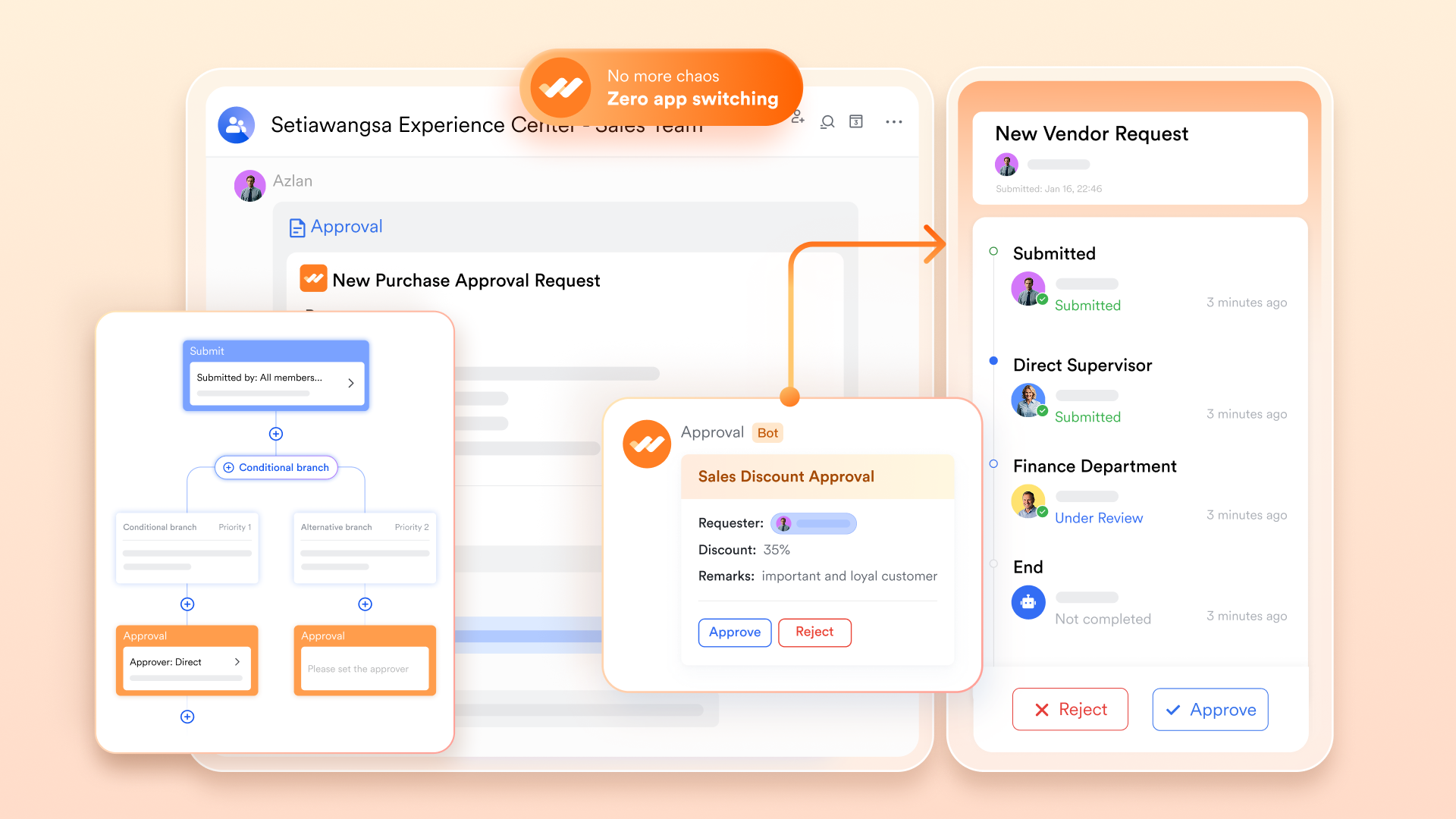
- Standardizing client information updates: You can set up an approval workflow. For example, when a sales representative needs to change a contact's status from "Prospect" to "Key Account," it must be approved by the sales manager. This ensures the accuracy of critical client tiering.
- Automating workflows for efficiency: Such approval requests are automatically routed to the correct approver and support automatic reminders, preventing process bottlenecks. This makes data management processes both standardized and efficient.
Pricing:
- Free plan: Includes 11 powerful products, supporting up to 20 users, 100 GB storage, 1,000 automation runs and unlimited AI translation in chats, docs and email.
- Paid plans: Provides competitive and affordable Basic plan and Pro plan.
- Enterprise plan: Custom pricing.
2. Saleshandy Lead Finder: B2B lead finding and cold email outreach in one platform
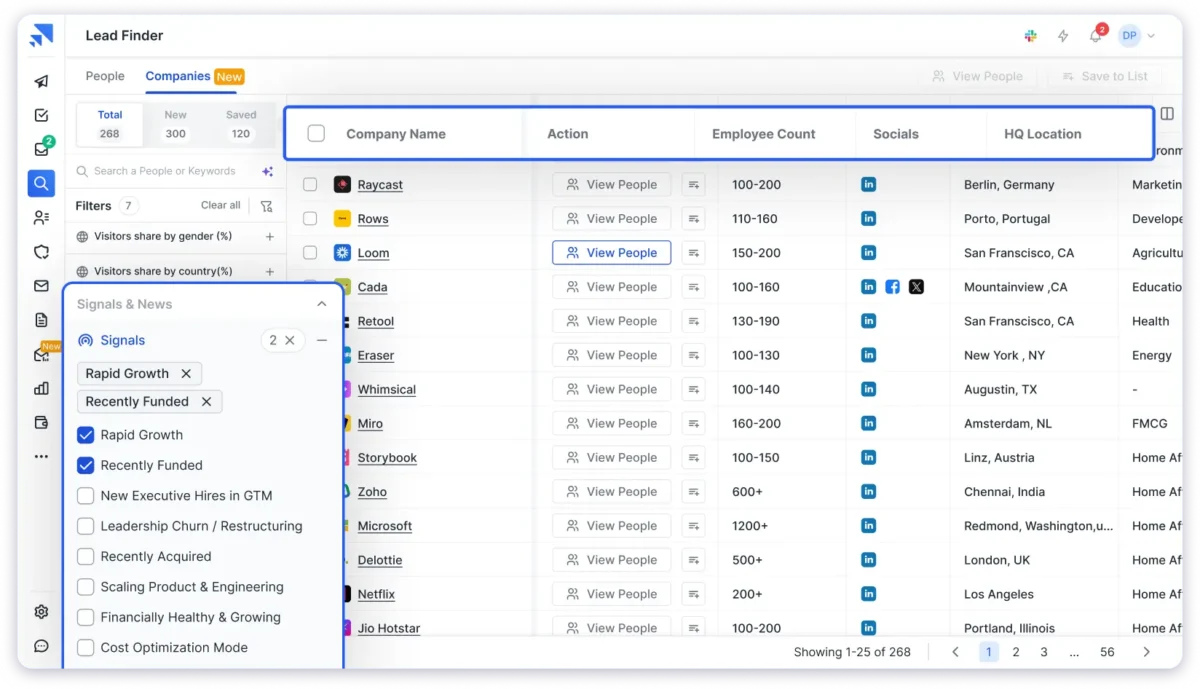
Saleshandy Lead Finder is a lead-finding tool that helps you discover both people and company information in one place. Most tools here stop at contact data.
Saleshandy combines prospecting, outreach, and even a built-in outbound CRM in one system. If you’re tired of exporting lists and jumping between tools just to launch a campaign, this setup makes things simpler.
Key features:
- 800M+ verified B2B contacts and 60M+ companies
- Dedicated Company Tab for account-based prospecting with Look Alike search
- Buying signals such as funding events, rapid hiring, leadership changes, and growth triggers
- 70+ advanced filters, including firmographics, technographics, revenue, funding, and hiring data
- AI-powered prospecting using plain English search prompts
- Chrome extension for LinkedIn and company-level contact reveal
- Bulk reveal and export into sequences
- Built-in cold email sequences with warm-up, sender rotation, and A/B testing
- Smart list management with include/exclude filters to prevent duplicates
- Real-time email verification included
- Outbound CRM with Kanban pipeline and full activity timeline
- SOC 2 certified and GDPR compliant
Limitations:
- Only 50 free credits are available.
Pricing:
- Lead Starter: $49/month (annual billing) for 30,000 credits per year
- Lead Pro: $79/month (annual billing) for 48,000 credits per year
- Custom pricing plans available
3. Lusha: Quick access to verified professional emails and phone numbers
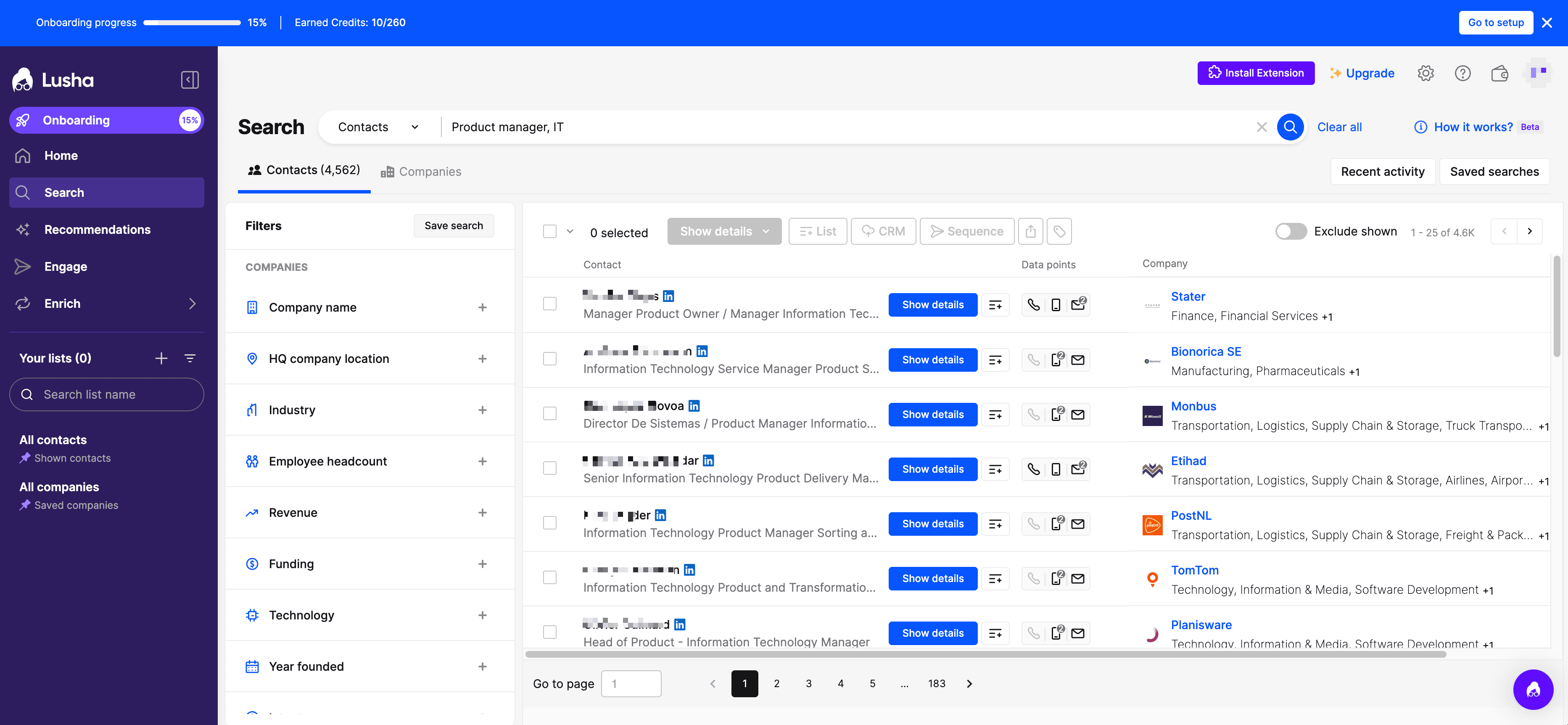
Image source: lusha.com
Lusha is a straightforward contact data solution that helps sales and recruitment professionals quickly find verified email addresses and direct phone numbers. The platform operates through both a web application and browser extension, allowing users to capture contact information directly from LinkedIn profiles and company websites. While maintaining a simple interface, Lusha focuses on delivering accurate, verified contact data that helps teams connect with decision-makers without extensive research. The platform is particularly popular among SMBs and individual professionals who need immediate access to reliable contact information.
Key features:
- Browser extension for instant contact discovery on LinkedIn and company websites
- Verified email addresses and direct phone numbers for key decision-makers
- Data enrichment services to automatically update and complete CRM records
- Simple list-building capabilities for targeted outreach campaigns
- Integration with popular CRMs including Salesforce and HubSpot
Limitations:
- Credit-based system limits high-volume prospecting on entry-level plans
- Provides less comprehensive company intelligence than enterprise platforms
- Database coverage varies across industries and geographic regions
Pricing:
- Free trial available
- Starts at $36/user/month
- Team plans offered
4. Cognism: GDPR-compliant global database with strong European coverage
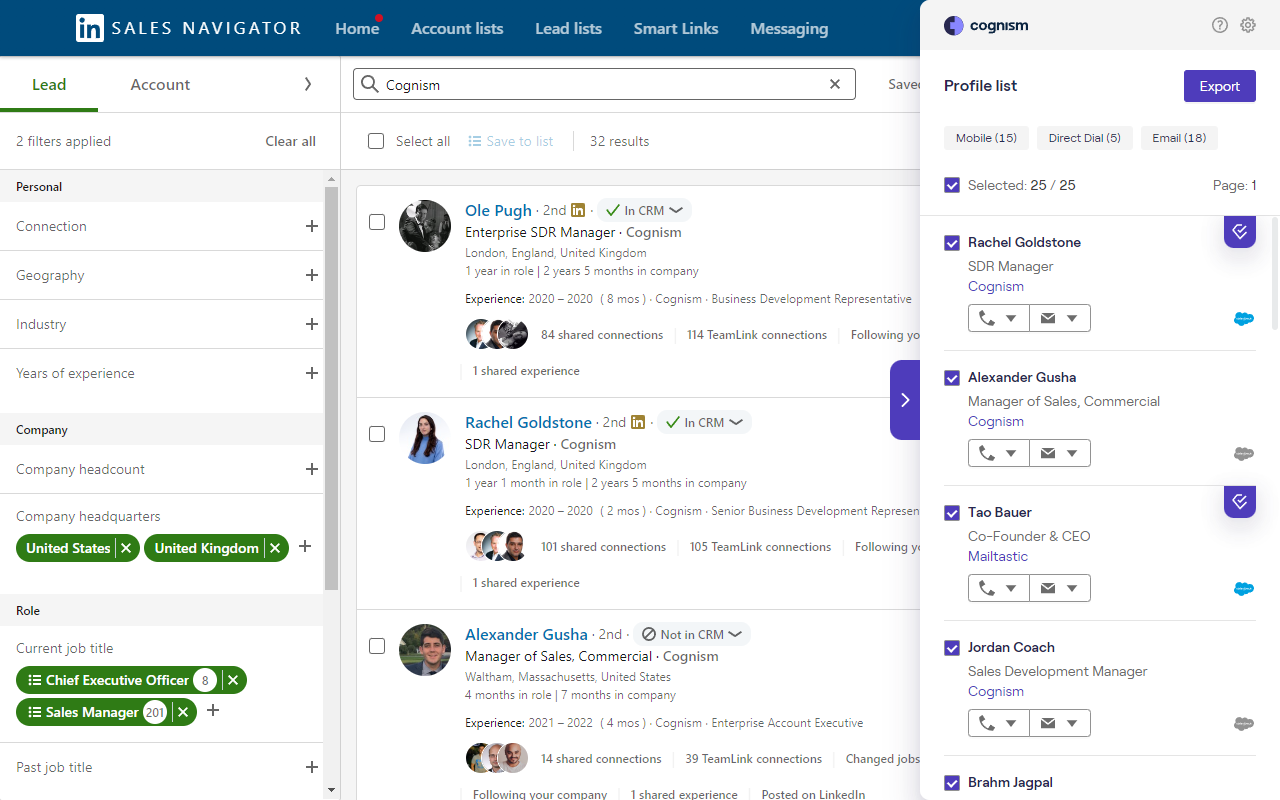
Image source: cognism.com
Cognism stands as a premium B2B data platform specializing in GDPR-compliant international contact data, with particular strength in European markets. The platform combines accurate company information with verified contact details, including hard-to-find mobile numbers. Cognism's multi-layered verification process ensures data quality while maintaining compliance with international data protection regulations. This makes it a preferred choice for enterprises operating across multiple regions, particularly those with stringent compliance requirements and need for reliable mobile contact information.
Key features:
- GDPR-compliant international database with strong European coverage
- Verified mobile numbers and direct dials for key decision-makers
- Data enrichment via API and CSV to maintain CRM data freshness
- Intent data identifying companies actively researching solutions
- Native integrations with major CRMs and sales engagement platforms
Limitations:
- Premium pricing positions it beyond the budget of many small businesses
- Smaller overall database volume compared to some US-focused providers
- Implementation requires more extensive setup than simpler tools
Pricing:
- Custom pricing only
- Enterprise packages
- Contact sales for quote
5. LinkedIn Sales Navigator: Professional network-powered lead and company intelligence
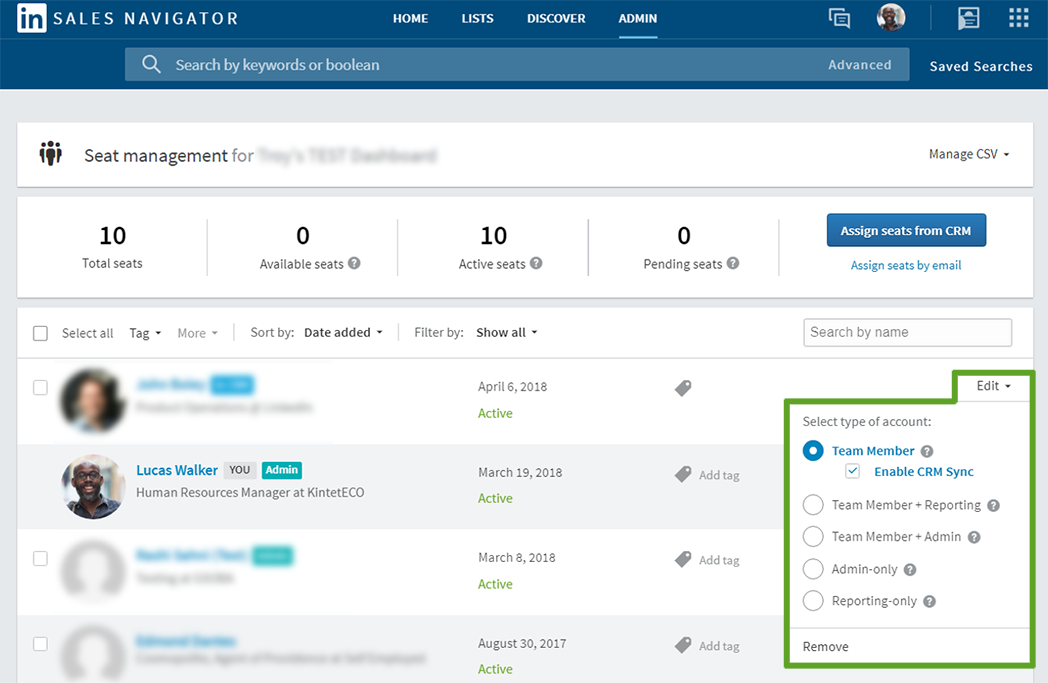
Image source: linkedin.com
LinkedIn Sales Navigator leverages the world's largest professional network to provide social selling intelligence and relationship-based prospecting. The platform transforms LinkedIn's extensive member database into a powerful sales intelligence tool, helping sales professionals identify and connect with potential buyers through warm introductions and shared connections — so there's no need to buy LinkedIn accounts when proper prospecting can be done directly through Sales Navigator filters and insights. Unlike traditional contact databases, Sales Navigator focuses on relationship intelligence and social signals, making it particularly effective for complex sales cycles where trust and connections matter.
Key features:
- Advanced search filtering based on detailed LinkedIn profile criteria
- Lead and account recommendations based on relationship intelligence
- Real-time updates and alerts on key accounts and decision-makers
- Integration with CRM systems for tracking social interactions
- TeamLink feature revealing colleagues' connections to target accounts
Limitations:
- Limited to LinkedIn network data rather than comprehensive contact verification
- Less effective for bulk list building and mass outreach campaigns
- Higher cost structure compared to many dedicated contact databases
Pricing:
- 1-month free trial
- From $79.99/user/month
- Enterprise custom plans
6. ZoomInfo: Comprehensive B2B intelligence platform with extensive data depth
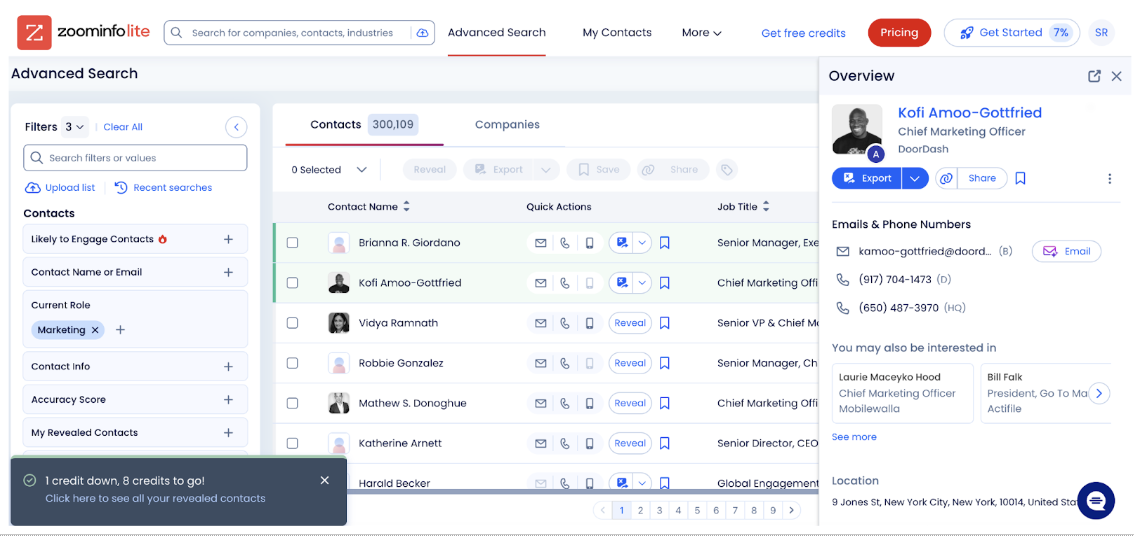
Image source: lartisan.co
ZoomInfo operates as the industry-leading B2B intelligence platform, providing the most comprehensive database of company and contact information available. The platform combines extensive data collection with sophisticated verification processes to deliver accurate, actionable intelligence for sales and marketing teams. Beyond basic contact information, ZoomInfo offers deep firmographic data, technographics, and intent signals that help enterprises identify and prioritize high-value opportunities. Its scale and accuracy make it the preferred choice for large organizations with complex sales processes.
Key features:
- Unmatched database depth with continuous verification and updating
- Advanced firmographic and technographic filtering capabilities
- Intent data identifying companies in active buying cycles
- Extensive integration ecosystem with sales and marketing platforms
- Orchestration features coordinating sales and marketing activities
Limitations:
- Highest cost structure in the market, limiting accessibility for SMBs
- Complex implementation requiring dedicated training and onboarding
- Steep learning curve compared to simpler prospecting tools
Pricing:
- 14-day trial available
- No public pricing
- Custom enterprise solutions
7. Apollo.io: All-in-one sales intelligence and engagement platform
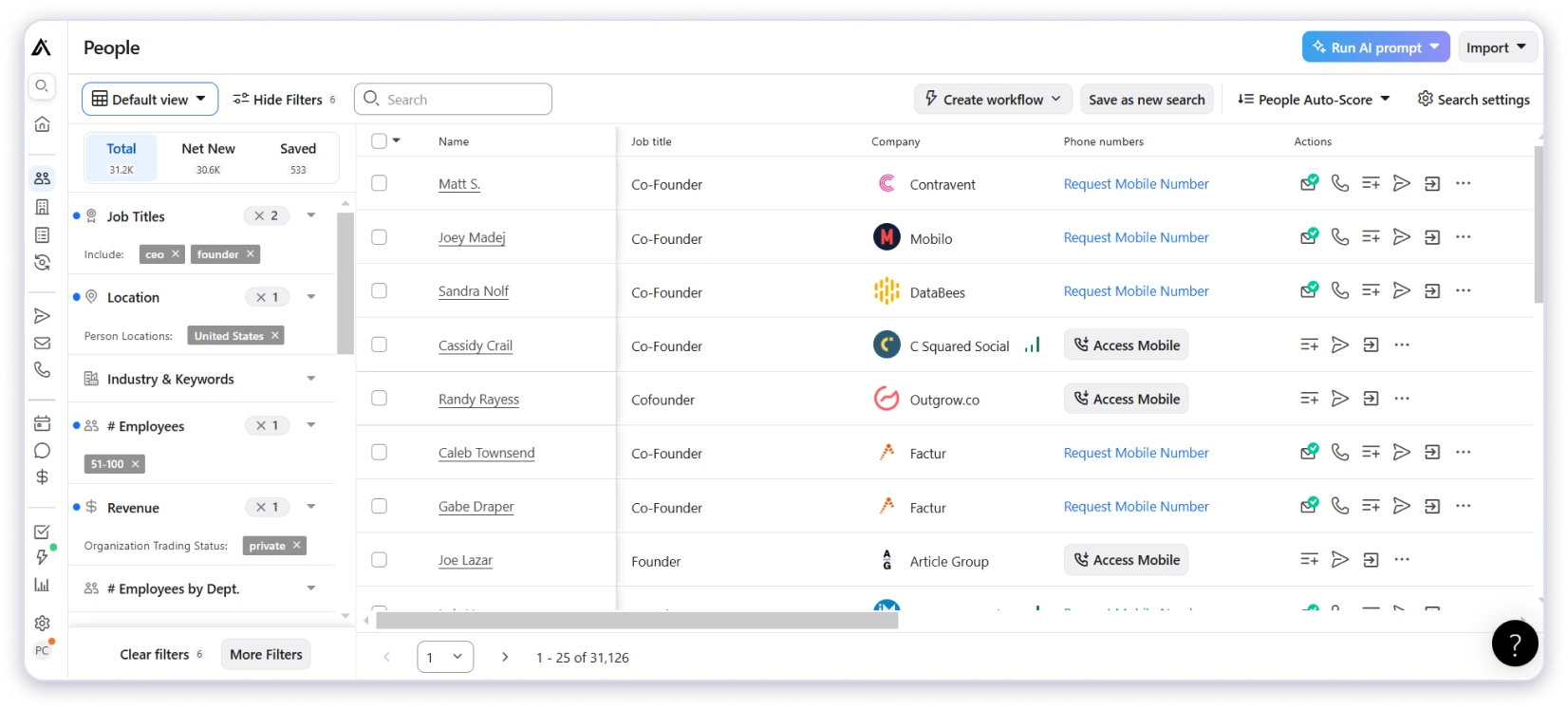
Image source: apollo.io
Apollo.io has established itself as a comprehensive sales intelligence and engagement platform combining an extensive contact database with built-in sales execution tools. The platform serves as an all-in-one solution for sales teams, providing everything from prospect identification to multi-channel outreach sequencing. Apollo's strength lies in its balance of database scale, affordability, and integrated engagement features, making it particularly popular among growing companies that need both data and execution capabilities in a single platform.
Key features:
- One of the largest B2B databases with global company and contact coverage
- Advanced filtering using firmographic, technographic, and intent criteria
- Integrated sales engagement platform for email sequencing and automation
- AI-powered recommendations for contact and company intelligence
- Generous free plan supporting basic prospecting needs
Limitations:
- Data accuracy can be inconsistent across certain industries and regions
- Interface complexity may overwhelm new users seeking simple solutions
- Engagement features require separate subscription from database access
Pricing:
- Free version included
- From $49/user/month
- Custom plans available
8. LeadIQ: Efficient prospecting and list-building from web sources
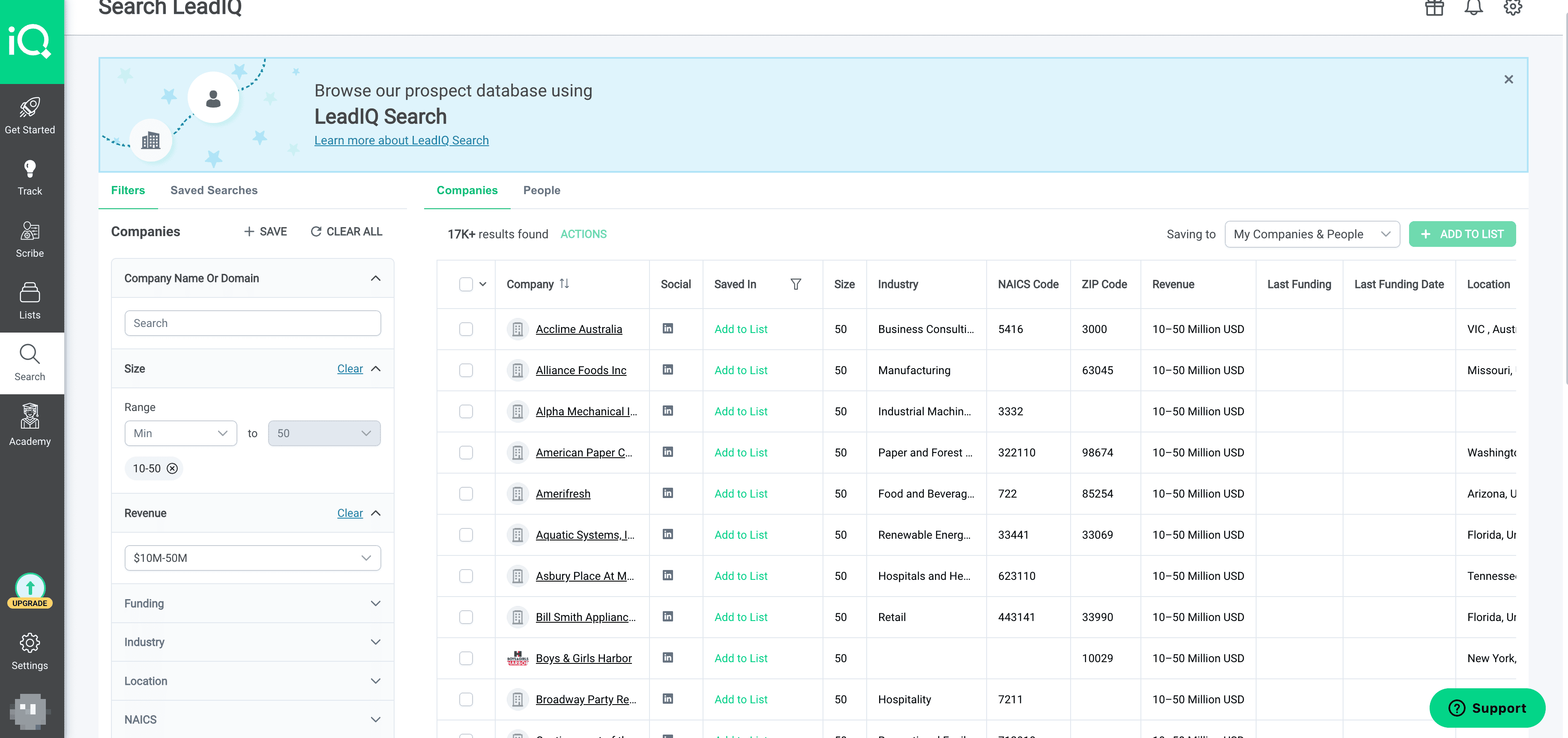
Image source: leadiq.com
LeadIQ specializes in sales acceleration through efficient list building and CRM data management. The platform excels at capturing prospect information from web sources, particularly LinkedIn, and seamlessly syncing it to CRM systems. Unlike broader intelligence platforms, LeadIQ focuses on streamlining the process of building targeted prospect lists and maintaining clean CRM data. This makes it particularly valuable for sales development representatives who spend significant time researching and capturing prospect information across multiple sources.
Key features:
- One-click capture of prospect data from LinkedIn and company websites
- Automated email verification ensuring contact data accuracy
- Seamless CRM synchronization maintaining data consistency
- Chrome extension enabling efficient web-based prospecting
- Cadence integration for immediate follow-up after prospect capture
Limitations:
- Primarily designed for list building rather than comprehensive market intelligence
- Credit-based system can limit high-volume usage scenarios
- Less effective as a standalone solution for companies needing complete data coverage
Pricing:
- Freemium model
- $39/user/month
- Transparent pricing
9. RocketReach: Extensive database of direct professional contact information
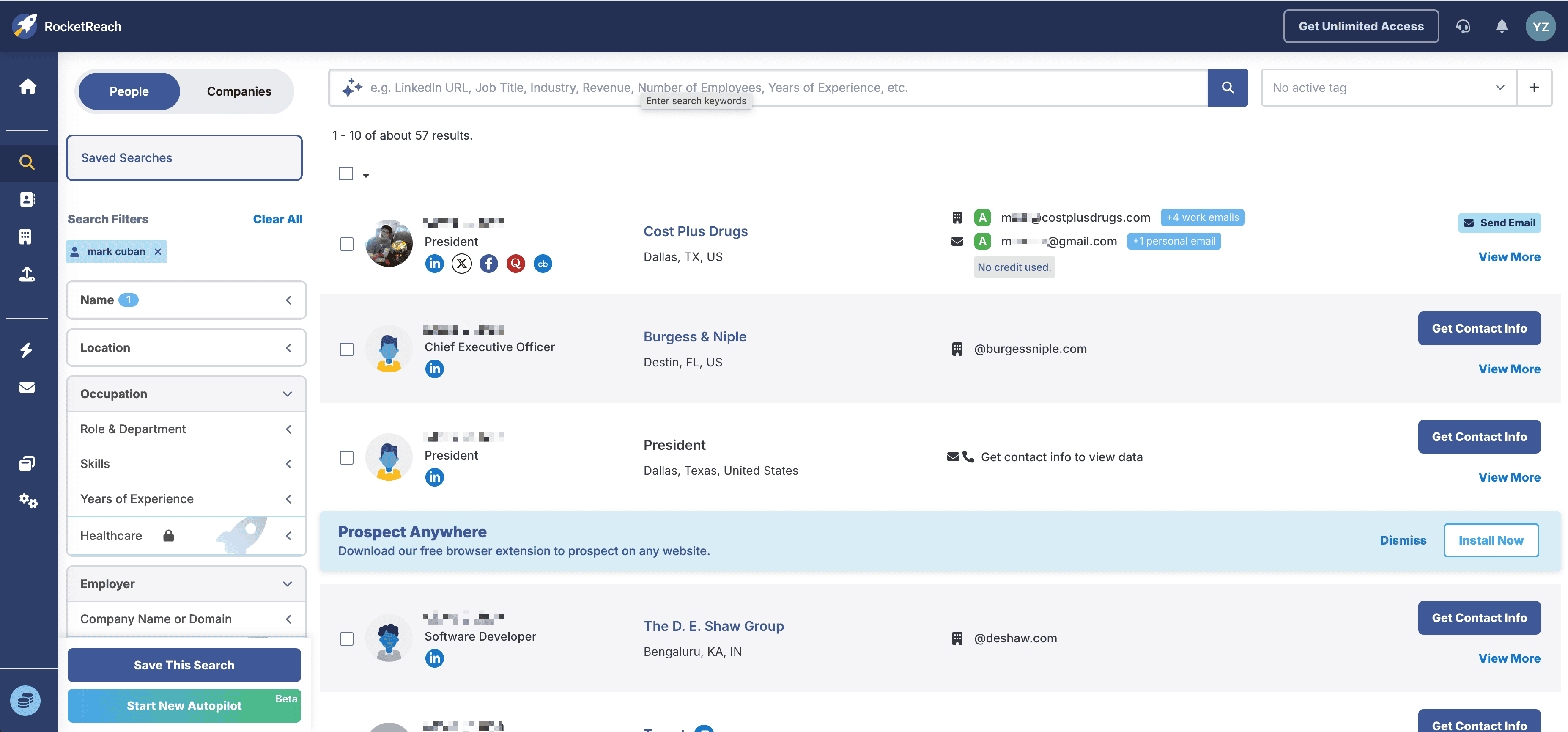
Image source: rocketreach.co
RocketReach provides extensive professional contact information through both web platform and browser extension access. The service focuses on delivering verified email addresses and direct phone numbers for professionals across industries and company sizes. With one of the largest databases of individual professional contacts, RocketReach serves as a reliable resource for sales, recruitment, and business development professionals needing direct access to decision-makers. The platform's simplicity and extensive coverage make it a popular choice for quick contact discovery.
Key features:
- Extensive database of professional email addresses and phone numbers
- Browser extension for instant contact access while browsing websites
- API access for integrating contact data into other applications
- List building and bulk lookup capabilities for campaign planning
- Global search coverage across industries and company sizes
Limitations:
- Strict credit system limits extensive prospecting on lower-tier plans
- Focuses primarily on individual contacts rather than company intelligence
- Data accuracy may vary compared to premium enterprise platforms
Pricing:
- Free plan available
- From $39/month
- Custom plans offered
10. Instantly.ai: A cold outreach and lead generation platform
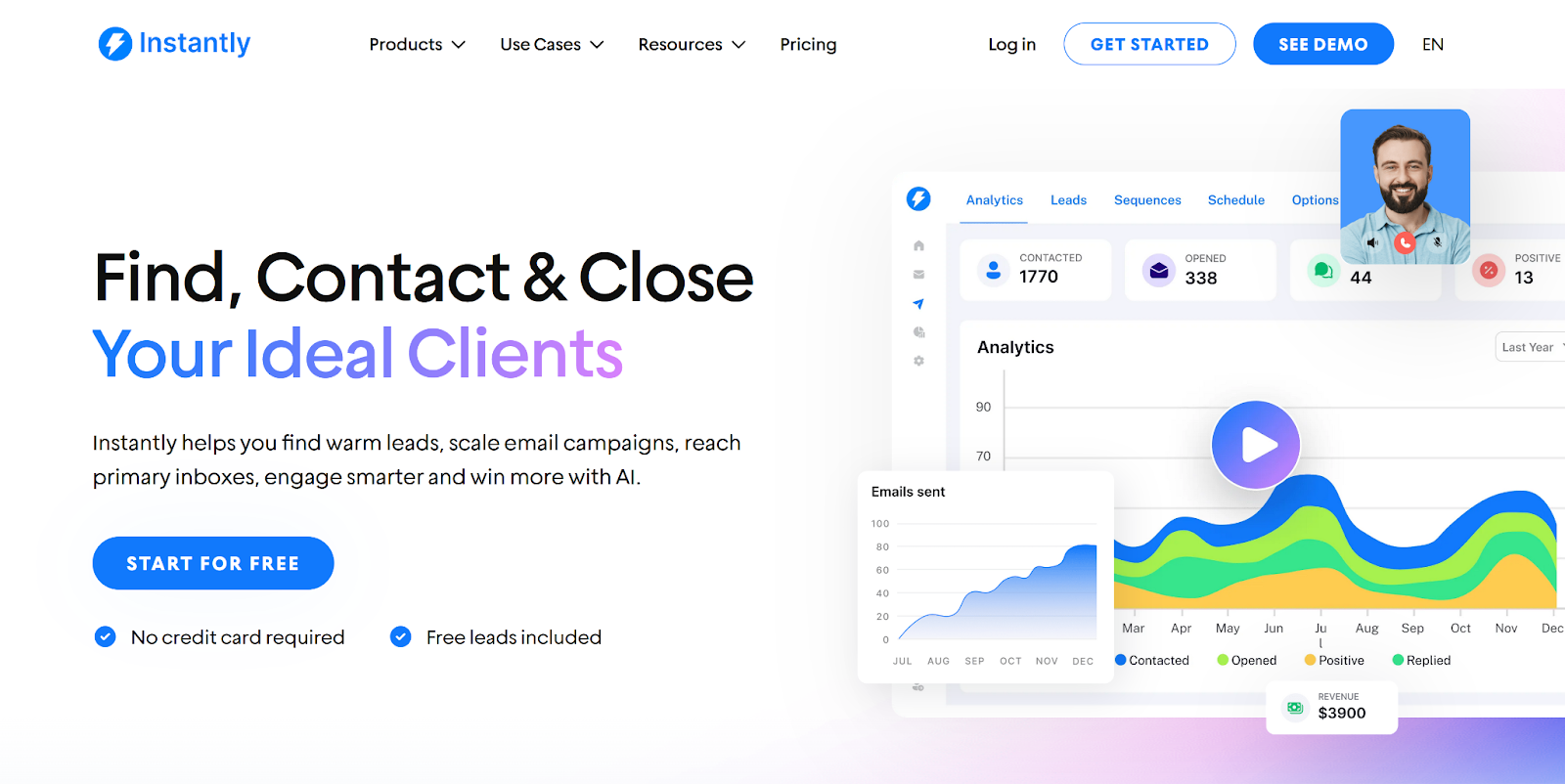
Image source: instantly.ai
Instantly.ai is a cold outreach and lead generation platform designed to help B2B teams find, contact, and close Ideal Clients with Cold Email.
It combines lead discovery, email automation, and AI-powered optimization to improve deliverability, personalize outreach, and increase response rates, making it easier for businesses to build and manage high-performing contact databases.
Key features:
- Unlimited email accounts and warmup on all plans
- Lead discovery tools to find qualified prospects
- Cold email automation and campaign scaling
- AI-powered email personalization and optimization
- Inbox Placement testing to monitor deliverability across providers
- Performance tracking and campaign analytics
Limitations:
- Primarily focused on email, with limited native multi-channel outreach options
- Requires proper setup (domains, warming, DNS) to achieve strong deliverability
Pricing:
- Growth: $47/mo (or $37.6/mo annual)
- Hypergrowth: $97/mo (or $77.60/mo annual)
- Light Speed: $358/mo (or $286.30/mo annual)
Key features B2B contact database tools must have
A fully-functional B2B contact database has evolved from a "nice-to-have" option to an indispensable strategic asset for sales and marketing teams. The following outlines the essential capabilities that a modern B2B contact database tool must possess - features that collectively form the foundation of its competitive strength.
Automated workflows and process management
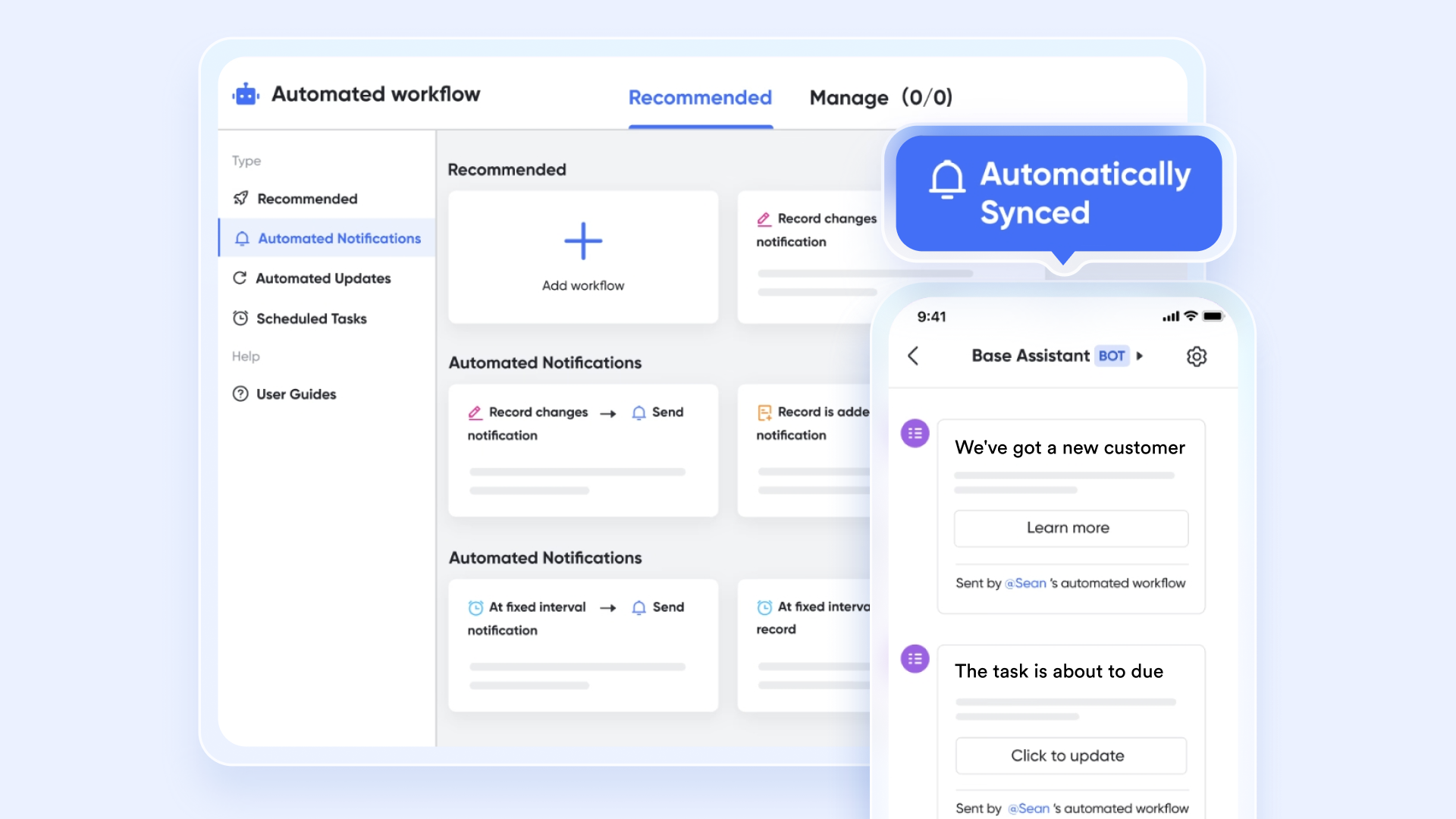
Custom automation rules can trigger actions based on specific data changes. Approval workflows ensure critical data modifications adhere to established protocols. Automated notifications keep teams informed of important updates and pending tasks. Task assignment and tracking are directly linked to corresponding contact records.
Cross-platform synchronization
Mobile accessibility ensures field teams access real-time data during client interactions. API connectivity enables seamless data exchange with complementary tools. Real-time synchronization maintains data consistency across all devices. Bulk operation support facilitates efficient data management at scale.
Unified data repository with customizable fields
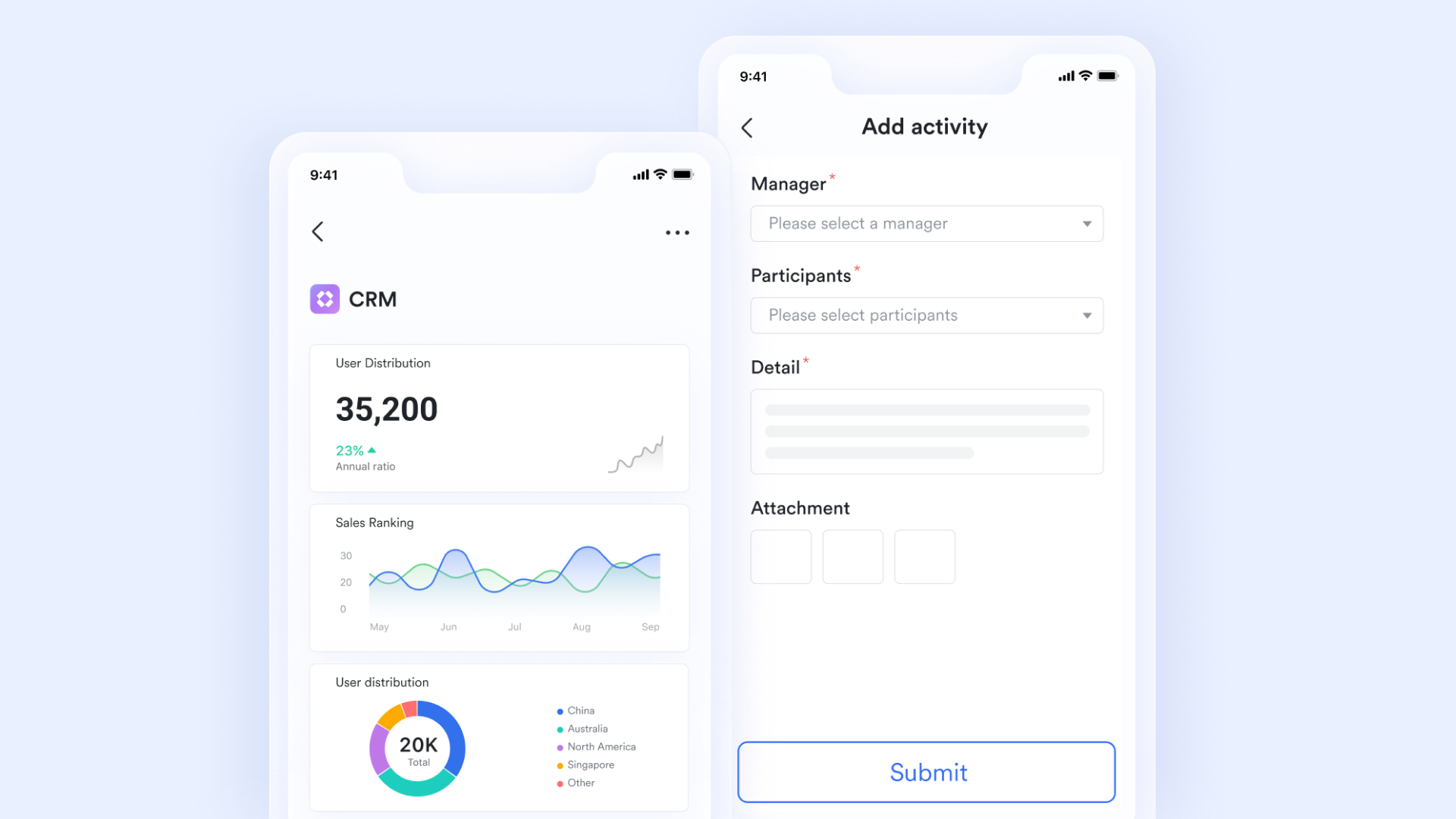
A centralized system consolidates all contact information into a single source of truth. Customizable fields enable the collection of industry-specific data points beyond basic contact details. Structured records ensure data consistency across team members and departments. Flexible data types support various formats, from plain text to attachments.
Multi-dimensional visualization and filtering
Kanban views enable visual pipeline management through drag-and-drop functionality. Advanced filtering allows segmentation based on multiple criteria simultaneously. Saved views provide quick access to frequently used data perspectives. Real-time updates ensure all team members access the latest information across all visualization interfaces.
How to choose B2B contact database tools
Define your core requirements
Begin by identifying your primary use cases and target markets. Consider your team size and typical prospect profiles to determine necessary features. Establish clear requirements for data accuracy, coverage breadth, and update frequency. Document essential integration needs with existing sales and marketing tools.
Evaluate data quality and coverage
Request sample data matching your ideal customer profile to verify accuracy. Assess the provider's data collection methodology and verification processes. Confirm coverage aligns with your target industries, company sizes, and geographic regions. Investigate data freshness through update cycles and quality assurance measures.
Analyze integration capabilities
Verify compatibility with your current technology stack, particularly CRM systems. Examine available integration methods from pre-built connectors to API access. Consider how the database will fit into existing sales workflows and processes. Ensure mobile accessibility if field teams require on-the-go access. Lark not only has a great integration capability, but also supports various features without switching apps.
Compare pricing and scalability
Understand complete pricing structure including hidden costs for implementation or support. Evaluate scalability options as your team grows or requirements change. Consider trial periods or pilot programs to test functionality before commitment. Calculate potential ROI based on time savings and expected conversion improvements.
Conduct practical testing
Schedule demonstrations focusing on your specific use cases rather than generic overviews. Involve end-users in the evaluation process to assess usability and adoption ease. Test customer support responsiveness and knowledge during the trial period. Compare multiple solutions side-by-side using consistent evaluation criteria.
Planning implementation success
Develop a clear implementation timeline with defined milestones and responsibilities. Prepare existing data for migration through cleaning and standardization. Plan comprehensive training sessions tailored to different user roles and technical abilities. Establish metrics to measure success and schedule regular review periods post-implementation.
Selecting the right B2B contact database requires balancing immediate needs with long-term growth objectives. A thorough evaluation process ensures the chosen solution delivers sustainable value through improved prospecting efficiency and revenue growth.
Implementation practices for B2B contact databases
Deploying a new B2B contact database is a strategic initiative that extends beyond mere technical setup. Its ultimate value is realized only through meticulous planning, widespread team adoption, and a commitment to continuous improvement. A structured approach to implementation is critical for transforming this powerful tool from a cost center into a proven growth driver. The following best practices outline the key phases to ensure a successful rollout and long-term ROI.
Data migration planning
Successful implementation begins with careful data migration. Clean existing records before importing them into the new system . This preparation prevents carrying forward outdated or inaccurate information.
Map fields between systems to ensure data integrity. This planning preserves important information and maintains relationships between data points . Thorough testing verifies the migration success.
Team training and adoption
User adoption determines the ultimate success of any new system. Provide comprehensive training that addresses different learning styles . This investment ensures teams can leverage the full capabilities.
Ongoing support helps address questions and challenges. Regular check-ins identify adoption barriers and opportunities for improvement . This attention sustains long-term usage.
Performance measurement
Establish clear metrics to evaluate the database impact. Track prospecting efficiency, conversion rates, and revenue growth . These measurements demonstrate the return on investment.
Regular reviews identify areas for improvement. Adjust strategies and processes based on performance data. This continuous optimization maximizes value over time.
Conclusion
A strategic B2B contact database transforms how organizations manage business relationships and drive growth. By centralizing verified contact information within collaborative workflows, teams can execute more targeted outreach and build stronger customer connections. The most effective solutions integrate seamlessly with daily operations rather than functioning as isolated tools.
For teams seeking to unify their contact database with actual workflow execution, Lark provides an integrated environment where data becomes actionable intelligence. Experience how our unified workspace connects contact management with team collaboration—transforming how you identify, engage, and grow business relationships while keeping all your essential tools in one platform.
FAQs
What makes a B2B contact database different from a CRM?
A B2B contact database is primarily for finding and verifying new prospect information, focusing on external market data. A CRM manages existing customer relationships and internal sales processes. They work together when integrated, with the database feeding new leads into the CRM for tracking and nurturing.
How to verify the accuracy of a provider's data before purchasing?
Most reputable providers offer a free trial or allow you to request a sample data set. Use this to search for contacts and companies you already know, checking for accuracy and completeness. This hands-on test is the most reliable way to gauge data quality for your specific needs.
What are the most common hidden costs with B2B contact databases?
Beyond per-user subscription fees, watch for costs related to data enrichment, API overage charges, and implementation services. Some providers also charge extra for premium support tiers, advanced analytics, or integrations with specific CRMs and marketing tools.
How to measure the ROI of investing in a contact database?
Track key metrics before and after implementation, focusing on time saved on prospecting, lead-to-meeting conversion rates, and email deliverability. The most significant ROI often comes from reduced time wasted on outdated leads and increased revenue from more effective targeting.
Related reading
Table of contents
Start using Lark today

Manage all your work in one place
Boost team efficiency by 10x
Save up to 70% on software costs
Table of contents
Start using Lark today
Manage all your work in one place
Boost team efficiency by 10x
Save up to 70% on software costs
Keep reading









2026 Lark Technologies Pte. Ltd.
Headquartered in Singapore with offices worldwide.






Explore: