














12 Best SaaS CRM Tools to Drive Retention & Guide Included

Ryan Tanner
Product Marketing Specialist
Sep 18, 2026
Ryan Tanner
Sep 18, 2026

23 min read


Finding the right CRM for SaaS is critical because SaaS companies depend on recurring revenue, renewals, and customer retention. Unlike traditional businesses, SaaS teams face high-velocity sales cycles and must track subscriptions, prevent churn, and upsell existing accounts. A general-purpose CRM often falls short, which is why specialized CRM for SaaS companies is essential to managing growth efficiently.
In this guide, we explore the 12 best SaaS CRM tools that help startups, SMBs, and enterprises scale. From Lark, HubSpot, Salesforce, Zoho, and Freshsales, you'll see how today's top solutions support retention, onboarding, and sustainable ARR growth.
1. Lark: All-in-one SaaS CRM and collaboration hub
2. HubSpot CRM: Best for SaaS startups
3. Zoho CRM: Best for budget-conscious SaaS teams
4. Salesforce: Best enterprise SaaS CRM
5. Freshsales: Best for growing SaaS SMBs
6. Close CRM: Best for inside sales SaaS teams
7. Insightly: Best for CRM + project alignment
8. Pipedrive: Best for SaaS sales-focused teams
9. ActiveCampaign: Best for SaaS marketing automation
10. Copper CRM: Best for G Suite SaaS companies
11. Streak CRM: Best lightweight Gmail SaaS CRM
12. Apptivo CRM: Best modular SaaS CRM for SMBs

Why SaaS needs a specialized CRM tool
Unlike traditional industries, SaaS growth depends on speed, retention, and expansion. A specialized CRM for SaaS addresses these unique needs by aligning customer data, subscriptions, and collaboration into one system.

Image source: unsplash.com
High-velocity sales cycles vs. traditional sales
SaaS companies often deal with short trial periods and fast conversions, unlike industries with long sales cycles. A SaaS CRM helps track prospects in real time, automate follow-ups, and ensure no opportunity slips away during the quick decision window.
Subscription management + renewals
Recurring revenue is the backbone of SaaS. A specialized CRM can manage subscription terms, auto-flag upcoming renewals, and automate reminders, ensuring steady revenue streams while reducing the risk of missed renewals.
Churn reduction is as important as acquisition
Winning new customers matters, but keeping them matters even more. SaaS CRMs include churn prediction, health scoring, and usage analytics so teams can spot at-risk accounts early and proactively engage to improve retention.
Account-based upselling and expansion
Growth in SaaS often comes from existing accounts through upselling and cross-selling. SaaS CRMs allow account-based strategies, enabling teams to identify expansion opportunities, track product usage, and offer personalized upgrades at the right time.
Need for tight collaboration between sales, success, and product
SaaS organizations rely on close alignment across teams. A CRM designed for SaaS acts as the shared hub where sales hand over clients, customer success monitors adoption, and product teams access insights—all in real time.
Must-have features in a SaaS CRM
A true CRM for SaaS companies isn't just about logging contacts and deals—it's about managing the entire subscription lifecycle, from the first trial sign-up to renewals and upsells. To handle the unique challenges of SaaS, your CRM should include the following must-have features:
Subscription & renewal tracking
For SaaS, revenue doesn't come from a single transaction but from recurring subscriptions. A SaaS CRM should let you track subscription terms, payment cycles, and renewal dates all in one place. The best platforms also send automated reminders or trigger renewal workflows, ensuring you don't lose revenue because of overlooked deadlines. This helps sales and success teams stay proactive instead of reactive.
Churn prediction & customer health scoring
In SaaS, reducing churn is just as critical as acquiring new customers. A specialized CRM can calculate customer health scores based on usage patterns, login frequency, or support requests. By surfacing accounts that show early warning signs, your team can take action—such as sending onboarding help or scheduling a check-in call—before a customer cancels. This predictive approach can make or break your ARR growth.
Usage analytics & customer feedback
Product adoption is the heartbeat of SaaS success. That's why usage data needs to be part of your CRM view. By integrating analytics, you can see whether customers are actively engaging with key features. Some SaaS CRMs also allow you to collect in-app feedback, helping product teams identify gaps and giving sales or customer success teams context for upsells.
Automated workflows for onboarding & renewals
Manual follow-ups won't scale when you're managing dozens—or thousands—of accounts. SaaS CRMs with workflow automation can send onboarding sequences, assign tasks to account managers, and even trigger renewal reminders without human intervention. For example, Lark Tasks & Lark Approval ensure every new customer gets the same consistent onboarding experience, while renewal playbooks keep teams aligned.
Multi-channel communication
Your customers don't only live in email. They expect seamless communication across email, chat, calls, and even in-app messaging. A SaaS CRM should centralize these channels, so all touchpoints are logged in one timeline. This gives account managers full context, prevents missed conversations, and keeps teams better prepared for every customer interaction.
Collaboration tools for sales, CS, and product alignment
SaaS companies can't afford silos between sales, customer success, and product teams. A CRM with built-in collaboration tools—like Lark Messenger, Lark Docs, and Lark Meetings—helps teams share updates instantly, store playbooks, and coordinate renewals. This ensures smoother handoffs from sales to success, better onboarding, and more cohesive customer management overall.
12 best CRM for SaaS companies
1. Lark: All-in-one SaaS CRM and collaboration hub
Lark brings together customer relationship tracking, project workflows, and team collaboration under one roof. Built around tools like Lark Base, Tasks, Approval, Docs/Wiki, Messenger, Calendar, and AI-powered automations, it's designed to support subscription-based businesses. With these features, SaaS teams can manage renewal pipelines, automate onboarding, and align sales, success, and product teams seamlessly—all from a single, unified workspace.
Features:
Lark Base: Subscription pipelines and workflow automation
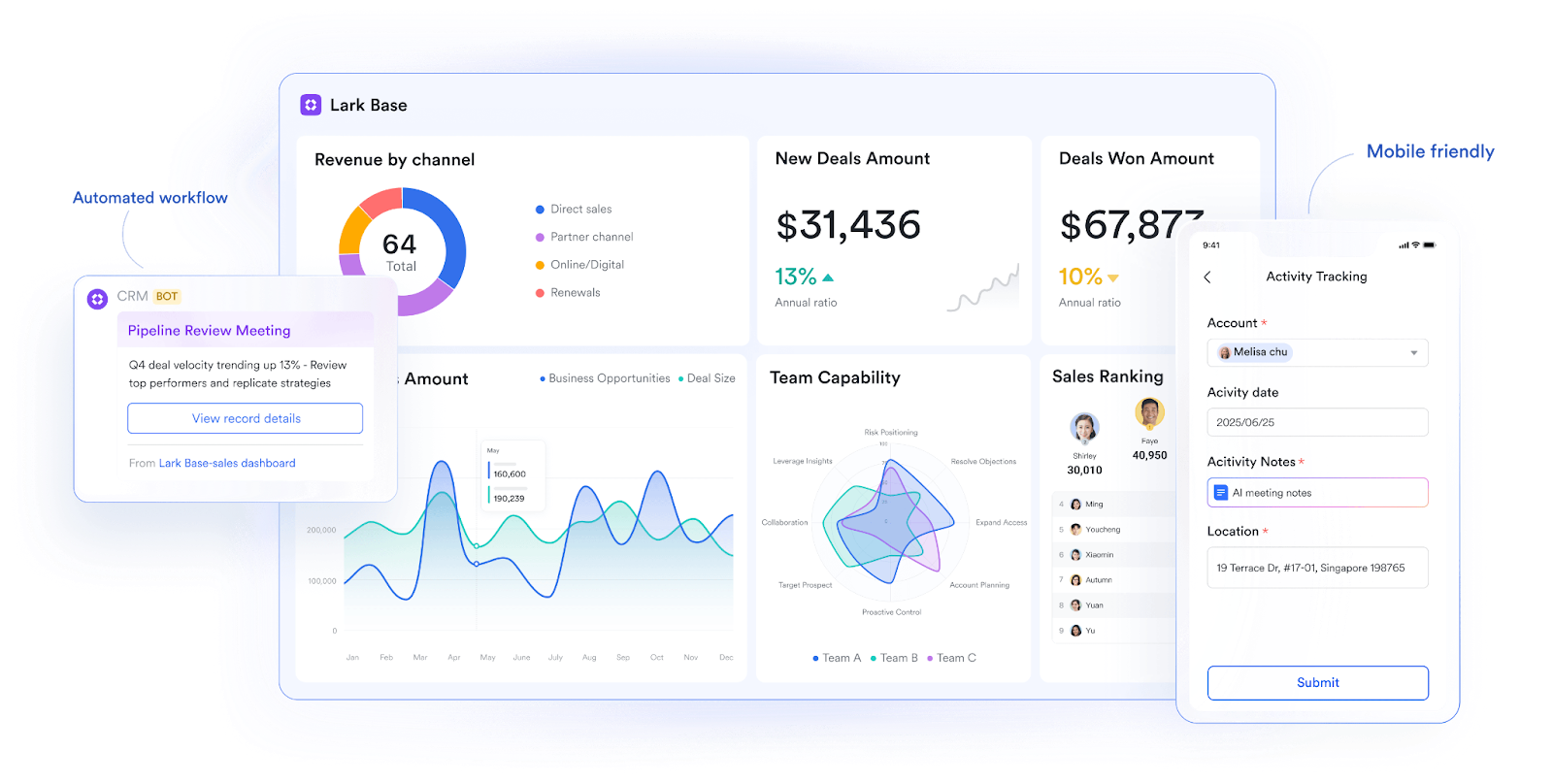
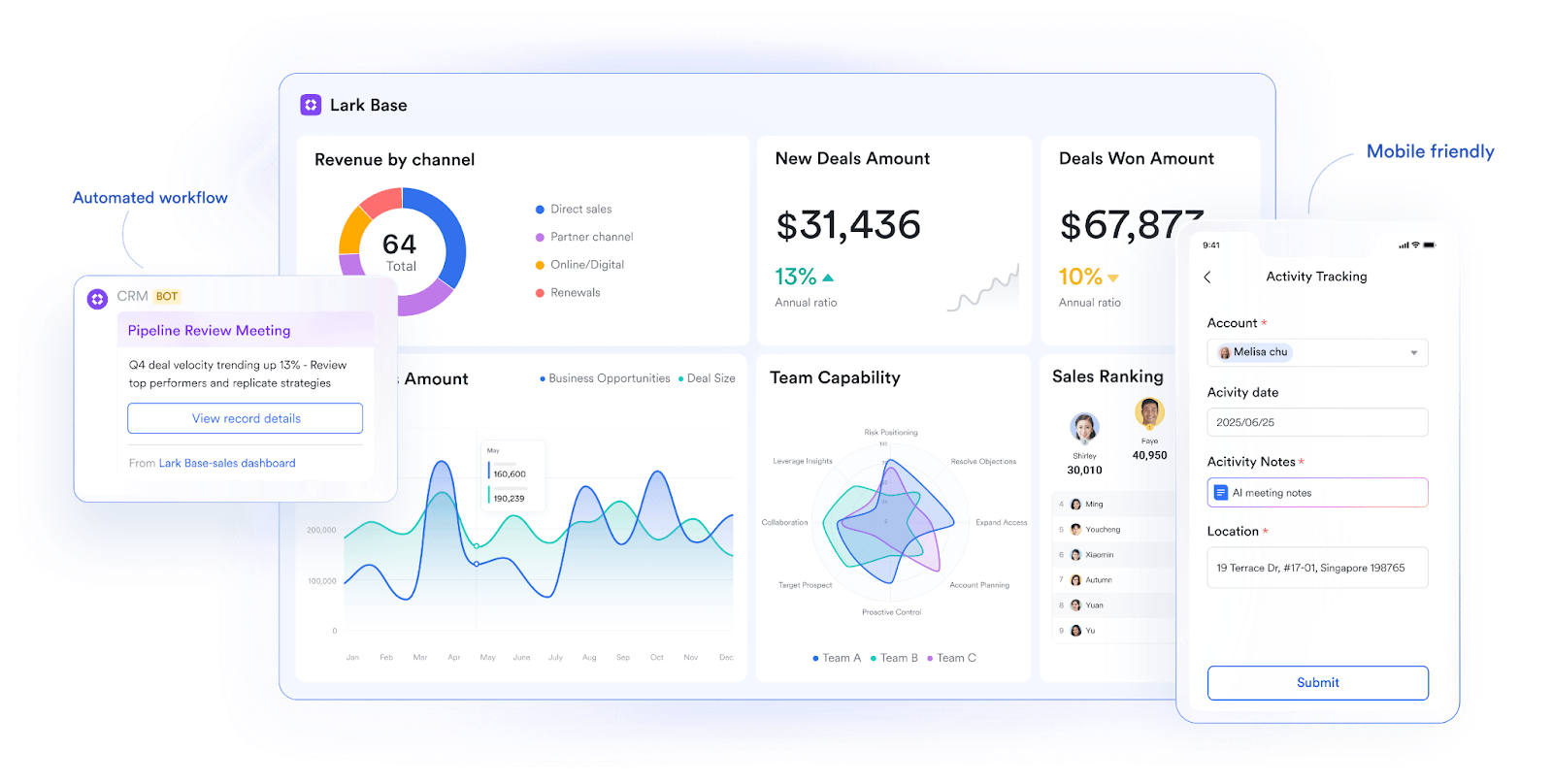
Lark Base is a no-code database designed for building custom pipelines that SaaS teams can use to track subscription lifecycles, manage trial-to-paid conversions, and centralize customer data. It also includes Automations and Workflow, which let you configure triggers for tasks such as sending renewal reminders, updating account statuses, or flagging churn risks. This ensures SaaS teams reduce manual follow-ups and keep revenue processes consistent.
Lark Approval: Renewal and contract approvals
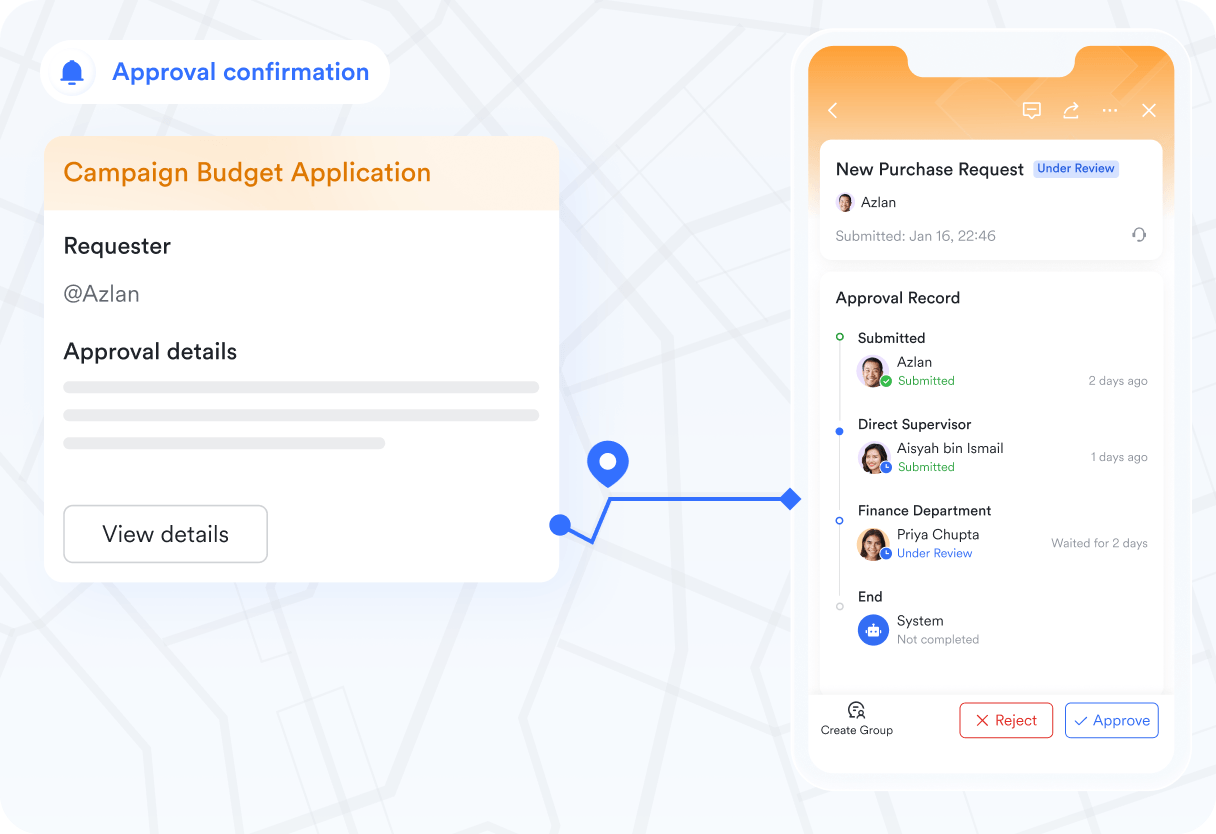
Lark Approval centralizes automated approval workflows with templates and mobile access. SaaS companies often need quick approvals for renewal discounts, contract changes, or exception handling. With Lark Approval, requests move through Messenger and trigger notifications, ensuring faster decision-making and smoother renewals.
Lark Docs and Lark Wiki: Playbooks and customer success knowledge
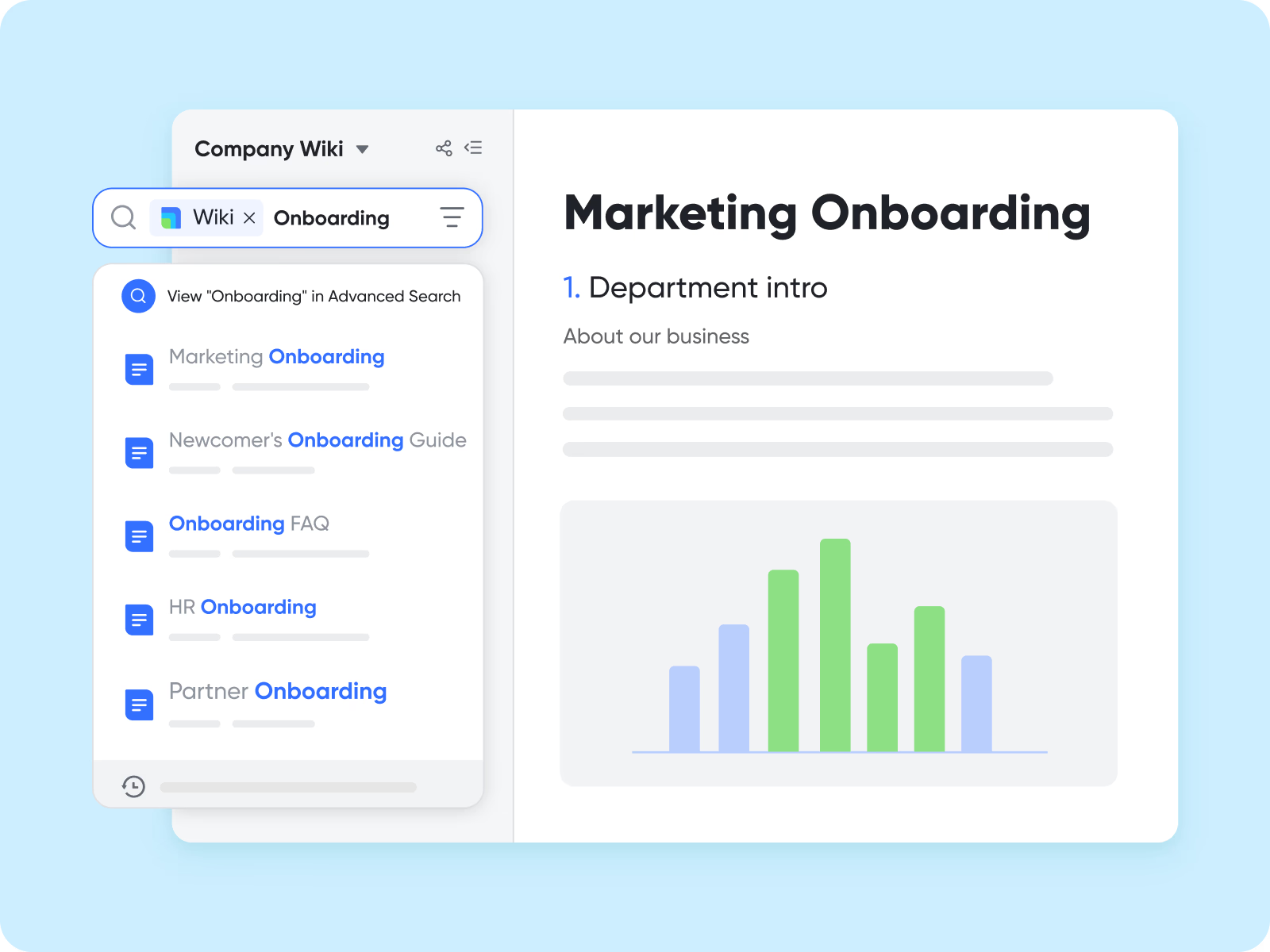
Lark Docs allows real-time co-editing of onboarding playbooks, renewal checklists, and SOPs. Lark Wiki organizes this content into a structured, searchable format for customer success teams. Together, they give SaaS organizations one place to store and share best practices that drive retention and account growth.
Lark Messenger: Customer and account communication in context
Lark Messenger supports direct and group chats with file sharing, document previews, and alerts. For SaaS teams, conversations about customer accounts, renewals, or onboarding can happen alongside the related Lark Base records or Approval requests, keeping discussions contextual and traceable.
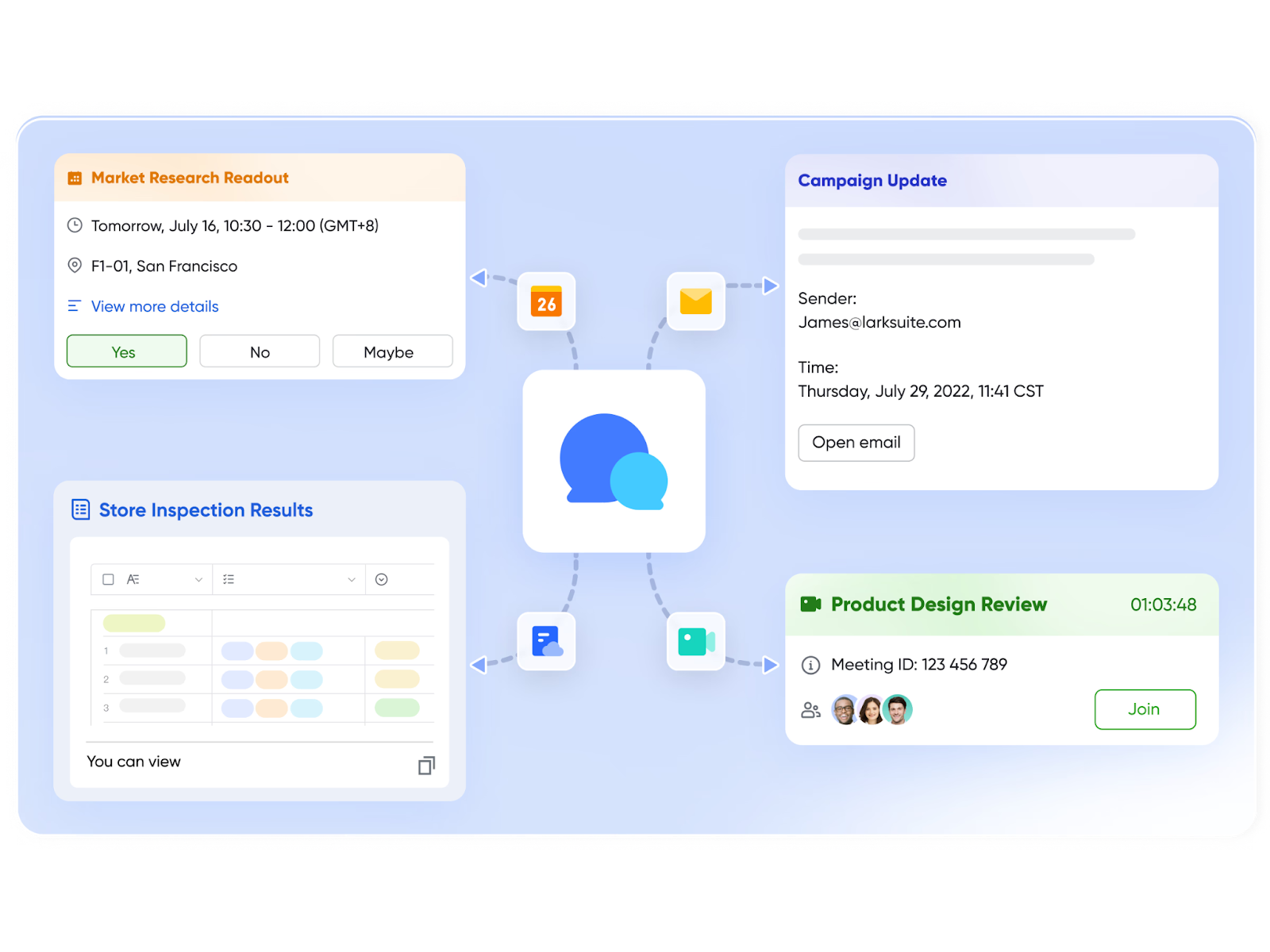
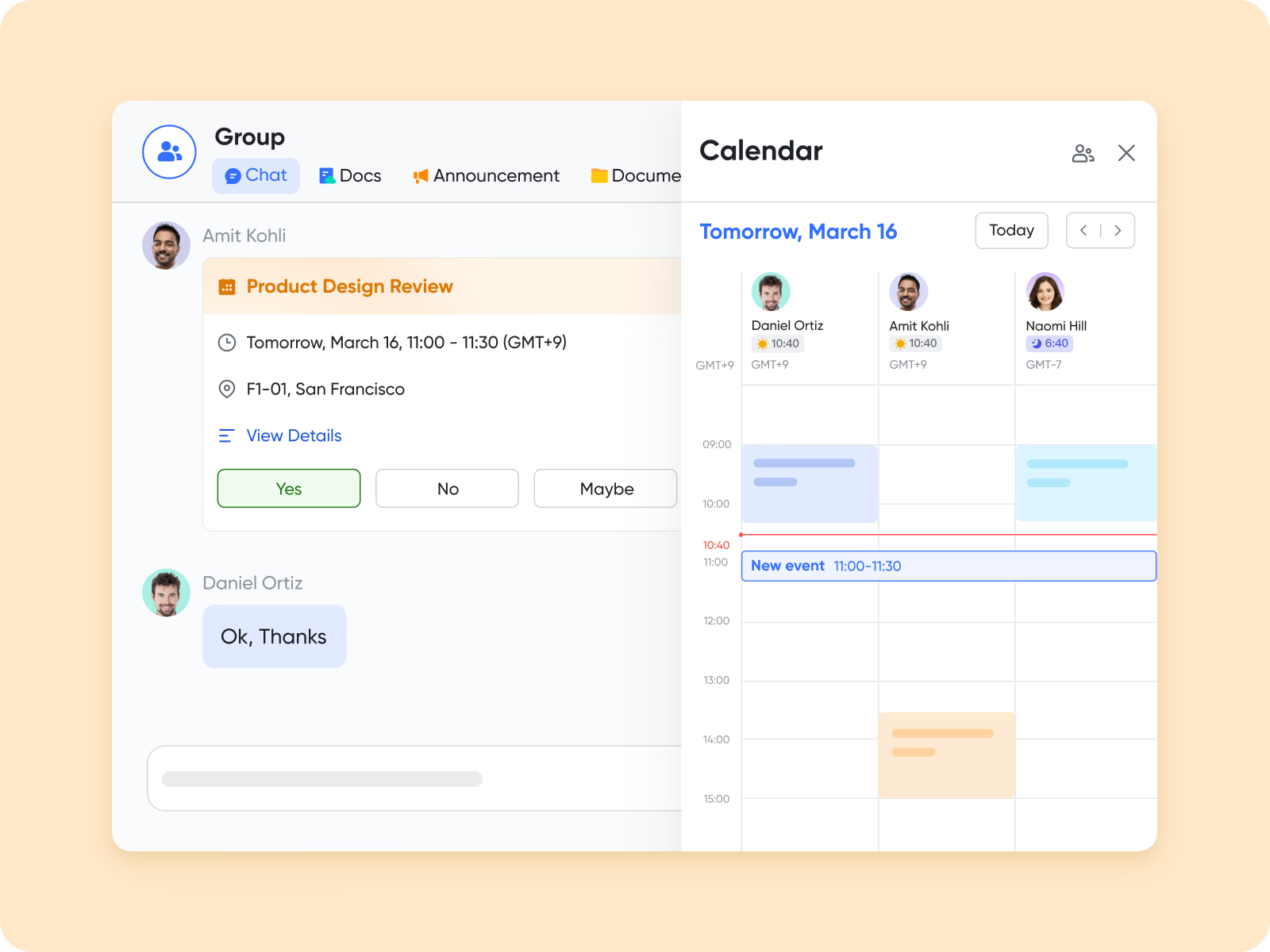
Lark Calendar and Lark Meetings: Scheduling renewals and customer calls
Lark Calendar helps SaaS teams schedule customer renewals, onboarding sessions, and internal check-ins. Integrated with Lark Meetings, it supports video calls, agendas, and attached Docs, so teams can run customer discussions and internal planning without leaving the CRM workspace.
Pricing:
- Starter plan: Free forever plan that includes 11 powerful tools for up to 20 users. It also comes with 100GB of storage, 1000 automation runs, AI translations, and more.
- Pro plan: $12/user/month (billed annually) for up to 500 users. It includes everything in Starter plus group calling for up to 500 attendees, 15TB of storage, 50,000 automation runs, and more.
- Enterprise plan: Contact sales for custom pricing. Supports unlimited users and includes even more automation runs and advanced data security, compliance, and management features.
Why you'll like it
- All-in-one workspace to manage the entire SaaS customer lifecycle in one place.
- Track subscriptions, renewals, and customer health with real-time dashboards—no tool-switching required.
- Automated workflows handle reminders, onboarding tasks, and renewal follow-ups, so nothing slips through.
- Built-in Messenger, Docs, and Calendar keep sales, success, and product teams aligned.
- Mobile-friendly access means you can monitor accounts, approve renewals, and chat with teammates anytime, anywhere.
2. HubSpot CRM: Best for SaaS startups
HubSpot CRM is a leading CRM for SaaS startups, offering a simple way to manage customer lifecycles without heavy setup or cost. It centralizes contacts, deals, and customer activities in an intuitive dashboard that small teams can easily adopt. HubSpot stands out for its inbound marketing tools, making it especially valuable for SaaS companies that grow through content and digital campaigns. Startups can nurture leads, automate follow-ups, and track renewals seamlessly. For early-stage SaaS businesses that need flexibility and scalability, HubSpot CRM provides a strong starting point.
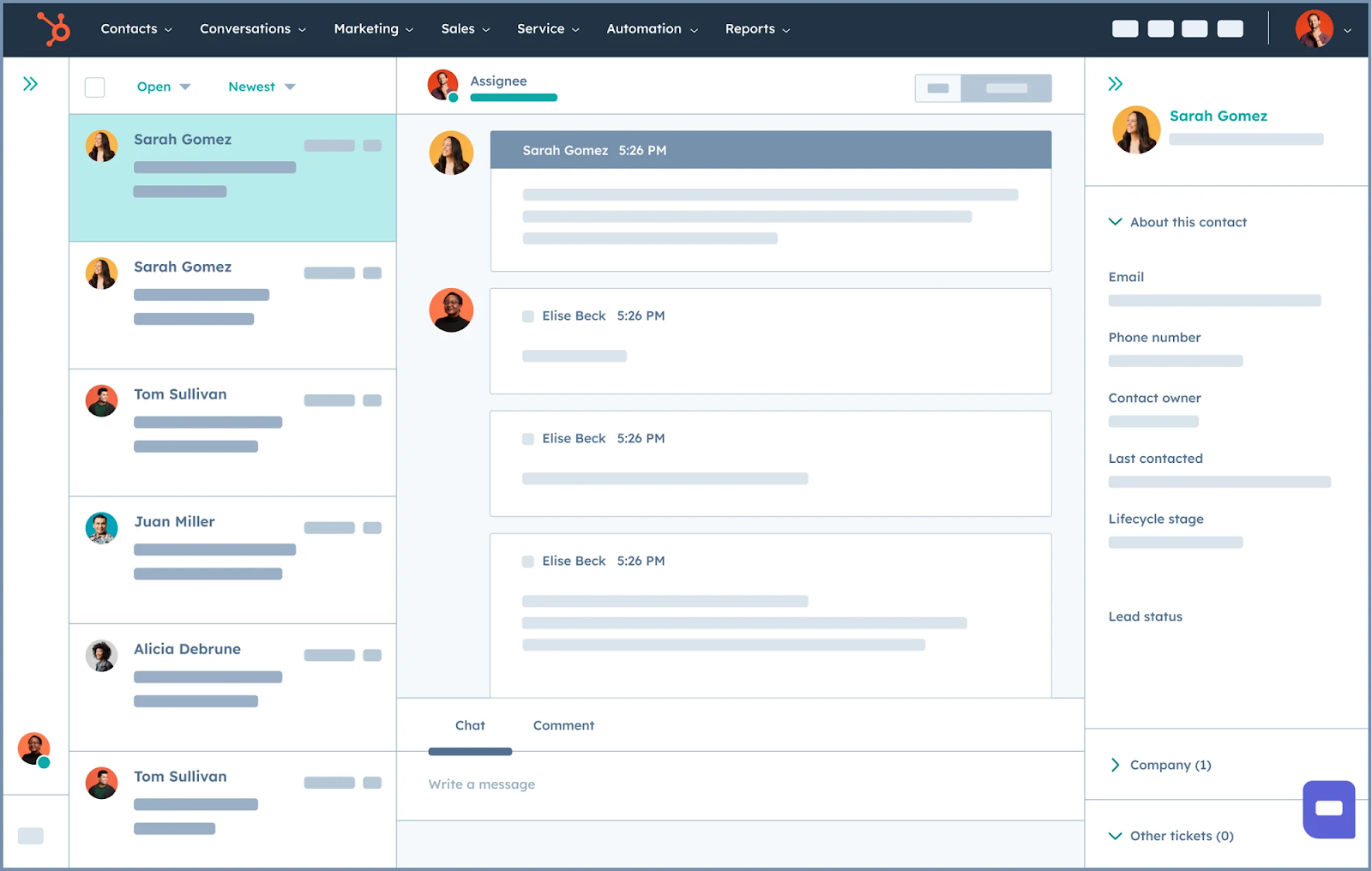
Image source: hubspot.com
Features:
- Contact and deal management with timeline view
- Built-in marketing automation for emails and campaigns
- Customer success tracking with activity logs
- Sales pipelines and reporting dashboards
- App Marketplace with 1,000+ extensions for added functionality
Pricing: Free plan; paid from $20/user/mo.
Why you'll like it:
- Free plan makes it accessible for SaaS startups with limited budgets
- Strong inbound marketing tools help generate and nurture leads
- Easy to scale from basic CRM to advanced paid tiers
- Simple interface and setup reduce the learning curve for small teams
3. Zoho CRM: Best for budget-conscious SaaS teams
Zoho CRM is often considered one of the best CRM for SaaS companies that need powerful features at a budget-friendly price. Its flexible platform offers contact management, sales automation, and AI insights tailored to fast-growing SaaS teams. With Zoho, startups and SMBs can customize modules to fit their subscription lifecycles, track renewals, and manage customer success without overspending. The platform's affordability makes it a strong option for businesses focused on scaling while keeping costs under control. For SaaS teams that want value without sacrificing functionality, Zoho CRM is a solid choice.
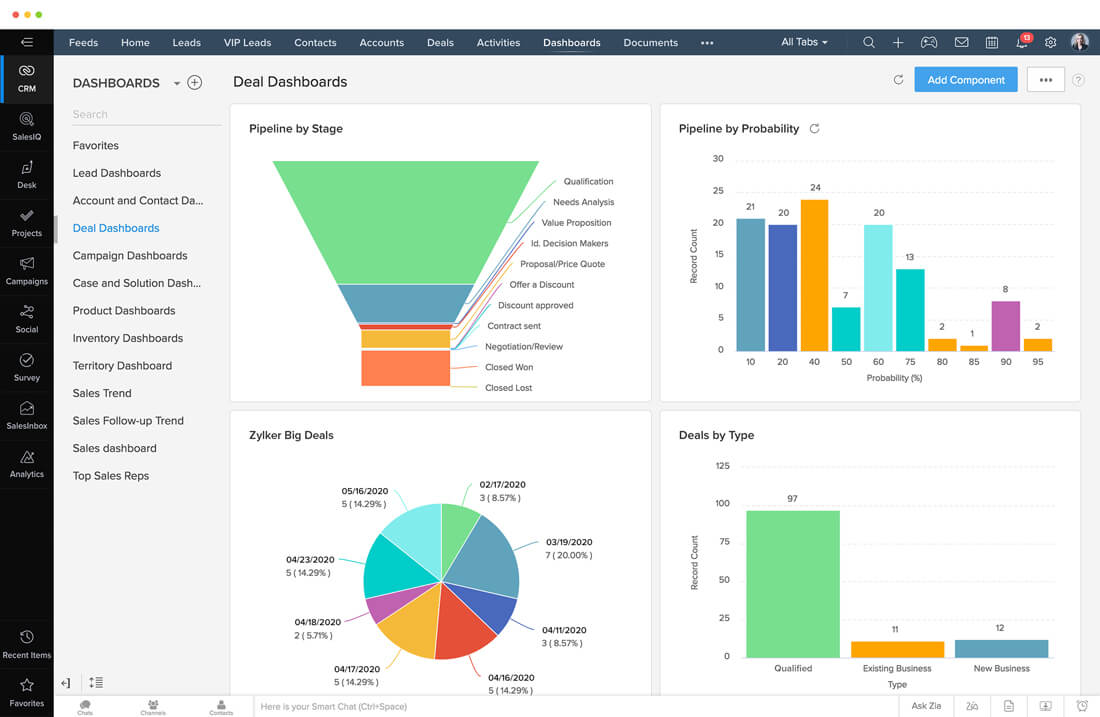
Image source: zoho.com
Features:
- Customizable modules for subscription and customer data
- AI-driven insights with Zia for predictive analytics
- Workflow automation for renewals and follow-ups
- Omnichannel communication (email, phone, chat, social)
- Reporting dashboards for sales and churn tracking
Pricing: Free (3 users); paid from $20/user/mo.
Why you'll like it:
- Affordable pricing that suits startups and SMBs
- Flexibility to adapt modules to SaaS business models
- AI tools help identify upsell opportunities and churn risks
- Scales easily as your SaaS company grown
4. Salesforce: Best enterprise SaaS CRM
Salesforce is widely recognized as the best CRM for SaaS enterprises that need deep analytics, account-based management, and scalability. It offers a robust suite of tools for managing customer lifecycles, from lead acquisition to renewals and upsells. Large SaaS companies rely on Salesforce to handle complex sales processes, global teams, and multi-product subscriptions. Its extensive customization options and advanced reporting make it a reliable backbone for managing churn and driving ARR growth at scale. For enterprise SaaS teams, Salesforce is built to handle complexity without limits.
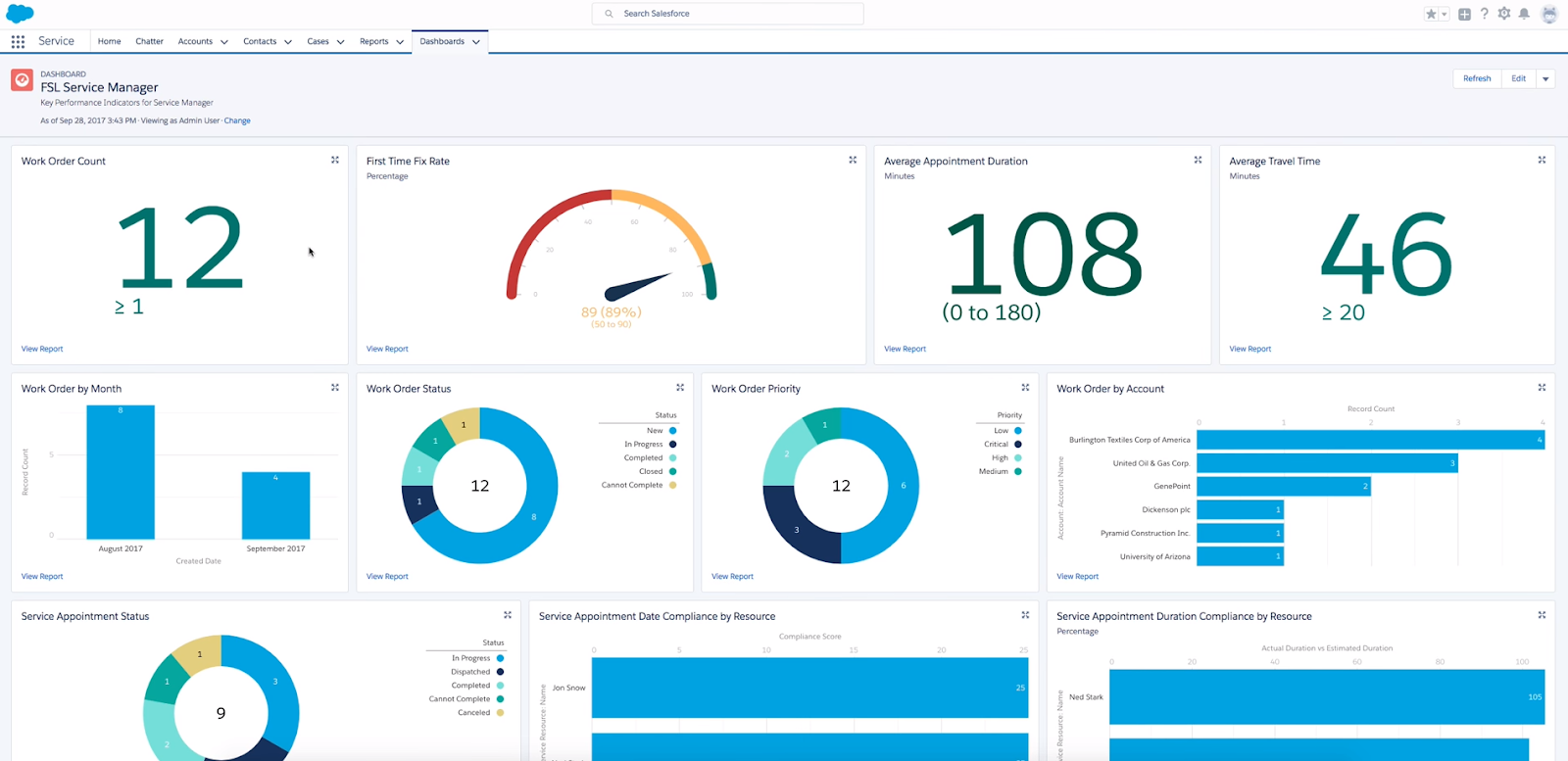
Image source: salesforce.com
Features:
- Advanced analytics and AI-driven sales insights
- Account-based management for large SaaS customers
- Workflow automation for renewals and customer success
- AppExchange marketplace with thousands of extensions
- Customizable dashboards and reporting for churn and ARR
Pricing: From $25/user/mo; enterprise $100–$350+.
Why you'll like it:
- Scales to meet the needs of global enterprise SaaS companies
- Powerful analytics and forecasting for ARR growth
- Highly customizable to fit complex subscription models
- Large ecosystem of apps and add-ons for extended functionality
5. Freshworks CRM: Best for growing SaaS SMBs
Freshworks CRM, also known as Freshsales, is a flexible CRM for SaaS companies that want enterprise-level automation at a price point designed for SMBs. It combines contact and deal management with built-in calling, AI-powered lead scoring, and visual pipelines. For SaaS businesses, Freshsales makes it easy to track subscriptions, automate renewals, and manage customer health. Its intuitive interface and quick setup mean smaller teams can start seeing value right away. Growing SaaS SMBs that need an affordable yet powerful CRM will find Freshsales a strong fit.
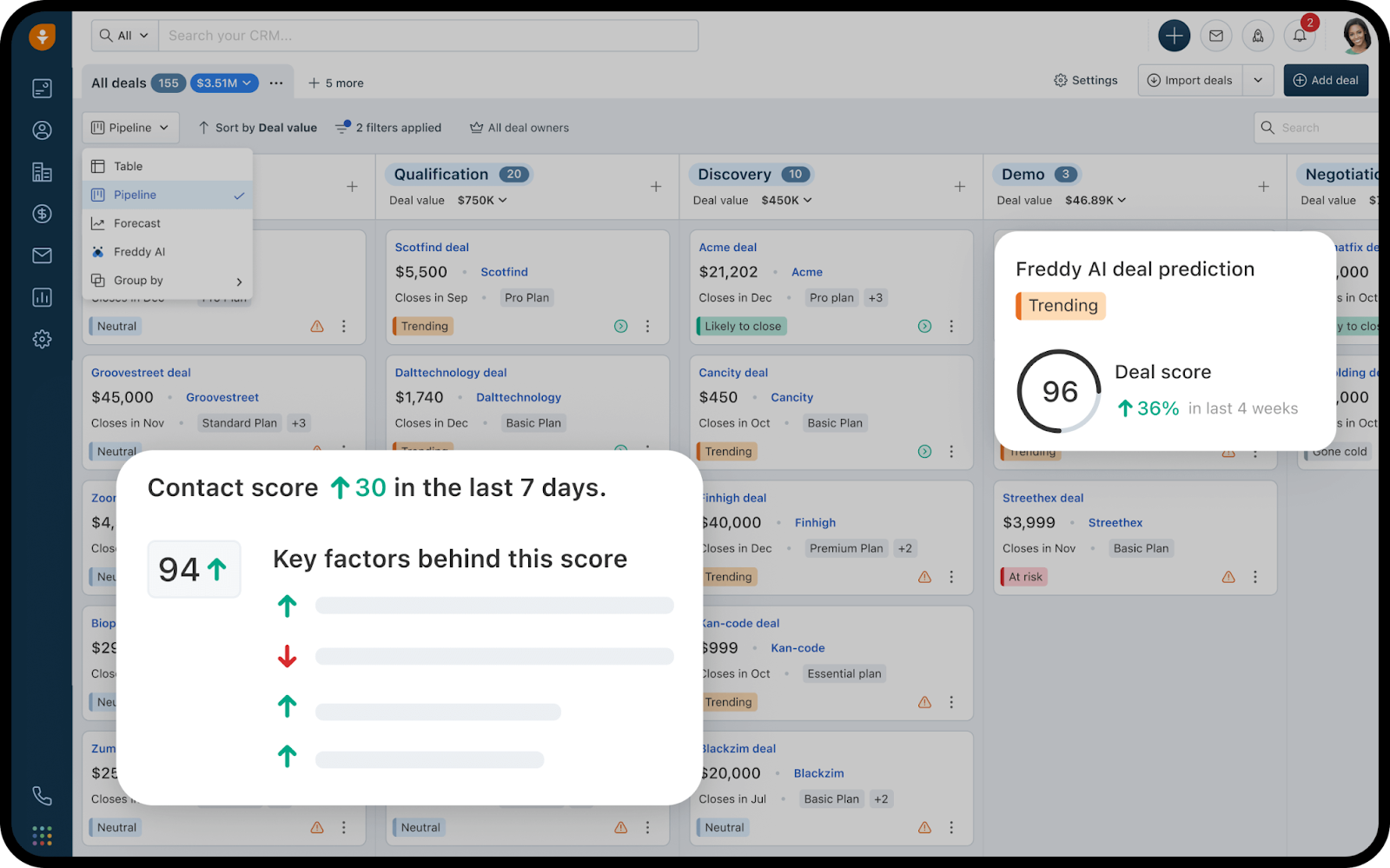
Image source: freshworks.com
Features:
- AI-powered lead scoring for faster conversions
- Built-in phone and email for customer communication
- Visual sales pipelines for SaaS subscription tracking
- Workflow automation for renewals and follow-ups
- Dashboards for monitoring churn and ARR growth
Pricing: Free plan; paid from $9/user/mo.
Why you'll like it:
- Low entry cost with powerful features for SMBs
- AI-driven insights to prioritize high-value customers
- Built-in communication saves time switching between tools
- Simple setup that suits fast-moving SaaS team
6. Close CRM: Best for inside sales SaaS teams
Close CRM is often regarded as the best SaaS CRM for small business teams that rely heavily on inside sales. It is built with calling, SMS, and email built directly into the platform, making it a true communication-first CRM. For SaaS companies, this means faster outreach to prospects, streamlined follow-ups, and improved trial-to-paid conversions. Close CRM also includes visual pipelines that let sales teams manage subscriptions and renewals with clarity. For small SaaS businesses running high-volume inside sales, Close CRM keeps everything fast and efficient.
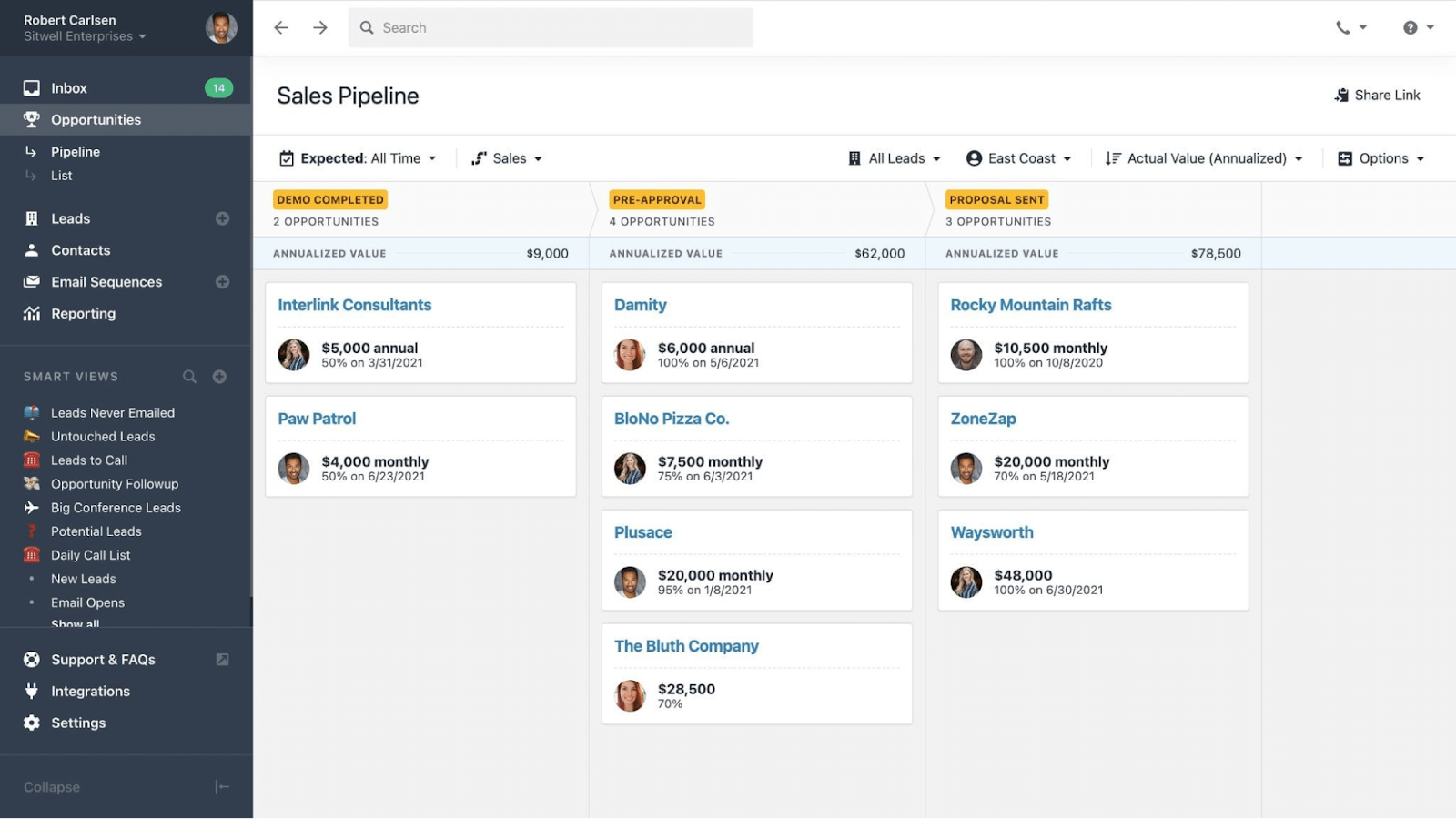
Image source: close.com
Features:
- Built-in calling, SMS, and email for inside sales teams
- Visual pipelines for managing SaaS subscriptions
- Task reminders and follow-ups for trial-to-paid conversions
- Reporting dashboards to track sales and renewals
- Workflow automation for repetitive outreach
Pricing: From $29/user/mo.
Why you'll like it:
- Communication-first CRM built for sales-heavy SaaS teams
- Reduces need for separate calling or SMS tools
- Easy to track customer journey from trial to renewal
- Great fit for small SaaS businesses running high-volume sales
7. Insightly CRM: Best for SaaS project alignment
Insightly is a practical SaaS CRM for small business teams that need CRM and project management in one platform. Unlike many CRMs that only track customer interactions, Insightly also lets SaaS teams align post-sale delivery with customer success goals. This makes it especially valuable for businesses where onboarding, renewals, and service delivery are tightly connected. With workflow automation and project tracking built alongside customer data, SaaS teams get a unified view of both revenue and execution. For smaller SaaS businesses that want an all-in-one tool, Insightly is a solid option.
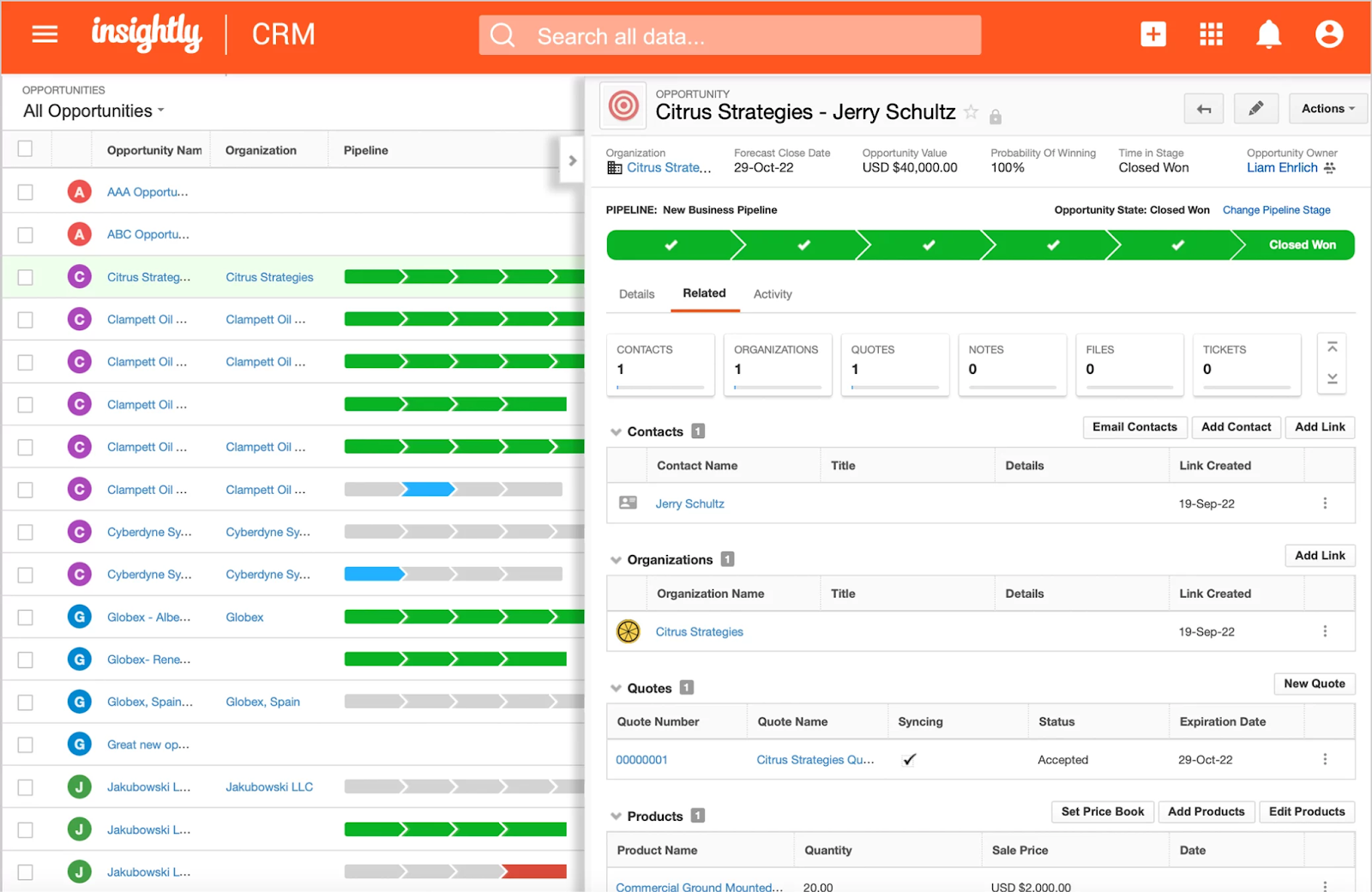
Image source: insightly.com
Features:
- Combined CRM and project management in one system
- Workflow automation for renewals and handoffs
- Contact and pipeline management for SaaS accounts
- Reporting dashboards to monitor sales and project delivery
- App connections for marketing and communication tools
Pricing: From $29/user/month
Why you'll like it:
- One platform for both CRM and project management
- Helps SaaS teams align customer success with delivery
- Workflow automation reduces manual work across departments
- Affordable option for small SaaS businesses
8. Pipedrive CRM: Best for SaaS sales-focused teams
Pipedrive is often seen as the best CRM for B2B SaaS teams that want a simple, sales-driven platform. Its visual pipelines give SaaS sales teams a clear view of leads, trials, and active deals in one place. For SaaS companies that depend on a steady flow of demos and conversions, Pipedrive makes it easy to track opportunities from first contact to subscription renewal. The tool emphasizes usability and efficiency, making it popular with smaller B2B SaaS sales teams. For organizations focused on closing deals quickly, Pipedrive delivers clarity and control.
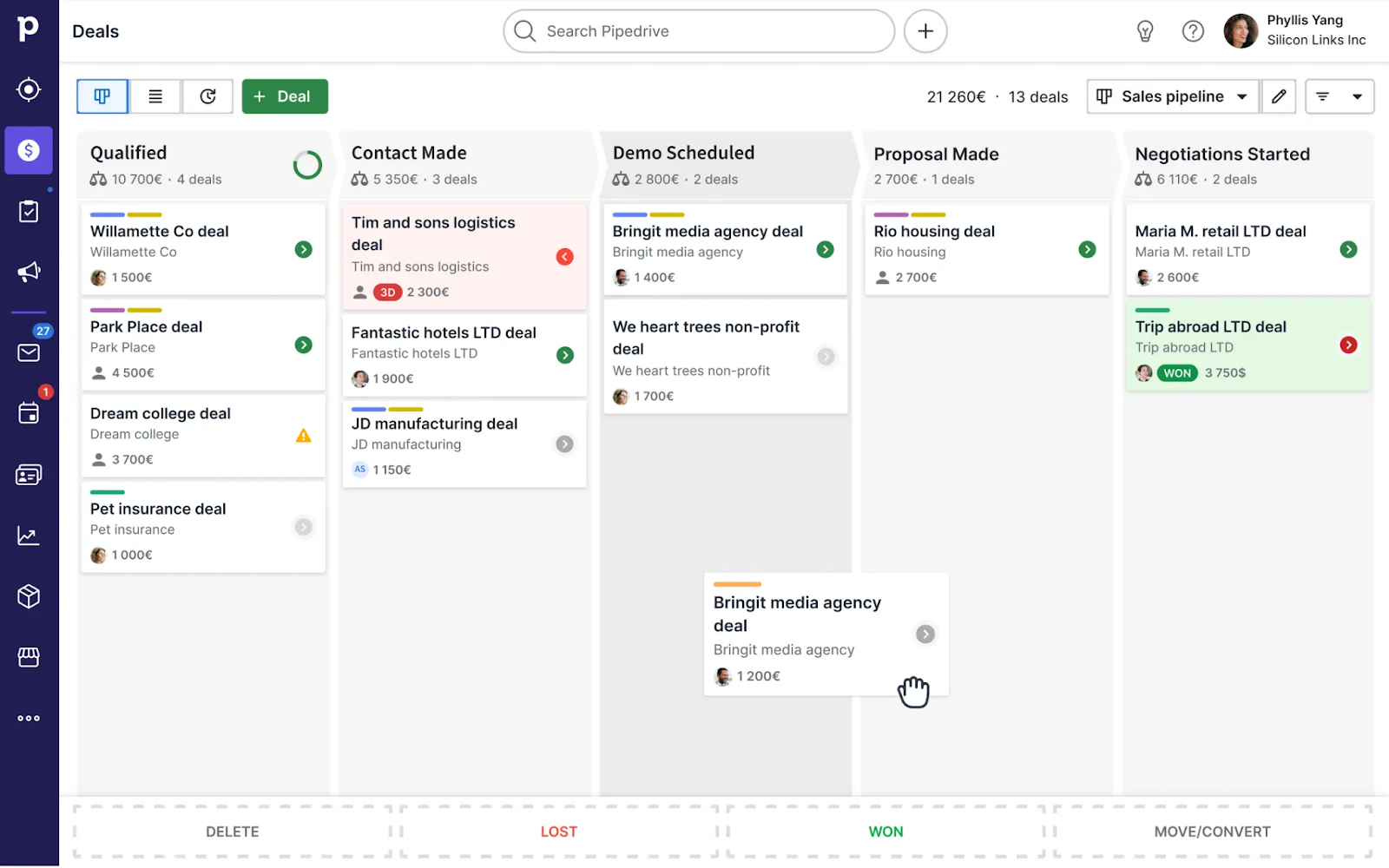
Image source: pipedrive.com
Features
- Visual pipelines for tracking SaaS trials, demos, and deals
- Customizable stages for subscription sales processes
- Activity reminders to reduce missed follow-ups
- Workflow automation for sales and renewals
- Reporting dashboards for pipeline performance and ARR growth
Pricing: From $14.90/user/month
Why you'll like it:
- Easy-to-use interface for fast-moving B2B SaaS sales teams
- Clear visual pipelines reduce confusion in deal tracking
- Workflow automation saves time on repetitive sales tasks
- Strong focus on helping teams close deals quickly
9. ActiveCampaign: Best for SaaS marketing automation
ActiveCampaign is one of the best CRM for SaaS startups that rely on email and lifecycle marketing to drive growth. It blends CRM features with powerful marketing automation, allowing SaaS teams to nurture trials, convert leads, and encourage upgrades. Customer journeys can be mapped with precision, combining behavioral triggers with multi-channel campaigns. For SaaS startups that need to build predictable customer pipelines while keeping churn low, ActiveCampaign provides a strong balance of CRM and automation. Its approachable pricing also makes it accessible for small, growing SaaS teams.
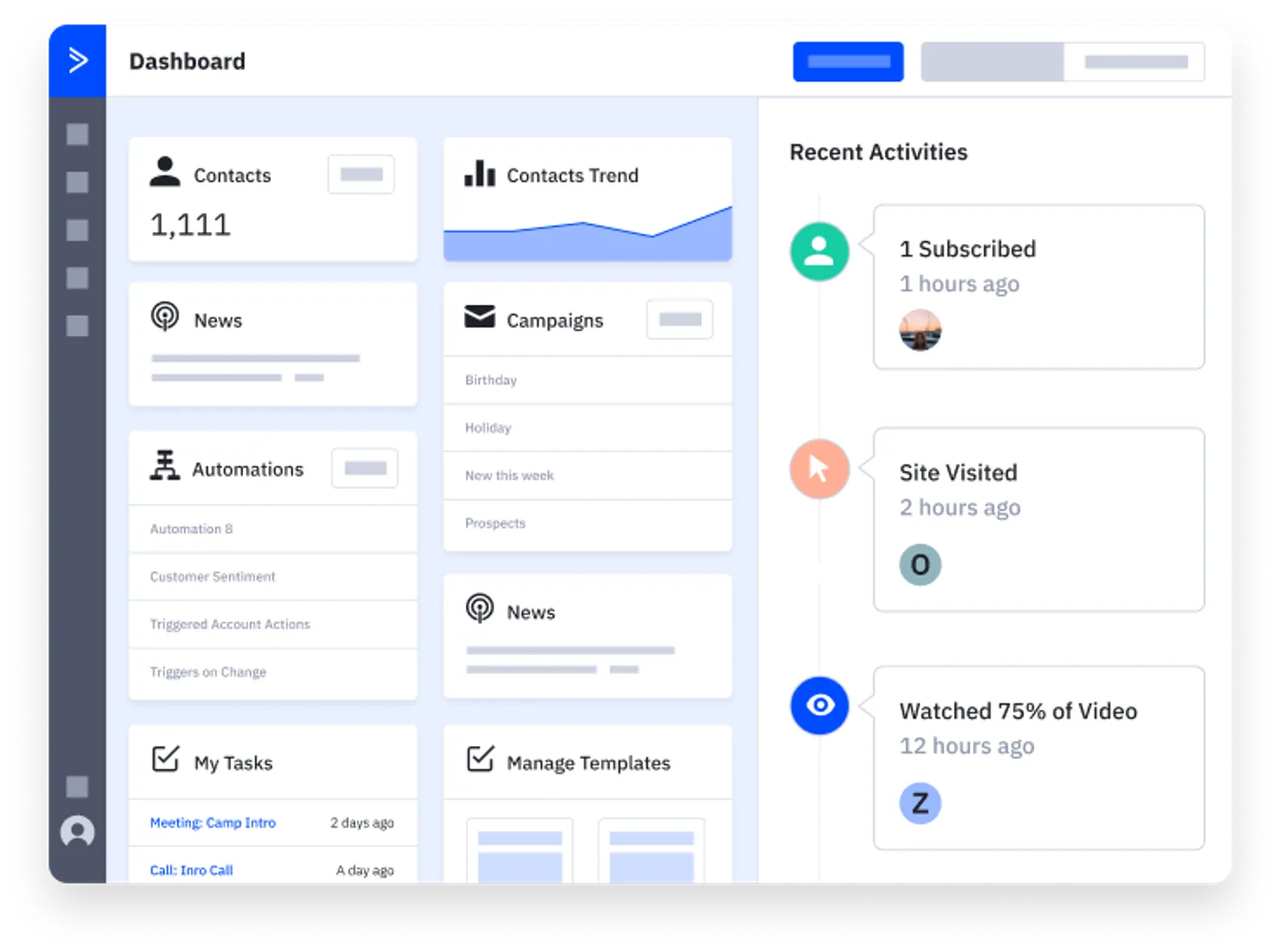
Image source: activecampaign.com
Features
- CRM combined with advanced email marketing automation
- Customer journey mapping with behavioral triggers
- Segmentation tools for SaaS trial, paid, and churned users
- Predictive actions powered by machine learning
- Multi-channel campaigns across email, chat, and SMS
Pricing: From $15/user/month
Why you'll like it:
10. Copper CRM: Best for G Suite SaaS companies
Copper is a lightweight CRM for SaaS companies that rely heavily on Google Workspace for their daily operations. It lives inside Gmail and Google Calendar, making it easy for SaaS teams to manage leads, deals, and customer activities without switching platforms. This close connection to Google tools helps startups and SMBs keep their workflows simple and efficient. Copper automatically captures emails and meetings, reducing manual data entry while ensuring full visibility of customer interactions. For SaaS companies already invested in Google's ecosystem, Copper CRM feels like a natural extension of the tools they already use.
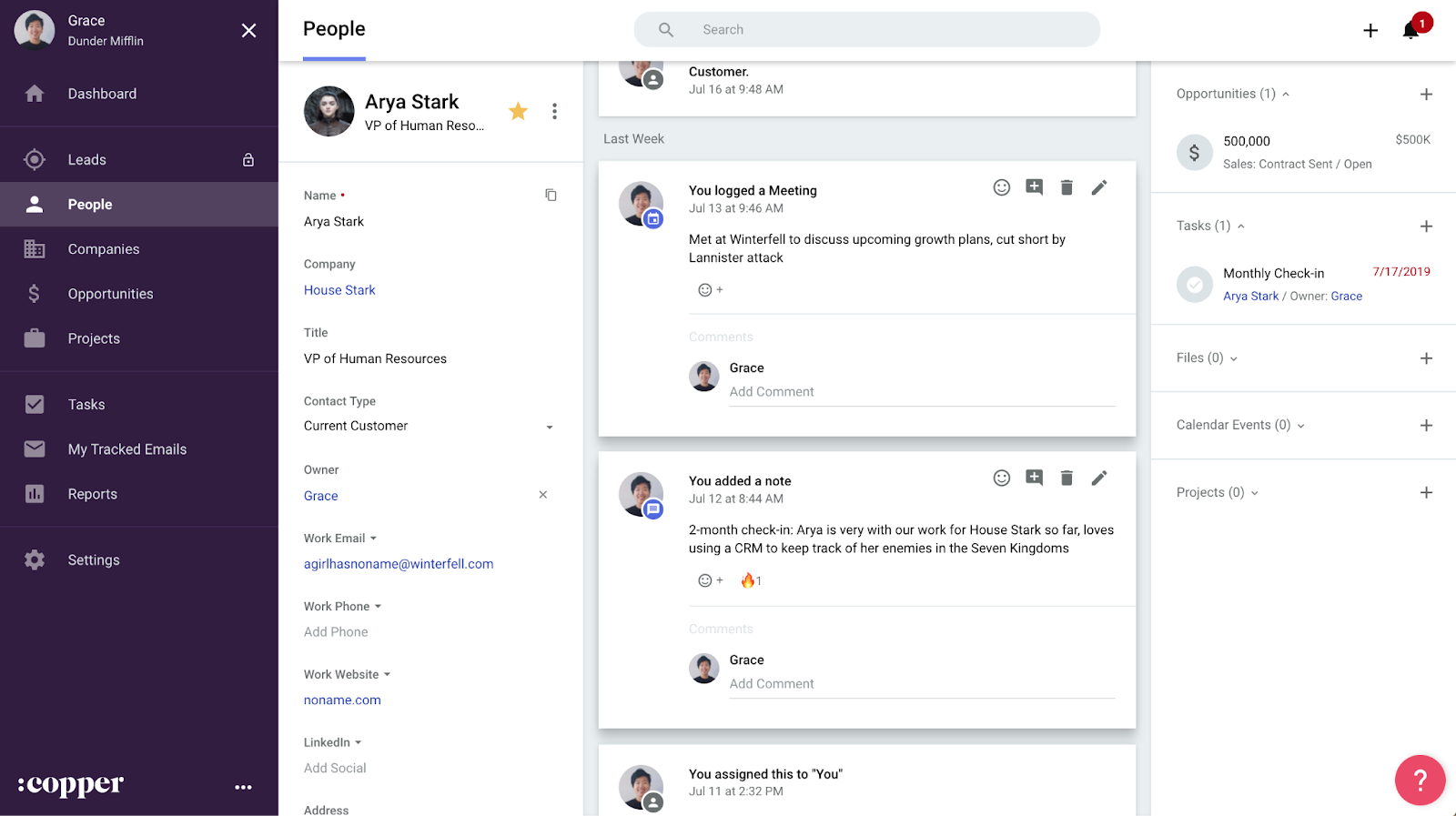
Image source: cooper.com
Features:
- Native Gmail and Google Calendar CRM experience
- Automatic email and meeting capture for customer records
- Visual pipelines for SaaS sales and renewals
- Workflow automation for follow-ups and reminders
- Reporting dashboards for sales and retention tracking
Pricing: From $25/user/month
Why you'll like it:
- Seamlessly works with Google Workspace tools
- Reduces manual data entry through auto-capture features
- Ideal for startups and SMBs running on Gmail and Calendar
- Keeps CRM simple and accessible inside tools your team already uses
11. Streak CRM: Best lightweight Gmail SaaS CRM
Streak CRM is a simple and effective CRM for SaaS startups that want customer management built directly into Gmail. Since it runs inside the inbox, Streak is ideal for small SaaS teams that don't want the overhead of learning or maintaining a larger CRM platform. It allows users to turn emails into leads, track pipelines, and manage renewals without leaving Gmail. For SaaS businesses that need speed and simplicity, Streak provides an accessible entry point into CRM. Its affordability and minimal setup make it especially attractive for early-stage startups.
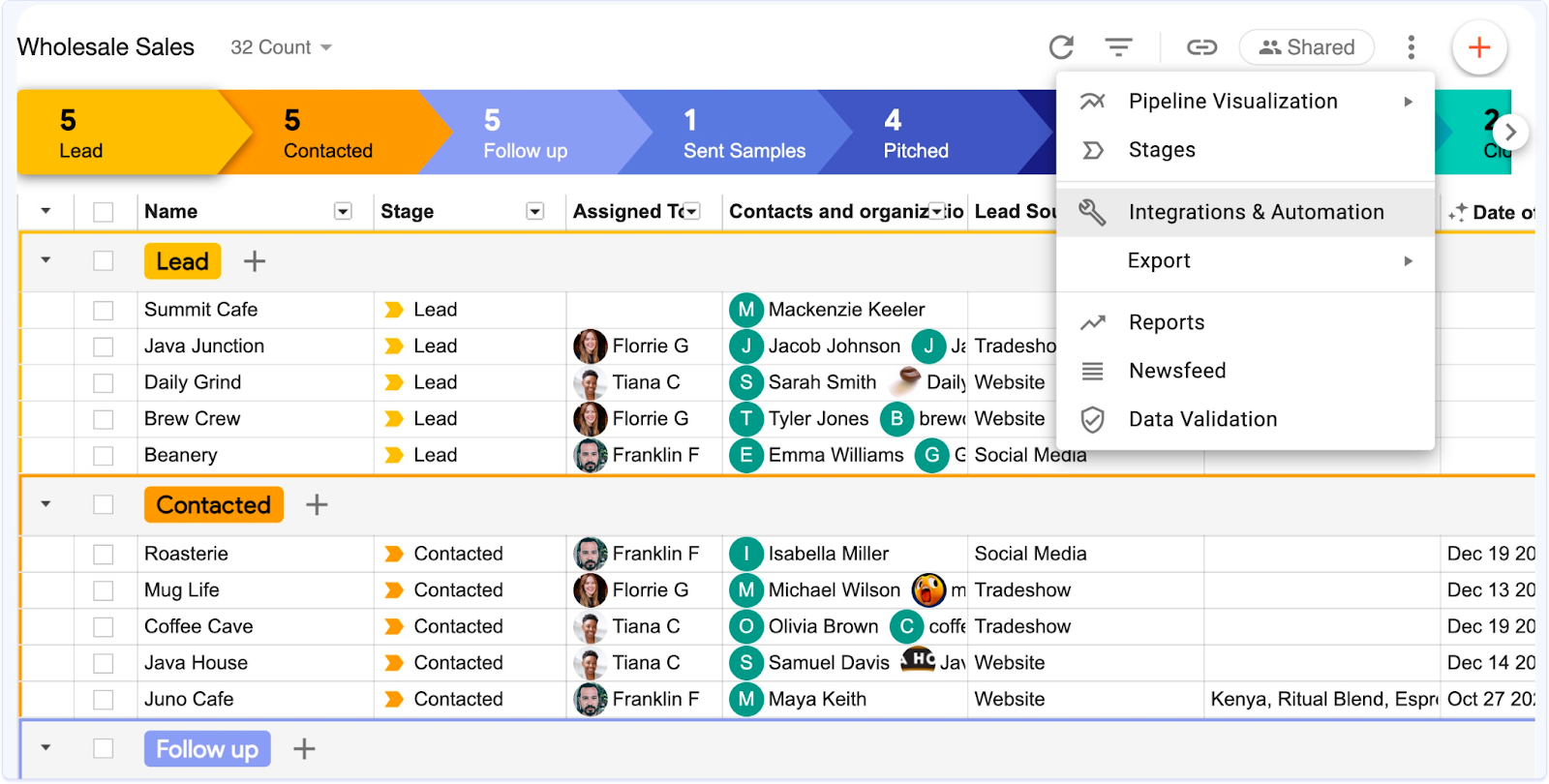
Image source: streak.com
Features:
- CRM built directly into Gmail for simplicity
- Email pipelines for managing SaaS sales and renewals
- Email tracking and scheduling to improve outreach
- Workflow automation for repetitive communication
- Collaboration tools to share pipelines with team members
Pricing: Free; paid from $15/user/month
Why you'll like it:
- Runs inside Gmail, eliminating the need for separate CRM software
- Extremely simple to set up and use for SaaS startups
- Affordable option with a free plan and low-cost tiers
- Perfect for early-stage SaaS teams focused on speed and simplicity
12. Apptivo CRM: Best modular SaaS CRM for SMBs
Apptivo is a versatile SaaS CRM for small business teams that want flexibility through modular apps. Instead of offering a one-size-fits-all CRM, Apptivo lets SMBs add the functions they need, such as billing, project management, or helpdesk, alongside customer tracking. For SaaS companies, this means building a CRM that aligns with subscription models, renewals, and account management without paying for unused features. Apptivo also provides strong mobile access, making it convenient for teams working on the go. With affordability and customization combined, it's well-suited for small SaaS businesses looking for control and scalability.
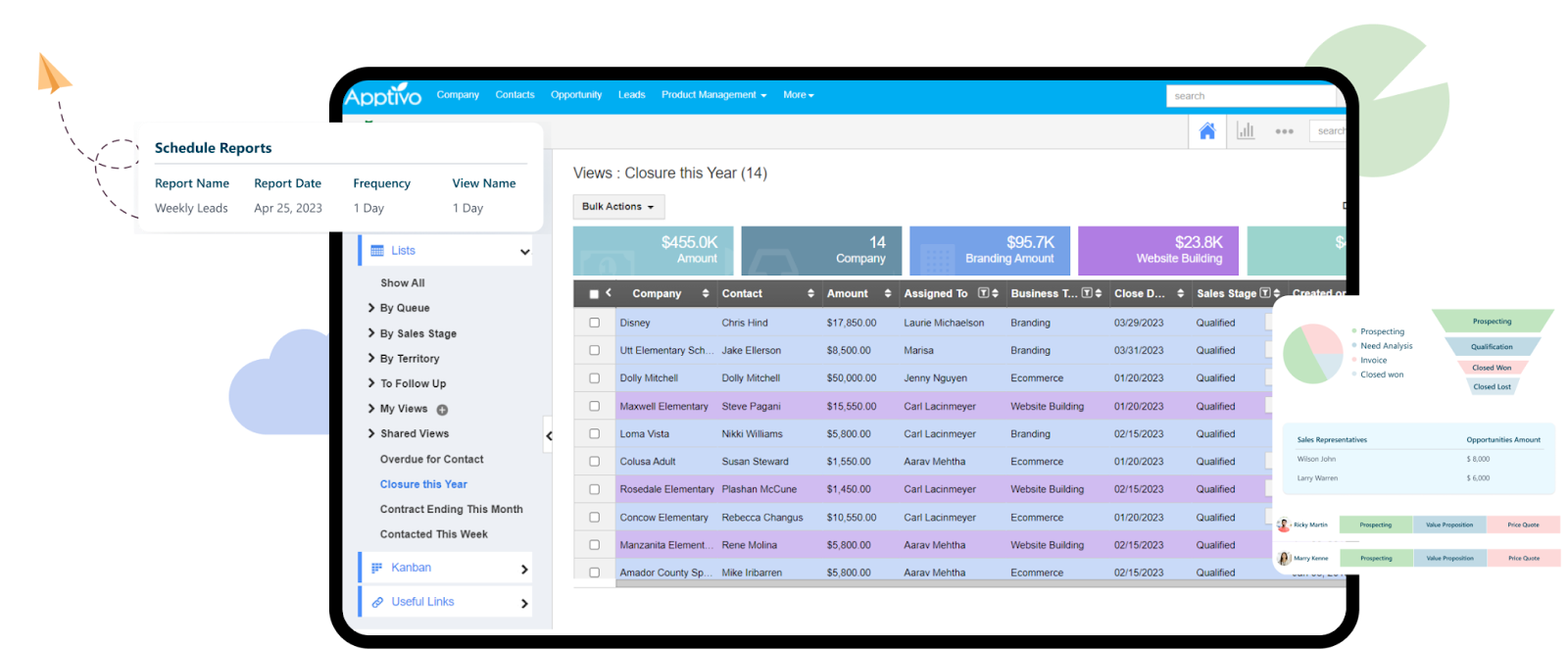
Image source: apptivo.com
Features:
- Modular CRM with apps for sales, billing, and projects
- Subscription and account management for SaaS lifecycles
- Workflow automation to reduce repetitive tasks
- Reporting and dashboards for churn and ARR tracking
- Mobile-friendly access for remote SaaS teams
Pricing: From $8/user/month
Why you'll like it:
- Highly customizable CRM through modular apps
- Affordable entry point for SMB SaaS businesses
- Covers multiple business functions beyond CRM
- Flexible enough to grow as SaaS needs expand
Why Lark is a better choice than other products
To give you a full picture of why Lark is favored by many companies, there is a quick checklist with a balanced comparison:
Best practices for implementing a SaaS CRM
Define stages for trials, conversions, and renewals
SaaS businesses thrive on recurring revenue, which means every customer journey has multiple touchpoints. To get the most out of your CRM, define clear lifecycle stages such as free trial, onboarding, conversion, active subscription, renewal, and expansion. Mapping these stages inside the CRM helps sales and customer success teams know exactly where each customer stands and what action is needed next.
Track product usage and customer feedback
In SaaS, usage data is a direct indicator of customer health. Linking product activity and in-app feedback into your CRM gives a more complete view of adoption and satisfaction. This allows teams to identify at-risk accounts early and act before churn happens. Customer feedback collected in one place also helps product teams make data-driven decisions that support retention and upselling.
Automate customer success touchpoints
Manual follow-ups don't scale when you're handling dozens or hundreds of accounts. Use your CRM to automate critical touchpoints such as onboarding emails, renewal reminders, and quarterly business reviews. Automation ensures that every customer receives timely communication while freeing your teams to focus on higher-value interactions like upsells or personalized success strategies.
Train cross-functional teams in CRM usage
A CRM is only effective if everyone uses it consistently. In SaaS companies, that means training not just sales, but also customer success, support, and even product teams to use CRM data. When all departments update and rely on the same system, handoffs are smoother, customer context is never lost, and collaboration improves. Consistent adoption turns your CRM into a true single source of truth.
Conclusion
SaaS CRMs are essential for managing renewals, reducing churn, and driving ARR growth. They give startups and enterprises the tools to track subscriptions, automate customer success touchpoints, and align teams around the customer lifecycle. Among the many options, Lark stands out by combining CRM functionality with collaboration tools like Messenger, Calendar, Docs, and Wiki. With features such as Lark Base for subscription tracking and workflow automation, SaaS teams can reduce manual work, improve retention, and scale operations more efficiently. For businesses looking to streamline growth, Lark offers an all-in-one platform that keeps sales, customer success, and product teams on the same page.
FAQs
How does a SaaS CRM help reduce churn?
A SaaS CRM helps reduce churn by tracking customer health, monitoring product usage, and automating proactive outreach before accounts disengage. This visibility allows teams to intervene early and retain more customers. With Lark Base, teams can build dashboards that highlight at-risk accounts and use Lark Tasks to trigger follow-ups, ensuring consistent retention strategies.
Can small SaaS businesses afford CRM tools?
Yes, many CRMs offer free or affordable plans for startups and small businesses. These include basic contact management, pipeline tracking, and automation features that support growth without straining budgets. Lark provides a free plan with core CRM and collaboration features, making it an attractive choice for small SaaS companies that want to get started quickly and scale later.
Which CRM is best for SaaS enterprises?
Enterprises usually need robust CRMs with advanced analytics, account-based management, and workflow customization. Tools like Salesforce are built for complex enterprise needs. Lark, while also suitable for SMBs, offers enterprise-ready features such as workflow automation, cross-team collaboration, and centralized knowledge bases, making it a flexible option for larger SaaS companies as well.
How does Lark compare to HubSpot or Salesforce for SaaS?
HubSpot is strong in inbound marketing, and Salesforce excels in enterprise analytics and customization. Both are powerful but can become costly or complex to manage. Lark offers a balance by combining CRM essentials with built-in collaboration and workflow automation at a lower cost, making it ideal for SaaS teams that value simplicity and cross-functional alignment.
Related reading
Table of contents
Start using Lark today

Manage all your work in one place
Boost team efficiency by 10x
Save up to 70% on software costs
Table of contents
Start using Lark today
Manage all your work in one place
Boost team efficiency by 10x
Save up to 70% on software costs
Keep reading









2026 Lark Technologies Pte. Ltd.
Headquartered in Singapore with offices worldwide.






Explore: