














Business Process and Workflow: What They Are and How They Work

Ryan Tanner
Product Marketing Specialist
Sep 18, 2026
Ryan Tanner
Sep 18, 2026

23 min read


Modern organizations run on a complex network of tasks, approvals, handoffs, and decision points. Yet the terms business process and workflow are often used interchangeably—leading to inefficiencies, misaligned responsibilities, and tools that don't scale. Understanding the difference between the two, how they fit together, and how they impact collaboration is essential for any team aiming to operate with more clarity and speed. In today's digital-first environment, businesses also need flexible tools that unify communication, data, tasks, approvals, and automation in one place.
This guide breaks down the fundamentals of business processes and workflows, key examples, how they work, common challenges, and how platforms like Lark bring everything together in a unified ecosystem that reduces complexity and keeps teams aligned end-to-end.

What is a business process?
A business process is a structured, repeatable sequence of activities that an organization follows to achieve a specific goal, such as onboarding, procurement, or customer service delivery. It provides a high-level blueprint that defines what needs to happen, why it matters, and how different teams coordinate to produce consistent outcomes. Unlike task-level workflows, business processes span multiple stages, roles, and decision points, providing organizations with a stable framework to guide operations. When designed well, it reduces errors, improves efficiency, and strengthens cross-department alignment. Effective processes also lay a foundation for broader workflow and business process management practices, enabling teams to refine how work flows across people and systems continuously. Over time, strong processes support scalable operations and form the backbone of mature business process and workflow management strategies that help organizations adapt to growth and changing business needs.
What is a workflow?
A workflow is the step-by-step sequence of tasks that guides how work moves from initiation to completion. It defines the order of actions, the people or teams involved, the conditions that trigger the next step, and the rules for handling exceptions or approvals. Unlike broad business processes, workflows operate at a more tactical level, focusing on execution rather than strategy. They bring clarity to daily operations by ensuring that tasks are routed correctly, deadlines are met, and responsibilities are clearly defined. A well-designed workflow reduces bottlenecks, improves consistency, and enables smoother collaboration across teams. It also plays a key role in larger organizational systems, helping clarify the difference between business processes and workflow as companies scale and formalize their operations. Over time, optimized workflows become essential in improving efficiency, enhancing decision-making, and supporting continuous operational improvement.
Difference between business process and workflow
How business process management (BPM) fits into workflows
Business process management (BPM) provides a structured, end-to-end discipline for analyzing, optimizing, and governing how work moves across an organization. While workflows handle task-level execution, BPM considers the larger system—policies, roles, technologies, and performance indicators—to ensure everything works cohesively. Together, they create a unified operational model that improves clarity, reduces inefficiencies, and strengthens accountability. BPM helps teams map processes, identify bottlenecks, and redesign flows that support long-term success. This becomes especially important as companies grow, adding more cross-team interactions and complex decision paths. When applied strategically, BPM enhances the value of everyday workflows and supports mature business processes and workflow management practices.
- BPM lifecycle: A structured approach to shaping and refining processes over time. In the 'design' stage, teams define goals, inputs, outputs, and stakeholders. During 'modeling', they visualize flows, decisions, and exceptions to align expectations. 'Execution' brings these models to life through workflows, automation, and collaboration. Organizations then 'monitor' performance to identify delays, errors, or inefficiencies. Finally, in the 'improve' stage, insights drive refinements that keep processes scalable and relevant.
- Where workflows belong inside BPM: Workflows sit within the execution layer of BPM, turning process designs into operational reality. They guide step-by-step task routing, approvals, and decision logic as defined during design and modeling phases. Because workflows handle real-time work movement, they serve as a key source of performance data for monitoring. This feedback loop ensures BPM remains a living, adaptable discipline rather than a static framework. By integrating workflows into BPM, teams align strategic intentions with daily execution.
- Why BPM matters for scaling teams: As organizations grow, the number of handoffs, dependencies, and cross-team activities increases dramatically. BPM ensures processes remain clear, efficient, and consistent even as complexity rises. It enables teams to standardize work, automate repetitive steps, and enforce governance without slowing execution. Scaling teams also benefits from better visibility into bottlenecks, enabling faster problem-solving and improved accountability. Ultimately, BPM creates the structure needed to support rapid expansion while ensuring workflows remain reliable and adaptable.
Key components of an effective business process workflow
An effective business process workflow brings structure, clarity, and accountability to how work moves across teams. It combines visual planning, precise task sequencing, data architecture, and communication practices that support smooth execution. When these elements are aligned, organizations gain the consistency needed for reliable outcomes and continuous improvement. Strong workflows also make it easier to automate operations and reduce manual effort where possible. As part of broader workflow and business process management systems, these components ensure processes stay efficient, scalable, and adaptable to change. Together, they form the backbone of modern business processes and workflow management strategies.
- Workflow diagramming: Workflow diagramming provides a visual blueprint of tasks, paths, decisions, and exceptions within a process. It helps teams understand the overall structure before implementation, reducing confusion and misalignment. Diagrams also make it easier to identify bottlenecks or unnecessary steps. When used in workflow and business process management, visual modeling ensures stakeholders share a unified understanding of execution. This clarity becomes essential for both automation and long-term optimization.
- Task dependencies: Task dependencies determine which actions must occur before others can begin. They ensure that workflows follow a logical sequence, preventing premature execution or duplicated effort. Explicit dependencies help teams coordinate more effectively, especially in cross-functional processes. They also support business process and workflow management by revealing critical paths and time-sensitive activities. When optimized, dependencies improve both speed and accuracy across the workflow lifecycle.
- Approvals & escalations: Approvals and escalations define the decision-making checkpoints that ensure governance, compliance, and accuracy. Well-designed approval logic keeps processes moving without unnecessary delays. Escalation rules help maintain pace when approvers are unavailable or deadlines approach. These mechanisms play a significant role in workflow and business process management systems, particularly in finance, HR, and procurement. By structuring authority levels, organizations reduce risk while maintaining operational agility.
- Data collection and record structure: Data collection and record structure shape how information is captured, stored, and referenced throughout a workflow. Standardized fields and forms prevent inconsistencies and ensure reliable reporting. A robust record framework consolidates documents, comments, updates, and attachments into a single location. This organized approach strengthens business process and workflow management by improving transparency and traceability. It also lays the foundation for meaningful analytics and performance insights.
- Notifications & collaboration mechanisms: Notifications keep work on track by alerting stakeholders about updates, assignments, or delays. Collaboration tools ensure that discussions, clarifications, and file sharing happen in context rather than across scattered channels. Together, they reduce friction and keep teams aligned during execution. These mechanisms are vital components of workflow and business process management systems, supporting real-time coordination. When built into the workflow itself, they enhance agility and reduce communication gaps.
- Reporting, audit trails & optimization: Reporting and audit trails provide visibility into workflow performance, compliance adherence, and user actions. They help teams track cycle times, identify bottlenecks, and measure outcomes against expectations. Audit logs ensure accountability and help organizations maintain regulatory readiness. These insights support continuous improvement, a core principle of business process and workflow management. Over time, data-driven optimization keeps workflows efficient, scalable, and aligned with organizational goals.
How to create a business process workflow
Creating a business process workflow begins with translating broad operations into structured, repeatable actions that improve consistency across teams. Effective process mapping helps teams uncover gaps, redundancies, and opportunities for automation rules that reduce manual errors. A strong workflow also clarifies who is responsible for each stage, ensuring operational clarity even as teams scale. Because workflows connect data, decisions, and actions, they help maintain structured data flows throughout the process. When done well, they support long-term workflow efficiency and continuous improvement. Ultimately, a business process workflow turns complex operations into predictable, measurable systems.
Step 1: Identify stages: Identify all primary stages involved in the process from start to finish, ensuring each one supports workflow efficiency across teams. Use process mapping to break complex operations into meaningful segments that are easy to understand. Ensure that each stage has a clear purpose and is tied to output. Avoid overlapping steps to maintain operational clarity and predictable performance. This foundation ensures smoother automation rules later in the workflow.
Step 2: Gather required inputs/outputs: List all inputs, outputs, data types, and dependencies needed for each step, keeping structured data at the center. Identify documents, forms, triggers, or systems that influence the workflow's progression. Use process mapping to understand how information flows between stages. Ensuring clarity here improves workflow efficiency and reduces human error. This step also strengthens future automation rules by defining clean handoff points.
Step 3: Define responsibilities: Assign clear owners for each step to maintain accountability and operational clarity across the workflow. Identify who initiates, reviews, and completes actions. Map these roles to process mapping outputs to ensure nothing is overlooked. Structure responsibilities so teams can rely on predictable performance even as workload scales. This clarity also improves structured data management within the process.
Step 4: Outline routing paths and exceptions: Define how work moves from one stage to another, guided by automation rules that maintain workflow efficiency. Clarify branches, conditional steps, and alternative paths for exceptions or edge cases. Process mapping helps visualize how routing changes in response to inputs or decisions. Build routing rules that support operational clarity even during irregular situations. This makes the workflow resilient and easier to manage.
Step 5: Build and test workflow logic: Once the structure is complete, translate it into automated workflow logic using conditional steps and rules. Simulate real scenarios to verify routing, transitions, and structured data flow. Testing highlights bottlenecks and areas where workflow efficiency may break down. Refine logic until each action is predictable and traceable. This ensures operational clarity before the workflow goes live.
Step 6: Establish metrics & monitoring routines: Define measurable KPIs to track process performance and ensure workflow efficiency over time. Use structured data to monitor turnaround times, error rates, or completion percentages. Metrics reveal where additional automation rules or adjustments may be needed. Regular reviews maintain operational clarity and prevent process drift. Continuous monitoring supports long-term scalability and improvement.
Common challenges in business process workflow design
Designing effective business process workflows often becomes complicated as teams grow and responsibilities diversify. Many organizations struggle to maintain clarity between strategic processes and operational task flows, especially as they scale workflow and business process management practices. Platforms like Emitrr help businesses streamline communication and automate operational workflows, making process management more efficient. Without proper structure, inefficiencies accumulate gradually and become harder to detect. Teams also face communication gaps, unclear rules, and fragmented tools. Addressing these challenges requires both governance and flexible workflow and business process management systems that support visibility. Below are the most common issues teams encounter when building or optimizing workflows.
- Too many approval layers: Excessive approvals slow execution and weaken accountability, especially when teams lack clarity about the difference between business processes and workflows. As more layers are added, decision-making becomes sluggish and inconsistent. Simplifying approval chains is easier when guided by structured business processes and workflow management principles. This ensures only essential checkpoints remain while retaining control. Ultimately, streamlined approvals help organizations improve agility and reduce operational friction.
- Poor documentation: Workflows often fail because teams inconsistently or not at all document steps, making it difficult to maintain alignment across departments. Clear documentation strengthens workflow and business process management, offering a shared reference for how tasks should progress. It also supports better onboarding and change management when processes evolve. Using structured repositories or formal guidelines prevents knowledge gaps. This becomes even more effective when paired with robust workflow and business process management systems.
- Data inconsistencies: Data mismatches appear when workflows rely on multiple tools or manual inputs, undermining visibility and trust. Teams can reduce these issues by applying strong business processes and workflow management discipline to standardize fields, formats, and inputs. Aligning data across systems also ensures reliable reporting and smoother automation. Understanding the difference between business processes and workflow helps clarify where data governance should sit. Consistent inputs ultimately make workflows more predictable and audit-ready.
- Process ownership unclear: Many workflows break down because no one knows who is responsible for decisions, updates, or exceptions. By establishing ownership through structured workflow and business process management, teams assign clear accountability for every stage. This prevents bottlenecks where tasks sit unclaimed or unresolved. Ownership maps also improve process transparency and communication. When supported by workflow and business process management systems, responsibilities remain visible and traceable across the entire lifecycle.
- Workflows built without cross-team alignment: Misalignment occurs when workflows are designed in isolation, leading to confusion during handoffs or conflicting expectations. Strong workflow and business process management practices encourage collaboration across all impacted teams before finalizing steps. This ensures routing paths, inputs, and dependencies reflect real operational needs. Cross-functional alignment also minimizes rework and inconsistencies downstream. Integrating diverse viewpoints improves scalability and helps teams better understand the difference between business processes and workflows.
As these challenges accumulate, teams often find themselves relying on scattered tools, manual updates, and workarounds that slow down processes rather than improve them. When workflows lack consistency, visibility, or a central source of truth, even well-designed processes fail to scale across departments. This is why many organizations look for platforms that bring structure, communication, documentation, and execution into one connected environment—setting the stage for a more streamlined way to manage business processes.
Lark: A unified, all-in-one environment for business processes & workflows
Lark provides a unified workspace where business processes and workflows move seamlessly across teams, tools, and communication channels. Instead of scattering tasks, approvals, data, and discussions across multiple platforms, Lark centralizes them into a single, connected environment. This eliminates fragmentation and helps teams maintain clarity from initiation to completion. With structured records, real-time collaboration, and automated logic, every workflow becomes more efficient and transparent. Cross-department operations—from HR to IT teams—run more smoothly because information stays in sync in one place. As organizations scale, Lark becomes the backbone that keeps processes coordinated, consistent, and easy to optimize.
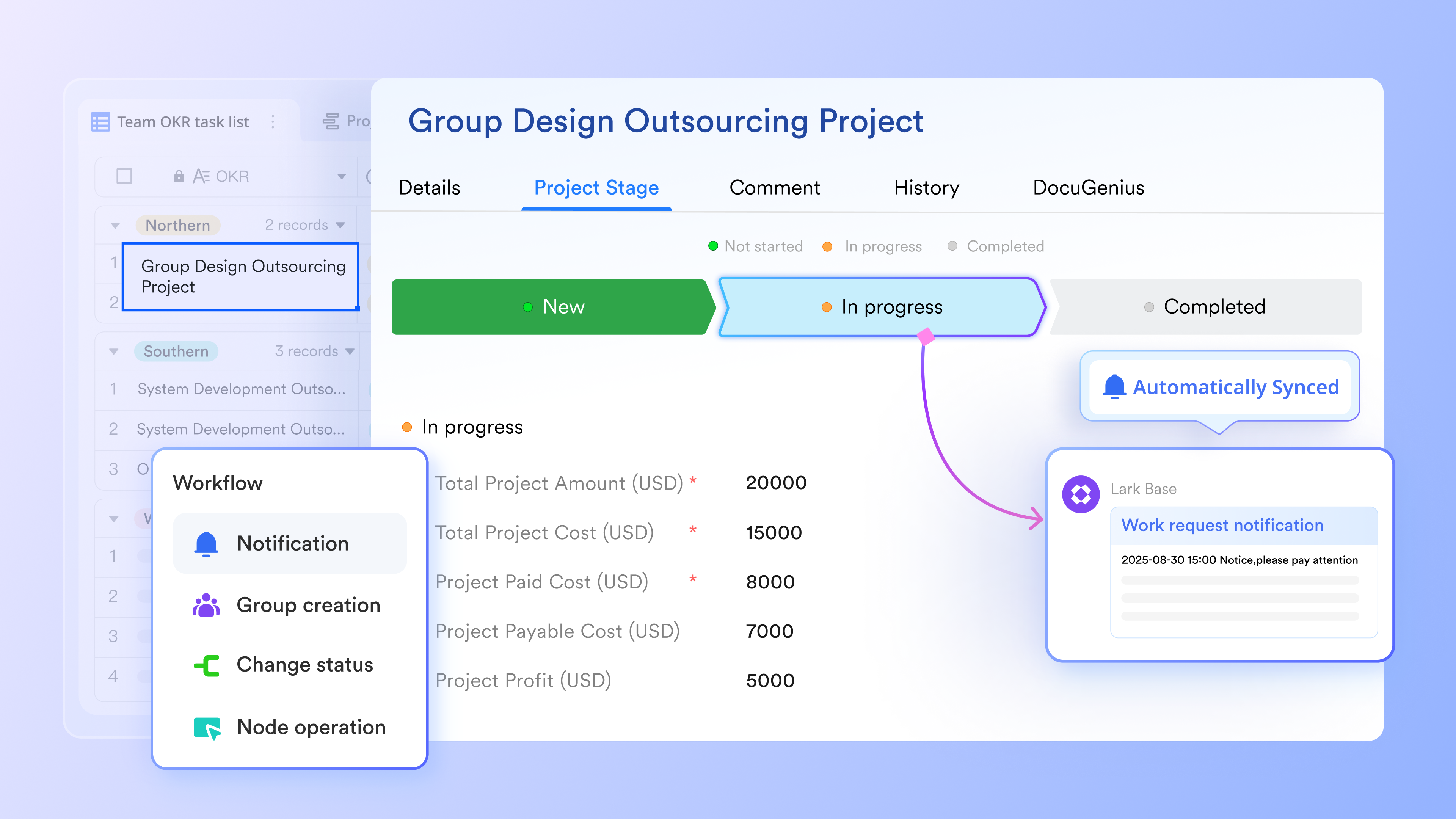
Structured workflows anchored in Lark Base
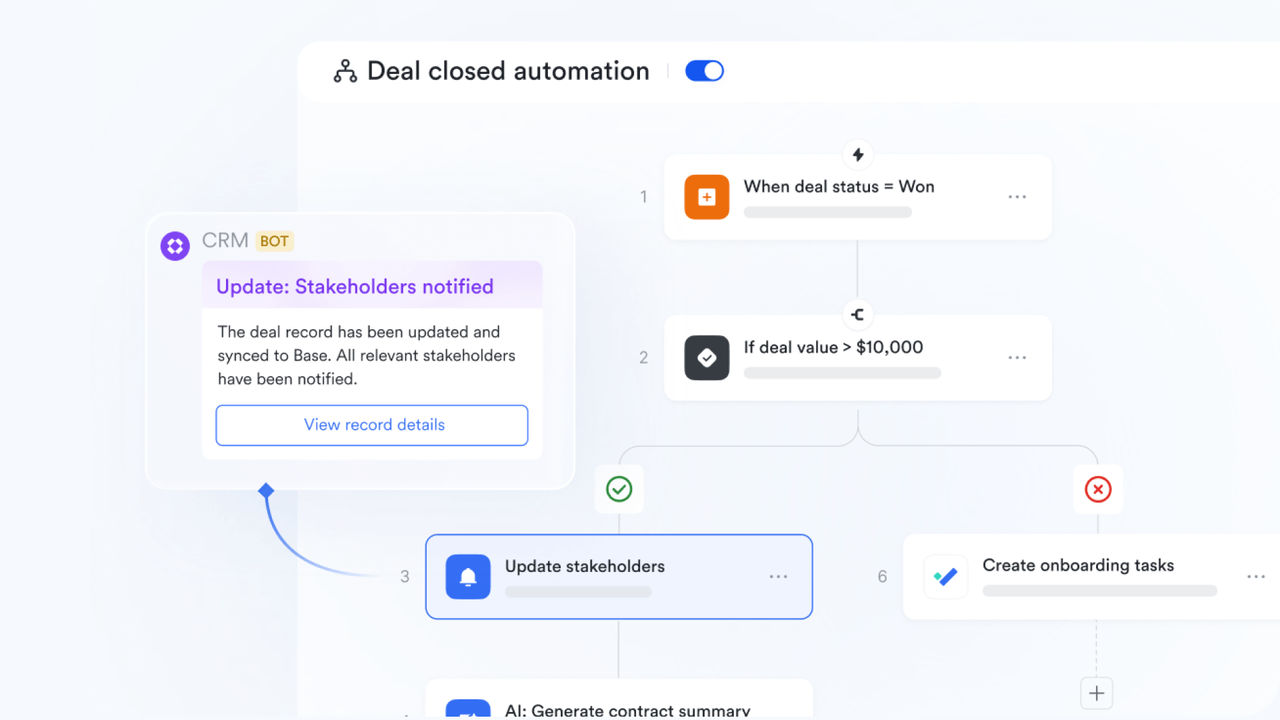
Lark Base serves as the operational backbone for any business process by turning requests, tickets, assets, or forms into living records that evolve as work progresses. Every update—status changes, comments, attachments, approvals, and follow-up tasks—stays tied to the same record. Via built-in automation, Lark allows users to automate calculations, data updates, and transformations with built-in formulas while powering sophisticated multi-step workflows through intuitive If/Else and Switch logic. Whether it's vendor onboarding or IT requests, the entire project lifecycle stays connected, traceable, and easy to optimize.
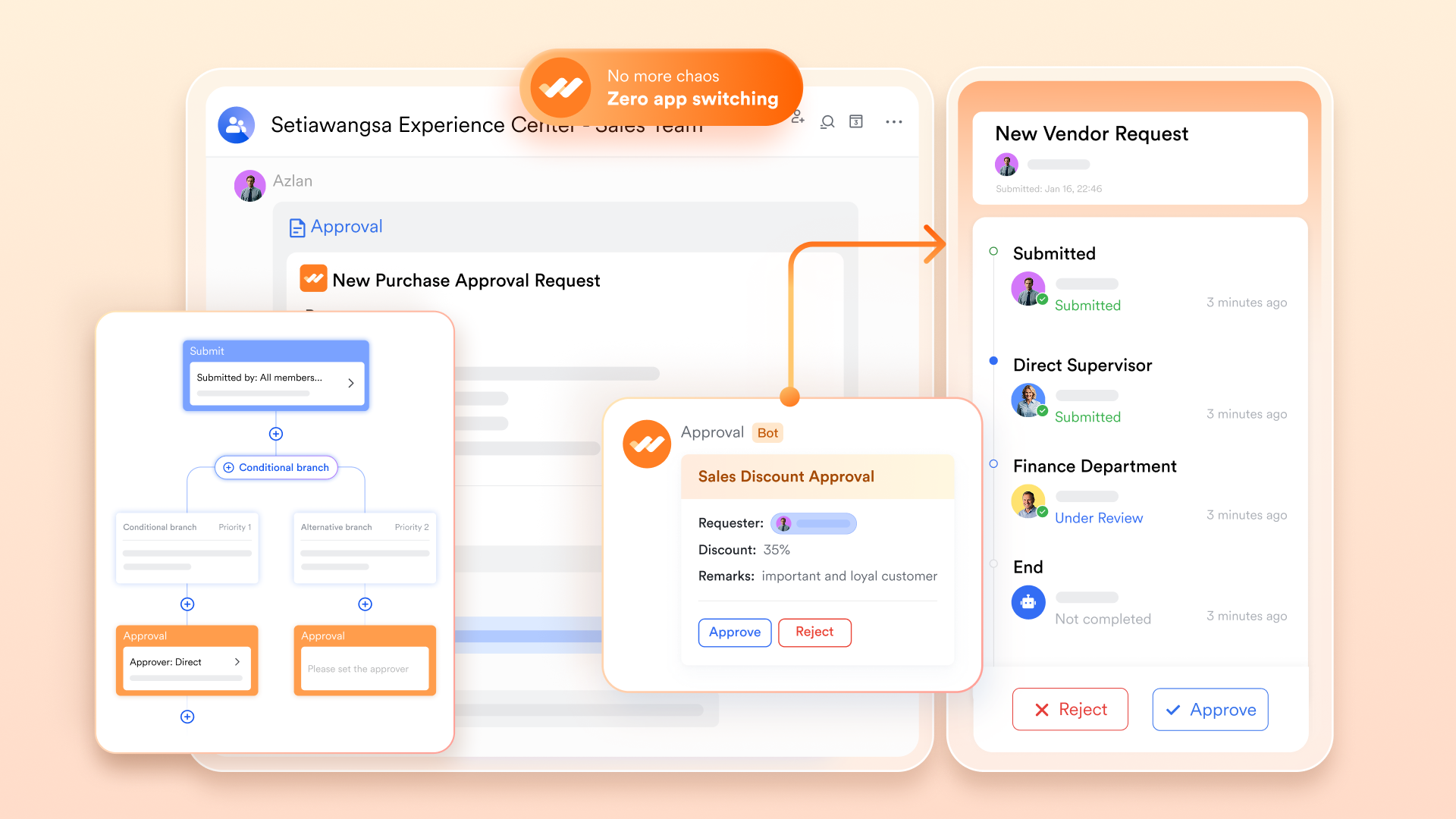
Flexible approval sequences built through Lark Approval
Lark Approval gives teams the ability to design quick reviews or multi-layered decision chains without complexity. Each approval includes full context: related documents, past decisions, Base data fields, and real-time updates. Reviewers can approve, reject, request updates, or escalate—all without switching apps. Because approvals work directly with Base records, companies avoid the fragmented, app-specific logic seen in traditional workflow tools.
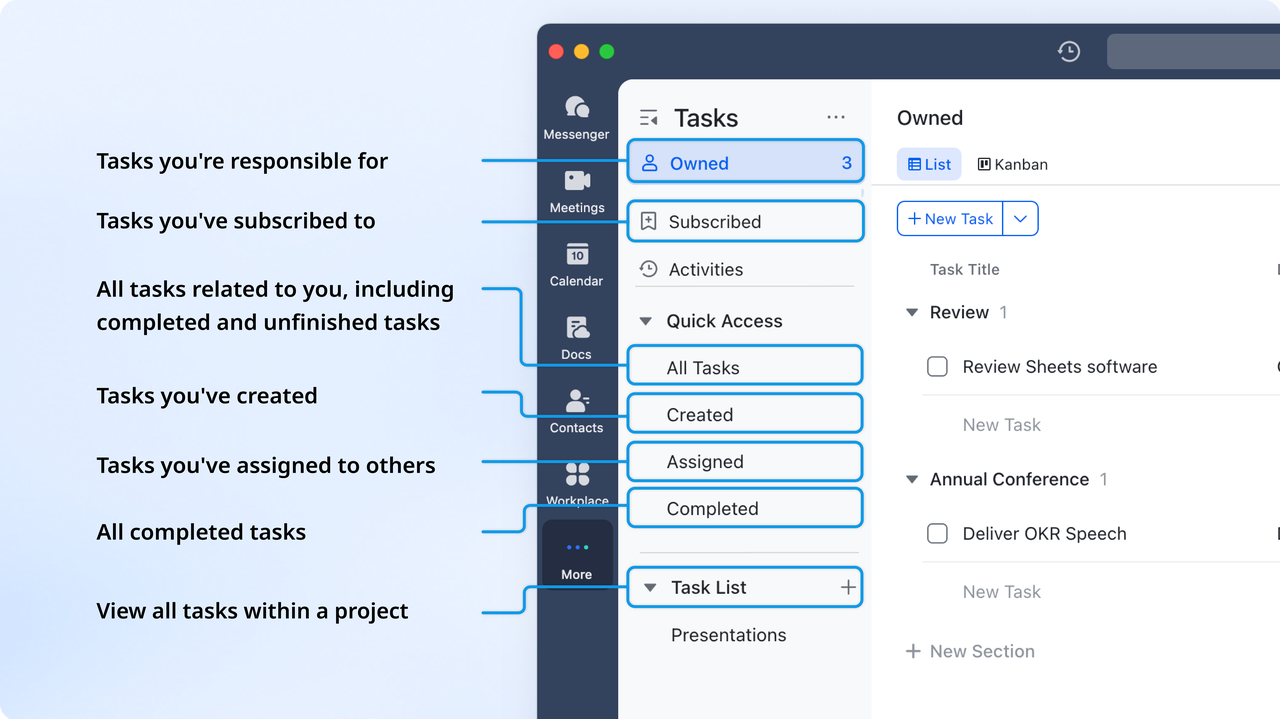
Task execution that stays linked to the plan through Lark Tasks
With Lark Tasks, workflow transitions automatically create action items for the right people, complete with due dates, reminders, and links back to the source record. This ensures that approvals, requests, and updates directly translate into clear next steps. Teams no longer lose tasks in emails or side tools—everything remains part of the broader business process, from initiation to completion.
Data tracking and performance monitoring through Lark Sheets
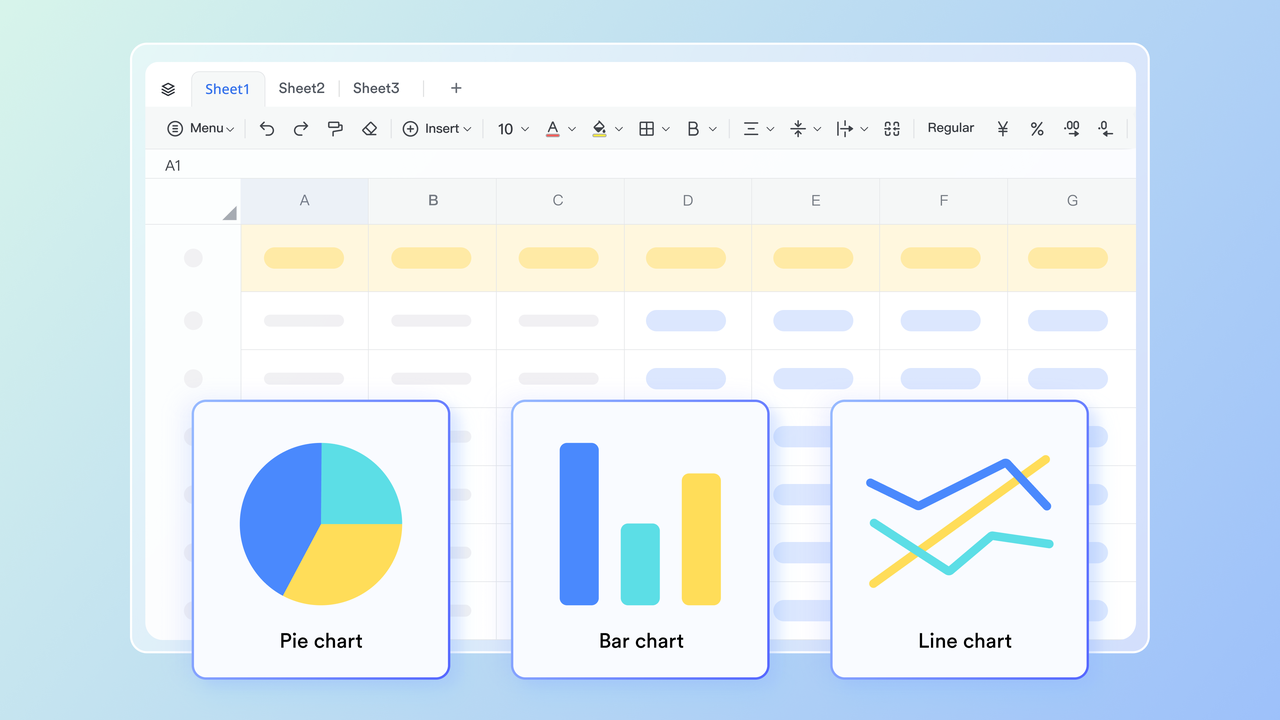
Lark Sheets gives teams a familiar, spreadsheet-friendly way to analyze workflow performance, review operational data, or track metrics without exporting anything. Because Sheets pulls from Base and other Lark modules, leaders get real-time insights into bottlenecks, cycle times, workload distribution, and process outcomes. It's lightweight analytics without leaving the workflow ecosystem.
Clear communication is built into every workflow with Lark Messenger
Lark Messenger keeps conversations on track, preventing them from getting lost in external chats or email threads. Each Base record can link directly to chat groups, messages, or discussions, so teams always have context when making decisions. Quick clarifications, file sharing, and feedback happen right beside the workflow item—no tab switching, no lost messages.

Meetings that move workflow items forward
With Lark Meetings, teams can instantly pull workflow items into discussions, schedule follow-ups, and document decisions that automatically update the record. The meeting notes and takeaways stay tied to the process, ensuring continuity between synchronous and asynchronous work.

Streamline documentation workflows via Lark Docs & Lark Wiki
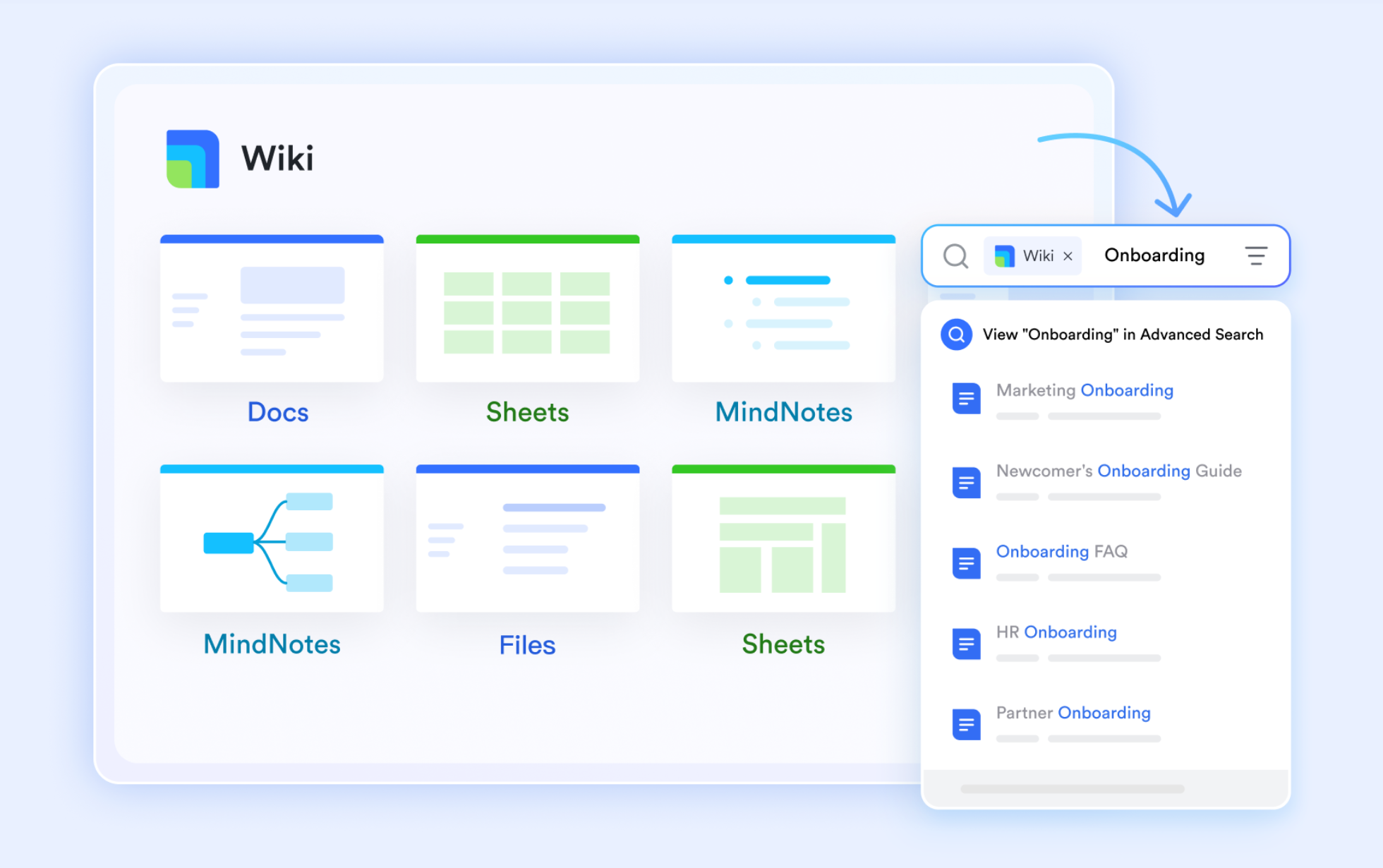
Lark Docs lets teams co-create guidelines, templates, contracts, and policy documents that connect directly to ongoing processes. Updates sync immediately, giving all stakeholders the latest version. Meanwhile, Lark Wiki serves as the long-term knowledge base, housing SOPs, governance rules, process definitions, and team manuals. Together, Docs and Wiki keep workflows aligned with accurate, accessible information.
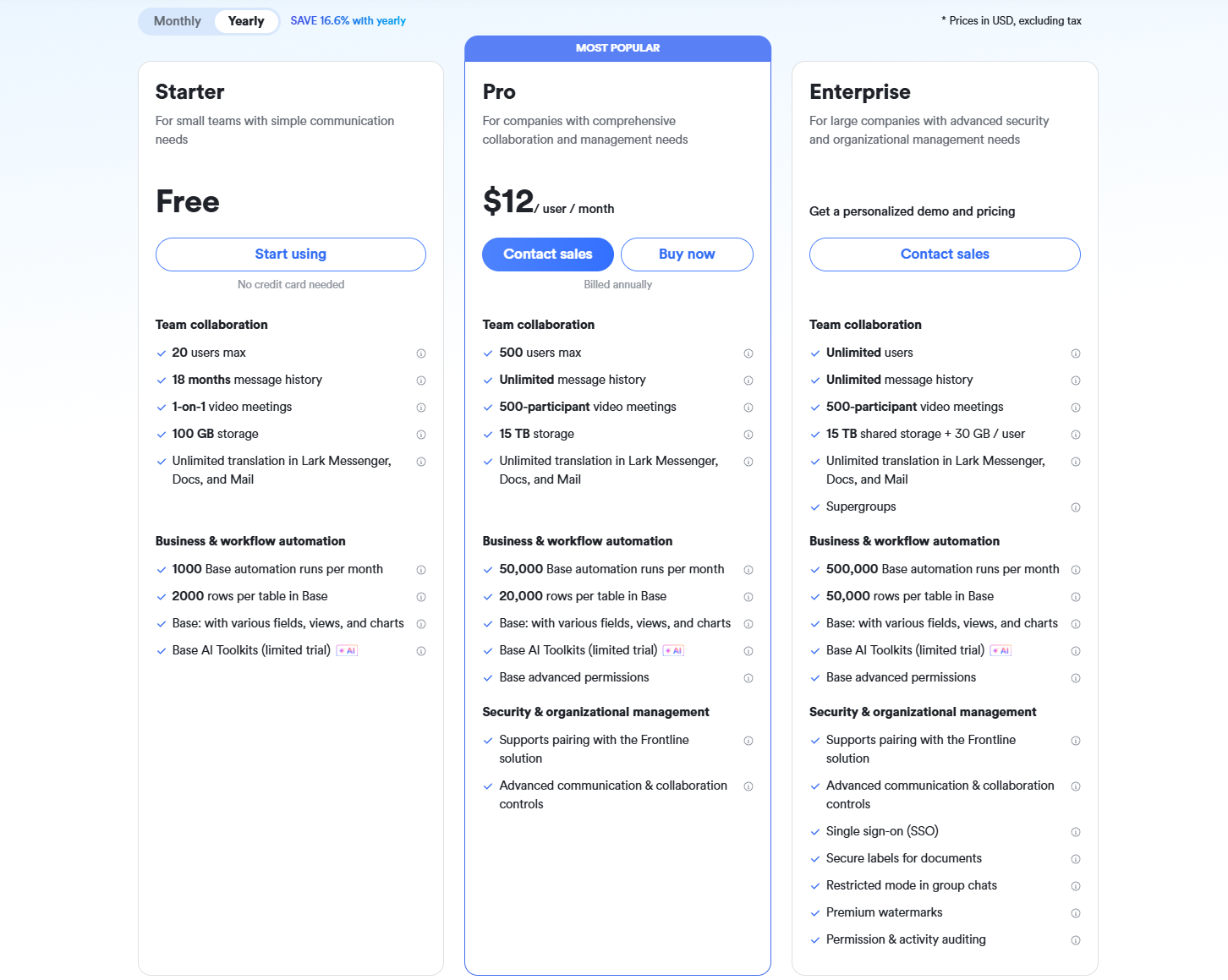
- Starter plan: Free forever plan that includes 11 powerful tools for up to 20 users. It also includes 100GB of storage, 1,000 automation runs, AI translations, and more.
- Pro plan: $12/user/month (billed annually) for up to 500 users. It includes everything in Starter, plus group calling for up to 500 attendees, 15 TB of storage, 50,000 automation runs, and more.
- Enterprise plan: Contact sales for custom pricing. Supports unlimited users and includes even more automation runs and advanced security, compliance, and management features.
Business process workflow examples in different teams
Business process workflows help organizations turn complex operations into structured, repeatable steps. By streamlining how tasks progress from start to finish, teams achieve better consistency and accuracy. This clarity becomes especially important as operations scale across functions. Many organizations strengthen their structure through workflow and business process management, ensuring every step follows an intentional sequence. As a result, workflows become a reliable backbone for daily operations. Below are examples of how different teams apply structured workflows to improve execution.
- Employee onboarding: Employee onboarding moves smoothly when supported by workflow and business process management, connecting HR, admin, and IT tasks into a single flow. It ensures that every new hire follows the same essential steps with minimal delay. Tasks such as provisioning, documentation, and orientation occur in a predictable order. This approach helps teams reduce manual errors and improve employee experience. It also creates consistency when onboarding at scale.
- Purchase-to-pay: Procurement teams depend on a precise process flow, and business process and workflow management help structure steps like requisition, approval, ordering, and payment. This alignment ensures compliance while maintaining operational speed. Each stage links logically to the next, making spending easier to track. With a defined sequence, procurement bottlenecks become easier to identify and prevent. This strengthens both financial control and supplier relationships.
- Customer support escalation: Support teams often rely on workflow and business process management systems to route tickets, apply priority rules, and assign ownership. These systems automate movement between tiers and reduce response delays. They also ensure that more severe cases receive immediate attention. As ticket volumes rise, automated workflows help maintain consistent service quality. This structure keeps customer issues from slipping through the cracks.
- IT ticket lifecycle: Understanding the difference between business processes and workflows helps IT teams map strategic service commitments to day-to-day ticket movement. While processes define SLAs and categories, workflows execute logging, triage, routing, and resolution. This distinction enables better planning and operational clarity. When followed consistently, the workflow creates predictable resolution timelines. It also supports data-driven improvement across IT operations.
- Contract approval: Contract management benefits from workflow and business process management, helping teams move documents through drafting, review, negotiation, and approval. Each stage is clearly defined, reducing confusion and delays. This structure standardizes how legal and business teams collaborate. It also makes audit and compliance checks more traceable. The result is faster, more reliable contract turnaround.
- Sales opportunity progression: Sales operations rely heavily on business process and workflow management to guide deals from prospecting to closing. This ensures reps follow a consistent methodology across pipelines. Defined stages improve forecasting accuracy and deal hygiene. Managers get clearer visibility into where deals stall and why. Consistent workflow structure helps reps focus more on selling and less on administrative tracking.
- Content creation & publishing: Marketing teams use workflow and business process management systems to organize ideation, drafting, editing, approvals, and publishing. These systems help manage version control and deadlines without confusion. Automated handoffs ensure content moves smoothly through editorial stages. Workflows also support distributed teams working on multiple assets at once. The result is a predictable and scalable publishing pipeline.
Conclusion
A well-designed business process workflow brings structure, clarity, and accountability to everyday operations, enabling teams to work faster and more consistently. By understanding the difference between high-level processes and the workflows that bring them to life, organizations can build systems that scale effortlessly across departments. Strong documentation, clear ownership, streamlined approvals, and reliable data structures form the foundation of smooth execution. Choosing the right workflow platform further amplifies these benefits—supporting collaboration, analytics, security, and long-term adaptability. When all of these elements work together, teams gain the visibility and control needed to operate efficiently and improve continuously.
If you're ready to streamline workflows, unify communication, and manage processes with greater confidence, Lark offers an all-in-one environment that supports teams at every stage. Try Lark today and experience how connected workflows can transform the way your organization works.
FAQs
What metrics should teams track to measure workflow efficiency?
Teams should monitor cycle time, task completion rates, approval turnaround, and bottleneck points to understand how smoothly a workflow operates. Error rates and rework frequency also reveal areas that need redesign or automation. Tracking these metrics helps determine whether processes remain aligned with business goals. Tools like Lark provide real-time dashboards and data views that make it easier to measure these indicators. With accurate insights, teams can continuously refine and optimize their workflows.
How do you maintain workflows when business policies or teams change?
Maintaining workflows during organizational changes requires flexible structures, clear documentation, and regular reviews aligned with updated policies. Teams should revisit responsibilities, approval paths, and data requirements whenever roles or rules shift. Platforms like Lark make adjustments easier by allowing quick edits without disrupting the entire process. Centralized records also help teams consistently update all relevant steps. This ensures workflows remain stable even when the organization evolves.
What level of training is required to set up a business process workflow?
Most modern workflow tools are designed so non-technical teams can build, modify, and manage flows with minimal learning effort. However, understanding process goals, roles, and exceptions is essential before designing an effective workflow. With intuitive interfaces like those in Lark, teams can quickly set up workflows using drag-and-drop structures and guided configuration. Basic training on logic rules, approvals, and data fields is usually sufficient. As complexity grows, advanced sessions can help teams optimize further.
How do workflows support compliance and audit readiness?
Workflows support compliance by enforcing mandatory steps, standardizing data capture, and ensuring every action is recorded. Automated rules reduce the risk of skipped approvals or inconsistent decision-making. Audit trails generated by platforms like Lark provide time-stamped transparency into who did what and when. This structured documentation
helps teams meet regulatory requirements more easily. Consistent workflows also strengthen accountability across departments.
Can business workflows work offline or in low-connectivity environments?
Many workflow tools offer limited offline capabilities, allowing users to collect information or draft updates that sync once connectivity returns. The goal is to reduce operational disruption in remote or low-bandwidth environments. While some functions may pause without an internet connection, essential actions often resume automatically when reconnected. Solutions like Lark are optimized for stable performance even in variable network conditions. This ensures teams can stay productive regardless of location.
Related reading
Table of contents
Start using Lark today

Manage all your work in one place
Boost team efficiency by 10x
Save up to 70% on software costs
Table of contents
Start using Lark today
Manage all your work in one place
Boost team efficiency by 10x
Save up to 70% on software costs
Keep reading







2026 Lark Technologies Pte. Ltd.
Headquartered in Singapore with offices worldwide.






Explore: