Every successful construction effort begins long before materials arrive on site. Complex builds require a structured approach that transforms large objectives into manageable components. Without this structure, coordination gaps, cost overruns, and scheduling conflicts quickly emerge across teams and subcontractors.
A construction work breakdown structure provides the foundation for organized execution by clearly defining what must be delivered at every stage. By applying a work breakdown structure construction approach early, teams gain clarity over scope, ownership, and dependencies. As projects grow in scale and complexity, digital collaboration platforms such as Lark gradually support work breakdown structure construction project planning by keeping information visible and aligned across stakeholders.
Start construction planning with clear work breakdowns
What is a construction work breakdown structure
A construction work breakdown structure is a hierarchical decomposition of the total scope required to complete a build. It focuses on deliverables rather than activities, ensuring that every required output is clearly defined. This approach allows teams to manage complexity by breaking the work into structured components. To see how these principles apply to modern site coordination, you can explore how Lark is transforming the construction industry by digitizing .
In a work breakdown structure in construction, the objective is to divide a large build into logical work packages that can be estimated, assigned, and tracked efficiently with . A well-defined construction project work breakdown structure prevents scope omissions and duplication of effort. It also establishes a shared reference point for owners, contractors, and subcontractors from planning through close-out. For a deeper look at how these structures integrate with overall , refer to our comprehensive guide on project management, which details the transition from scope definition to final delivery.
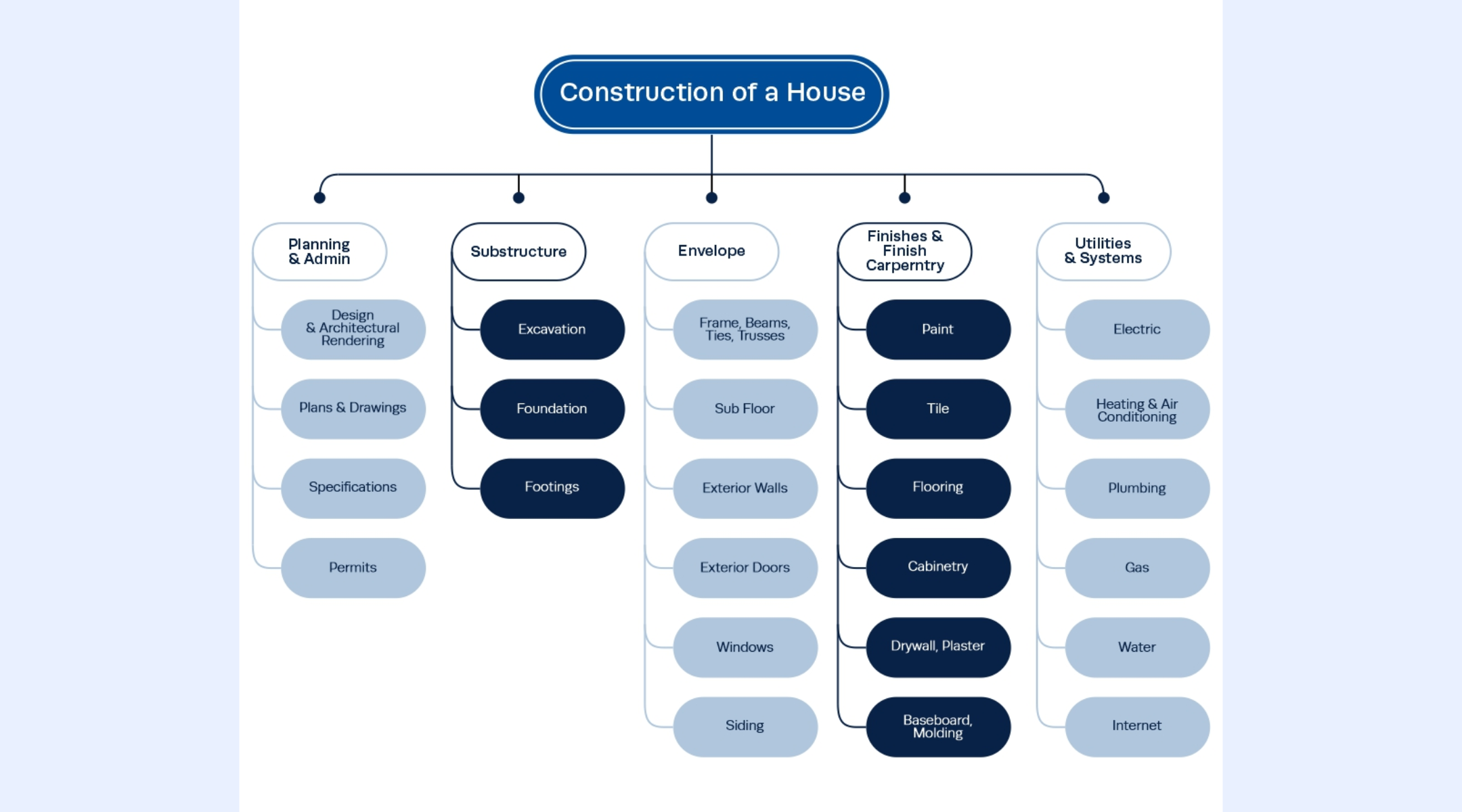
Image source: instituteprojectmanagement.com
Construction work breakdown structure levels explained
A work breakdown structure construction building model follows a top-down hierarchy that balances clarity with control. Each level adds definition while maintaining alignment with the overall scope. Understanding these levels ensures the work breakdown structure for execution remains practical and scalable.
Level 1: The project
This level represents the completed facility or infrastructure as a single deliverable. It defines the full scope governed by the construction work breakdown structure. At this stage, attention remains on overall objectives rather than execution details.
Level 2: The phase
In a construction project work breakdown structure, Level 2 organizes the overall scope into major chronological phases. These phases reflect how work naturally progresses on site and help teams plan, sequence, and monitor progress at a high level. Structuring a work breakdown structure in construction around phases creates clarity before trade-level detail is introduced.
- Pre-construction: This phase covers permitting, design coordination, and site surveys that prepare the project for execution and reduce downstream risk in the construction project work breakdown structure.
- Substructure: The substructure phase includes excavation, foundations, and earthworks that create the physical base for all subsequent construction activities.
- Superstructure: This phase focuses on framing, roofing, and exterior walls, marking visible progress while requiring tight coordination across multiple trades.
- Close-out: Close-out includes final inspections, documentation, and handover activities that formally complete the work breakdown structure in construction.
Level 3: Trade or system
At this level, the construction work breakdown structure organizes work by discipline or building system. Within phases such as the superstructure, this includes trades like HVAC, electrical, plumbing, and masonry. Defining work at the trade level allows teams to align procurement, contracts, and scheduling more effectively. This is where a work breakdown structure in construction becomes directly actionable for subcontractor coordination and cost control.
Level 4: Work package
The work package is the most detailed level in the work breakdown structure construction hierarchy. It groups related tasks that can be assigned to a single crew or subcontractor with clear ownership. Each work package must be measurable, time-bound, and tied to a specific deliverable. Well-defined work packages enable precise tracking, accountability, and within the construction project work breakdown structure.
How to use a work breakdown structure in construction
Using a work breakdown structure in construction requires more than creating a hierarchy at the planning stage. It is an ongoing that connects scope, ownership, cost, and progress from bidding through final handover. When applied correctly, a construction work breakdown structure becomes the operational backbone of the entire build. Following a structured approach ensures the work breakdown structure for the construction project execution remains accurate and useful.
Step 1: Define the project scope and apply the 100% rule
The first step is clearly defining the full scope of work before creating any levels. The 100% rule in a work breakdown structure in construction states that every required deliverable must be included. If an item, such as site cleanup or final landscaping, is missing, it is effectively excluded from planning and budgeting. Applying this rule prevents scope gaps and unexpected cost overruns later.
Step 2: Decompose the project into chronological phases
Next, divide the scope into high-level phases that reflect how the build progresses. Common phases include pre-construction, substructure, superstructure, and finishes. Organizing the work breakdown structure construction building model by phase helps stakeholders visualize milestones. It also allows managers to anticipate when specific trades will be required.
Step 3: Identify work packages and assign ownership
At this stage, the construction project work breakdown structure is decomposed down to the work package level. Each work package should represent a measurable unit of work that can be assigned to one team or subcontractor. Clear ownership removes ambiguity and supports accountability. This step is critical for controlling execution on site.
Step 4: Integrate the WBS with cost and schedule
Once work packages are defined, they should be linked to both the budget and timeline. In a work breakdown structure construction model, each package becomes a cost account tied to a specific deliverable. This integration allows managers to track spending and progress together. Delays or overruns can then be identified early.
Step 5: Monitor progress and update the WBS as a living document
A work breakdown structure for construction project management must remain current throughout execution. As work progresses or changes occur, the structure should be updated to reflect reality. Using like Lark helps teams update work package statuses in real-time. This keeps the WBS accurate as the single source of truth until completion.
Gain real-time visibility across work breakdowns
How Lark supports construction work breakdown structures
A construction work breakdown structure delivers real value only when it stays connected to execution, , and change on site. Static documents quickly fall out of sync as conditions evolve and decisions shift. For a work breakdown structure for construction project management to remain reliable, it must support collaboration, real-time updates, and controlled visibility.
provides the digital foundation that transforms a traditional WBS into a living system that teams can plan, track, and manage throughout the entire construction lifecycle. Lark helps organize and manage project tasks within the WBS, ensuring every segment of the project is clearly defined and monitored.
Collaborative document platform for work breakdown structures
serves as a collaborative "smart canvas" for . It allows teams to co-author detailed work packages using multi-media blocks (embedding blueprints and site photos) while @mentions and inline comments maintain accountability at every structural level. Key high-relevance functions include embedding Lark Base tables for live progress tracking, utilizing synced blocks to ensure safety protocols are consistent across multiple documents, and leveraging version history to maintain a traceable audit trail of scope changes. 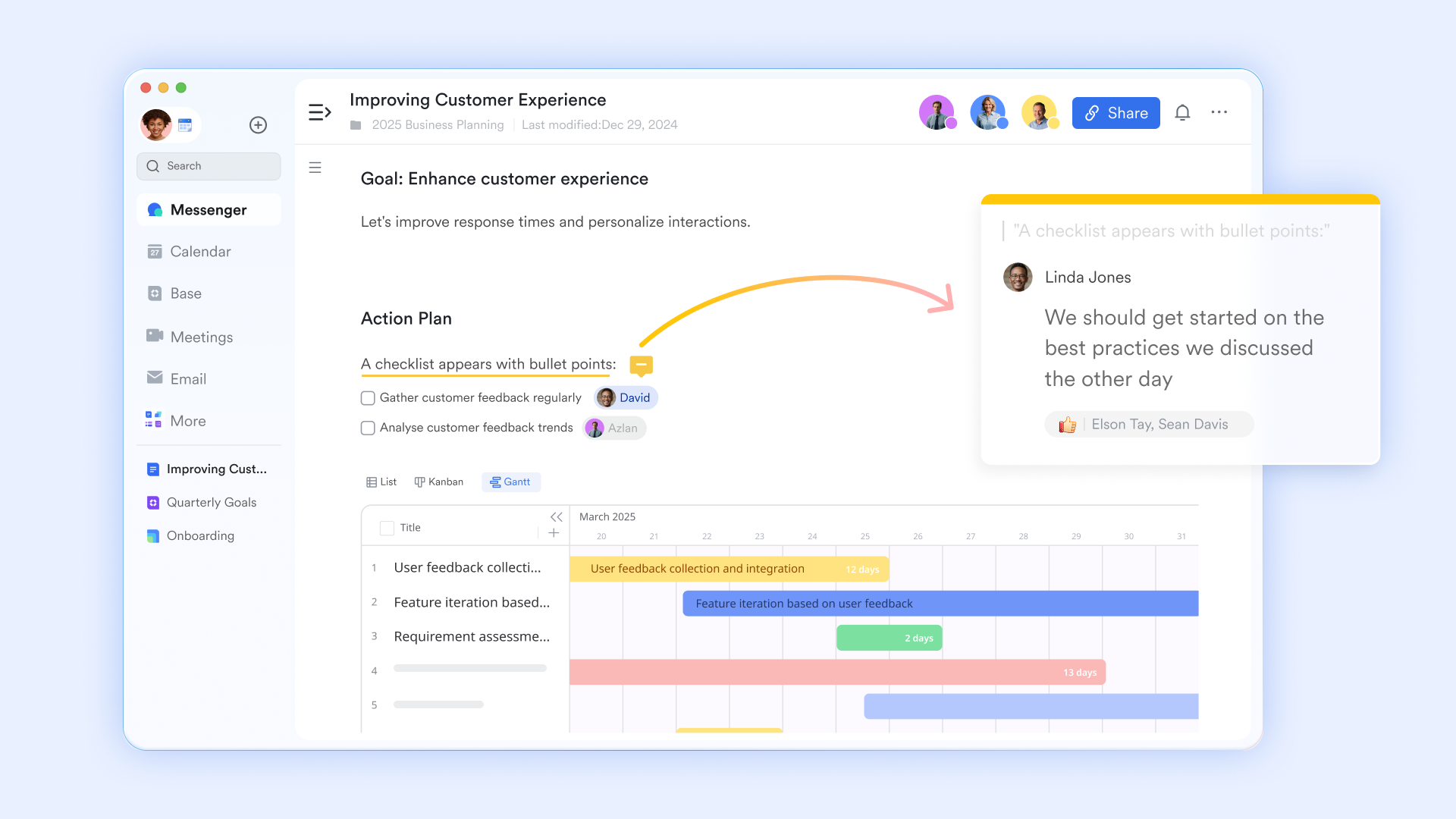
Dynamic management system for project controls
uses linked records to create clear hierarchies between and specific work packages. It offers multi-dimensional visualizations, such as and Kanban views, allowing teams to monitor dependencies and track real-time progress from both the office and the field. Through , site updates can instantly trigger notifications and calculate completion percentages, ensuring the WBS remains a single source of truth for budgeting and resource allocation.
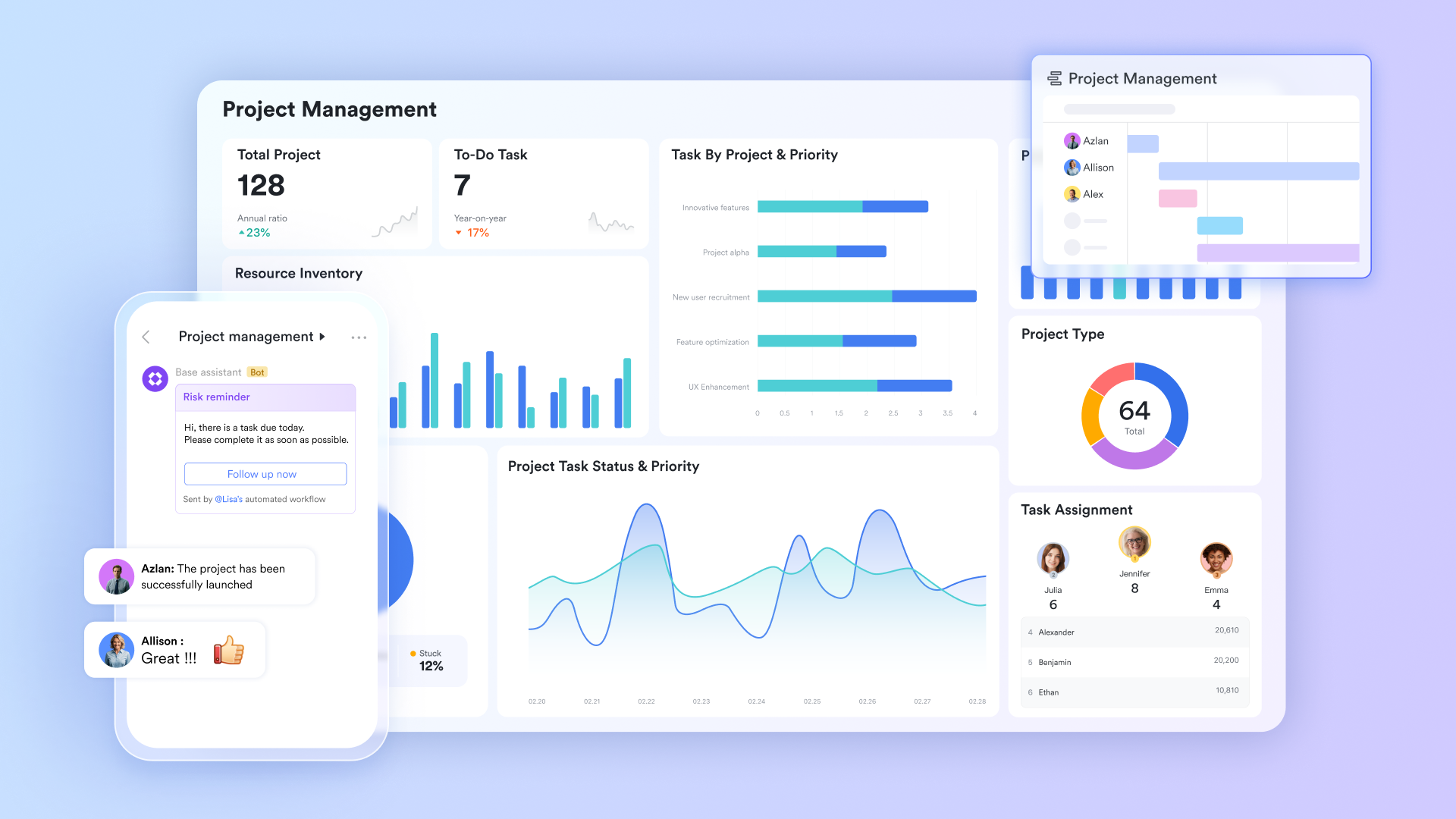
Native dashboards with real-time visibility
For data insights, Lark Base dashboards provide a real-time visual summary. When it comes to construction projects' status and financial health, it offers various metrics and blocks: By implementing slicer blocks, users can instantly filter complex data to focus on specific work packages, while pivot tables and metrics blocks offer deep insights into resource allocation and critical project KPIs. These elements ensure that the office and field stay aligned on the master plan, 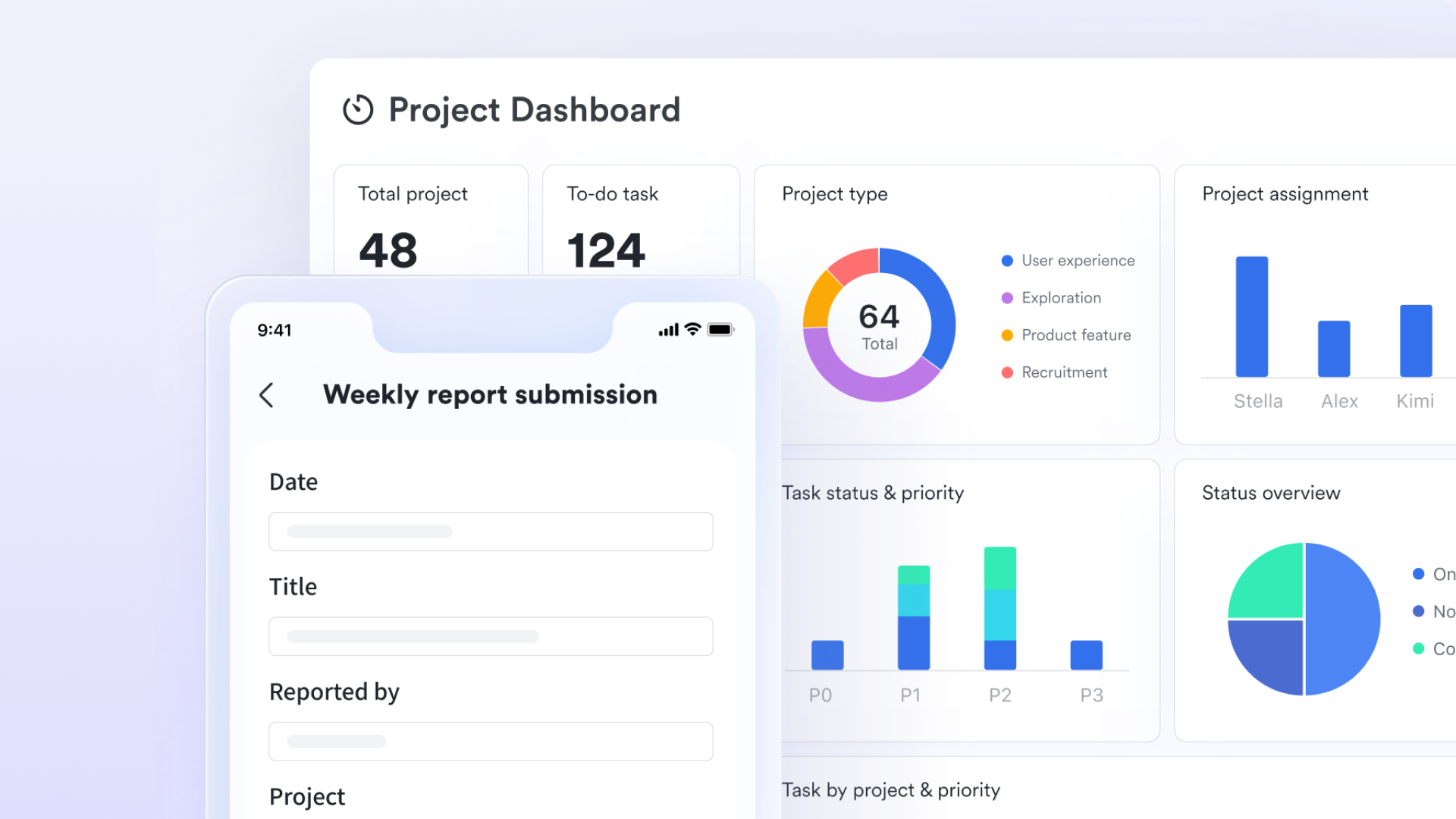
Task assignment and trackable execution
As your task assignment console, Lark Tasks allows project managers to break down major phases into detailed subtasks. With clear deadlines, assignees, and priority levels, it fosters accountability by enabling site crews to update their specific work packages and share visual evidence. This creates a bridge between high-level scope planning and day-to-day execution, keeping the entire construction team aligned. 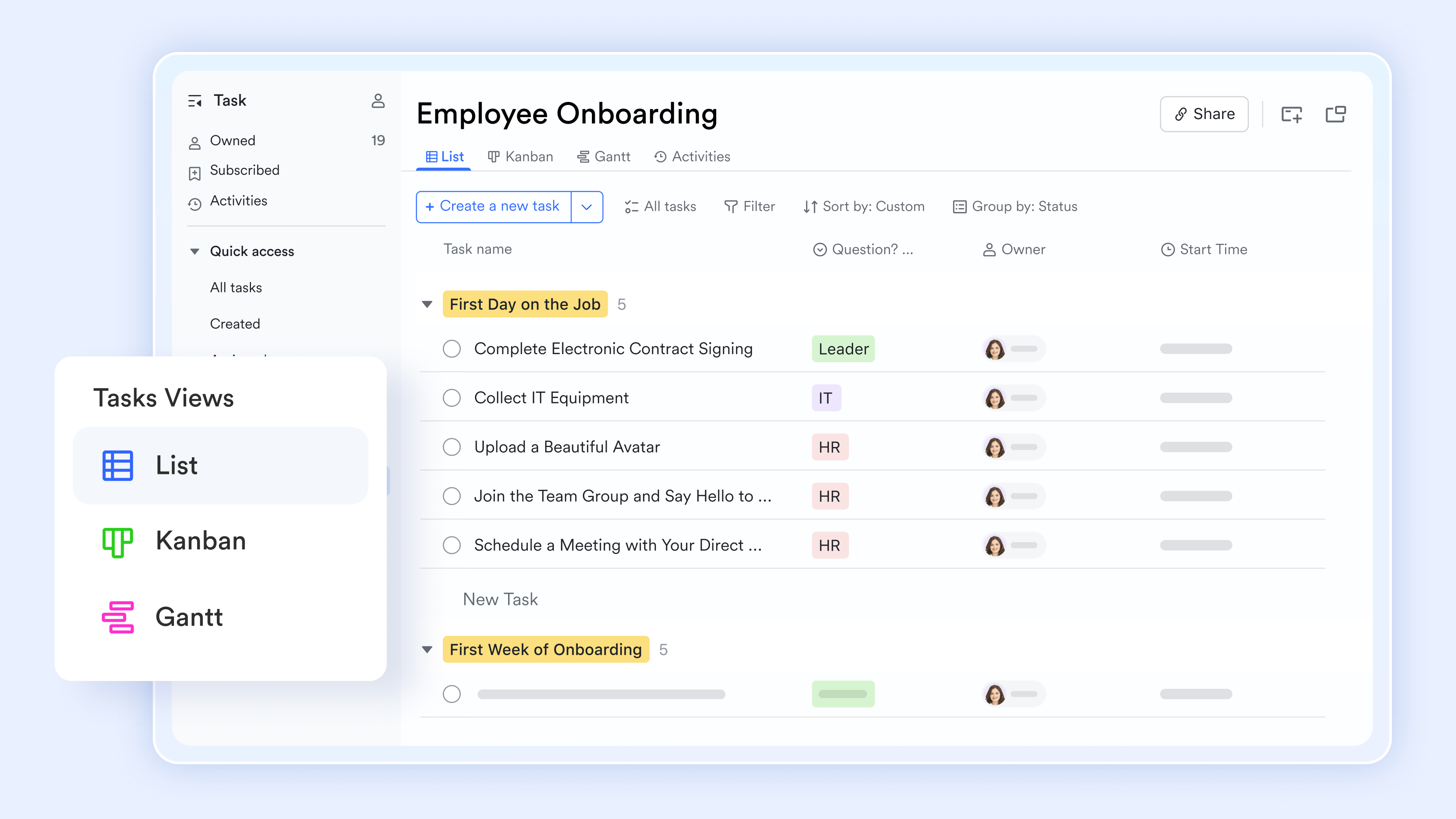
Seamless communication in one hub
supports construction work breakdown structures by using dedicated project groups to align real-time communication with specific project phases and work packages. The message-to-task function ensures that every site-level decision or new requirement is instantly documented and integrated into the broader WBS hierarchy. Through threaded replies and pinning messages, the team maintains a clear record of technical specifications and progress updates, preventing critical information from being lost in a general chat. 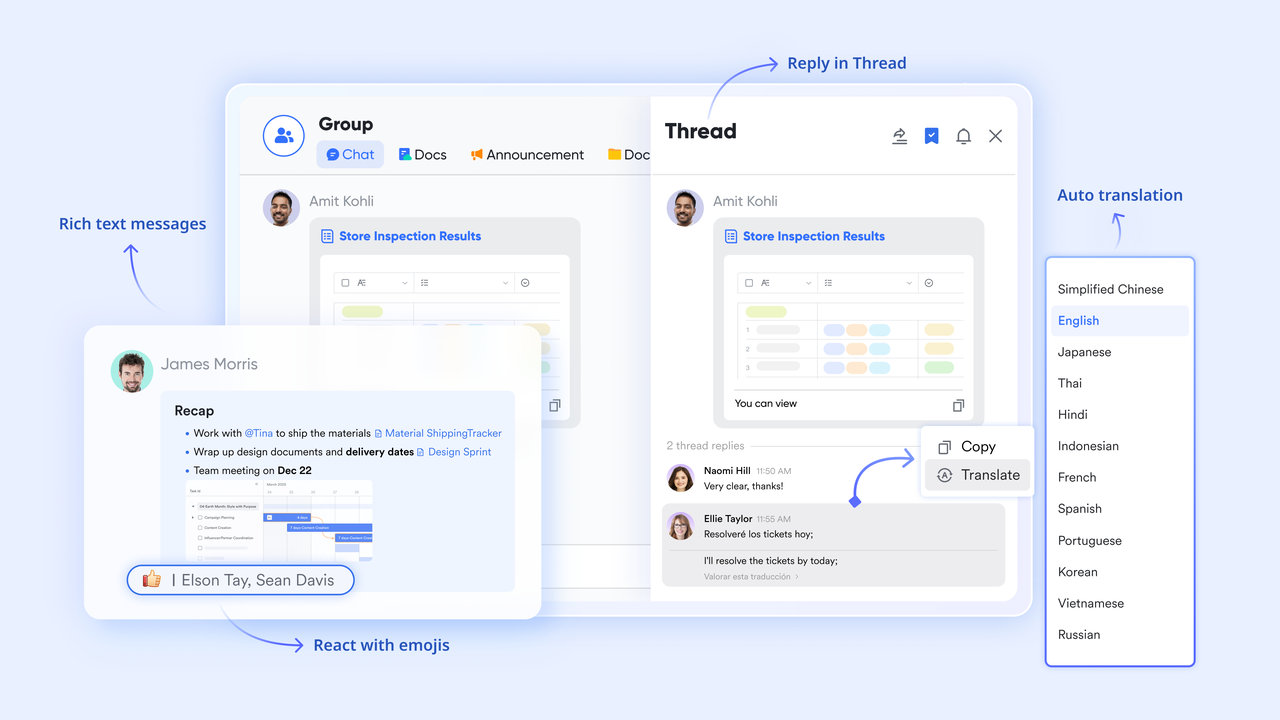
:
- Starter plan: Free forever plan that includes 11 powerful tools for up to 20 users. It also comes with 100GB of storage, 1000 automation runs, AI translations, and more.
- Pro plan: $12/user/month (billed annually) for up to 500 users. It includes everything in Starter plus group calling for up to 500 attendees, 15TB of storage, 50,000 automation runs, and more.
- Enterprise plan: for custom pricing. Supports unlimited users and includes even more automation runs and advanced security, compliance, and management features.
For small teams with simple communication needs

18 months message history
1000 Base automation runs/month
2000 rows per table in Base
Most POPULAR
For companies with comprehensive collaboration and management needs
Unlimited message history
500-participant video meetings
50k Base automation runs/month
20k rows per table in Base
For large companies with advanced security and organizational management needs
Get a personalized demo and pricing
Unlimited message history
500-participant video meetings
15 TB storage + 30 GB storage/user
500k Base automation runs/month
50k Base automation runs/month
Most POPULAR
For companies with comprehensive collaboration and management needs
Unlimited message history
500-participant video meetings
50k Base automation runs/month
20k rows per table in Base
Ready-to-use construction project planning template
Standardized templates play a critical role in turning planning intent into repeatable execution. In construction environments, templates reduce setup time, enforce consistency, and help teams align schedules, safety, contracts, and daily from the outset. Using ready-to-use construction project planning templates allows teams to focus less on formatting and more on coordination, accuracy, and on-site delivery.
Action plan for construction template
The action plan for construction templates breaks high-level goals into specific tasks with owners and deadlines. It supports short-term execution by clarifying what needs to happen next and who is responsible. This template is especially useful for tracking follow-ups, resolving issues, and maintaining momentum on the site.
Construction Gantt chart template
The construction Gantt chart template provides a visual timeline that maps tasks, dependencies, and milestones across the full . It helps teams understand sequencing, identify critical paths, and adjust schedules as conditions change. By presenting work in a time-based view, this template supports proactive planning and clearer communication with stakeholders.
Construction proposal template
The construction proposal template helps teams present scope, approach, timelines, and costs in a clear and professional format. It ensures that assumptions and deliverables are documented upfront, reducing misunderstandings later. This template supports consistency when bidding or seeking approvals from clients and stakeholders.
Construction site safety plan template
Safety planning is essential in construction environments, and this template provides a structured way to document hazards, controls, and responsibilities. It helps teams standardize safety procedures across sites and ensure compliance with regulations. Using a site safety plan template reinforces accountability and risk awareness from day one.
Benefits of using a construction work breakdown structure
Implementing a construction work breakdown structure (WBS) brings significant advantages to construction projects of any size. By breaking down complex projects into manageable components, a WBS provides a clear and organized framework that supports every stage of project planning and execution. This hierarchical breakdown structure allows project managers to define the entire project scope up front, ensuring that no critical tasks or deliverables are overlooked.
- Enhanced accountability and resource management: A well-structured WBS makes it easier to track progress, assign responsibilities, and allocate resources efficiently. Project teams can quickly identify potential bottlenecks or issues, enabling proactive problem-solving and minimizing delays. For a deeper look at organizing your team's output, you can explore these to see how digital structures improve accountability.
- Streamlined stakeholder communication: The WBS also enhances communication among all stakeholders—owners, contractors, subcontractors, and project managers—by providing a shared reference point for project goals and deliverables. By utilizing , managers can ensure that the WBS is not just a document, but a living guide that keeps everyone on the same page regarding project milestones.
- Preventing scope creep and budget overruns: One of the most valuable benefits is the WBS's role in preventing scope creep. By clearly outlining the work breakdown and deliverables, the WBS helps keep the project focused and aligned with original objectives, reducing the risk of unapproved changes that can lead to cost overruns or missed deadlines. Understanding the is essential for ensuring that your WBS remains a rigid defense against unplanned expansion.
Best practices for creating a construction WBS
A construction work breakdown structure is only effective when it is built with discipline and consistency. Applying best practices ensures the structure remains accurate, usable, and aligned with real execution on site. These guidelines help teams maintain clarity from early estimation through final inspection and handover.
- Adhere to the 100% rule: A work breakdown structure in construction must represent the complete scope of work without exception. This includes physical construction activities as well as supporting tasks such as permitting, inspections, and final cleanup. Anything excluded from the WBS is excluded from planning and . Following this rule protects against scope creep and unplanned costs.
- Focus on deliverables, not actions: The construction project work breakdown structure should be organized around deliverables rather than activities. Using outcome-based elements such as foundation slabs or exterior envelopes makes completion measurable and clear. This approach simplifies cost assignment and progress tracking. Deliverable-focused structure improves financial and .
- Maintain mutually exclusive work packages: Each element of the work breakdown structure construction hierarchy must be distinct and non-overlapping. Clear separation prevents double-counting of progress and confusion over responsibility. Every work package should have its own budget, resources, and owner. This clarity supports accountability across subcontractors.
- Apply the 8 to 80 rule for detail: When defining work packages in a work breakdown structure construction building plan, target durations between 8 and 80 hours. Packages smaller than this increase administrative effort, while larger ones reduce visibility. This balance allows issues to be identified early. Proper sizing improves control without unnecessary complexity.
- Integrate real-time field feedback loops: A work breakdown structure for construction project management should stay connected to site reality. Allowing teams to update progress directly from the field ensures accuracy. Platforms like Lark support this by linking work packages to real-time updates. This keeps the WBS aligned with actual conditions on site.
Conclusion
In a construction context, a well-crafted work breakdown structure provides the foundation for disciplined and controlled execution. By decomposing a building effort into clear phases, trades, and work packages, teams gain project transparency into scope, cost, and sequencing. This clarity supports better forecasting, stronger accountability, and fewer surprises during the delivery cycle.
Regardless of scale, the principles of a work breakdown structure in construction remain consistent. Clear deliverables lead to better coordination and predictable outcomes. As teams move beyond static documents, digital platforms increasingly help keep the construction project work breakdown structure accurate and actionable. Over time, tools like support this shift by enabling teams to manage, update, and track their WBS as work progresses.
Turn your construction WBS into a digital powerhouse
FAQs
How detailed should a construction work breakdown structure be?
A construction work breakdown structure should be detailed enough to support accurate cost and schedule estimation. Most teams stop at the work package level, where ownership can be assigned to a single trade. Excessive detail increases administrative effort without added value. Digital tools like Lark help manage this balance by keeping details structured and easy to update.
Can a WBS change during construction execution?
Yes, a WBS is considered a even though its core structure should remain stable. When major change orders or scope adjustments occur, the construction project work breakdown structure must be updated. This ensures budgets and schedules remain aligned. Platforms such as Lark make controlled updates easier to manage.
Is WBS created before or after the project schedule?
The work breakdown structure is always created before the schedule. It defines the work packages that are later sequenced and assigned durations. Without a WBS, schedules lack structure and accuracy. Modern tools like Lark help teams link WBS elements directly to timelines.
How does WBS help manage subcontractors?
A WBS clarifies exactly what each subcontractor is responsible for delivering. Defined work packages support clearer contracts, performance tracking, and progress reporting. This reduces disputes and overlaps between trades. Digital systems such as Lark help maintain transparency across subcontractor scopes.
What is the most important thing in the WBS?
The most important element of a WBS is complete and clear scope coverage. Every required deliverable must be represented so nothing is missed during planning or execution. Clear ownership at the work package level is equally critical to ensure accountability. When the WBS stays accurate and visible, teams can manage cost, schedule, and quality more effectively. like Lark help keep this clarity intact as work progresses.
Related reading





























