Running a hotel today requires more than great service—it demands intelligent data management. A hotel database management system brings order to the complexity of managing guests, rooms, reservations, and payments. It transforms scattered data into actionable insights that keep operations seamless. From automating bookings to ensuring accurate reporting, these systems empower hotels to stay resilient in a fast-changing market.
Tools like Lark, for instance, allow team members to collaborate, create structured workflows, and centralize data effortlessly—important ingredients in any hospitality setup. In this guide, we'll explore what these systems are, how they work, and why they matter for every modern hotel.
Key takeaways: 5 Tools for hotel database management system
In this review, I select altegother 10 tools for hotel database management system, the first 5 would be:
- Lark: The collaborative data infrastructure for hotels
- HotelKeyApp: Simplifying multi-property operations
- Mews: A forward-thinking PMS for automation and integration
- Opera (Oracle Hospitality): Enterprise-level reliabilityP
- Preno: Simplicity and efficiency for boutique hotels
Experience efficient hotel management system
What is a hotel database management system
A hotel database management system (HDMS) is a digital framework for storing, organizing, and managing a hotel's operational data. It keeps records of everything—from guest details and room inventory to financial transactions—within a secure, structured database. An HDMS centralizes hotel operations by unifying reservations, billing, guest management, housekeeping, and reporting into a single platform, and improving efficiency.
- Provides a single source of truth for all hotel data
- Reduces manual errors and data duplication
- Enables efficient hotel management by streamlining operations and improving overall efficiency
HDMS is a type of hospitality software and hotel management software. Modern solutions are often cloud PMS platforms or hotel PMS software, offering integrated, scalable, and accessible management for hotels. These systems are essential for hospitality businesses seeking to modernize and scale.
Why hotels need HBMS
- Centralized data control: Instead of relying on scattered spreadsheets or manual logs, hotels use HDMS to store all records in one place.
- Operational efficiency: It streamlines daily processes such as bookings, billing, and housekeeping coordination.
- Improved guest experience: By maintaining up-to-date guest preferences and history, staff can personalize services.
- Data integrity and security: Centralized systems protect sensitive information like payment data and personal records.
- Real-time insights: Managers can access reports instantly, allowing faster and more informed decision-making.
When implemented correctly, a hotel database management system doesn't just store information—it becomes part of a hotel's ecosystem, working alongside the property management system (PMS), channel managers, and CRM tools to deliver complete visibility over operations.
How a hotel database management system works behind the scenes
At its core, a hotel management system database schema defines how different data entities—like "Guest," "Room," "Booking," and "Payment"—interconnect. These relationships allow hotel staff to access real-time information without duplication or confusion. The system also enables staff to manage reservations and manage room inventory efficiently, preventing overbookings and optimizing availability.
The process in motion
- Guest check-in and booking: When a reservation is made, the booking details are recorded as linked entries across multiple tables, connecting the guest to the room inventory and payment record.
- During the stay: Any new services, such as dining or SPA treatments, are logged in the system and tied to the guest's record in real-time.
- Departure and billing: Upon checkout, the HDMS compiles all transaction data, ensuring billing accuracy and .
Behind all of this, database triggers, workflows, and integrations ensure that no data point is left behind. Hotels may connect their HDMS with POS systems, online booking engines, or accounting tools—each synchronized for seamless operation.
This foundation ensures high performance, consistency, and adaptability, no matter how many bookings or departments are in motion.
Channel management and distribution in hotel database systems
Channel management and distribution form the reliable backbone of today's hotel systems, and they're truly game-changing for modern hospitality. As guests increasingly discover and book their perfect stays through diverse platforms—from trusted online travel agencies (OTAs) and comprehensive global distribution systems (GDS) to your hotel's own welcoming website—you'll find that a well-designed channel manager becomes your trusted partner in keeping room inventory and rates perfectly aligned across every touchpoint.
Guest communication and engagement through database management
Guest communication and engagement truly form the foundation of outstanding hospitality experiences. When hotels combine a robust property management system with thoughtfully organized guest data, they unlock remarkable opportunities to personalize every moment of a guest's stay. By maintaining comprehensive that capture preferences, visit history, and those special touches that matter most, hotels can create interactions that feel genuinely tailored to each person—naturally building satisfaction and lasting relationships.
Unlock your hotel's potential with powerful tool
Key components of an efficient hotel database management system
An effective HDMS balances technical robustness with user flexibility. For anyone learning how to for hotel management system, these components are critical:
- Data architecture and database design: Defines how data is structured and related. A relational model often works best to maintain accuracy and enable queries.
- Integration and APIs: Modern systems connect easily with PMS, accounting platforms, and third-party apps through APIs. Most PMS platforms offer all the tools needed for comprehensive , including booking engines, channel managers, and more.
- : Tasks such as updating room status or sending check-in reminders can be automated using workflow tools.
- User access and permissions: Security is central; roles control who can edit financial data, guest profiles, or reports.
- : Built-in visual reports make it easier to analyze occupancy trends and seasonal performance, while tracking key metrics such as occupancy and revenue per available room (RevPAR) for better decision-making.
A well-designed system not only stores data but also helps hotels act on it. Whether building a hotel database management system project for academic purposes or deploying one in a real property, the same principles—accuracy, integration, and scalability—remain essential.
Benefits of implementing a hotel database management system
Using a hotel database management system can completely transform daily hotel operations, moving them from reactive to data-driven. By and personalization, these systems enhance guest experiences, allowing hotels to anticipate needs and deliver tailored services. It enables every department—from the front desk to housekeeping—to act on updated information and provide consistent service quality, which helps improve guest satisfaction through more efficient service and tailored offerings. Integrating all guest touchpoints and services delivers a seamless guest experience, while connecting systems like POS and PMS can boost revenue by streamlining operations and increasing upsell opportunities.
Operational advantages
- Efficiency and automation: Routine tasks, such as reservation confirmations and invoice generation, are automated, saving valuable staff time.
- Data accuracy: reduce duplication, ensuring guest records and billing details remain consistent.
- Improved communication: Instant access to shared data reduces coordination friction between teams.
Guest-centered improvements
Guests expect a personalized experience. With real-time access to guest histories and preferences, staff members can anticipate needs. This personal connection leads to stronger guest loyalty and repeat stays—core goals of any successful hospitality business.
Advanced systems also support by enabling personalized communication and loyalty programs, further enhancing the guest experience and encouraging repeat bookings.
Managerial insights
A well-structured hotel management system database schema helps managers identify trends like seasonality or occupancy rates through integrated analytics tools. By integrating a revenue management system, managers can maximize revenue by leveraging real-time data to dynamically adjust pricing and inventory. Insights derived from this structured data inform and revenue management with greater precision.
Common challenges and how to overcome them
Even the most advanced hotels encounter hurdles when integrating new technology. Understanding these challenges helps mitigate them early.
- Data migration: Moving from spreadsheets or legacy systems can lead to record mismatches. Employing data validation checks and cleaning scripts is crucial before deployment.
- Integration complexity: Connecting the HDMS to external tools such as or payment systems might require custom APIs. Selecting a solution with open interfaces simplifies this process.
- Staff training: Team members accustomed to older systems may resist change. Regular training sessions and simplified dashboards improve adoption. Mobile apps can also simplify onboarding and daily operations for staff by providing intuitive interfaces and real-time access to essential functions.
- Security and compliance: With sensitive guest data at stake, encryption and role-based access control must be non-negotiable.
These obstacles are common to any digital transition. I've seen that strategic planning—paired with incremental implementation—helps hotels move forward while maintaining stability.
For professionals researching how to create database for hotel management system, clear documentation and gradual testing phases are vital. This approach ensures integrity across all operational layers. Hotel management companies can also provide valuable expertise and support during the transition to a new system.
Enhance guest experiences & streamline processes
Step-by-step guide to building or deploying a hotel database management system
Implementing a robust HDMS requires both technical structure and operational understanding. Whether it's part of a hotel database management system project or a large-scale business rollout, the following steps form a reliable framework:
Step 1. Identify your data entities: Define key tables—rooms, bookings, guests, and payments—and specify relationships among them. These relationships create the foundation for data accuracy.
Step 2. Design your schema: Use entity-relationship diagrams to visualize how data moves between departments. Pay attention to dependencies like booking status or room type availability.
Step 3. Choose your platform: or low-code tools offer scalability and lower maintenance loads. The choice of system may depend on how many rooms or properties you need to manage, as pricing and features often scale based on the total number of rooms.
Step 4. Integrate essential systems: Synchronize the HDMS with your property management system (PMS), CRM, or POS for seamless transactions.
Step 5. Test and refine: Before full launch, conduct pilot runs to catch logic or permission issues.
Step 6. Train staff: Educate users across departments to ensure smooth operation and confidence in the new system.
A properly executed hotel database management system reduces human error and supports a more connected hotel environment, setting a foundation for predictable growth and long-term guest satisfaction. Large hotel groups require scalable solutions that can centralize operations across multiple properties.
Top 10 tools for managing hotel data and operations
1. Lark — The collaborative data infrastructure for hotels
is a next-generation workplace platform combining messaging, video meetings, cloud documents, and database-style tools into one ecosystem. For hotels, it functions as a lightweight hotel database management system, allowing teams to manage guest information, room inventory, and internal communications without multiple logins or siloed software. acts as a relational database builder where teams can easily organize rooms, staff rosters, booking records, and even maintenance reports—visually and collaboratively. It's designed for non-technical teams who still need structured data management backed by powerful automation.
Key features:
Powerful hotel database: With , design a robust database that suits your hotel's unique needs. It allows users to create structured databases without coding, providing multiple views and access permissions. This flexible, no-code database functions similarly to a simplified hotel management system database schema, enabling you to track everything from room inventories and guest profiles to payment records efficiently.
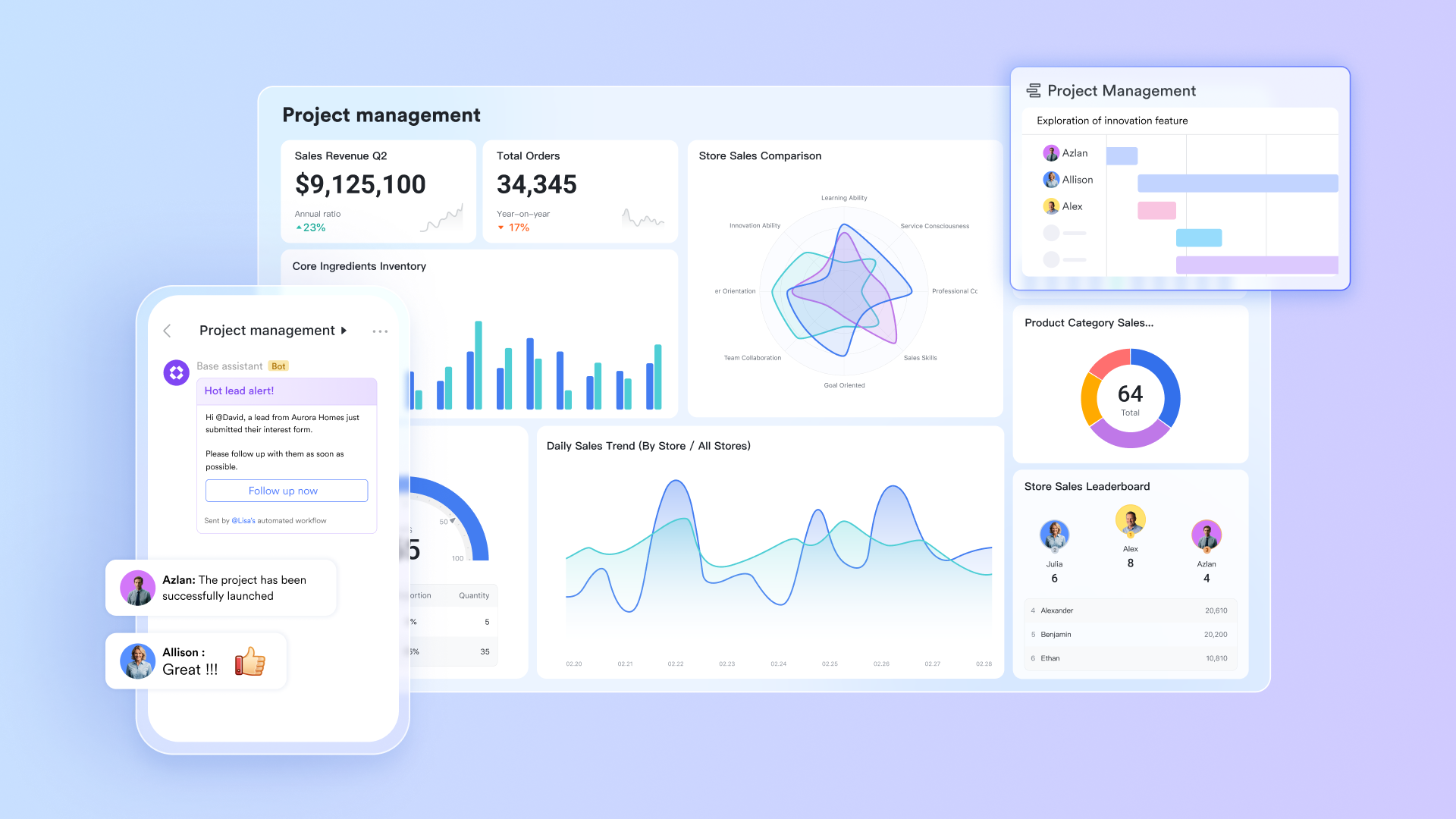
: automates essential hotel processes, enhancing efficiency in daily operations. For instance, it can automatically trigger updates such as notifying housekeeping when a guest checks out or alerting staff to new reservations. Additionally, provides custom automation workflows that streamline the approval processes for changes and requests across various departments, ensuring everything runs smoothly without delays.
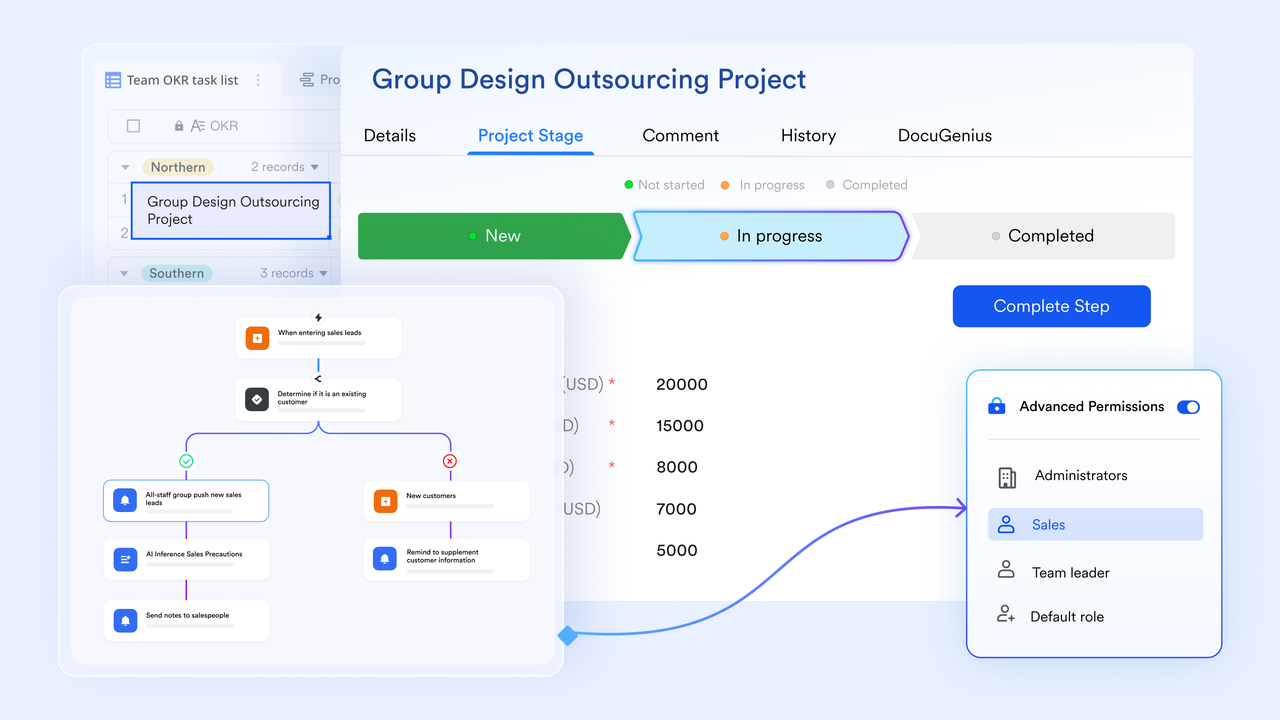
Cross-department visibility: Lark facilitates real-time updates, allowing reception, accounting, and management to operate from the same dataset. This transparency eliminates miscommunication and ensures that all team members have access to the most accurate and timely information, enhancing collaboration and operational efficiency.
: Seamlessly connect Lark with your existing systems, such as booking platforms, chatbots, , and calendars via its open APIs. This flexibility enables hotels to consolidate their operations, reducing data silos and fostering a comprehensive operational ecosystem that adapts to your business requirements.
Remote collaboration: Lark shines in its ability to support remote work, offering secure access through both and desktop devices. This means managers and staff can stay aligned regardless of their location, ensuring that communication remains fluid and operational tasks can be effectively managed from anywhere.
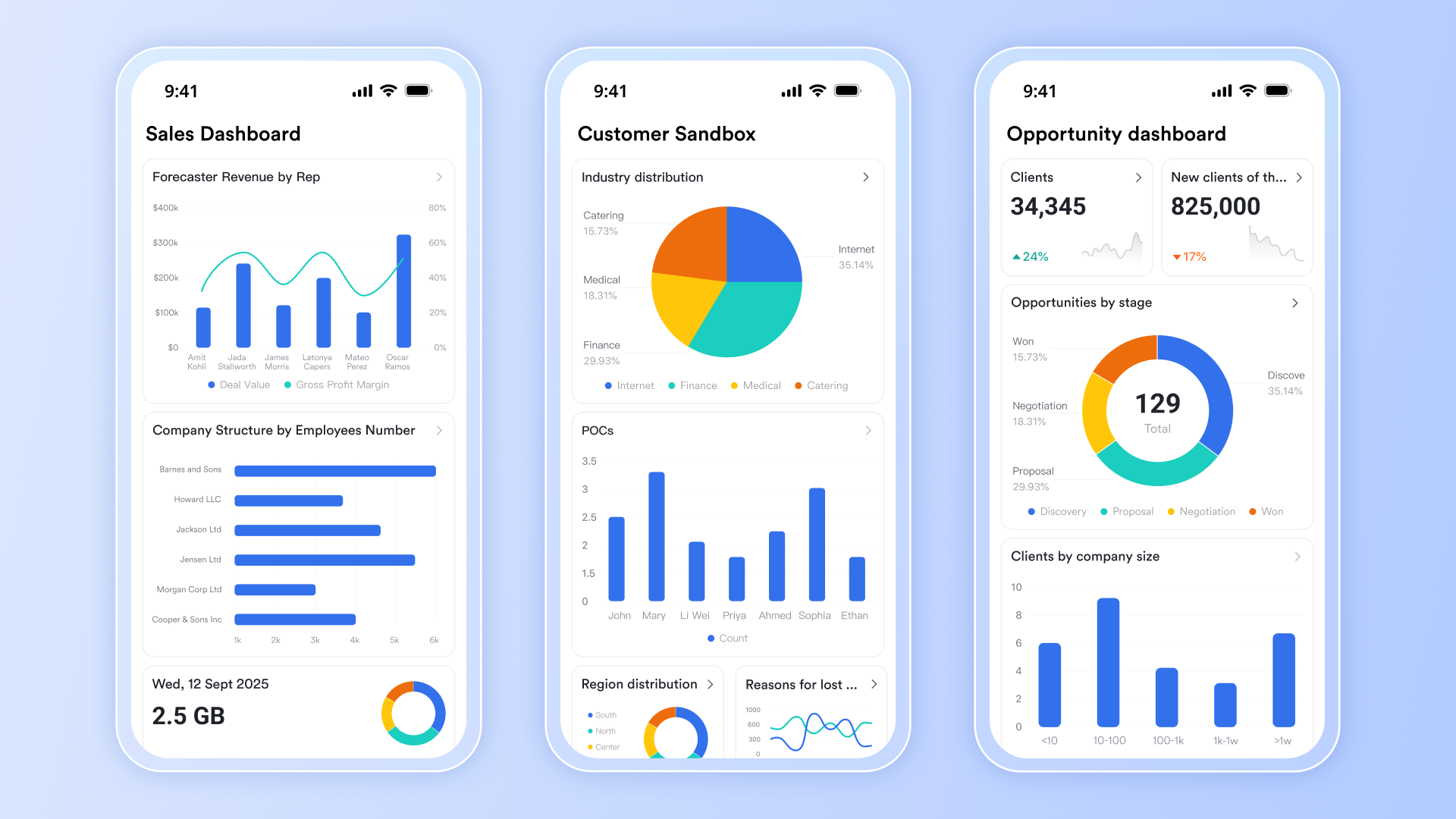
Why I picked Lark:
Because Lark merges collaboration with structured data, it empowers hotels to operate more efficiently without the technical demands of traditional database management. It's ideal for both large corporations and smaller teams exploring how to bring centralized data practices to hospitality.
:
- Starter plan: Free forever plan that includes 11 powerful tools for up to 20 users. It also comes with 100GB of storage, 1,000 automation runs, AI translations, and more.
- Basic plan: $6/user/month (billed annually) for up to 500 users, including everything in Starter plus 1-on-1 video meetings, 5TB of storage, 1,000 automation runs, and more. To know more about Basic plan, .
- Pro plan: $12/user/month (billed annually) for up to 500 users. It includes everything in Basic plus a group calling for up to 500 attendees, 15TB of storage, 50,000 automation runs, and more.
- Enterprise plan: for custom pricing. Supports unlimited users and includes even more automation runs and advanced security, compliance, and management features.
For small teams with simple communication needs

18 months message history
1000 Base automation runs/month
2000 rows per table in Base
Most POPULAR
For companies with comprehensive collaboration and management needs
Unlimited message history
500-participant video meetings
50k Base automation runs/month
20k rows per table in Base
For large companies with advanced security and organizational management needs
Get a personalized demo and pricing
Unlimited message history
500-participant video meetings
15 TB storage + 30 GB storage/user
500k Base automation runs/month
50k Base automation runs/month
Most POPULAR
For companies with comprehensive collaboration and management needs
Unlimited message history
500-participant video meetings
50k Base automation runs/month
20k rows per table in Base
Revolutionize your hotel operations with Lark
2. HotelKeyApp — Simplifying multi-property operations
HotelKeyApp is a cloud-based property management platform that allows hotels to oversee multiple properties, departments, and services from a single interface. The system combines front-office management, housekeeping automation, and guest communication in a mobile-first framework. Its intuitive dashboard visualizes occupancy, revenue, and booking data—ideal for global hotel groups managing complex property networks. Behind its design lies a scalable architecture built to align tightly with any hotel database management system project that stores guest and booking information across different entities.
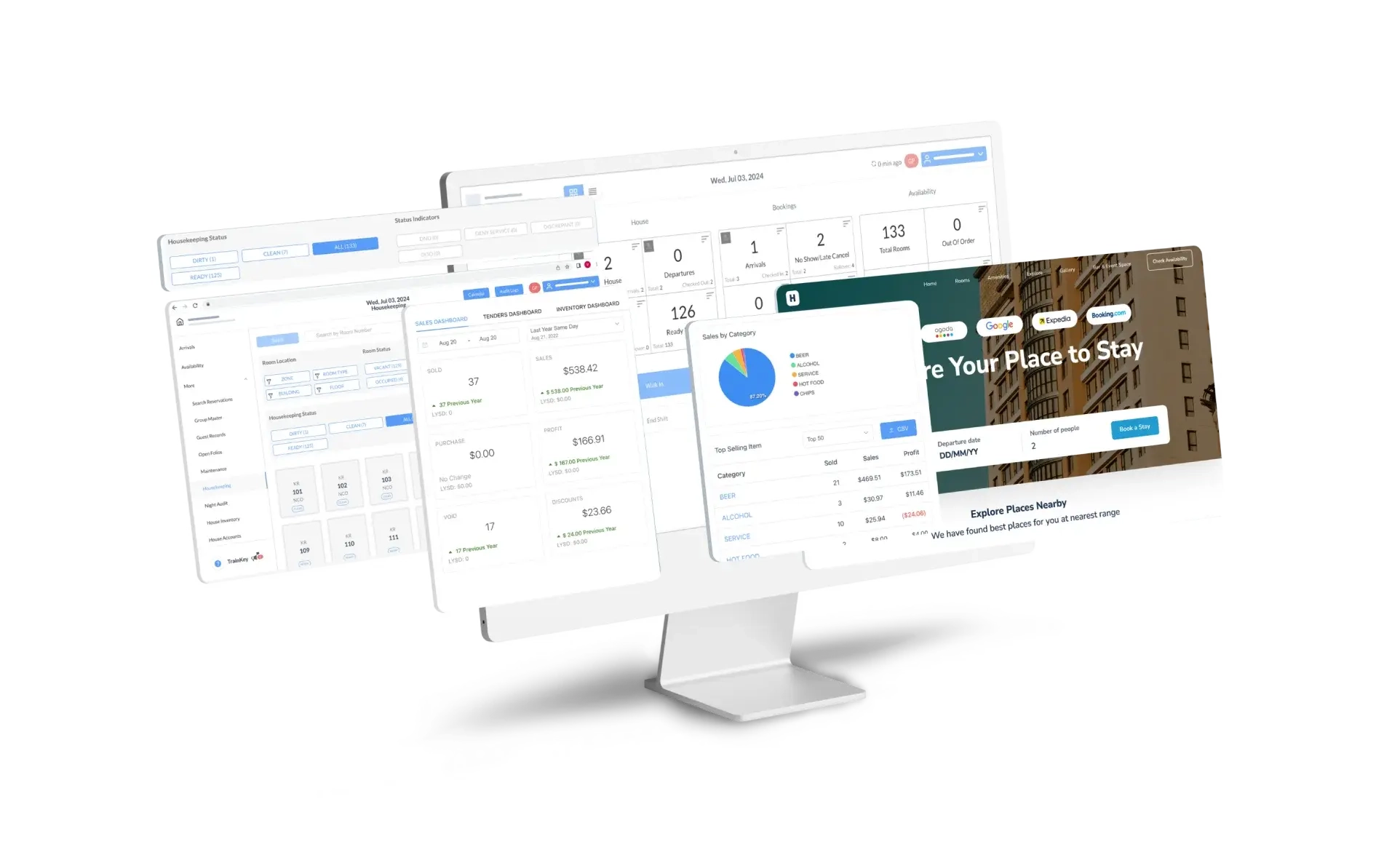
Image source: hotelkey.com
Key features:
- Unified dashboard: Provides real-time insights into occupancy rates, guest activity, and performance metrics across multiple properties.
- Advanced housekeeping module: Tracks cleaning schedules and staff performance through connected mobile devices.
- Smart reservations management: Simplifies bookings by integrating channel managers and online travel agencies (OTAs).
- Cloud scalability: Operates seamlessly across devices while maintaining secure, centralized data access.
- Custom reporting: Offers both prebuilt and customizable analytics views for management oversight.
Why I picked HotelKeyApp:
I value its focus on scalability and user experience—key traits for hotels that need multi-location visibility and strong integration with broader hospitality ecosystems.
Pricing:
Subscription-based pricing model starting from a standard monthly plan; enterprise quotes available for chain properties.
3. Mews — A forward-thinking PMS for automation and integration
Mews is a cloud-native PMS (property management system) and one of the most automation-ready solutions in the hospitality market. Its smart connectivity supports everything from reservations to billing and guest self-check-in. Mews handles high data volumes, integrating smoothly with CRMs, POS systems, and external marketing tools. It's particularly suited for tech-driven hotels that value open APIs and want to design a flexible hotel management system database schema through robust integrations.
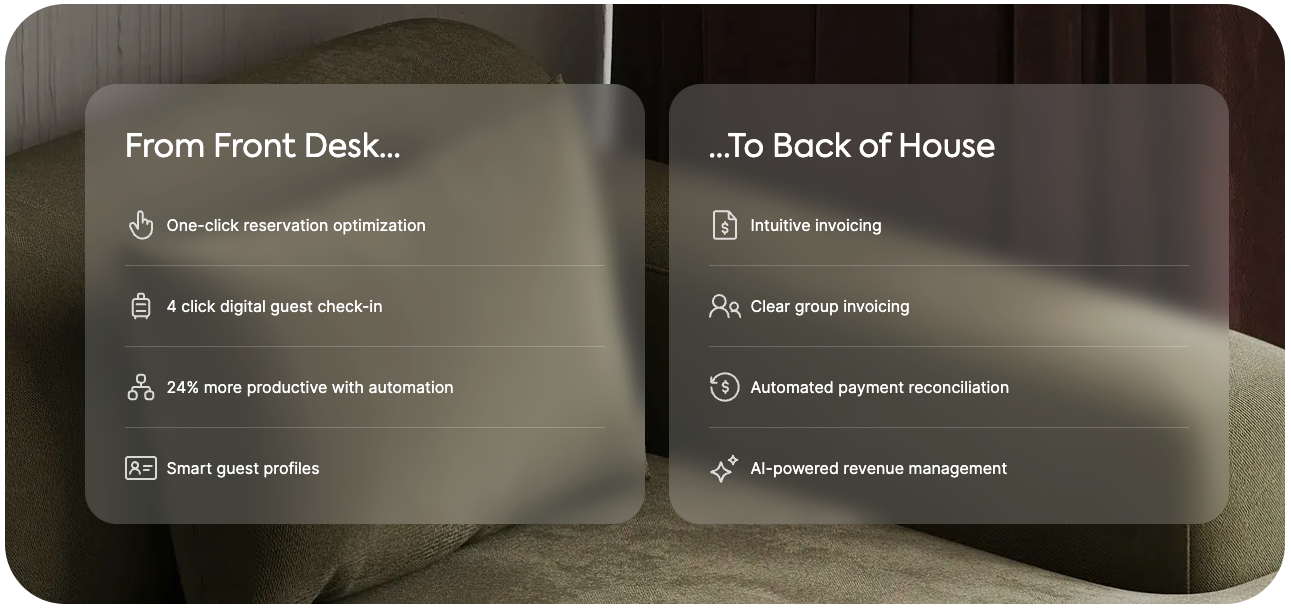
Image source: mews.com
Key features:
- Full automation: Reduces manual tasks such as invoicing, check-ins, and confirmations through built-in workflows.
- Open architecture: Enables deep API connections with over a hundred hospitality apps and tools.
- Advanced analytics: Displays real-time data dashboards for occupancy, financials, and guest trends.
- Cloud mobility: Gives staff mobility—allowing them to manage guest requests from anywhere.
- Guest experience tools: Offers self-service kiosks, online check-ins, and mobile key integrations.
Why I picked Mews:
Mews combines flexibility with strong automation principles, aligning closely with hotels aiming to streamline operations and explore how to create database for hotel management system that optimizes real-time analytics and automation.
Pricing:
Pricing is quote-based, adjustable to each hotel's property size and operational scope.
4. Opera (Oracle Hospitality) — Enterprise-level reliability
Opera is an enterprise-grade hotel management suite developed by Oracle, designed to support the complexities of large hospitality operations. It is known for its reliability, robust integration options, and adherence to high data security standards. Opera unites reservations, inventory management, and guest services in one powerful system capable of handling thousands of transactions simultaneously. For hotels seeking a solution aligned with a refined hotel database management system, Opera's mature architecture ensures compliance, precision, and scalability.
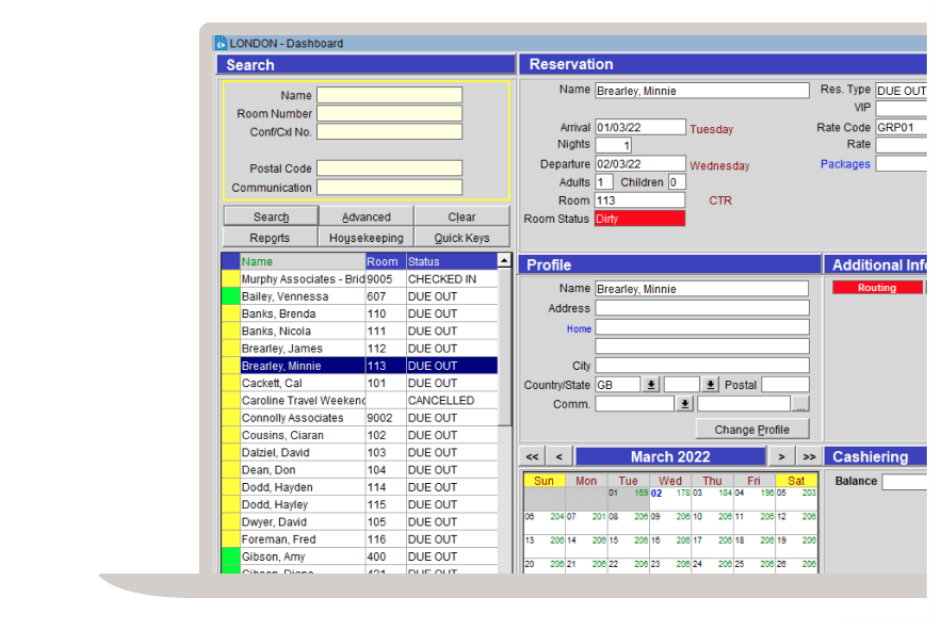
Image source: oracle.com
Key features:
- Comprehensive reservations engine: Centralizes multi-property bookings and tracks availability in real time.
- Integrated CRM: Captures detailed guest profiles and service preferences for personalized experiences.
- Advanced reporting: Provides deep insight into operations, revenue analysis, and performance tracking.
- Global compliance and security: Employs enterprise-level data encryption and access management.
- Modular configuration: Adaptable to both small properties and multinational hotel groups.
Why I picked Opera:
From an enterprise perspective, Opera stands as a benchmark for data consistency and intelligence. For hotels undertaking a large-scale hotel database management system project, Opera's infrastructure offers unmatched reliability and analytical strength.
Pricing:
Custom enterprise pricing available through Oracle's consultation process, depending on deployment scale and business requirements.
5. Preno — Simplicity and efficiency for boutique hotels
Preno is a cloud-based hotel and motel management platform created specifically for small and boutique hotels. It integrates seamlessly with accounting systems like Xero and online booking platforms, minimizing manual data entry. Preno streamlines front-office and back-office tasks by centralizing reservations, room allocation, billing, and reports within an easy-to-navigate interface. This makes it an ideal solution for independent hoteliers or managers who need intuitive tools without extensive IT overhead.
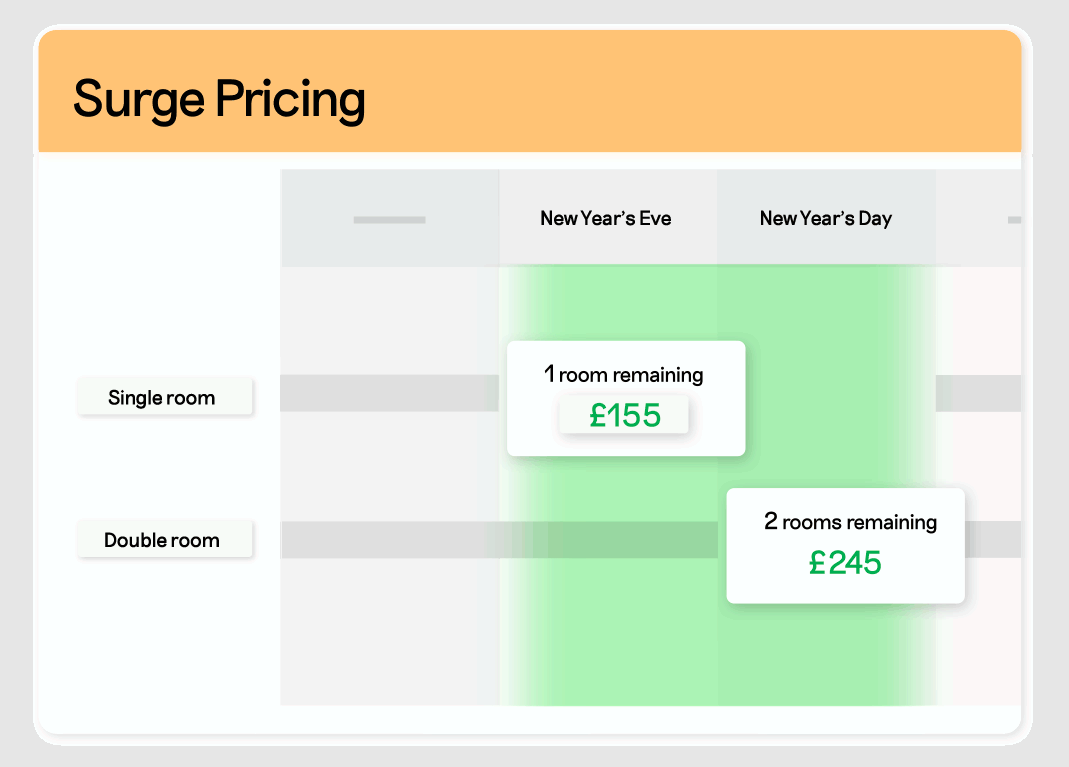
Image source: prenohq.com
Key features:
- Unified operations: Combines room management, housekeeping updates, and payment tracking in one system.
- Integrated accounting: Real-time connection to Xero enables automatic revenue and expense updates.
- Channel management: Synchronizes room availability and bookings across OTAs and direct channels.
- Custom reporting tools: Enables tracking of performance indicators and occupancy statistics.
- Cloud access: Teams can manage property data securely from anywhere.
Why I picked Preno:
Preno stands out for its focus on usability—ideal for owners and managers who want professional-grade software that still feels approachable.
Pricing:
Starts at a monthly subscription per property, with flexible billing plans depending on room count and integrations. For 5 units, yearly paid:
- Enterprise/Groups: Custom pricing
6. Cloudbeds — All-in-one PMS for data-driven hotels
Cloudbeds offers a unified hospitality platform that combines PMS, booking engine, channel management, and revenue optimization tools. Designed for independent hotels through to enterprise chains, it creates a single source of truth for all operational data. Cloudbeds simplifies reservations, automates guest communication, and enhances revenue tracking. It easily complements any hotel database management system setup by consolidating multiple data streams under one dashboard.
Image source: clouded.com
Key features:
- Central reservation system: Tracks bookings from both online and offline sources with automatic availability updates.
- Guest management: Stores guest data, preferences, and communication history for future personalization.
- Integrated payments: Facilitates secure, unified payment processing across all platforms.
- Revenue optimization tools: Uses demand-based algorithms to suggest optimal room pricing.
- API ecosystem: Allows integration with CRM, POS, and custom applications.
Why I picked Cloudbeds:
I like how Cloudbeds functions as a digital command center—it's designed for hoteliers who value analytics and want their operational data connected in real time.
Pricing:
Tiered subscription plans, with customizable modules available via quote based on property configuration.
7. eZee Absolute — Cloud PMS with strong automation
eZee Absolute is a comprehensive cloud PMS providing complete automation for hotel operations. It covers reservations, billing, housekeeping, POS, and reporting through a single platform. Its scalable system fits both small properties and multi-location hotels. eZee Absolute emphasizes connectivity with other hospitality systems, making it particularly suitable for teams refining a hotel management system database schema to ensure consistent data relationships between departments.
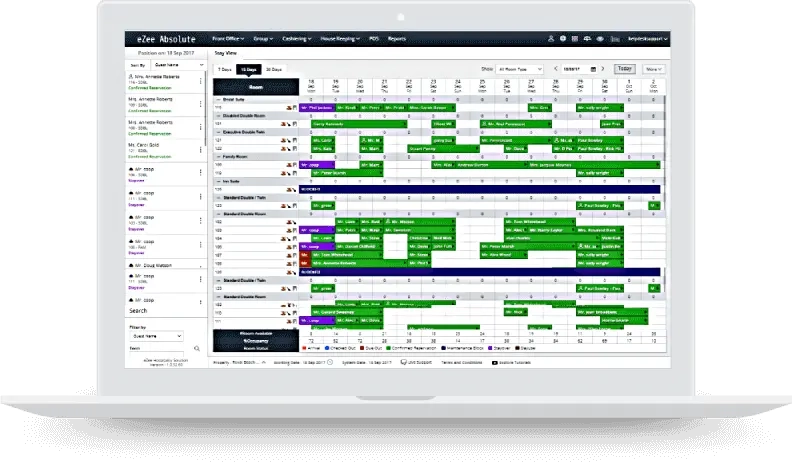
Image source: ezeeabsolute.com
Key features:
- Central dashboard: Monitors reservations, check-ins, and check-outs in real time.
- Housekeeping and maintenance tracking: Automates staff assignments and updates task progress.
- Point-of-sale integration: Unites restaurant and service transactions into room bills seamlessly.
- Multi-device access: Managers and staff can log in from desktops, tablets, or mobiles.
- Reports and analytics: Custom dashboards provide performance and financial insights.
Why I picked eZee Absolute:
It provides a reliable operational core for hotels with multiple revenue streams requiring automated synchronization across outlets.
Pricing:
License available through cloud subscription, with flexible rates depending on room capacity and module selection. For example, for 5 rooms, paid yearly:
- Classic (Only Cloud Property Management System): $44/month
- Elite (Cloud PMS + Booking Engine): $89/month
- Star (Cloud PMS + Channel Manager): $89/month
- Champion (Cloud PMS + Booking Engine + Channel Manager): $134/month
8. RMS Cloud — Scalable property management for growing hotels
RMS Cloud is a web-based PMS that combines hotel operations, reservations, and dynamic pricing in a customizable interface. It supports hotels, serviced apartments, and vacation rentals, offering tools that balance functionality with user-friendly design. RMS focuses on automation, helping properties improve efficiency while reducing overhead. It's often chosen by operators running hotel database management system projects where configuration flexibility and cross-platform integration are key to success.
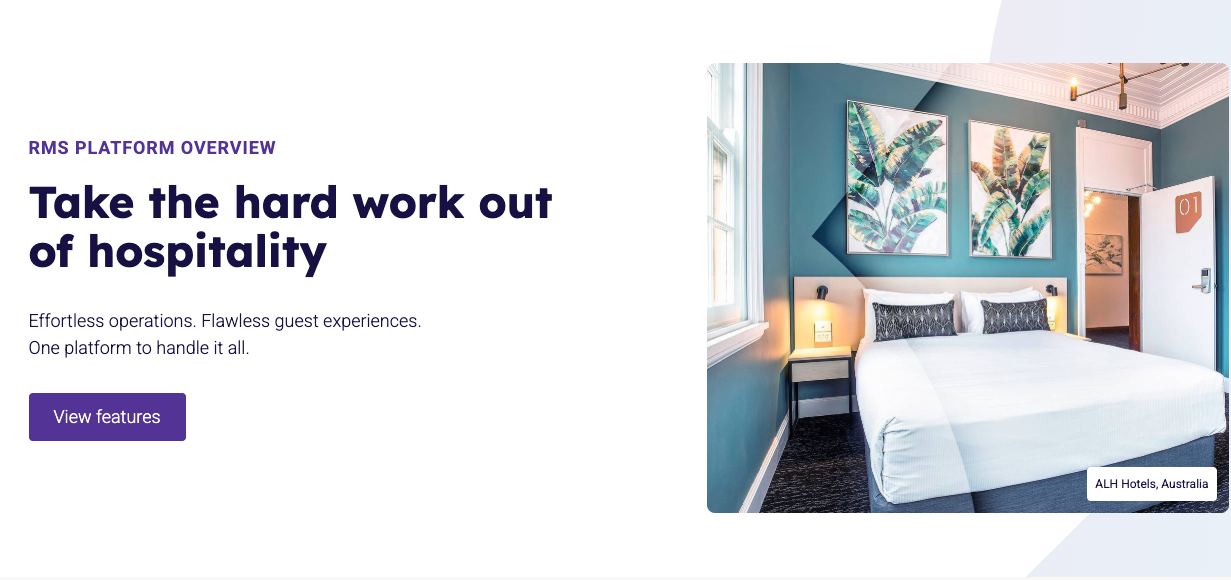
Image source: rmscloud.com
Key features:
- Dynamic pricing module: Adjusts room rates automatically based on demand and seasonality.
- Comprehensive booking engine: Captures direct bookings and synchronizes with external channels.
- Workflow automation: Ensures that confirmations, receipts, and guest communications happen automatically.
- Reporting and BI tools: Visual dashboards offer in-depth operational overviews.
- API integrations: Connects with payment systems, CRMs, and external analytics solutions.
Why I picked RMS Cloud:
Its scalable structure allows hoteliers to grow without switching platforms, maintaining consistent data handling across expansion.
Pricing:
Cloud-based subscription model; pricing varies by number of rooms, location, and feature configuration.
9. Little Hotelier — Designed for small lodgings and B&Bs
Little Hotelier is a PMS tailored for small-scale accommodations, such as boutique hotels, inns, and bed-and-breakfasts. It streamlines front-desk tasks, provides a booking engine, and connects with online distribution channels. The system's intuitive interface helps small business owners manage all their data efficiently without extensive training. With its clear record-keeping and reporting tools, it acts as a simplified hotel database management system suited for independent operations.
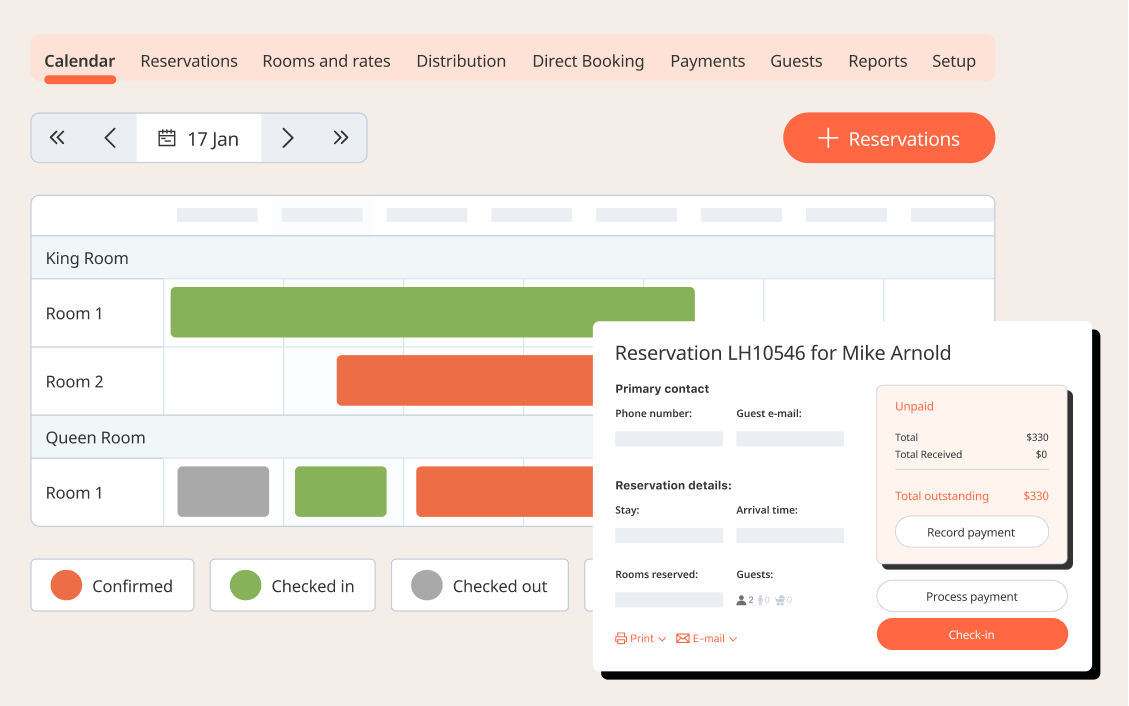
Image source: littlehotelier.com
Key features:
- Booking engine: Converts direct website visitors into confirmed guests.
- Channel manager integration: Syncs room inventory and pricing across OTAs.
- Automated invoicing: Handles billing and payments through built-in templates.
- Guest tracking CRM: Records guest details for repeat-stay personalization.
- Easy setup: Ideal for hoteliers with limited technical expertise.
Why I picked Little Hotelier:
It's built for simplicity and self-sufficiency—two traits that small hotels value when scaling up operations.
Pricing:
Monthly subscription per property, with optional add-ons for advanced analytics or branding features.
For 5 bookable rooms, for example:
- Basics: $39/month+1% fee
- Revenue optimiser: $179/month
10. Guestline — Flexible an data-driven PMS for modern hotels
Guestline is a UK-developed property management platform that integrates PMS, distribution, and payment tools into one cloud system. Known for its adaptability, it fits independent hotels as well as chains seeking to unify data processes. Guestline connects every aspect of hotel operations—bookings, housekeeping, and revenue management—under one database, working seamlessly with most third-party systems. It's valuable for teams interested in further optimizing a hotel database management system project through modular deployment.
Image source: theaccessgroup.com
Key features:
- Comprehensive PMS: Combines reservations, availability management, and automation tools.
- Distribution platform: Manages rates and room inventory across multiple OTAs.
- GuestPay module: Handles transactions securely while reconciling payments automatically.
- Business intelligence tools: Generates revenue and occupancy reports to support strategy planning.
- Cloud-native design: Reduces infrastructure costs while maintaining high security and reliability.
Why I picked Guestline:
I find Guestline's modularity compelling—it gives hoteliers the freedom to choose functions that align with their data and operational goals.
Pricing:
Custom quotation based on hotel size, selected features, and integration requirements.
Best practices for maintaining a hotel database management system
Establishing a strong data foundation is only the first step; maintaining it properly preserves efficiency, compliance, and accuracy. Sustained upkeep ensures a system remains reliable, especially when scaling operations or integrating new platforms. Based on hospitality and best practices, several essential maintenance strategies stand out.
Regular data validation and cleanup
Eliminate duplicate records, update outdated guest profiles, and confirm consistent formatting across tables. A clean database ensures dependable insights and streamlined performance.
Backup and recovery planning
Regular automatic backups—both local and cloud-based— from system failures or data corruption. Test recovery processes periodically to verify they function correctly in emergencies.
Secure access management
Assign permissions according to job roles. Limiting access to sensitive information minimizes security risks and complies with privacy regulations.
Documentation and training
Keeping up-to-date system documentation makes future maintenance easier. Staff training ensures correct system usage, leading to fewer data-entry errors in the long run.
Version updates and audits
Running periodic audits after each software upgrade maintains operational stability, especially for teams experimenting with how to create database for hotel management system solutions that evolve alongside other property management tools.
Overall, consistent and well-documented maintenance transforms an HDMS from a static system into a dynamic business asset.
How to choose the right tool for hotel database management
Selecting a hotel database management system starts with identifying your priorities—efficiency, integration, automation, or scalability. Every tool serves a unique purpose, but your choice should fit how your team actually works, not just what looks advanced on paper.
- If you want fast setup and teamwork across departments, choose . Lark stands out for its all‑in‑one design: Messaging, cloud docs, and workflow automation all connect directly with a flexible database function. It's ideal if you want structured data and communication to live in one place.
- If you manage multiple hotels, choose HotelKeyApp or Opera. They provide centralized management, strong compliance, and performance across large networks—suited for multi‑property operations.
- If automation is your focus, choose Mews. Mews streamlines repetitive tasks, integrates with third‑party systems, and fits easily into projects exploring how to create database for hotel management system using open APIs.
- If you run a boutique or small property, choose Preno or Little Hotelier. Their simple, make daily operations easy and cost‑efficient.
- If analytics and scalability matter most, choose Cloudbeds or RMS Cloud. Both excel in reporting, pricing automation, and data visualization.
However, if you prefer an adaptable tool that combines collaboration, data, and automation—Lark remains the most balanced choice. It brings and structured data into one modern environment fit for dynamic hotel teams.
Discover how Lark can streamline your operations today
Future trends in hotel database management
The hospitality industry continues evolving with technology, and databases are now at the center of innovation. From AI-powered personalization to predictive analytics, the hotel database management system project of the future looks more interconnected and intelligent. Let's explore what's shaping tomorrow's landscape.
AI-driven insights and automation
Artificial intelligence will refine how hotels analyze guest data—suggesting promotions, predicting occupancy surges, and . AI-driven sentiment analysis from guest feedback is also set to influence service delivery.
IoT and smart property integration
With connected devices—from smart thermostats to digital locks—hotels can collect real-time data to optimize energy consumption and enhance guest comfort. These IoT integrations introduce new dimensions to hotel management system database schema design, emphasizing data efficiency and security.
Interoperable ecosystems
As more systems embrace open APIs, interoperability will become a central requirement. Tools like Lark and other cloud-based apps will form linking PMSs, CRMs, and workforce tools directly to the database layer.
Enhanced data governance and compliance
Future systems will include built-in compliance frameworks to handle data privacy laws globally. Strong governance ensures that sensitive data is protected while maintaining smooth cross-border operations.
Innovations in computing will continue to make in hospitality more dynamic, secure, and people-centric—positioning hotels to adapt to changing guest expectations and operational challenges with confidence.
Conclusion
Building or choosing a hotel database management system is less about technology and more about alignment—between your team, data, and guest experience goals. Tools today do more than store information; they unite communication, automation, and analytics into a single, intelligent ecosystem.
If your priority is flexibility, collaboration, and efficiency, Lark stands out as a practical choice. Its combination of databases, messaging, and workflow tools creates a connected hotel environment that grows with your operations. Whether you're refining your hotel management system database schema, exploring how to create database for hotel management system, or managing a full-scale hotel database management system project, taking a thoughtful, scalable approach ensures future‑ready hospitality excellence.
FAQs
Is there a hotel database?
Yes. Most hotels use centralized databases that store information on guests, reservations, billing, inventory, and staff operations. A modern hotel database management system ties all of these data resources together to ensure accuracy and real-time accessibility.
What is CRM for hotels?
A hotel CRM (Customer Relationship Management) system helps hotels collect and analyze guest data to improve communication, retention, and personalization. It integrates data from multiple sources—bookings, PMS, marketing platforms—to tailor offers, enhance loyalty, and create consistent guest journeys across the stay cycle.
What is a hotel database?
A hotel database is a structured data system that organizes all hotel‑related information—such as customer profiles, room details, and transactions—into connected tables. In practice, it supports operations, reporting, and guest service management through a clear hotel management system database schema.
Is there a free version of PMS software?
Yes. Some providers offer limited free plans or trial versions of property management software, typically with core features like reservations and billing. However, full functionality—including integration with CRM systems or multi‑property features—is usually available only in paid versions
Related reading