There's a unique energy when a new project gets the green light—a palpable sense of possibility. But standing between that initial excitement and productive work is a single, make-or-break event: the project kickoff meeting. All too often, this critical moment is wasted. Instead of a launchpad, it becomes a formality, leaving teams more confused than inspired and draining the project's initial momentum before it even begins.
This guide is your blueprint to change that. Forget simple checklists; this is a comprehensive framework for mastering the modern kickoff. We will show you how to build deep alignment, genuinely inspire your team, and—most importantly—turn discussion into immediate, tangible action. It’s time to learn how to set your project up for success from the very first day.
Take charge of your project kickoff meeting now
What is a project kickoff meeting?
For anyone new to project management, a project kickoff meeting is the first official meeting between the project team, , and sometimes the client, to launch the project. It's the formal start. But its real purpose goes much deeper than that.
The true kickoff meeting purpose is not just to share information; it is to create a shared reality. It is the moment where a collection of individuals begins to transform into a single, unified team with a common goal. Think of it as the foundational ceremony for your project. This is where you establish alignment on the project's goals, , and agree on the "rules of engagement" for how you will work together.
A successful kickoff achieves two fundamental things: alignment and momentum.
- Alignment means everyone leaves the room with the same understanding of what you are building, why you are building it, who is doing what, and what success will look like. It's about proactively eliminating ambiguity and surfacing hidden assumptions.
- Momentum is the energizing force that propels the project forward. A great kickoff generates enthusiasm and provides a clear, actionable path for the days and weeks ahead, ensuring the excitement from the meeting doesn't fade the second everyone logs off.
It's also helpful to distinguish between two common types of kickoffs. An internal kickoff involves just your core project team. It's often more informal and tactical, focusing on roles, processes, and internal workflows. A client kickoff, on the other hand, includes the customer or external stakeholders. Its focus is on building trust, managing expectations, and confirming the project vision and . While the agenda might be similar, the tone and emphasis will be different. This guide will provide a framework you can adapt to both.
The kickoff before the kickoff: How to prepare for success
I'm going to share a secret that experienced project managers live by: the success of a project kickoff meeting is decided long before the meeting ever begins. Thorough preparation transforms the kickoff from an information dump into a productive working session, ensuring you use everyone's time effectively. Here is your essential checklist to guide your preparation.
Step 1: Define the "why"
Before you can align the team, you must have clarity yourself. Be able to articulate the project's purpose simply and compellingly. Ask yourself: What problem are we solving? What does success look like six months from now? What are the ?
Step 2: Identify your people
A meeting is only as effective as the people in it. Identify the core team, sponsor, and key stakeholders. Then, create a simple to clarify roles and decision-making authority from the start.
Step 3: Create a central hub with core documents
Instead of scattered files, you can create a single "source of truth". This will be your central project hub. Here, you should draft and embed the core documents for the team to review:
- : A high-level summary of scope, objectives, and participants.
- Scope statement: Clearly define what's in and out of scope to prevent future creep.
- Draft timeline: An overview of major project phases and key milestones.
Step 4: Send the invitation with context
Never send an empty invite. Your invitation should include a brief project summary and a link to your docs. And here features like helps a lot, which can send invitations to stakeholders with every doc you need during the kickoff meeting. Crucially, add a clear call to action, like: "Please review the linked Project Scope and Timeline before our meeting. Add any initial comments directly to the doc so we can have a more productive live discussion." This starts collaboration before the meeting even begins.
By assigning pre-reading and encouraging asynchronous feedback, you are already starting the collaboration process. Questions that might have taken up valuable meeting time can be answered in the document beforehand. When you finally gather for the live meeting, you're not starting from zero. You're starting from a place of shared knowledge, ready for a high level strategic conversation.
Plan your kickoff meeting with an effective tool
How to run the project kickoff meeting: A step-by-step blueprint
Now that your preparation is complete, it's time to focus on the main event. Running a high-impact project kickoff meeting is a leadership skill, and like any skill, it improves dramatically with the right framework. This isn't about simply reading from a list; it's about orchestrating a productive conversation that builds tangible momentum.
This step-by-step blueprint is your guide to structuring that conversation effectively. It serves as your detailed , ensuring you cover all critical ground and guide the team from initial introductions to unified, concrete action.
Blueprint step 1: Start with people and purpose
Every great project is built on human connection and a shared mission. Begin the meeting by focusing on these two elements to set a collaborative and inspiring tone.
- What it is: A round of introductions followed by a compelling presentation of the project's vision.
- Why it matters: It breaks the ice, makes team members feel seen, and immediately grounds everyone in the answer to "Why are we doing this?" Starting with purpose gives meaning to the work that will follow.
- How to run this step: Don't just go around the room sharing names and job titles. You can use a simple, engaging icebreaker to connect the person to the project. After introductions, the project sponsor or manager should passionately and concisely present the project's purpose. Tell the story behind it. What customer pain point are you solving? What business opportunity are you chasing? Make the team feel like they are part of something important.
- Hybrid tip: for introductions. For example, have a section in your doc with everyone's picture and ask them to add a virtual sticky note with their answer to the icebreaker question. It makes remote participants feel more present.
Blueprint step 2: Define the "what"-scope and goals
This is the intellectual core of the kickoff. You are moving from the inspirational "why" to the concrete "what" you will build together.
- What it is: A detailed review of the project background, the specific problem you are solving, , and the key deliverables.
- Why it matters: This is your primary opportunity to create alignment and prevent future scope creep. Clarity in this step is non-negotiable.
- How to run this step: Refer back to the project charter and scope statement you prepared. Visually walk the team through the project's boundaries. Clearly state: "This is what we are doing." Then, just as clearly state: "This is what we are not doing." Review the primary objectives and how you will measure success (the KPIs). This isn't a lecture; pause frequently and ask, "Does this match everyone's understanding?" or "Are there any gray areas here we need to clarify?"
- Hybrid tip: Have your central screen-shared throughout this entire section. As you discuss, you can even make minor clarifications to the text live, so everyone sees the agreement being recorded in real-time.
Blueprint step 3: Outline the "how"-plan and timeline
Now that the team knows what you're building, you need to provide the map of how you'll get there.
- What it is: A high-level review of the project's major phases, , and any known dependencies between tasks or teams.
- Why it matters: It makes the project feel real and achievable. It also helps the team understand the project's rhythm and when their contributions will be most critical.
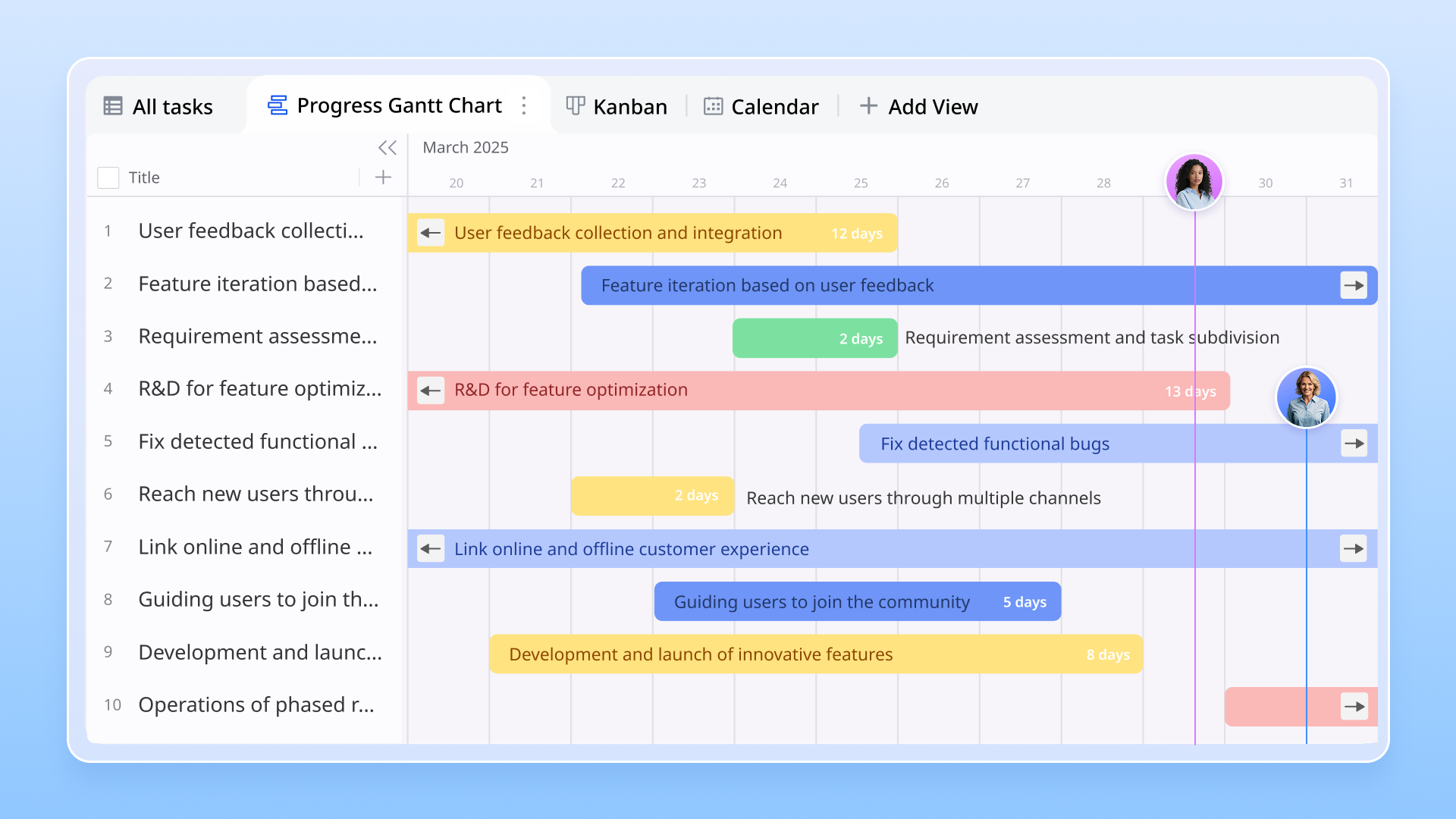
- How to run this step: Present a visual timeline. This could be a simple roadmap slide or a more detailed from a feature like . Focus on the big rocks, not the pebbles. For example: "Phase 1 is Research & Discovery, which will take three weeks. Phase 2 is Design & Prototyping, which will take four weeks." Highlight any critical dependencies, such as, "We can't begin development until the client has approved the final designs."
- Hybrid tip: Share a link to the interactive timeline tool you are using, rather than just showing a static image. This allows team members to explore it on their own and understand how their work fits into the larger picture.
- Recommended project kickoff meeting agenda template: The is perfectly designed for this. It goes far beyond a simple list of dates. This template allows you to visually map the entire flow of the project, breaking down large phases into individual tasks, setting durations, and assigning owners.
Blueprint step 4: Clarify the "who"—roles and responsibilities
This step is about ensuring everyone knows exactly what is expected of them and who they can turn to for decisions.
- What it is: A quick review of the or roles and responsibilities document you prepared.
- Why it matters: It establishes clear ownership and accountability from day one, which is essential for smooth execution. It eliminates the "I thought someone else was doing that" problem before it ever happens.
- How to run this step: Briefly present the . Don't read every cell. Instead, focus on the key roles. "I, as the Project Manager, am accountable for the overall timeline and budget. Sarah is responsible for all design deliverables. Mark, as the tech lead, will be consulted on all technical feasibility questions." Give each team member a moment to confirm their understanding of their role.
- Hybrid tip: In your central doc, @mention each person next to their name in the RACI chart. This creates a notification for them and serves as a permanent, searchable record of their role with tools like .
Blueprint step 5: Agree on communication rules
Setting clear expectations for how the team will communicate is one of the most high-leverage activities you can do in a project management kickoff meeting.
- What it is: A simple agreement on the , channels, and cadence for project communication.
- Why it matters: It prevents information silos and communication chaos. It ensures everyone knows where to find information and how to share updates.
- How to run this step: Be specific. "We will have a 15-minute daily stand-up in our 'Project Falcon' chat group. All formal documentation and meeting notes will live in our shared doc. Weekly progress reports will be posted in that same doc every Friday by 4 PM." Setting these "rules of the road" reduces friction throughout the.
Blueprint step 6: Confront risks and open the floor
Great leaders don't just plan for success; they prepare for challenges. This section builds trust and psychological safety.
- What it is: A transparent discussion about potential risks and a dedicated time for an open Q&A session.
- Why it matters: Acknowledging risks shows foresight and tells the team that it's safe to talk about problems, not just successes. The Q&A is your chance to surface any final misalignments or anxieties.
- How to run this step: Come prepared with a list of 2-3 potential risks you've already identified. "One risk is a potential delay in receiving the API from the partner team. We are mitigating this by..." Then, open the floor by asking, "What other potential roadblocks or concerns are on your mind?" For the Q&A, create a safe space. No question is a dumb question. Patiently answer every query.
Blueprint step 7: Solidify next steps and end with clarity
This is the most critical part of your entire kickoff. Do not end the meeting without it. A kickoff without clear next steps is just a conversation. A kickoff with clear next steps is the start of real work.
- What it is: A concise summary of the most immediate action items, who owns each one, and when they are due.
- Why it matters: It converts the meeting's energy directly into momentum. Everyone leaves knowing exactly what they need to do first.
- How to run this step: Be explicit. Go through the list one by one. "Okay, our immediate next steps are: 1) Sarah will finalize the design mockups by Friday. 2) David will set up the development environment by end of day tomorrow. 3) I will send out the follow-up notes from this meeting within the hour." Everyone should nod in agreement, confirming they understand their tasks.
Master your kickoff meeting today
After the meeting: How to maintain momentum
The energy from a great kickoff can fade quickly if there isn't a strong follow through. The project isn't truly kicked off until you have completed the post meeting steps that solidify alignment and translate discussion into documented action. This is your chance to reinforce the agreements made and keep the momentum going.
Step 1: Send your follow-up within 24 hours
Timeliness is key. Your follow up reinforces the importance of the meeting and provides a record while the details are still fresh in everyone's mind.
But don't just send another email that will get lost in everyone's inbox. Instead, share the link to your "single source of truth"—the doc you created during your preparation. By now, this document is a complete artifact of your kickoff. Update the doc with a clean summary of key decisions, and ensure the and the are attached.
Your message can be simple and direct: "Team, thank you for a fantastic and productive kickoff session today. Here is the link to our Project Doc, which now contains the meeting recording, full transcript, and a summary of our decisions and next steps. Please review and confirm your action items."
Step 2: Make action items visible
The "next steps" you defined at the end of your meeting must immediately be moved from a list of notes into a visible, . A project management tool is essential for this.
Ensure every single task that was assigned is created in your team's task management system like . Each task should have a clear owner and a specific due date. This visibility is crucial for accountability. It moves the tasks from a vague promise into a concrete commitment that the entire team can see and track. This is the difference between hoping things get done and ensuring they do.
Step 3: Ask for feedback (the kickoff post-mortem)
This final step is one that most project managers skip, but it is a powerful way to build trust and improve your own process. It shows your team that you value their perspective and are committed to leadership and collaboration.
Send out a very short, asking for feedback on the kickoff meeting itself. Keep it anonymous to encourage honest responses. You only need a few questions:
- On a scale of 1-5, how clear do you feel about the project's goals after the kickoff?
- What was the most valuable part of the meeting for you?
- What is one thing we could do to make our next project kickoff even better?
The insights you gain will be invaluable, helping you refine your approach for every project that follows. This simple act of asking for feedback signals to your team that you are all in this together, building not just a project, but a better way of working.
Keep your team aligned and engaged in a unified platform
Unify your kickoff: From preparation to action in one place
Running a great project kickoff requires managing a lot of moving parts: documents, schedules, conversations, and action items. Traditionally, this meant juggling a handful of disconnected tools—a word processor for the agenda, a separate cloud drive for files, a video conferencing app for the meeting, a chat app for follow-up, and a project management tool for tasks.
A modern, unified platform like is designed to solve this exact problem. By bringing all these functions into a single, connected workspace, you can streamline the entire kickoff process, from the to the final follow-up task. Here's how to use a unified tool to solve the most common kickoff challenges.
Create a single home for your entire project
The most common point of failure in meeting preparation is scattered information. When your agenda is in one document, your project scope is in a spreadsheet, and your designs are in a separate folder, your team is already starting from a place of confusion.
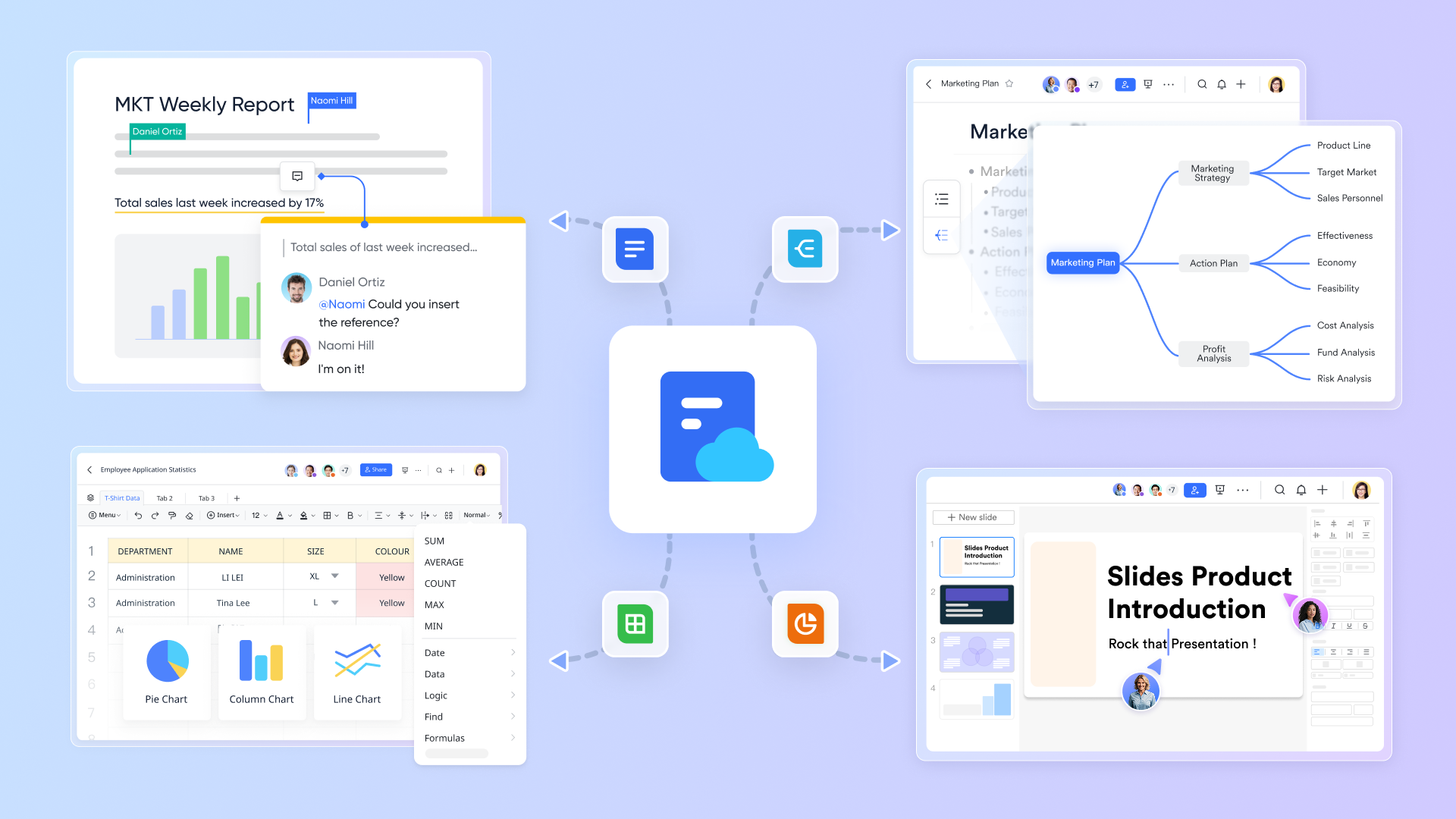
solves this by acting as a "single source of truth." You can create one master document for your kickoff and embed everything directly within it—your project charter, timelines from , design files, and even introductory videos. Instead of sending five different links or attachments, you send one. When team members need to do their pre-reading, they simply open this document, where they can use comments and @mentions to ask questions asynchronously before the meeting even begins.
Capture every word and turn talk into action
As a meeting leader, you face an impossible choice: either focus on facilitating the conversation or furiously type notes, trying to capture every detail. You can't do both well. This is where automated transcription tools like are transformative. With one click, you can enable live transcription for your meeting. This not only provides a complete, searchable record but, more importantly, it liberates you to actually lead. You can focus on listening, asking thoughtful questions, and managing the room's energy when you use .
The real magic happens when a decision is made. Imagine a team member says, "I'll create the initial wireframes and have them ready for review by this Friday." Instead of just hoping you remember that, you can highlight that exact sentence in the , click "Create Task," assign it to that person, and set the due date. The commitment is captured, assigned, and tracked before you even move to the next topic. This seamless conversion of conversation into accountable action is the key to maintaining momentum. 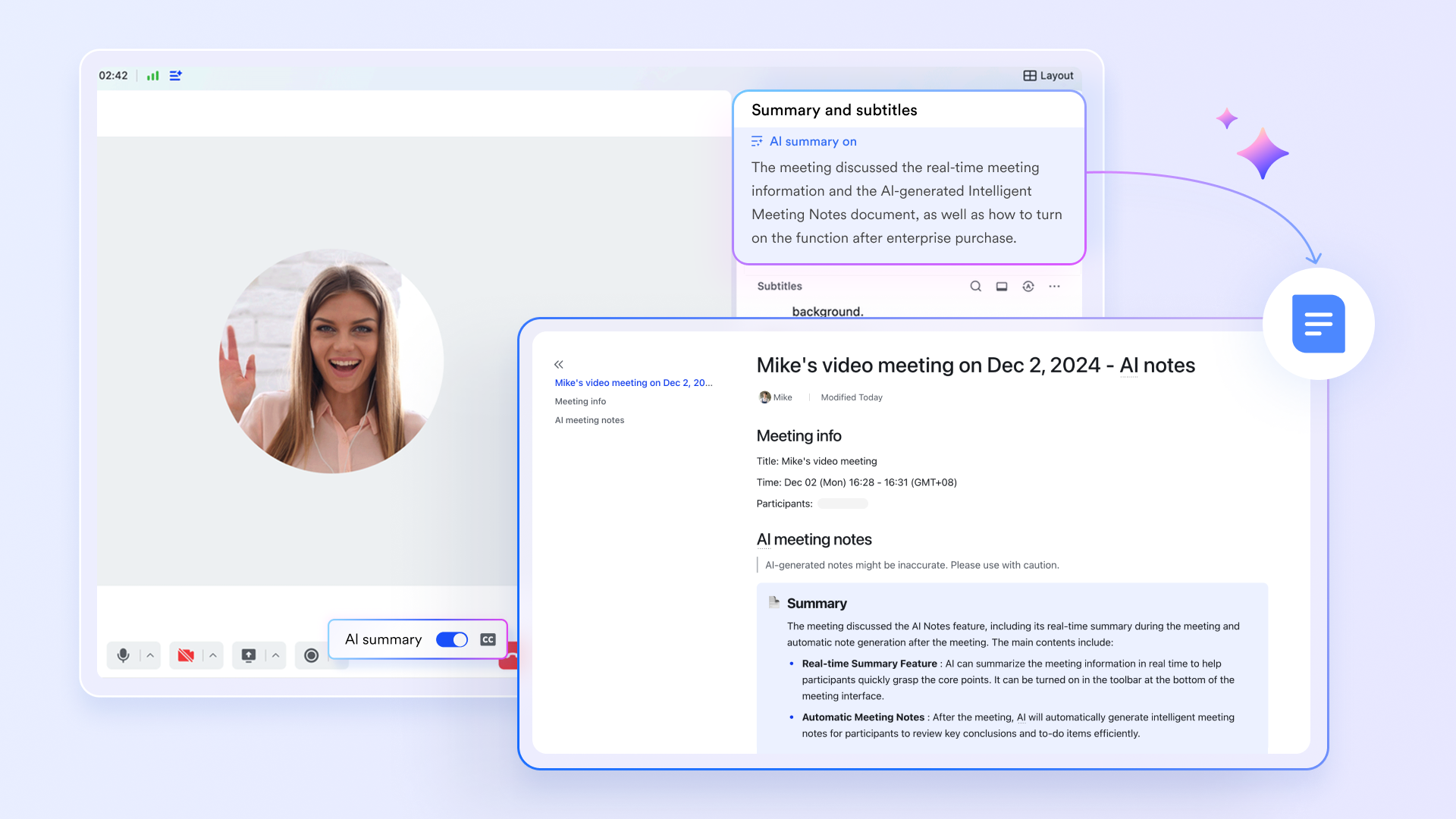
Keep everything connected, from calendar to conversation
Friction is the enemy of progress. Searching for the meeting link, finding the right document, and figuring out where to ask follow-up questions are all small points of friction that drain energy. A unified platform eliminates this. The workflow becomes seamless:
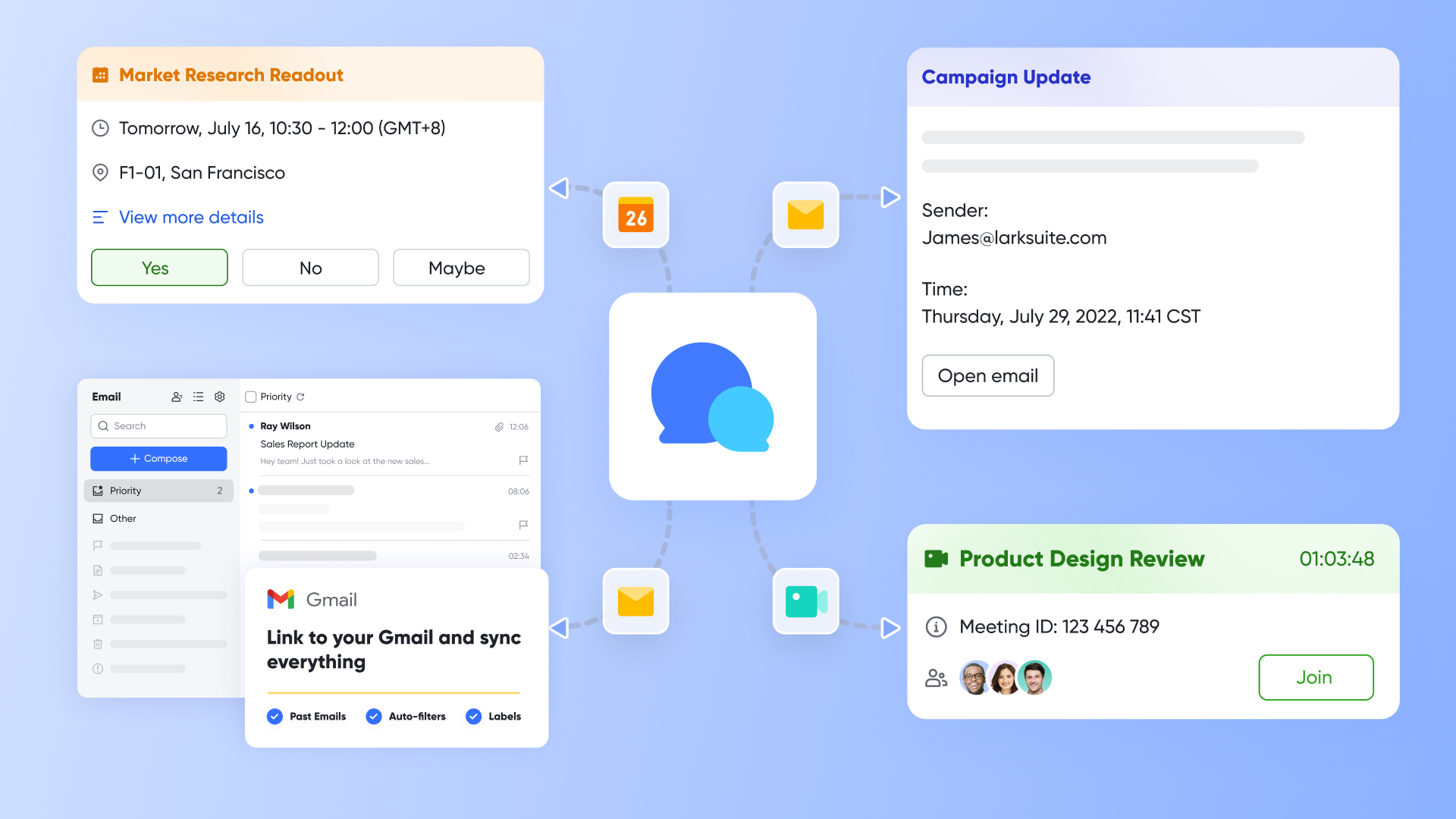
- You create the event in and attach your docs directly to the invitation.
- Attendees join the with one click from the calendar event.
- During the meeting, everyone can open and co-edit the same docs to follow along.
- After the meeting, the conversation continues in the project's dedicated group, which is permanently linked to the calendar event and the document. This connected ecosystem means there is zero friction moving from scheduling, to preparing, to meeting, to following up. Everything exists in a shared, logical context.
Build a living plan that drives accountability
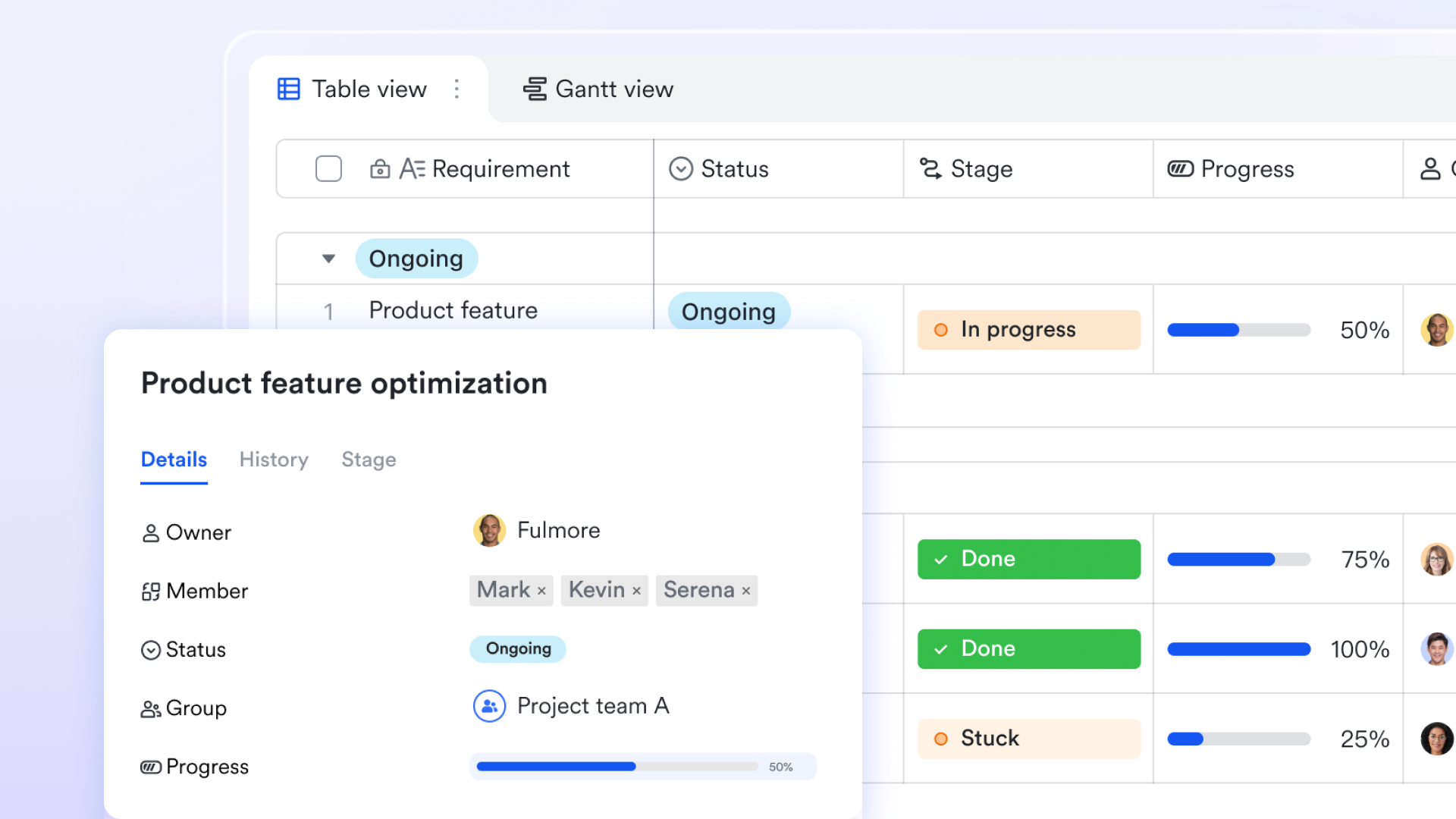
The action items you create during the kickoff should not die in a static document. They are the seeds of your project plan and must be nurtured in a living system. You can translate the action items from Lark AI Meeting Notes to Tasks with just one click. You can also set tasks in to get fully control.
If you choose the second method, you can build a complete project plan around them. You can visualize tasks on a , assign dependencies, and track progress against your milestones. The commitments made verbally in the meeting are now visible to everyone, creating a culture of transparency and accountability.
- Free plan: Includes 11 powerful products, supporting up to 20 users, 100 GB storage, 1,000 automation runs and unlimited AI translation in chats, docs and email.
- Basic plan: $6/user/month (billed annually) for up to 500 users. Includes everything in Starter plus unlimited message history, 5TB storage, 1,000 automation runs, and more. Some users may need to to purchase.
- Pro plans: $12/user/month, supporting up to 500 users. Includes unlimited message history, 50,000 automated Base workflow executions per month.
- Enterprise plan: for custom pricing. Supports unlimited users and includes even more automation runs and advanced security, compliance, and management features.
For small teams with simple communication needs

18 months message history
1000 Base automation runs/month
2000 rows per table in Base
Most POPULAR
For companies with comprehensive collaboration and management needs
Unlimited message history
500-participant video meetings
50k Base automation runs/month
20k rows per table in Base
For large companies with advanced security and organizational management needs
Get a personalized demo and pricing
Unlimited message history
500-participant video meetings
15 TB storage + 30 GB storage/user
500k Base automation runs/month
50k Base automation runs/month
Most POPULAR
For companies with comprehensive collaboration and management needs
Unlimited message history
500-participant video meetings
50k Base automation runs/month
20k rows per table in Base
Conclusion
A project kickoff meeting is far more than a formality. It is your single greatest opportunity to align your team, generate powerful momentum, and set the strategic foundation for success. It's where you turn a project plan into a shared mission.
By moving beyond simple templates and embracing a holistic approach—thoughtful preparation, dynamic facilitation, and diligent follow-up—you transform the kickoff from a passive meeting into an active launchpad. While this process has many moving parts, it doesn't need to be complicated. The key is to eliminate friction by bringing every step into a single, connected workspace.
If you're ready to run kickoffs that replace confusion with clarity and talk with immediate action, give a try. It's time to launch your next project with the confidence and alignment it deserves.
Elevate your project kickoff skills now
FAQs
What are some 4-5 things discussed at the project kickoff meeting?
You should cover the project's goals and scope, the high-level timeline, team roles and responsibilities, and the immediate next steps. This provides clarity on the project's "why," "what," "who," and "how" from the very start.
What to discuss at a project kick off meeting?
Discuss the project's purpose, scope, and overall plan. It's also critical to align on roles, agree on communication rules, and capture all decisions. Using a unified tool like Lark helps turn these discussions directly into trackable tasks.
Who attends a project kick-off meeting?
The meeting should include the core project team, the project manager, the project sponsor, and key stakeholders. If it's a client project, their primary representatives are essential for alignment. Keep the group focused on those directly involved.
How long should a project kick off meeting be?
Aim for 60-90 minutes, which is long enough to cover all critical points without losing focus. You can keep it effective by sharing all pre-reading materials in a central Lark Doc beforehand, so meeting time is saved for discussion.
Related reading