Nowadays, bringing innovative ideas to life requires precision, collaboration, and a keen eye for detail. The journey from concept to creation is often complex, with numerous decisions and iterations shaping the final outcome. A critical component of this journey, often overlooked or undervalued, is the design review process. This systematic examination of a design is essential for ensuring quality, functionality, and alignment with project goals. Without a robust framework for evaluating designs, teams risk encountering costly errors, delays, and a disconnect between vision and execution. This guide delves into the core aspects of effective design reviews, offering insights and actionable strategies to refine your workflow and empower your team to deliver exceptional products.
What is a design review?
A design review is a systematic inspection where a critically evaluates a design. Its primary purpose is to identify potential issues, assess effectiveness, and ensure alignment with established objectives before committing significant resources.
This collaborative examination typically involves experts from various disciplines—such as engineering, , and marketing. Whether it's a design process review for a new application's user flows or an engineering design review process for technical feasibility, the goal remains the same: to scrutinize the design from diverse perspectives. A comprehensive design review process overview encompasses preparation, presentation, feedback, discussion, and agreement on next steps. Ultimately, a design review isn't about criticism, but about collective improvement, preventing downstream problems, and achieving a superior final product.
Why is design review important?
Implementing an effective design review process offers substantial benefits across all project stages, significantly impacting overall success.
- Minimizes costly rework and delays: Addressing design issues early is far less expensive and time-consuming than fixing them post-development. A thorough engineering design review process prevents costly reiterations, keeping and .
- Accelerates product development cycles: Despite appearing as an extra step, effective reviews by efficiently addressing issues and aligning stakeholders, allowing teams to proceed confidently into development.
- and continuous improvement: Reviews promote open communication and constructive feedback. This collaborative environment encourages learning, skill development, and a collective commitment to excellence.
- and enhances decision-making: Design reviews proactively identify and mitigate risks related to feasibility, market acceptance, or compliance. They provide a structured forum for informed decisions, especially for complex systems where a PCB design review process overview is vital for risk identification.
Elevate your design review process today
Types of design reviews
Not all design reviews are created equal. The type of review conducted often depends on the project's stage, complexity, and specific objectives. Understanding these different approaches helps tailor your design review process for maximum effectiveness.
- Concept/ideation reviews: These early-stage reviews focus on high-level ideas, problem definition, and initial solution exploration. The goal is to validate the core problem and explore various conceptual directions, often involving product managers and to align on a strategic direction before detailed design work begins. Sometimes the task is image design, and if you need to build a strong brand image and keep your design consistent, AI-powered platforms like uBrand let you instantly generate on-brand visuals and videos—and publish them seamlessly across social media channels.
- Usability testing reviews: While not a traditional review meeting, this crucial process involves observing actual users interacting with prototypes or products to gather direct feedback on usability, learnability, and satisfaction. Insights from user behavior identify critical issues, driving iterative design improvements throughout the design process review.
- Technical/engineering reviews: These evaluations assess technical feasibility, implementation complexity, performance, scalability, and adherence to technical specifications. Engineers and architects identify risks and validate architectural approaches, crucial for specialized reviews like a PCB design review process to ensure buildability and long-term viability.
- reviews: This is a comprehensive design process review typically conducted just before the design is handed off for full development. This broad-stakeholder session confirms all design aspects are final, approved, and that all specifications are ready for engineering hand-off and implementation.
Your step-by-step guide to a successful design review process
A successful design review isn't a spontaneous event; it's a meticulously planned and executed process. By following a structured approach, you can transform what might otherwise be a chaotic feedback session into a highly productive and impactful collaboration. Let's break down the design review process into two key phases, ensuring every step contributes to refining your design and moving your project forward efficiently.
Phase 1: Pre-review preparation – setting the stage for success
The groundwork you lay before the actual review meeting is crucial for its effectiveness. Think of it as preparing the canvas before you start painting; the better the preparation, the clearer the masterpiece will be.
Define clear objectives and desired outcomes
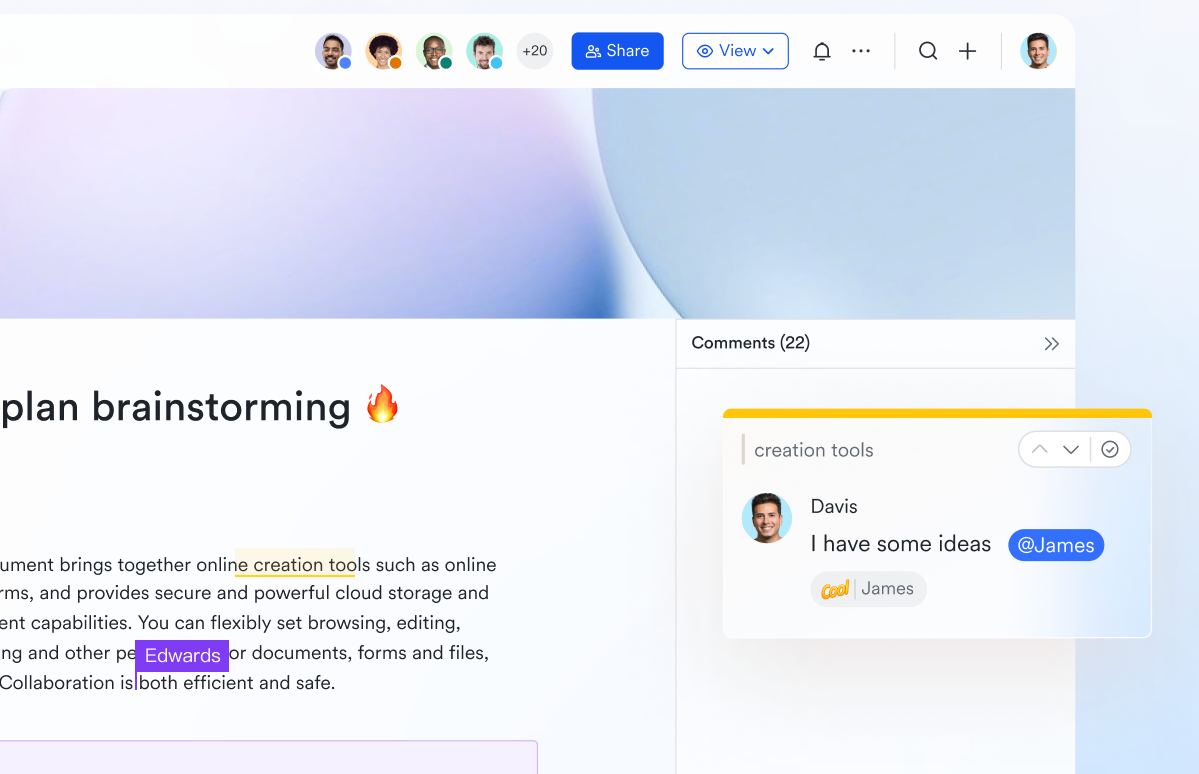
Before scheduling anything, clearly articulate what specific feedback you need and what decisions the review should achieve. Vague objectives lead to vague feedback. For instance, an objective might be to validate a user flow or confirm technical feasibility. Clearly sets expectations for all participants and guides the entire discussion. Drafting these in collaborative tools like ensures early alignment and allows for pre-meeting discussions.
Identify and invite the right participants
Invite only those who can offer relevant, actionable feedback based on expertise, role, or stake to avoid design by committee. This includes designers, product managers (strategy), engineers (feasibility/implementation, critical for engineering design reviews), QA specialists, and key stakeholders. For specialized reviews like PCB design, electrical engineers and hardware specialists are essential.
Prepare comprehensive design artifacts and context
Your design communicates problem-solving logic. Provide key context: (wireframes, prototypes, technical diagrams), a clear problem statement, condensed user research, project goals, constraints, and targeted questions to guide reviewers. A cohesive collaborative workspace adds great value, letting you embed interactive prototypes and a full background in one dynamic document.
Establish clear ground rules and an agenda
To keep the review focused and productive, set clear ground rules (e.g., focus on the design, not the designer; constructive feedback; respect differing opinions). acts as your roadmap, outlining the flow, time allocations for each section (presentation, feedback, discussion, next steps), and ensuring everyone stays on track.
Share materials in advance
This is one of the most critical steps. Distribute all the relevant materials—objectives, design artifacts, context, agenda, and specific questions—at least 24-48 hours before the review. This allows participants ample time to familiarize themselves with the design, understand the context, and formulate thoughtful, specific feedback, moving beyond initial superficial reactions.
Phase 2: Executing the design review – facilitating productive discussions
The review meeting itself is where the critical collaborative work happens. Your role as the presenter or facilitator is to guide the conversation effectively, ensuring it leads to clear outcomes.
Kick off with purpose and context
Start the meeting by briefly reiterating the and any updated context since materials were shared. A quick reminder of the ground rules and agenda helps refocus everyone, setting a professional, results-oriented tone for the design review process overview.
Present the design (the story, not just the screens)
Don't just click through visuals. Instead, tell the compelling story of your design: start with the problem it solves, walk through the intended user journey, articulate the rationale behind key design decisions, and actively guide reviewers to the specific areas where you need input.
Facilitate open and constructive feedback
This requires active moderation. Encourage specific, actionable feedback by asking clarifying questions (e.g., "What specifically isn't working for you, and why?"). Listen actively, manage the discussion to stay on topic, encourage quieter participants, and gently pivot subjective feedback to objective criteria related to the design's goals. Robust tools for are essential for clear screen sharing and verbal or hybrid settings.

Document all feedback and action items
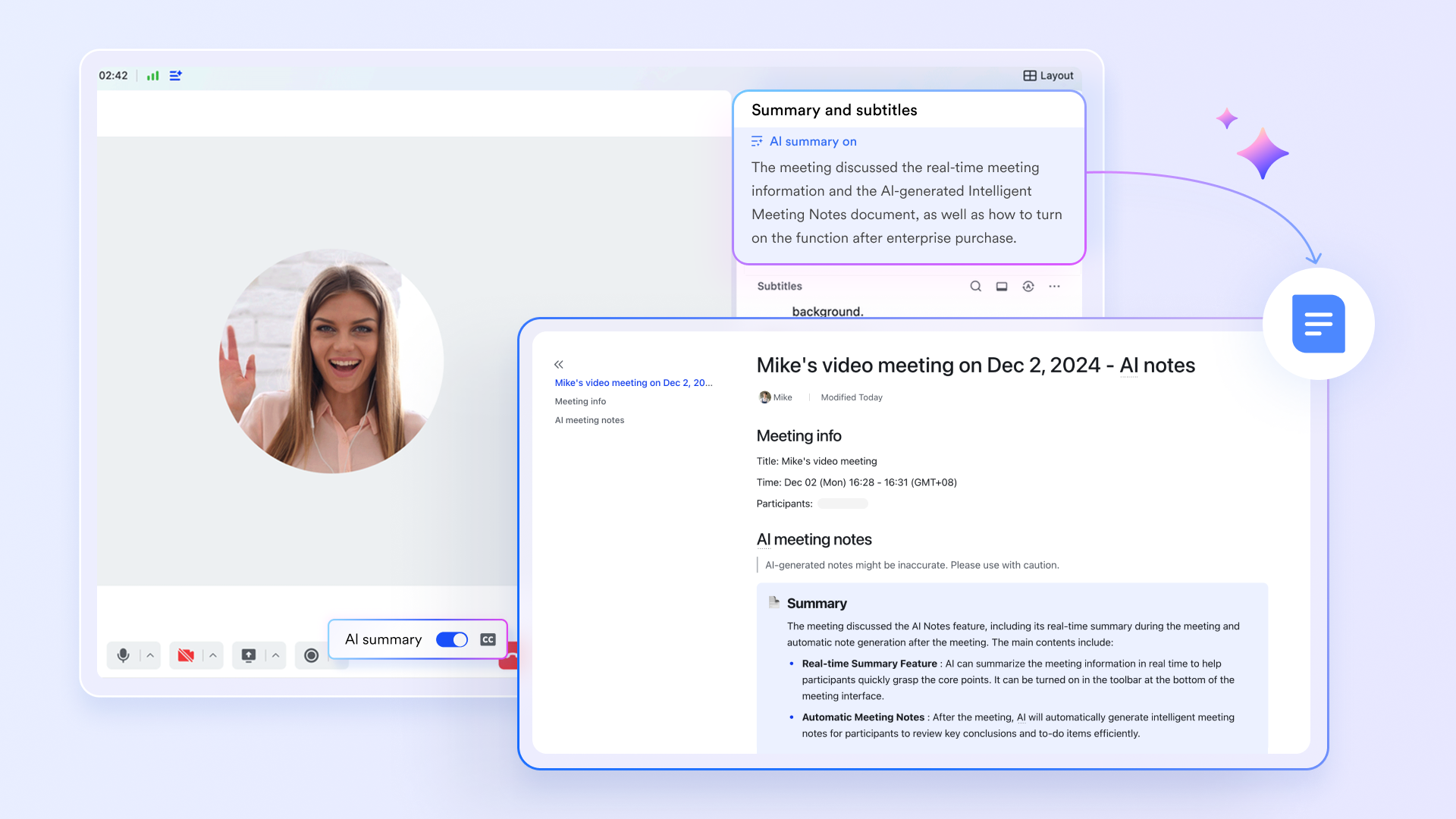
Crucially, accurately capture all feedback and decisions. Designate a note-taker to record both positive observations and areas for improvement, including any proposed solutions or innovative ideas. Most importantly, identify clear, actionable items: what specific tasks need to be completed, who is responsible, and by when. What deserves special mention is that can automatically record key items, ensuring immediate accountability and creating a transparent record.
A design review checklist you should know
A detailed checklist is a crucial part of any design review. Here are some key points to include:
- Process and logistics: Are clear objectives defined? Have the right participants been invited? Are materials prepared and shared in advance? Is a facilitator and note-taker assigned?
- User experience and visuals: Does the design address the problem statement? Are user flows clear and intuitive? Is visual consistency maintained? Is accessibility considered? Are error states handled?
- Technical feasibility and performance: Is technical feasibility confirmed? Have scalability and performance been considered? Are security risks assessed? Is maintainability viable? (For PCB designs: are component selection, schematic, and layout integrity verified?)
- Outcomes and next steps: Have feedback been addressed and decisions made? Are action items defined, owned, and dated? Has the risk assessment been updated?
Involve your team in creating the checklist to gather different perspectives and catch issues that might otherwise be missed.
Transform your design review process right now
Optimize your design review process
An effective design review requires , clear communication, and robust documentation. provides a unified platform that naturally supports and enhances every stage of your design review process, ensuring efficiency and better outcomes without disjointed tools.
Create a unified information hub
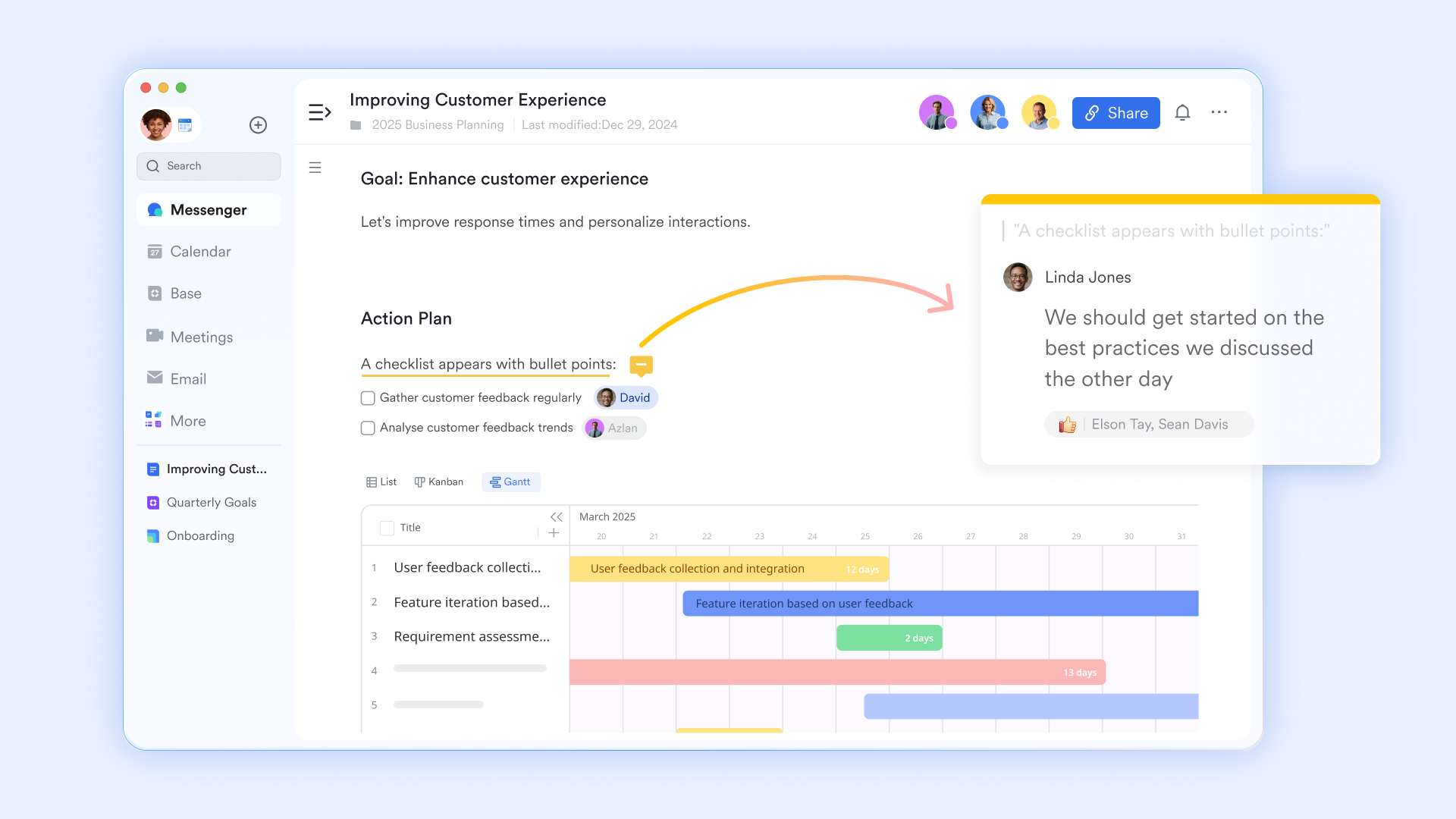
Instead of scattering design files, context documents, and agendas across various applications, Lark allows you to consolidate everything into one central, dynamic location. With , you can embed interactive prototypes, upload images of wireframes and mockups, and alongside them, include your problem statement, user research summaries, project objectives, and . This single source of truth ensures all reviewers access the latest version of the design and its context, facilitating a more informed and coherent design process review for everyone involved.
Facilitate seamless scheduling and informed participation
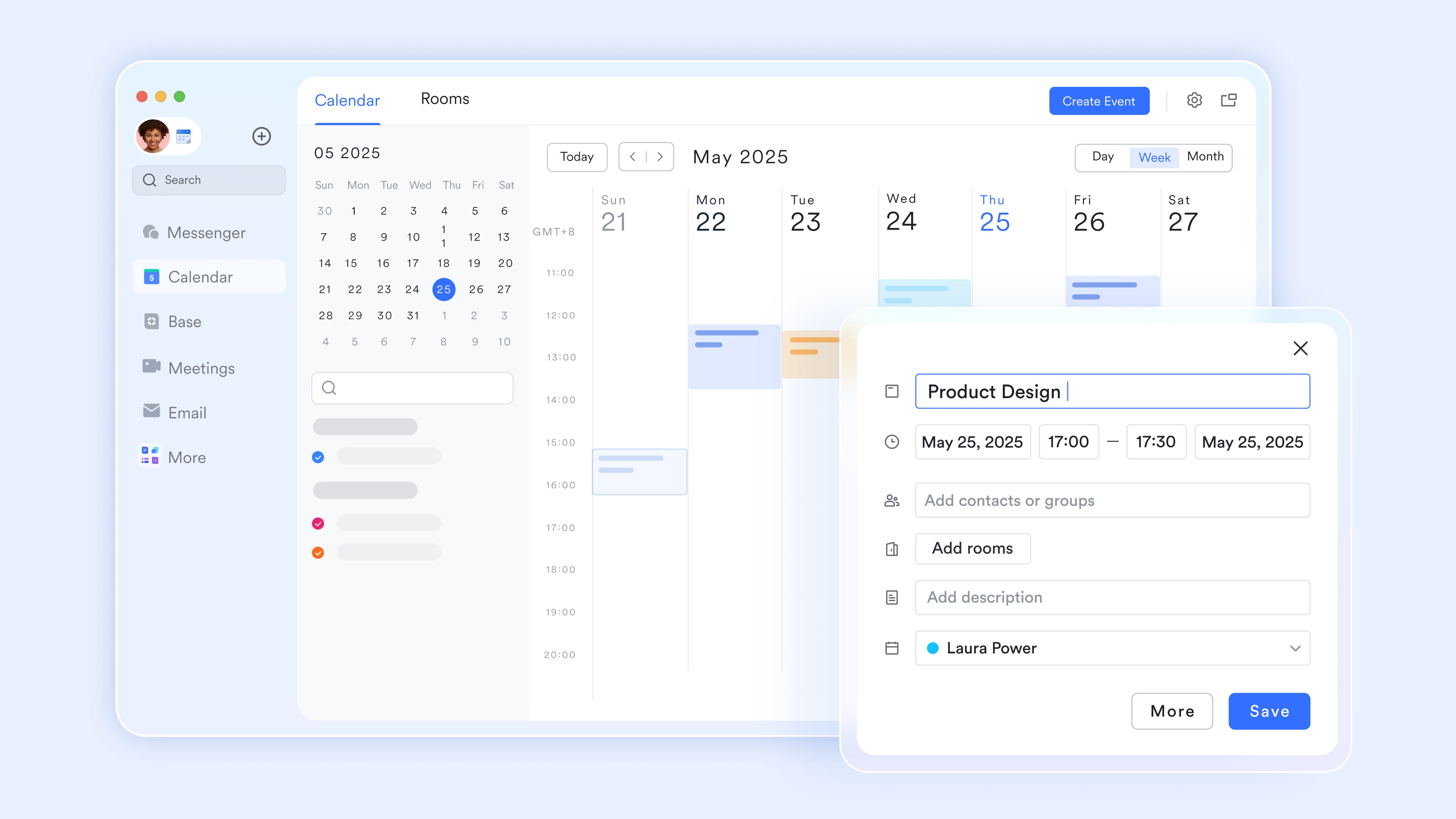
Organizing reviews with multiple stakeholders can be a logistical challenge. Lark simplifies this significantly. Using , you can easily schedule a review, invite specific team members or predefined groups, and attach the all-encompassing directly to the calendar invite. This ensures every participant has instant access to all necessary pre-read materials (objectives, designs, context) from the moment they accept the invitation. This proactive approach leads to a more efficient engineering design review process or any specialized review, as participants arrive well-versed and ready to contribute focused, high-value feedback.
Ensure accountability and follow-through with actionable tasks
One of the most common pitfalls of design reviews is the lack of follow-through on identified action items. Lark directly addresses this by allowing you to instantly convert discussion points from the Lark Docs into trackable Lark Tasks. These tasks can be assigned directly to specific team members, given due dates, and tracked within the platform. This creates a clear design review process flowchart for accountability and ensures that all feedback, whether from a visual review or a complex PCB design review process overview, leads to concrete action. 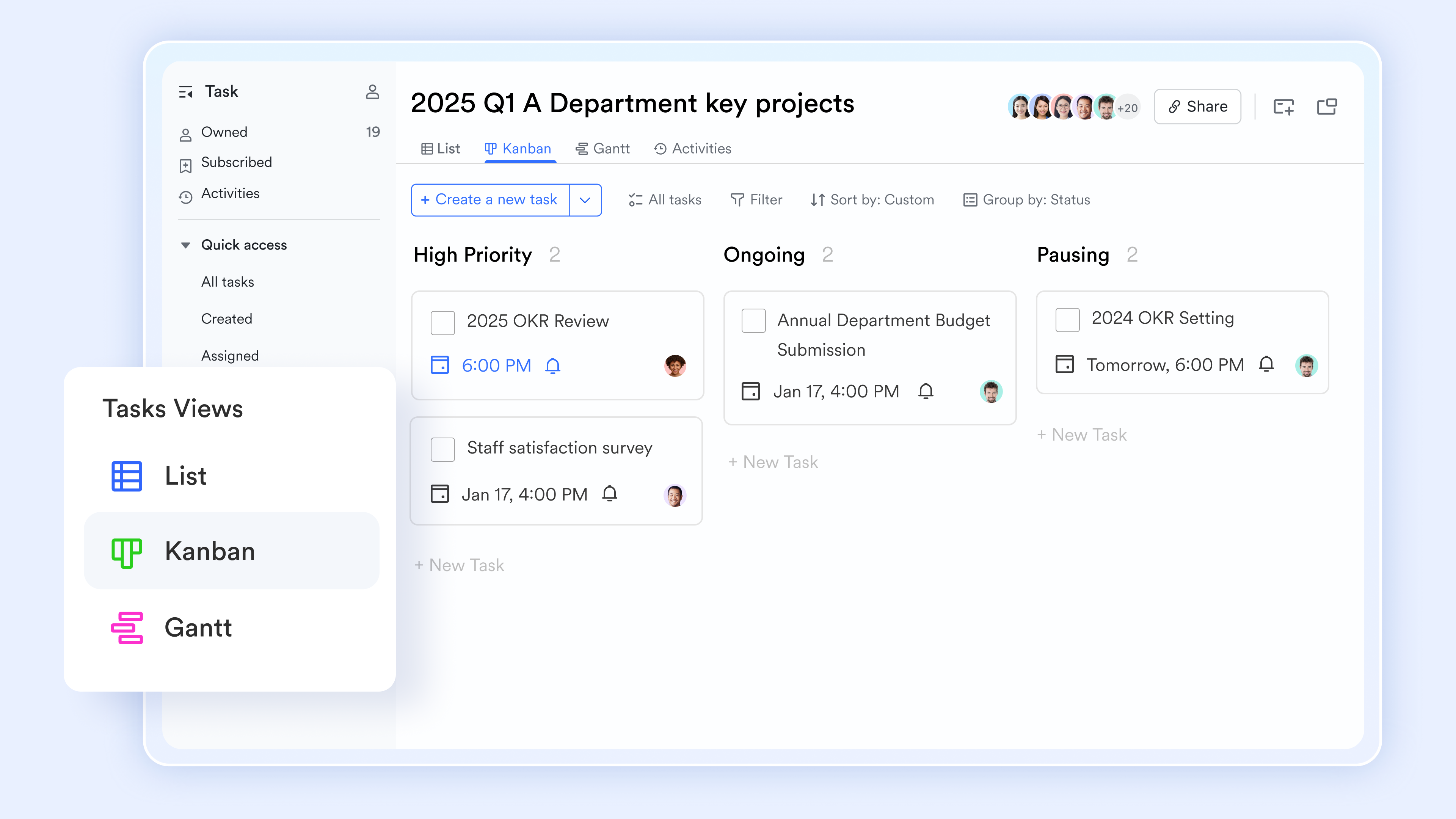
Centrally manage design tasks and statuses
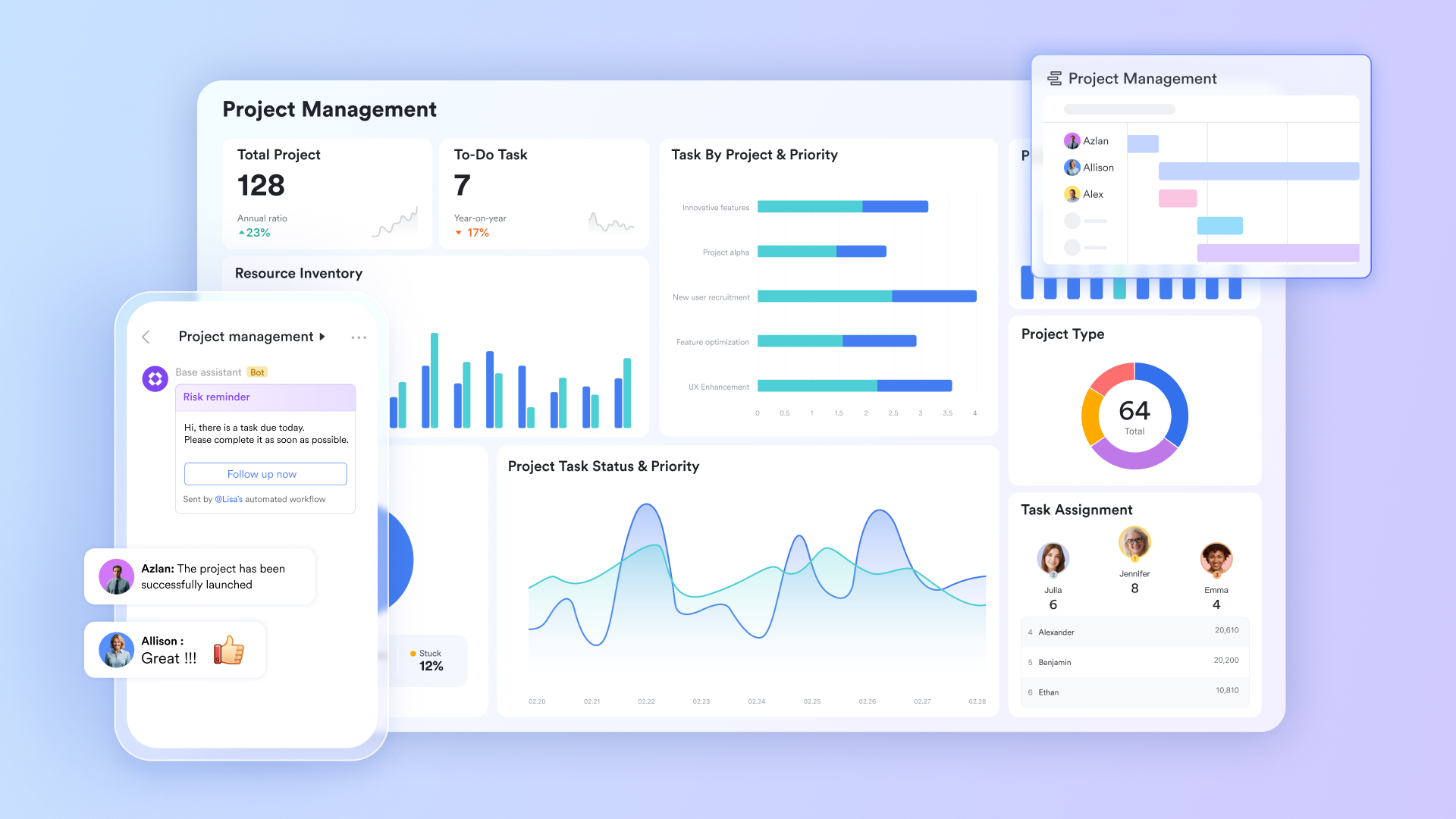
plays a pivotal role in design project management. It serves as a highly customizable database, empowering teams to centralize and streamline their entire design workflow. Create a Base to meticulously track the progress of every design task. You can define custom fields to represent various stages in your design lifecycle (e.g., "To Do," "In Progress," "In Review," "Approved," "Completed") and easily update them. This allows for a quick, visual overview of where every task stands. You can also add fields for assignees, due dates, priority levels, and even design sprint associations, making it a comprehensive design task management system. Moreover, Lark provides multiple templates for you. for Lark:
- Starter plan: Free forever plan that includes 11 powerful tools for up to 20 users. It also comes with 100GB of storage, 1000 automation runs, AI translations, and more.
- Pro plan: $12/user/month (billed annually) for up to 500 users. It includes everything in Starter plus group calling for up to 500 attendees, 15TB of storage, 50,000 automation runs, and more. A closer look at and can help businesses determine whether the platform fits their budget.
- Enterprise plan: for custom pricing. Supports unlimited users and includes even more automation runs and advanced security, compliance, and management features.
For small teams with simple communication needs

18 months message history
1000 Base automation runs/month
2000 rows per table in Base
Most POPULAR
For companies with comprehensive collaboration and management needs
Unlimited message history
500-participant video meetings
50k Base automation runs/month
20k rows per table in Base
For large companies with advanced security and organizational management needs
Get a personalized demo and pricing
Unlimited message history
500-participant video meetings
15 TB storage + 30 GB storage/user
500k Base automation runs/month
50k Base automation runs/month
Most POPULAR
For companies with comprehensive collaboration and management needs
Unlimited message history
500-participant video meetings
50k Base automation runs/month
20k rows per table in Base
Common challenges in a design review process
While a design review process is crucial, several common pitfalls can derail its effectiveness, turning what should be a productive session into a frustrating experience. Recognizing these challenges is the first step toward mitigating them.
- Lack of clear objectives: Without defined goals, feedback becomes unfocused, subjective, and contradictory, with participants unsure of the expected input. It leaves no aligned focus or unified standard for organizing and acting on subsequent feedback.
- Insufficient preparation: Unprepared reviewers waste meeting time on basic comprehension instead of detailed feedback. This slows the rhythm and leads to superficial reviews that miss core design details and potential issues.
- Subjective or unconstructive feedback: Vague comments like "I don't like it" offer no actionable insights, hindering progress and frustrating designers. They lack specific improvement directions and often spark meaningless subjective debates.
- Lack of clear context: Presenting design without explaining its problem, user research or rationale leaves reviewers guessing. They may propose scenario-disconnected suggestions that deviate from the core design intent.
- Poor facilitation: Unmanaged off-topic discussions, dominant voices, and disengagement of quiet members reduce productivity. It silences diverse perspectives and causes the review to miss key design flaw identification.
Best practices for conducting effective design reviews
Overcoming common challenges requires a disciplined approach and adherence to proven best practices. Implementing these strategies will elevate your design review process from a mere meeting to a powerful catalyst for design excellence.
- Define and communicate clear objectives: Before any review, articulate precisely what feedback is needed and what decisions are to be made. Share these objectives with all participants in advance.
- Proactive material distribution: Send out all design artifacts, context documents, and the agenda at least 24-48 hours ahead of time. This ensures reviewers are prepared and can provide thoughtful, rather than reactive, feedback.
- Present the "why," not just the "what": Frame your design presentation around the problem it solves, the user's journey, and the rationale behind your decisions. Guide reviewers to the specific areas where you need input.
- Facilitate, don't just present: Guide the conversation, encourage specific and constructive feedback, manage discussion time, and ensure all voices are heard. Keep the focus on the design's effectiveness relative to its objectives.
- Focus on : Train your team to provide feedback that identifies problems and suggests potential solutions or areas for exploration, rather than just stating opinions.
Conclusion
A well-executed design review process is indispensable for delivering high-quality, user-centered products and ensuring technical soundness. It minimizes costly rework, aligns cross-functional teams on a shared vision, and speeds up iterative product improvements. By adopting these structured steps and best practices, your team can transform reviews into powerful engines for collaboration, innovation, and efficiency. To truly streamline your entire design review workflow, from preparation to follow-up, consider leveraging the unified power of —its unified tools turn review insights into actionable progress with ease.
Experience seamless design management and reviews
FAQs
What is a design review process?
A design review process is a structured evaluation of a design by a team of stakeholders, including designers, engineers, product managers, and users. Its purpose is to identify potential issues, gather constructive feedback, ensure alignment with project goals, and validate the design's feasibility and usability before further development. Platforms like Lark are ideal for organizing, documenting, and facilitating these collaborative sessions.
What are the 7 steps of the design process?
While methodologies can vary, a common design process often includes: 1. Empathize (understand users), 2. Define (articulate the problem), 3. Ideate (brainstorm solutions), 4. Prototype (build preliminary versions), 5. Test (gather user feedback), 6. Implement (build the final product), and 7. Iterate (refine based on ongoing feedback). Lark's unified features can help teams manage tasks, share documentation, and communicate effectively throughout all these phases.
What are the 7 steps to review code?
A thorough code review typically involves: 1. Understand the code's purpose, 2. Check for functionality and logic, 3. Look for coding standards and style compliance, 4. Identify potential bugs, security flaws, or performance issues, 5. Suggest improvements and alternative approaches, 6. Verify test coverage, and 7. Document findings and track resolutions. Lark Messenger and Lark Docs are excellent for discussing code changes, capturing feedback, and assigning follow-up tasks efficiently.
What's a PDR vs CDR?
PDR (Preliminary Design Review) is an early-stage review that assesses the basic design approach, concept feasibility, and high-level architecture, confirming the initial direction. CDR (Critical Design Review) is a more detailed and in-depth review conducted later, ensuring the design is complete, technically sound, and ready for manufacturing or implementation, covering all specifications and testing. Both reviews require extensive documentation and stakeholder alignment, which can be seamlessly managed and presented using Lark.
Related reading