














How to Perform A Gap Analysis: The Complete Guide to Turning Strategy into Action

Fecilia Clarke
Solutions Marketing Specialist
Sep 18, 2026
Fecilia Clarke
Sep 18, 2026

16 min read


Is there a space between your team's current performance and its ultimate potential? It's a universal business challenge. You have ambitious goals and a vision for the future, but the path from where your organization is today to where it wants to be can feel unclear. This is where gap analysis becomes an indispensable powerful tool. It provides a structured framework to diagnose problems, bring clarity to complexity, and build a clear, actionable roadmap for success. This step-by-step guide will walk you through the entire process, showing you how to perform a gap analysis.
Key takeaways: 4 steps to perform a gap analysis
Follow these four steps and perform a better gap analysis for your business:
Step 1: Identify and document your current state
Step 2: Define your ideal future state
Step 3: Analyze the gaps and uncover root causes
Step 4: Create a data-driven action plan
What is a gap analysis?
At its core, performing a gap analysis is like creating a detailed map for your business objectives. Before you can chart a course to your destination, you must first know your precise starting point. A gap analysis is a systematic method of assessing the difference between a business's actual performance (the current state) and its desired, or potential, performance (the future state). The objective is to identify these discrepancies and understand the reasons behind them, allowing you to develop targeted strategies to bridge the divide.
It's crucial to understand that this is not an exercise in finding faults or placing blame. It is a method for objective self-assessment and a cornerstone of effective strategic planning. It empowers an organization and its teams to move forward with confidence and purpose. Many of the most organizations use this method to regularly evaluate their standing and realign their efforts. A proper individual assessment of processes, teams, or products using this framework provides a much better understanding of what needs to change to achieve long-term success.

Why a gap analysis is so important for modern business
The ability to pivot, adapt, and improve continuously is what separates market leaders from the rest. This is why a gap analysis is more critical than ever. It forces teams to pause, evaluate, and plan with intention. When you conduct a gap analysis, you are investing in the long-term health and agility of your business, ensuring that your efforts are focused on what truly matters.
Here are the core benefits that make this process indispensable:
- Drives strategic alignment: A significant challenge for any organization is ensuring that daily tasks contribute to high-level goals. The gap analysis process directly links operational improvements to your overarching strategy. It ensures that the solutions you implement are not just random fixes but are steps that move the entire business closer to its vision, preventing a disconnect between expected and actual performance.
- Enables data-driven decisions: Gut feelings have their place, but strategic choices require evidence. The process compels you to gather data—both quantitative and qualitative—to get an honest look at your current situation. This evidence-based approach helps you make informed decisions, build a stronger business case for change, and gain buy in from key stakeholders.
- Optimizes resource allocation: Every business operates with finite resources. A gap analysis helps you allocate resources—time, budget, and personnel—more effectively. By pinpointing the most significant deficiencies, you can direct your efforts where they will have the greatest impact, justifying investments in new technology, training, or personnel with concrete data showing how they will close a specific performance gap.
- Pinpoints areas for improvement: Without a structured review, it's easy to become accustomed to inefficient current processes. A gap analysis shines a light on these areas. It helps you identify areas that are underperforming, causing bottlenecks, or failing to meet regulatory requirements. This clear identification is the first step toward meaningful and lasting improvement.
- Enhances overall performance: Ultimately, the reason you conduct gap analyses is to get better. By providing a clear roadmap for change, the process directly leads to enhanced efficiency, better product-market fit, and improved profitability. It creates a cycle of continuous improvement that builds momentum over time, helping you close the gap between your current performance and your ideal performance.
The comprehensive 4-step gap analysis process
Now, let's dive into the core of the framework. While the concept is straightforward, the power of a gap analysis lies in the disciplined execution of these four distinct steps. Following this structure ensures a comprehensive review that leads to a practical and effective action plan. Each step logically builds upon the previous one, creating a seamless flow from initial discovery all the way to final execution. This is how you perform a gap analysis that delivers real results.
Step 1: Identify and document your current state
You cannot map your journey without knowing your exact starting coordinates. The foundational first step is to establish an honest, detailed, and accurate baseline of your current state. This requires an objective look at your performance, and you must gather data from multiple sources to build a complete and unbiased picture. Resist the temptation to gloss over problems or paint a rosier picture than reality; a clear-eyed view of your current situation is absolutely essential for the entire process to be effective.
To do this thoroughly, you must collect two distinct types of data:
- Quantitative data: These are the hard numbers, the measurable facts that define your performance. This includes Key Performance Indicators (KPIs), financial reports showing actual sales, website analytics, customer support tickets, or any other objective performance metrics. This data provides the "what." It shows you where your performance stands against benchmarks or historical trends.
- Qualitative data: This is the "why" behind the numbers. It includes subjective but invaluable insights like team feedback, direct quotes from customer interviews, notes on process observations, and survey responses concerning customer satisfaction. This information adds context and human experience to the hard data.
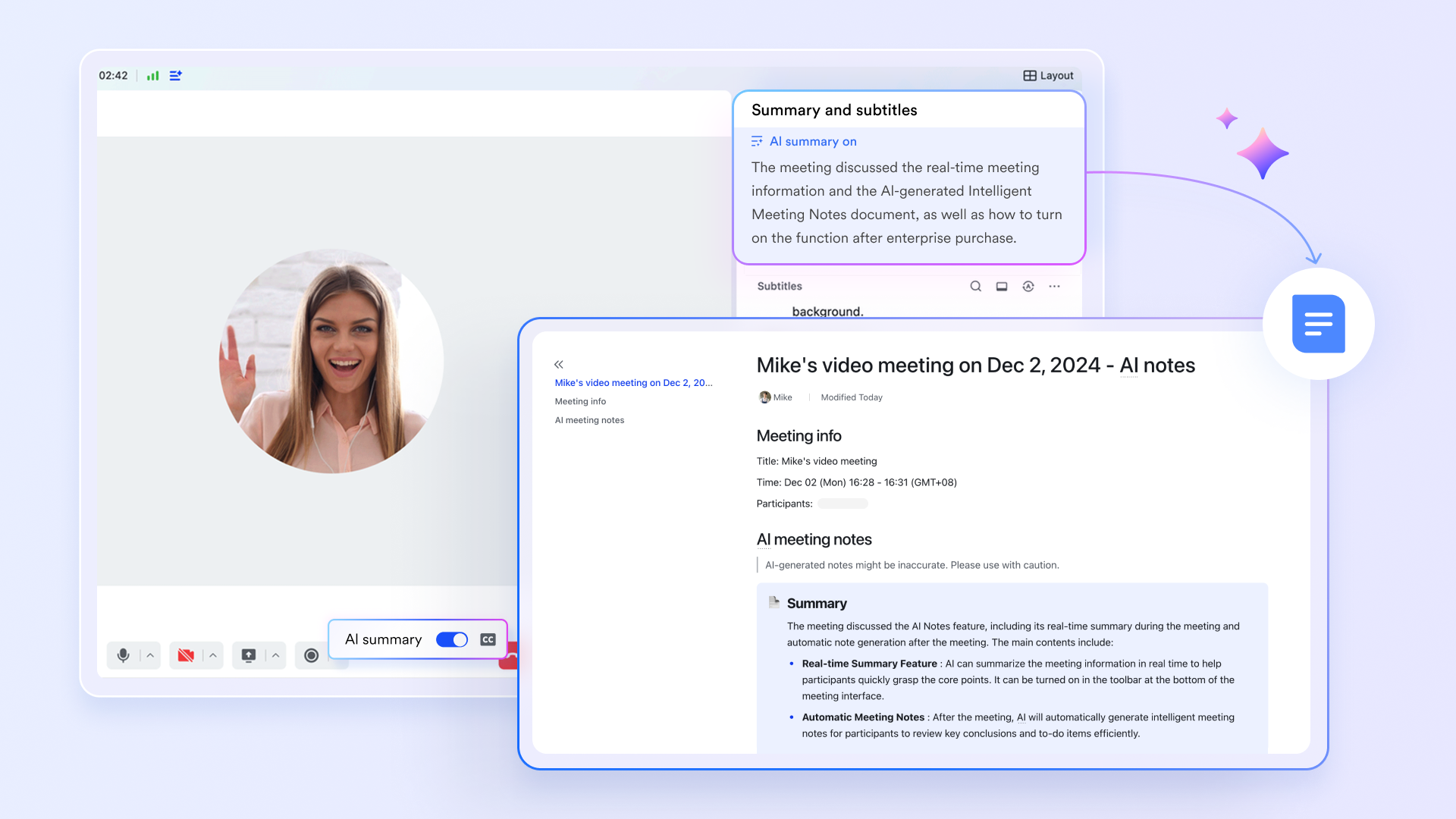
Capturing all this information efficiently can be a challenge. For qualitative insights, using Lark's AI Meeting Notes during a brainstorming session with your team leader and members can automatically capture and summarize key problems and pain points. For quantitative feedback, sending out Lark Forms to survey team members on process efficiency or to customers on their satisfaction provides structured, measurable feedback that is easy to analyze and integrate into your assessment.
Step 2: Define your ideal future state
Once you have a crystal-clear picture of where you are, it's time to define your destination. Your desired future state is the ideal condition you want to achieve. This vision must be more than a vague dream; it needs to be a clear, compelling, and measurable outcome. This future state will serve as the North Star for your entire action plan, motivating your team and providing a concrete definition of what successful completion looks like.
- Specific: Clearly define the desired outcome. What will be different?
- Measurable: Include metrics to track progress and confirm success.
- Achievable: Set a realistic goal, not an impossible one.
- Relevant: Ensure the goal aligns with broader business objectives and future goals.
- Time-bound: Set a target due date for achieving the goal. A goal without a deadline is just a wish.
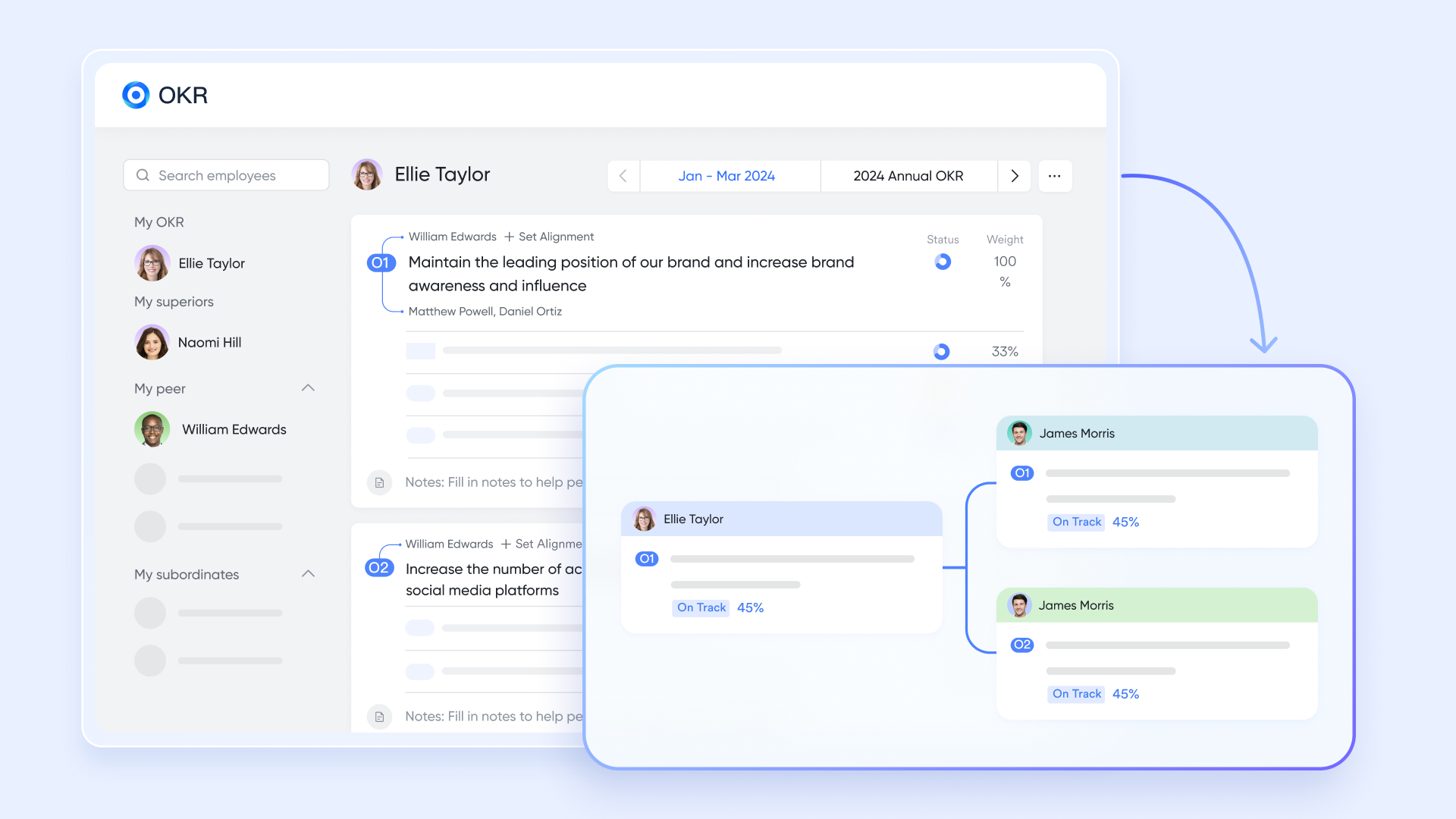
For example, instead of a vague goal like "improve customer service," a SMART future state would be: "Achieve a 95% customer satisfaction score (CSAT) and a 4-hour average first-response time within the next fiscal quarter." You can ensure this goal is strategically relevant by linking it directly to your company's high-level objectives within Lark OKR. This creates a clear line of sight from your team's project to the company's overall mission, ensuring your efforts contribute to the bigger picture and align with industry standards.
Step 3: Analyze the gaps and uncover root causes
This is the analytical heart of the process. The "gap" is simply the space between your current state (Step 1) and your desired future state (Step 2). However, merely identifying that a gap exists is not enough. The most critical work in this step is to understand why the gap is there in the first place. You need to dig deep to uncover the root causes—the underlying issues that are preventing you from achieving your desired state.
To add structure to your root cause analysis, you can leverage several established business frameworks. Often, business analysts are skilled in using these tools:
- SWOT analysis: A powerful framework for analyzing your organization's Strengths, Weaknesses, Opportunities, and Threats in relation to your goal. The weaknesses you identify often point toward the root causes of internal gaps.
- Fishbone (Ishikawa) diagram: A visual tool used to brainstorm and categorize the potential causes of a problem. It helps teams move beyond symptoms to find the true root causes.
- Balanced scorecard: This strategic performance management tool can help you analyze the gap from four different perspectives: financial, customer, internal business processes, and learning and growth.
- Market research: For external gaps, such as falling behind in market share due to unexpected competition, conducting thorough market research or a market gap analysis is essential to understand the competitive landscape.
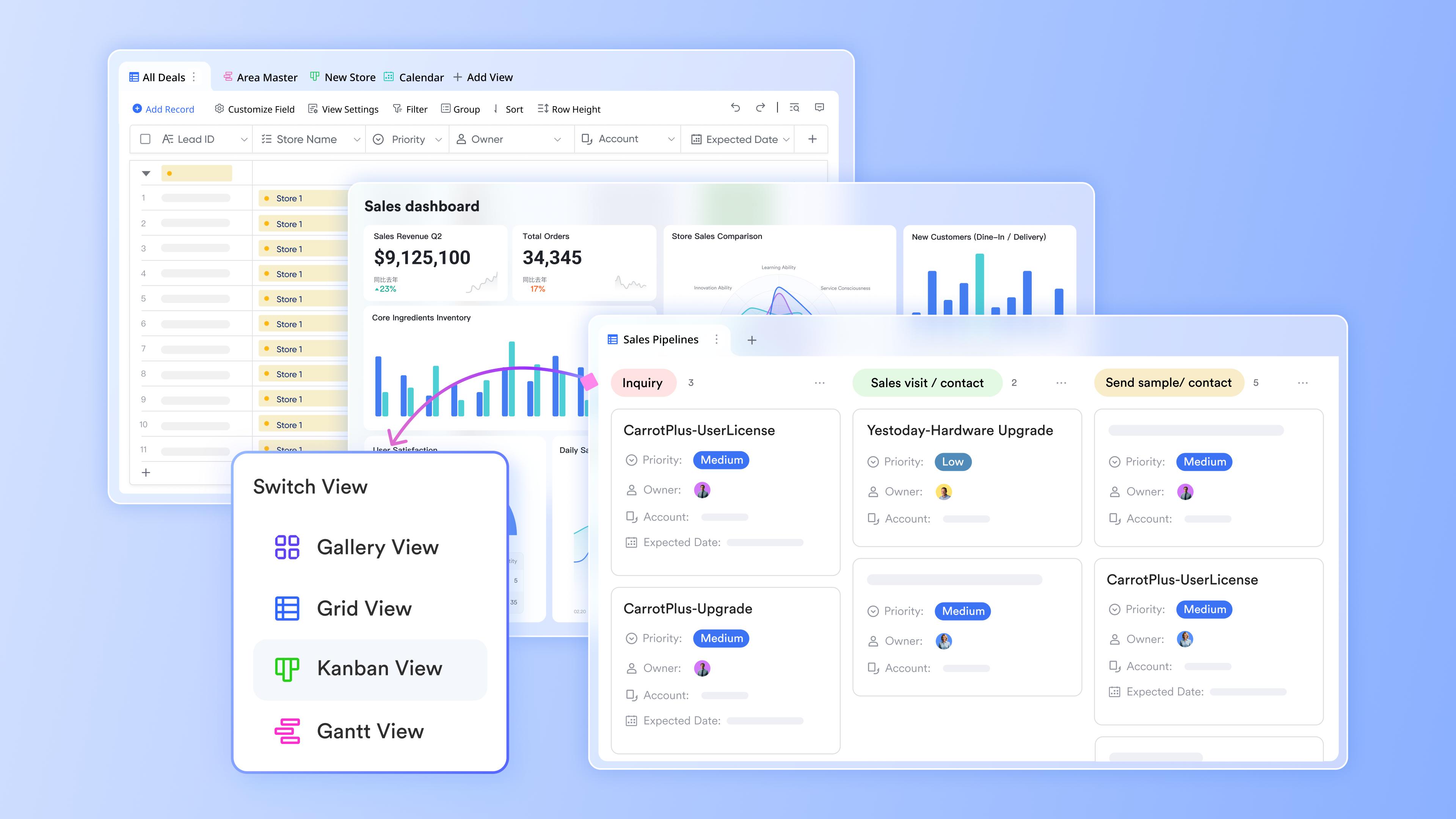
This phase can feel overwhelming, with a significant amount of data and ideas coming from all directions. This is the perfect time to leverage Lark Base. You can create a dedicated "Gap Analysis Base"—a powerful, collaborative database—to neatly organize your findings. Create custom fields for "Current State Metric," "Future State Goal," "The Gap," "Identified Root Cause," and "Proposed Solution." This simple action transforms what could be a time consuming and chaotic process into a structured, sortable, and data-driven tool that your entire team can contribute to.
Step 4: Create a data-driven action plan
An analysis without a plan is just an interesting observation. This final step is where you translate your hard-won insights into a concrete action plan for improvement. This plan is the bridge you will build to get from your current state to your future state. It must break down the journey into a series of manageable, well-defined steps that will guide your team toward the desired outcome. Without a clear plan, the momentum from the analysis will be lost.
An effective action plan must:
- Prioritize actions: You will likely have multiple proposed solutions. You must prioritize them based on their potential impact and the effort required to implement them.
- Define concrete steps: Break down each solution into specific, actionable tasks. For example, "Improve training" is a goal; "Develop a new onboarding module for the analytics management software by Q3" is an action.
- Assign clear ownership: Every single task needs one clear owner—often a team leader or subject matter expert—who is responsible for its successful completion. This accountability is non-negotiable.
- Set realistic deadlines: Assign a due date to each task. This creates a sense of urgency and a clear, time bound timeline for the entire project. This is a core tenet of effective project management.
This is where you can bring your entire analysis to life inside a Lark Doc. Embed your Lark Base directly into the document to create a central project command center. In the Doc, you can convert your "Proposed Solutions" into actionable tasks by @mentioning team members to assign ownership. Set due dates that automatically sync with their Lark Calendar. If your analysis reveals you need to allocate resources like a budget for new tools, you can use Lark Approval to formalize the request and get the backing you need, all within your integrated project hub.
Gap analysis examples in action
Let's make these concepts more tangible with two detailed business scenarios. Seeing the four-step process applied to real-world problems helps illustrate its practical power.
Example 1: Closing a market gap after a product launch
A tech company recently completed a product launch, but actual sales are lagging far behind projections. The leadership team decides they need to conduct a gap analysis to understand why.
- Step 1 (Current state): They gather data showing sales are 40% below forecast. A review of the reporting process shows that while initial user sign-ups were high, conversion to paid plans is low. A qualitative analysis of support tickets and social media comments reveals users are confused about the product's value proposition compared to an established competitor.
- Step 2 (Future state): The team sets a new future goal: increase the trial-to-paid conversion rate from 5% to 15% and achieve 80% of the original sales forecast within the next two quarters.
- Step 3 (Analyze the gaps): The primary performance gap is in converting users. A market gap analysis reveals that while their product has more features, a key competitor's marketing is much clearer about solving one specific problem. They identify deficiencies in their own onboarding and marketing messages. The root cause is a disconnect between the product's capabilities and how its value is communicated.
- Step 4 (Action plan): The action plan, managed in Lark Docs, focuses on clarifying the product's value. Tasks include rewriting the website's homepage, creating new onboarding email sequences, and running A/B tests on pricing page copy. Each task is assigned to a specific team member with a clear due date.
Example 2: Improving internal regulatory compliance processes
A financial services firm needs to ensure its client onboarding process meets new, stricter regulatory requirements. They initiate a gap analysis to identify deficiencies and ensure full compliance.
- Step 1 (Current state): A review of the current processes by business analysts reveals that the process is manual, relying on checklists in spreadsheets, and there's no centralized audit trail. They determine that the current process has a high risk of non-compliance.
- Step 2 (Future state): The desired state is a fully digitized and automated onboarding process where every step is tracked, documents are stored securely, and a complete audit trail is generated automatically for every client, ensuring 100% compliance with the new regulations.
- Step 3 (Analyze the gaps): The gap is the lack of automation, auditability, and centralization. The root cause is an over-reliance on outdated legacy systems and a lack of investment in modern compliance management software. The potential for human error is identified as the single biggest risk.
- Step 4 (Action plan): The proposed solution is to implement a new compliance platform. The project management plan, built in Lark, includes tasks to evaluate vendors, secure budget via Lark Approval, manage the data migration, and train the team on the new system. Progress is monitored weekly.
Beyond the report: Ensuring your gap analysis drives real change
Completing the four steps is a huge accomplishment, but the work isn't over. The most common reason strategic initiatives fail is a lack of follow-through. To ensure your gap analysis delivers lasting value, you must build a system for execution, communication, and monitoring.
Gaining crucial buy-in from key stakeholders
For any plan to succeed, you need support. From the very beginning of the gap analysis process, it's vital to involve key stakeholders. This includes leadership who approve resources, team members who will implement the changes, and anyone else impacted by the plan. Share your findings transparently and involve them in shaping the proposed solution. When people feel they are part of the solution, their buy in is much stronger.
From static analysis to a living dashboard
The old way of sharing a final PDF report is ineffective. It's static and quickly becomes outdated. Instead, transform your analysis into a living dashboard. By real-time charts in Lark Base, you create a single source of truth. Anyone can visit this dynamic document to see the original analysis, the current action plan, and the progress being made on every task. This transparency keeps the project top-of-mind and ensures accountability.
How to monitor progress and close the loop
You must monitor progress to know if your plan is working. The tasks with assigned owners and due dates in your Lark Docs provide a clear way to track execution. But you also need to measure the outcome. After your plan has been implemented, use Lark Forms again to measure the new current state. Did actual performance improve? Did you hit your target performance metrics? Update your Lark Base with this new data to provide a direct, measurable comparison that proves the effectiveness of your targeted strategies. Finally, document the successful new process in Lark Wiki to make it the new standard.
Conclusion
A gap analysis is one of the most essential strategic tools for any team serious about improvement. By moving beyond static reports and embracing a dynamic, collaborative approach, you can ensure your hard work translates into real, measurable results. Don't just identify gaps in your performance—start building the bridge to close them. With a powerful, unified platform like Lark, you have all the solutions you need to move seamlessly from insight to analysis to action.
FAQs
What are the three components of a gap analysis?
A gap analysis fundamentally consists of three core components. First is identifying the "Current State" by gathering data on your actual performance. Second is defining the "Future State," a clear and measurable description of your desired performance or goal. The third component is the "Action Plan," which outlines the specific strategies and steps required to close the gap between the two.
Can ChatGPT do a gap analysis?
ChatGPT can be a powerful assistant for a gap analysis. It can help you structure your thoughts, draft questions for stakeholders, and summarize text-based data. However, it cannot perform the analysis independently because it lacks access to your specific business data, performance metrics, and the nuanced context that comes from team collaboration. Use it as a tool, not the analyst.
What is the best tool for gap analysis?
The best tool for gap analysis is not a single application but a unified platform that supports the entire process. While spreadsheets are common, they create silos. A superior solution like Lark combines a powerful database (Lark Base), collaborative documents (Lark Docs), and project management tools. This allows your team to analyze, plan, and execute in one unified workspace.
What is a gap analysis checklist?
A gap analysis checklist is a structured guide or template that walks you through the key steps of the process to ensure consistency and completeness. The checklist would prompt you to confirm actions like: gathering quantitative and qualitative data, defining a SMART future state, identifying root causes, prioritizing solutions, and assigning ownership for each action item. It's a simple tool to prevent skipping critical steps.
Related reading
Table of contents
Start using Lark today

Manage all your work in one place
Boost team efficiency by 10x
Save up to 70% on software costs
Table of contents
Start using Lark today
Manage all your work in one place
Boost team efficiency by 10x
Save up to 70% on software costs
Keep reading








2026 Lark Technologies Pte. Ltd.
Headquartered in Singapore with offices worldwide.






Explore: