It's not hard to find that, where assets move constantly across teams and lifecycles, simple visibility is no longer enough to maintain control. Without structured governance, high-value resources often become underutilized, duplicated, or exposed to significant compliance risks.
A robust asset management program transforms passive tracking into a strategic advantage. It ensures that every tool, vehicle, and digital resource isn't just a line item, but a high-performing contributor. Today, let's get closer to this magic tool and find out where and how it makes a difference.
What is an asset management program?
An asset management program provides coordinated governance of assets across multiple initiatives, departments, and portfolios. Rather than managing assets in isolation within individual projects, the program establishes shared rules for ownership, classification, usage, and lifecycle actions. This approach ensures that all resources remain visible, controlled, and strictly aligned with organizational priorities.
Unlike basic tracking, a formal asset management program connects physical and digital assets to broader policies and performance outcomes. These programs define exactly how assets are acquired, assigned, optimized, and retired over time. By implementing a structured program—and leveraging the right management software—organizations reduce waste, ensure compliance, and maintain clarity across complex operational environments.
4 core components of an effective asset management program
An effective asset management program is built on structure, consistency, and visibility across initiatives. Rather than relying on ad hoc tracking, asset management programs define how assets are classified, governed, and measured at scale. These components ensure assets remain controlled, accountable, and optimized throughout their lifecycle. When implemented together, they transform asset data into a reliable foundation for program-level decision-making.
- Asset inventory and classification: Asset inventory is the baseline of any program. By utilizing , organizations ensure everyone works from a single source of truth. Standardized classification enables teams to apply policies uniformly and identify underutilized resources across the enterprise.
- Ownership models and stewardship: Clear ownership ensures every asset has a responsible steward throughout its lifecycle. Asset management programs define who owns, uses, approves, and maintains assets at the program level. This prevents ambiguity when assets move between teams or initiatives. Strong stewardship models improve accountability and ensure assets are actively managed rather than passively recorded.
- Policy definition and enforcement: Policies define how assets are acquired, assigned, maintained, and retired. In a mature asset management program, policies are standardized, documented, and consistently enforced across programs. Enforcement mechanisms ensure that asset use aligns with financial, operational, and compliance requirements. Well-defined policies reduce risk and support scalable asset governance.
- Performance and utilization tracking: Tracking performance transforms asset data into actionable insight. Asset management programs measure utilization rates, costs, and contributions to outcomes. These metrics reveal underused assets, inefficiencies, and opportunities for optimization. ensures assets justify their ongoing investment within the program.
Turn your assets into a structured database today
5 steps to achieve effective asset management
Implementing a software asset management program requires a phased approach that balances structure with adaptability. These steps help organizations move from fragmented tracking to a . Each step builds maturity while minimizing disruption to ongoing work.
Step 1: Define asset scope and ownership
The first step is identifying which assets fall under the asset management program and assigning ownership. Scope definitions clarify whether assets are physical, digital, licensed, or shared. Ownership models establish responsibility from acquisition through retirement. This step creates accountability and prevents unmanaged assets from entering the system.
Step 2: Standardize classification and policies
Standardization ensures consistency across asset management programs. Assets are classified using shared attributes such as type, value, , and lifecycle status. Policies define acceptable usage, review cycles, and approval thresholds. Consistent standards reduce confusion and simplify governance across programs.
Step 3: Centralize asset records
Centralized records provide a single source of truth for asset data. An effective asset management program consolidates inventories, ownership, and documentation into one system. This reduces duplication and version conflicts. Centralization improves visibility and supports accurate reporting at scale.
Step 4: Establish review and lifecycle rules
Lifecycle rules define how assets are reviewed, renewed, reassigned, or retired. Asset management programs schedule regular audits to validate usage and compliance. Review cycles prevent assets from becoming obsolete or forgotten. Lifecycle governance ensures assets remain aligned with program needs.
Step 5: Monitor and improve continuously
Continuous improvement keeps asset management programs effective over time. Metrics are reviewed to identify trends, inefficiencies, and risks. Feedback loops allow policies and workflows to evolve. Ongoing monitoring ensures the asset management program adapts as organizational needs change.
Optimize asset management with a reliable tool
Measuring the success of an asset management program
Measuring success ensures an asset management program delivers control, value, and risk reduction rather than just records. Clear metrics help organizations understand whether assets are being used efficiently and governed consistently. These indicators turn asset data into decision-ready insight for program leaders.
- Utilization and redundancy indicators: Utilization metrics show how frequently assets are used across programs and teams. Low utilization often signals excess procurement or poor allocation. Redundancy indicators reveal duplicate assets serving the same purpose, increasing unnecessary costs. Together, these metrics help optimize asset distribution and reduce waste.
- Cost efficiency metrics: Cost efficiency measures compare asset spending against actual value delivered. This includes acquisition costs, maintenance expenses, and renewal fees. An effective asset management program highlights assets that exceed their value contribution. These insights support smarter budgeting and long-term cost control.
- Risk exposure and compliance health: Risk metrics track license violations, expired warranties, and policy exceptions. indicators reveal whether assets align with regulatory and internal governance standards. Early risk detection prevents penalties and operational disruption. Strong compliance tracking reinforces trust in the asset management program.
Where traditional asset management tools fall short
Many traditional asset management tools focus on tracking rather than control and action. As programs scale, these limitations reduce visibility and weaken governance. Understanding these gaps explains why many asset fail to deliver real value.
- Siloed asset records: Traditional tools often store asset data separately by department or system. This fragmentation prevents program-level visibility and accurate reporting. Teams struggle to reconcile conflicting records. Siloed data undermines the effectiveness of asset management programs.
- Limited collaboration across programs: Most legacy asset tools lack built-in . Communication happens outside the system, disconnecting decisions from asset records. This slows approvals and increases errors. Limited collaboration reduces accountability across asset management programs.
- Poor visibility into real usage: Tracking ownership does not always reflect actual usage. Traditional tools rarely connect assets to day-to-day work or outcomes. This creates blind spots around underused or misused assets. Poor visibility weakens optimization and decision-making.
Need a custom solution for enterprise asset governance?
Modern choice: Track and manage assets easily with Lark
Traditional asset management often fails because the "tracking" happens in one tool while the "work" happens in another. eliminates this friction by embedding asset records directly into the communication and . When an asset changes hands or a license nears expiration, the system doesn't just record it—it notifies the right people and triggers the necessary approvals instantly. This solution ensures that your asset data is always live and actionable, rather than in forgotten entries or extemporized sheets.
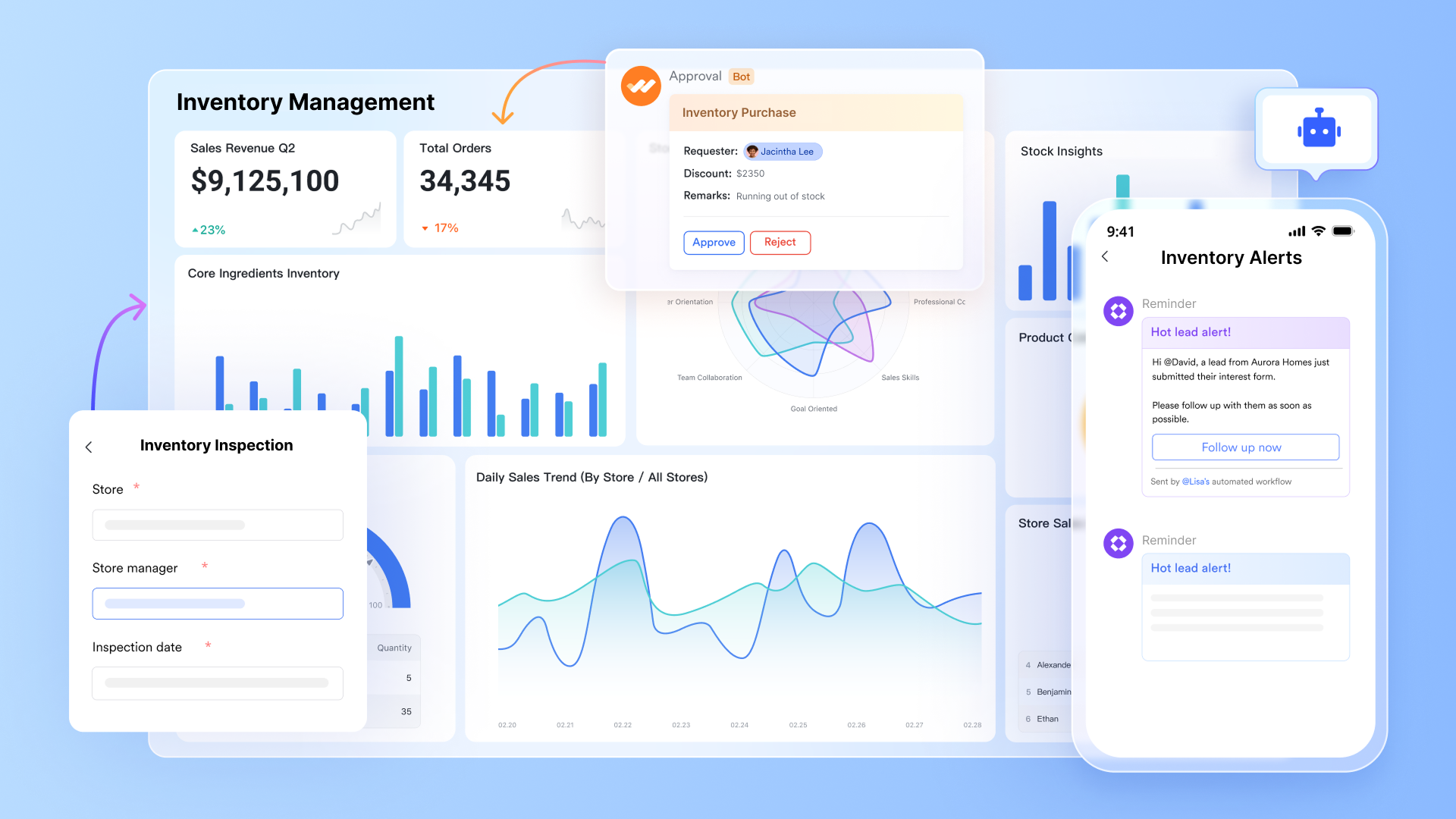
Centralized asset records and automation
serves as your primary command center for program assets. With custom fields like "ID," "Assets," and "Owner," you can turn complex asset data into a structured database. Unlike a simple table, Base allows you to create relational databases that link assets to specific projects, departments, or individual owners. Also, you can set to notify owners before a software license expires or a hardware warranty ends.
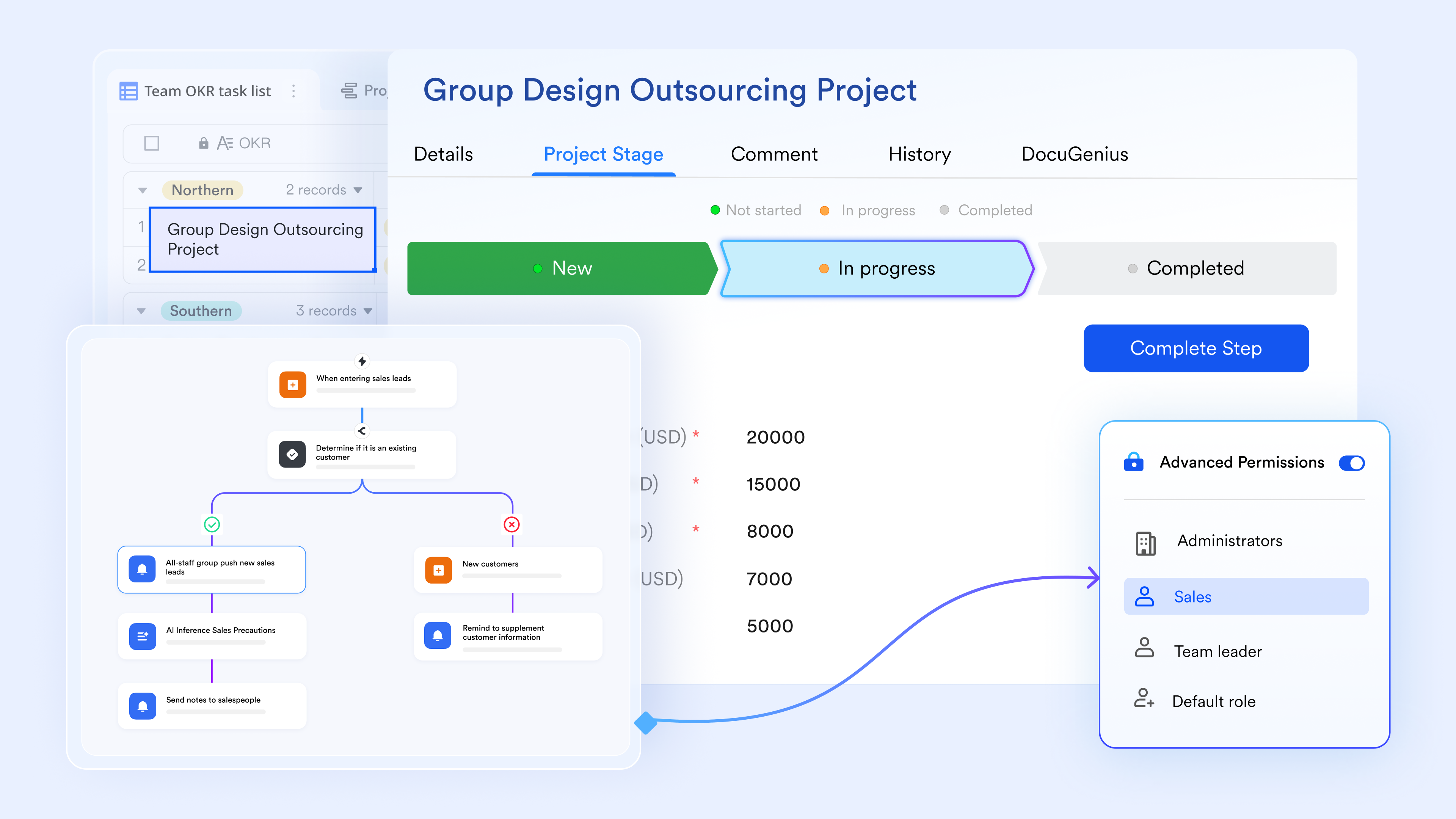
Flexible views and real-time dashboards
Lark Base supports flexible data views with . Use Grid and to track the day-to-day lifecycle of equipment, from procurement to maintenance, while Gallery views provide instant visual identification for field teams. Simultaneously, dashboards aggregate this data into high-level metrics and progress charts, offering immediate data trends for total asset value. 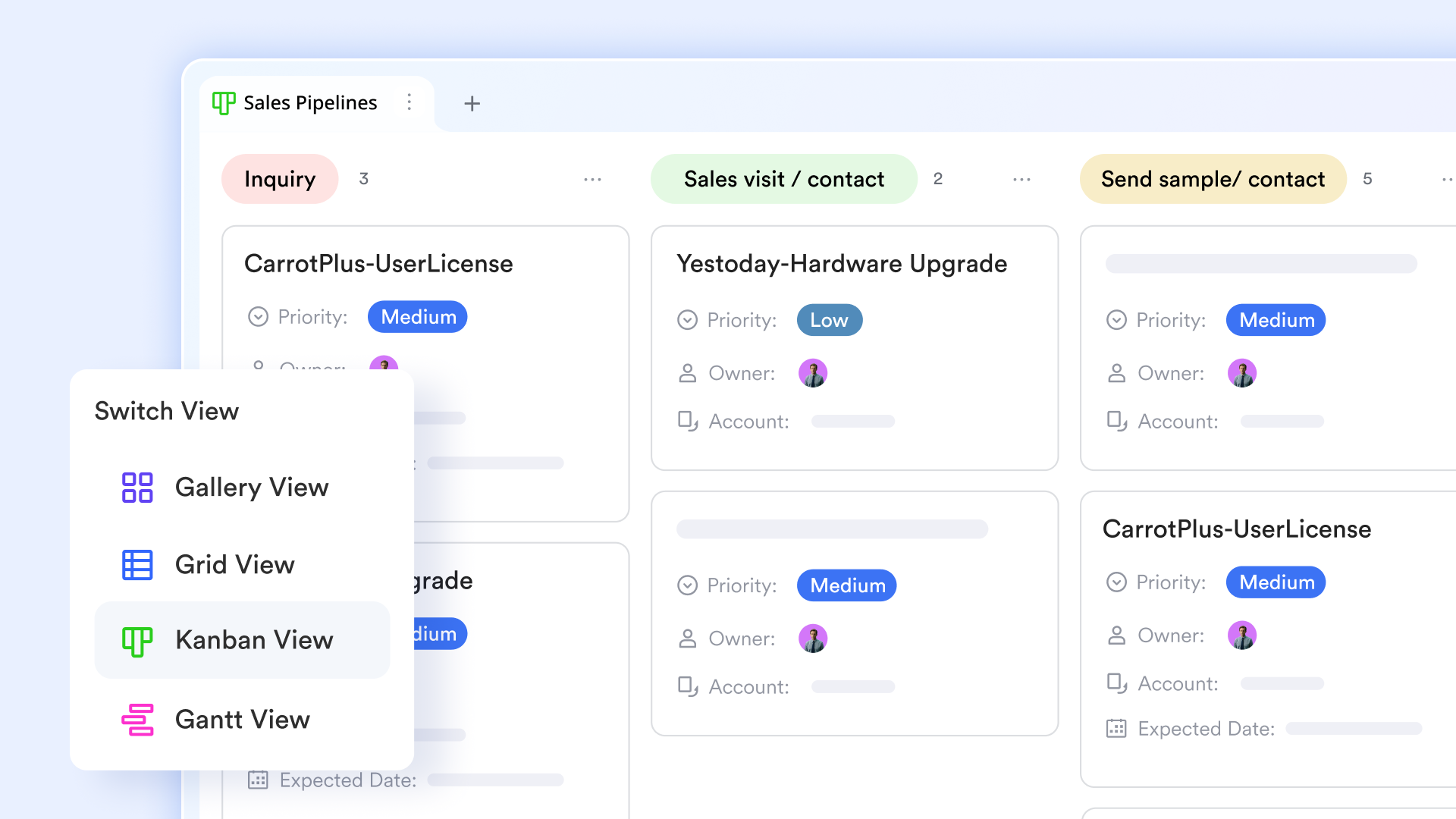
Asset policies and living documentation
Standard operating procedures for asset handling shouldn't be buried in a static PDF. In , asset policies are collaborative and easily accessible to every stakeholder. You can insert live views of your inventory directly into policy documents, so users see real-time data while reading guidelines. This ensures that compliance documentation and version control stay synchronized with your actual asset holdings. 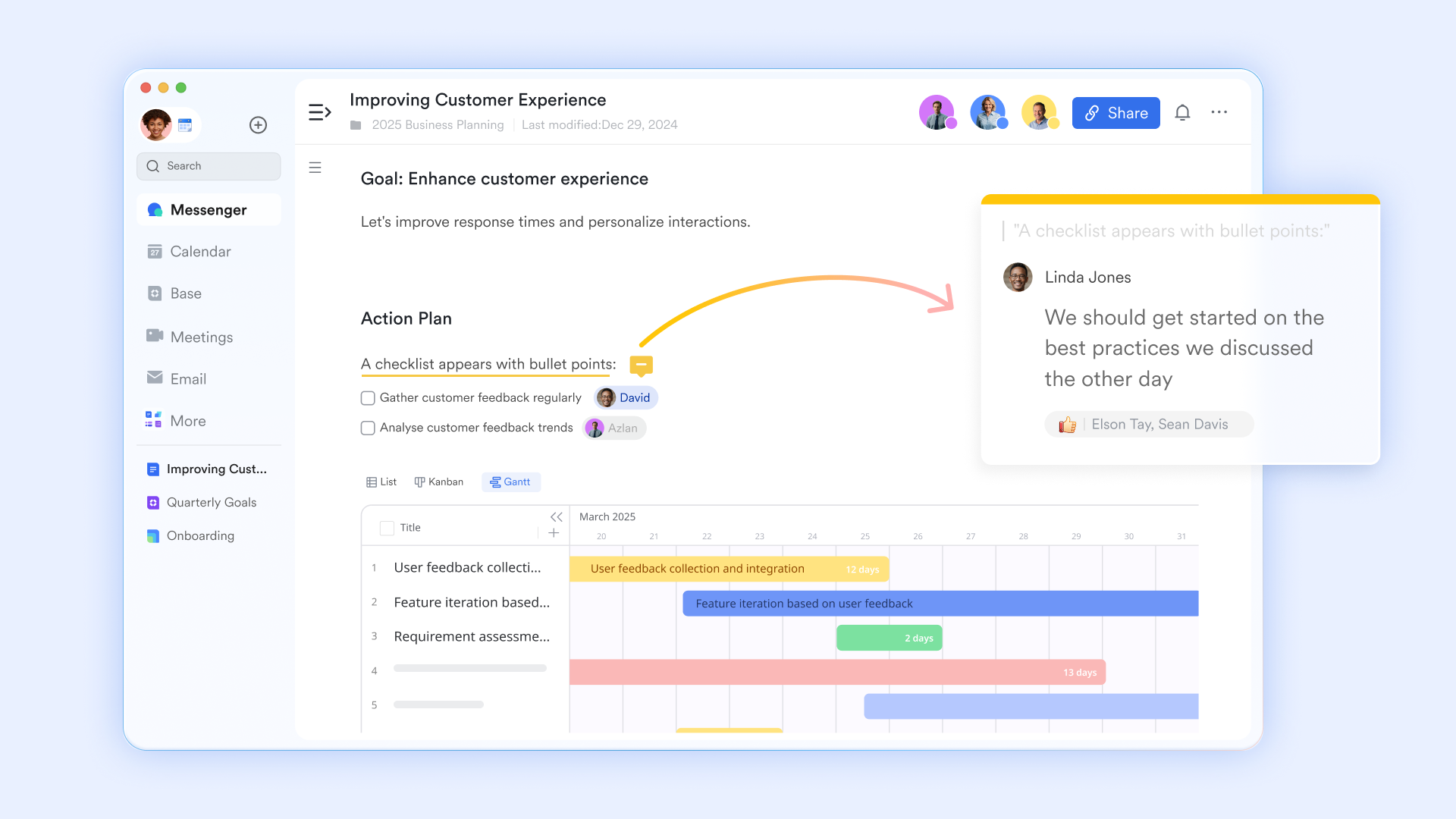
Contextual communication around asset changes
Communication about assets should happen where the data lives to avoid confusion. unifies with your database to provide instant context through automated bot notifications. If a high-value asset is moved or flagged for repair, dedicated channels receive instant updates. This allows field teams to share photos or status updates that are immediately linked to the asset record. 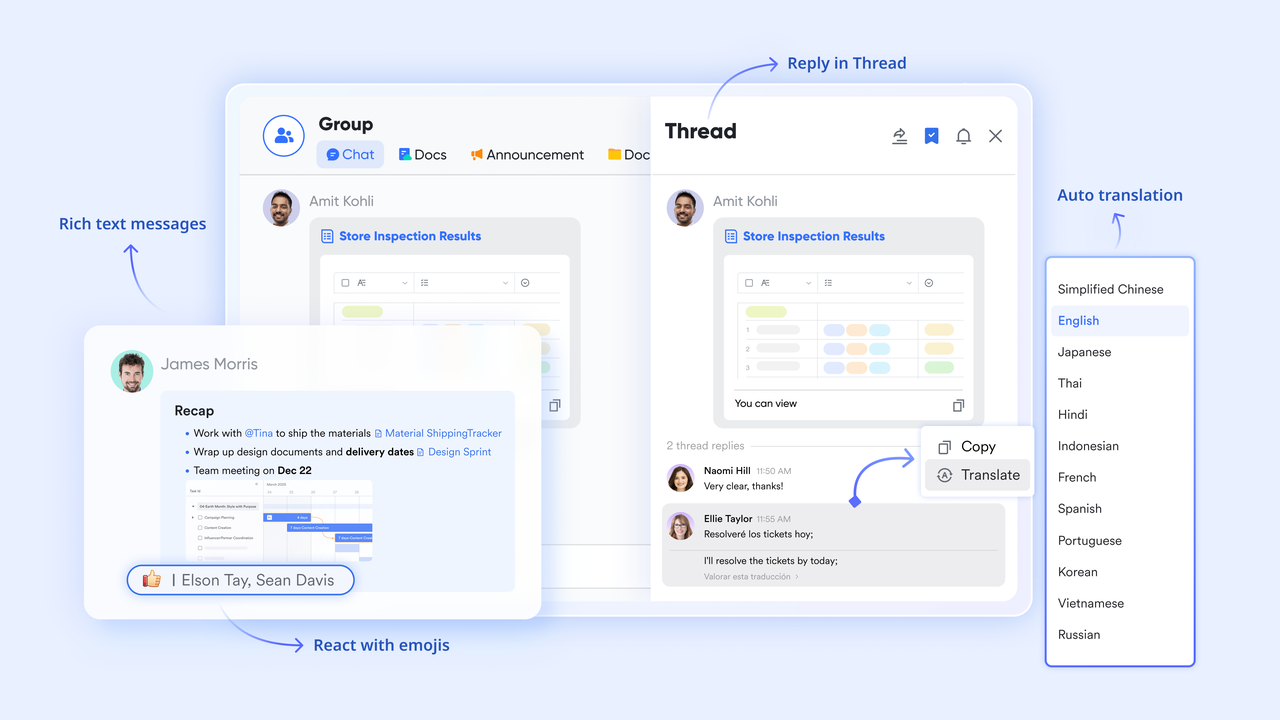
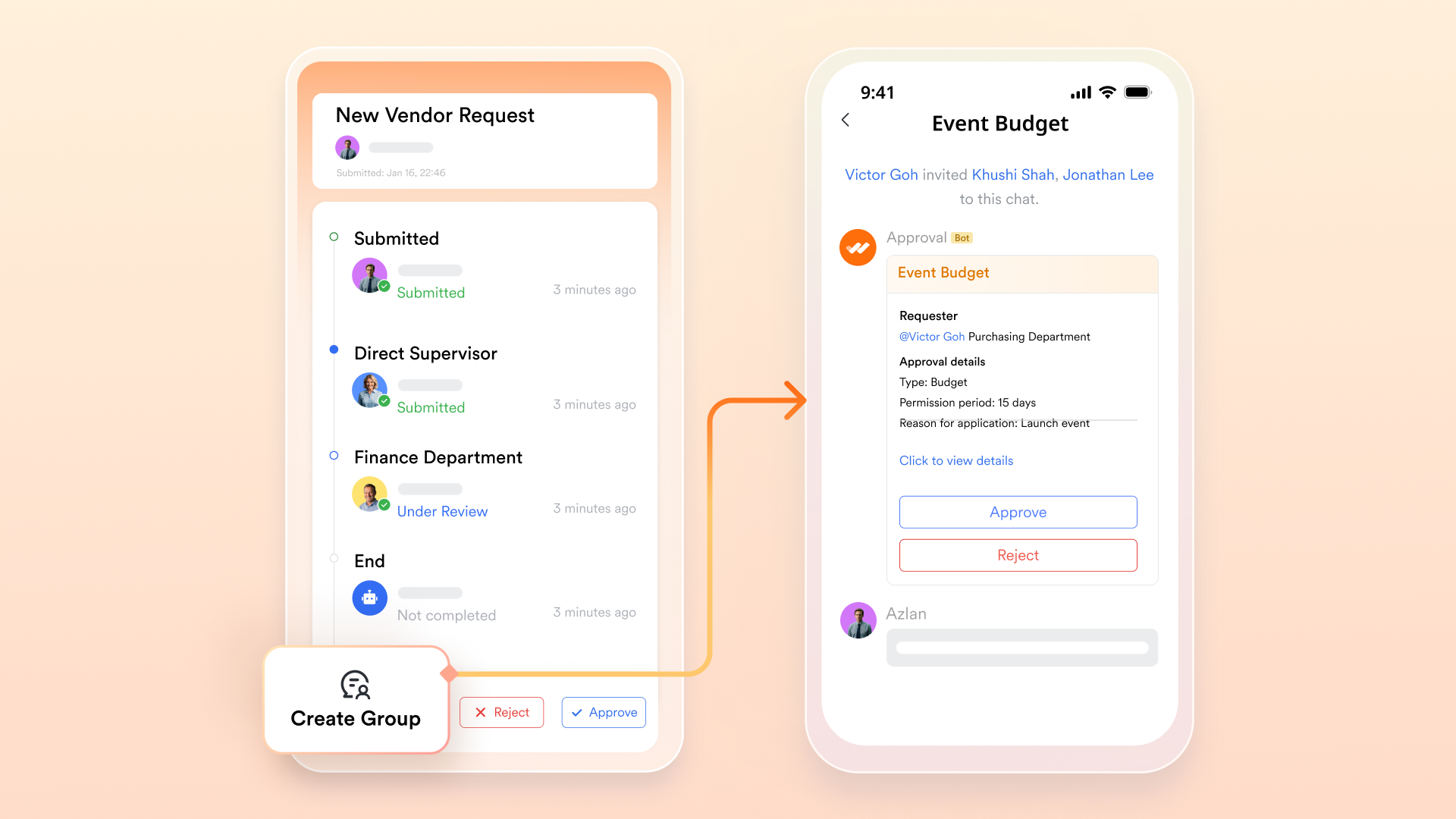
Asset requests, renewals, and exceptions
Procuring or retiring assets requires a formal paper trail to ensure fiscal responsibility. digitizes this process with custom workflows, ensuring new requests follow specific paths based on value or department budget. It allows managers to approve urgent asset transfers or maintenance requests on the go, keeping the entire program moving forward efficiently.
:
- Starter plan: Free forever plan that includes 11 powerful tools for up to 20 users. It also comes with 100GB of storage, 1000 automation runs, AI translations, and more.
- Pro plan: $12/user/month (billed annually) for up to 500 users. It includes everything in Starter plus group calling for up to 500 attendees, 15TB of storage, 50,000 automation runs, and more.
- Enterprise plan: for custom pricing. Supports unlimited users and includes even more automation runs and advanced security, compliance, and management features.
For small teams with simple communication needs

18 months message history
1000 Base automation runs/month
2000 rows per table in Base
Most POPULAR
For companies with comprehensive collaboration and management needs
Unlimited message history
500-participant video meetings
50k Base automation runs/month
20k rows per table in Base
For large companies with advanced security and organizational management needs
Get a personalized demo and pricing
Unlimited message history
500-participant video meetings
15 TB storage + 30 GB storage/user
500k Base automation runs/month
50k Base automation runs/month
Most POPULAR
For companies with comprehensive collaboration and management needs
Unlimited message history
500-participant video meetings
50k Base automation runs/month
20k rows per table in Base
Common challenges in asset management
Asset management becomes increasingly complex as organizations scale across teams, tools, and initiatives. Without strong structure and ownership, asset data quickly loses accuracy and relevance. These challenges often prevent asset management programs from delivering real operational value.
- Lack of clear ownership and accountability: When asset ownership is unclear, responsibilities fall through the gaps. Teams may assume someone else is managing renewals, audits, or maintenance. By defining early on, you establish a culture of responsibility.
- Inconsistent asset classification: Assets are often recorded using different naming conventions or categories across programs. This inconsistency makes reporting unreliable and comparisons difficult. Standardized classification enables meaningful analysis.
- Manual tracking and outdated records: Spreadsheets and disconnected systems rely heavily on manual updates. Over time, records become outdated or incomplete. This reduces trust in asset data and limits its usefulness.
- Weak governance enforcement: Policies may exist, but are not consistently followed or monitored. Without enforcement mechanisms, exceptions become the norm. This increases compliance and financial risk. Governance must be embedded into daily asset workflows.
- Asset data disconnected from operational work: When asset records live separately from and communication, updates lag behind reality. Decisions are made using partial information.
Streamline your asset tracking today with Lark
Best practices for scaling asset management
Scaling asset management requires more than adding tools. It demands discipline, visibility, and integration across programs. These best practices help organizations maintain control as asset volume and complexity increase.
- Establish program-level asset governance: Define clear rules for acquiring, assigning, reviewing, and retiring assets. Governance should apply consistently across all programs. Program-level standards prevent fragmentation. This creates a shared foundation for asset management programs.
- Centralize asset records in a single system: A centralized asset repository ensures consistency and accuracy. All the same information in real time. Centralization eliminates reconciliation issues. It also supports reliable reporting at scale.
- Link assets to people, projects, and workflows: Assets gain context when connected to owners and active work. Linking records to tasks and programs improves accountability. This approach transforms asset management from static tracking to active control. It also improves utilization insights.
- Automate reviews, renewals, and alerts: Automation reduces reliance on memory and manual follow-ups. reviews and alerts ensure assets are evaluated on time. This prevents lapses in compliance or renewals. Automation keeps asset management programs proactive.
- Continuously measure and refine performance: Regularly review asset metrics to identify trends and inefficiencies. Use insights to adjust policies and allocation strategies. Continuous improvement strengthens long-term program outcomes. Measurement turns asset data into a strategic advantage.
Conclusion
In a nutshell, a robust asset management program is essential for maintaining control and reducing waste across complex initiatives. As organizations scale, assets become shared dependencies requiring governance beyond simple tracking. To stay actionable, asset data must be woven into everyday operations rather than managed in isolation. Platforms like Lark support this shift by embedding asset management directly into team collaboration, ensuring every resource is optimized through real-time visibility and integrated decision-making.
Achieve smart asset management with Lark
FAQs
What are the three types of asset management?
Asset management is commonly grouped into physical asset management, IT and software asset management, and financial asset management. Each focuses on different asset lifecycles but follows similar principles of ownership, governance, and optimization. At the program level, these types often overlap across initiatives. Teams increasingly use tools like Lark to manage all asset types within shared workflows.
Can non-IT teams benefit from software asset management principles?
Yes, software asset management principles apply beyond IT. Marketing, operations, and finance teams also manage licenses, subscriptions, and shared tools. Applying structured asset management improves visibility and cost control across programs. like Lark make these practices easier to adopt outside technical teams.
How often should asset governance policies be reviewed at the program level?
Asset should be reviewed at least annually or when major program changes occur. Reviews ensure policies reflect current usage, risk exposure, and regulatory requirements. Regular updates prevent outdated rules from limiting effectiveness. Tools like Lark help keep policies and asset data aligned in real time.
What skills are required to run a mature asset management program?
Strong asset management programs require , governance awareness, and cross-team communication. Leaders must understand lifecycle management, risk, and utilization metrics. Collaboration skills are essential when assets span multiple programs. Platforms like Lark support these skills by connecting data, decisions, and accountability.
Related reading