A project's success rarely hinges on a single task done well. More often, it depends on the intricate web of connections between tasks—the silent architecture that dictates the flow of work. When these connections are invisible or misunderstood, even the best-laid plans can stall. Teams find themselves waiting, not due to a lack of effort, but because a crucial piece from another part of the puzzle isn't yet in place.
This invisible web is made of project dependencies. They are the fundamental relationships that define what must be completed before something else can begin, and they form the backbone of any realistic timeline. In modern work, where collaboration spans teams, departments, and time zones, mastering these connections transforms planning from a hopeful guess into a reliable map.
This guide explores the core framework of dependencies in project management. It moves beyond basic definition to provide a practical understanding of their types, strategies for identification, and methods for proactive management. The goal is to turn potential bottlenecks into predictable pathways, enabling teams to navigate complex projects with clarity and confidence.
What is a dependency in project management?
Let's start with a simple definition. In the context of getting work done, a dependency describes a specific relationship between two tasks or activities. It means that one task (the successor) relies on another task (the predecessor) in order to begin, end, or proceed correctly.
Think of it as a "waiting for" relationship. You are waiting for something from another task before your task can hit its next milestone. That "something" could be:
- A tangible output (a completed report, a built feature).
- A decision or approval (a finalized budget, a signed contract).
- A resource (a key team member, a piece of specialized software).
It's crucial to distinguish a from a simple task sequence. Sequencing says "Task B comes after Task A." A dependency explains why: "Task B cannot start until Task A finishes because it needs the prototype that Task A creates." The dependency defines the nature of the connection.
Why is understanding this so critical? Because dependencies in are the architecture of your plan. They determine your schedule's realistic shape, expose risks before they become emergencies, and dictate how information and work products flow through your team. When you map task dependencies in project management, you are not just making a to-do list; you are building a model of how your team collaborates. In a world where work is increasingly interconnected and teams are often distributed, making these connections visible is no longer a nice-to-have—it's essential for preventing miscommunication, reducing downtime, and building a culture of accountability and trust.
The 4 key types of dependencies in project management
To effectively manage project management dependencies, you need to speak the language. These four dependency types form the basic grammar for planning any . They describe the precise relationship between the start and finish dates of two linked tasks.
Finish to Start (FS)
This is the most common and intuitive type of task dependency.
- Definition: Task B cannot start until Task A finishes.
- The logic: The successor task requires the full output of the predecessor. There's a clear handoff.
- Modern example: A developer cannot begin integrating a payment API (Task B) until the external vendor's documentation and access keys are fully received and verified (Task A). In a remote team, the "finish" trigger might be a message in a team chat linking to the finalized document in a shared drive.
Start to Start (SS)
This type coordinates tasks that need to begin in tandem.
- Definition: Task B cannot start until Task A starts.
- The logic: These tasks are often parallel but coordinated. The start of one signals that conditions are right for the other to begin, often because they share context or need to align closely.
- Modern example: The work on a product launch announcement video (Task B) can start once the core product development sprint begins (Task A). This ensures the video content evolves alongside the product, even though both tasks run concurrently for weeks. It prevents the video team from working in a vacuum based on old specs.
Finish to Finish (FF)
This dependency ensures two tasks conclude together.
- Definition: Task B cannot finish until Task A finishes.
- The logic: While the tasks may proceed independently for most of their duration, their conclusions are linked. The finishing of one is often a prerequisite for finalizing the other.
- Modern example: The user acceptance testing phase (Task B) for a new software module cannot officially finish and be signed off until the development team's bug-fix cycle for that module is also complete (Task A). Even though testing runs alongside fixing, the final "all clear" report depends on no more critical bugs being active.
Start to Finish (SF)
The rarest of the four, but vital for specific scenarios involving continuity or handover.
- Definition: Task B cannot finish until Task A starts.
- The logic: This creates an overlap to ensure no gap in coverage or responsibility. The successor's completion is tied to the predecessor's initiation.
- Modern example: In customer support, an agent working the evening shift (Task B) cannot finish their shift and log out until the agent for the night shift (Task A) has started, logged in, and is ready to receive handoff notes. This guarantees seamless 24/7 coverage. Another example is phasing out an old system only after the new one has successfully started its pilot run.
Understanding these four types of dependencies in allows you to build more accurate and resilient schedules. Instead of just lining up tasks end-to-end, you can model the true, often overlapping, nature of collaborative work. This clarity is the first major step toward proactive dependency management, helping you answer the crucial question for every task: "What, exactly, am I waiting for, and when can I expect it?"
How to identify dependencies in a project
Moving from knowing about dependencies to actively finding them in your own work is the crucial first step toward control. The process of identifying dependencies in project management is less about a solitary manager making guesses and more about facilitating a structured, collaborative discovery. It transforms hidden assumptions into visible connections. A thorough approach typically unfolds across three progressive stages.
Step 1: Initiate with a work breakdown structure
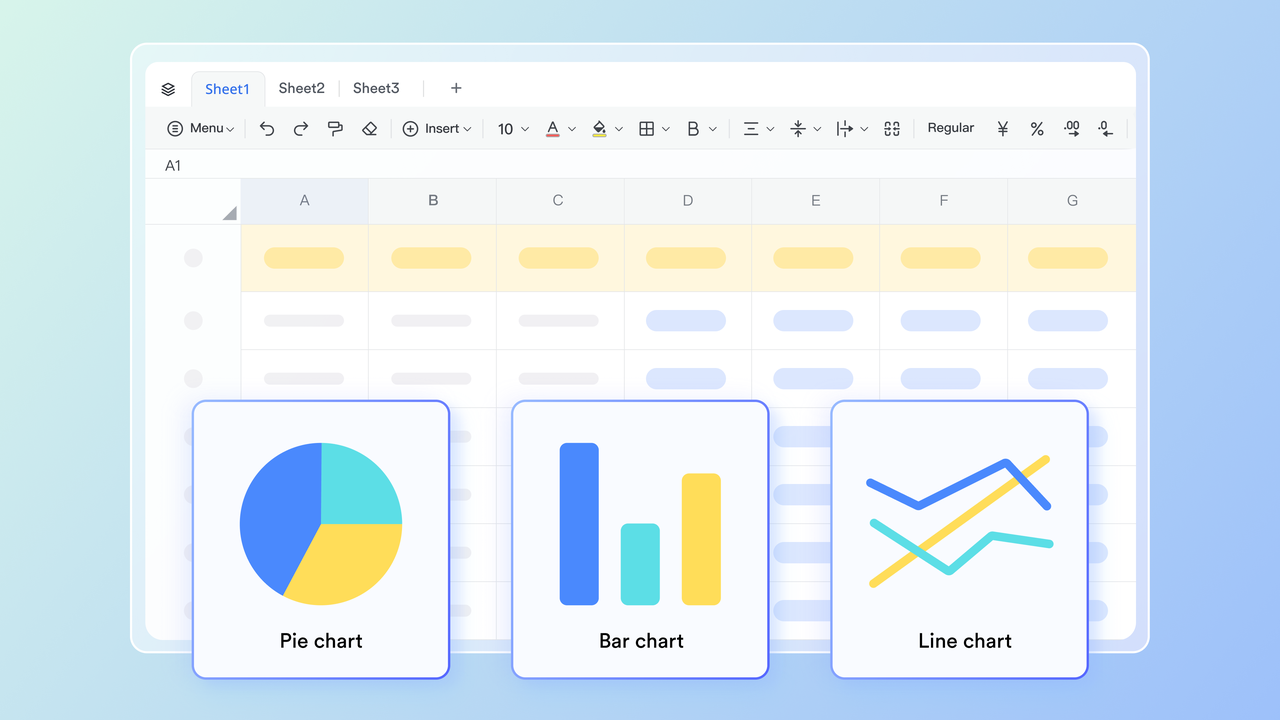
Before you can link tasks, you must define them clearly. Start by breaking the project down into all its and activities. This becomes your master list. The act of decomposition itself often reveals obvious, high-level dependencies. For instance, "Final Product" clearly depends on "Completed Manufacturing" and "Finished Packaging Design." Using a flexible, shareable feature for this—like with a hierarchical list or Lark Sheets—ensures this foundational list is dynamic and accessible to all, setting the stage for collaborative analysis.
Step 2: Conduct collaborative dependency mapping sessions
This is the core of identification. Gather the people who will do the work, along with from interfacing teams. For each item on your WBS, guide the group through targeted questioning:
- "What inputs or preconditions are absolutely required to begin this task?"
- "Whose work will be directly impacted once we finish this task?"
- "Are there any shared resources (people, equipment, budget) that create a conflict or sequence?"
The power here lies in diverse perspectives. A developer will identify technical prerequisites, a content writer will spot review cycles, and a finance partner will highlight approval gates. Visually mapping these links in real-time is invaluable. Utilizing a collaborative whiteboard allows the team to draw lines, create notes, and see the complex network of task dependencies in project management emerge organically. This session aims to capture not just the obvious finish-to-start links, but also the subtle start-to-start coordinations and critical external dependencies like vendor deliveries or legal approvals. Step 3: Analyze and formalize the dependency log
The raw map from your session now needs synthesis and classification. Review each link and categorize it by type (FS, SS, FF, SF) and by nature (logical, resource, preferential, external). This analysis helps prioritize management focus; an external dependency often carries more risk than an internal preferential one. The final, vital step is to pinpoint the critical path—the longest sequence of these dependencies in project that determines the project's shortest possible duration. Formalizing all this information into a central dependency log or directly inputting it into your with dependencies turns insights into a living, actionable plan. This documented network becomes your single source of truth for who is waiting on what, forming the basis for all subsequent management actions.
Turn your project list into a clear dependency map
How to manage project dependencies
Identifying dependencies gives you a map; managing them is the active navigation of the territory. Effective management of project management dependencies is a continuous discipline of communication, vigilance, and adaptation. It involves implementing systems that maintain clarity and enable proactive responses, ensuring the theoretical plan survives contact with reality.
Centralize visibility and establish real-time status
The greatest enemy of dependency management is information silos. Once identified, all dependencies in project workflows must be tracked in a centralized location that is universally accessible and updated in real time. The primary function of robust project management software with dependencies is to serve as this hub. When a task's status changes from "in progress" to "under review" or "completed," that update should be automatically visible to everyone linked to it. This eliminates the wasteful cycle of manual status update meetings and emails. In a unified platform like Lark, the completion of a predecessor task can trigger notifications or automatically unlock the successor task, creating a dynamic, self-informing system that keeps the entire team aligned without constant managerial intervention. 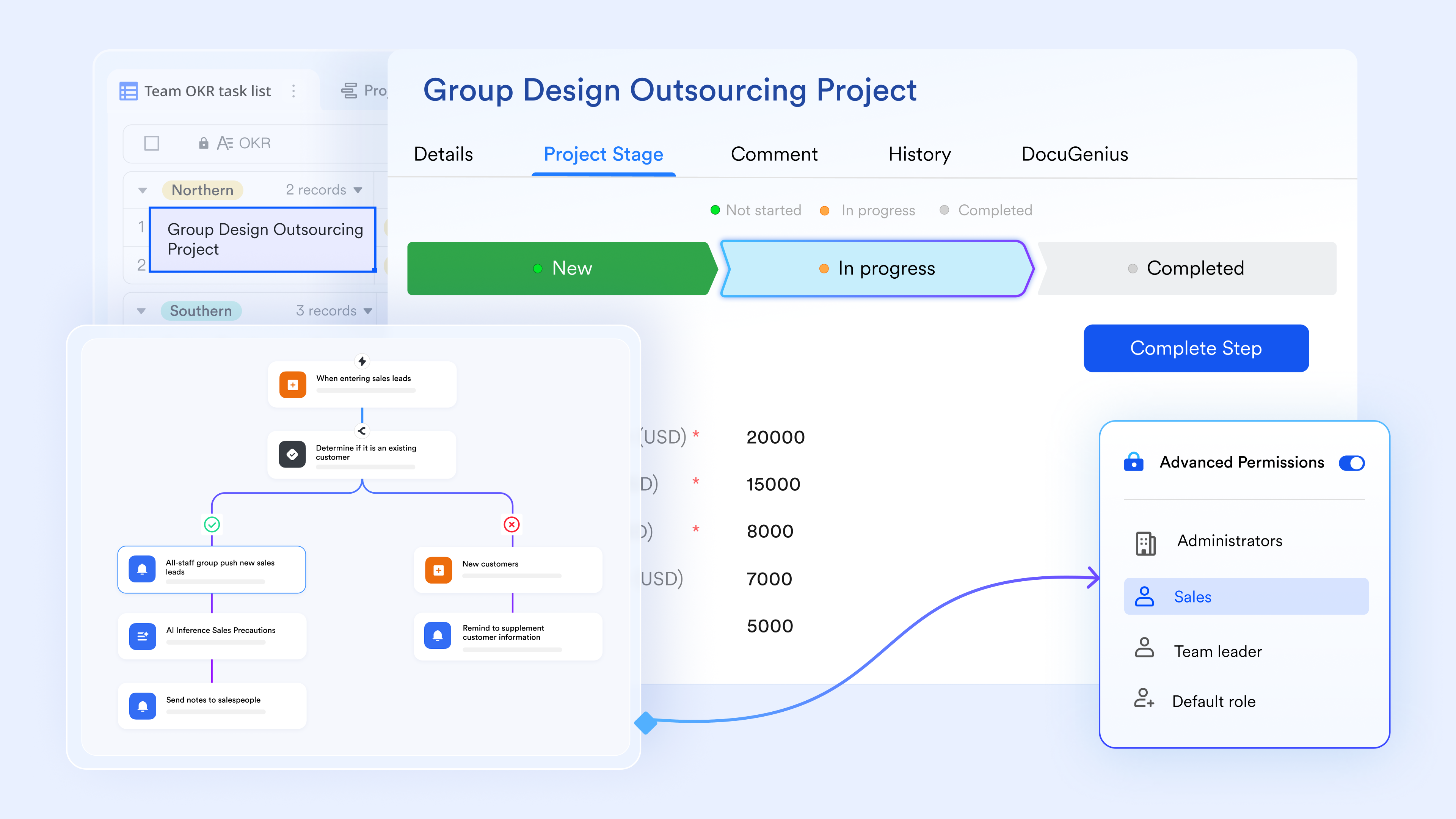
Implement defined handoff protocols and communication rituals
A dependency is more than a line on a chart; it's a handoff between people. For each key dependency, especially finish-to-start links, define what a proper handoff entails. Is it attaching the final file to the task with a specific comment tag? Is it a brief handoff in a shared note? Establishing this protocol turns a passive wait into an active transfer of responsibility. Complement this with simple, regular communication rituals. A daily stand-up or weekly sync should explicitly review the status of critical path task dependencies project management. Questions should be framed interdependently: "Is your work still on track to deliver the input the marketing team needs by Wednesday?" This keeps the focus on commitments to colleagues, not just personal to-do lists.
Proactively monitor risks and enable scenario planning
Dependency management is fundamentally risk management. means watching for early warning signs—a task consistently missing interim checkpoints, an external vendor being unresponsive—not just reacting when a deadline is missed. Use your dependency log to flag high-risk items for extra attention. Furthermore, leverage your mapped network for "what-if" analysis. If a crucial resource dependency is at risk (e.g., a key engineer may go on leave), a clear dependency map allows you to quickly model the impact on downstream tasks and explore alternative scenarios. This capability to forecast ripple effects is what separates advanced dependency management from simple , allowing teams to adapt plans before a minor risk becomes a major blockage.
Cultivate a culture of transparent accountability
Ultimately, and processes are enabled by culture. Successful management of project dependencies requires a team environment where it is safe and expected to communicate delays or problems early. The goal must shift from "appearing on track" to "ensuring the collective success of the project." Leaders can foster this by responding to early warnings with support and collaborative problem-solving, not blame.
When a team member flags a potential delay on a task others depend on, it should be seen as a responsible act that gives the entire team valuable time to adjust. This cultural shift, supported by transparent systems, transforms dependencies from sources of friction into the documented pathways of collaboration.
See how unified tools streamline dependency management
Benefits of managing project dependencies well
Investing in systematic dependency management yields returns that extend beyond on-time delivery. It fundamentally enhances how a team operates, delivering strategic advantages.
- Predictable delivery and : A clear map of dependencies in project work transforms timelines from optimistic wishes into predictable forecasts. Understanding the critical path allows teams to foresee the impact of any delay. This enables proactive mitigation—redeploying resources or adjusting scope—before a crisis emerges. This foresight de-risks execution and builds a record of reliable delivery.
- Optimized efficiency and : Visibility into resource dependencies prevents bottlenecks and idle time. Managers can see when a key person or tool is over-committed. This allows for intelligent, conflict-free scheduling. Workflows become smoother, and the costly "stop-and-wait" pattern is minimized. This leads to higher productivity and better team morale.
- and strategic alignment: When the web of task dependencies is visible, team members see how their work interlinks. This fosters shared purpose and organic accountability. It also elevates discussions from tactical tasks to strategic trade-offs. Leaders can make informed decisions, reprioritizing based on dependency chains. This ensures project execution stays aligned with core business objectives, maximizing value delivered.
Use Lark to manage project dependencies effectively
Translating the principles of dependency management into daily practice requires tools that are as interconnected as the work itself. A unified work platform like moves beyond simple task tracking by weaving dependency management directly into the fabric of communication and collaboration. Here's how its specific functionalities address the core challenges of managing project dependencies.
Make dependencies clear at a glance
Complex task chains are most challenging when they are "invisible." In the or timeline view of Lark Tasks, dependencies between tasks are no longer hidden notes but clear connecting lines. Teams can intuitively see logical chains, such as "Task A must be completed before Task B can begin," making it easy to understand where their work fits into the project network and how their delays or advancements affect upstream and downstream colleagues. This visualization significantly reduces communication overhead, making the overall project landscape and critical path transparent to everyone and minimizing blockers caused by misunderstandings from the outset. 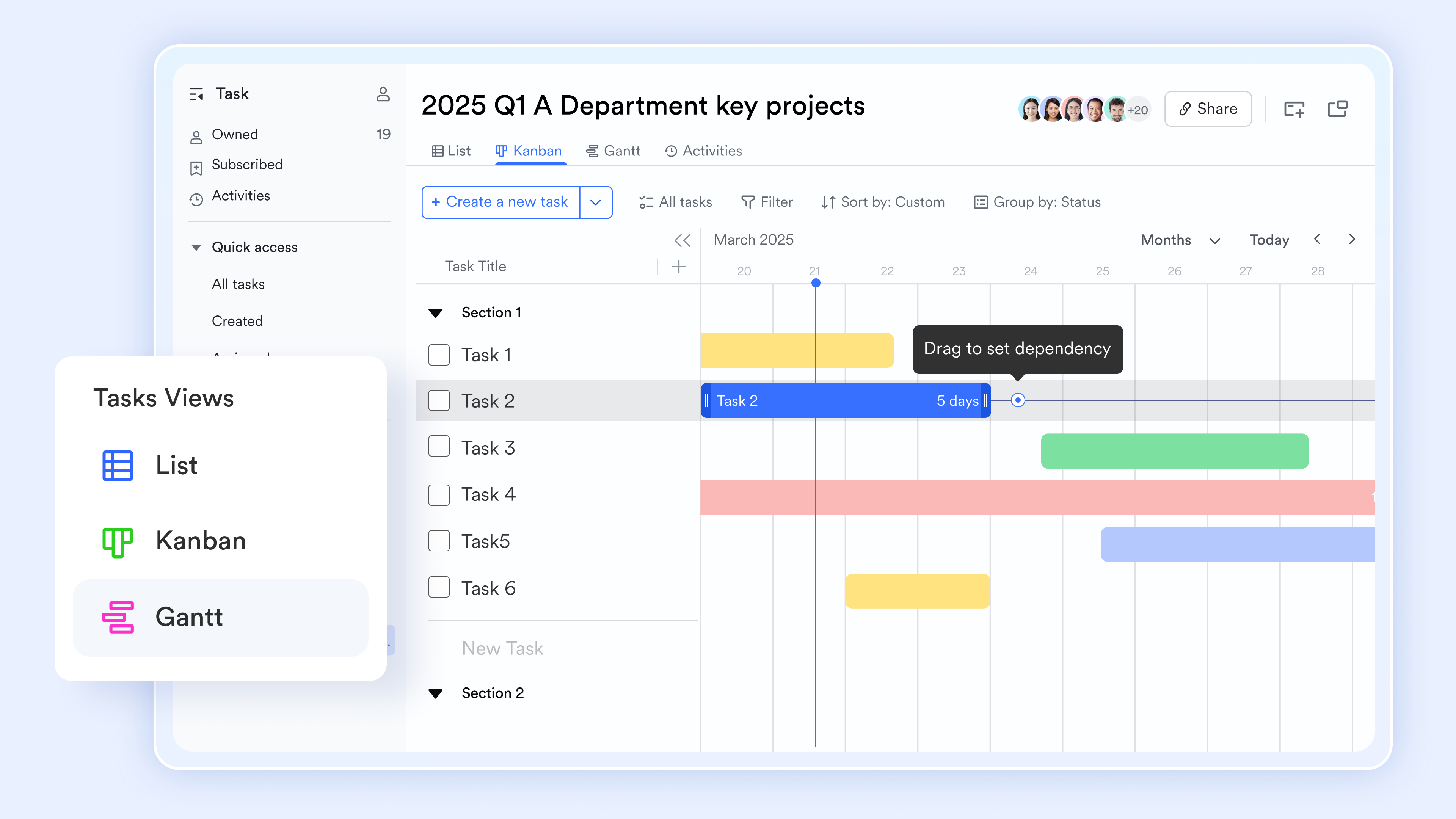
Automate handoff protocols to replace manual follow-ups
Managing dependencies often involves tedious manual chasing. Lark Base automation turns procedural handoffs into reliable, automatic workflows. You can create a rule that states: "When a task in the 'Design' project is marked 'Approved,' change the status of its linked 'Development' task to 'Ready,' and post a notification in the 'Eng-Design Sync' chat channel." This automates the critical moment of a Finish-to-Start dependency. The successor task owner receives an immediate, clear signal to begin work, without the project manager having to send a single message. 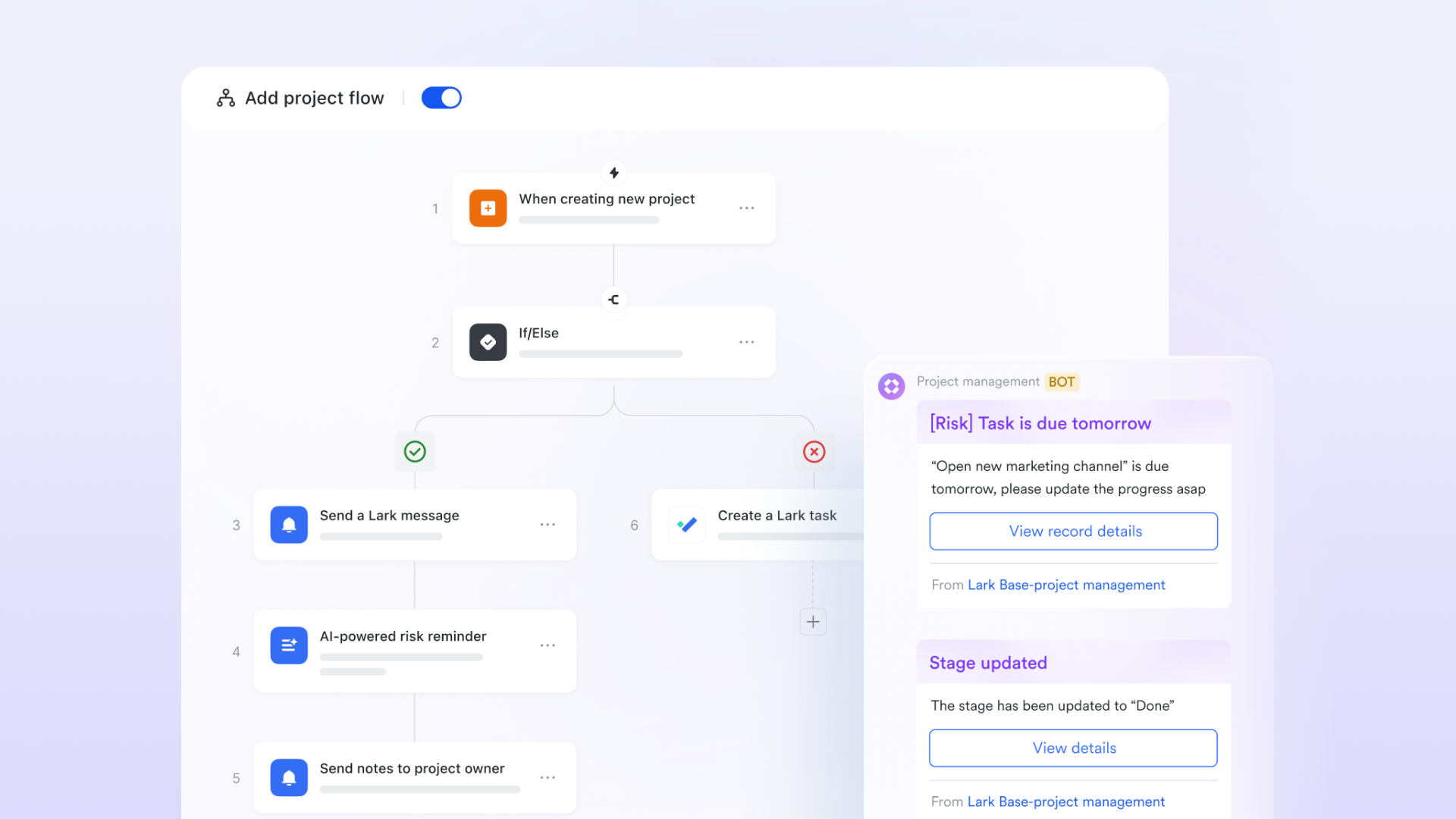
Gain a real-time command center for the critical path
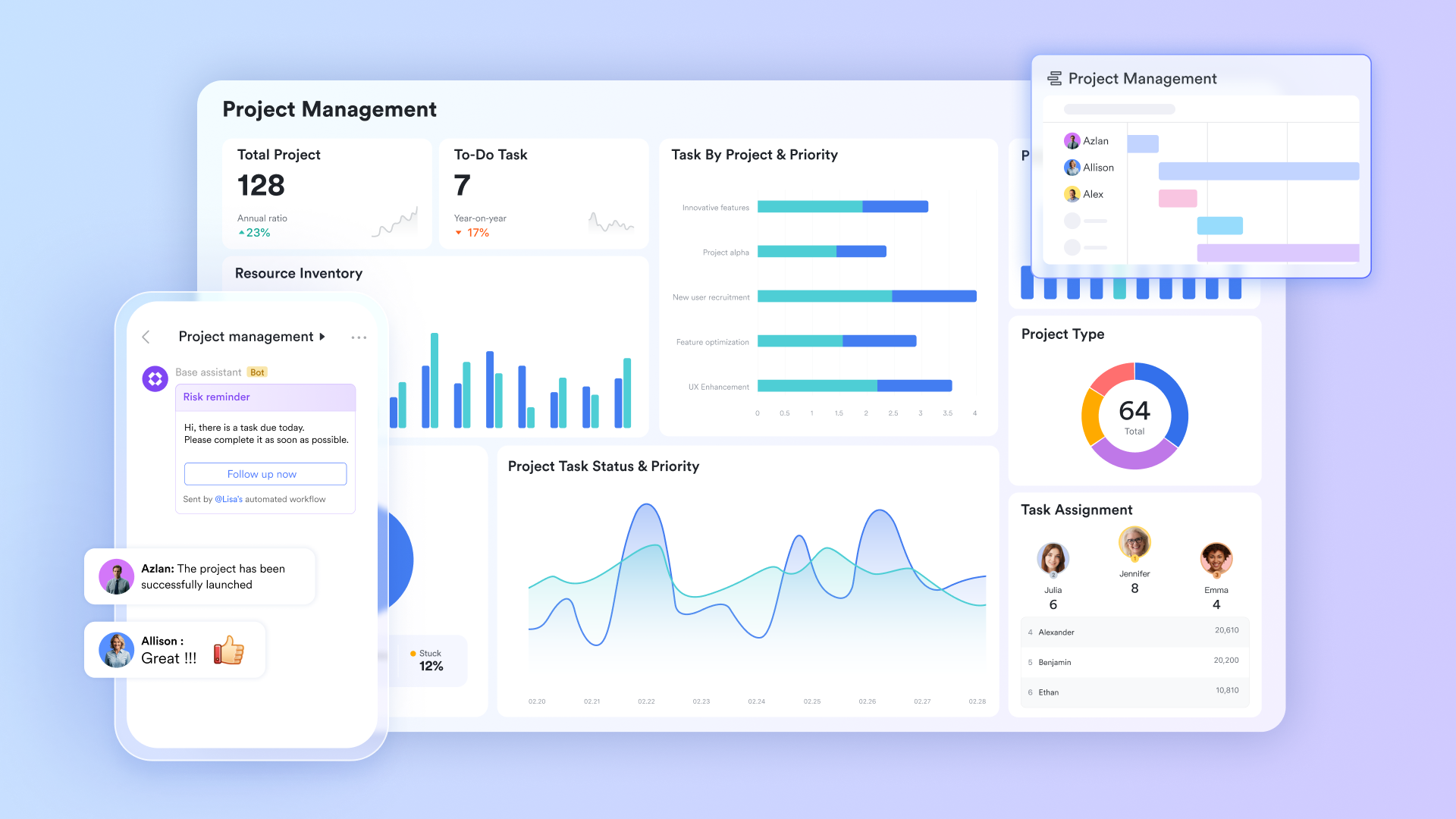
Understanding the health of your dependency network requires more than a static list; it needs a dynamic, visual overview. Lark Base dashboards allow you to build a customized project command center. You can create widgets that pull live data, such as a Gantt chart view filtered to show only tasks on the critical path, a list of all tasks tagged as "Blocked" or "Waiting," or a count of overdue deliverables that have dependent successors. 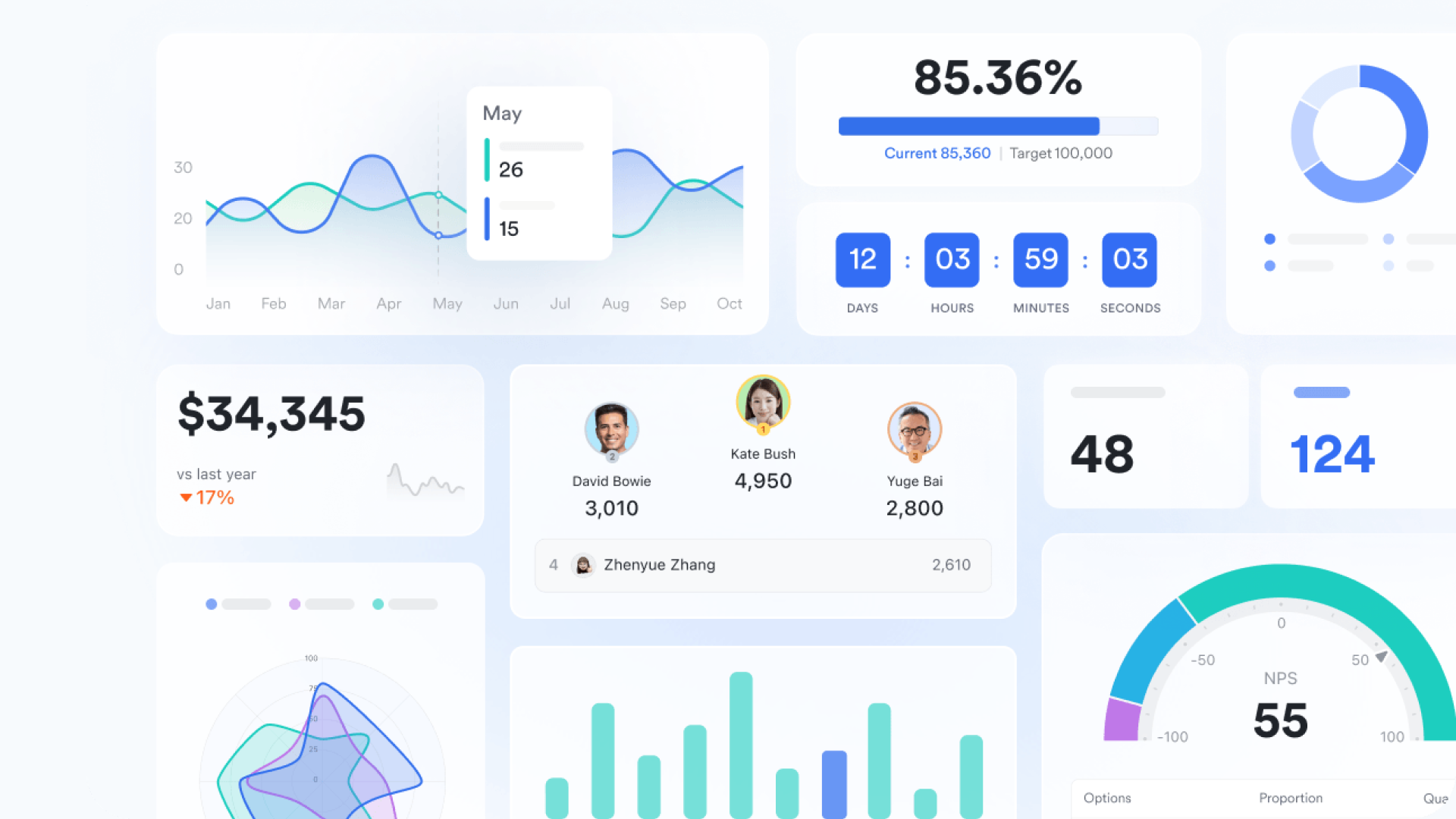
for Lark:
- Starter plan: Free forever plan that includes 11 powerful tools for up to 20 users. It also comes with 100GB of storage, 1000 automation runs, AI translations, and more.
- Pro plan: $12/user/month (billed annually) for up to 500 users. It includes everything in Basic plus group calling for up to 500 attendees, 15TB of storage, 50,000 automation runs, and more.
- Enterprise plan: for custom pricing. Supports unlimited users and includes even more automation runs and advanced security, compliance, and management features.
For small teams with simple communication needs

18 months message history
1000 Base automation runs/month
2000 rows per table in Base
Most POPULAR
For companies with comprehensive collaboration and management needs
Unlimited message history
500-participant video meetings
50k Base automation runs/month
20k rows per table in Base
For large companies with advanced security and organizational management needs
Get a personalized demo and pricing
Unlimited message history
500-participant video meetings
15 TB storage + 30 GB storage/user
500k Base automation runs/month
50k Base automation runs/month
Most POPULAR
For companies with comprehensive collaboration and management needs
Unlimited message history
500-participant video meetings
50k Base automation runs/month
20k rows per table in Base
Tips for dependency management
Mastering dependencies in project management is an ongoing practice. Beyond tools and processes, these practical tips can embed effective dependency handling into your team's culture.
Start early and review often
Begin identifying project dependencies during the initial planning phase, not after the schedule is set. Treat your dependency log as a living document. Review and update it regularly—in weekly syncs or during sprint planning—to account for any , resources, or priorities. Early and frequent attention prevents small oversights from becoming major roadblocks.
Prioritize the critical path
Not all task dependencies carry equal weight. Focus your most vigilant monitoring and communication on the dependencies that form the project's critical path. A one-day delay on a critical path task directly delays the final deliverable. By clearly communicating which dependencies are on this path, you help the entire team understand where precision and timeliness matter most.
Communicate the "why" behind the dependency
When assigning a task, don't just note that it depends on another. Explain the reason. Telling a developer, "This API integration task cannot start until the vendor documentation is finalized because we need the authentication specifications," provides crucial context. This understanding helps team members problem-solve, , and sometimes find creative ways to work around a blockage, fostering greater autonomy and engagement.
Plan for contingencies, especially for external links
External dependencies are often the highest risk. Always have a "Plan B" for critical external items. If a launch depends on a third-party app store approval, know what you can do if it's delayed. Can you adjust your marketing timeline? Is there a parallel activity the team can focus on? Building contingency time into your schedule for key external handoffs is a hallmark of mature dependency management.
Put these tips into action with Lark
Conclusion
Project dependencies are the blueprint of collaboration, defining how work and responsibility flow within a team. Mastering them transforms uncertainty into predictability and friction into trust.
This journey from awareness to action starts with understanding dependency types, is solidified by mapping links with your team, and is operationalized through clear communication and focus on the critical path. The ultimate goal is to make the invisible visible, turning potential bottlenecks into clear pathways for delivery.
Ready to transform how your team manages dependencies? provides the integrated workspace to map, track, and automate these critical connections seamlessly.
FAQs
What are project dependencies?
Project dependencies define the sequence of work by establishing relationships between tasks. They specify that one task relies on the start or completion of another, forming the logical backbone of any project schedule. Understanding these relationships is fundamental to predicting timelines and preventing bottlenecks.
What are the four types of dependencies in project management?
The four primary types are Finish-to-Start, Start-to-Start, Finish-to-Finish, and Start-to-Finish. These categories describe the specific condition (start or finish) that must be met in a predecessor task for a successor task to begin or end. Mastering these types allows for accurate and flexible project planning.
What is an example of a dependency?
A classic example is in construction: you cannot begin painting the interior walls of a building until the drywall installation and priming are fully completed. This is a Finish-to-Start dependency, where a clear, quality handoff is required before the next phase can logically begin.
What are key dependencies in a project?
Key dependencies are those tasks on the project's critical path or those linked to major deliverables and approvals. A delay in any key dependency will directly impact the final deadline. Proactively managing these—such as major client sign-offs or deliverables from external vendors—is crucial for success. Centralizing tracking for these, as teams do with platforms like Lark, ensures they remain visible and top-of-mind.
Related reading