Fast tracking project delivery has become a common response to aggressive deadlines, market pressure, and shifting priorities. Teams are often asked to deliver more in less time without additional budget or resources. This is where fast tracking in project management enters the conversation as a strategic option rather than a shortcut.
Unlike traditional scheduling, fast-tracking project management overlaps activities that would normally run sequentially. While this can reduce timelines significantly, it also increases coordination complexity and risk. Understanding what fast tracking in project management is, when it works, and when it fails is essential before applying it. This guide explores fast-tracking project management definitions, real examples, leadership trade-offs, and how modern tools like Lark can help teams fast-track projects with greater control.
What is fast tracking in project management
Fast tracking in project management is a schedule compression technique where that are normally completed one after another are performed in parallel. Instead of waiting for one activity to finish fully, teams begin subsequent activities earlier to shorten the overall . Project managers use alongside the project plan to identify opportunities for fast tracking or crashing. Fast tracking and crashing both involve evaluating the original schedule to identify ways to reduce project duration, and this process involves evaluating dependencies and workflows. This approach is commonly used when deadlines cannot be moved, but scope and resources remain fixed.
The fast-tracking project management definition emphasizes overlap without adding extra resources. This distinguishes project management fast tracking from schedule crashing, which is a schedule compression technique used to shorten project timelines by adding extra resources. Crashing adds resources to critical path tasks to reduce their duration, and this often involves additional resources and more resources such as personnel or equipment. In project fast tracking, risk increases because dependencies are partially completed rather than finalized. Teams must work with incomplete information and adapt as changes occur.
When people ask what fast tracking in project management is, the answer lies in trade-offs. Time is reduced, but coordination, rework, and decision pressure increase. Fast-tracking in project management requires strong leadership, experienced teams, and fast feedback loops to succeed.
The real question: Should you fast-track projects at all
Fast tracking is not a default solution. Before applying project management fast-tracking, leaders must assess whether the project environment can support overlap without chaos. This decision is more strategic than tactical. Careful planning by project professionals is essential to evaluate if fast tracking is appropriate, ensuring that resources and schedules are coordinated to manage risks and maintain quality.
- Fast-tracking project management makes the most sense when deadlines are imposed by regulation, market launch windows, or contractual commitments. If the deadline is internally set and flexible, fast tracking may create unnecessary risk. Leaders should confirm whether the timeline truly cannot be moved before adopting fast tracking in project management.
- Project fast tracking works best when are well understood and unlikely to change. If upstream outputs are volatile, overlapping downstream work increases rework. Stable dependencies reduce uncertainty and make project management fast tracking more predictable. It is also crucial that all stakeholders are on the same page to ensure effective collaboration and minimize misunderstandings.
- Fast-tracking in project management places a heavy cognitive load on teams. Experienced teams can make decisions with partial data and adjust quickly. Less experienced teams struggle under overlapping responsibilities, increasing error rates.
- Leaders must assess tolerance for quality variation. In some projects, small quality dips are acceptable temporarily. In others, such as work, quality loss creates unacceptable risk. Fast tracking may not always be the best option; when tasks cannot be overlapped, project crashing can be a viable alternative.
Influences: What fast tracking actually changes inside a project
Fast tracking does more than shorten timelines. It reshapes how planning, execution, and decision-making happen across the project. Understanding these internal shifts helps teams prepare for the operational pressure that fast tracking creates.
- Planning rhythm: Planning moves from a fixed, sequential cadence to a rolling and adaptive cycle. Teams revisit plans more frequently as overlapping work reveals new information, which is essential for fast tracking in project management. Teams must also identify certain tasks that can be overlapped and plan for the next task in the sequence to maintain momentum.
- Team workload: Workload becomes denser as teams handle multiple phases at the same time. Project management fast tracking increases cognitive load and requires clear prioritization to avoid burnout. Fast tracking often requires executing tasks in parallel and managing multiple tasks simultaneously, which demands careful coordination.
- Decision speed: Decisions must be made faster and often with incomplete data. Delays quickly erase time savings in fast-tracking in project management. Resource optimization is crucial when handling different tasks concurrently to ensure efficient use of time and resources.
- Error tolerance: Rework becomes more common because tasks start before inputs are fully finalized. Fast-tracking project management succeeds when teams accept controlled rework rather than aiming for perfection upfront.
- : Stakeholders need to engage more frequently and respond faster. Fast tracking in project management relies on short feedback loops to keep overlapping work aligned.
Critical path method: The backbone of fast tracking
The is a foundational project management technique that plays a pivotal role in successful fast tracking. CPM involves mapping out all project tasks, identifying dependencies, and determining the longest sequence of dependent activities—known as the critical path. This critical path dictates the shortest possible project duration, as any delay in these tasks will directly impact the overall timeline.
For project managers considering fast tracking, understanding the critical path is essential. By analyzing which tasks are on the critical path, project managers can identify opportunities to overlap or reschedule certain activities without jeopardizing project completion. Fast tracking in project management often means starting tasks on the critical path earlier or running them in parallel with other activities, provided that dependencies allow.
using CPM enables project managers to focus their attention and resources where they matter most. It also helps in evaluating the risks associated with overlapping tasks, as any misstep on the critical path can significantly affect project delivery. By leveraging the Critical Path Method, project managers can make informed decisions about fast tracking in project environments, ensuring that time savings do not come at the expense of project quality or success.
Fast tracking vs crashing: A leadership trade-off
Fast tracking and crashing are often compared, but they solve schedule pressure differently. Understanding this distinction helps leaders choose the right approach.
Fast-tracking project management compresses schedules by overlapping work without adding resources. by adding resources or budget to critical tasks. Project management fast tracking increases , while crashing increases cost risk.
In practice, leaders often combine both approaches. A project may begin with fast tracking in project management and later apply limited crashing to stabilize delivery. The key is recognizing that fast-tracking in project management shifts risk rather than eliminating it.
Plan faster projects with better visibility
Where fast tracking works surprisingly well
Fast tracking is not universally risky. In certain contexts, project fast tracking delivers strong results with manageable trade-offs.
- : Product launches often involve parallel work across marketing, sales, and engineering. Fast-tracking project management allows teams to prepare campaigns while final features are still being completed. This overlap reduces time to market when dependencies are well managed.
- Construction fit-outs: Interior fit-outs frequently use fast tracking in project management by starting installations before all designs are finalized. Experienced contractors manage rework risk through modular designs and clear change control.
- : Campaign assets, media planning, and distribution can run in parallel. Project management fast tracking works well because creative work can adapt quickly to changes.
- System migrations: Phased migrations allow teams to prepare training and support while technical work continues. Fast-tracking in project management shortens downtime when coordination is strong.
Where fast tracking fails badly
Fast tracking is not suitable for every project environment. In some contexts, overlapping work increases risk faster than it reduces timelines, leading to cost overruns and quality issues.
- Regulated industries: Projects in healthcare, finance, or aviation require completed approvals before execution. Fast tracking in project management increases in these environments.
- R&D projects: Research-driven work depends on discovery and learning. Overlapping uncertain tasks lead to wasted effort and incorrect assumptions in project management fast tracking.
- Early-stage product discovery: Requirements are fluid and evolving. Fast-tracking in project management amplifies confusion rather than accelerating clarity.
- : Coordination across vendors with different incentives and timelines is difficult. Project fast tracking often breaks down due to misalignment and delayed handoffs.
How to fast-track without losing control
Fast tracking can be effective when paired with strong execution discipline. These practices help teams manage overlap while maintaining visibility and accountability.
- : Not every task needs fully completed inputs to begin. Teams should clearly identify which activities require finalized outputs and which can safely start with partial information. This clarity reduces unnecessary waiting and prevents risky overlap. Proper dependency mapping makes project management fast tracking more predictable and easier to adjust when conditions change.
- Freeze partial scope: Fast tracking works best when critical requirements are locked early, even if secondary details remain flexible. By freezing core scope elements, teams reduce the likelihood of cascading rework. This approach allows fast tracking in project management to move forward without constant resets. Controlled flexibility preserves speed without sacrificing stability.
- Create escalation rules: Overlapping work increases the frequency of conflicts and trade-off decisions. Clear escalation rules define who makes decisions, how quickly they must be made, and what information is required. Fast-tracking project management depends on rapid resolution rather than prolonged debate. Without escalation clarity, time savings disappear quickly.
- Increase review frequency: Shorter review cycles help teams identify issues before they spread across overlapping tasks. Frequent checkpoints replace long milestone reviews in . This creates faster feedback loops and reduces the cost of corrections. Regular reviews keep execution aligned as plans evolve.
- Add risk buffers: Schedule compression should not eliminate all contingency. Risk buffers absorb unexpected delays caused by overlap or rework. In fast-tracking project management, buffers act as shock absorbers rather than inefficiencies. Maintaining buffer time protects delivery without undermining speed gains.
Warning signs your fast-tracked project is going off-track
Fast-tracked projects require constant monitoring. These signals indicate that overlap is creating more risk than value.
- Rising rework: An increase in revisions or repeated corrections often means dependencies are not stable enough to overlap. Teams may be acting on incomplete or changing inputs, which undermines project fast tracking. When rework accelerates, overlap should be reduced or paused.
- Missed micro-deadlines: Small internal deadlines slipping is an early warning sign for fast-tracking in project management. These delays compound quickly across overlapping tasks and often signal .
- Conflicting priorities: Teams struggle to decide which task deserves attention when multiple phases run in parallel. Without clear prioritization, effort becomes fragmented and productivity drops sharply in fast-tracked projects.
- Silent stakeholders: Reduced feedback or delayed responses increase downstream risk. Fast-tracking project management relies on active and timely
Reduce fast-tracking execution risk
Meet Lark: Modern platform making tracking fast, easy, and accurate
Fast tracking increases coordination intensity. Traditional tools struggle to keep pace with overlapping workstreams. Modern platforms like , project management software, help teams manage project management fast tracking with greater clarity and control by integrating scheduling, tracking, and communication features. By connecting tasks, , communication, and automation, Lark supports the fast decision-making required in fast-tracking in project management without overwhelming teams.
Real-time project tracking via Gantt views and timelines
Lark Base Gantt views provide a high-level visual control center for . Teams can fast-track timelines by simply dragging time bars to adjust start and end dates, which automatically synchronizes updates across all other views, like Kanban, grid, or Gallery. Milestones, start & end dates, and custom time bars enable the identification of critical deadlines and realistic capacity planning. Also, the function that aligns colors with records and uses progress field titles provides instant visibility into project health. 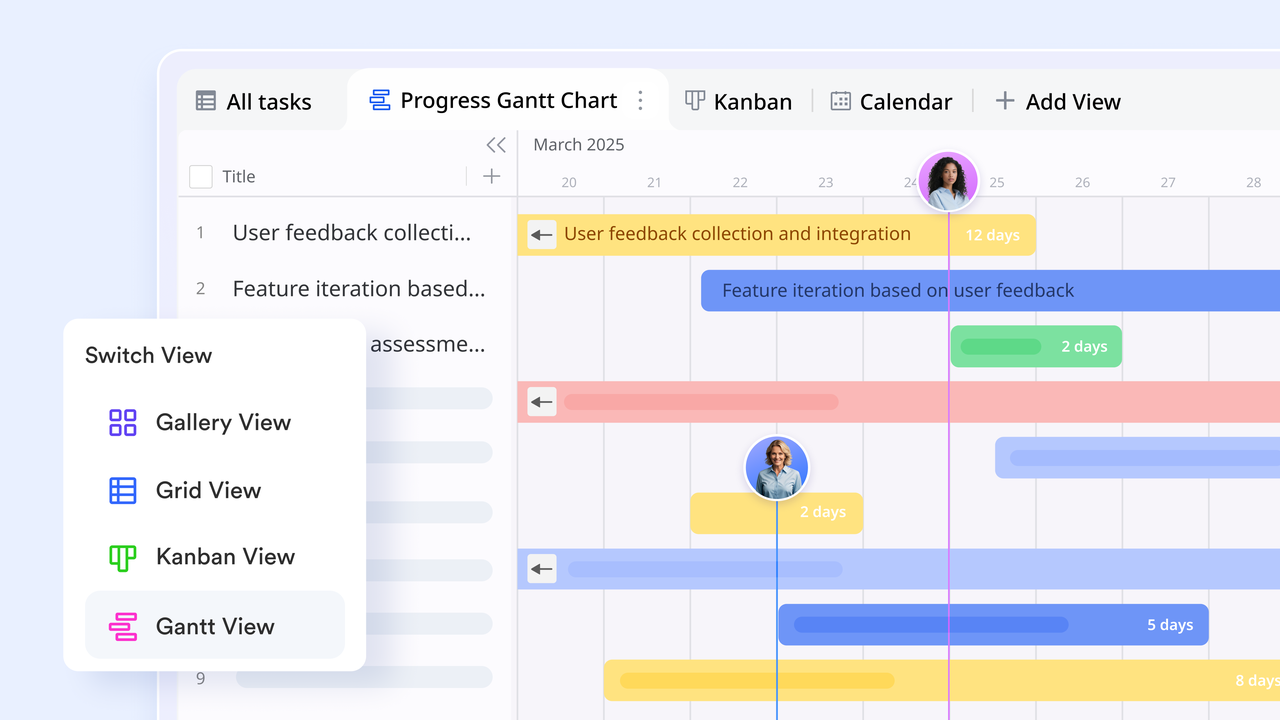
Native dashboards provide a clear overview
With 36 different kinds of blocks, Lark Base dashboards turn real-time data into a visual data console for rapid decision-making. Managers can use progress charts and metrics blocks to track completion rates against targets, ensuring that any lagging tasks are identified and addressed immediately. Ranking blocks and funnel charts help pinpoint process bottlenecks, while countdown blocks maintain team urgency around critical deadlines. By embedding Gantt and Kanban view blocks directly into the dashboard, teams gain a comprehensive overview of and dependencies. 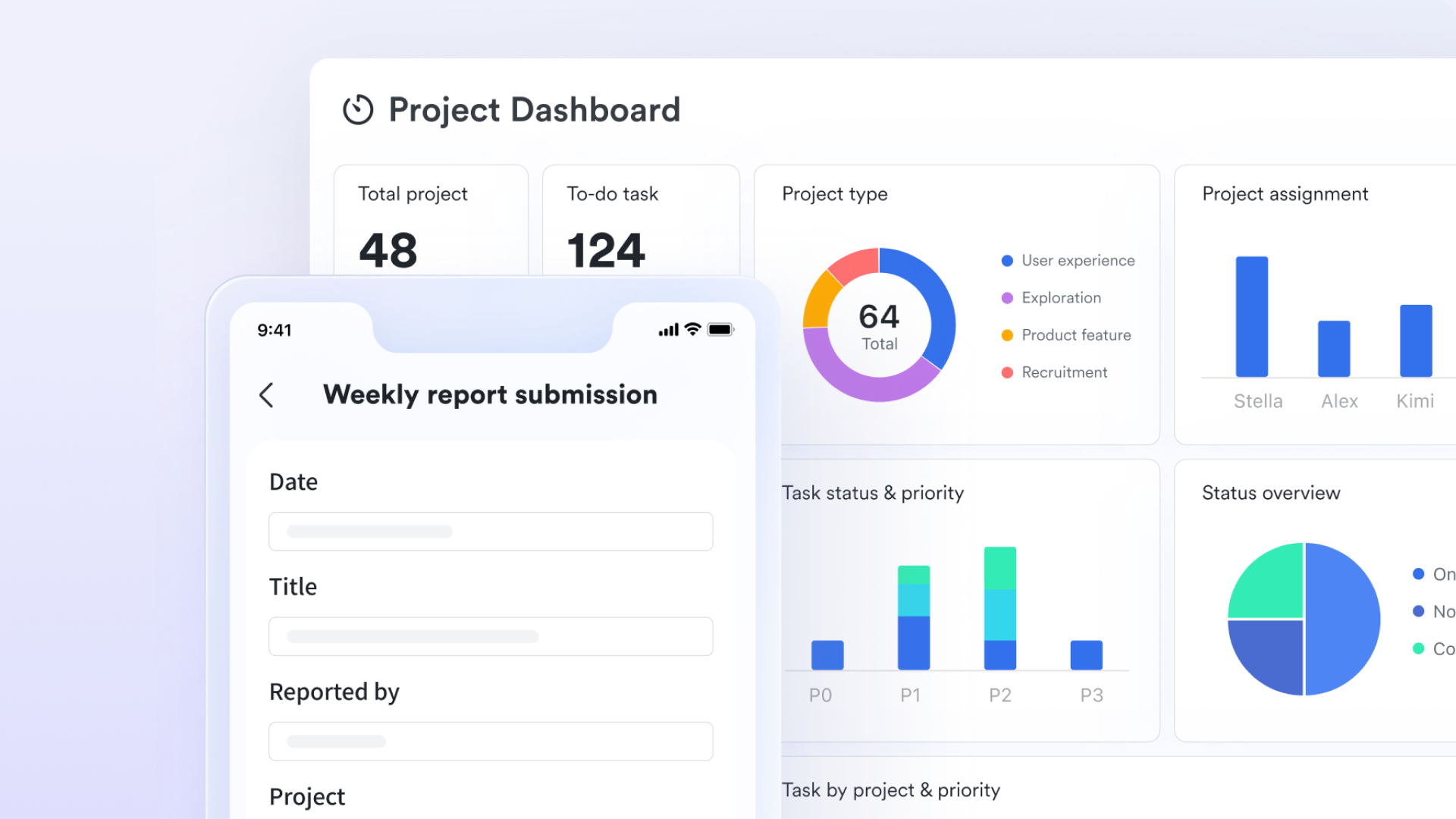
Execution engine for all ongoing tasks
Lark Tasks turns complex workflows into a coordinated execution engine. Teams can identify essential priorities using the "highlight critical path" feature, ensuring that any delay in the longest sequence is identified. Options like "dependency management" can automatically synchronize schedule changes across linked tasks, and milestones and sub-tasks provide visual anchors. With custom task lists, managers can prioritize high-risk items and maintain a clear overview of the project process. 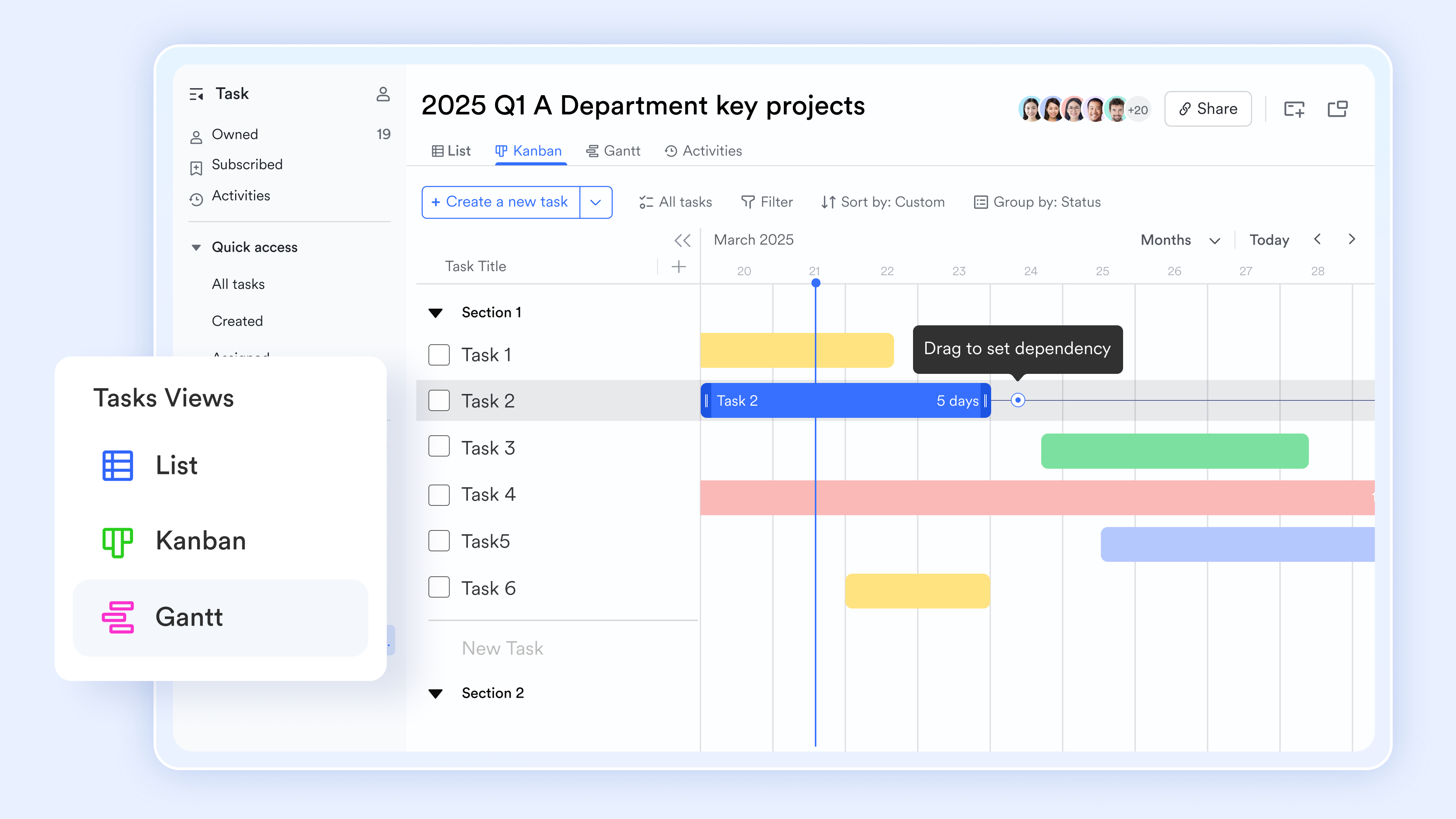
Automated workflows reduce manual input
Lark Base automations reduce manual handoffs with a no-code , which triggers actions based on real-time data changes. Trigger-action chains allow the system to automatically send instant alerts via chat, update records, and create tasks or calendar events the moment a project status changes. For customization, teams can also use conditional branching, like IF/ELSE, Loop, or Switch, to handle complex logic. 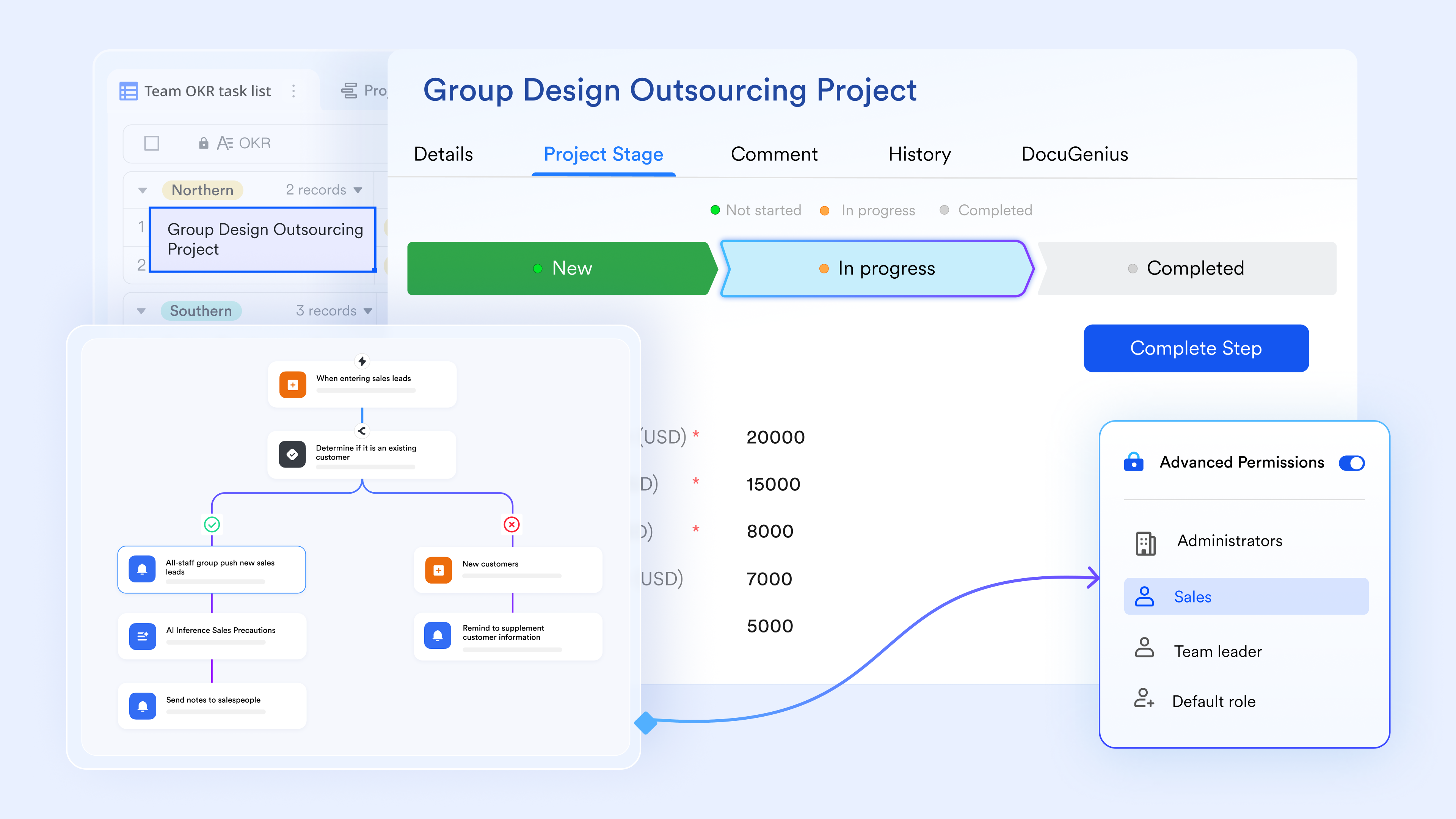
Advanced filters for no-distraction tracking
Lark Base's filter and group feature allows teams to slice through datasets to focus on the desired part. The "group conditions" enable managers to organize tasks by priority and owner simultaneously, while "Save as New View" allows individual members to maintain personal workspaces. With filters to isolate incomplete tasks or high-risk roadblocks, teams can respond to potential delays in real time. 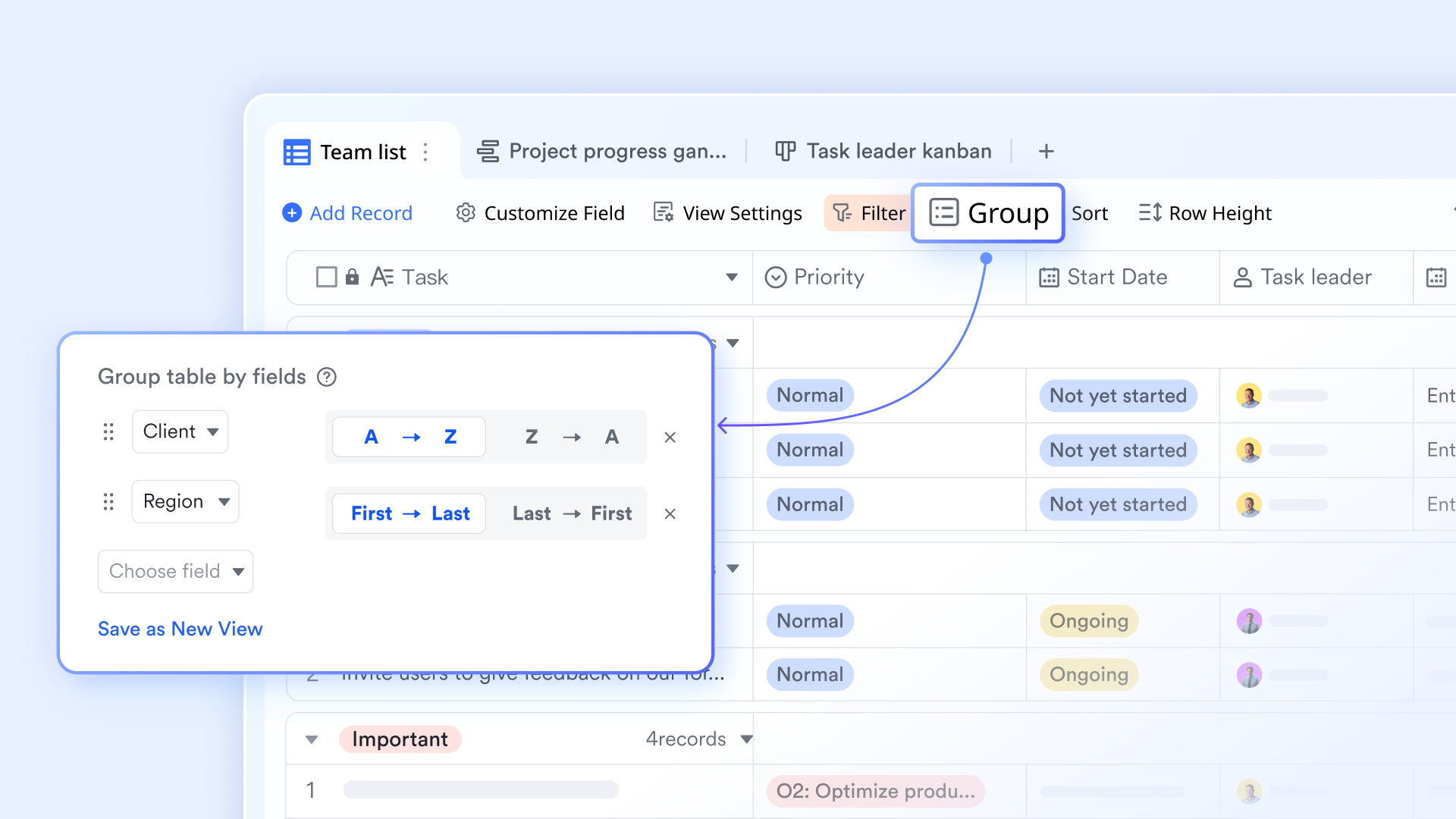
:
- Starter plan: Free forever plan that includes 11 powerful tools for up to 20 users. It also comes with 100GB of storage, 1000 automation runs, AI translations, and more.
- Pro plan: $12/user/month (billed annually) for up to 500 users. It includes everything in Starter plus group calling for up to 500 attendees, 15TB of storage, 50,000 automation runs, and more.
- Enterprise plan: for custom pricing. Supports unlimited users and includes even more automation runs and advanced security, compliance, and management features.
For small teams with simple communication needs

18 months message history
1000 Base automation runs/month
2000 rows per table in Base
Most POPULAR
For companies with comprehensive collaboration and management needs
Unlimited message history
500-participant video meetings
50k Base automation runs/month
20k rows per table in Base
For large companies with advanced security and organizational management needs
Get a personalized demo and pricing
Unlimited message history
500-participant video meetings
15 TB storage + 30 GB storage/user
500k Base automation runs/month
50k Base automation runs/month
Most POPULAR
For companies with comprehensive collaboration and management needs
Unlimited message history
500-participant video meetings
50k Base automation runs/month
20k rows per table in Base
A fast-tracking approval checklist for leaders
Before committing to project fast tracking, leaders need to evaluate whether the organization, team, and project conditions can support overlapping work. This checklist helps decision makers assess readiness and avoid avoidable risk before accelerating delivery.
- Scope stability: Core must be clearly defined and unlikely to change significantly during execution. Minor adjustments may be manageable, but frequent scope shifts increase rework and undermine fast-tracking project management.
- Resource readiness: Teams must have the capacity, skills, and experience to handle parallel responsibilities. Without experienced ownership, project management fast tracking can quickly overwhelm key contributors.
- Risk appetite: Leadership must be comfortable accepting higher coordination and rework risk in exchange for time savings. Fast-tracking in project management always trades certainty for speed.
- : Feedback loops, escalation paths, and decision owners must be clearly defined upfront. Fast-tracking project management depends on rapid information flow to prevent small issues from escalating.
- Exit strategy: Teams should know when and how to return to sequential execution if risks exceed acceptable levels. Clear exit criteria protect delivery when project fast tracking no longer adds value.
Conclusion
Fast-tracking project delivery is a powerful but risky technique. It compresses schedules by overlapping work rather than adding resources. When applied thoughtfully, fast tracking in project management enables organizations to meet immovable deadlines without uncontrolled cost growth.
However, fast-tracking project management magnifies challenges, decision pressure, and rework risk. Success depends on stable dependencies, experienced teams, and continuous visibility. Without these, project management fast tracking quickly becomes counterproductive.
Modern platforms like make fast-tracking in project management safer by connecting timelines, tasks, communication, and automation in one operational layer. By reducing human delay and improving visibility, teams can fast-track projects while maintaining control, quality, and accountability.
Deliver faster without losing control
FAQs
What is an example of fast tracking in construction?
A common example is starting interior work before all structural activities are fully completed. Electrical wiring, plumbing, and finishing tasks begin while final inspections are still in progress. This fast tracking in shortens delivery timelines when dependencies are well understood. As overlap increases, teams often rely on shared task visibility and clearer approval tracking, where tools like Lark are introduced to help coordinate contractors and keep updates aligned.
Can fast tracking be reversed mid-project?
Yes, fast tracking can be reversed if risk levels rise or dependencies become unstable. Teams may pause overlapping activities and return to a more sequential execution model. Project management fast tracking should always include clear exit criteria to avoid confusion. With better visibility into task status and dependencies, platforms such as Lark make it easier to re-sequence work without losing context.
How do you document decisions in fast-tracked work?
Decisions in fast-tracked work need to be captured as they happen, not after the fact. Notes, approvals, and changes should stay connected to the tasks they affect. Fast-tracking in project management becomes harder to manage when documentation is scattered across tools. Many teams gradually adopt centralized workspaces like Lark to keep decisions, files, and execution records in one place.
What KPIs change during fast tracking?
During fast tracking, overall cycle time usually decreases while rework rates may increase in the early stages. Coordination-focused metrics, such as dependency delays and approval turnaround time, become more important than simple utilization. Fast-tracking project management shifts attention from efficiency to flow. Teams often start using real-time dashboards, with tools like Lark helping surface these as overlap increases.
Related reading





























