In the dynamic landscape of public service, effective government project management isn't just a best practice; it's a fundamental necessity. From building critical infrastructure to implementing vital social programs and safeguarding our digital frontiers, the success of these initiatives directly impacts citizens' lives and the nation's well-being. As a professional, I've seen firsthand how meticulous planning, precise execution, and transparent communication are paramount in ensuring public funds are utilized wisely and impactful results are delivered efficiently.
What is government project management?
At its core, government project management is the specialized discipline of planning, executing, and overseeing initiatives within public sector organizations. These projects, ranging from infrastructure development to policy reforms, aim to deliver unique products, services, or results that serve the public good. Unlike the private sector, where profitability often takes precedence, government project management is driven by public accountability, legislative mandates, and the overarching goal of creating social value and improving citizens' lives. It requires a nuanced understanding of regulatory frameworks, public scrutiny, and the unique political landscape.
While the fundamental principles of project management remain consistent, government projects face distinct challenges that set them apart from private sector endeavors. Transparency and accountability are paramount due to taxpayer funding, leading to strict budgetary controls and extensive documentation requirements. often involves navigating multi-layered bureaucracies, complex approval processes, and inter-agency collaboration. Moreover, political shifts and evolving public priorities can significantly influence project continuity, demanding greater adaptability and robust planning. The focus shifts from maximizing profit to maximizing public value and ensuring compliance with a myriad of regulations, making project management in government a unique and demanding field.
Figure out how to manage government project
Government project management types
The breadth of initiatives undertaken by governments necessitates diverse approaches to government project management. These projects often fall into several key categories, each with its own set of complexities and requirements.
Infrastructure and facilities
This category encompasses projects vital to a nation's foundational framework. Think of the construction and maintenance of roads, bridges, public transport systems, schools, hospitals, and public utilities. Local government is often critical here to manage the intricate logistics, , and long timelines involved. These projects demand careful planning, environmental impact assessments, and coordination with numerous contractors and stakeholders to ensure public safety and sustainable development.
Digital services and cybersecurity
In an increasingly digitized world, governments are heavily invested in modernizing public services and protecting critical information. Projects in this area include the development of e-government platforms, citizen service portals, data centers, and robust cybersecurity initiatives. Government projects in this domain require specialized expertise in technology, data privacy, and risk management to safeguard sensitive data and ensure seamless, secure public access to services.
Social and policy programs
These projects focus on improving public welfare and implementing legislative decisions. Examples include healthcare reforms, educational programs, housing initiatives, poverty reduction strategies, and environmental protection efforts. Managing these government projects involves extensive stakeholder engagement, community consultation, and a deep understanding of social impact. The success metrics often go beyond financial returns, emphasizing societal benefits and the effective delivery of public services.
Key functions of government project management
Effective government project management relies on a set of core functions that ensure public initiatives are delivered successfully, transparently, and accountably. From initial planning to final delivery, each function plays a crucial role in navigating the complexities of the public sector.
Resource planning and coordination
At the heart of any successful government project is meticulous resource planning and coordination. This involves strategically allocating human, financial, material, and technological resources to meet project objectives. must ensure the right talent is in place, define clear roles and responsibilities across multidisciplinary teams, and carefully manage budgets funded by taxpayers. This function also includes coordinating with external contractors and ensuring the efficient utilization of equipment and technology to prevent delays and cost overruns. Effective resource planning minimizes waste and optimizes asset utilization, directly impacting the project's financial and operational efficiency.
Risk and budget management
Given the high stakes and public scrutiny, robust budget and are indispensable in government project management. Identifying potential risks early, such as political changes, public opposition, regulatory hurdles, or unforeseen economic shifts, is critical. Project managers must develop comprehensive mitigation strategies and contingency plans to ensure projects can adapt to unexpected challenges without compromising results. Budgeting is particularly stringent in the public sector; every dollar must be meticulously tracked, justified, and spent efficiently. Regular financial reporting and audits are essential for maintaining transparency, accountability, and public trust.
Time control and schedule discipline
Government projects often operate under strict deadlines dictated by legislative schedules, fiscal years, or urgent societal needs. Therefore, meticulous time control and schedule discipline are vital. Project managers must develop detailed timelines, outlining and deliverables, while accounting for potential delays from regulatory approvals or procurement processes. Continuous monitoring ensures the project stays on track, and swift corrective actions are taken if delays occur. For critical initiatives like disaster recovery or public health crises, meeting deadlines is not just important for project success but can also be a matter of public safety and economic stability.
Stakeholder engagement and public communication
Engaging and coordinating is one of the most challenging yet essential functions of project management for government. This includes internal departments, external contractors, vendors, community organizations, and the general public. Project managers must foster seamless communication, build productive partnerships, and manage conflicting interests. Public consultations, regular updates, and transparent reporting are crucial to ensure projects align with community needs and expectations, building trust and securing public support. Navigating political dynamics carefully is also key to ensuring projects remain nonpartisan and focused on their objectives.
Compliance and procurement essentials
Government project management is heavily bound by extensive legal and regulatory frameworks, making compliance and procurement essential functions. Project managers must navigate complex procurement processes, often involving competitive bidding and rigorous documentation, to ensure fairness and prevent corruption. Adhering to environmental assessments, labor laws, and various other regulations is paramount. This function also involves establishing clear audit trails and maintaining meticulous records for accountability. Understanding and meticulously following these guidelines are critical to avoiding legal challenges, financial penalties, and maintaining public confidence.
Performance measurement and benefits realization
Beyond project completion, government project management emphasizes performance measurement and benefits realization. This involves formally evaluating project outcomes against original objectives to determine if the intended societal benefits were achieved and if timelines and budgets were adhered to. are used to measure success, and comprehensive reports detail challenges and lessons learned. This function ensures continuous improvement for future government projects and demonstrates to the public that their resources are being used effectively to deliver tangible value.
Try different types of government PM
Using Lark to manage government projects
In the complex world of government project management, a robust and intuitive platform like Lark is a game-changer. offers integrated tools addressing public sector challenges, promoting secure collaboration, transparency, and streamlined operations. Many government teams juggle disparate tools for communication, documentation, and task management, leading to fragmented information and project delays. With Lark, you manage every government project from kick-off to execution in one connected workspace, ensuring seamless coordination and maximum efficiency.
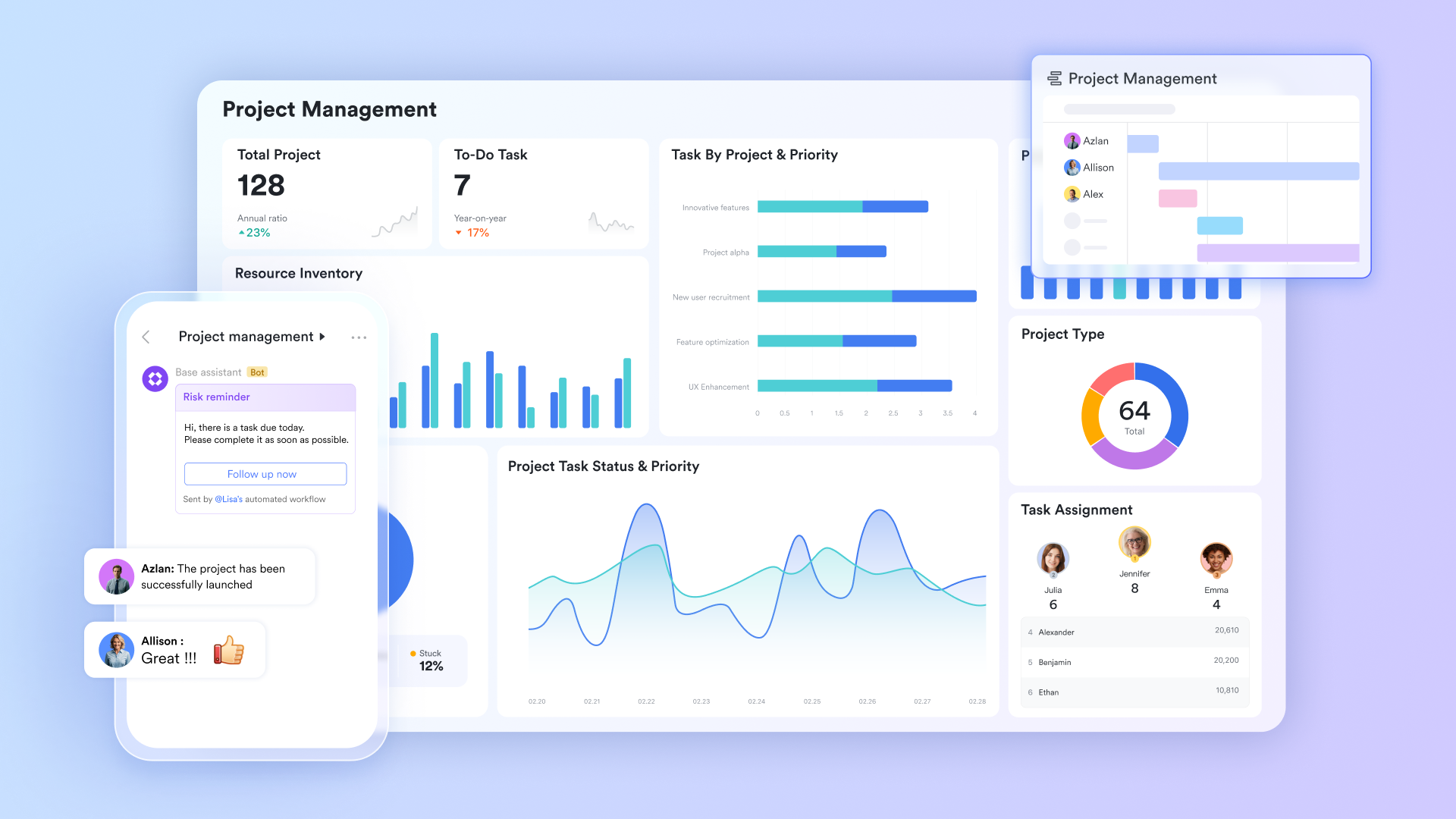
Secure collaboration and structured documentation
Lark provides a secure, centralized platform for all government project communications and documentation, critical for public trust and compliance. Its robust security protects sensitive government data, adhering to strict privacy regulations paramount in the public sector. Teams collaborate in real-time within , Sheets, and MindNotes, with version control ensuring everyone uses the latest, approved iteration. This eliminates confusion and provides an accurate historical record. Structured folders within Drive and intuitive search make organizing and retrieving project information easy, creating an auditable record essential for project management in government. All discussions within and dedicated project chats keep the entire team—from agency leads to external contractors—on the same page, sharing ideas and staying aligned from the start. 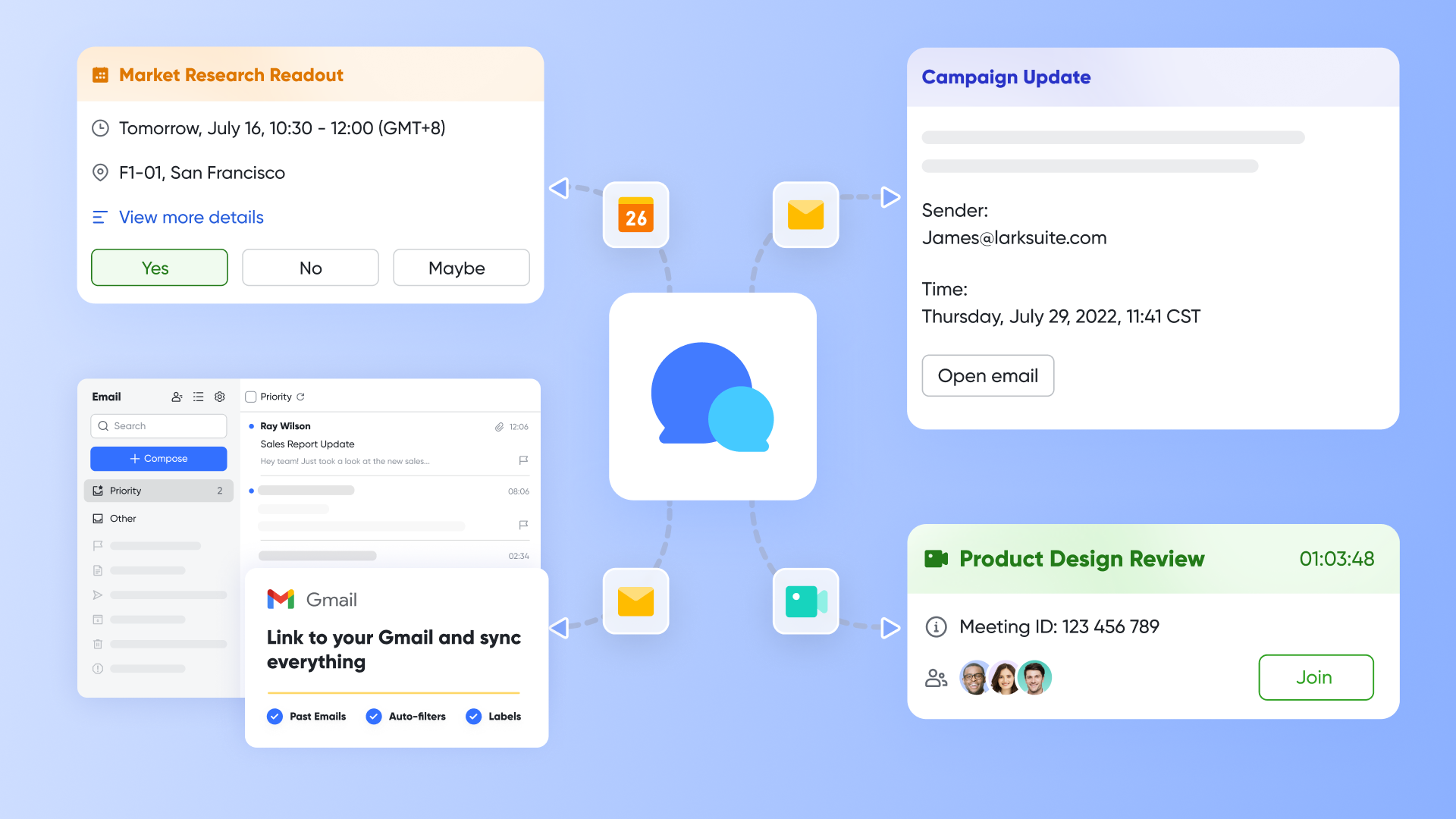
Project operating system: Tasks, calendars, docs, forms
Lark acts as a comprehensive project operating system, integrating critical functionalities into a single, user-friendly interface. Government projects demand clear task ownership and accountability. Lark Base serves as a powerful project tracker, allowing managers to assign, track, and prioritize tasks with clear owners, deadlines, and priorities. Switch between Gantt, Kanban, or custom views in Lark Base to see your government project portfolio's big picture or zoom into specific deliverables. Integrated Lark Calendar provides a consolidated view of project schedules, key milestones for legislative reviews, and team availability, preventing conflicts. Lark Docs offers powerful document creation and collaboration, enabling teams to co-create project charters, detailed policy briefs, and crucial progress reports. Furthermore, Lark Forms simplifies data collection and feedback, allowing efficient surveying of public opinion, gathering internal feedback, or streamlining resource requests—all crucial for effective government project management software. 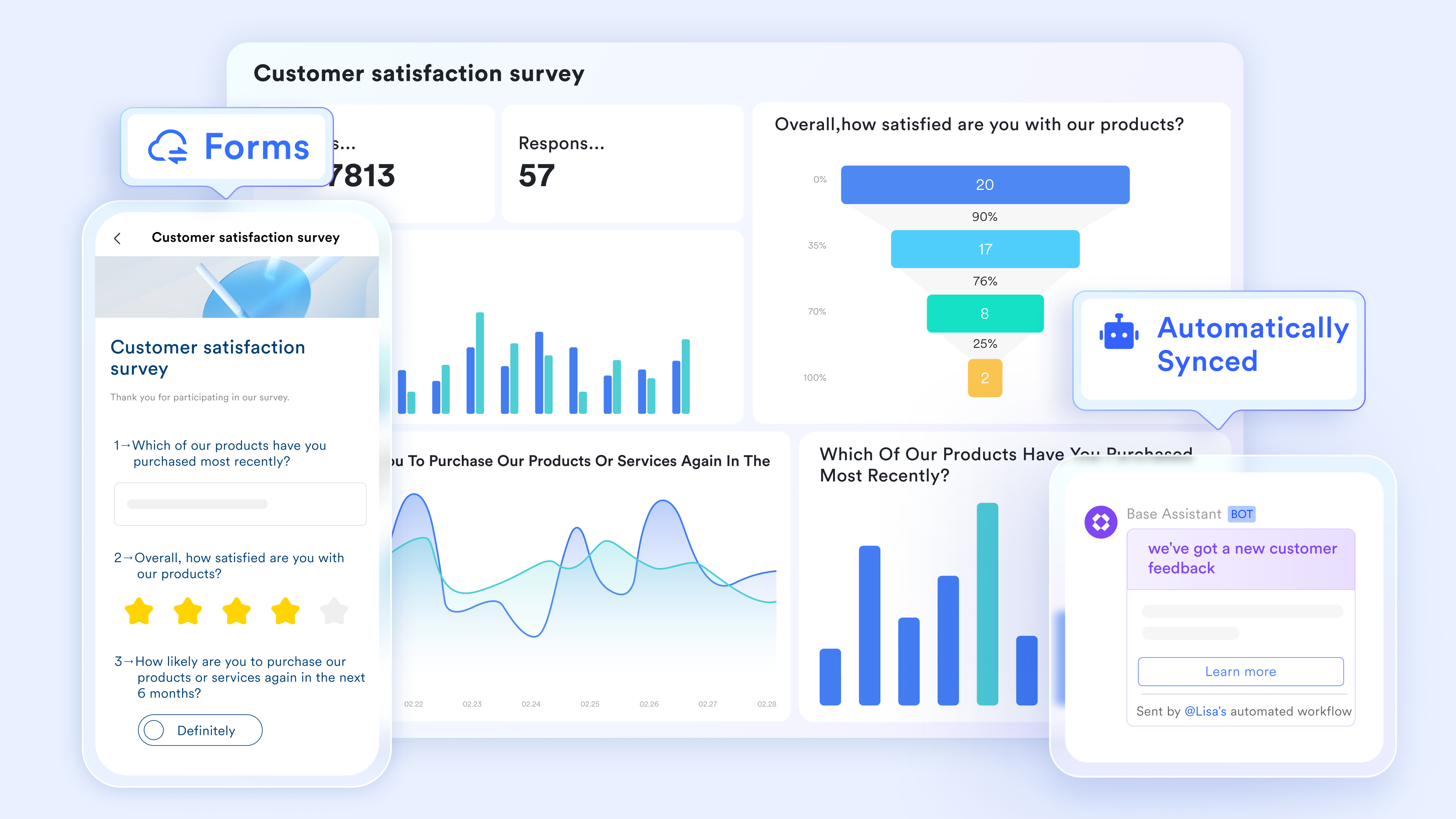
Approval and audit trails for governance gates
Government projects feature numerous governance gates requiring formal, multi-level approvals. Lark streamlines these processes with built-in approval workflows customizable to complex public sector hierarchies and regulations. Each approval step—for budget, policy, or procurement decisions—is clearly documented within Lark Approval. This creates an immutable audit trail critical for accountability, public spending compliance, and transparency. From project authorization to final acceptance, Lark ensures every decision is tracked, time-stamped, and attributed, providing irrefutable evidence for audits and public scrutiny. Managers respond instantly to Lark Approval notifications directly in their chat feed, facilitating faster decisions and keeping vital government projects moving smoothly. 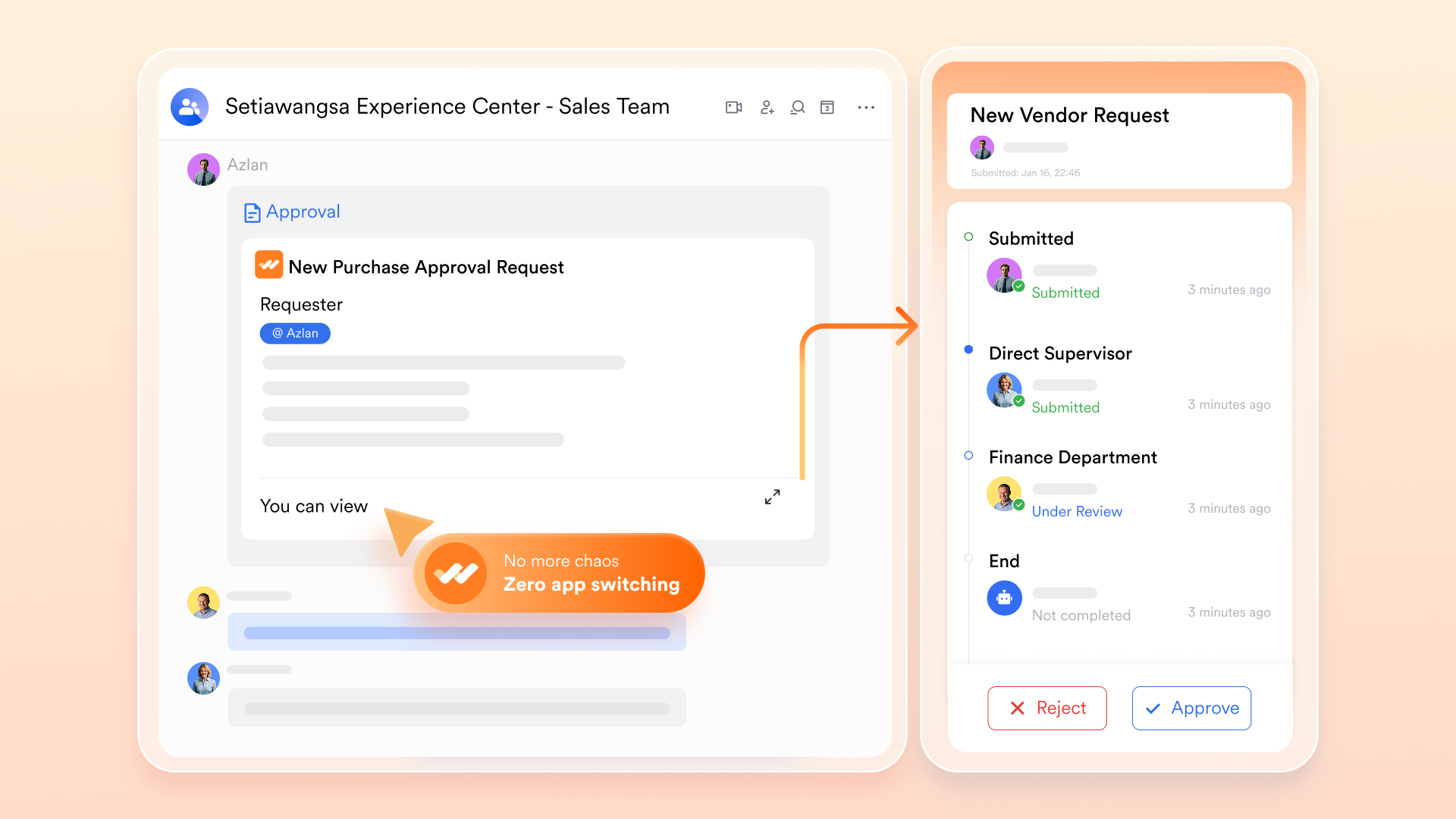
for Lark:
- Starter plan: that includes 11 powerful tools for up to 20 users. It also comes with 100GB of storage space, 1000 automation runs, AI translations, and more. No credit card needed.
- Pro plan: (billed annually) for up to 500 users. It includes everything in Starter plus group calling for up to 500 attendees, 15TB of storage space, 50,000 automation runs, and more.
- Enterprise plan: for custom pricing. Supports unlimited users and includes even more automation runs and advanced security, compliance, and management features.
For small teams with simple communication needs

18 months message history
1000 Base automation runs/month
2000 rows per table in Base
Most POPULAR
For companies with comprehensive collaboration and management needs
Unlimited message history
500-participant video meetings
50k Base automation runs/month
20k rows per table in Base
For large companies with advanced security and organizational management needs
Get a personalized demo and pricing
Unlimited message history
500-participant video meetings
15 TB storage + 30 GB storage/user
500k Base automation runs/month
50k Base automation runs/month
Most POPULAR
For companies with comprehensive collaboration and management needs
Unlimited message history
500-participant video meetings
50k Base automation runs/month
20k rows per table in Base
How to do government project management
Successfully navigating government project management requires a strategic and systematic approach. Drawing from best practices, I've seen these methods consistently deliver results in the public sector.
30–60–90 day plan: Governance, baselines, cadence
A well-structured 30-60-90 day plan is crucial for initiating government projects with clarity and momentum.
- First 30 days (foundation and governance): Focus on establishing the project's foundational elements. This includes defining the project scope, objectives, and key deliverables with unwavering clarity. Crucially, this period is dedicated to solidifying the governance framework: identifying key stakeholders, establishing a project steering committee, defining roles and responsibilities, and setting up communication channels. We secure initial approvals and formally kick off the project, ensuring everyone understands the mission. This phase also involves laying the groundwork for a robust project management in government plan.
- Next 30 days (Baselines and detailed planning): With governance in place, the next 30 days are about developing detailed baselines. This means finalizing the project schedule, budget, and resource plan. We conduct comprehensive risk assessments, identifying potential threats and developing proactive mitigation strategies. This phase also involves creating a detailed communication plan, outlining how and when information will be shared with various stakeholders. We work to establish performance metrics and define how success will be measured, aligning with the principles of project management for government.
- Final 30 Days (Cadence and ): The final 30 days of this initial plan are dedicated to establishing the project's operational cadence and initiating execution. We hold regular team meetings, progress reviews, and stakeholder check-ins. This involves implementing the communication plan, launching initial work packages, and beginning to track progress against the established baselines. We monitor early issues, address them swiftly, and ensure the project gains sustainable momentum. This structured approach helps in navigating the initial complexities of project management: government projects.
Standard templates
To ensure consistency, efficiency, and compliance, leveraging standard templates is a non-negotiable aspect of government project management. These templates act as guiding frameworks, ensuring all essential information is captured and shared systematically.
: A foundational document outlining the project's purpose, objectives, scope, stakeholders, and high-level deliverables. It formally authorizes the project manager to proceed.
(WBS) & RACI Matrix: The WBS breaks down the project into manageable tasks, while the RACI (Responsible, Accountable, Consulted, Informed) matrix clarifies roles and responsibilities for each task, promoting accountability in project management in government.
Procurement plan: A detailed outline of how goods and services will be acquired, adhering to stringent government regulations and ensuring transparency.
Risk assessment: A living document to track, assess, and manage potential risks and emerging issues, ensuring proactive problem-solving.
Communication plan: Defines who needs to be informed, what information they need, when they need it, and through which channels, crucial for project management: government projects videos linkedin training.
Lifecycle and methodology choices
Choosing the right project lifecycle and methodology is critical for successful government project management. Each approach has its strengths, and often a hybrid model proves most effective.
- : A traditional, sequential approach where each project phase must be completed before the next begins. It's well-suited for government projects with well-defined requirements, stable scope, and strict compliance needs, such as large-scale infrastructure projects. The emphasis on extensive documentation and upfront planning aligns well with government accountability.
- Agile/Hybrid methodologies: Agile, with its iterative and flexible approach, is gaining traction in government, especially for digital services and software development projects. It allows for rapid prototyping, continuous feedback, and adaptability to changing requirements. A hybrid approach often combines the structured governance of Waterfall with the iterative development of Agile, offering the best of both worlds for project management for government.
- Project gates (stage-gates): Regardless of the chosen methodology, government projects typically incorporate formal project gates. These are review points at the end of each major phase where key stakeholders assess progress, risks, and alignment with objectives before authorizing advancement to the next stage. These gates are crucial for maintaining control, ensuring transparency, and safeguarding public funds.
Reporting and audits
Robust reporting and regular audits are cornerstones of accountable government project management. They ensure transparency, allow for performance monitoring, and facilitate continuous improvement.
- Dashboards: Visual, real-time representations of key project metrics, offering an at-a-glance overview of project health, budget adherence, and schedule progress. These are invaluable for decision-makers and for communicating project status to stakeholders.
- Key performance indicators (KPIs): Quantifiable metrics that track project success against objectives. For government projects, KPIs might include citizen satisfaction rates, service delivery efficiency, cost savings, or compliance adherence.
- Records management: Meticulous documentation of all project activities, decisions, communications, and expenditures is essential. This creates an exhaustive record that supports audits, satisfies legal and regulatory requirements, and provides valuable historical data for future project management in government initiatives. Regular internal and external audits verify compliance and validate financial stewardship, strengthening public trust.
See how these steps are applying
Common pitfalls and challenges
Even with the best intentions and meticulous planning, government project management is fraught with unique challenges and potential pitfalls. Recognizing these, and understanding how to remedy them, is crucial for success.
Through my experience, I've identified several recurring pitfalls in project management in government and developed strategies to overcome them.
Pitfall 1: Scope creep and lack of clear objectives
Scope creep can lead to ever-expanding requirements, , and missed deadlines.
Remedy: Implement a rigorous change control process. Ensure a clear, concise project charter is approved by all key stakeholders at the outset. Regularly review the scope and communicate any proposed changes transparently, along with their impact on budget and schedule.
Pitfall 2: Insufficient stakeholder engagement
Failing to involve key internal and external stakeholders early and continuously can lead to resistance, misunderstandings, and a lack of support.
Remedy: Develop a comprehensive plan. Identify all relevant parties, understand their interests and influence, and establish regular, multi-directional communication channels. Use tools like Lark to facilitate open dialogue and feedback.
Pitfall 3: Bureaucratic delays and approval bottlenecks
The multi-layered approval processes inherent in government can significantly slow down projects.
Remedy: Streamline internal processes where possible. Establish clear lines of authority and decision-making matrices. Proactively anticipate approval requirements and prepare documentation well in advance. Consider piloting agile approaches for faster iterations.
Pitfall 4: Inadequate risk management
Overlooking potential risks or failing to develop robust mitigation strategies can lead to costly disruptions.
Remedy: Conduct thorough and ongoing . Maintain a detailed risk register, assigning ownership for each risk and developing proactive response plans. Regularly review and update the risk register throughout the project lifecycle.
Pitfall 5: Poor communication and siloed information
Lack of transparent communication and information sharing between departments or agencies can lead to duplication of effort and critical misunderstandings.
Remedy: Implement a centralized communication platform like Lark to ensure all government project information is accessible and updated in real-time. Foster a culture of open communication and regular information sharing sessions.
Pitfall 6: Political influence and changing priorities
Shifts in political leadership or priorities can derail long-term government projects.
Remedy: Build strong, bipartisan support for projects by emphasizing their long-term public value. Develop adaptable plans and maintain clear communication with policymakers to manage expectations and demonstrate progress.
Avoid those pitfalls in your process
Conclusion
In conclusion, government project management is a specialized and vital field dedicated to serving the public good. While it presents unique complexities, including stringent regulations, diverse stakeholders, and the imperative for transparency, mastering its functions is achievable with the right strategies and tools. By embracing clear planning, robust risk management, continuous stakeholder engagement, and leveraging integrated platforms like , public sector professionals can navigate these challenges effectively. I firmly believe that with a commitment to best practices and the support of innovative solutions, we can ensure government projects are delivered successfully, creating lasting positive impacts for our communities and nation.
FAQs
What is government project management?
Government project management focuses on public benefit, regulatory adherence, and accountability for taxpayer dollars, serving a broader range of stakeholders, including citizens and various agencies. It's characterized by complex procurement, fixed budgets, extensive documentation, and political/fiscal year cycles. Risk management is typically conservative, with a strong emphasis on social impact rather than purely commercial returns.
What is the 80/20 rule for project managers?
The 80/20 rule, also known as the Pareto Principle, suggests that 80% of project outcomes or value stem from just 20% of the efforts, activities, or features. For project managers, this principle means identifying the "vital few" tasks (the 20%) that yield the most significant impact, allowing them to focus resources on these areas for maximum efficiency and productivity.
What is the highest-paid project manager?
Generally, senior roles with broader scope, such as Program Managers, tend to earn more than standard Project Managers. Specifically, the highest-paid project managers are often found in high-demand sectors like IT, Defense, or Pharmaceuticals. Senior PMO Managers, due to their strategic oversight and responsibility, can command very high annual earnings, sometimes exceeding $200,000.
Who is higher, PMO or PM?
The Project Management Office (PMO) typically operates at a higher, more strategic organizational level than a Project Manager (PM). The PMO defines and implements project management methodologies, standards, and training, and tracks overall portfolio performance. While a PM leads a specific project with day-to-day execution, the PMO provides the overarching framework and support structure within which PMs operate.
Related reading