Speed and efficiency are the twin goals of every modern team. Whether you are launching software or restructuring operations, the pressure to deliver faster is constant. In this pursuit, you have likely encountered the two dominant philosophies: Agile and Lean.
For too long, teams have treated these as a binary choice—flexibility versus efficiency. But most high-performing organizations know this is a false dichotomy. This brings us to agile lean management, a hybrid philosophy that combines the iterative speed of Agile with the rigorous waste reduction of Lean. In this guide, I will walk you through exactly what this approach entails and how you can implement it to build a workflow that is not only fast but sustainable.
What is lean agile management?
To truly understand agile lean management, we first need to look at the ingredients separately. While they share a common goal—delivering value—they approach it from different angles.
The Agile mindset
Agile emerged from the world of as a reaction against heavy, long-term planning. Its core is iteration. Whether using Scrum or Kanban, the Agile focus is on breaking work into small chunks, delivering frequently, and responding to change rather than following a rigid map. It asks, "How can we adapt quickly to what the customer needs right now?"
To know more about Agile, click
The Lean mindset
Lean traces its roots to manufacturing, specifically the Toyota Production System. While Agile focuses on adaptability, Lean focuses on flow and the elimination of waste (often called Muda). In a Lean and Agile management context, waste is anything that does not add value, like unnecessary meetings or waiting for approvals. Lean asks, "How can we improve flow and remove bottlenecks?"
To know more about Lean, click
The hybrid: Lean Agile approach
When you combine these, you get a powerful framework. Lean agile management applies Lean thinking (efficiency, flow) to Agile practices (iteration, collaboration).
Think of it this way: Agile helps you ensure you are building the right product by constantly checking in with the customer. Lean helps you ensure you are building the product right by optimizing your internal processes. A team using a lean agile approach actively looks for ways to make their sprints smoother. The result is a system where lean and support each other, creating a workflow that is disciplined yet flexible.
Benefits of lean agile management
Adopting a lean agile project management strategy is not just about updating your team handbook. It has tangible impacts on your bottom line and team culture. When you successfully blend these methodologies, you unlock key advantages that a single approach often misses.
- and time-to-market: The most immediate benefit is speed. Agile emphasizes releasing work in small batches, while Lean emphasizes removing obstacles. When you combine them, you create a highway for your tasks. By stripping away non-value-added activities, your team can focus entirely on execution. This reduces the cycle time from "idea" to "launch," giving you a significant competitive edge.
- Higher quality and customer value: In traditional setups, quality checks often happen at the end. In lean agile product management, quality is baked into every step. Because you are working in short iterations (Agile) and constantly seeking to eliminate defects (Lean), errors are caught almost immediately. This ensures the final output aligns with what your users actually need, maximizing customer value.
- Greater adaptability to change: Markets shift rapidly. A rigid process might be efficient at making one specific thing, but if the market shifts, you are just efficiently heading in the wrong direction. By integrating Agile adaptability, you retain the ability to pivot. A lean agile master knows that the goal is not just a perfect process, but one that survives when priorities change.
Unlock these benefits for your team with a powerful tool
Core principles of lean agile management
To master agile and lean management, you do not need to memorize a textbook of rules. Instead, you need to internalize a few guiding principles that drive decision-making. These pillars ensure that your "hybrid" approach remains stable.
- Focus on : This is the North Star. Both methodologies agree: if a task does not ultimately help the customer, it is questionable. In a lean agile approach, every feature request, meeting, or report is evaluated against this standard. If it doesn't add value, it is a candidate for elimination.
- Elimination of waste (Muda): The concept of Muda is central to Lean. In knowledge work, waste isn't scrap metal; it is time and attention. Common forms of waste include "task switching" (jumping between apps), waiting for information, and over-processing (perfectionism on internal documents). A lean management ruthlessly hunts down these inefficiencies to protect their time.
- Continuous improvement (Kaizen): You will never have a "perfect" process. The goal is Kaizen—continuous, incremental improvement. Through Agile retrospectives, teams regularly pause to ask, "What slowed us down last week?" and "How can we be 1% faster next week?" This culture of reflection prevents stagnation.
- Respect for people: Tools and processes are useless without a motivated team. This principle dictates that the people doing the work are the experts. Management's role is not to command, but to remove obstacles so the team can flow.
How lean agile management works
So, what does this look like in practice? It is less complicated than it sounds. Lean and agile project management works by leveraging to visualize work and limit how much you tackle at once—these tools serve as the foundation for turning theoretical principles into actionable daily workflows.
The engine of this system is usually a combined with a cadence (like Scrum sprints). The team visualizes every task on a shared board to create transparency. This makes bottlenecks instantly visible—if a pile of tasks is stuck in "Review," everyone sees it.
Simultaneously, the team applies "Pull" logic. Instead of managers pushing work onto overloaded employees, team members pull new tasks only when they have the capacity. This prevents burnout and ensures that work in progress (WIP) stays manageable. By capping WIP, tasks move across the board faster, reducing cycle time and delivering value to the customer sooner.
How to implement lean agile management in 5 steps
Moving from theory to practice can be daunting. You don't need to overhaul your entire organization overnight. Instead, follow these five steps to gradually introduce a lean agile approach to your team.
Step 1: Map your value stream
Before you can improve your process, you must see it. Gather your team and map out the lifecycle of a task from the moment it is requested to the moment it is delivered.
- Identify the stages: Does it go from "Idea" to "Design" to "Dev" to "QA"?
- Spot the delays: Where do tasks sit and wait? Is it waiting for a manager's approval? Is it stuck between email threads?
You can use a or a shared document to map this out in real-time during a video meeting, ensuring everyone agrees on the current reality.
Step 2: Visualize your work
Once you know your stages, put them on a board. You need a central "source of truth" where the status of every project is visible.
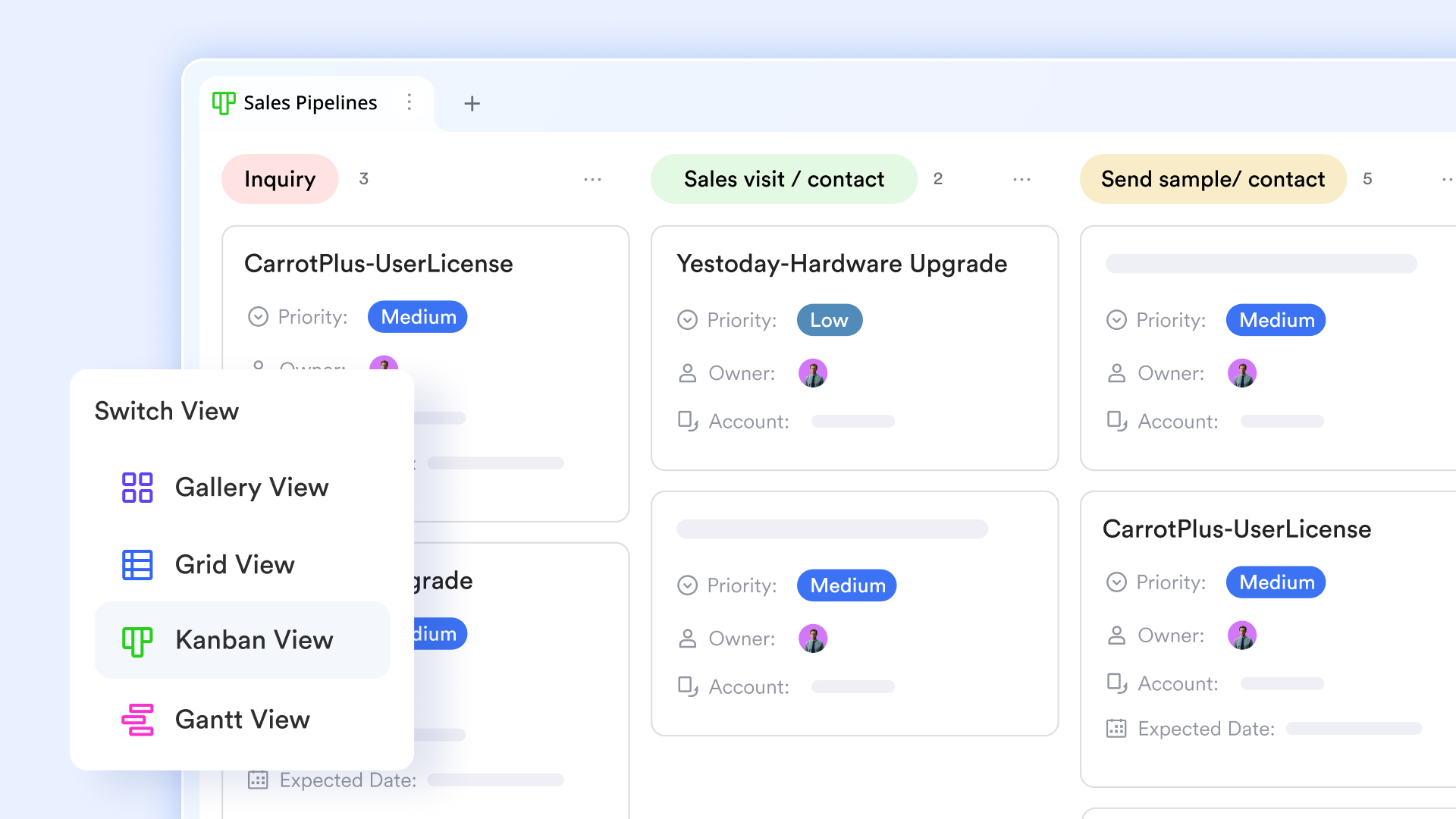
- Create a Kanban board: Set up columns that match your value stream (e.g., To Do, In Progress, Blocked, Done).
- Make it accessible: In a , a physical board on a wall doesn't work.
Using a digital tool like allows you to customize a Kanban view that lives right inside your team chat. This means your project tracking is always just one click away from your conversation, keeping visibility high without requiring extra login steps.
Step 3: Limit work in progress (WIP)
This is the hardest step for many teams. We are conditioned to say "yes" to everything. However, in lean agile project management, starting more work than you can finish creates a traffic jam.
- Set limits: Agree that the "In Progress" column can only hold a specific number of items (e.g., 3 tasks per person).
- Stop starting, start finishing: If the limit is reached, no new work can be pulled until something is moved to "Done." This forces the team to swarm on blocked tasks and clear the jam rather than ignoring it to start something new.
Step 4: Implement short feedback loops
Agile relies on rapid feedback. You don't want to wait until the end of a quarter to find out you built the wrong thing.
- The daily sync: Hold a short, 15-minute stand-up to align on daily goals and flag blockers.
- The retrospective: At the end of every cycle (or every two weeks), hold a rigorous review. What went well? Where was the waste?
- Automate the loop: You can collect daily updates or poll the team for retrospective topics before the meeting starts. This keeps the actual meeting time focused on solving problems rather than just reporting status.
Step 5: Optimize flow and reduce friction
Once the system is running, your job is to oil the gears. Look for the "waste" you identified in the principles section.
- Cut the meetings: If a status update can be an automated notification, automate it.
- Centralize context: A major source of friction is scattered information. If your requirements are in a doc, your chat is in an app, and your tracker is a separate tool, you are creating "transportation waste" for data.
Involving these in a unified workspace helps maintain flow, allowing your agile and lean management system to function without the friction of constant context switching. 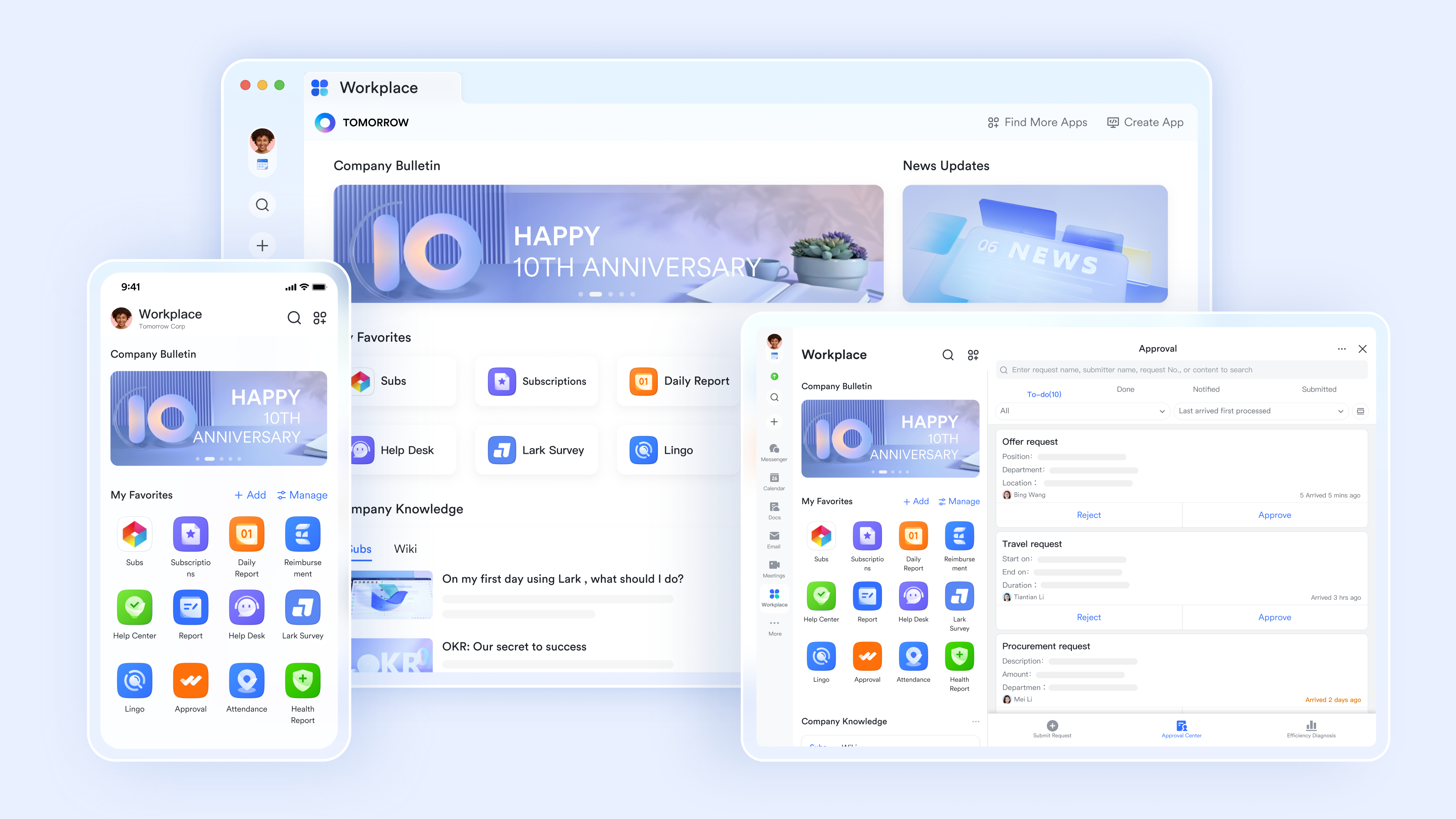
The hidden enemy of lean agile management: context switching
You can have a perfect Kanban board and disciplined rituals, yet still miss deadlines. If your lean agile master plan is struggling, the culprit is often invisible: context switching. In lean terms, this is waste (Muda). Unlike physical scrap on a factory floor, this waste manifests as lost time and cognitive fatigue.
The cost of tool overload
Modern teams are drowning in apps—chatting in one, in another, and writing docs in a third. It takes over 20 minutes to regain deep focus after an interruption. If your team has to toggle between tabs to update a status, you are constantly breaking their flow. You are asking them to be agile, but giving them a clumsy environment that introduces friction at every step.
Why unification is the answer
To truly embrace a lean agile approach, you must minimize this "digital waste." The goal is smooth, uninterrupted value delivery.
This is where a unified platform like Lark becomes a strategic asset. By combining chat, meetings, docs, and into one interface, it eliminates the waste of moving between apps.
- Context stays attached: Instead of pasting links between tools, you can embed project tasks directly into the team chat. The discussion happens right where the work is tracked.
- Meeting efficiency: You can edit a together inside a video call window, rather than just screen-sharing.
By unifying your workspace, you protect your team's focus, allowing agile and lean management to thrive without the friction of a fragmented toolset.
Eliminate context switching with a unified platform
How to apply lean agile for better project management
Applying agile and lean management principles is not just about changing your mindset; it is about changing your daily mechanics. To bridge the gap between theory and execution, you need tools that support flexibility without adding administrative bloat. Here is how you can use a unified platform like to supercharge your project management.
Combining communication and execution
One of the biggest sources of waste in lean agile project management is the disconnect between where you talk and where you work. Usually, decisions made in a chat get lost before they reach the . With Lark, you can bridge this gap using Message-to-Task. If a new requirement pops up during a team discussion, you don't need to switch apps to log it. You can turn those specific messages in into Lark Tasks card instantly. 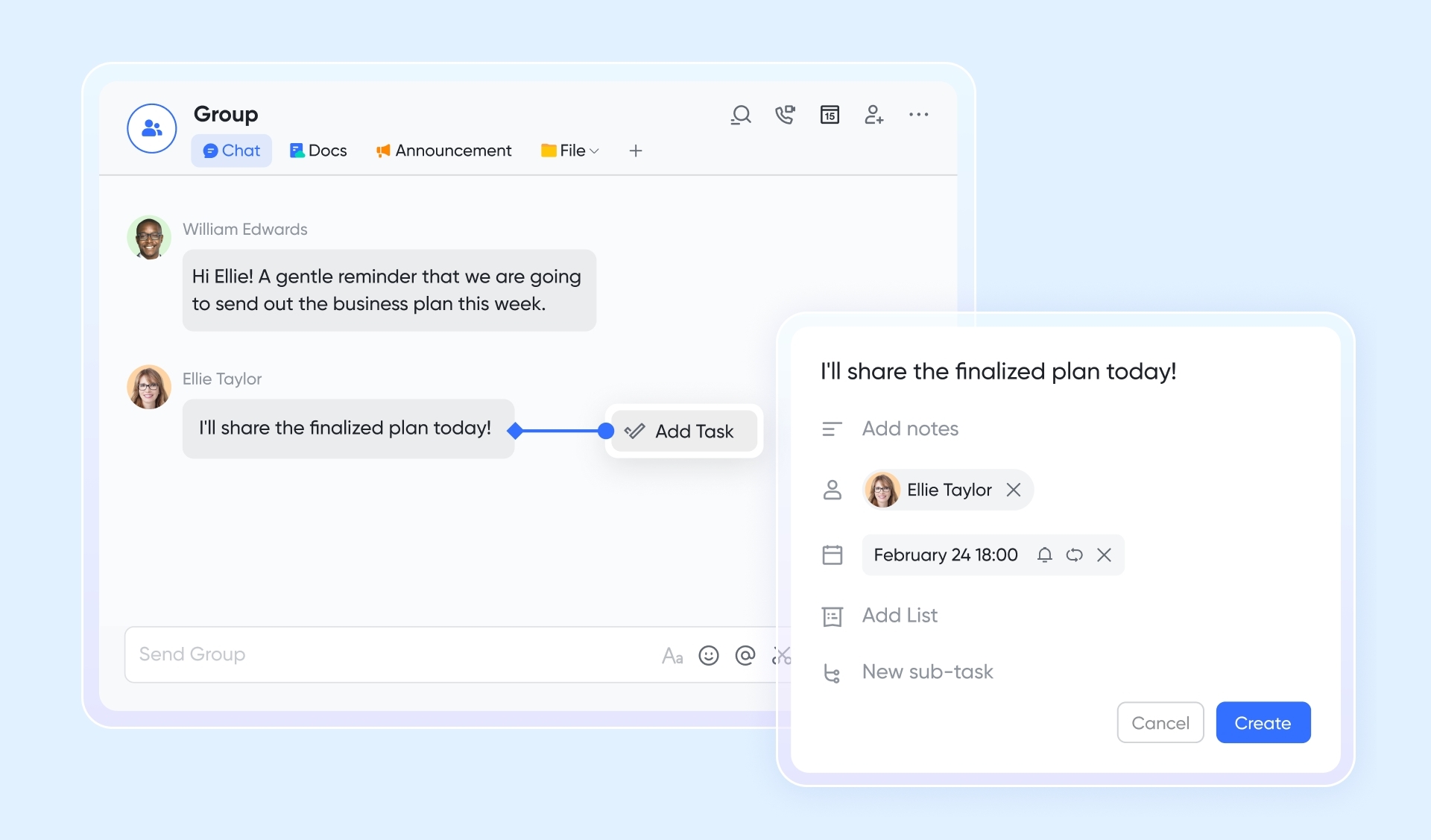
Visualizing complex timelines without rigidity
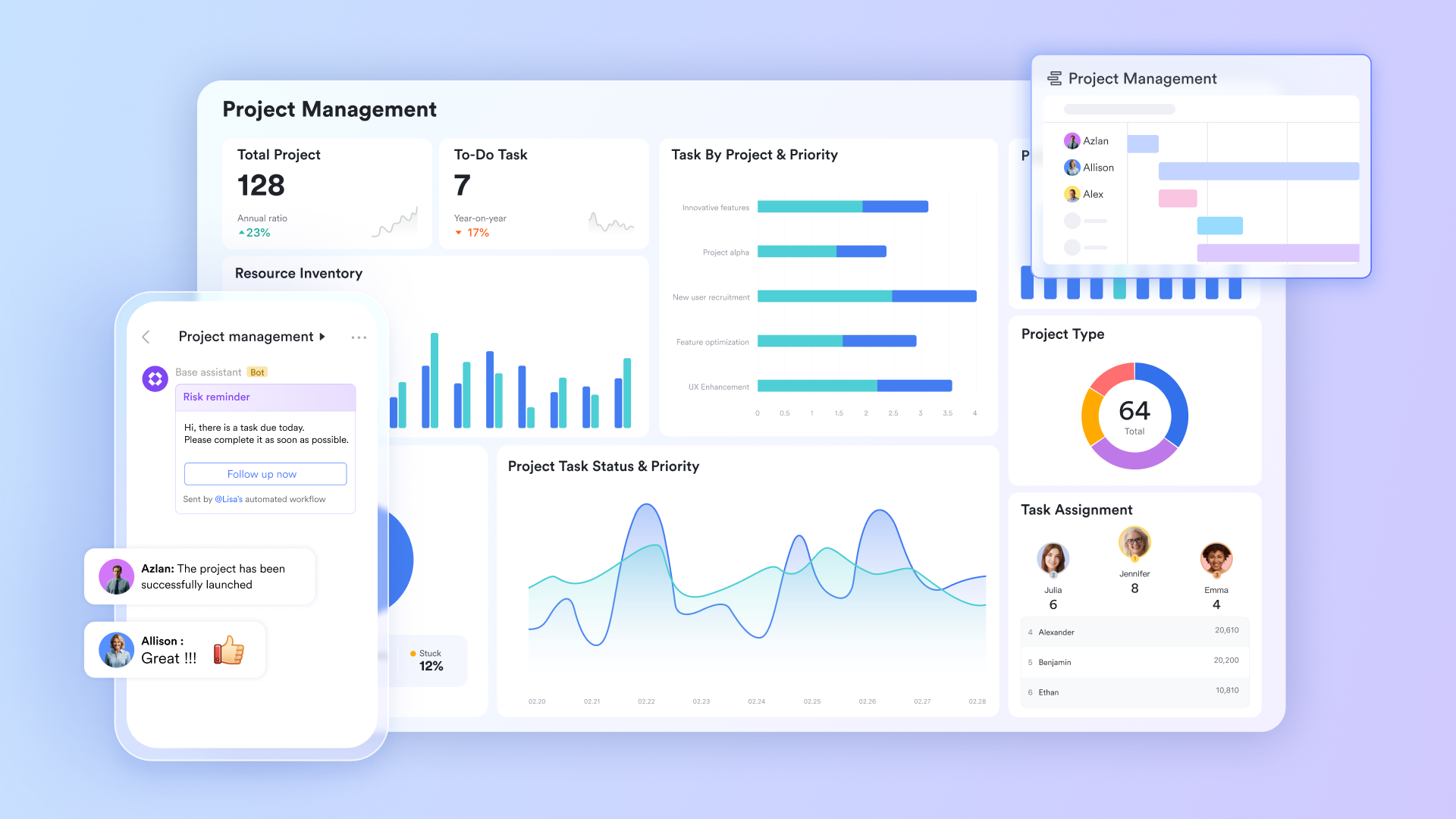
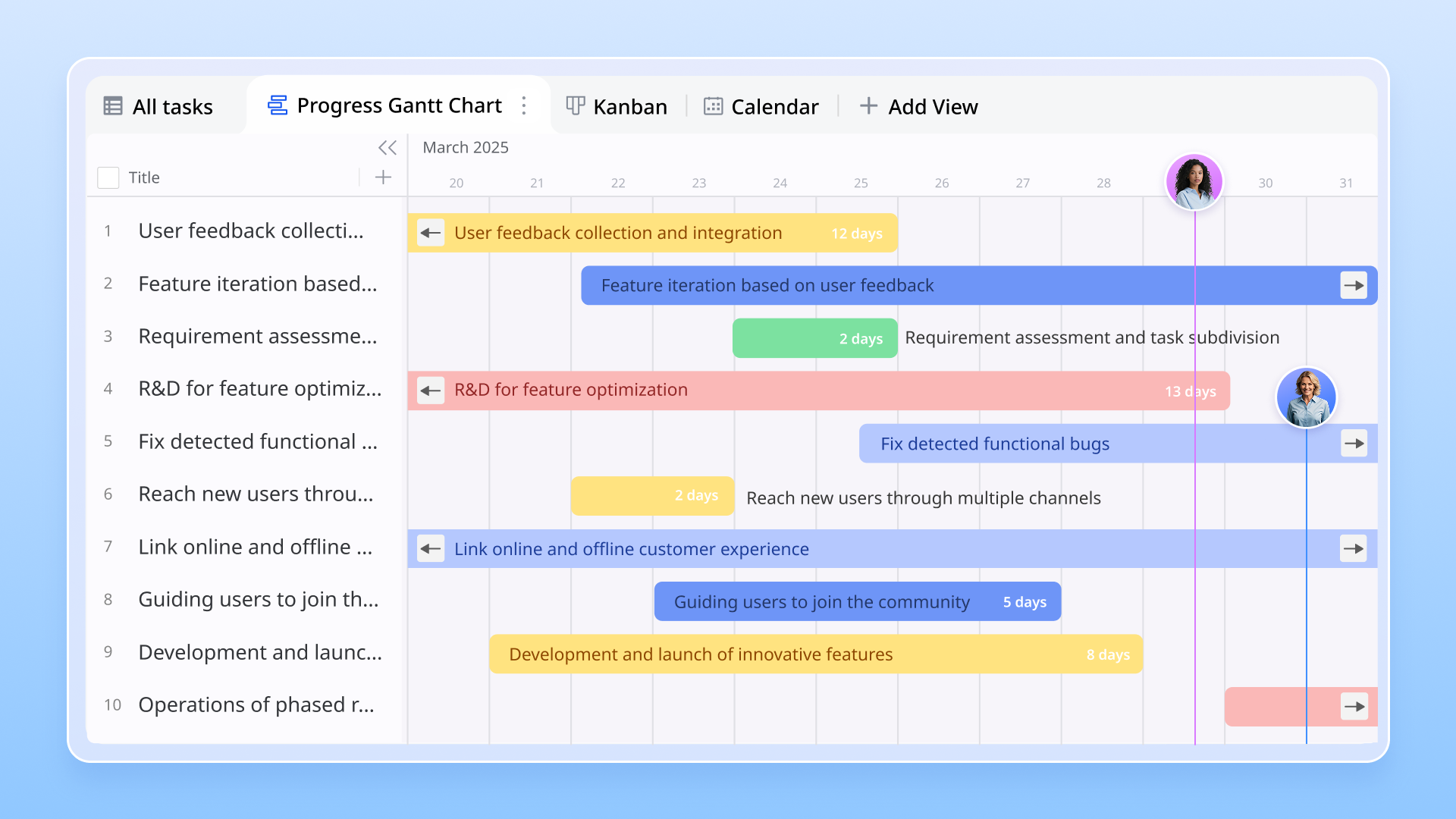
While Agile loves lists and backlogs, sometimes you need to see the bigger picture to ensure Lean flow. However, traditional Gantt charts are often too rigid for agile teams. offers a flexible that is generated from your task list data. Because it is a database and not just a drawing, if you drag a timeline bar to extend a due date, it automatically updates the task status for the assignee. This gives project managers the high-level visibility they need to spot potential bottlenecks (a Lean requirement) while allowing individual contributors to update their specific tasks easily (an Agile requirement).
Automating busywork to improve flow
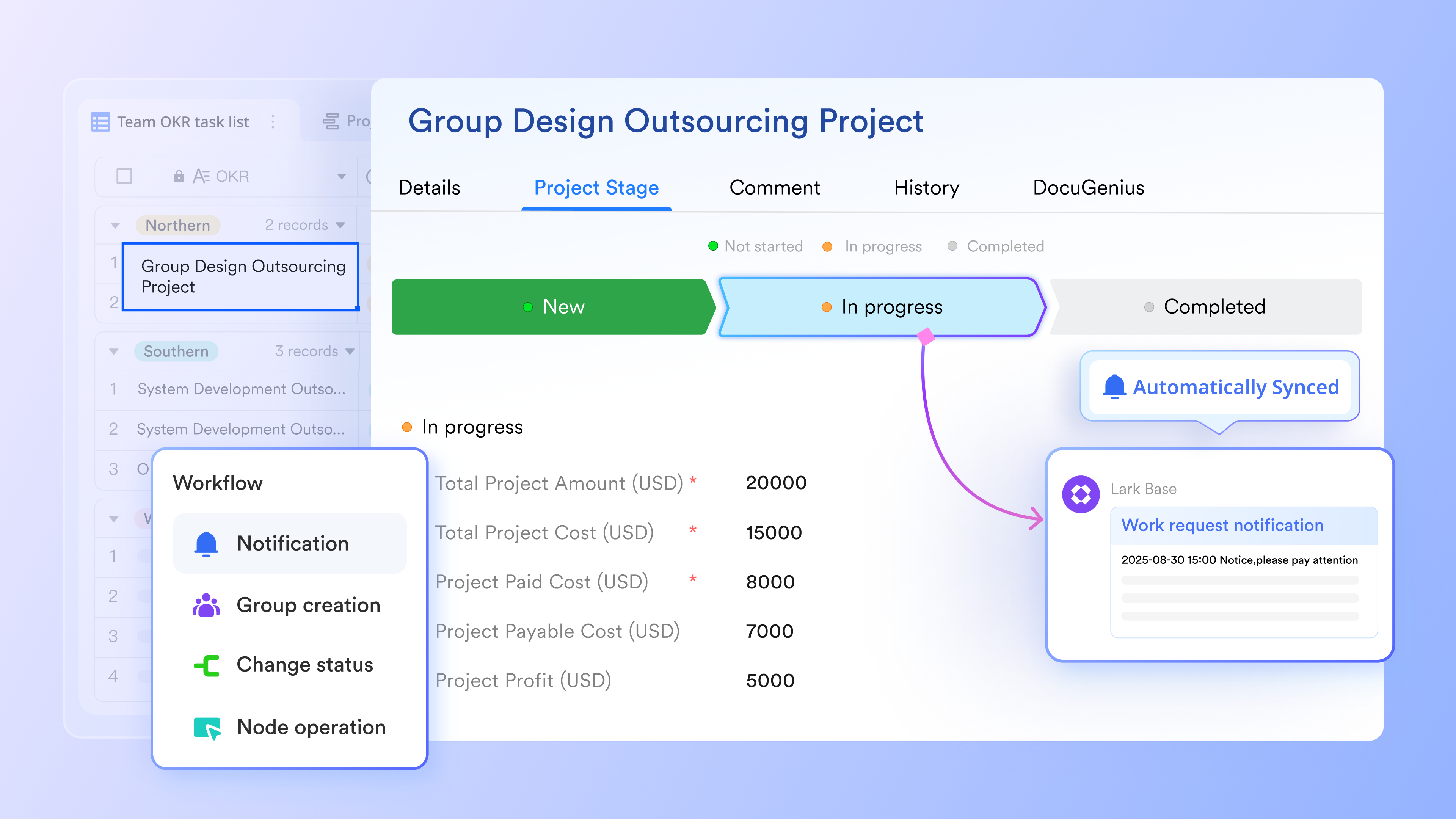
A key tenet of lean management scrum is removing non-value-added activities. Manual status updates are a prime example of this waste. They interrupt the flow and often rely on outdated info. You can eliminate this by using automated workflows. For example, you can set up a workflow where changing the task status to "Done" in Lark Base automatically posts a notification to the project group chat.
Creating a single source of truth for documentation
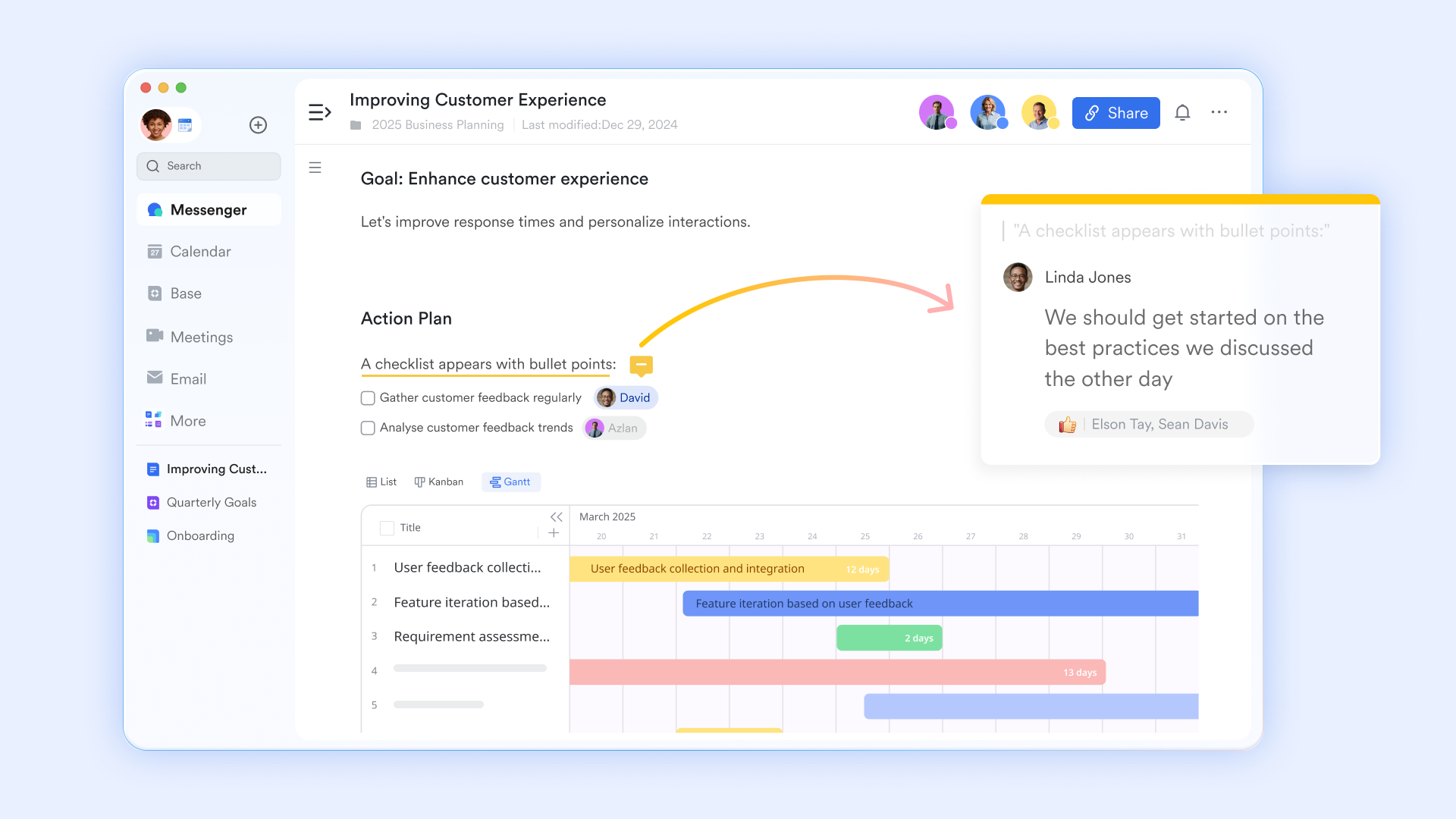
Agile teams value working software over comprehensive documentation, but some documentation is still necessary. The Lean error here is "inventory waste"—docs that are created, stored, and never read or updated. solves this by being live and interactive. Instead of a static PDF project plan, you can insert live mind maps, task lists, or Lark Base tables directly into the document.
for Lark:
- Starter plan: Free forever plan that includes 11 powerful tools for up to 20 users. It also comes with 100GB of storage, 1000 automation runs, AI translations, and more.
- Pro plan: $12/user/month (billed annually) for up to 500 users. It includes everything in Starter plus group calling for up to 500 attendees, 15TB of storage, 50,000 automation runs, and more.
- Enterprise plan: for custom pricing. Supports unlimited users and includes even more automation runs and advanced security, compliance, and management features.
For small teams with simple communication needs

18 months message history
1000 Base automation runs/month
2000 rows per table in Base
Most POPULAR
For companies with comprehensive collaboration and management needs
Unlimited message history
500-participant video meetings
50k Base automation runs/month
20k rows per table in Base
For large companies with advanced security and organizational management needs
Get a personalized demo and pricing
Unlimited message history
500-participant video meetings
15 TB storage + 30 GB storage/user
500k Base automation runs/month
50k Base automation runs/month
Most POPULAR
For companies with comprehensive collaboration and management needs
Unlimited message history
500-participant video meetings
50k Base automation runs/month
20k rows per table in Base
Common mistakes when adopting this mindset
The journey to becoming a lean agile master is rarely a straight line. Many teams stumble because they try to implement the practices without understanding the principles. Here are the most common pitfalls to avoid.
- Cherry-picking without balance: Some managers love the speed of Agile but ignore the discipline of Lean. This leads to "chaos at speed"—you are releasing updates fast, but they are full of bugs because you ignore the Lean focus on quality at the source. Conversely, over-emphasizing Lean without Agile adaptability can turn your team into a rigid factory that efficiently builds products nobody wants. You must respect both sides of the lean and agile management coin.
- Micromanagement disguised as visibility: In lean agile project management, the goal of visualizing work is to spot bottlenecks, not to spy on employees. If you use your tracking board to nitpick every minute of an employee's day, you kill the trust required for an autonomous team. Tools like Lark help here by democratizing data. When the whole team has access to the and project views in real-time, it shifts the dynamic from "reporting to the boss" to "collaborating on the board."
- Neglecting the "transportation waste" of data: As mentioned earlier, forcing teams to jump between five different apps to get work done is a massive efficiency killer. Teams often adopt Agile rituals but keep their legacy, fragmented toolset. This creates a situation where the mindset is agile, but the environment is sluggish. Consolidating your stack with a platform like removes this invisible friction, ensuring your tools support your new velocity rather than hindering it.
Avoid these pitfalls with Lark
Measuring success: Key metrics to track
How do you know if your move to a lean agile approach is working? Forget about "hours worked" or "lines of code." You need metrics that measure value and flow.
- Cycle time: This is the heartbeat of lean management scrum. It measures the time it takes for a task to go from "started" to "delivered." A downward trend in cycle time means your team is getting faster at execution and removing waste.
- Lead time: While cycle time measures execution, lead time measures the entire journey from "customer request" to "delivery." If your lead time is weeks longer than your cycle time, it means requests are sitting in a backlog gathering dust—a clear sign of waste in your upstream process.
- : Track how many tasks are active at any given time. If this number keeps climbing while your delivery rate stays flat, you have a bottleneck. In Lark Base, you can easily visualize this by grouping tasks by status and seeing where the pile-up is happening.
- Team happiness: Never underestimate the human element. Agile and Lean should make work more satisfying, not more stressful. Regular pulse checks or "happiness metrics" in your retrospectives are vital. If metrics are up but morale is down, your pace is unsustainable.
Conclusion
The debate between Agile flexibility and Lean efficiency is over. The winners in today's market are the teams that have figured out how to blend them. Agile lean management offers a path to work that is not just faster, but smarter—where every action adds value and every team member feels empowered to improve the flow.
However, a philosophy is only as good as the tools that support it. You cannot build a seamless, high-velocity workflow on a fractured foundation of disconnected apps. If you are ready to eliminate the "digital waste" of context switching and give your team a workspace that truly moves at the speed of thought, it is time to try . By unifying your chat, docs, and projects, Lark turns the principles of lean and agile project management into your daily reality.
Transform your project management with Lark
FAQs
What is lean agile management?
Lean agile management is a hybrid approach that combines the iterative, adaptive nature of Agile with the waste-reducing, efficiency-focused principles of Lean. It aims to deliver high-quality products or services quickly by continuously optimizing workflows and eliminating anything that doesn't add customer value. A unified platform like Lark facilitates this by bringing communication, documentation, and project tracking into one seamless environment, minimizing context switching and supporting efficient flow.
What are the 5 lean principles in agile?
The core 5 Lean principles, often applied within an agile context, are: 1. Identify Value from the customer's perspective. 2. Map the Value Stream to visualize the entire process. 3. Create Flow by eliminating interruptions. 4. Establish Pull, ensuring work is pulled when capacity allows. 5. Seek Perfection through continuous improvement.
Is lean considered agile?
No, Lean is not considered Agile, but they are highly complementary. Lean originated in manufacturing, focusing on waste elimination and efficient flow, while Agile emerged from software development, emphasizing iterative delivery and adaptability to change. Both share a customer-centric focus and a commitment to continuous improvement, making them powerful when combined.
What are the 5 C's of agile management?
While there isn't a universally recognized "5 C's" framework in Agile, common themes often emphasized include: Communication, Collaboration, Customer Focus, Continuous Improvement, and Courage. These values underscore the importance of transparent teamwork, responsiveness to user needs, constant learning, and the willingness to make difficult decisions.
Related reading