Delivering complex projects on time often feels like a moving target. Even with detailed Gantt charts and padded estimates, teams frequently find themselves scrambling as the deadline approaches. The issue usually isn't a lack of planning, but the methodology itself.
Traditional project management focuses heavily on rigid dates while often overlooking the reality of limited resources and human behavior. This guide explores the Critical Chain Method, a dynamic alternative that prioritizes project flow and resource availability. By shifting your focus from individual task deadlines to the overall system, you can protect your delivery date and significantly reduce team stress.
What is the Critical Chain Method?
The Critical Chain Method is a that prioritizes resource availability and buffer management over rigid task deadlines. Unlike traditional methods that focus strictly on task sequence, CCPM recognizes that a project is truly constrained by its limited resources—the "bottlenecks."
This approach directly addresses Parkinson's Law, the tendency for work to expand to fill the time assigned to it. In standard projects, team members add safety padding to every task estimate "just in case." CCPM removes this hidden safety from individual tasks and pools it into a shared "project buffer" at the end of the timeline.
By shifting focus from meeting individual task deadlines to protecting the final delivery date, teams can work faster and with less stress. While a technical Critical Chain Project Management PDF may detail complex calculations, the philosophy is simple: and manage the flow. To fully grasp the behavioral changes required, referencing a dedicated Critical Chain book is often recommended for new practitioners.
Critical path vs critical chain: Key differences
To appreciate CCPM, it helps to compare it with the Critical Path Method (CPM). The discussion of Critical Chain Method vs often centers on one key distinction: how they view resources.
CPM defines project duration based purely on the sequence of tasks, exactly when needed. The Critical Chain Method adds a layer of reality. It recognizes that a task cannot begin if the assignee is busy elsewhere. Consequently, the critical chain schedule is calculated by looking at both task dependencies and resource availability, ensuring a more realistic timeline.
Here is a breakdown of the practical differences:
- Focus on resources: CPM focuses on the order of tasks. If you are studying for your Critical Chain Method PMP certification, you will learn that CPM calculates "float" or "slack"—the amount of time a task can be delayed without delaying the project. CCPM argues that float is often wasted. It focuses on resolving resource contention so that the most constrained resources are always working on the most important tasks.
- Handling safety margins: In the Critical Path Method, safety time is baked into every single task. If you ask a developer for an estimate, they give you a "safe" number. In the Critical Chain Method, you strip that safety away. You use aggressive estimates (50% probability of success) for tasks and move that stripped safety time to a "Project Buffer" at the end.
- Multitasking: CPM often allows for multitasking, assuming a resource can split their time between two tasks. CCPM strictly forbids bad multitasking. The method requires a relay-race mentality: when you have the baton (the task), you run as fast as you can without distraction until you pass it to the next person.
By addressing the reality that resources are finite and people are not machines, the Critical Chain Method offers a more robust way to predict project completion in complex environments.
Benefits of the Critical Chain Method
Adopting this methodology is not just about changing how you draw a ; it is about changing how your team feels about work. When implemented correctly, the shift creates a more focused and less chaotic environment. Here is why many organizations are making the switch.
- Faster : By removing the safety padding from individual tasks and eliminating bad multitasking, projects naturally move faster. A typical Critical Chain Method example shows that teams can often reduce cycle times significantly because resources are fully focused on one thing at a time.
- Reduced team burnout: Multitasking is a productivity killer. It forces your brain to constantly switch contexts, leading to fatigue. CCPM encourages single-tasking. Your team members know exactly what to work on and are protected from interruptions until that task is done.
- Early warning signals: Traditional statuses like "90% complete" are often misleading. In contrast, Critical Chain software or simple buffer trackers provide clear visibility. You know immediately if the project is in trouble based on how much buffer has been consumed, allowing you to act before it is too late.
- Higher reliability: Because the methodology accounts for resource contention upfront, the dates you promise stakeholders are far more realistic. You stop breaking promises and start building trust.
See these benefits in one app
The 3 pillars of the Critical Chain Method: Understanding buffers
The "secret sauce" of this method is the concept of buffers. In traditional management, safety is hidden inside every task estimate. In the critical chain schedule, we make safety explicit and strategic. There are three specific types of buffers you need to master.
- Project buffer: This is a block of time added to the very end of the project, between the last task and the final deadline. It acts as a shock absorber for the entire project. If a task on the critical chain takes longer than expected, it eats into this buffer rather than pushing the delivery date. As long as you have buffer left, your delivery date is safe.
- Feeding buffer: These are inserted where a non-critical chain of tasks feeds into the critical chain. The goal is to prevent a delay on a secondary path from impacting the main timeline. It ensures that the critical chain never has to wait for a feeding task to arrive.
- Resource buffer: Unlike the other two, this is not usually time added to the schedule. It is a . A resource buffer is a wake-up call sent to a team member—for example, "You are needed on the critical chain in 3 days." It ensures resources are ready to run the moment the baton is passed to them.
The core principles of critical chain scheduling
If you are looking for how to get Critical Chain WoW (Way of Working) into your organization, you need to follow a few ground rules. These principles might feel uncomfortable at first because they go against traditional habits, but they are essential for success.
- Identify the true constraint: You cannot optimize a project until you know what limits it. You must identify the critical chain—the dependent on both task logic and resource availability. This is the heartbeat of your project.
- Aggressive task estimates: This is often the hardest part for teams to accept. You must ask for estimates based on a 50% probability of finishing on time, rather than the 90% "safe" estimate. If a task usually takes 4 days but could be done in 2 if everything goes perfectly, you schedule it for 2. The safety time you stripped away goes into the project buffer.
- The relay race mindset: Treat tasks like a baton in a relay race. When a resource gets a critical task, they must drop everything else and run with it until it is finished. There is no multitasking. When they finish, they pass the baton immediately, regardless of the original schedule dates.
- Buffer management over deadline management: Stop micromanaging individual task due dates. If a team member is late on a task, do not reprimand them. Instead, look at the buffer status. If the buffer is in the green, the project is healthy. This shift is often highlighted in Critical Chain Method PMP training as a key leadership transition—moving from monitoring dates to monitoring flow.
How to implement the Critical Chain Method in 5 steps
Moving from theory to practice is where many project managers hesitate. It feels risky to strip away safety margins and change how your team . However, you do not need to overhaul your entire organization overnight. You can apply these five steps to a single pilot project to prove the value of the Critical Chain Method.
Step 1: Identify the true critical chain
The first step requires a shift in perspective. In a standard , you look for the critical path based solely on task dependencies—Task A must finish before Task B starts. To find the critical chain, you must also look at your people.
Load all your tasks into your . Now, look for resource conflicts. Is your lead developer, Sarah, assigned to two "parallel" tasks that are supposed to happen at the same time? In reality, she cannot do both at once. She is the bottleneck.
You must level your resources. When you resolve Sarah's conflict by moving one of her tasks to start after the other, the duration of your project likely extends. That new, longer sequence—defined by task logic and Sarah's availability—is your critical chain. Using a platform that offers a or timeline view, like , can make this visualization much easier.
Step 2: Cut task estimates in half (and build trust)
This is the most controversial step and requires high emotional intelligence. You need to ask your team to give you . A good rule of thumb is the "50% probability" rule. Ask them: "How long would this task take if you had everything you needed, no interruptions, and focused only on this?"
Usually, this number is about half of their standard "safe" estimate. Your team will resist this. They will feel you are setting them up to fail. You must reassure them that these new dates are not deadlines in the traditional sense. Tell them, "I am not going to judge you if you miss this aggressive date. We are removing safety from your individual task and moving it to a shared bucket for the whole team."
Step 3: Build your buffers
Now that you have shortened the tasks, you have a "gap" of leftover time. You do not just pocket this time; you use it to protect the project.
Take 50% of the time you cut from the critical chain tasks and add it to the very end of the schedule as your project buffer. For example, if you shave 10 days off critical tasks, add a 5-day project buffer at the end.
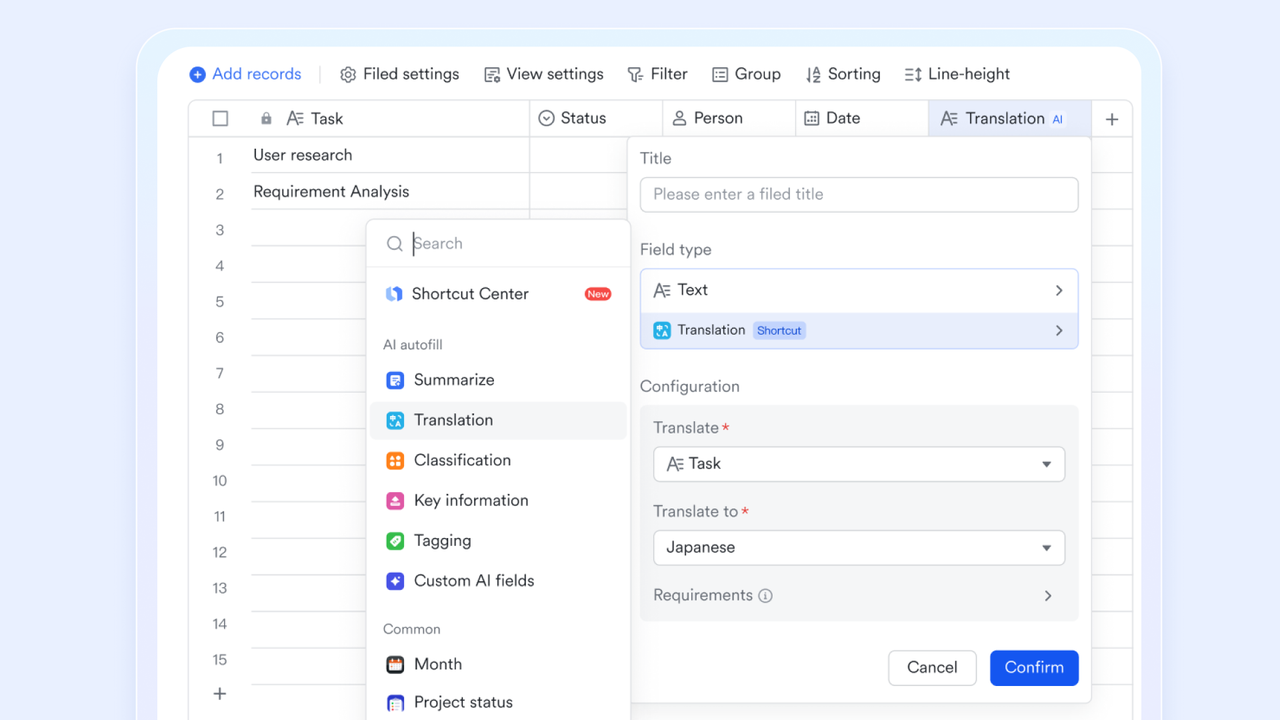
Next, look at the non-critical chains (the secondary paths). Use the time cut from those tasks to create feeding buffers right where they join the main chain. This ensures that if a non-critical task runs late, it eats the feeding buffer before it delays the critical chain. You don't need complex, expensive critical chain software to calculate this; a flexible database like works perfectly for tracking these calculated blocks of time.
Step 4: Execute with a relay race mindset
A relay race is won or lost during the handoff. In traditional projects, if Task A finishes three days early, the person assigned to Task B often doesn't notice until the official "Start Date" arrives. Those three gained days are lost.
In the Critical Chain Method, you ignore start dates. You operate on availability. When Task A is done, Task B starts immediately.
This requires seamless communication. You cannot rely on weekly status emails. This is where a unified workspace becomes your competitive advantage. If your , chat, and documents are all in one app like Lark, the handoff is frictionless. The moment a team member marks a task complete, the Lark bot can send a notification automatically. This speed prevents the gaps that usually plague project schedules.
Step 5: Monitor the buffer, not the dates
Once the project starts, stop asking "Is this task on time?" A task is only "late" if it causes the project buffer to shrink too fast.
You will need a way to visualize this health. This is often done with a "fever chart," which plots the percentage of the project completed against the percentage of the buffer consumed.
- Green zone: Project is progressing, buffer consumption is low. No action is needed.
- Yellow zone: Buffer is being eaten faster than tasks are finished. Plan a recovery strategy.
- Red zone: The buffer is nearly gone. Immediate intervention is required to break bottlenecks.
By focusing on the buffer, you stop micromanaging the team. You only step in when the project is at risk, which gives your team the autonomy they crave while you need.
Visualize your critical chain instantly
Using Lark to master the Critical Chain Method
Implementing the Critical Chain Method often fails not because the theory is wrong, but because the tools are too rigid. Traditional project software is obsessed with dates, while CCPM is obsessed with flow. To make this work, you need a platform that connects your planning directly to . Here is how you can use a to bring the critical chain to life without needing expensive, niche software.
Spotting resource bottlenecks instantly
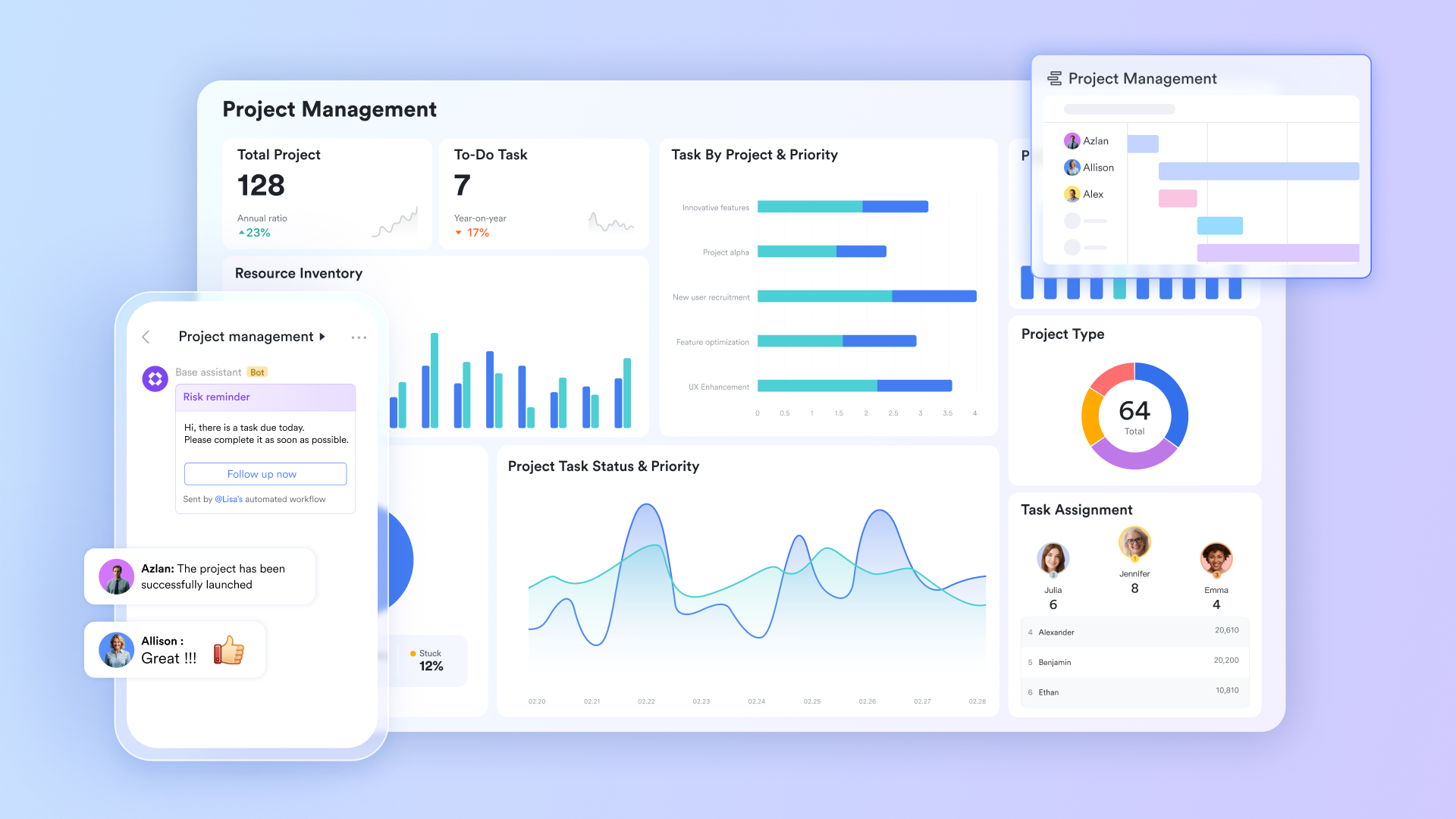
The critical chain is defined by , but identifying these in a standard spreadsheet is a nightmare. You can solve this by creating your project schedule in . By switching your project view to a timeline or and grouping tasks by "Assignee," you immediately visualize the stack of work for each person.
Instead of seeing a list of dates, you see the reality: "Sarah is assigned to three critical tasks during week four." This visual clarity allows you to level the resources manually—shifting tasks to resolve the conflict—before the project even starts. You identify the constraint (Sarah) and design the schedule around her availability, effectively establishing your critical chain in minutes.
Automating the project relay race
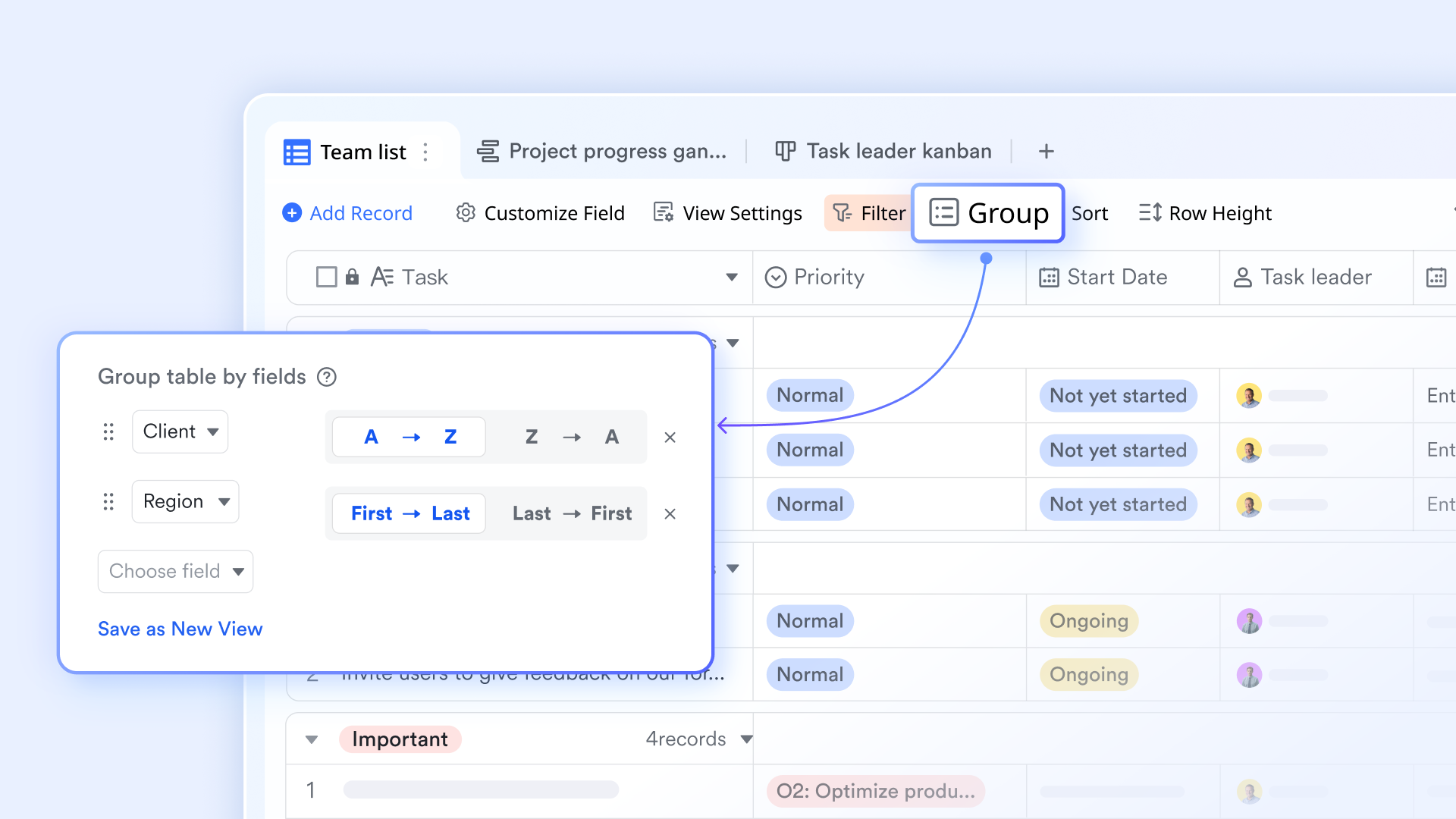
The biggest source of delay in CCPM is the "white space" between tasks—the time between one person finishing and the next person starting. In a typical setup, this handoff relies on status meetings or emails that get ignored.
You can eliminate this latency by setting up . When a team member marks a critical task as "Complete" in the system, it can trigger an immediate bot notification to the next person in the chain via chat: "Task A is done. You are up for Task B." This acts as an automated "Resource Buffer," ensuring the next runner grabs the baton instantly. This seamless connection between your task tracker and your communication tool turns a passive schedule into an active relay race.
Visualizing buffer health with live data
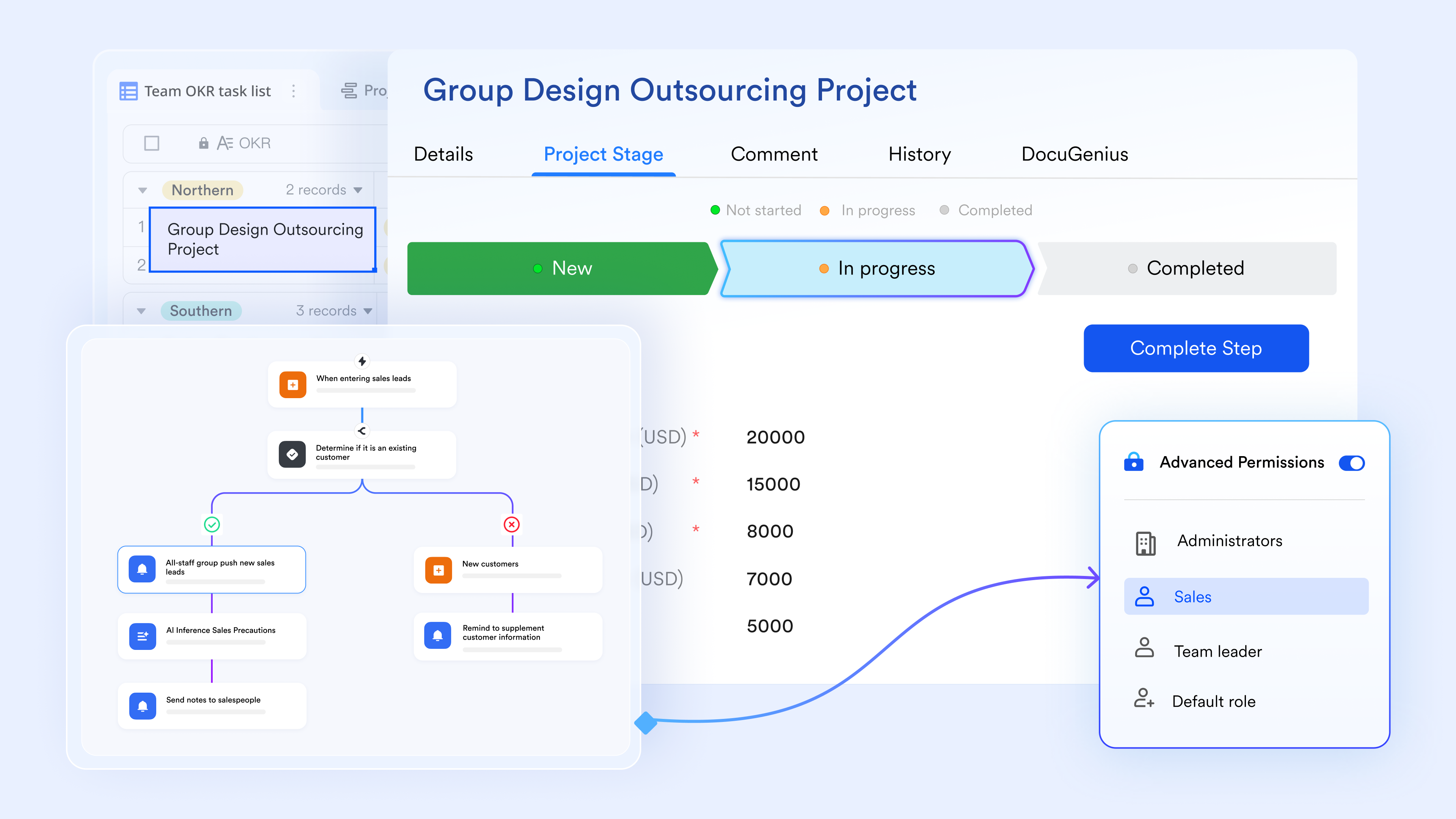
Managing by buffer requires real-time data, not weekly reports. If you have to manually calculate how much buffer is left in Excel every Friday, you are already too late. You can build various charts directly into your project dashboard. By using formula fields, you can automatically calculate the percentage of the critical chain completed versus the percentage of the project buffer consumed. You can then visualize this on a dashboard that updates every time a task status changes. 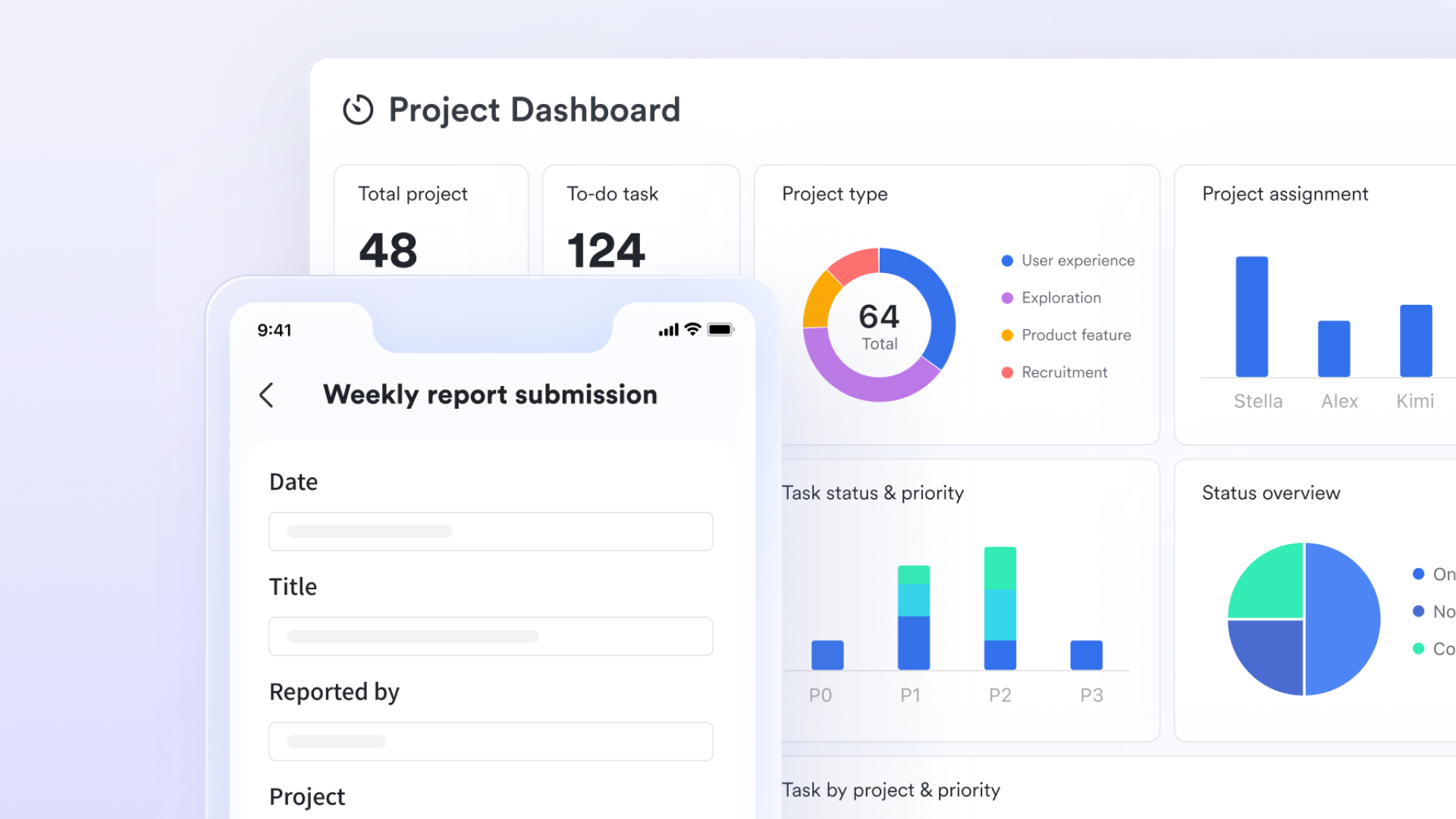
Protecting focus to prevent multitasking
CCPM demands that when a resource is working on a critical task, they must single-task. Bad multitasking (context switching) is the enemy.
A unified platform helps protect this focus by reducing the need to toggle between apps. When your documents, requirements, and chat are all integrated, a developer doesn't need to leave their workspace to find information. Furthermore, you can encourage a culture where team members use "Focus Mode" or specific status settings when they are active on the critical chain. This signals to the rest of the organization: "I am powering through a critical task—do not disturb." This digital boundary is essential for maintaining the speed required for aggressive estimates.
:
- Starter plan: Free forever plan that includes 11 powerful tools for up to 20 users. It also comes with 100GB of storage, 1000 automation runs, AI translations, and more.
- Pro plan: $12/user/month (billed annually) for up to 500 users. It includes everything in Starter plus group calling for up to 500 attendees, 15TB of storage, 50,000 automation runs, and more.
- Enterprise plan: for custom pricing. Supports unlimited users and includes even more automation runs and advanced security, compliance, and management features.
For small teams with simple communication needs

18 months message history
1000 Base automation runs/month
2000 rows per table in Base
Most POPULAR
For companies with comprehensive collaboration and management needs
Unlimited message history
500-participant video meetings
50k Base automation runs/month
20k rows per table in Base
For large companies with advanced security and organizational management needs
Get a personalized demo and pricing
Unlimited message history
500-participant video meetings
15 TB storage + 30 GB storage/user
500k Base automation runs/month
50k Base automation runs/month
Most POPULAR
For companies with comprehensive collaboration and management needs
Unlimited message history
500-participant video meetings
50k Base automation runs/month
20k rows per table in Base
Critical Chain Management tips
Successfully running a project like the one above requires a change in daily behavior. Here are a few tips to help you manage this new way of working.
- Stop asking "What percentage is complete?": In knowledge work, "90% complete" is a myth. A task is either done or not done. Instead, ask your team: "How many days of focused work are remaining?" This gives you a much more accurate picture of when the resource will free up for the next person in the chain.
- Protect your team from "noise": As a manager, your primary job in CCPM is to be a bodyguard for the person on the critical chain. If management asks for a or another department needs a "quick favor," you must intervene. Tell them, "Sarah is on the critical chain right now; I can help you, but she cannot be disturbed." This singular focus is what drives the speed of the project.
- Don't panic when the buffer is eaten: It is normal for the buffer to be consumed. That is what it is there for. New practitioners often panic the moment the project enters the "Yellow" zone of the fever chart. Stay composed. Only intervene when the trend line shows you are diving deep into the "Red" zone with no sign of recovery. If you react too early, you reintroduce the anxiety that causes student syndrome.
- Revisit the source material: If you find your team slipping back into old habits, it is often helpful to run a book club or a workshop. Reading Goldratt's critical chain book together can be an eye-opener. It helps the team understand that the "aggressive estimates" aren't about squeezing them for more work, but about removing the stress of fake deadlines.
Master critical chain management with Lark
Critical Chain Method example
Theory is useful, but seeing mechanics in a real-world scenario makes it click. Let's walk through a practical Critical Chain Method example involving a software development team building a new mobile app feature.
The "traditional" approach
Imagine the project has three linear steps: Design, Coding, and Testing.
- Designer: Estimates 10 days (5 days work + 5 days safety because the creative process is unpredictable).
- Developer: Estimates 10 days (5 days work + 5 days safety because bugs happen).
- QA tester: Estimates 6 days (3 days work + 3 days safety).
- Total project timeline: 26 days.
In this scenario, if the Designer finishes in 5 days, they likely won't hand it off immediately. They might polish the work or catch up on emails until the "scheduled" day 10 arrives (student syndrome). The 5 days of gained time are wasted. However, if the developer hits a snag and takes 12 days, the project is now 2 days late. The safety was wasted, and the delay was permanent.
The "critical chain" approach
Now, let's apply CCPM to the same feature.
Aggressive estimates: We ask the team for their "50% likely" estimates.
The buffer: We stripped 13 days of safety (26 minus 13). We take 50% of that safety (6.5 days, rounded to 7) and create a project buffer.
New project timeline: 13 days (Chain) + 7 days (Buffer) = 20 days.
The execution: The project is scheduled for 20 days—still 6 days faster than the traditional plan.
- The Designer finishes in 6 days (1 day "late" on their aggressive estimate). They pass the baton immediately.
- The Developer gets a notification and starts immediately. They hit a major bug and take 8 days (3 days "late").
- The QA Tester breezes through in 2 days (1 day early).
The result:
- Total work time: 6 + 8 + 2 = 16 days.
- Buffer consumed: The project used 3 days of the 7-day buffer.
- Status: The project finished 4 days early compared to the CCPM plan, and 10 days early compared to the traditional plan.
By focusing on the flow rather than holding individuals to arbitrary deadlines, the team absorbed the delay during the coding phase without panicking, and the project remained green the entire time.
Conclusion
The Critical Chain Method is more than just a scheduling technique; it is a philosophy that values focus on business and flow over rigid deadlines. By acknowledging the human element of project management—our tendency to procrastinate, our fear of being late, and our inability to multitask effectively—CCPM offers a path to delivering projects faster and with less stress.
It requires courage to strip away the safety margins and trust the buffer, but the results are worth it. You will move from a culture of excuse-making to a culture of teamwork and speed.
You don't need to wait for a perfect time to start. You can begin by simply identifying your bottleneck and encouraging single-tasking today. If you need a platform that supports this high-speed, transparent way of working, try managing your next project on . With unified chat, docs, and automated workflows, Lark helps you pass the baton instantly and keeps your critical chain moving without friction.
Start your critical chain journey with Lark
FAQs
What is the Critical Chain Method?
The Critical Chain Method (CCPM) is a project management technique that prioritizes resource availability and buffer management over rigid task deadlines. Derived from the Theory of Constraints, it focuses on identifying the longest sequence of dependent tasks and resources—the "critical chain"—to ensure projects are delivered on time despite uncertainties.
What is the difference between Critical Path Method and Critical Chain Method?
The main difference lies in how they handle resources. The Critical Path Method (CPM) calculates the timeline based solely on task dependencies, assuming resources are always available. In contrast, the Critical Chain Method accounts for limited resource availability, creating a more realistic schedule that prevents bottlenecks from derailing the project.
What is an example of a critical chain scheduling?
Imagine a software project where developers cut their "safe" estimates in half, pooling that removed safety time into a shared project buffer at the end. Instead of multitasking, they work relay-race style, using a tool like Lark to automatically notify the next person the moment a task is done, ensuring no time is lost between handoffs.
What is the difference between CPM and CCM?
While CPM focuses on monitoring "float" (slack time) within individual tasks, CCM strips safety margins from individual tasks and aggregates them into strategic buffers (Project and Feeding buffers). CCM emphasizes eliminating bad multitasking and student syndrome behavior, whereas CPM emphasizes strictly adhering to specific start and finish dates for every activity.
Related reading