In project management, establishing a project baseline is crucial for ensuring overall success. A project baseline serves as a reference point for measuring performance throughout the project's lifecycle. Without a clearly defined baseline, teams may find it challenging to track progress, manage changes, and achieve the expected outcomes. By setting a project baseline, project managers can align team efforts, meet stakeholder expectations, and foster effective communication.
This blog will explore the essential aspects of project baselines, including their types, key elements, and significance. We will provide practical guidance on how to set them effectively and discuss the flexibility of adjusting baselines as projects evolve. Additionally, we'll highlight how tools like Lark can simplify the management of baselines, making the process more efficient for project teams.
Start mastering project baselines today
What is a project baseline and its key types?
A project baseline is a foundational component of project management—an approved version of the project plan that serves as a fixed reference point. It unites all stakeholders around a shared understanding of the project's objectives, deliverables, and success criteria, while providing a framework to and guide decision-making throughout the . At its core, a project baseline comprises three interconnected, critical elements—known as the "triple constraint"—which also define its primary types:
Scope baseline
The scope baseline defines exactly what is included in (and excluded from) the project, setting clear boundaries to —uncontrolled expansions of work that derail timelines and budgets. It is formally documented in a Work Breakdown Structure (WBS), which breaks down the project into manageable tasks, sub-tasks, and deliverables. Beyond avoiding deviations from the original objectives, this baseline aligns the team on what constitutes project success, ensuring everyone works toward the same outcomes without redundant or off-scope efforts.
Schedule baseline
Serving as the project's roadmap, the schedule baseline outlines the planned timeline for all activities, including , task sequences, and deadlines. It is critical for tracking progress: by comparing actual performance against the baseline, project managers can quickly identify delays or early completions, then implement timely adjustments to keep the project on track. This baseline transforms abstract timelines into actionable guidance, ensuring coordination across teams and preventing bottlenecks that threaten delivery.
Cost baseline
The cost baseline represents the , detailing estimated expenses for all components—labor, materials, tools, and other resources. It acts as a financial control tool: teams monitor actual spending against the baseline to detect discrepancies, avoid budget overruns, and make data-driven corrective decisions. By formalizing budget expectations, this baseline ensures transparency in financial management and helps stakeholders allocate resources efficiently.
Key elements of project baseline
Establishing a project baseline involves several key elements that are essential for effective project management. Each of these components plays a critical role in ensuring that the project remains on track and aligned with its objectives. Here are the primary elements that comprise a robust project baseline:
- Scope definition: Clearly is the foundation of the baseline. This includes identifying all deliverables, tasks, and boundaries of the project. A well-defined scope helps prevent misunderstandings and scope creep, ensuring that all stakeholders agree on what the project will and will not deliver.
- : The WBS organizes the project into smaller, manageable components. By breaking down tasks into work packages, project managers can assign responsibilities, track progress more easily, and ensure that no critical components are overlooked. The WBS serves as a visual representation of the entire project, making it easier to navigate and manage.
- Baseline schedule: This includes a detailed timeline featuring critical milestones and . The baseline schedule allows project managers to set realistic deadlines and track progress. By comparing actual performance with the baseline schedule, teams can identify delays and take corrective action promptly, ensuring the project stays on course.
- Budget estimates: The cost baseline encompasses a breakdown of all anticipated expenses, including labor, materials, and overhead costs. Accurate budget estimates are essential for financial planning and . By keeping track of actual expenditures against the budget baseline, project managers can maintain control over project finances and avoid overspending.
- Performance metrics: Establishing associated with the project baseline is crucial for monitoring progress. These metrics allow teams to measure how well the project is adhering to its planned scope, schedule, and cost. Regularly reviewing these metrics helps project managers make informed decisions and adjustments as needed.
Together, these key elements create a comprehensive project baseline that serves as a single source of truth for managing the project. A clear and well-documented baseline enables effective monitoring and control, increasing the likelihood of project success.
Importance of project baseline
The importance of a project baseline cannot be overstated in project management. A well-defined baseline serves as a guiding framework that shapes project execution and drives success. Here are some key reasons why establishing a project baseline is critical:
- Performance measurement: A project baseline provides a reference point against which actual performance can be measured. By comparing real-time progress to the established scope, schedule, and cost baselines, project managers can identify variances and determine whether the project is on track.
- Enhanced accountability: With clear baselines, team members understand their roles and responsibilities concerning . When everyone knows the expectations set by the baseline, accountability for progress increases. This clarity helps foster a sense of ownership and commitment among team members.
- Proactive decision-making: When deviations from the baseline are identified early, project managers can respond proactively rather than reactively. This timely intervention allows for corrective actions to be taken, minimizing the impact of any changes on the overall project timeline or budget.
- Improved communication: A project baseline serves as a . It enhances communication by ensuring that everyone involved has a shared understanding of the project's goals and progress. Regular updates based on the baseline keep stakeholders informed and engaged throughout the project lifecycle.
- Strategic planning and resource allocation: By establishing a clear baseline, project managers can make more informed decisions regarding resource allocation. Understanding what resources are needed for specific tasks allows for better planning and optimization of project expenditures.
- Risk management: A project baseline aids in in the project. By recognizing which areas deviate from the baseline, teams can assess risks and implement mitigation strategies to prevent project delays or budget overruns.
In summary, a project baseline is crucial for successful project management. It empowers teams to measure performance, enhances communication, and allows for proactive decision-making, ultimately leading to more successful project outcomes.
How to set a project baseline
Setting a project baseline is a structured process that acts as a foundation for effective project management. A solid baseline guides the project team and allows for better tracking and management of project performance. Here's a comprehensive guide on how to set a project baseline effectively:
Step 1: Define project scope
Start by gathering input from all stakeholders to create a comprehensive and . This statement should detail the project objectives, deliverables, and boundaries. Engage team members in discussions to clarify what is included and excluded. This thorough understanding helps prevent scope creep, ensuring that everyone is aligned on the project goals.
Step 2: Create a Work Breakdown Structure (WBS)
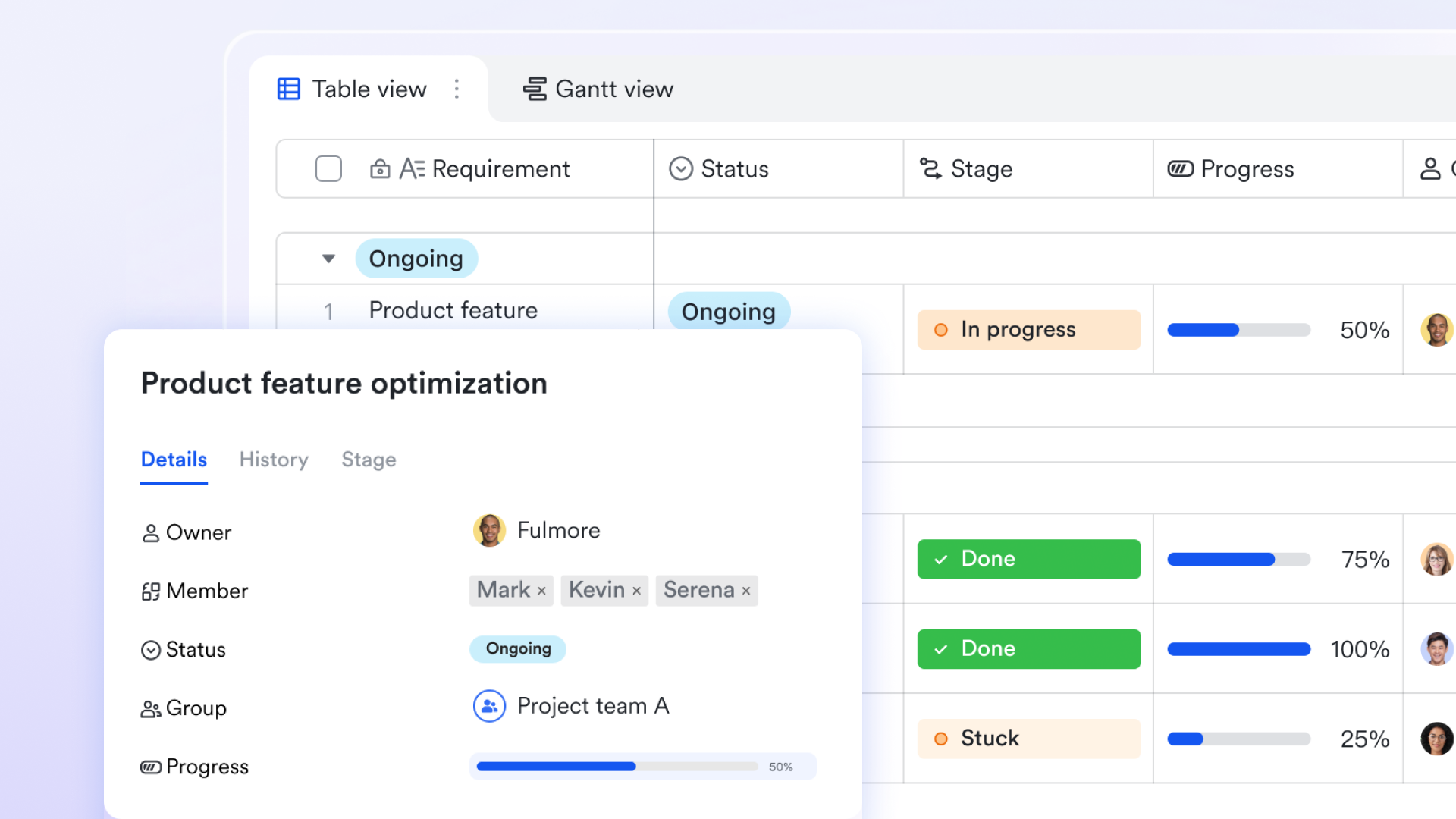
Develop a detailed Work Breakdown Structure that divides the entire project into smaller, manageable components or work packages. The WBS provides a visual representation of the project and outlines tasks necessary for completion. This structure helps team members understand their roles and responsibilities better. Using collaboration tools like can streamline this process, allowing team members to contribute insights and updates easily.
Step 3: Establish a baseline schedule
Construct a baseline schedule that delineates key milestones, deadlines, and . This schedule should be realistic and include estimated durations based on input from the team. Pay special attention to task dependencies; understanding which tasks must be completed before others can commence is essential for a smooth workflow.
Step 4: Develop a budget
by estimating expenses for all resources, such as labor, materials, and overhead. This budget should reflect a realistic financial plan based on market research and historical data from similar projects. Detail the budget to ensure accuracy, allowing it to serve as a reliable reference throughout the project lifecycle.
Step 5: Document the baseline
Once all elements of the scope, schedule, and budget are defined, compile this information into a formal project baseline document. This document should include:
- The approved scope statement
- The Work Breakdown Structure
- The baseline schedule with milestones
This comprehensive documentation ensures that all stakeholders have consistent access to the baseline information, promoting transparency and accountability.
Step 6: Communicate to stakeholders
After finalizing the baseline, communicate it to all stakeholders. Use meetings or collaborative platforms like Lark to present the baseline plan effectively. Ensure that everyone understands their roles and responsibilities according to the baseline, fostering engagement and commitment to the project.
Step 7: Monitor and review
As the project progresses, regularly compare actual performance against the established baseline. with the team to discuss progress and address any discrepancies. This ongoing monitoring helps identify issues early and allows the team to make necessary adjustments to keep the project on track.
By following these steps, you will create a robust project baseline that enhances control over project execution. The baseline is not just a static document; it's a living guide that facilitates effective decision-making and keeps the project aligned with its objectives.
Implement effective baselines in your projects
Accelerate your baseline workflow with ready-to-use templates
Templates are invaluable for project managers, helping streamline processes, enhance organization, and improve communication within teams. Below are some highly effective templates that can aid project managers in various aspects of their work.
Gantt chart for requirement management template
Core function: Visualizes the project baseline and synchronizes consensus on timeline and scope.
Functional analysis: This template serves as the most intuitive carrier for project scope and timeline baselines. It deeply combines requirements (scope), tasks, responsible persons, and the . Project managers only need to input the Work Breakdown Structure (WBS) to automatically generate a visual project roadmap.
How it supports baseline management: This template solidifies the schedule baseline by visually locking in planned dates for all tasks and milestones. During execution, it enables real-time monitoring by contrasting actual progress against the original baseline on the Gantt chart, providing early warning for any deviations. By managing task dependencies, it helps teams proactively adjust to delays, thereby maintaining the stability and integrity of the project's foundational plan.
4x4 risk assessment template
Core function: Quantifies project risks to safeguard the baseline.
Functional analysis: This is a structured risk register template. It employs a risk , guiding the team to conduct qualitative or semi-quantitative analysis of identified risks based on two dimensions: "Probability of Occurrence" and "Impact Severity" (typically categorized into 4x4 levels).
How it supports baseline management: This template acts as a proactive defense for the baseline by systematically identifying and evaluating risks that could threaten scope, schedule, or cost during the planning phase. It prioritizes these risks through automatic scoring, directing focus and resources to the most critical threats. By assigning a clear owner to each risk, it ensures accountability for mitigation, preventing unforeseen issues from derailing the established project baseline.
Project problem tracker template
Core function: Manages execution deviations through a closed-loop process, ensuring baseline control.
Functional analysis: This is a centralized template for tracking all obstacles, defects, or problems that deviate from the plan during project execution. It typically includes fields for problem description, status (Open/In Progress/Resolved), severity level, responsible person, and root cause analysis.
How it supports baseline management: This tool ensures baseline control by transforming any detected deviations—such as missed deadlines or quality defects—into trackable action items, preventing minor slippages from escalating. It safeguards the quality standards defined in the scope baseline and creates a complete audit trail of all issues. This recorded history provides crucial context for project reviews and informed decision-making when considering any necessary adjustments to the baseline itself.
Can you change the project baseline?
Yes, adjusting a project baseline is often necessary due to shifts in project requirements or unexpected challenges. Here's how to do it effectively:
Start by identifying the reasons for the change, such as alterations in project scope, delays, or budget overruns. Ensure these reasons are justified and based on factual data.
Next, assess the proposed adjustments and their potential impact on overall project performance. to gather insights and foster agreement on the necessity of these changes.
Once the changes are defined, document the new baseline details clearly, highlighting what has changed and why. Communicate these updates to all stakeholders, outlining any implications for roles, responsibilities, and timelines.
Finally, update all project documentation to reflect the new baseline accurately, preventing confusion as the project progresses. Regularly monitor performance against this updated baseline and remain flexible to further adjustments as the project evolves.
By following these steps, you can adapt your project baseline responsibly and ensure continued support for successful management.
How to manage project baselines with Lark
Effective project baseline management isn't just a static post-approval document. It needs a dynamic, shared scope/schedule/cost framework: team-aligned, progress-tracked, and transparently adaptable. Traditional tools split baselines from execution, making key references obsolete. unifies docs, tracking, automation, and knowledge into one workflow—turning baselines from snapshots into central hubs that drive alignment, mitigate risks, and preserve decision context. Below are how Lark's features make this dynamic, collaborative management intuitive.
Simplify collaboration and efficiently establish baseline plans
A project baseline isn't just a static plan at a specific time—it's a "standard snapshot" of key project dimensions (scope, schedule, cost) reviewed and approved by the team. The core management goal is to keep everyone aligned on this "standard" in real time and ensure all changes are traceable.
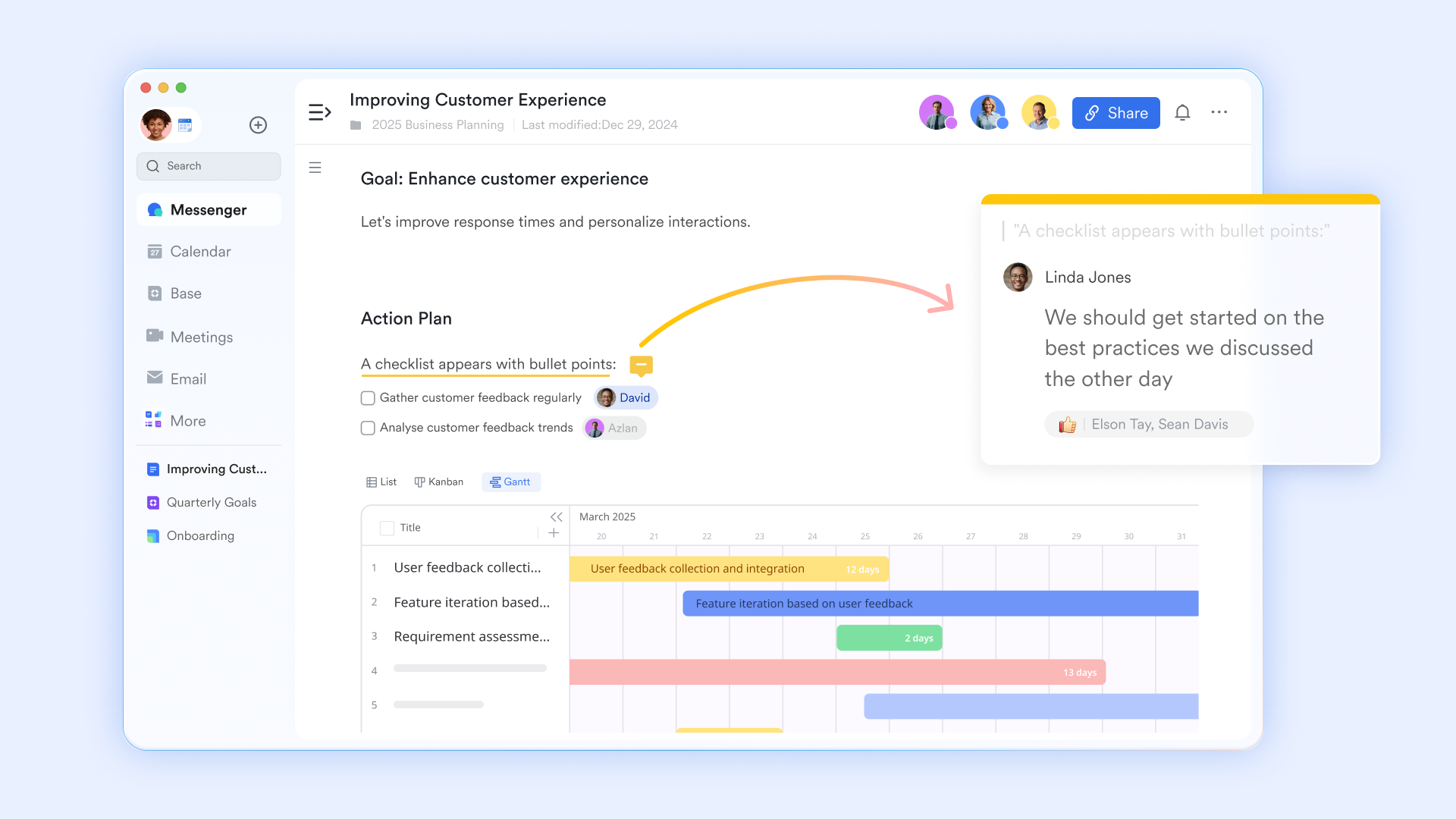
transforms baseline setup from "publishing a document" to "anchoring collaborative consensus." For example, during project initiation, teams can co-draft the project charter and master plan in Lark Docs. Using comments, @mentions, and task assignments, all core deliverables, milestone dates, and budget figures are openly discussed and confirmed. Once marked "Reviewed" or "Baseline Version," the document—along with full discussion history—becomes a living baseline. Subsequent change requests can be initiated directly via comments in the relevant section, ensuring transparent discussion and decision-making. This shifts the baseline from a management control tool to a shared cognitive anchor for the entire team.
From post-event checking to monitoring and smart alerts
Traditional baseline management often falls into a "set-forget-deviate-firefight" cycle: managers lack real-time, automated monitoring and can only react after issues arise.
changes this by turning the project plan into a structured, dynamically tracked "digital twin." Input the work breakdown structure (WBS), dependencies, owners, planned dates, and baseline dates into a Base table. The Gantt chart view clearly shows the comparison between the planned timeline and baseline (often in different colors or dashed lines). 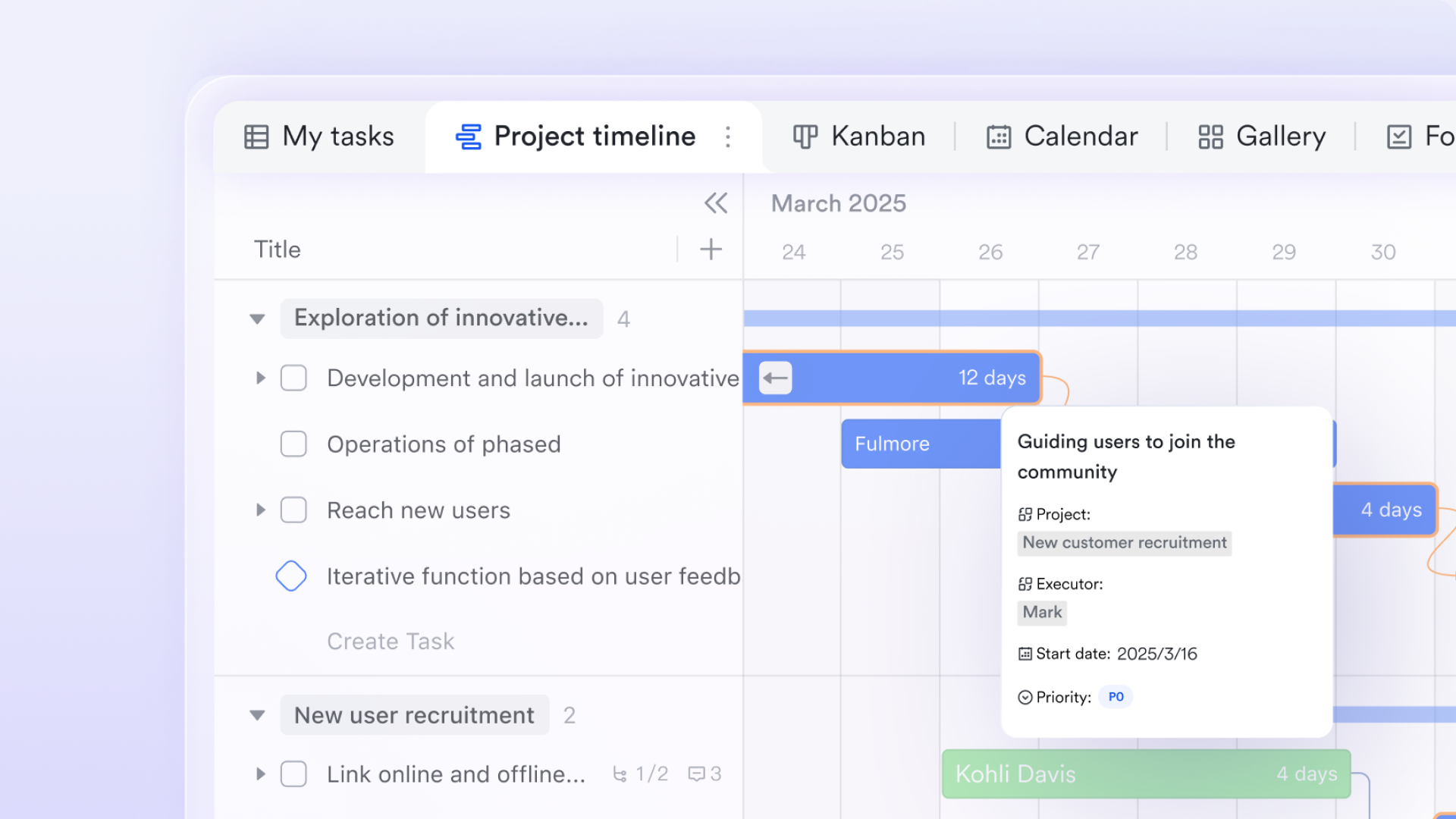
More importantly, set automation rules for key task fields. For example, when a milestone or task deadline nears, the system automatically reminds the owner and project manager to drive progress. This keeps the team focused on goals, boosts accountability, ensures on-time task completion, and keeps the project aligned with the baseline. 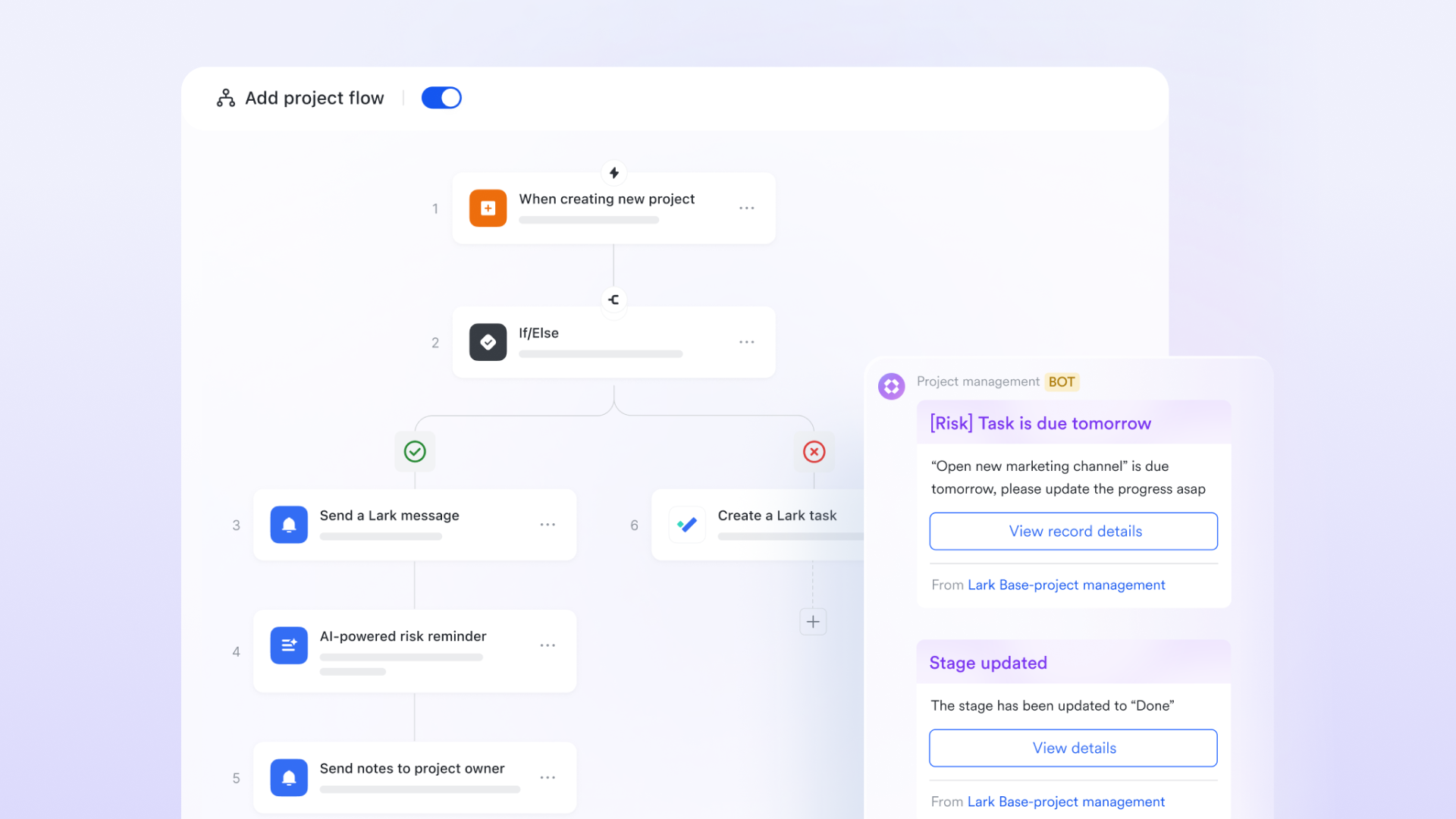
Preserving process assets, making baseline decisions traceable
A baseline doesn't come out of nowhere—it's supported by solid market analysis, technical validation, and trade-off decisions. Lose these process assets, and the baseline loses its basis, with subsequent changes becoming arbitrary.
, the project's centralized knowledge base, is the perfect carrier for the baseline's full lifecycle. The team can create a project Wiki page, with the approved baseline document as the core and decision context built around it. For instance, store the initial business requirements document, key technical solution review notes, change control board meeting records, and even critical decision videos from . Every major baseline update leaves a clear "stratigraphic" record via Wiki page version history. This lets team members quickly trace the full decision context of any baseline version over time, boosting project continuity and reproducibility.

Visual data analysis aiding scientific decision-making
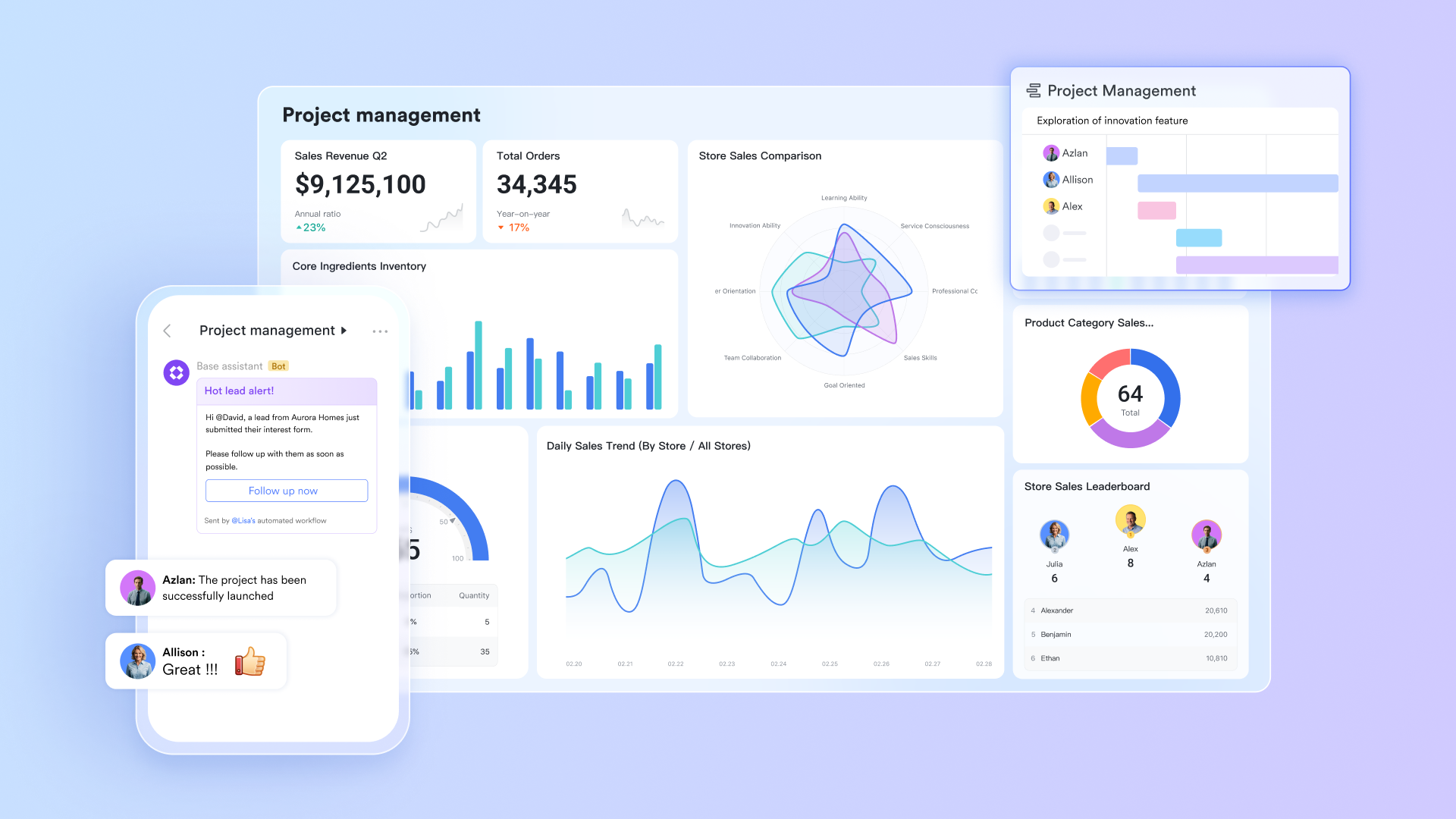
Lark Base's dashboards, as data analysis and reporting tools, play a key role in managing project baseline plans. For example, dashboards built with Lark Base can clearly compare the variance between actual expenditures and the cost baseline, as well as deviations between actual progress and the planned schedule. These visual analysis results provide valuable decision-making support for project managers, helping them make scientific, data-driven decisions in baseline plan management. By identifying potential trends and patterns, managers can proactively prevent risks, seize opportunities, and ultimately drive the project to successful completion.
Efficient communication and synchronizing project updates
Change is inevitable in project management. When a project baseline plan needs adjustment, clear communication is crucial. Lark combines communication tools like and , helping teams conduct efficient discussions around necessary adjustments to the baseline plan.
When stakeholders need to discuss updates and revisions to the baseline plan, Lark can streamline the communication process. Team members can use to quickly share the latest information, solicit feedback, and clarify questions in real-time, ensuring everyone is on the same page with synchronized information and aligned goals. This efficient communication model also applies to engaging with external stakeholders, helping to enhance project management transparency and build trust in cooperation.

- Free plan: Includes 11 powerful products, supporting up to 20 users, 100 GB storage, 1,000 automation runs and unlimited AI translation in chats, docs and email.
- Pro plans: $12/user/month, supporting up to 500 users. Includes unlimited message history, 50,000 automated Base workflow executions per month.
- Enterprise plan: for custom pricing. Supports unlimited users and includes even more automation runs and advanced security, compliance, and management features.
For small teams with simple communication needs

18 months message history
1000 Base automation runs/month
2000 rows per table in Base
Most POPULAR
For companies with comprehensive collaboration and management needs
Unlimited message history
500-participant video meetings
50k Base automation runs/month
20k rows per table in Base
For large companies with advanced security and organizational management needs
Get a personalized demo and pricing
Unlimited message history
500-participant video meetings
15 TB storage + 30 GB storage/user
500k Base automation runs/month
50k Base automation runs/month
Most POPULAR
For companies with comprehensive collaboration and management needs
Unlimited message history
500-participant video meetings
50k Base automation runs/month
20k rows per table in Base
Conclusion
In conclusion, establishing a clear project baseline is essential for effective project management, enabling teams to set realistic goals, track progress, and make informed decisions. By using collaborative tools such as , project managers can simplify the baseline-setting process, enhance communication, and keep all stakeholders aligned. Embrace Lark to elevate your project management experience and ensure your project's success!
Enhance your project management skills now
FAQs
What is a project baseline?
A project baseline is a fixed reference point that includes the original scope, schedule, and budget of a project. It serves as a benchmark against which project performance is measured and monitored. Utilizing tools like Lark can help teams document and maintain this baseline effectively.
What is an example of a baseline?
An example of a baseline could be a project's timeline that includes milestones, such as completing the design phase by a certain date and beginning construction thereafter. This timeline is used to track actual progress against the planned timeline, ensuring adherence to project goals.
Who approves the project baseline?
The project baseline is typically approved by key stakeholders, including the project manager, project sponsor, and other relevant team members. This approval ensures that all parties are aligned on the project's scope, schedule, and budget before execution begins. Lark can facilitate this collaboration by allowing for easy sharing and discussion of the baseline among stakeholders.
What is the difference between a project baseline and a project plan?
The project plan is a comprehensive document that outlines how the project will be executed, controlled, and closed, including the project's goals, timeline, resources, and methodologies. In contrast, a project baseline focuses specifically on the approved scope, schedule, and budget, serving as a reference for measuring progress. Using Lark can help differentiate these documents clearly, maintaining both the project plan and baseline in an organized manner for easy access and updates.
Related reading