You're drowning in tasks. That email about an "urgent" status update derailed your important project for the afternoon. Your presentation prep—the work that actually matters for next quarter—got pushed to tomorrow night again. Meanwhile, your to-do list keeps growing, your stress levels climb, and somehow you're perpetually busy yet never quite catching up. This is the reality for most professionals today. The problem isn't a lack of effort; it's a lack of clarity about what deserves your time in the first place.
This guide breaks down exactly how the Eisenhower matrix method helps professionals separate what truly matters from what just feels urgent. You'll discover a proven framework for transforming reactive chaos into intentional focus, and understand why this approach remains relevant even in our hyper-connected, always-on world. Whether you're managing a team, building a business, or trying to reclaim control of your calendar, this article shows you how the Eisenhower matrix urgent important method can reshape your productivity in meaningful ways. Tools like Lark can help automate this process at scale, but first, you need to understand the framework itself.
Understanding the Eisenhower matrix method
The Eisenhower matrix method is a decision-making framework that categorizes tasks and activities into a 2x2 grid based on two dimensions: Urgency and importance. Each quadrant represents a different relationship between these factors, helping you understand where your effort should actually go.
The framework traces back to President Dwight D. Eisenhower, a military strategist and U.S. President known for managing competing demands at the highest levels. The actual popularization of this approach came through Stephen Covey's seminal work, The 7 Habits of Highly Effective People, where Covey formalized what we now recognize as the Eisenhower matrix prioritization method. Covey recognized that Eisenhower's strategic insight—the distinction between what's urgent and what's important—was a game-changing principle for personal and organizational productivity.
Today, in 2026, this framework remains remarkably relevant, perhaps even more so than when Covey first introduced it. Here's why:
- Notification overload: Modern work environments flood us with constant alerts, messages, and requests, creating an unprecedented sense of urgency around tasks that often don't deserve immediate attention. The Eisenhower matrix productivity method cuts through this noise by forcing you to evaluate what actually matters.
- Organizational urgency culture: Many companies have inadvertently created systems where everything is "urgent." When every project has a red flag, and every email expects an immediate response, professionals lose the ability to distinguish real priorities from manufactured ones.
- Complexity of modern work: Unlike previous eras, today's work often involves , projects, and competing timelines happening simultaneously. Without a clear framework, this complexity becomes paralyzing.
The Eisenhower method matrix is essentially a lens that lets you see through this chaos. It doesn't reduce complexity—but it does make complexity manageable by forcing honest categorization.
Try Eisenhower matrix method in a superapp
The four quadrants of the Eisenhower matrix method explained
The power of the Eisenhower matrix method lies in its elegant simplicity: A 2x2 grid, divided into four quadrants, each offering a distinct directive on how to approach your tasks. Understanding these four zones is essential to using the framework effectively for and .
Quadrant 1: Do first (urgent and important)
Quadrant 1 encompasses tasks that are both urgent and important, demanding immediate attention due to their critical nature and direct impact on significant outcomes. These tasks possess firm deadlines and directly align with crucial goals. Delaying them leads to real consequences. They often represent crises, critical , or problems that, if unaddressed, will escalate. They carry clear external pressure and often involve high stakes.
Real-world examples:
- A project deadline tomorrow impacts a major client relationship.
- A critical system failure affecting customer operations.
- An essential presentation for senior leadership is scheduled for next week.
- A regulatory deadline with legal implications.
- A health emergency or family crisis requires immediate response.
Time allocation reality: Ideally, Q1 work should constitute roughly 20-25% of your professional time. Consistently exceeding this suggests that your organization may be operating in perpetual crisis mode, or that upstream processes (poor planning, unclear priorities) are failing. The solution isn't to work harder in Q1, but to address the systemic issues generating so much urgent work.
Quadrant 2: Schedule (important but not urgent)
Quadrant 2 is where the Eisenhower matrix time management theory becomes truly powerful. It contains work that is strategically important but lacks immediate time pressure, making it the most neglected yet most impactful quadrant. Q2 tasks are foundational for long-term success and growth, generating significant future value. They don't have pressing deadlines, which is why they are easily sidelined by more urgent demands. Yet, these are the activities that drive genuine progress, foster innovation, and build long-term capabilities.
Examples of important but not urgent work:
- Skill development and learning: Courses, certifications, deliberate practice.
- Strategic planning and : Long-term vision, comprehensive project plans.
- Relationship building: Networking, mentorship, fostering collaborations.
- Process improvement: Developing better workflows, documentation, and systems.
- Preventive work: Health check-ups, system maintenance, proactive problem-solving.
- Personal development: Reading, exercise, and reflective practices.
The strategic paradox: Q2 activities are responsible for a disproportionate amount of long-term success. The strategic initiative you build now compounds into a competitive advantage later. However, because there's no immediate urgency, most professionals under-allocate time here. High performers intentionally protect time for Q2 work, creating systems that reduce unnecessary Q1 tasks, thereby making space for strategic efforts. The Eisenhower matrix variations across different roles consistently show that Q2 work demands active protection to ensure real progress.
Quadrant 3: Delegate (urgent but not important)
Quadrant 3 comprises tasks that feel pressing but do not require your specific expertise or decision-making authority. These are typically interruptions, "quick asks," and distractions that can derail focus. Q3 work has an immediate deadline or appears time-sensitive, but it doesn't leverage your unique skills or directly support your core goals. Someone needs it done soon, but it doesn't have to be you. These tasks are often driven by others' priorities or poor planning.
Common examples of Quadrant 3 tasks:
- Routine status meetings could be handled asynchronously.
- Administrative tasks and paperwork.
- Requests from colleagues outside your core responsibilities.
- Emails demanding an immediate response but not requiring your specific input.
- Meetings "for your awareness" where active participation isn't essential.
- Urgent requests that stem from someone else's lack of planning.
The delegation barrier: A common pitfall is thinking, "I could do it faster myself." While true in the short term, this prevents you from engaging in Q2 work and hinders the development of delegation skills within your team. Short-term efficiency comes at the cost of long-term leverage. The crucial skill in managing Q3 is distinguishing between what is "urgent to me" and "urgent to the business," and having the confidence to respectfully push back or delegate. The Eisenhower matrix productivity method emphasizes intentional delegation as a tool for leverage and .
Quadrant 4: Delete (not urgent and not important)
Quadrant 4 represents time-wasters and low-value activities that yield no meaningful output. The directive for these tasks is straightforward: Eliminate or drastically minimize them. Q4 activities produce no real value, have no deadlines, and contribute neither to immediate crises nor long-term goals. They are often passive, habitual, or used as avoidance tactics, consuming time without yielding results.
Examples of not urgent and not important activities:
- Endless social media scrolling in a professional context.
- Busywork that feels productive but creates no real value.
- Meetings with no clear agenda or purpose.
- Perfecting minor details that don't affect outcomes.
- Rumination and worry about uncontrollable problems.
- Notifications and interruptions unrelated to critical work.
- Habitual time-filling when procrastinating on harder tasks.
The decision rule: A helpful guideline for Q4 items is: "If it won't be missed or remembered in one month, it probably shouldn't be taking my time today." Most people underestimate the time spent in Q4, often using these tasks as an escape from more challenging, important work. Recognizing and systematically eliminating these time sinks is crucial for optimizing your focus for the higher-leverage quadrants.
Wondering how to spend less while getting more features?
How to distinguish between urgent and important tasks
Applying the Eisenhower matrix method effectively hinges on one crucial skill: accurately distinguishing between urgent and important tasks in the heat of daily work. Our natural bias often blurs these distinctions, causing us to react to what's loudest rather than what truly matters. Building this judgment muscle is key to mastering the Eisenhower matrix prioritization method. To cut through the noise, ask yourself these clarifying questions for any new task:
- Real versus perceived deadline? Is there an external, non-negotiable deadline (e.g., a client contract), or is it an internal preference or someone else's perceived urgency? Not all "due dates" carry the same weight.
- Consequences of delay? What genuinely happens if you don't do this today? Does the business stop, a client leave, or is the impact minimal? The severity of consequences reveals true importance.
- Only you can do it? Does this task specifically require your unique skills or authority, or could it be delegated to someone else? This separates your essential contributions from tasks better suited for Quadrant 3.
- Strategic alignment? Does this task contribute to your long-term goals or next quarter's strategic priorities, or is it a one-off without lasting impact?
- Whose panic? Are you reacting to a genuine business need, or simply being swept up in someone else's stress or poor planning?
Decoding urgency: Real versus false
Understanding the difference between real and false urgency is vital for effective Eisenhower matrix theory:
Real urgency indicators:
- External stakeholder dependency.
- Genuine, measurable business impact if delayed.
- Direct alignment with clear organizational priorities.
False urgency signals:
- Someone else's poor planning becomes your emergency.
- "Nice to have" items framed as "must do."
- Vague timelines paired with pressure language ("ASAP" without justification).
- Soft deadlines (internal, negotiable) are treated as hard (external, non-negotiable).
Regularly auditing tasks you've treated as "urgent but not important" (Quadrant 3) can reveal false urgency patterns. If a task could have been ignored or was actually Quadrant 4 in hindsight, you've identified a bias to adjust. This helps refine your use of the Eisenhower matrix productivity method.
Deadlines: Tool or trap?
Deadlines are a powerful prioritization tool, but they can also be a trap if not critically assessed.
- Not all deadlines equal priority: A task with a deadline tomorrow isn't inherently more important than a strategic project due next month. The immediate deadline can distort your perception of true importance.
- Hard versus soft deadlines: Distinguish between non-negotiable external deadlines (e.g., regulatory filings) and internally set, often negotiable soft deadlines (e.g., internal reports). Treat them differently.
- Avoid "this week" grouping: Grouping all tasks due "this week" creates false urgency. Break down timelines more granularly; a task due Friday has different demands than one due tomorrow.
The Eisenhower matrix urgent important method empowers you to question perceived urgency and make deliberate choices, ensuring your focus remains on what truly moves the needle for your goals. Remember that Eisenhower Matrix examples and Eisenhower Matrix variations will always require this discernment.
Implement the Eisenhower Matrix in Lark: A streamlined workflow tool
Understanding the Eisenhower matrix method intellectually is the first step; applying it consistently across a team is the real challenge. Individual Eisenhower matrices don't scale—when team members prioritize differently, organizational chaos ensues. Manually sorting tasks into quadrants creates friction, increases update burden, and leads to inconsistency. Modern tools are essential to transform the Eisenhower matrix prioritization method from a personal productivity hack into a seamless team operating principle. This is where , one of the most versatile , shines, providing a holistic platform to automate the Eisenhower Matrix into your .
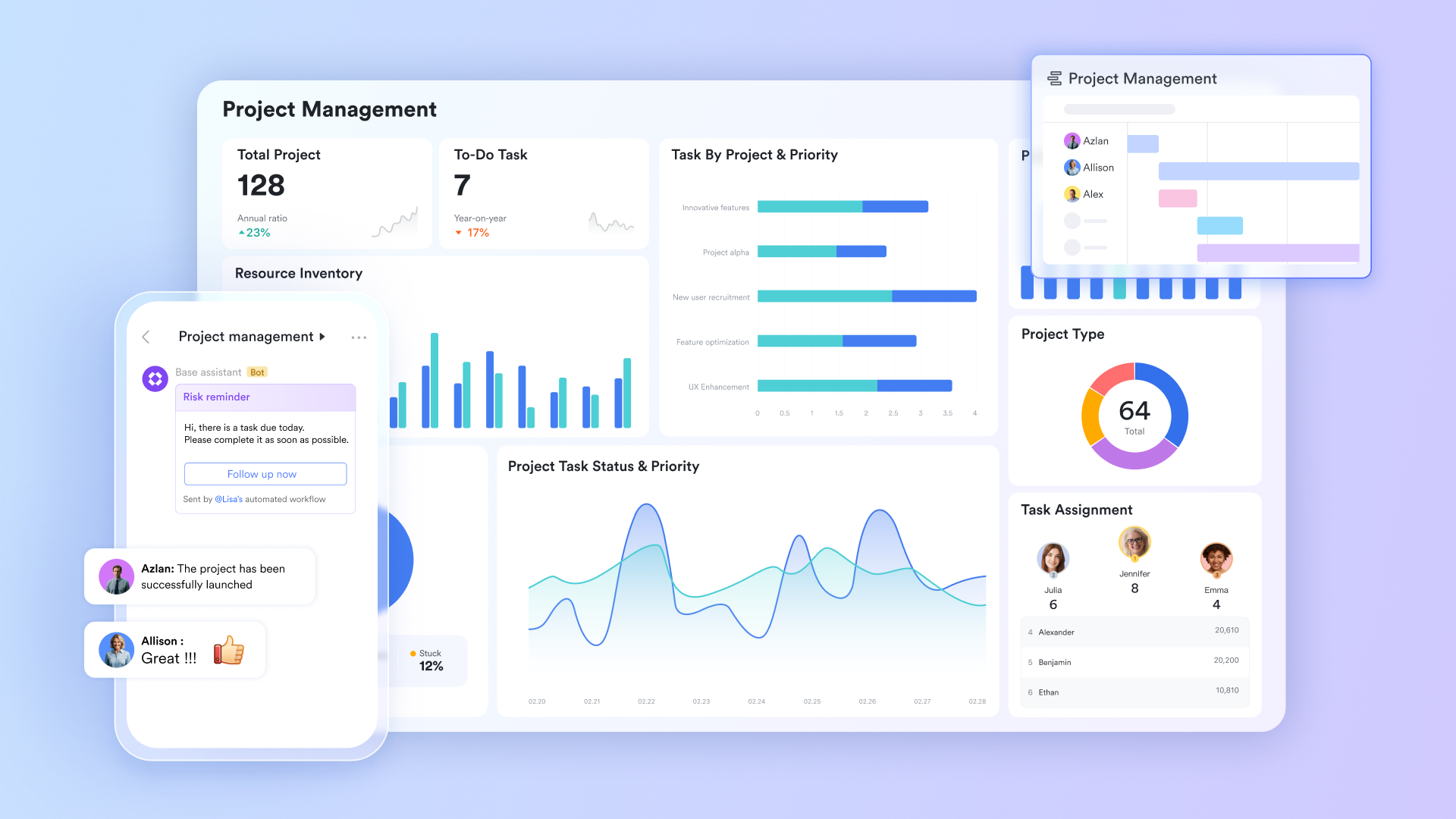
Multiple priority views: The dynamic core of your matrix
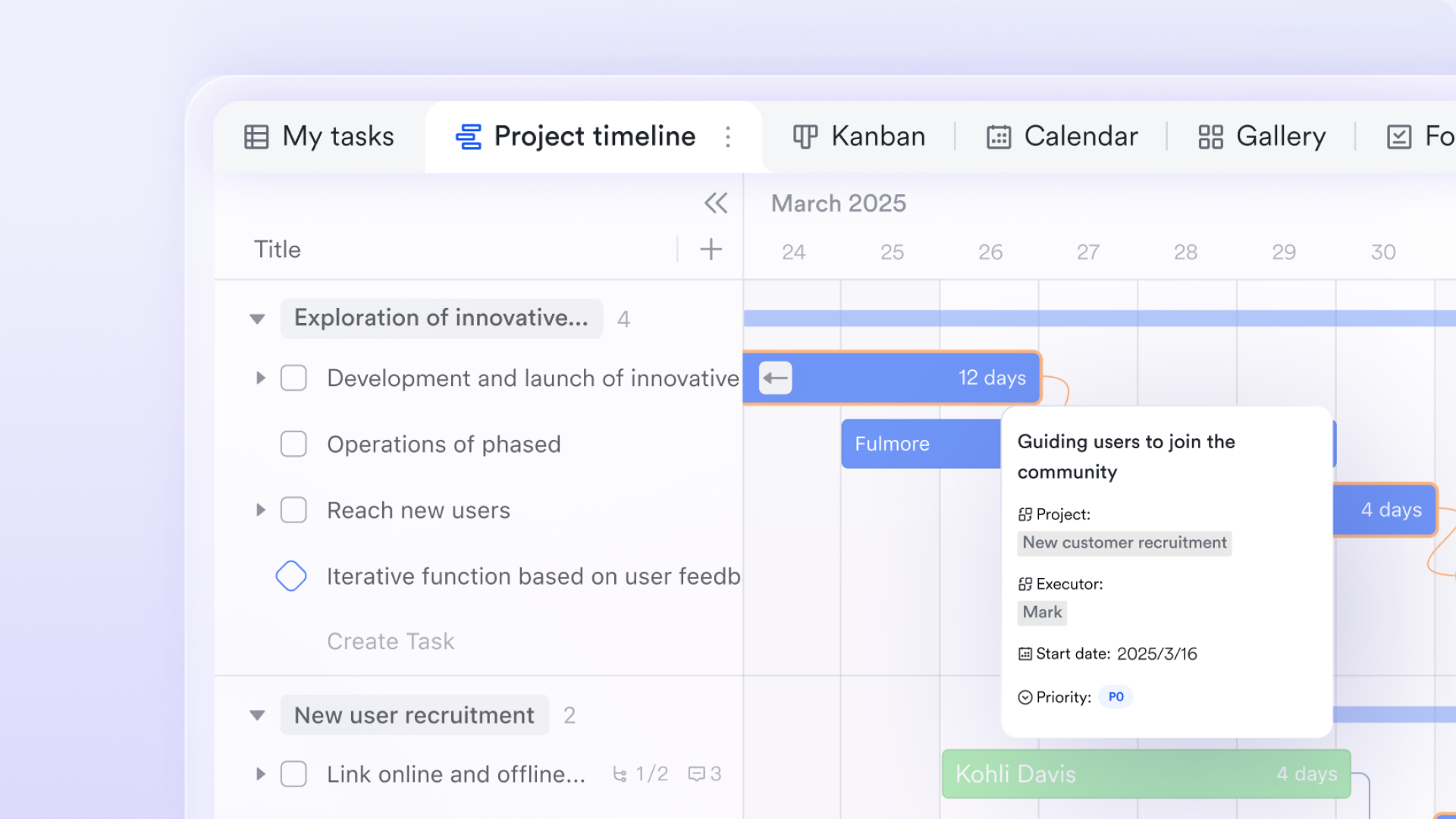
serves as the central nervous system for your Eisenhower Matrix. It allows you to input task data once and instantly view it in multiple synchronized formats. Start with a detailed Grid view for task specifics, then seamlessly switch to a or to visualize priorities. The power lies in its live sync: Dragging a task from "P2" (Important but Not Urgent) to "P0" (Urgent and Important) on a Kanban board automatically updates its priority across every linked view and dashboard in your workspace. This ensures all team members have a consistent, real-time understanding of what truly belongs in Quadrant 1 and Quadrant 2.
Automated trigger notifications: Keeping critical tasks top-of-mind
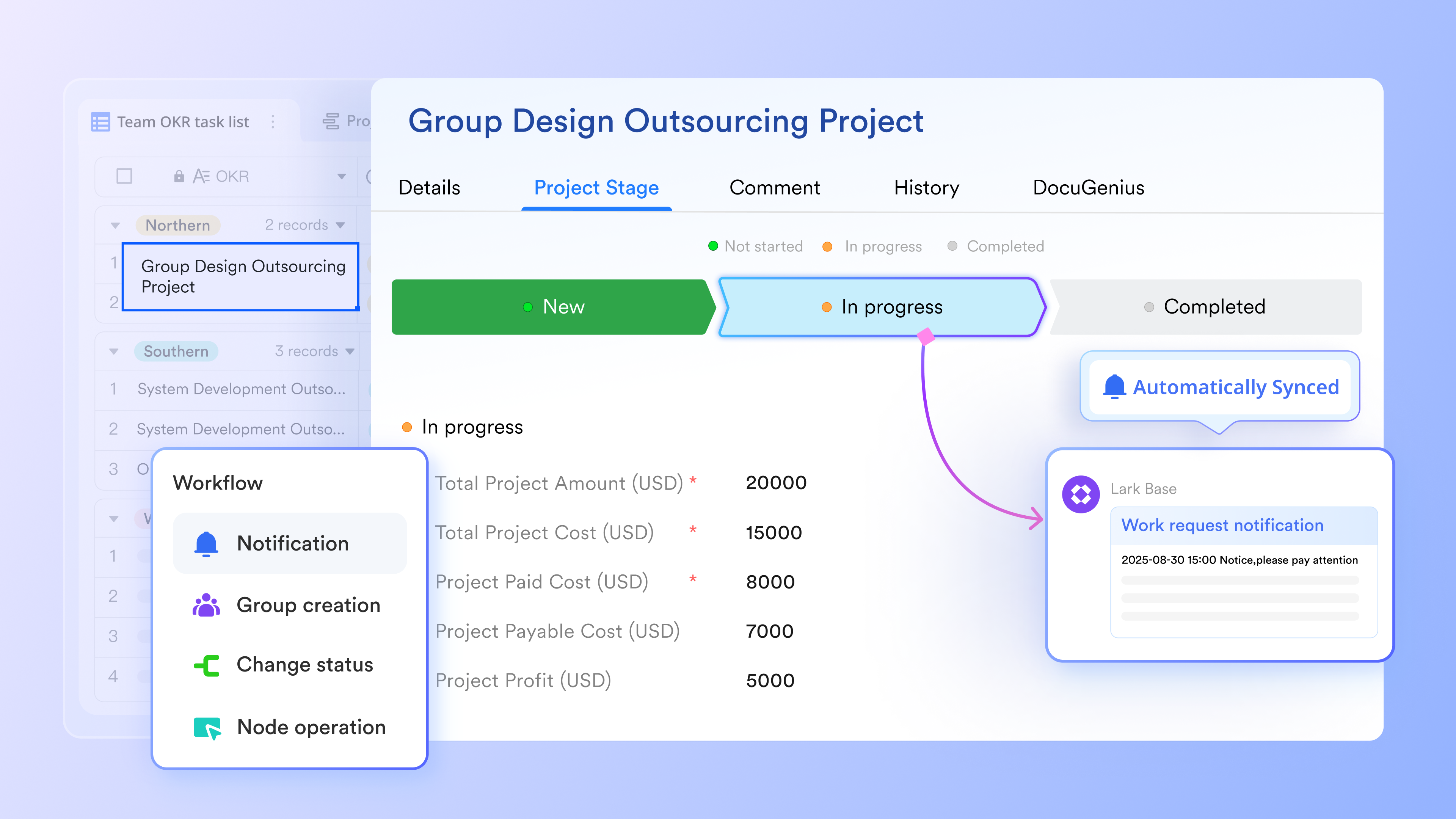
To effectively manage Quadrant 1 (Urgent and Important) tasks, Lark Base offers . You can configure triggers like: "If a task's priority is set to 'High' and its deadline is within 24 hours," Lark will automatically send a customized alert in to the task owner. This proactive system ensures that critical work remains top-of-mind without constant manual checking, significantly enhancing your team's ability to respond swiftly to pressing issues.
AI-powered status summaries: Accelerating decision and action
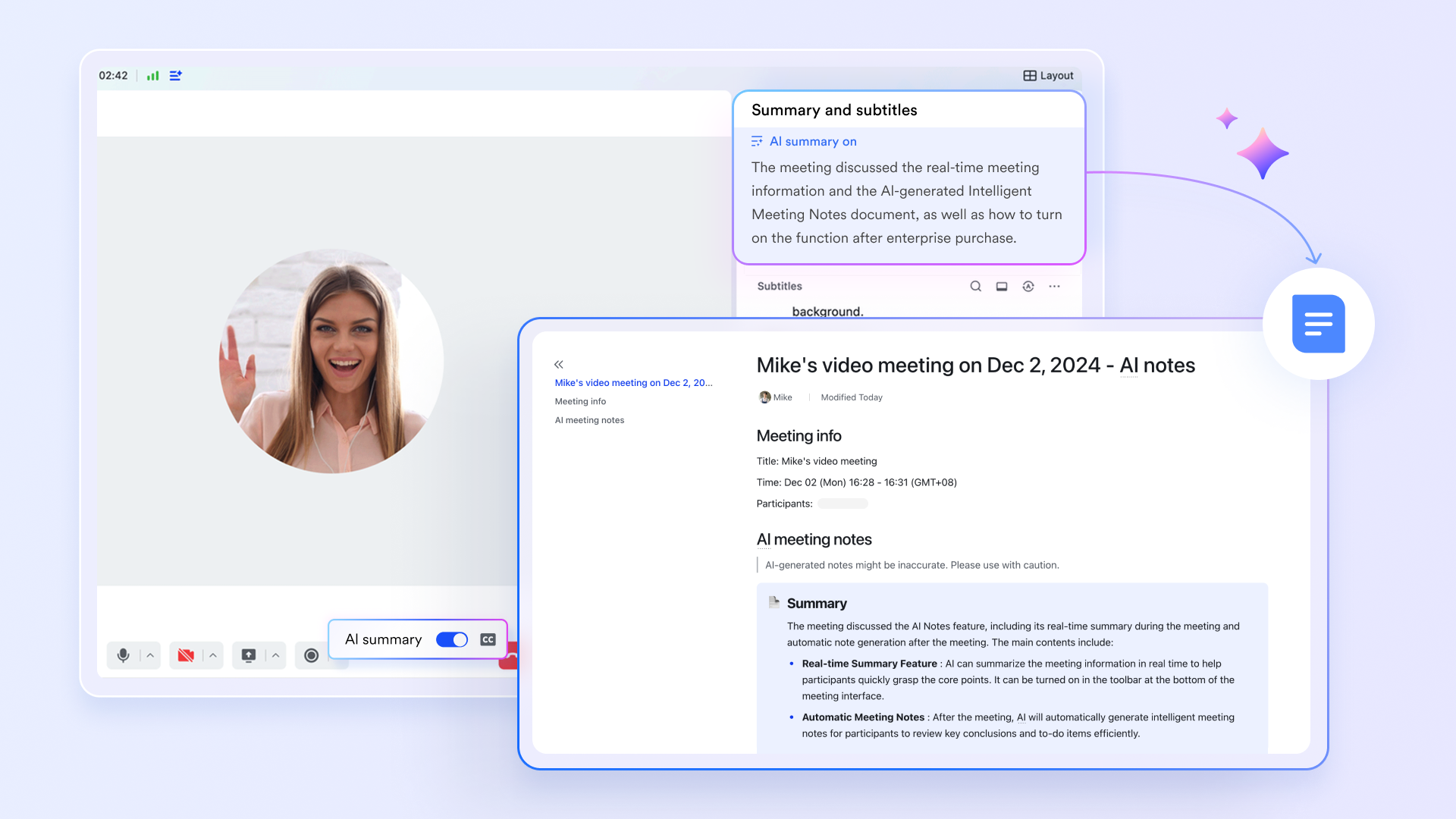
Priority-setting meetings often generate numerous action items and decisions. Lark's feature can automatically extract "next steps" and generate concise textual summaries from your conversations. Immediately after the meeting, the AI meeting notes document can be shared with all participants. This dramatically reduces the "administrative lag" between meeting discussions and actual task updates, ensuring that Quadrant 1 emergencies and Quadrant 2 strategic initiatives are identified and assigned without delay.
Dynamic task-to-chat linking: Contextual communication
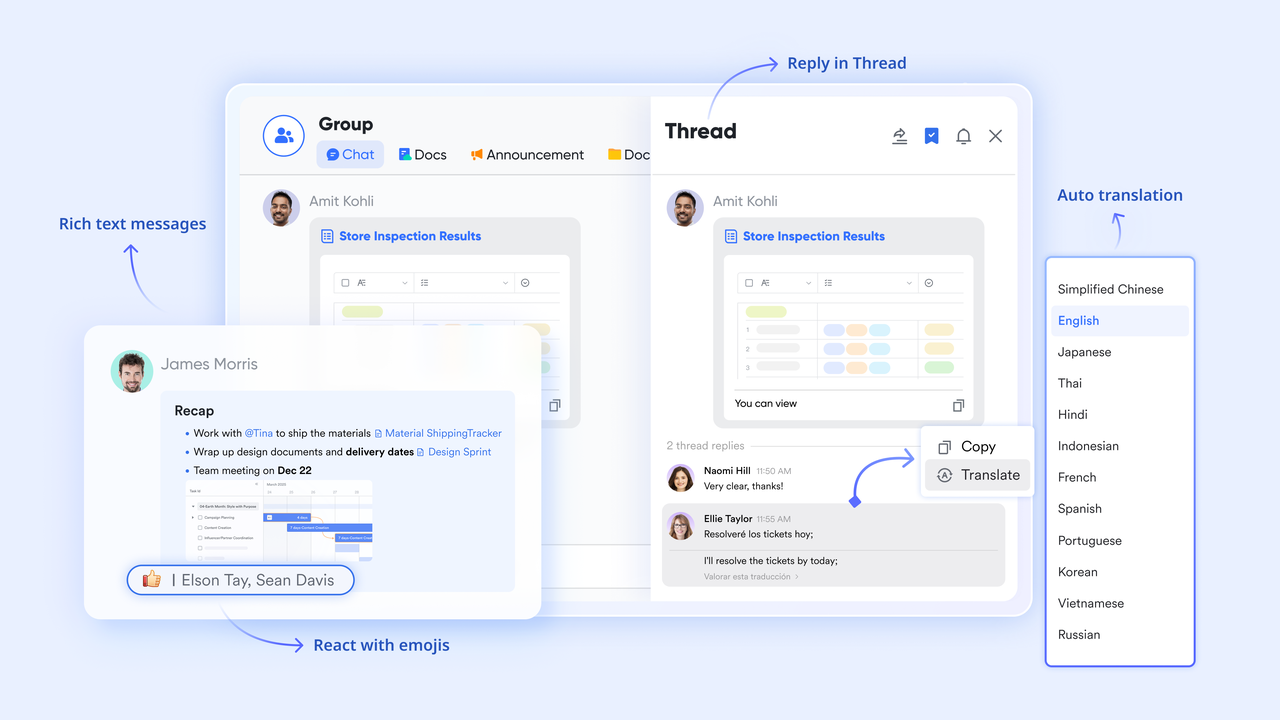
Within , priority records can be shared and discussed in active conversations. Every item is searchable, and you can create dedicated chat threads for important tasks. By pinning a message and @mentioning a teammate, all relevant context remains attached to the . This is invaluable for swift communication during Quadrant 1 crises, providing clear instructions when delegating Quadrant 3 tasks, and maintaining historical context for Quadrant 2 strategic discussions, ensuring everyone understands why a task's priority was adjusted.
With Lark, the Eisenhower Matrix evolves from a theoretical concept into a dynamic, collaborative, and intelligent system, empowering your team to effectively manage priorities, focus on truly important work, and achieve exceptional outcomes in a rapidly changing world.
:
- Starter plan: Free forever plan with 11 powerful tools for up to 20 users, 100GB storage, 1,000 automation runs, AI translations, and more. No credit card needed.
- Pro plan: $12/user/month (billed annually) for up to 500 users. Includes everything in Starter plus group calling for up to 500 attendees, 15TB storage, 50,000 automation runs, and more.
- Enterprise plan: for custom pricing. Supports unlimited users and includes advanced automation, security, compliance, and management features.
For small teams with simple communication needs

18 months message history
1000 Base automation runs/month
2000 rows per table in Base
Most POPULAR
For companies with comprehensive collaboration and management needs
Unlimited message history
500-participant video meetings
50k Base automation runs/month
20k rows per table in Base
For large companies with advanced security and organizational management needs
Get a personalized demo and pricing
Unlimited message history
500-participant video meetings
15 TB storage + 30 GB storage/user
500k Base automation runs/month
50k Base automation runs/month
Most POPULAR
For companies with comprehensive collaboration and management needs
Unlimited message history
500-participant video meetings
50k Base automation runs/month
20k rows per table in Base
Eisenhower matrix examples across different roles
For project managers
navigate a constant tension between immediate team needs and strategic project advancement.
- Quadrant 1 (Urgent & important): Primarily involves unblocking team members and managing client escalations. These are critical issues that directly impact project progress and client satisfaction.
- Quadrant 2 (Important & not urgent): This is the high-leverage quadrant, often underutilized. It includes process improvement, developing team capabilities, and strategic planning for the project. Investing time here prevents future crises and fosters efficiency.
- Quadrant 3 (Urgent & not important): A common trap is the "status meeting" that could be replaced by asynchronous updates. Project managers should aim to shift from synchronous, routine meetings to more efficient, less disruptive communication methods.
For executives
Executives face intense pressure, often managing demands from all directions.
- Quadrant 1 (Urgent & important): Focuses on critical strategic decisions, nurturing key relationships (e.g., board members, major clients), and addressing operational threats that could derail the business.
- Quadrant 2 (Important & not urgent): This quadrant is vital for multiplying executive impact. Activities include mentorship, industry thought leadership, and shaping organizational culture. These efforts build long-term strength and direction.
- Quadrant 3 (Urgent & not important): Executives often fall into the trap of attending "quick meetings" that don't require their direct input. Delegating attendance or declining if not essential frees up invaluable executive time.
For remote teams
introduces unique challenges, often blurring signals of urgency.
- Unique challenge: Asynchronous communication can make everything feel urgent, as there's no immediate context or visual cues to prioritize.
- Quadrant 2 strategy: To protect focus time, remote teams benefit from batching communication (e.g., designated times for checking messages) and explicitly scheduling "deep work" blocks on calendars to signal unavailability for immediate responses.
- Quadrant 3 consideration: Over-communication, like frequent "check-ins" or requests for "quick thoughts," can create false urgency. Training teams to differentiate between genuine needs for synchronous discussion and asynchronous updates is crucial.
Across these roles, the Eisenhower matrix theory consistently emphasizes questioning perceived urgency and strategically allocating time to high-impact activities.
Even with a solid understanding of the Eisenhower matrix method, consistent application under pressure presents several common pitfalls. Recognizing these challenges upfront can help individuals and teams navigate them more effectively, turning potential stumbling blocks into opportunities for growth.
Try to optimize your task management methods now
Five time management tips when working with the Eisenhower Matrix
The Eisenhower matrix prioritization method offers a clear framework, but truly embedding it into your workflow requires specific practices. These five strategies help you move from simply understanding the theory to consistently applying it for effective time management.
Conduct a weekly "quadrant audit"
- Purpose: To bridge the gap between intended and actual time allocation.
- Action: Dedicate 15 minutes each week (e.g., Friday) to review how your time was spent across all four quadrants.
- Benefit: This regular check reveals patterns, identifies where time disproportionately goes, and holds you accountable to your prioritization goals.
Create a "Quadrant 2 fortress"
- Purpose: To actively protect time for important-but-not-urgent work, which often gets neglected.
- Action: Block dedicated, non-negotiable time on your calendar for Quadrant 2 tasks. Clearly communicate these "protected focus times" to your team.
- Benefit: Ensures strategic, long-term initiatives receive the necessary attention, preventing them from being overshadowed by immediate urgencies.
Implement a "triaging ritual" for incoming work
- Purpose: To prevent reactive decision-making and reduce the tendency to treat everything as urgent.
- Action: Designate specific times (e.g., 10 AM and 3 PM) to process and categorize all new incoming tasks into the matrix.
- Benefit: Fosters , reduces decision fatigue, and minimizes the risk of inflating urgency under pressure.
Delegate Quadrant 3 work intentionally
- Purpose: To empower team members and foster development, rather than merely offloading undesirable tasks.
- Action: Frame Quadrant 3 delegation as a growth opportunity. Clearly explain the task, its importance, and the support you'll provide.
- Benefit: Transforms delegation into a leadership act, enhances team capabilities, and frees your time for higher-leverage activities.
Track what becomes Quadrant 1 unnecessarily
- Purpose: To identify systemic issues and prevent future emergencies.
- Action: Analyze patterns in tasks that frequently escalate from Quadrant 2 or 3 to become Quadrant 1 crises.
- Benefit: Reveals preventable failures and highlights opportunities for process improvements, , or proactive measures (which are Quadrant 2 activities) to reduce the recurrence of unnecessary urgency.
The future of task prioritization: Evolving beyond the Eisenhower matrix method
The Eisenhower matrix method continues to be a cornerstone of effective prioritization, and its future lies not in its abandonment but in its augmentation and intelligent application.
Why the Eisenhower matrix remains relevant
The enduring relevance of the Eisenhower matrix method stems from fundamental human psychology and its inherent clarity:
Psychological foundation: The "mere urgency effect"—our natural tendency to prioritize immediate demands over long-term —is a persistent human trait. Modern tools and communication only amplify this, making the core insight of the Eisenhower matrix an urgently important method more critical than ever.
Enduring clarity: The framework provides a simple, powerful mental model to navigate complexity:
- Urgent & important (Q1): Do it first.
- Important & not urgent (Q2): Schedule it.
- Urgent & not important (Q3): Delegate it.
- Not urgent & not important (Q4): Delete it. This clear decision rule helps cut through analysis paralysis.
Augmenting Eisenhower with AI and automation
The evolution of the Eisenhower matrix prioritization method involves leveraging technology to automate routine aspects, freeing up human cognitive effort for higher-level decision-making:
- AI-powered categorization: Modern tools can analyze data from calendars, emails, and tasks to provide AI-driven recommendations for quadrant categorization, based on factors like deadlines, stakeholder importance, and .
- Predictive urgency: Advanced systems can detect when currently non-urgent items are likely to become urgent, prompting earlier attention.
- Dynamic quadrant shifts: The Eisenhower matrix template can evolve into a dynamic system where tasks automatically move between quadrants as circumstances (e.g., approaching deadlines or shifting priorities) change, as exemplified by Lark's workflow automation capabilities.
The human element: Why tools alone won't fix prioritization
While technology significantly enhances the framework, it has its limits. The Eisenhower matrix time management theory ultimately relies on human choices, discipline, and culture:
- Discipline and mindset: Tools can organize, but they cannot instill the discipline to protect Quadrant 2 time or engage in difficult boundary-setting conversations.
- Organizational culture: Effective prioritization is deeply rooted in organizational culture and individual mindset. Success depends on leadership explicitly clarifying strategic importance and individuals committing to prioritizing accordingly.
- Beyond tools: Technology removes friction and provides visibility, but true success with the Eisenhower matrix productivity method comes from a collective commitment to the principle that some work is more important than others, and that this should genuinely dictate time allocation.
Conclusion
The Eisenhower matrix's power lies in its simplicity: Two dimensions, four quadrants, and clear rules. It reveals why most professionals react to urgency rather than strategically invest in importance. This framework empowers you to decline urgent-but-unimportant tasks, creating space for strategic, long-term value-creating activities. While individually powerful, the method truly transforms into organizational practice when teams align on shared priorities, with leadership protecting important-but-not-urgent work (Quadrant 2). To efficiently scale this across teams and embed it into daily operations, powerful tools are essential. elevates this personal practice into a sustainable organizational habit, enabling seamless task categorization, calendar protection, and real-time team-wide alignment without constant manual effort.
Embark on a task management journey in Lark now
FAQs
How to use the Eisenhower Matrix effectively?
Categorize tasks into four quadrants based on urgency and importance. Do first: urgent & important. Schedule: important but not urgent. Delegate: urgent but unimportant. Delete: neither. Protect Quadrant 2 time fiercely—that's where strategic progress happens and where most people fail.
What is the Eisenhower Matrix study technique?
It's not exclusively a study technique but applies to academic work: prioritize exams and projects (Quadrant 1), schedule deep learning time (Q2), delegate group work portions (Q3), eliminate procrastination activities (Q4). Students often neglect Q2, causing last-minute cramming and poor retention.
What are some Eisenhower Matrix examples?
Q1: Project deadline tomorrow, system outage. Q2: Skill development, strategic planning. Q3: Status meetings, routine emails. Q4: Social media, busywork. Real example: A manager spends 70% on Q1, yet high performers allocate 40% to Q2, yielding stronger long-term outcomes.
Is the Eisenhower Matrix effective?
Yes, but only when consistently practiced. It clarifies what deserves your time, reducing reactivity. Most people fail by neglecting Quadrant 2—the important-but-not-urgent work. When teams align on this framework together, effectiveness multiplies significantly beyond individual use.
How does the Eisenhower Matrix work?
Plot tasks on a 2x2 grid: horizontal axis (urgency), vertical axis (importance). This creates four quadrants, revealing where you actually allocate time versus where you should. The matrix forces honest categorization, exposing how urgency bias hijacks your priorities.
Related reading