














The Ultimate Guide on How to Create A Work Plan That Drives Results

Fecilia Clarke
Solutions Marketing Specialist
Sep 18, 2026
Fecilia Clarke
Sep 18, 2026

17 min read


Ever have one of those days where you're buried in tasks, bouncing between meetings, and answering messages, only to reach the end of the day feeling like you haven't moved the needle on your most important goals? You have a destination in mind, but the path to get there is foggy, leading to detours, wasted effort, and a constant feeling of being reactive. The goal is to plan smarter, not just work harder, to achieve true project success.
This is where a well-crafted work plan comes in. It’s more than just a list of things to do; it's a strategic guide that transforms your goals from abstract ambitions into a concrete, actionable roadmap. It’s a cornerstone of effective project management. In this guide, we'll walk you through everything you need to know about how to create a work plan that works. We'll cover the essential elements, a detailed step-by-step process, and the secret to creating a plan that adapts—all while showing you how integrated project management tools like Lark can bring your entire project to life.
What is a work plan?
At its core, a work plan is a formal, written document that outlines all the steps and resources required to accomplish a specific goal within a defined timeline. Think of it as the blueprint for your initiative. It provides a structured framework that answers not just what needs to be done, but also why it's important, who is responsible, when it needs to be completed, and what success looks like. For project managers, it serves as a single source of truth—often centralized and managed via project management tools—that aligns everyone involved, from individual contributors to key stakeholders, ensuring everyone is moving in the same direction with a shared understanding of the objective.
It's equally important to understand what a work plan is not. It’s not a simple to-do list, which is purely tactical and lists activities without strategic context. A work plan, which can also be framed as an action plan, provides the overarching strategy. It’s also slightly different from a project plan. While a detailed project plan is a type of work plan, the term "work plan" can be broader. You can create a monthly work plan template for ongoing team goals or personal development, which may not be a formal project. The purpose is always the same: to bring structure to ambition and turn ideas into achievements.
The essential elements of a successful work plan
Before you begin building your plan, you need to gather your ingredients. A truly successful work plan is built on a foundation of several key components that work together to provide a comprehensive picture of your initiative. Skipping any of these main components can lead to confusion, missed deadlines, or a final outcome that doesn’t meet expectations. Think of these as the non-negotiable sections of your strategic document. They form the backbone of your plan and ensure that you've thought through every critical aspect before the work even begins.
Clear goals and objectives
This is the "north star" of your entire plan. Your project goals are the ultimate outcome you want to achieve, and your project objectives should be specific, measurable, achievable, relevant, and time-bound (SMART goals). A vague goal like "improve marketing" is not actionable. A strong objective like "Increase organic website traffic by 20% in Q4 by publishing four new SEO-optimized blog posts" provides a clear, measurable target. This gives your work plan a distinct purpose and direction. Without well-defined objectives, your plan has no destination.
Project scope and requirements
Before diving into tasks, you must define the boundaries of your initiative. The project scope clearly outlines what is included in the plan—and just as importantly, what is not. This helps prevent scope creep, where the project gradually expands beyond its original objectives. Alongside the scope, you must document the project requirements, which are the specific criteria and conditions that the final outcome must meet to be considered successful. This clarity is fundamental to keeping the team aligned from start to finish.
Key tasks and activities
Once you know your destination and boundaries, you need to map out the specific tasks to get there. These are the concrete actions and workstreams that need to be completed. This involves breaking down the high-level goal into smaller, manageable steps. For our goal of increasing traffic, the tasks required might include "conduct keyword research," "write and edit blog post drafts," "design custom graphics," and "promote content on social media." This detailed breakdown of actionable steps ensures nothing falls through the cracks and makes the overall goal feel less daunting.
Timelines, due dates, and key milestones
A goal without a deadline is just a dream. This component sets the pace for your work plan, assigning specific due dates to your major tasks and establishing key milestones along the way. Your project timeline must be carefully considered. Milestones are significant checkpoints that show progress, such as "all blog post drafts completed." A clear schedule, with defined start and end dates, creates urgency and helps in managing dependencies. Creating realistic timelines is one of the most critical factors for success, as it provides a framework for tracking progress against your project schedule.
Resources and budget
No plan can be executed without the necessary resources. This section of your work plan identifies everything you will need. This includes personnel (the team members involved), tools (what software or equipment is required?), and the overall project budget. You must clearly outline all the resources needed, from software subscriptions to potential labor costs. Clearly detailing your resource needs and the strategy for allocating resources upfront prevents roadblocks later and ensures you have the support needed to execute your plan successfully.
Stakeholders and responsibilities
Work, especially in a team setting, involves multiple people with different roles. This element clarifies who is involved and what is expected of them, preventing the chaos that stems from poor communication. You can use a simple RACI model to define roles for major tasks. Who is doing the work? Who is accountable for its success? Who needs to be consulted? Who just needs to be kept informed? This clarity is essential for fostering ownership and ensuring everyone is on the same page.
Metrics for success and risk assessment
How will you know if your work plan has been successful? This component defines the specific KPIs you will use to measure progress and, ultimately, success. For our example, the primary metric is the "20% increase in organic traffic." It's also critical to identify potential risks—what could go wrong? For each risk, you should develop contingency plans. This proactive approach to risk management demonstrates foresight and prepares your team to handle challenges without derailing the entire initiative. A great way to start organizing these elements is by creating a simple table in Lark Docs, giving you a clean, structured overview of your plan's foundation.

How to create a work plan in 7 actionable steps
With a clear understanding of the essential elements, you're ready to build. This section provides a step-by-step process for how to create a work plan from scratch. Following these steps will help you move from a high-level idea to a detailed, actionable document. We'll build upon our example of increasing organic traffic to make each step tangible.
Step 1: Define your primary goal and align it
The foundation of any great work plan is a crystal-clear goal. As discussed, this goal should be SMART. Start by writing a one-sentence goal statement. For our example: "Our goal is to increase organic website traffic by 20% by the end of Q4." But a goal in isolation is not enough; it needs to be aligned with broader company objectives. This ensures your work is strategically important and contributes to the bigger picture.
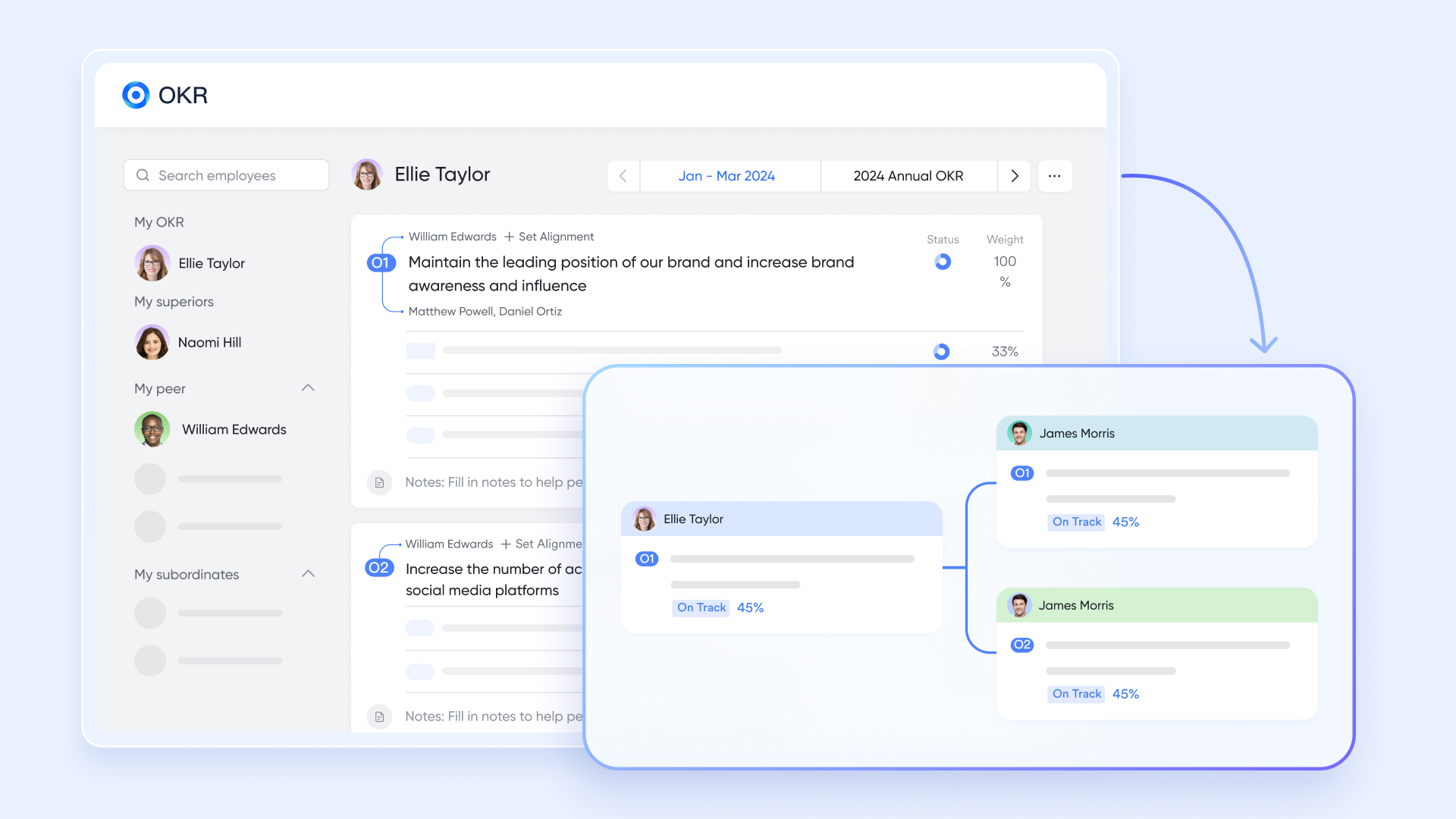
This is where a tool like Lark OKR becomes invaluable. You can create your goal within the OKR platform and link it directly to a parent objective, such as the marketing team's goal to "Increase Brand Awareness." This creates a transparent hierarchy, allowing anyone to see how your specific work plan contributes to the overall mission. This alignment is a powerful motivator and ensures your efforts are focused where they matter most.
Step 2: Break down the goal into a comprehensive list of tasks
Once your destination is set, it's time to chart the course by breaking the large goal into smaller tasks. For complex projects, this work breakdown structure is non-negotiable. Start by brainstorming every possible task required to achieve the goal. Don't worry about order at this stage; just get all the ideas out. For our SEO example, this includes keyword research, content outlining, writing, editing, designing graphics, on-page SEO optimization, publishing, and promotion. Whether you're doing event planning or managing a software bug fix, this step is critical.
A simple checklist inside Lark Docs is a perfect starting point. As you refine the list, you can add structure. For more complex plans, however, a checklist can quickly become limiting. This is the moment to elevate your plan by transforming it into Lark Base. With one click, you can convert your list into a powerful, lightweight database where each task becomes a structured record. Now you can add fields for status, priority, the estimated time for completion, and owners, turning a simple list into a dynamic planning tool.
Step 3: Assign ownership and establish a timeline
A plan with unassigned tasks is a plan that won't get done. You must assign tasks to a clear owner—one person who is responsible for ensuring completion. Alongside assigning ownership, you must establish a realistic project timeline with specific due dates. Work backward from your final end dates, considering any dependencies. It is here you will want to set milestones that mark significant achievements along the way.
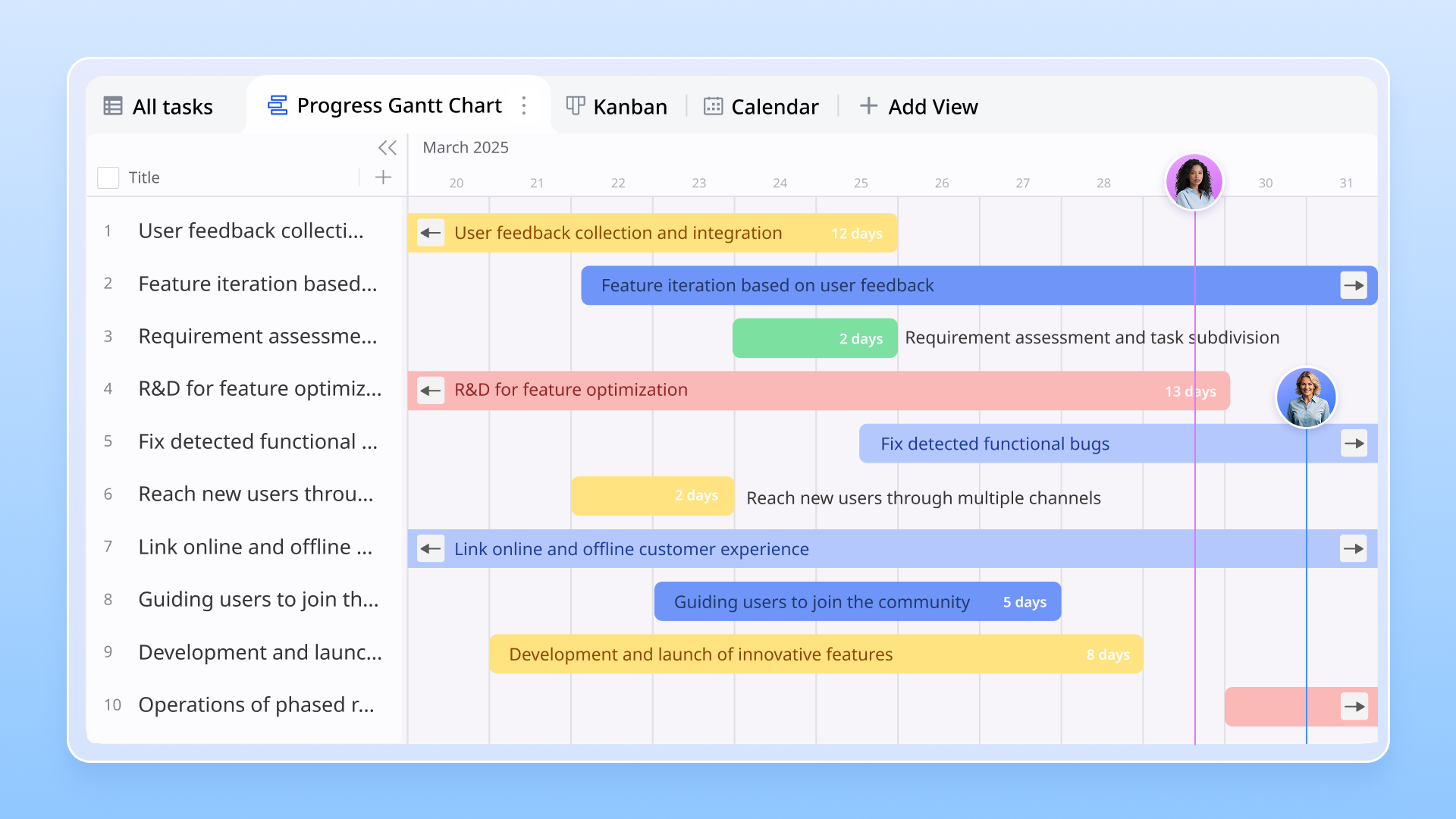
In Lark, this process is seamless. Within your Lark Base or Docs, you can simply @mention a colleague to assign a task. This action not only tags them but also sends them a notification and syncs with their Lark Calendar. To get a bird's-eye view of your entire schedule, switch your Lark Base to the Gantt chart view. This provides a visual representation of your project, showing how all the pieces fit together over time and making it easy to spot potential bottlenecks before they become problems.
Step 4: Execute resource allocation and get approvals
Now that you know what needs to be done, who will do it, and when, you need to confirm you have the resources. This is the stage where you formalize your resource allocation strategy. If your plan requires a budget for new project management software, hiring a freelancer, or running paid ads, you need to detail these costs and get the necessary sign-off from leadership. Ignoring this step is one of the most common pitfalls that can derail a work plan weeks or months down the line.
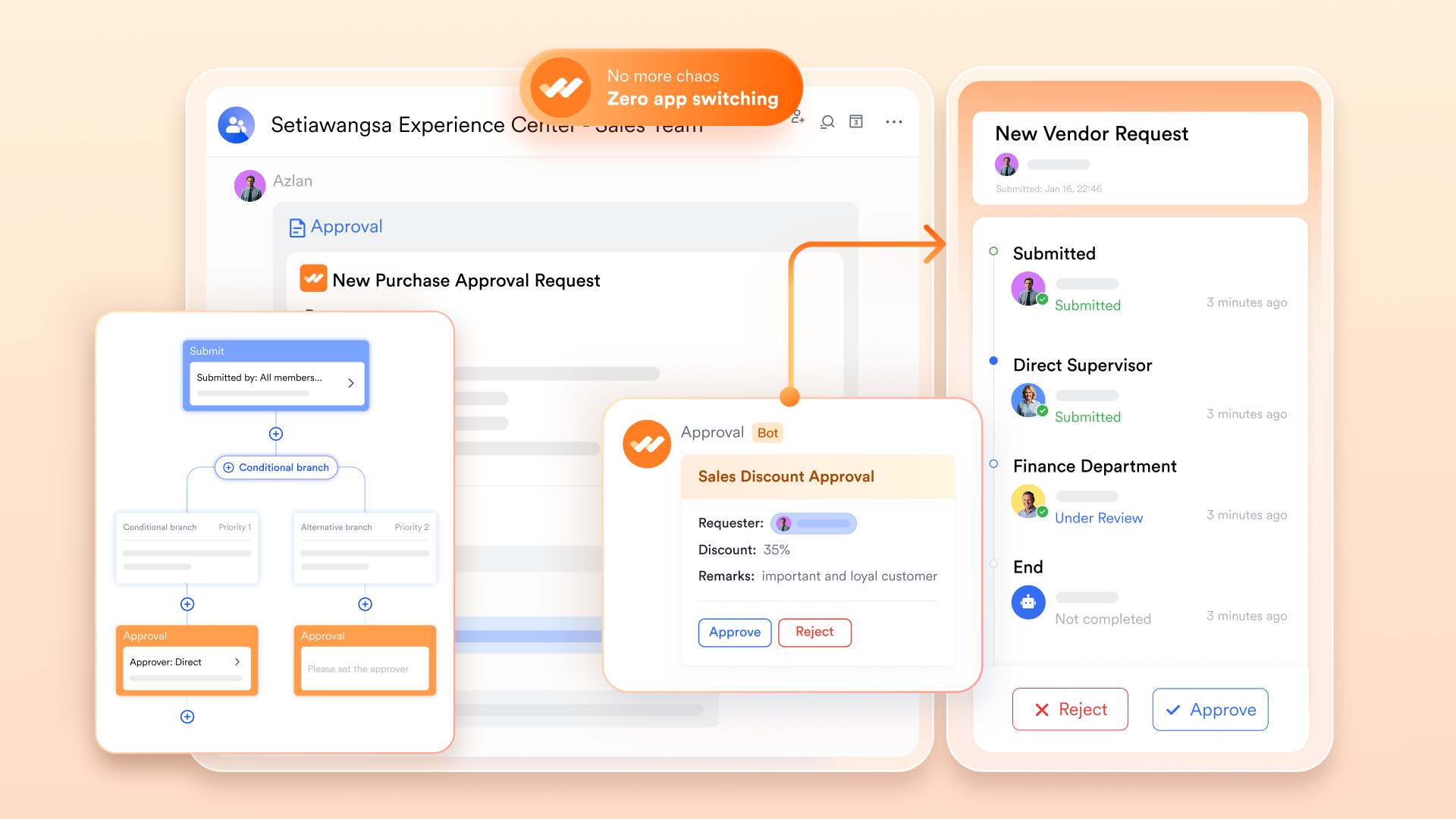
For parts of your plan that require formal sign-off, you can streamline the process using Lark Approval. Instead of relying on messy email chains, you can create a customized approval workflow. You can link to your work plan doc for context, specify the amount requested, and route it to the appropriate manager. This creates a transparent, auditable trail and ensures that you have official clearance to move forward, all without leaving your primary workspace.
Step 5: Define your success metrics and communication plan
A work plan isn't complete until you've defined exactly what success looks like in measurable terms. This step involves selecting the KPIs that will tell you if you have achieved your project objectives. Your primary metric should be directly tied to your goal statement. It's also here that you should formalize your communication plan. How will the team communicate? How often will you report progress to stakeholders? A solid communication plan is the best defense against confusion and misalignment.
This connects directly back to your Lark OKR. The Key Results (KRs) under your Objective are your success metrics. By tracking these directly in the OKR module, you create a direct link between the metrics in your work plan and the official performance-tracking system of your organization. This makes reporting on progress clear, consistent, and aligned with how the rest of the company measures success.
Step 6: Consolidate everything into a single source of truth
You've now created all the individual components of your plan. The next critical step is to assemble them into a single, centralized document. This prevents information from being scattered across multiple documents and spreadsheets. Your goal is to create one place where any stakeholder can go to understand the plan and see the latest status. Many teams use a project plan template for this, but a dynamic document is far more powerful.
This is where the power of an unified platform like Lark truly shines. You can create a master doc for your work plan. At the top, write a brief executive summary. Then, embed your live Lark Base of tasks directly into the document. This isn't a static screenshot; it's the actual, interactive database. You can also embed relevant Lark Messenger group chats and design mock-ups. This creates a rich, dynamic hub for everything related to your plan.
Step 7: Share the plan and kick off the project
The final step is to share your work plan with all stakeholders and formally kick off the project. Don't just send the document over email. Schedule a kickoff meeting to walk through the plan, clarify roles, discuss the timeline, and answer any questions. This ensures everyone starts on the same page with a shared sense of purpose and excitement. This meeting is your opportunity to build alignment and momentum before the first task even begins.
With Lark, sharing and collaborating on the plan is simple and secure. You can share your master doc with specific people or teams, setting granular permissions. Before the kickoff meeting, you can ask stakeholders to leave feedback using the Comments feature, allowing you to address questions in advance. During the meeting, you can present the doc itself, and afterward, it serves as the living reference point for everyone involved.
Beyond creation: How to make your work plan a living document
One of the biggest reasons work plans fail is that they are treated as static artifacts. The reality of work is that priorities shift and challenges arise. A successful work plan is not a rigid set of instructions; it's a living guide that should be reviewed and updated. The entire project lifecycle, from initiation to closing, depends on this adaptability.
Schedule recurring reviews in your calendar
To keep your plan alive, make reviewing it a consistent habit. Proactively schedule regular check-ins with your core team. The purpose of this meeting should be to review project progress, identify roadblocks, and make adjustments. This regular cadence ensures the plan remains the central focus.
You can facilitate this habit using Lark Calendar. Create a recurring meeting series and invite all key team members. Most importantly, attach the master work plan Lark Docs directly to the calendar invitation. This simple action ensures no one has to hunt for the document and reinforces that the plan itself is the agenda for the discussion.
Update progress in real-time, not in status meetings
Traditional status meetings are often inefficient. A modern, effective team operates with real-time transparency. Progress on tasks should be visible to everyone at any time. This requires a tool where updates are instant. Good project planning software should facilitate this.
This is the beauty of a work plan built in Lark. When a team member finishes a task, they can drag it on their Kanban board view in Lark Base. That update is instantly reflected in the master work plan Doc for everyone to see. This allows for real time progress tracking and keeps everyone informed without the need for manual status reports. You can even create project dashboards to visualize key metrics.
Adapt to change and monitor progress with flexibility
No plan survives first contact with reality. The strength of a plan is not in its rigidity but in its ability to adapt. When change happens, your work plan should be a tool for assessing the impact. This active approach to project execution is vital.
Because your work plan in Lark is dynamic, making adjustments is simple. Is a task blocked? Change its status and leave a comment. Does the timeline need to shift? Simply drag and drop the bars in the Gantt charts view. This ability to monitor progress and adapt in real-time is crucial for improving project efficiency and navigating the complexities of any initiative.
The secret to success: How to actually follow your plan
Even the most well-crafted work plan is useless if it isn't followed. The greatest challenge is often not in the planning but in the execution. The secret to bridging this gap is to seamlessly integrate the high-level plan into the daily workflow of each individual team member.
Connect the big plan to your daily tasks
An individual contributor needs to know: "What are my most important tasks for today?" A successful work plan must be able to cascade down from the strategic view to the individual's to-do list. This connection ensures daily effort contributes to the larger goals.
Lark creates this connection automatically. When you assign a task in the master work plan Lark Base, that task instantly appears in their personal task list. This direct-line integration between the project-level plan and the personal task list is critical. It ensures that no one is working in a vacuum and that every small action is aligned with the team's strategic objectives.
Keep communication focused and contextual
Communication is the lifeblood of any collaborative effort. To execute a plan effectively, communication must be focused, contextual, and directly linked to the work being done.
Lark is designed for this kind of contextual communication. If you have a question about a specific task in your work plan Doc, you can highlight it and start a comment thread. If that discussion needs to become a live conversation, you can spin up a Lark Messenger chat directly from that comment. The chat will be automatically linked to the document, preserving the context forever.
Conclusion
Creating a work plan is about more than just filling out a plan template. It’s an act of strategic thinking that brings clarity, focus, and alignment. It transforms vague intentions into a concrete path forward, giving you and your team the confidence to tackle ambitious goals. A great work plan isn't a rigid set of rules; it's a dynamic guide that empowers you to achieve a successful project.
Ultimately, the best plan is one that gets used every day. By moving your planning process into an integrated platform, you can transform your plan from a static document into a living engine for productivity. You can connect strategy to execution, keep your team aligned, and adapt with agility. Ready to stop just being busy and start making real progress? Create your first living work plan with Lark today.
FAQs
How to create a work plan example?
For an example, imagine your goal is to "Launch a new website feature by Q3." Your work plan would list tasks like "Finalize UI/UX design," "Develop front-end code," and "Conduct user testing." Each task would have an owner and a firm due date. A Gantt chart would visualize the project timeline, while the resource section would allocate developer time and a testing budget.
What does a work plan include?
A comprehensive work plan includes several key elements to guide your project. It always starts with a clear goal and specific objectives. It then breaks down the work into all necessary tasks and activities, sets a detailed project timeline with key milestones, and outlines the required project resources and budget. Finally, it assigns responsibilities to team members and defines how success will be measured.
What are the four basic components of a work plan?
While plans can be complex, they are built on four basic components. First, Goals (the "what"): what you aim to achieve. Second, Tasks (the "how"): the specific actions you will take. Third, Timelines (the "when"): the schedule and deadlines for your tasks. Fourth, Resources (the "who" and "with what"): the people and tools needed to complete the work successfully.
What are the five 5 crucial components of a personal work plan?
For a personal work plan, five crucial components are essential for success. Start with a clear personal Goal. Then, define measurable Milestones to track your journey. Create a list of specific Tasks with self-imposed deadlines. Identify the Resources you'll need, such as your time or money. Lastly, establish a method to regularly Measure Progress to stay motivated and accountable.
Related reading
Table of contents
Start using Lark today

Manage all your work in one place
Boost team efficiency by 10x
Save up to 70% on software costs
Table of contents
Start using Lark today
Manage all your work in one place
Boost team efficiency by 10x
Save up to 70% on software costs
Keep reading








2026 Lark Technologies Pte. Ltd.
Headquartered in Singapore with offices worldwide.






Explore: