Every organization, regardless of its size or industry, strives for clarity, alignment, and measurable progress. We all seek effective ways to translate ambitious visions into concrete achievements. This can often feel like navigating a complex landscape, especially when juggling numerous priorities and team efforts.
This comprehensive OKR guide is designed to illuminate that path. We aim to equip you with a robust framework for strategic goal setting, helping your team focus on what truly matters, drive meaningful results, and foster a culture of transparent accountability. We believe that with the right understanding and tools, any organization can unlock its full potential. Join us as we explore Objectives and Key Results, a powerful methodology that has propelled some of the world's most innovative companies forward.
What are OKRs? Breaking down objectives and key results
At its core, the framework is a powerful goal-setting methodology used by individuals, teams, and entire organizations to define and track ambitious goals and their measurable outcomes. It provides a clear, concise structure for translating vision into action, ensuring everyone understands what needs to be achieved and how progress will be measured. Let's unpack the two fundamental components: Objectives: Your aspirational north star
An objective is a qualitative, inspiring, ambitious, high-level goal that sets a clear direction for the team—your "where we want to go" destination. It unites the team around a shared purpose, with no specific measurement attached. Here are the critical characteristics of a strong objective:
- Ambitious and inspirational: It should feel like a stretch, pushing your team beyond their comfort zone. It's not just about doing more; it's about achieving something significant.
- Qualitative and concise: Objectives are generally expressed in simple, memorable language. They describe the desired future state without specifying how it will be measured.
- Time-bound: While aspirational, an objective should have a defined period for achievement (e.g., within a quarter, year).
- Actionable by the team: While high-level, the team should be able to directly contribute to its achievement.
should resonate with everyone involved, fostering a shared sense of purpose. For instance, instead of "increase sales," a powerful objective might be "delight our customers with an unparalleled product experience." This statement inspires and provides a clear direction for various teams.
Key results: Your measurable milestones to impact
Key Results are quantitative metrics that track progress toward an objective (2–5 per objective), answering "how we know if we've achieved the objective". They measure outcomes, not tasks or activities. Effective key results possess these qualities:
- Quantitative and measurable: They must include a number (e.g., percentage, count, dollar amount) that can be tracked and verified. This is crucial for transparent .
- Specific and verifiable: There should be no ambiguity about whether a key result has been met or not. It should be possible to objectively say "yes" or "no" at the end of the period.
- Aggressive yet realistic: Like objectives, key results should challenge the team. They push for significant improvement but remain within the realm of possibility.
- Outcome-oriented: Key results focus on the impact or result of efforts, not the activities performed. For example, "launch new feature X" is an activity, but " by 20% through new feature X" is an outcome-oriented key result.
Notice how these key results provide clear, measurable indicators of whether the "delight our customers" Objective is being met. They are not simply tasks, but quantifiable changes in customer experience. This structured approach, where objectives and key results work in tandem, forms the core of the objectives and key results.
Discover how OKRs transform your strategy
A brief history of OKRs: From Intel to Google and beyond
The Objectives and Key Results (OKR) framework traces its roots back to Andrew S. Grove at Intel Corporation. Grove refined earlier goal-setting ideas into a system focused on clear, measurable outcomes and frequent progress checks.
John Doerr, then a venture capitalist, learned this system directly from Grove. Recognizing its profound potential, Doerr formalized these principles into the OKR methodology we know today.
The OKR guideline gained global prominence in 1999 when Doerr introduced the framework to a fledgling startup: Google. Larry Page and Sergey Brin quickly adopted OKRs to align their rapidly expanding company. Google's success became a defining Google OKR case study, demonstrating how the framework could drive exponential growth and focus across all departments. Many seeking a Google OKR guide or Google OKR examples today are inspired by this foundational adoption. From its origins at Intel to its widespread popularization through Google, the OKR framework has evolved into a globally recognized system for strategic goal achievement, empowering organizations to drive measurable outcomes.
What is the difference between KPI and OKRs?
Many people confuse with Objectives and Key Results (OKRs). While both are vital for tracking progress, they serve distinct purposes. Understanding this difference is crucial for effective strategic planning and for any solid OKR implementation guide.
Key Performance Indicators (KPIs) are health metrics—specific, measurable values tracking how effectively a company meets ongoing objectives. Like a car's dashboard (showing speed, fuel, etc.), they monitor operational health. Examples: website traffic, customer acquisition cost, and monthly recurring revenue. KPIs are continuous, tracking performance to maintain.
Objectives and Key Results (OKRs) are a strategic goal-setting framework for ambitious growth or change. If KPIs are the dashboard, an OKR is deciding to drive to a new distant city: the objective is the destination, and key results are measurable milestones. OKRs often aim to significantly shift a KPI or build new capabilities.
Here's a concise comparison:
- Purpose: KPIs monitor operational health; OKRs drive strategic change.
- Nature: KPIs are often continuous; OKRs are time-bound and aspirational.
- Focus: KPIs track what is happening; OKRs define what needs to happen to achieve a new state.
- Relationship: A struggling KPI might inspire an OKR (e.g., "reduce customer churn"). A successful Key Result might then establish a new, improved KPI.
Leveraging both KPIs for stability and OKRs for growth ensures comprehensive .
What are the benefits of OKRs?
Adopting the Objectives and Key Results framework offers powerful advantages for elevating performance and achieving ambitious goals. It's an operational system that transforms how teams work. Here are key benefits:
- Enhanced focus and clarity: , ensuring teams concentrate on the most critical objectives. This clarity directs energy effectively and is a cornerstone of any good OKR guideline.
- Strategic alignment: OKRs connect individual, team, and departmental goals directly to overarching company objectives. This ensures everyone is working towards a shared vision, fostering a sense of .
- Increased transparency: Publicly visible OKRs promote open communication, break down silos, and encourage . Teams understand each other's goals and can offer support.
- Improved engagement: Ambitious Objectives inspire. When employees see their impact through measurable Key Results, motivation and ownership increase, encouraging them to think bigger.
- Data-driven accountability: Quantitative Key Results make progress tracking objective. This eliminates ambiguity, encourages honest assessment, and supports data-informed decision-making and learning.
OKR as a goal management framework
Beyond merely setting goals, the Objectives and Key Results (OKR) methodology acts as a comprehensive goal management framework. It structures an organization's journey from strategic conception to evaluation and learning. It's about actively of strategic achievement.
This framework guides through:
- : OKRs initiate thoughtful discussions to define inspiring objectives aligned with the company vision. This ensures goals are purposeful and connected to strategic direction, grounded by measurable Key Results.
- Alignment: The framework excels at vertical and horizontal alignment. Company-level OKRs link to departmental and team OKRs, ensuring synchronized efforts. This builds a transparent connection across the organization, crucial for any effective OKR implementation guide.
- Ongoing tracking: OKRs mandate regular check-ins to review Key Result progress, identify roadblocks, and adjust confidence levels. This continuous monitoring keeps goals top-of-mind and allows for timely course correction.
- : At cycle end, formal reviews assess performance against Key Results. This leads to retrospectives to understand successes and shortcomings, fostering objective evaluation and learning.
- Iterative improvement: Insights from one cycle directly inform the next. This creates a continuous loop of goal setting, execution, measurement, and learning, driving sustained organizational adaptability.
By providing this structured approach, the Objectives and Key Results (OKR framework) transforms abstract aspirations into a tangible, manageable, and continuously improving journey towards success.
OKR as a way to formulate goals
The effectiveness of any goal-setting initiative hinges on how goals are formulated. The offers a distinct and powerful approach to crafting impactful goals, providing a clear OKR guideline for turning vague intentions into specific, measurable, and inspiring targets.
As a goal formulation method, OKRs excel by:
- Enhancing clarity: The O+KR structure forces precision. The Objective states the "what," and Key Results demand clarity on "how" success will be measured. This transforms vague ideas into actionable targets.
- Promoting outcome-orientation: OKRs inherently shift focus from activities to impact. Key Results must measure the effect of efforts, not just the efforts themselves. For example, "generate 15 qualified leads" (outcome), not "make 100 cold calls" (activity).
- Encouraging ambition: OKRs are designed for "stretch goals." Objectives are aspirational, pushing teams beyond comfort zones. Key Results, while measurable, are also challenging, fostering innovation and high performance.
- Ensuring measurability: Key Results are quantitative and verifiable from the outset. This eliminates subjectivity in evaluation, providing objective feedback loops on progress.
- Driving focus: By limiting Objectives (3-5) and Key Results (2-5 per Objective), the framework ensures sharp focus. This disciplined approach prevents teams from spreading resources too thin, concentrating efforts on high-impact goals.
Using OKRs to formulate goals means creating a strategic blueprint – goals that are inspiring, clear, measurable, and designed to drive significant progress, making it a critical component of any effective OKR training program.
How to write effective OKRs: your step-by-step framework
Crafting impactful Objectives and Key Results is more art than science, but it follows a clear process. This step-by-step framework will guide you in formulating OKRs that inspire your team, drive strategic focus, and ultimately lead to measurable success. This is a foundational part of any good OKR training program.
Step 1: Define your strategic objectives (the "what")
Begin by articulating what you want to achieve. Remember, Objectives are qualitative, ambitious, and time-bound. They should answer the question: "What is the most important thing we need to achieve this quarter/year?"
Anchor to vision: Align objectives with the company's long-term vision and current .
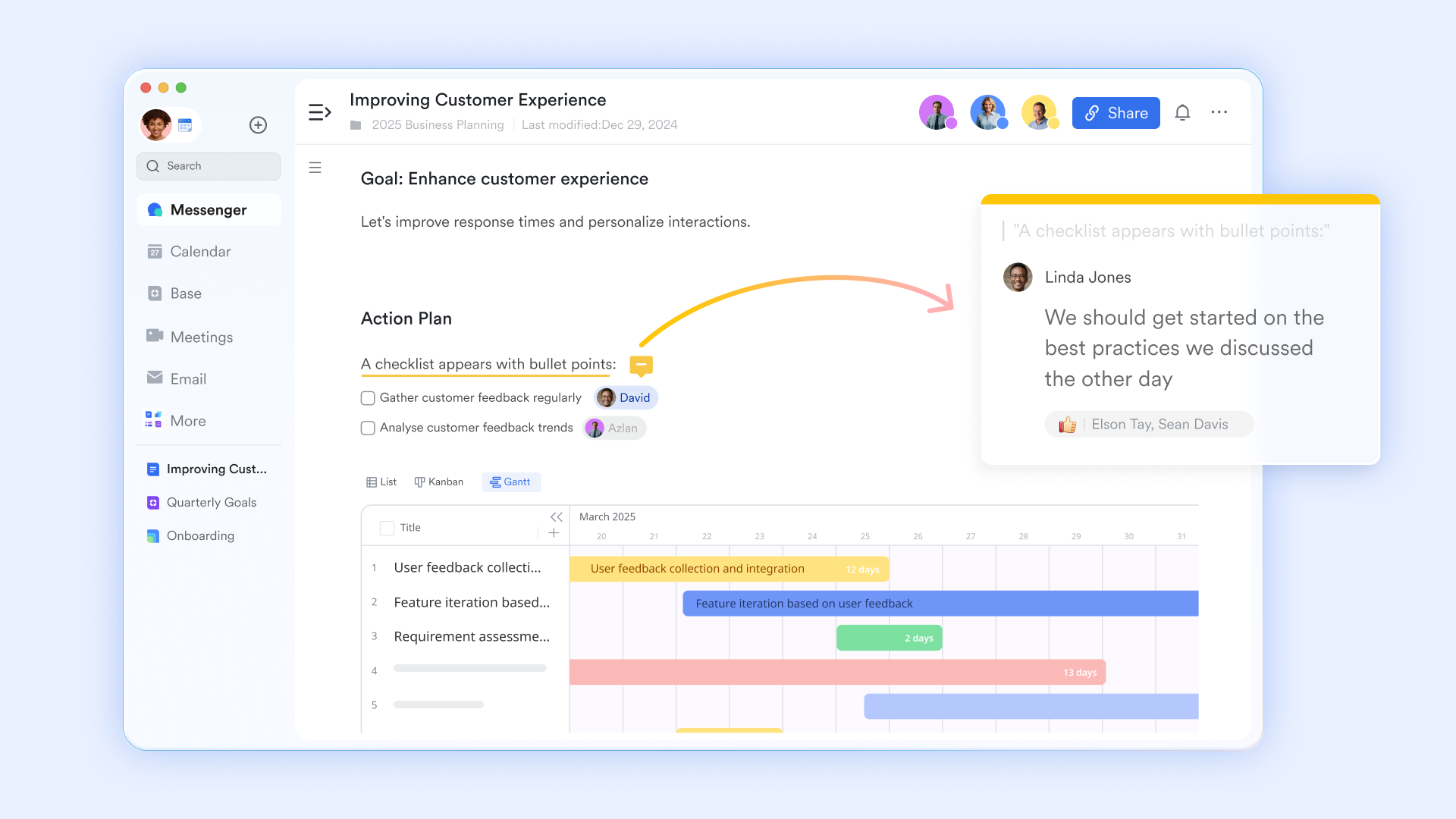
Collaborative brainstorming: Gather input from key stakeholders (team leads, team members) via real-time shared tools like for collective idea contribution.
Limit objectives: Stick to 3-5 per cycle (for company/departments/teams) to force prioritization and avoid resource dilution—if everything is a priority, nothing is.
Make it inspiring: Motivate the team with vivid, action-oriented language (e.g., replace the generic Launch a new product with Delight our users with an innovative, seamless new product experience).
Step 2: Identify measurable key results (the "how well")
Once objectives are set, define how to measure their achievement—each objective needs 2-5 Key Results (KRs), which turn inspiring goals into verifiable outcomes.
Quantify everything: Every KR must include a number; unmeasurable items are not valid KRs. Focus on metrics that reflect real success, not just activity.
Prioritize outcomes over activities: KRs are not tasks. For an objective like "become the industry leader in ", a valid KR is "increase Net Promoter Score (NPS) from X to Y" (an outcome), not "conduct 10 customer interviews" (an activity).
Set ambitious yet achievable targets: KRs should stretch the team and align with the stretch goal philosophy in Google's OKR guide, while remaining attainable in the cycle.
Ensure verifiability: At cycle end, KR achievement should be undisputed, with clear data as the only measure.
Collaborate on definition: Leaders set objectives, but KRs benefit from bottom-up input—frontline teams have the best insights into measurable progress. Use a shared tool to track proposed KRs, assign owners, and collaborate on target setting.
Step 3: Validate and refine your OKRs
After drafting OKRs, review and refine them to ensure robustness and effectiveness.
Stretch test: Are KRs ambitious enough? Do they push boundaries instead of maintaining business as usual?
Meaningful test: Will achieving the KR truly drive the objective? Is it the right metric?
Two-way test: Ensure alignment. Do team/department OKRs support departmental/company OKRs respectively? Prioritize transparent connection over strict top-down cascading.
Gain buy-in: Share draft OKRs with the team and seek feedback—their understanding and ownership are key to implementation.
Iterate: OKR drafting isn't one-time. Revise multiple times before finalization to optimize results and strengthen your OKR guidelines.
This structured approach helps create clear, ambitious, measurable OKRs aligned with organizational strategic goals.
Start writing your effective OKRs today
Implementing OKRs successfully: The full lifecycle
Setting OKRs is just the first step—their true value lies in the continuous implementation lifecycle, a robust process that keeps goals dynamic, visible, and actively managed. A strong OKR implementation integrates planning, regular check-ins, and thorough reviews.
OKR planning: Laying the groundwork for success
The phase sets the cycle's direction (quarterly for most; annual for company-level OKRs) with key actions:
- Strategic alignment workshop: , core challenges, and opportunities to define company OKRs.
- Collaborative OKR setting: Teams build OKRs that support company-level goals.
- : Assign necessary time, budget, and personnel—OKRs without resources will fail.
- Communication plan: Share OKRs company-wide via Lark Messenger announcements and departmental briefings to ensure clear role and goal understanding.
OKR check-ins: Maintaining momentum and adapting
Weekly/bi-weekly short, focused meetings to track progress, resolve roadblocks, and adjust plans:
- Forward-looking discussions (not status reports): Assess KR confidence levels, review progress, identify impediments, and outline next steps.
- Structured updates: KR owners share current metrics, 0-10 confidence scores, challenges, and weekly action plans.
- Targeted problem-solving: Unblock lagging KRs by securing needed support and defining pivot strategies for agility.
OKR grading and retrospectives: Learning and improving
Formal end-of-cycle reviews drive reflection, learning, and next-cycle planning:
- Objective grading: Score KRs on a 0.0-1.0 scale (0.7 = strong stretch goal achievement); grade objectives by averaging their KR scores.
- Retrospective analysis: Teams discuss what worked/failed and why, key learnings, and actions to stop/start/continue for the next cycle.
- Learning-focused recognition: Acknowledge efforts, celebrate wins, and frame failures as learning opportunities (focus on growth, not punishment).
- : Apply retrospective insights directly to the next cycle's OKR planning to create a continuous improvement loop.
By executing this full lifecycle, organizations turn OKR guidelines from theory into a living system—one that consistently drives strategic success and builds a high-performance culture.
Use Lark to track your teams' OKRs
Successful OKR implementation relies heavily on having the right to support the entire lifecycle – from setting and aligning to tracking and reviewing. While the methodology is powerful, the practicalities of managing OKRs across an organization can be complex. This is where a unified platform like becomes invaluable, transforming your OKR implementation guide into a living, dynamic system. Lark offers a suite of interconnected features that naturally facilitate the best practices of the Objectives and Key Results (OKR framework), making it easier for teams to stay focused, aligned, and accountable.
A centralized hub for defining and organizing goals
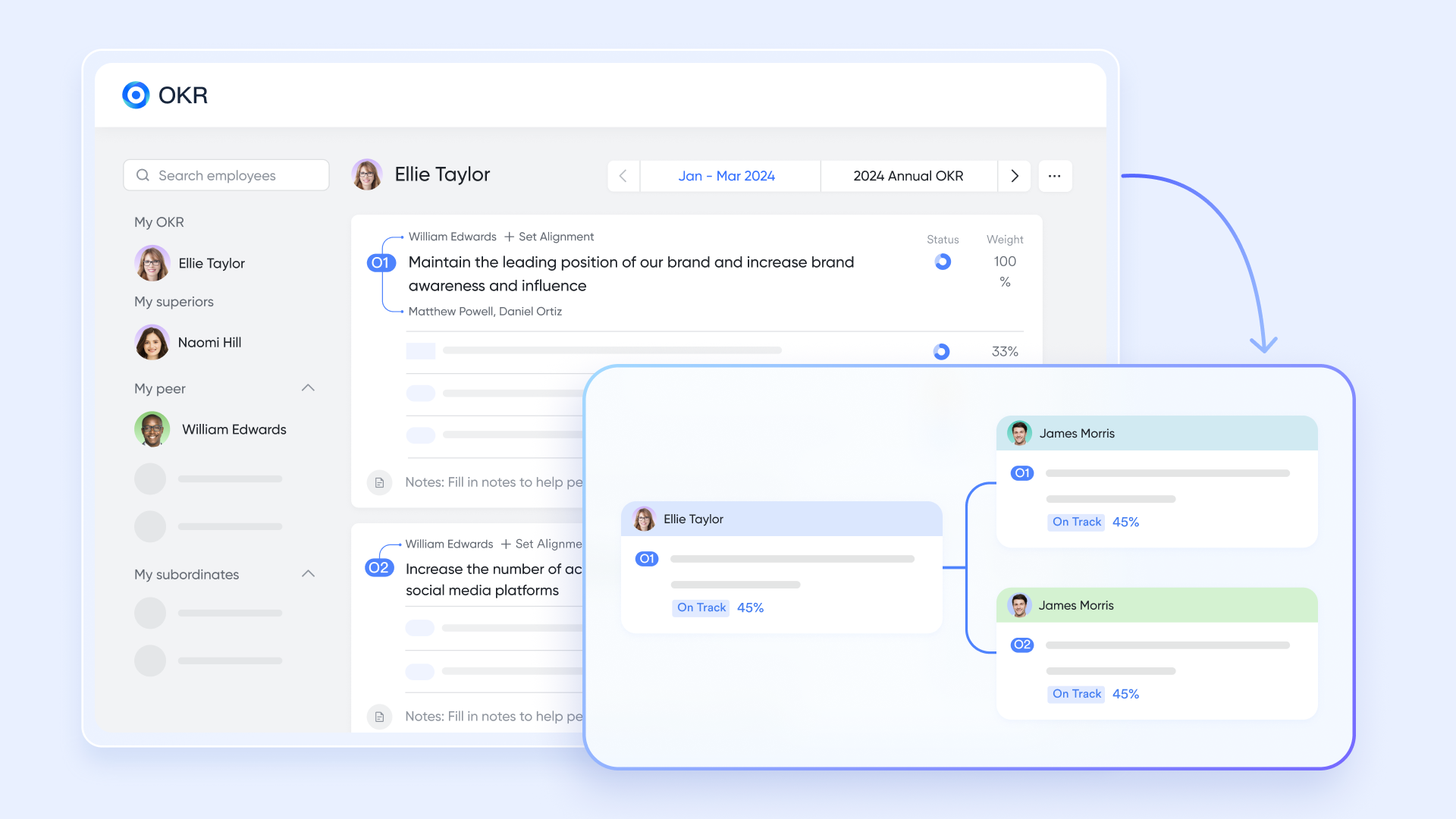
Lark provides a dedicated and structured environment specifically designed for managing OKRs. Instead of scattered documents or disparate spreadsheets, all your company, departmental, and individual OKRs reside in one accessible location. allows you to clearly define each Objective and its associated Key Results, complete with owners, deadlines, and current progress. It ensures that the aspirational goals you've formulated are not just written down but are systematically organized and ready for action. This unified structure is critical for any organization seeking to implement a robust OKR guideline, ensuring consistency and clarity from the outset.
Real-time visibility into progress and performance
One of the cornerstones of effective OKR management is knowing exactly where you stand at any given moment. Lark OKR dashboards offer a dynamic, visual overview of OKR progress across your entire organization. You can quickly see the status of each Key Result and its current value. This real-time visibility means that leadership, teams, and individuals can instantly assess performance, identify areas that are on track or falling behind, and make data-driven adjustments proactively. This level of transparency fosters accountability and enables quick problem-solving, preventing surprises at the end of the cycle. 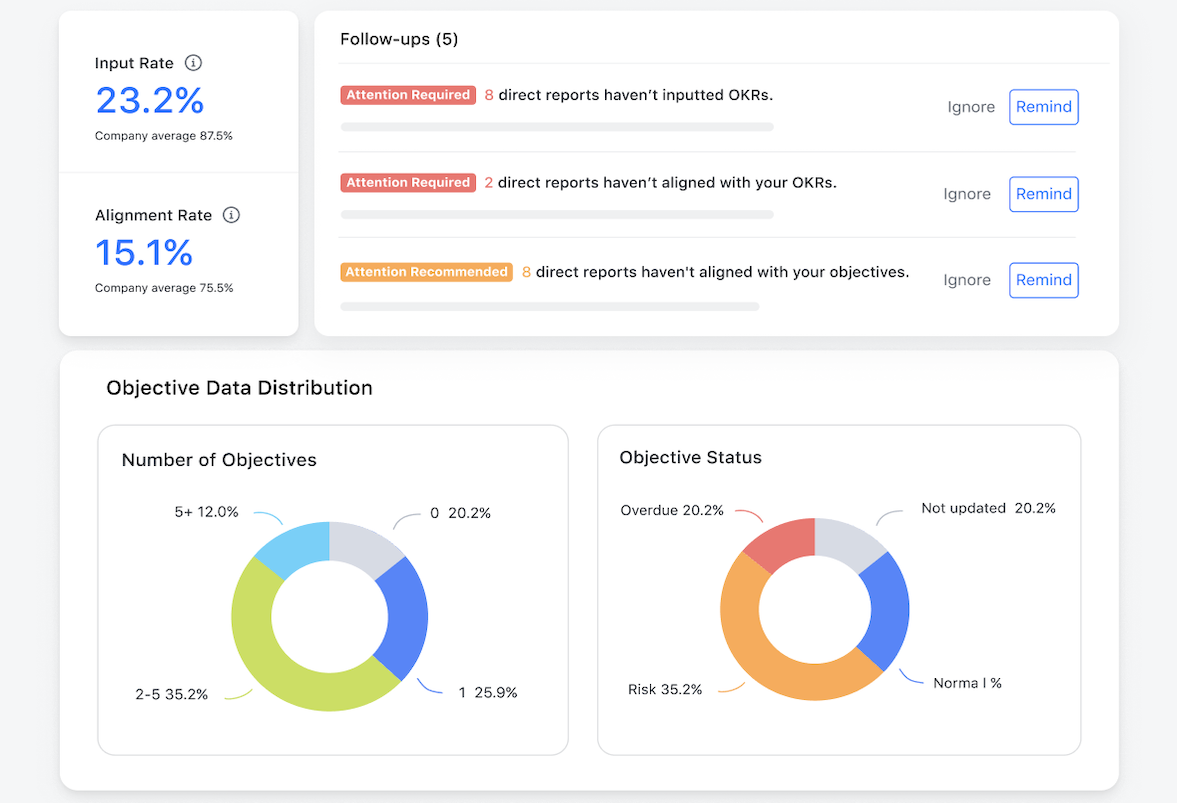
Fostering seamless collaboration and rich context
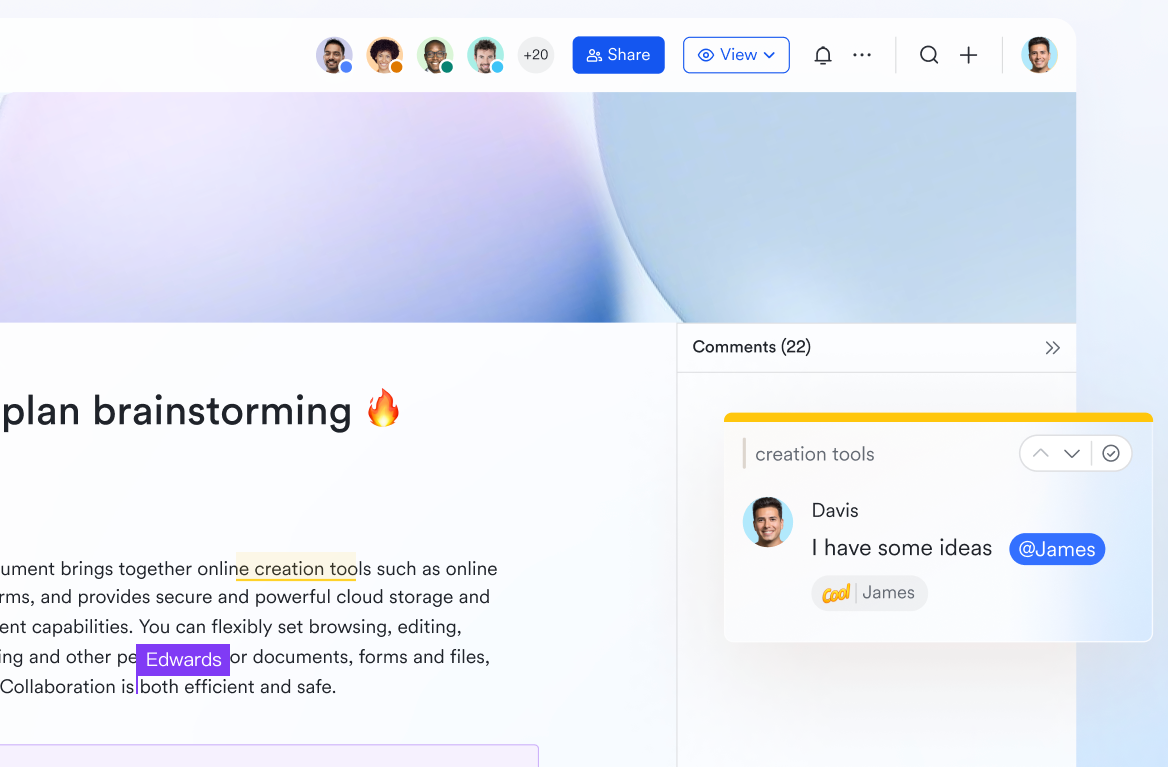
Crafting and refining OKRs is a collaborative process. allows teams to draft Objectives and Key Results together, provide feedback, and iterate in real-time. This rich, interconnected information ensures that everyone understands the "why" behind each goal, not just the "what." This shared understanding is vital for driving engagement and ensuring that the initial OKR training translates into practical, collaborative action.
Unlocking organizational alignment and transparency
excels at illustrating the hierarchical alignment of OKRs. You can visually trace how individual or team key results contribute to departmental objectives, which in turn support overarching company goals. This clear, interconnected view helps every employee understand their direct impact on the organization's strategic direction. This level of transparent alignment is often highlighted in famous google okr examples.
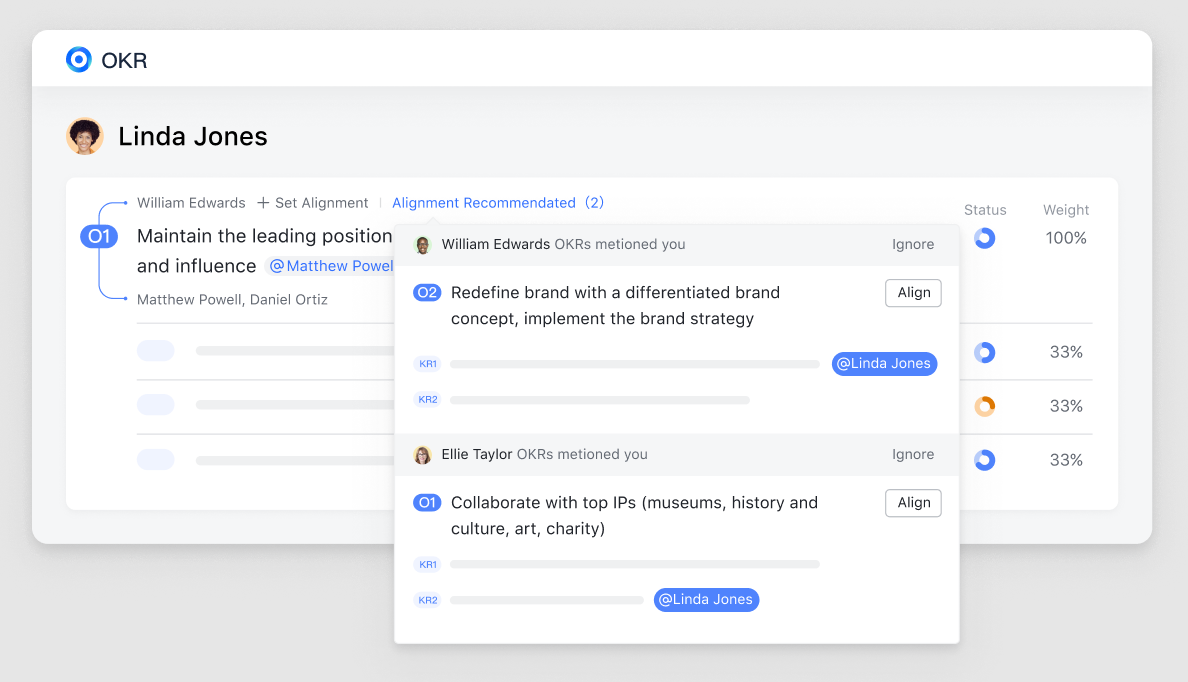
Streamlined communication and continuous feedback loops
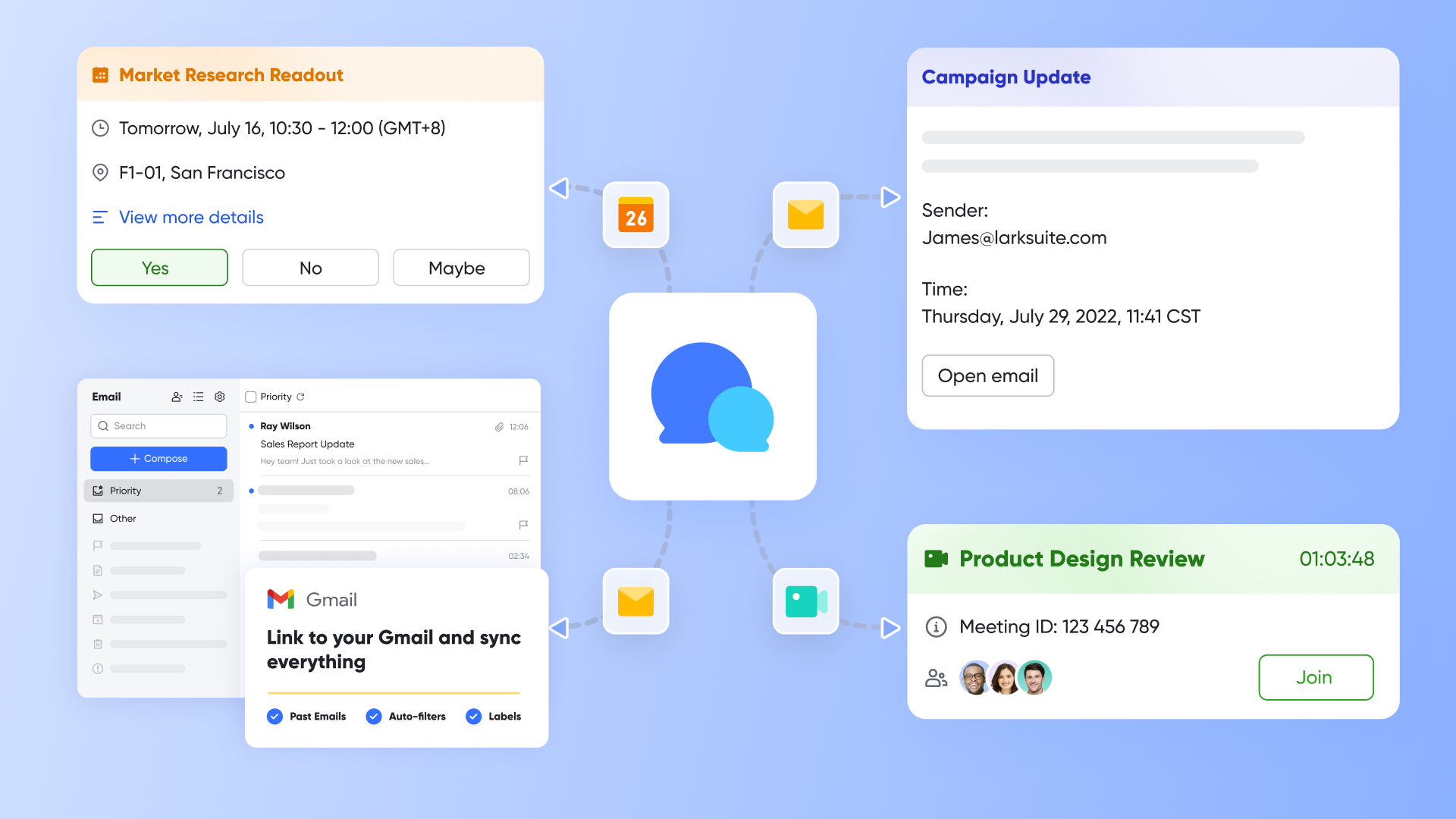
OKRs thrive on consistent communication and regular check-ins. Lark's messaging functionality simplifies this critical aspect. Teams can provide quick, informal updates on Key Result progress directly within dedicated groups. More formal weekly check-in discussions can be scheduled and conducted within , with notes and action items captured. This ensures that the essential dialogue around progress, roadblocks, and next steps happens seamlessly, keeping momentum high and allowing for rapid adaptation – a key characteristic of the Objectives and Key Results (OKR framework).
for Lark:
- Starter plan: Free forever plan that includes 11 powerful tools for up to 20 users. It also comes with 100GB of storage, 1000 automation runs, AI translations, and more.
- Pro plan: $12/user/month (billed annually) for up to 500 users. It includes everything in Starter plus group calling for up to 500 attendees, 15TB of storage, 50,000 automation runs, and more.
- Enterprise plan: for custom pricing. Supports unlimited users and includes even more automation runs and advanced security, compliance, and management features.
For small teams with simple communication needs

18 months message history
1000 Base automation runs/month
2000 rows per table in Base
Most POPULAR
For companies with comprehensive collaboration and management needs
Unlimited message history
500-participant video meetings
50k Base automation runs/month
20k rows per table in Base
For large companies with advanced security and organizational management needs
Get a personalized demo and pricing
Unlimited message history
500-participant video meetings
15 TB storage + 30 GB storage/user
500k Base automation runs/month
50k Base automation runs/month
Most POPULAR
For companies with comprehensive collaboration and management needs
Unlimited message history
500-participant video meetings
50k Base automation runs/month
20k rows per table in Base
What are some real-world examples of OKRs?
To truly grasp the power of Objectives and Key Results, let's look at some practical Google OKR examples and general industry applications. These illustrate how the framework translates an ambitious vision into measurable progress across different functions.
Company-level OKR example:
Objective: Become the market leader in sustainable energy solutions.
Key results:
- Increase market share from 10% to 18% in the renewable energy sector.
- Launch three new patented energy-efficient products, each achieving 500+ pre-orders.
- Reduce the carbon footprint of manufacturing operations by 15%.
Product team OKR example:
Objective: Deliver an exceptional user experience for our flagship mobile app.
Key results:
- Increase average user session duration from 8 minutes to 12 minutes.
- Achieve an App Store rating of 4.8 stars (out of 5) from 4.2.
- Reduce critical bug reports by 75%.
Marketing team OKR example:
Objective: Significantly expand our brand reach and .
Key results:
- Grow qualified website traffic by 40%.
- Increase social media engagement rate (likes, shares, comments) by 25%.
- Generate 2,000 new marketing qualified leads (MQLs).
These examples highlight how Objectives are inspirational and qualitative, while Key Results are specific, measurable, and outcome-focused. They serve as clear targets for teams to rally around.
Common mistakes to avoid
Even with the best intentions, organizations often stumble during their OKR implementation guide journey. Avoiding these common pitfalls is essential for harnessing the full potential of the Objectives and Key Results (OKR framework):
- Setting too many OKRs: Overloading teams with too many Objectives (more than 3-5) or Key Results (more than 2-5 per Objective) dilutes focus. If everything is a priority, nothing is.
- Key Results are activities, not outcomes: This is perhaps the most frequent mistake. A Key Result should measure impact (e.g., "increase user retention to X%"), not simply effort (e.g., "launch 3 marketing campaigns").
- Not ambitious enough: OKRs are meant to be a "stretch." If your team consistently hits 100% of their Key Results with ease, they're likely not setting ambitious enough goals. Aim for a 70% achievement rate for truly challenging goals.
- Lack of alignment: When departmental or individual OKRs don't clearly support higher-level company Objectives, teams can work in silos, undermining overall strategic efforts.
- No clear owner for Key Results: Every Key Result needs a single, . Without this clarity, responsibilities can become diffused.
By being mindful of these common missteps, your organization can foster a more effective and sustainable okr guideline.
Avoid these pitfalls and ensure successful OKR implementation
What are the best practices for setting OKRs?
Effective OKR setting goes beyond just writing down Objectives and Key Results; it involves a strategic approach that maximizes their impact. Embracing these best practices will significantly improve your OKR training and the overall success of your implementation:
- Keep it simple and focused: Less is more. Limit the number of Objectives and Key Results to ensure clarity and concentration of effort. This forces difficult but necessary prioritization.
- Make them aspirational (stretch goals): OKRs should push teams beyond their comfort zones. They should feel a little uncomfortable, but still achievable, driving innovation and ambition.
- Ensure two-way alignment: While company OKRs provide direction, teams should actively participate in developing their own OKRs that contribute to the larger goals. This bottom-up input fosters ownership and ensures relevance.
- Key Results must be measurable and objective: There should be no ambiguity about whether a Key Result has been achieved. Focus on verifiable outcomes, not just activities.
- : Make OKRs visible across the organization. Transparency fosters understanding, encourages collaboration, and builds trust. Everyone should see how their work contributes.
Conclusion
The Objectives and Key Results (OKR) framework is far more than a simple goal-setting methodology; it's a dynamic system for strategic focus, alignment, and measurable growth. By clarifying aspirations with inspiring Objectives and tracking progress with quantifiable Key Results, organizations can foster a culture of ambition, transparency, and accountability. Embracing OKRs allows teams to not only achieve their goals but also to learn, adapt, and continuously improve, ensuring that every effort contributes to the bigger picture. To truly unlock this potential and streamline your entire OKR implementation guide, consider leveraging an integrated platform like . Its powerful tools for goal definition, real-time tracking, seamless collaboration, and organizational alignment provide the perfect environment for your teams to master OKRs and transform strategic visions into tangible success.
Elevate your OKR journey with Lark today
FAQs
What are the basics of OKRs?
OKRs (Objectives and Key Results) are a goal-setting framework consisting of an ambitious, qualitative Objective (what to achieve) and 2-5 measurable, quantitative Key Results (how to measure progress). They are typically time-bound (e.g., quarterly) and designed to foster focus, alignment, and stretch goals, easily managed and tracked within platforms like Lark.
What are some good OKR examples?
A good OKR example might be: Objective: "Delight our customers with an unparalleled product experience." Key Results: "Increase Net Promoter Score (NPS) from 6.0 to 8.5" and "Reduce average customer support resolution time by 30%." Such examples can be easily shared and collaborated on using Lark's document features.
Is Google still using OKR?
Yes, Google continues to be a prominent user of the OKR framework. They were instrumental in popularizing OKRs globally after John Doerr introduced the methodology to them in 1999, leveraging it for rapid growth and internal alignment, much like how modern teams use integrated platforms such as Lark today.
What is the OKR method?
The OKR method is a strategic goal-setting and management framework that helps organizations define and track audacious goals and their measurable outcomes. It emphasizes transparency, alignment, and accountability, providing a structured approach to translate vision into action, a process greatly enhanced by collaborative tools like Lark that support the full OKR lifecycle.
Related reading