In nowadays digital workplace, managing employee information goes far beyond spreadsheets. A modern employee management system database provides HR teams with a unified, secure, and scalable foundation to store, track, and analyze workforce data. From onboarding to payroll, and from performance metrics to compliance, businesses need intelligent platforms that centralize everything. Tools like Lark are reimagining how organizations combine collaboration, automation, and database technology to simplify HR operations. In this article, we’ll explore what makes a people data platform truly effective—and how you can choose the right system for your team’s future.
Key takeaway: Overview of top tools
Information source: Official vendor sites
Update time: 2025-12-10
Note: Pricing and plan details reflect publicly available data as of the update date and may vary based on region, billing cycle, and number of agents.
What is an employee management system database?
An employee management system database is the backbone of digital . It’s a centralized database where all employee-related information—from contact details to job roles, salaries, performance records, hire date, and job title—is securely stored and easily accessed.
This kind of database goes beyond archiving data. It transforms how organizations handle people operations by connecting personnel data with everyday HR processes such as leave management, work scheduling, and .
In contrast to a basic employee database management system, which focuses largely on storage and often relies on manual data entry, a full management system incorporates workflows, analytics, and security protocols, significantly reducing or eliminating manual data entry. To explain how employee database software work: these systems act as centralized, often automated solutions that store, organize, and provide secure access to employee information. Some businesses even opt for an open source employee database management system to gain more flexibility and control over customization and cost.
An unified employee database and adds another layer of efficiency, ensuring that HR updates ripple instantly into payroll, benefits, and reporting. Employee database management software and other software solutions help organizations manage HR processes by streamlining integration and improving operational efficiency. That real-time accuracy prevents duplication and maintains compliance. Ultimately, a well-structured database for employee management system offers not just convenience but also strategic insight into workforce trends, helping organizations manage their workforce data and compliance.
Key features to look for in an employee management system database
When evaluating tools, successful HR leaders focus on the following essentials. These elements help transform a static employee management system database schema into a dynamic operational driver.
- Centralized employee information: All employee records—personal details, positions, reporting lines—are managed in one secure hub. This structure ensures HR always has updated insights across teams or regions. The system also allows for storing and , tracking employee certifications, and monitoring document expiration dates to ensure compliance deadlines are met.
- : Modern systems automate tasks like approvals, onboarding, and evaluations. Automation reduces administrative load and ensures consistency across HR functions. is a key feature, streamlining the management and updating of employee documents and related tasks.
- Role-based access and compliance: Strong permission settings keep sensitive data secure. Compliance features help businesses meet data protection standards globally.
- Integrations with existing tools: A flexible system connects seamlessly with payroll, attendance, and , strengthening internal continuity. Integration with other HR tools and HR management tools further streamlines HR processes and enhances automation capabilities.
- Analytics and reporting: HR professionals can visualize turnover, attendance, and performance through built-in dashboards, turning data into actionable insight. The ability to create customized reports and focus on generating reports is essential for data-driven decision-making and compliance monitoring.
- Focus on user experience: A user friendly interface is crucial for managing employee data, making it accessible and easy to use for both managers and staff.
A comprehensive employee management system database empowers organizations to replace fragmented with one unified data environment—simplifying complexity, strengthening the connection between people and performance, and managing employee data efficiently.
Explore a solution that meets all features
Top 10 employee management system database tools in 2026
1. Lark — best all-in-one collaboration and automation
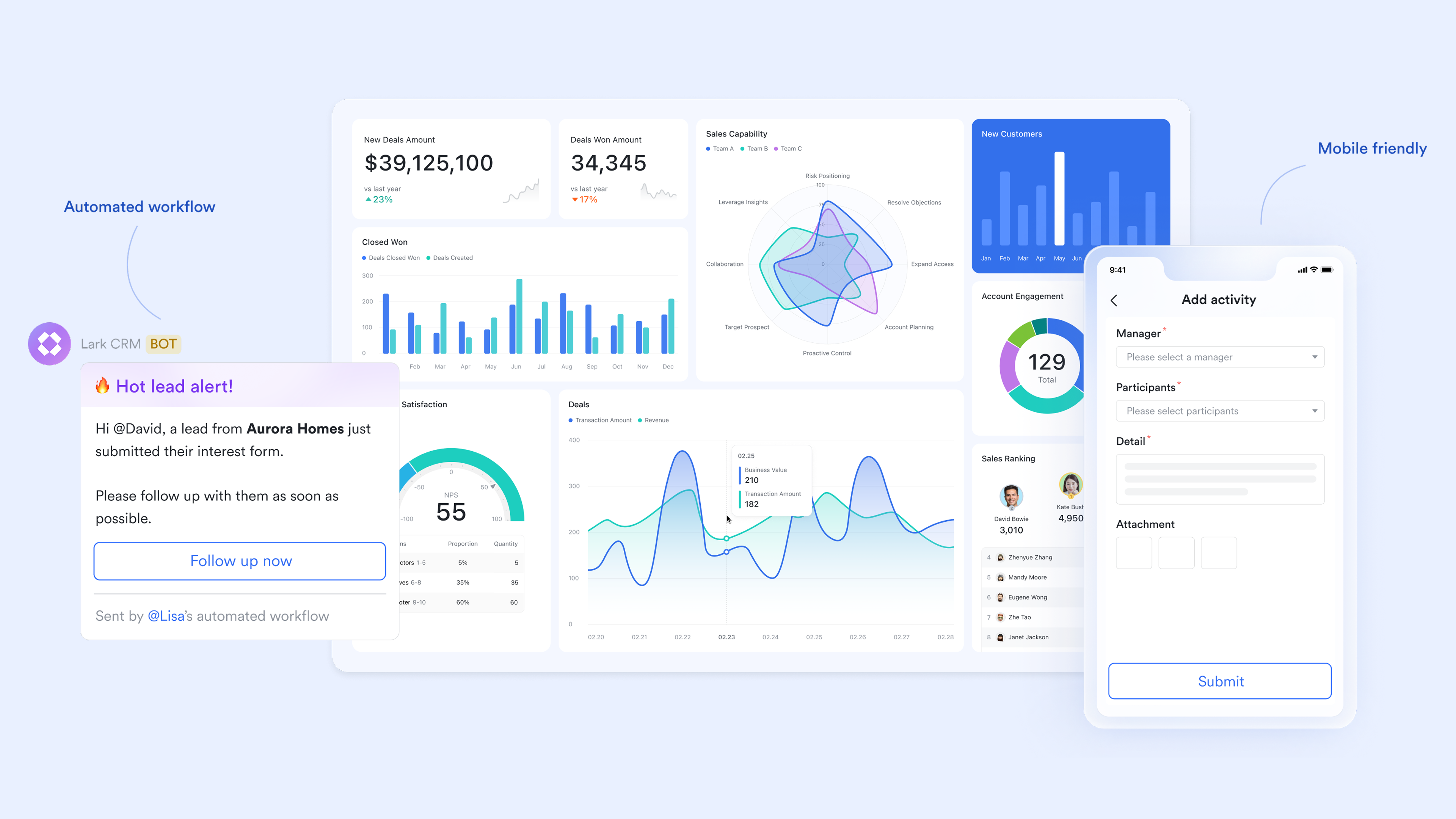
Managing employee information, onboarding processes, and workflow approvals can become overwhelming for HR teams. Imagine a scenario where HR staff are juggling various spreadsheets and manual approvals, leading to inefficiencies and errors. Enter , a powerful employee management database system designed to modernize these essential functions.
With tools like Lark Base, employers can effortlessly create a customizable database to store employee records and performance metrics without any coding. Lark Approval streamlines the workflow for onboarding and leave requests, reducing the administrative burden. Together with , Lark provides a centralized, secure platform that connects all daily HR operations, enhancing productivity and ensuring data accuracy.
Key features:
Customizable database for employee records
functions as a no-code, customizable database ideal for storing employee records, contracts, benefits, and performance metrics. It supports multiple views such as Gantt, Kanban, and grid views, enabling HR teams to visualize data in a way that suits their workflow. Additionally, AI field shortcuts within Lark Base streamline data entry and retrieval, enhancing overall efficiency and organization. 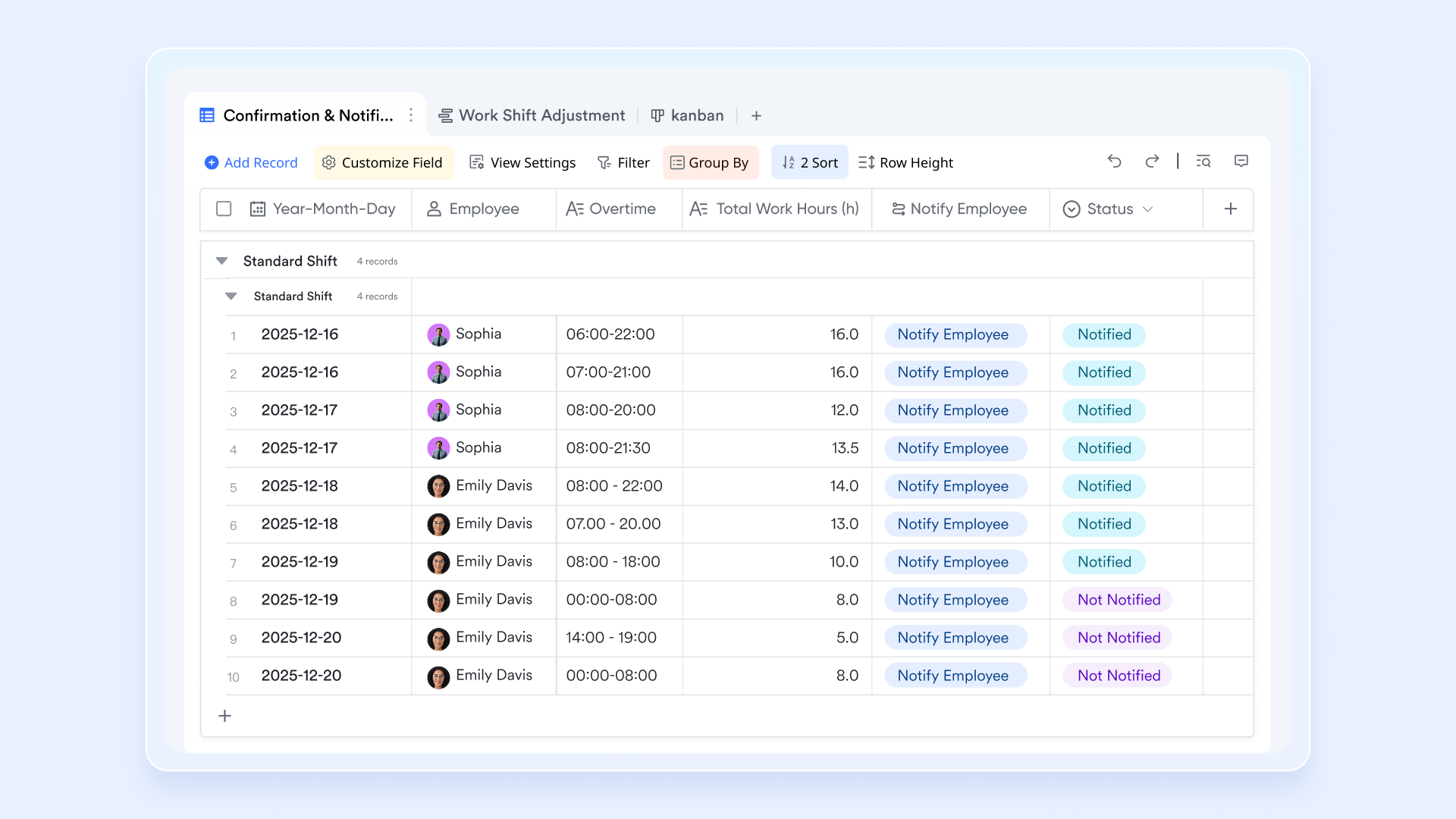
Flexible workflow automation
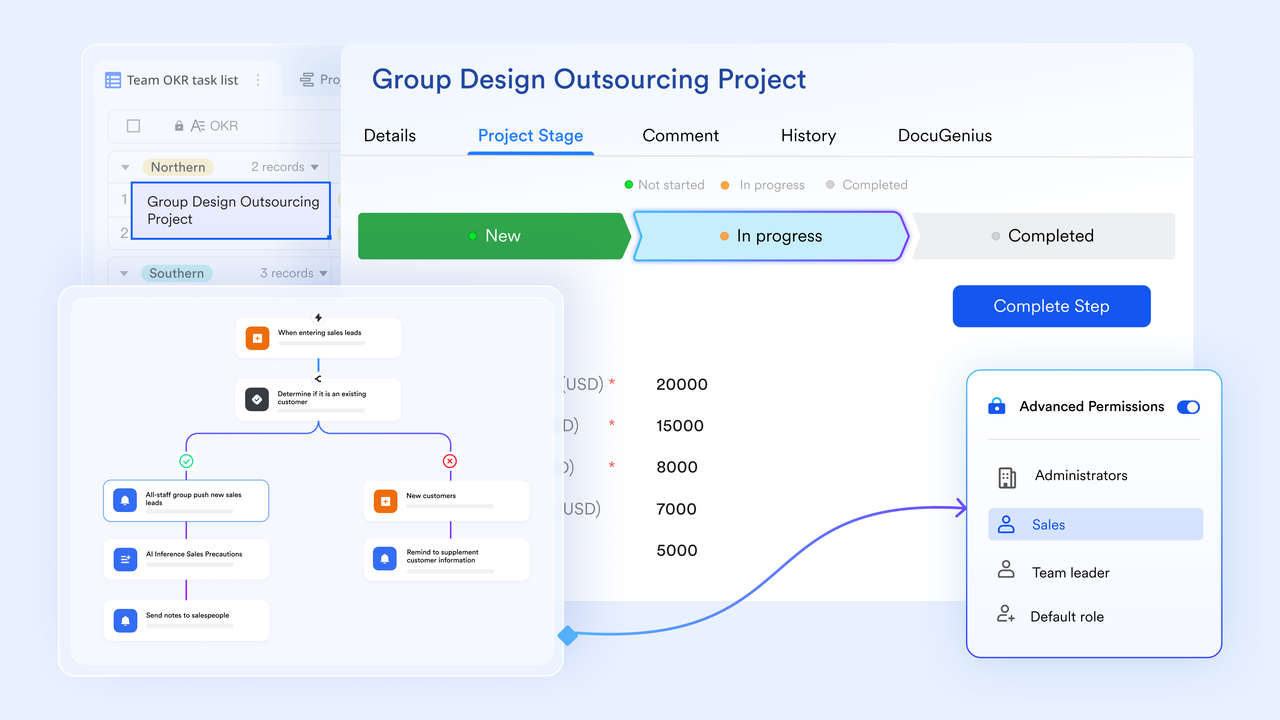
Lark Base's automation capabilities empower users to set custom rules for processes, allowing for efficient . In addition, the automation of approval processes in —such as onboarding and leave requests—ensures that all necessary authorizations are processed swiftly, significantly reducing administrative burdens and accelerating HR response times.
Centralized staff profiles with knowledge management
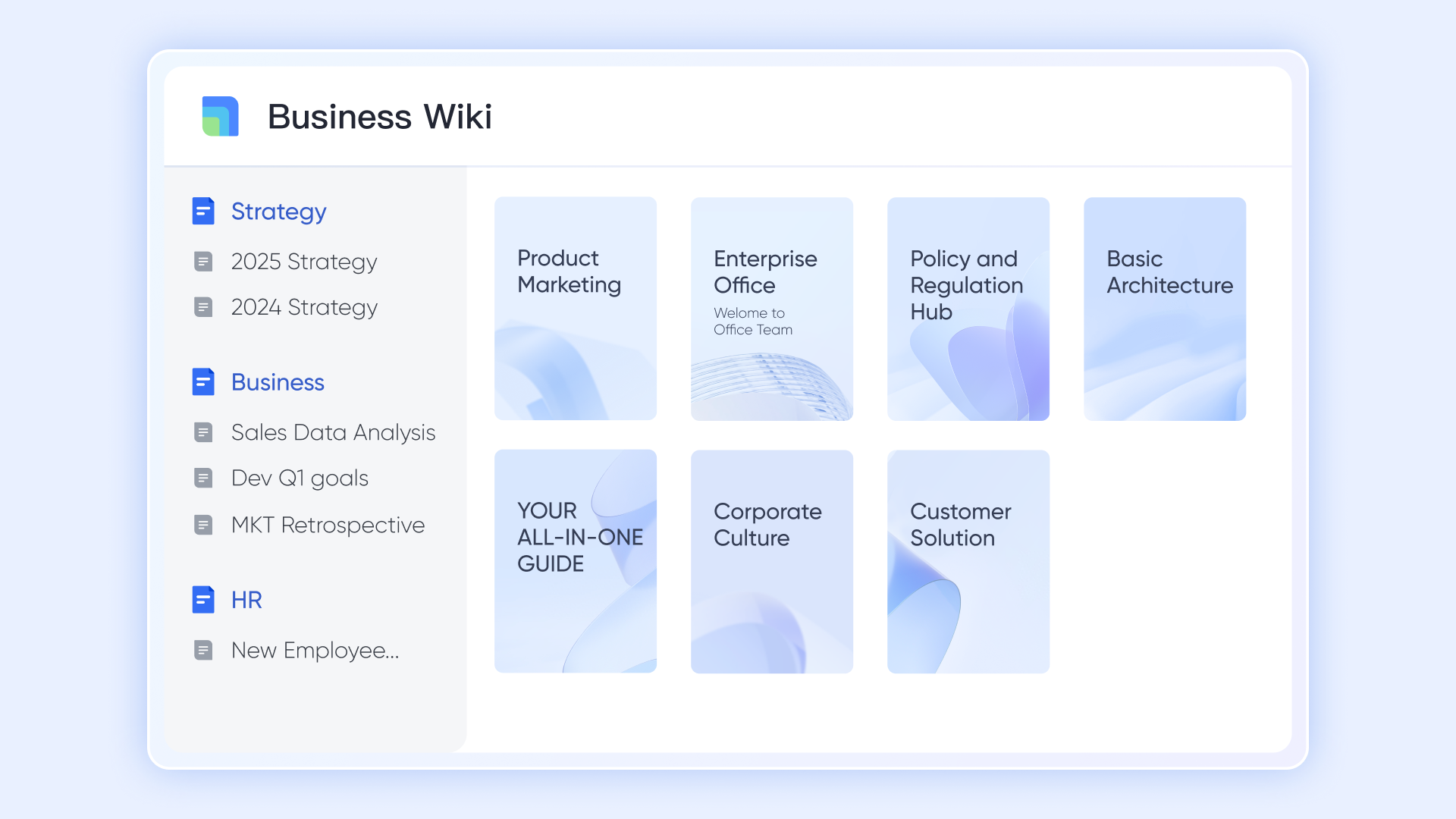
The employee directory template offers a centralized location for staff profiles that can be edited in real-time. Coupled with , a knowledge management tool, users can create a comprehensive internal resource library. This feature includes permission management, allowing for controlled access to sensitive employee information, thus ensuring data privacy and security.
Attendance tracking and reporting for management insight
Lark Attendance feature allows organizations to track employee presence and absences effectively. This tool automates the attendance recording process, ensuring accurate data collection while providing insights into workforce availability, ultimately supporting better scheduling and resource planning. Lark Attendance also automatically compiles attendance data into structured reports that managers or admins can view. These reports show working hours, absences, late or early records, overtime accumulation, leave usage, and team-level patterns. The insights help leaders identify staffing issues, ensure compliance, and improve productivity. Export options also support payroll preparation, internal audits, and HR reporting. 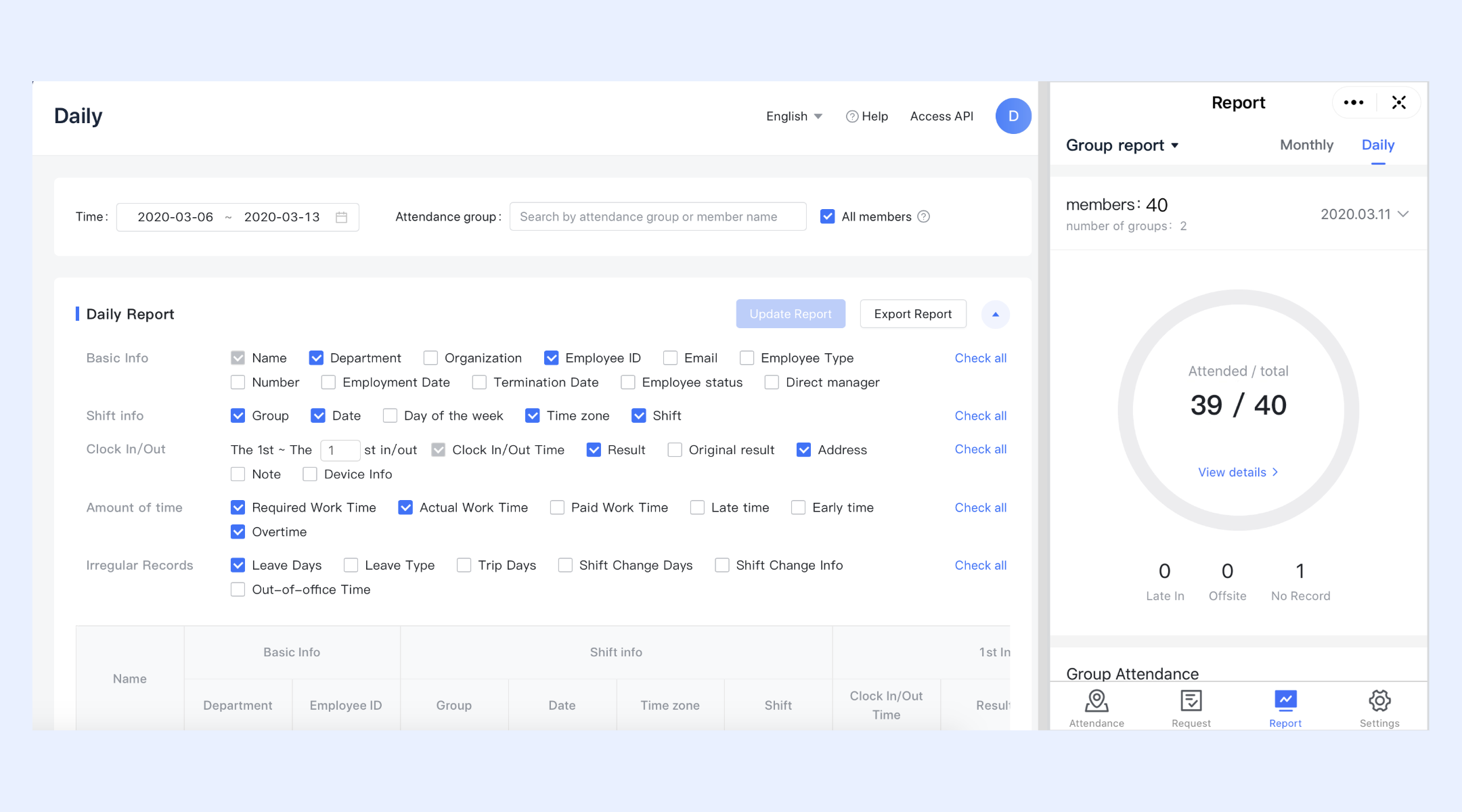
Diverse HR templates ready for use
Lark provides a variety of ready-to-use HR templates tailored for common tasks and processes, allowing HR teams to implement best practices quickly. These templates streamline documentation and processes, making it easier for teams to maintain consistency and efficiency across HR operations.
Limitations:
- Requires configuration to tailor HR data structures and workflows for larger organizations. Lark provides complete guidance.
Why I pick Lark: Lark stands out for seamlessly connecting communication and data management within one environment. Its adaptability makes it ideal for teams building a customizable employee management system database that evolves with business growth. The combination of Base, Approval, and built-in analytics bridges collaboration, automation, and HR data into a single .
:
- Starter plan: Free forever plan that includes 11 powerful tools for up to 20 users. It also comes with 100GB of storage, 1,000 automation runs, AI translations, and more.
- Pro plan: $12/user/month (billed annually) for up to 500 users. It includes everything in Starter plus a group calling for up to 500 attendees, 15TB of storage, 50,000 automation runs, and more.
- Enterprise plan: for custom pricing. Supports unlimited users and includes even more automation runs and advanced security, compliance, and management features.
For small teams with simple communication needs

18 months message history
1000 Base automation runs/month
2000 rows per table in Base
Most POPULAR
For companies with comprehensive collaboration and management needs
Unlimited message history
500-participant video meetings
50k Base automation runs/month
20k rows per table in Base
For large companies with advanced security and organizational management needs
Get a personalized demo and pricing
Unlimited message history
500-participant video meetings
15 TB storage + 30 GB storage/user
500k Base automation runs/month
50k Base automation runs/month
Most POPULAR
For companies with comprehensive collaboration and management needs
Unlimited message history
500-participant video meetings
50k Base automation runs/month
20k rows per table in Base
2. BambooHR — best for small and mid-sized businesses
BambooHR is a cloud-based human resources platform focused on simplifying data management for small and medium-sized enterprises. It consolidates HR functions—such as employee records, onboarding, and time-off tracking—into one intuitive interface.
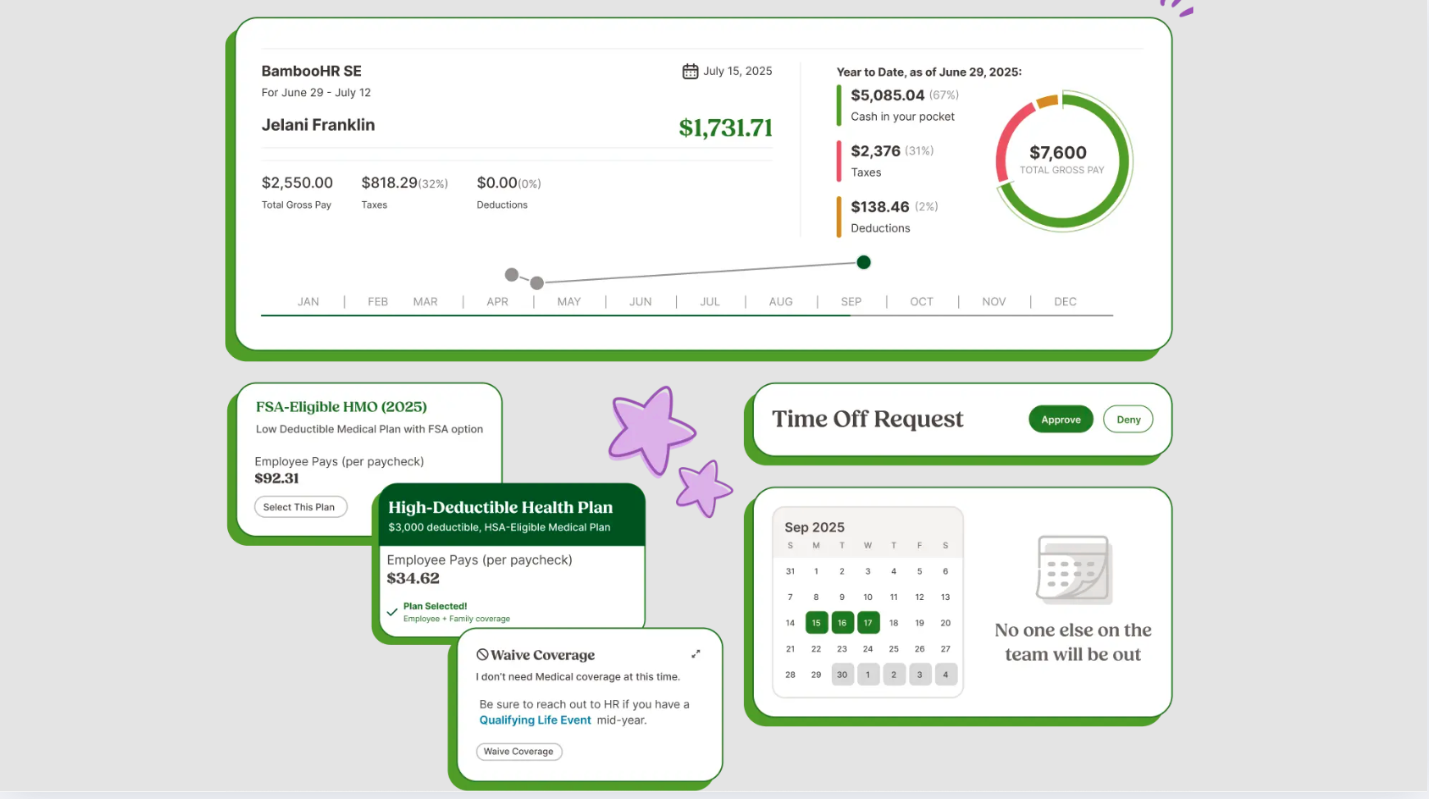
Image source: bamboohr.com
Key features:
- Central employee records and activity logs.
- Onboarding and offboarding management.
- Time-off tracking and performance evaluations.
- Custom reports and analytics dashboards.
Limitations:
- Limited payroll features outside the U.S.
- Advanced customization available only in higher pricing tiers.
Why I pick BambooHR: BambooHR is perfect for organizations seeking a simple yet powerful HR system. It turns employee data into accessible insights and helps growing teams establish structured processes. Its clean interface, dependable automation, and customizable reports make it an excellent entry point for developing a scalable employee database system.
Pricing: Custom pricing available on request based on workforce size.
3. Rippling — best for automation at scale
Rippling combines HR, IT, and finance into a single platform that syncs all employee data across departments and applications, supporting automated actions across an employee’s lifecycle.
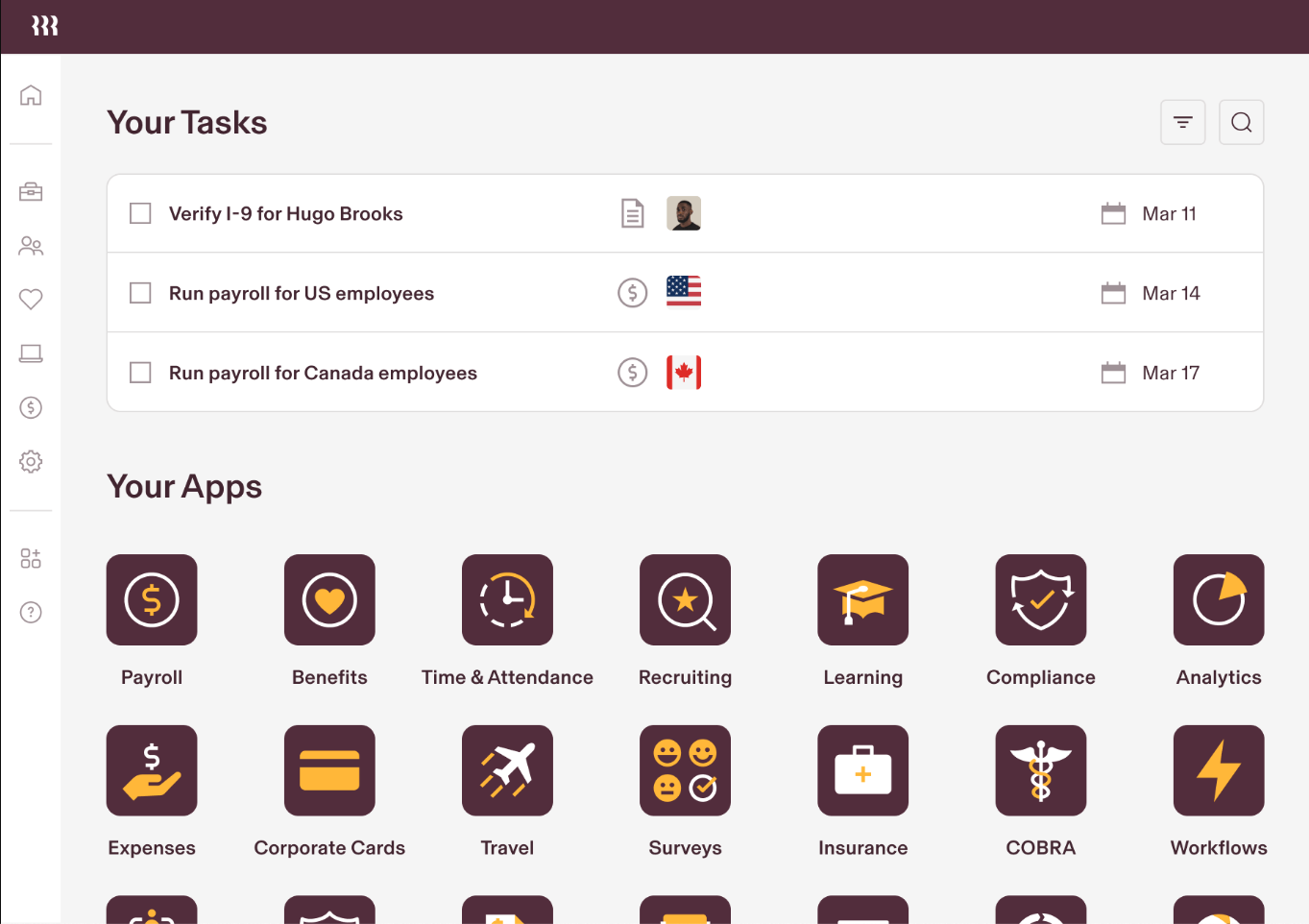
Image source: rippling.com
Key features:
- Unified employee database for HR and IT.
- Automated onboarding and offboarding.
- Payroll and benefits integration.
- Built-in compliance and audit tools.
Limitations:
- Can be complex for smaller organizations.
- Add-ons and advanced modules increase overall cost.
Why I pick Rippling: Rippling offers a unified infrastructure where employee data flows across HR, IT, and finance systems with zero friction. I recommend it for companies aiming to automate end-to-end administrative operations. Its deep integrations and scalable framework make employee management fast, accurate, and compliant across multiple business functions.
Pricing: Custom pricing. Most Rippling products are billed on a simple per-employee, per-month basis, some may be charged at (or include) a monthly base fee.
4. Connecteam — best for mobile workforce management
Connecteam is designed for companies with remote or frontline employees. It simplifies HR communications, time tracking, and operational management through an intuitive mobile app.
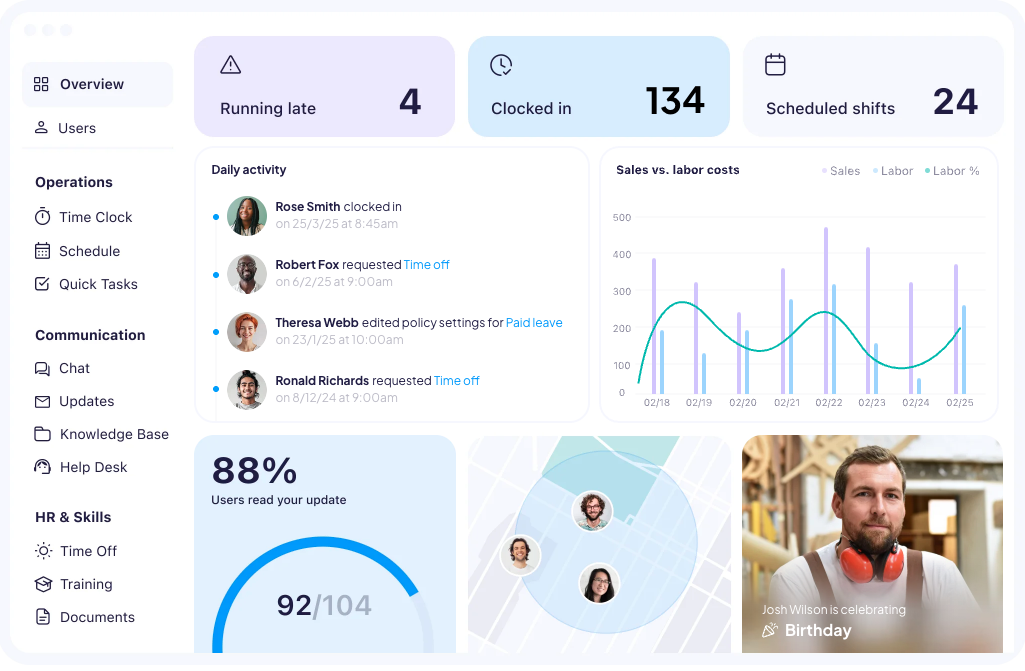
Image source: connecteam.com
Key features:
- Mobile-first HR and communication system.
- Digital time tracking and shift scheduling.
- HR form submissions and document storage.
- Attendance analytics dashboard.
- Employee development tracking Connecteam: Monitor employee growth, training progress, and skills development with real-time updates and automated compliance.
Limitations:
- Lacks advanced HR analytics features.
- Limited scalability for very large enterprises.
Why I pick Connecteam: Connecteam excels at empowering mobile and remote teams to manage HR tasks anytime, anywhere. It transforms smartphones into comprehensive portals for scheduling, communication, and record updates. I recommend it for organizations prioritizing flexibility, accessibility, and real-time engagement for distributed employees.
Pricing for HR skills (annual billing):
- Basic: $29/mo for 30 users; $0.5/mo for each additional user
- Advanced: $49/mo for 30 users; $1.5/mo for each additional user
- Expert: $99/mo for 30 users; $3/mo for each additional user
5. HiBob (Bob) — best for engagement and analytics
HiBob is a people management platform built around company culture and analytics. It helps HR teams connect data from engagement, performance, and retention for strategic insights.
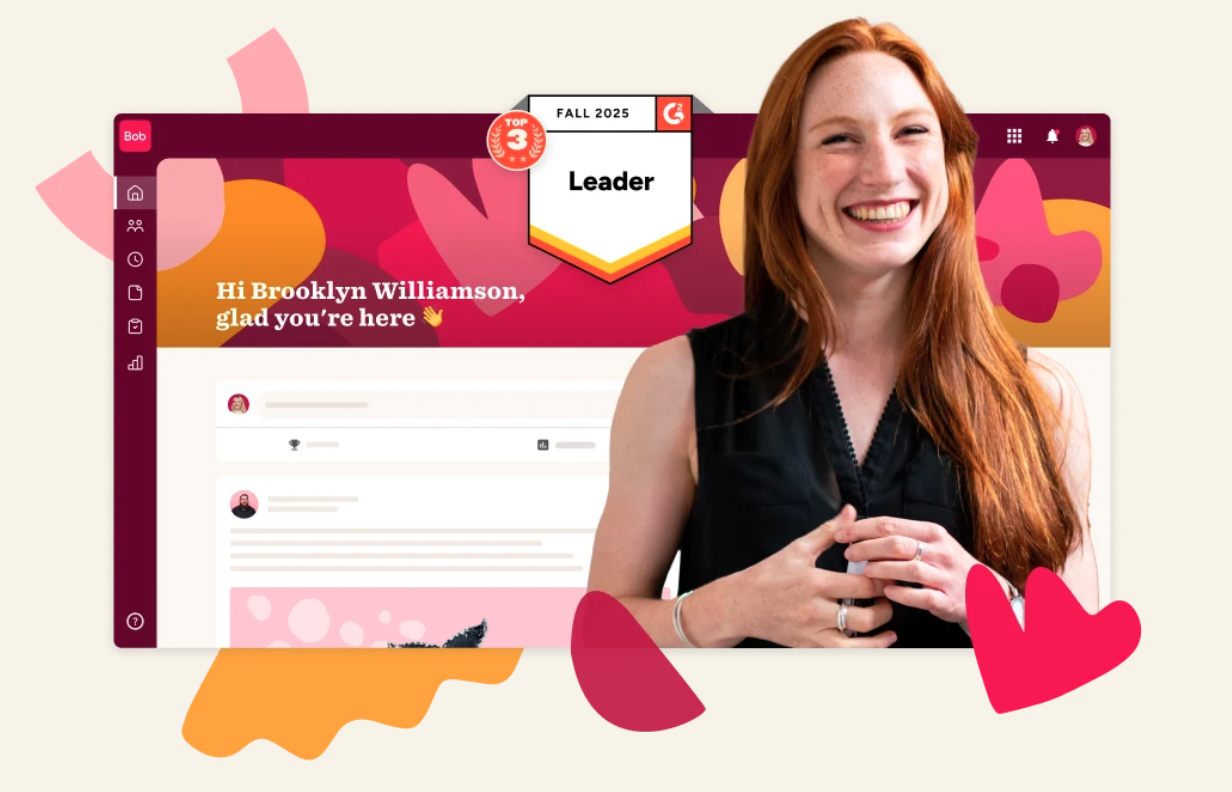
Image source: hibob.com
Key features:
- Comprehensive HR database and analytics panel.
- Employee engagement surveys and trend reports.
- Performance management tools with goal tracking that support career development and enhance job satisfaction.
- Integrations with payroll and communication systems.
Limitations:
- The setup process requires consulting for best results.
- Cost structure suited to medium and large organizations.
Why I pick HiBob: HiBob goes beyond simple HR management—it nurtures employee engagement and organizational insight. Its engagement and performance tools are designed to foster career development and improve job satisfaction, helping leaders act proactively based on employee sentiment and analytics. It’s a great fit for companies focused on building data-driven, people-centered workplaces.
Pricing: Tailored pricing available upon request.
6. Gusto — best for payroll and HR integration
Gusto is a comprehensive HR and payroll platform favored by startups and small businesses. It merges employee data, payroll processing, and benefits management into one accessible workspace.
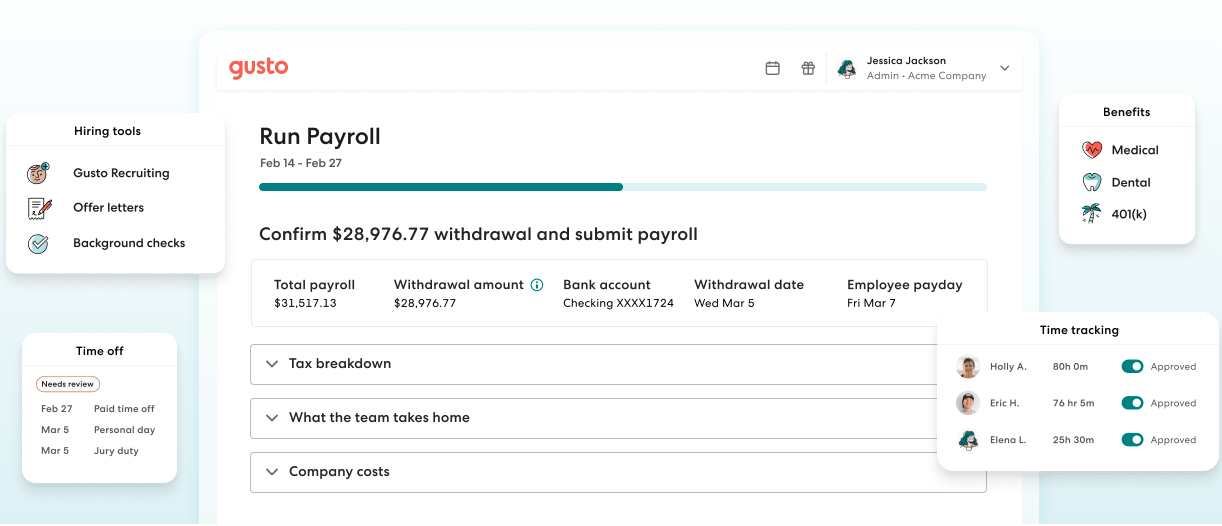
Image source: gusto.com
Key features:
- Full-service payroll with tax filing automation.
- Benefits and compliance management.
- Employee self-service access portal.
- Reporting and workforce analytics.
Limitations:
- Limited international payroll support.
- Advanced features can be costly for very small teams.
Why I pick Gusto: Gusto simplifies how businesses handle both payroll and HR in a synchronized environment. I selected it for small businesses seeking trustworthy automation, effortless employee record management, and clear . It removes the complexity from compliance and payments while maintaining transparency across payroll and benefits data.
Pricing:
- Simple: $49/mo+ additional $6/user/mo
- Plus: $80/mo+ additional $12/user/mo
- Premium: $180/mo+ additional $22/user/mo
7. ADP Workforce Now — best for enterprise compliance
ADP Workforce Now is a large-scale HR and payroll suite that supports global enterprises. It offers integrated employee data management, payroll automation, and compliance monitoring. The platform also features document lifecycle management ADP, which automates, secures, and ensures compliance for employee document processes throughout their entire lifecycle.
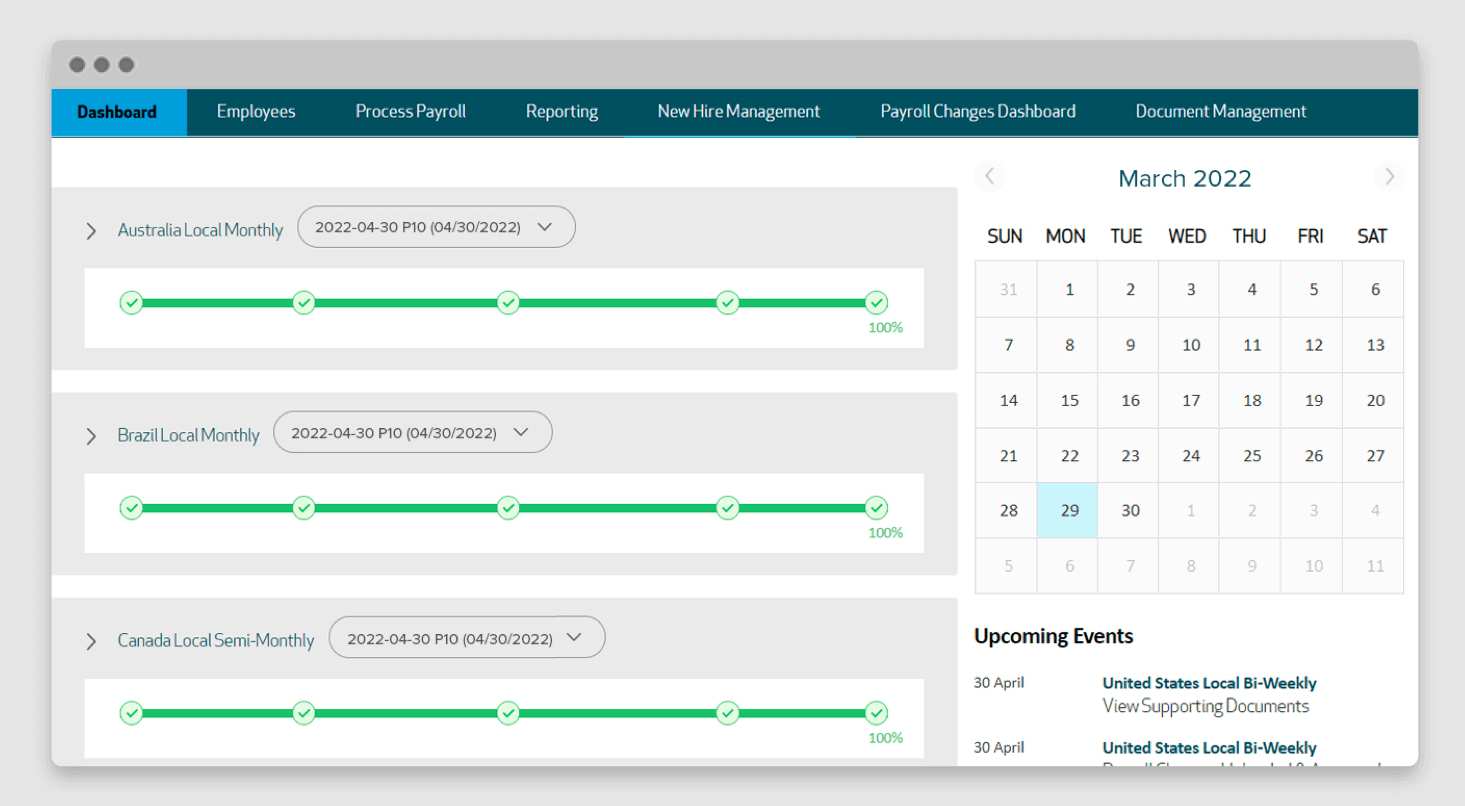
Image source: adp.com
Key features:
- Robust global payroll and tax filing tools.
- HR compliance dashboards and data security.
- Advanced analytics and workforce insights.
- Talent and benefits management modules.
- Document lifecycle management ADP for creating, storing, automating, archiving, and maintaining compliance of employee documents.
Limitations:
- The implementation period may be lengthy.
- Pricing on the higher end for smaller organizations.
Why I pick ADP Workforce Now: ADP Workforce Now earns its place for its reliability and depth in enterprise-level compliance and payroll management. With document lifecycle management ADP, it helps automate and secure employee document processes, supporting compliance needs. It offers unparalleled analytics and secure data governance across large organizations. I recommend it to enterprises that need a proven foundation for their global employee management system database.
Pricing: Customized enterprise pricing available.
8. Zoho People — best for workflow customization
Zoho People is part of the Zoho business suite, offering HR teams a flexible environment to automate workflows and manage employee data efficiently.
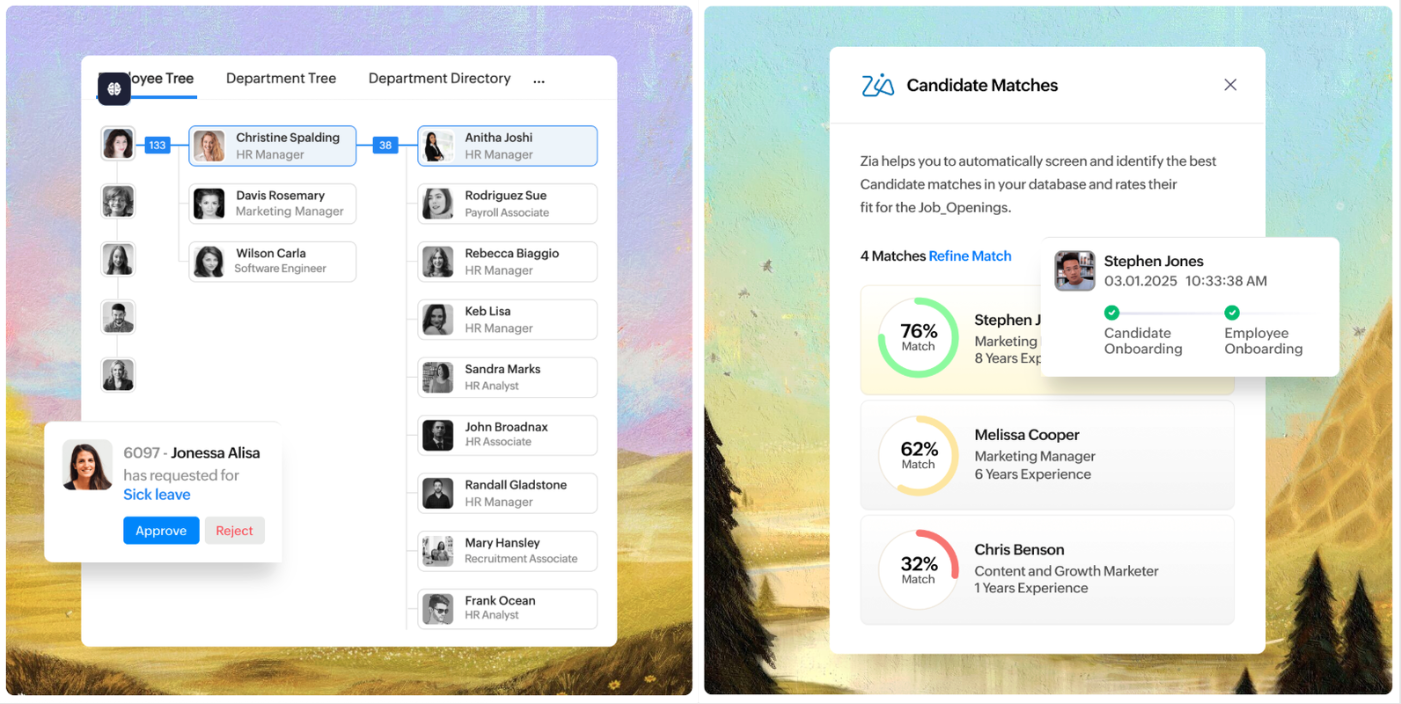
Image source: zoho.com
Key features:
- Custom HR forms and approval workflows.
- Attendance, shift, and leave tracking.
- AI-driven analytics dashboard.
- Integration with payroll systems and HR tools.
Limitations:
- Limited advanced HR analytics compared to larger suites.
- Some reporting features require setup customizations.
Why I pick Zoho People:
Zoho People is a versatile solution that allows complete customization of HR workflows and data structures. I recommend it to companies seeking the flexibility of an open source–style system in a hosted cloud environment. It’s particularly valuable for teams needing adaptable automation and continuous scalability.
Pricing (annual billing):
- Essential HR: $1.23/user/month
- Professional: $2/user/month
- Enterprise: $4.5/user/month
9. TalentGuard — best for talent development and internal mobility
TalentGuard focuses on performance tracking, competency management, and employee development. It’s structured to strengthen workforce capability through skill mapping and personalized growth paths.
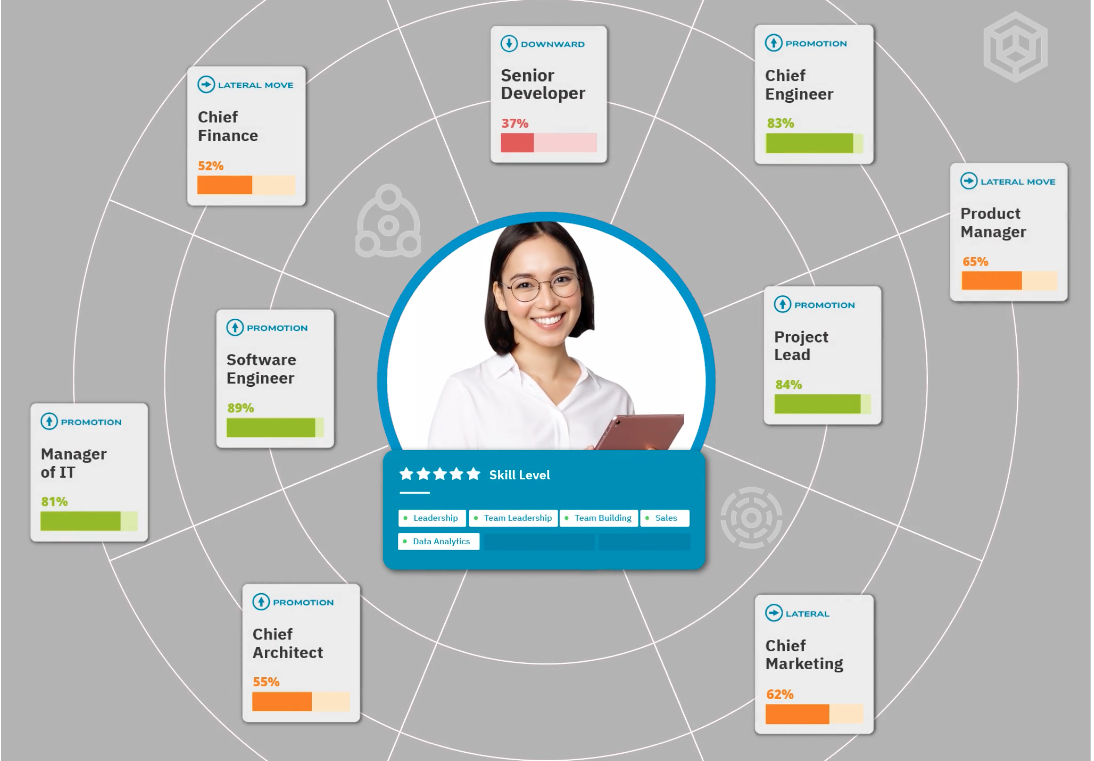
Image source: talentguard.com
Key features:
- Employee profiles with skills and competencies.
- Career pathing and performance assessments.
- Learning management and gap analysis reports.
- Integration with HRIS platforms.
Limitations:
- Narrow functionality outside development and analytics.
- Requires learning curve for managers.
Why I pick TalentGuard: TalentGuard focuses on career growth and competency mapping, helping organizations convert their HR data into development insights. I like how it aligns learning, performance, and succession planning under one talent-focused database system. It’s an excellent choice for businesses prioritizing internal mobility and skill-building initiatives.
Pricing: Custom enterprise pricing on consultation.
10. Paycor — best for small to medium-sized businesses with evolving needs
Paycor is an all-in-one HR and payroll solution designed specifically for small and medium-sized businesses. It provides robust functionalities tailored to evolving business needs, including hiring, onboarding, and benefits management, while ensuring compliance and data security.
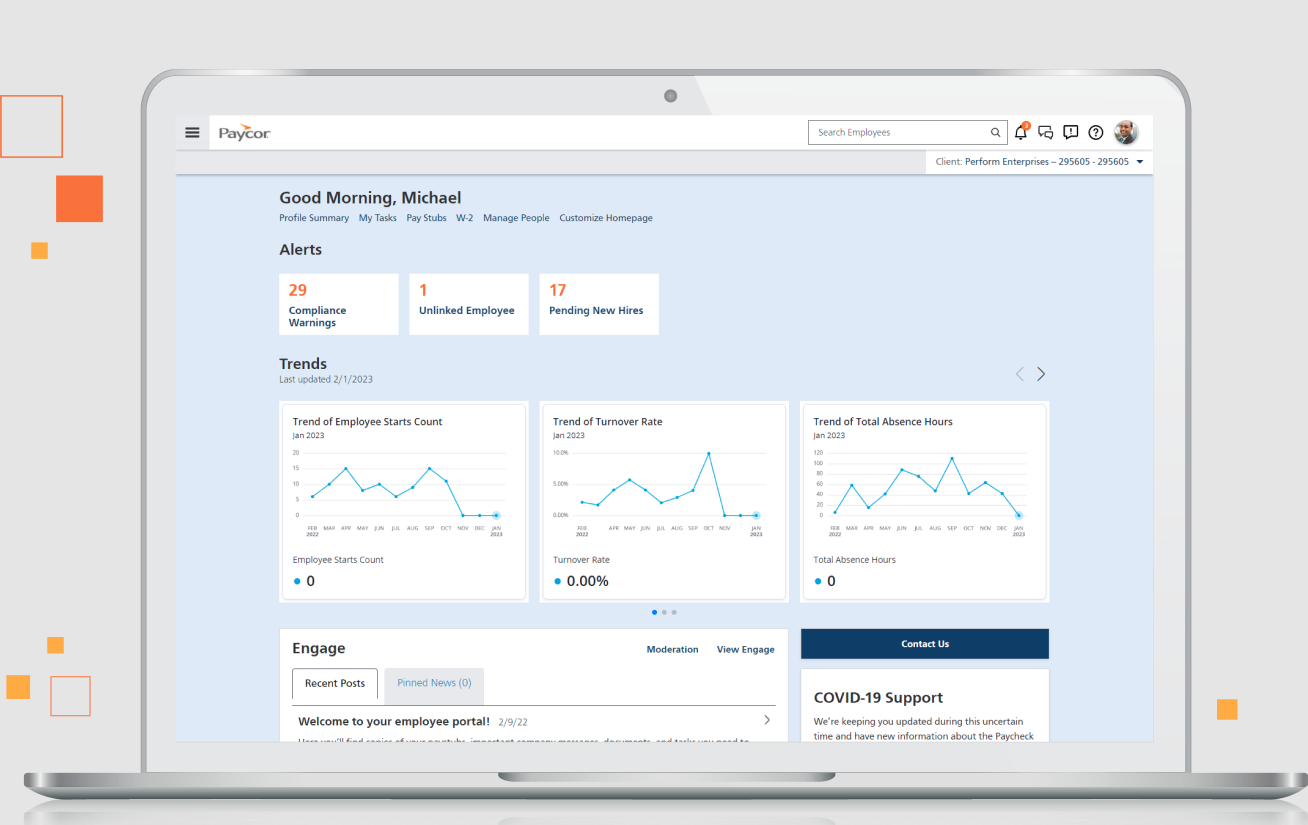
Image source: paycor.com
Key features:
- Comprehensive payroll processing integrated with HR functions.
- Recruitment and onboarding tools to streamline the hiring process.
- Customizable reporting and analytics for workforce insights.
- Employee self-service portal for accessing pay stubs, benefits, and personal information.
Limitations:
- Some users report that customer support could be improved.
- Certain advanced features may not be as comprehensive as those found in larger enterprise solutions.
Why I pick Paycor:
Paycor stands out for its user-friendly design and comprehensive features tailored for small to medium-sized businesses. It simplifies HR processes like payroll and benefits management while ensuring compliance and reducing administrative burdens. The platform's scalability allows organizations to adapt to changing needs, fostering efficient workforce management and enhancing employee engagement.
Pricing:
Pricing is based on the number of employees and the services selected, typically requiring a customized quote based on specific business requirements.
Choose a tool that cost-eefective and powerful
Benefits of adopting a robust employee management database
A powerful employee data system does more than track HR details—it transforms the employee experience and operational efficiency.
- Better accuracy and fewer errors: By centralizing data, organizations eliminate duplicate entries and human mistakes.
- Time savings through automation: HR tasks like leave approvals or record updates are automated, freeing teams for higher-value strategy.
- Enhanced data security and compliance: Centralized encryption and access controls safeguard sensitive information.
- Holistic visibility: Managers gain insight into workforce composition, trends, and productivity metrics in real time. The system also delivers data insights and enables HR teams to analyze employee data for improved .
- Employee empowerment: Self-service features allow staff to manage personal records, leading to a transparent and efficient workplace.
These systems support data driven decision making by providing actionable analytics and reporting capabilities. Every organization’s goal is to manage data smartly while enabling growth. Choosing the right employee management system database is a critical step toward achieving that balance, with features like customizable employee records bamboohr supporting
Streamline employee management with customizable tools
Data security and management in employee management system databases
Effective data security and smart management form the foundation of every thriving system database. As organizations handle increasing volumes of valuable employee information, safeguarding its confidentiality, integrity, and availability has become a primary concern for HR professionals.
- Protecting employee information: Today's leading employee database management systems are equipped with advanced security features like encrypted cloud storage and role-based access controls. These elements work together to create robust defenses against unauthorized access and potential data breaches, ensuring that sensitive employee information remains secure.
- Enhanced security protocols: Modern employee management software goes beyond basic data storage by incorporating secure authentication protocols, such as multi-factor authentication (MFA), and sophisticated document management tools. These capabilities empower HR teams to manage all aspects of employee information—from performance reviews to job titles—within a single, protected environment while maintaining precise control over who can access and edit data.
- Efficient data workflows: Automated employee data workflows not only enhance security but also improve data accuracy by reducing manual entry errors. This ensures that employee record updates remain consistent, reliable, and fully traceable, fostering trust in the data being managed.
- Customizable data management: Customizable employee records provide remarkable flexibility, allowing organizations to adapt data fields and management processes to meet specific HR needs. This adaptability supports streamlined data organization and simplifiesacross the entire employee lifecycle.
- Dual benefits of quality database software: Investing in robust employee database software yields dual benefits: it safeguards valuable employee data and empowers HR professionals to manage information with confidence. This minimizes manual errors and fosters a workplace culture grounded in transparency and trust.
By prioritizing security and efficient management, organizations can enhance compliance efforts and cultivate greater employee engagement through secure self-service access to personal information and essential documents.
How to choose the best employee management system database for your organization
Selecting the right employee management system database can define how efficiently your HR operations run. While every organization has unique needs, certain guiding principles make evaluation more strategic and less overwhelming. Here’s a practical approach to finding your match:
- Define your organizational goals: Start by identifying what you expect from the system—whether it’s centralizing employee data, integrating with payroll software, managing compliance, improving employee performance, or supporting career development. If your existing employee system only stores records, it might be time to upgrade to a solution that automates and analyzes as well.
- Assess workflow automation capabilities: Look for platforms that handle approvals, onboarding, and training through , including streamlined onboarding documentation as a key feature. This not only saves time but ensures standardized HR processes across departments.
- Evaluate integration and scalability: The best systems don’t operate in isolation. They connect smoothly with your payroll tools, communication apps, and reporting dashboards—essential functions of a modern database for employee management system.
- Consider data security and compliance: Data protection regulations demand strong access control, backup systems, and audit trails. Choose providers that take compliance as seriously as innovation.
- Focus on user experience: An intuitive interface ensures that HR professionals and employees alike can access, update, and analyze data easily, increasing both adoption and accuracy.
Choosing wisely means striking balance. Even an open source employee database management system can be powerful if it fits your structure and budget while offering customization flexibility.
Future trends in employee management system databases
The future of employee management system databases is centered on intelligence, integration, and inclusivity. Artificial intelligence and predictive analytics will reshape how organizations understand retention and engagement—offering real-time insights to prevent turnover and personalize employee experiences. Today’s databases are no longer static repositories; they’re responsive ecosystems that actively guide HR decision-making.
The next evolution also lies in integration. Collaboration platforms such as Lark and Slack are extending their systems to connect communication channels with live employee data, creating seamless ecosystems where workflows and insights coexist. Furthermore, automation-driven decision-making is becoming a norm, reducing administrative tasks and empowering HR professionals to focus on people-first initiatives.
Finally, flexible and hybrid data environments—powered by APIs and no-code tools—are enabling organizations to customize, connect, and scale their databases effortlessly, ensuring agility in an ever-changing digital workplace.
Embrace the future trends for employee management
Conclusion
A modern employee management system database is far more than a storage system—it’s the foundation of connected, data-informed workplaces. By bridging human insight with technology, these systems empower teams to make smarter choices, improve collaboration, and foster transparency.
Selecting the right platform isn’t only about feature sets; it’s about building a culture of efficiency and trust where data works for people, not the other way around. Tools like Lark represent this shift perfectly—combining communication, automation, and database flexibility to help organizations create holistic HR operations that grow with their teams and future needs.
FAQs
What is an employee database management system?
An employee database management system is a digital platform that stores, organizes, and manages all data related to a company’s workforce in one centralized environment. It records essential details such as personal information, job titles, salary structure, attendance, and performance data while maintaining security and compliance. Unlike traditional spreadsheets or manual filing, it enables instant data retrieval, automated updates, and integration with payroll, recruitment, and analytics tools—making it an essential component of modern HR operations.
What are the 4 types of database management systems?
There are four fundamental types of database management systems:
- Hierarchical DBMS: Organizes data in a tree-like structure, with parent-child relationships.
- Network DBMS: Allows multiple relationships between entities, suitable for complex linkages like multidepartment employee mapping.
- Relational DBMS (RDBMS): The most common type, storing data in tables linked by relationships—used by most HR software.
- Object-oriented DBMS: Stores data as objects, useful for applications managing multimedia and advanced employee data models. Modern employee management system databases often employ hybrid models, integrating relational and object-oriented elements for scalability.
Is Excel an HRIS system?
No, Excel is not considered a Human Resource Information System (HRIS). While it can store and sort employee information, it lacks the automation, security controls, and integration capabilities required in a professional HR platform. An HRIS—like BambooHR or Lark—automates core HR tasks such as payroll, approvals, training, and compliance. Excel is suitable for basic recordkeeping but becomes inefficient and risky as data volumes and privacy requirements increase.
What is the best employee management software?
The best system depends on your company’s scale, goals, and workflows. For small and mid-sized businesses, BambooHR and Gusto are known for simplicity and seamless payroll integration. Enterprises may prefer ADP Workforce Now or UKG Pro for their compliance strength and scalability. For agile organizations seeking flexibility, Lark stands out with its database-driven architecture and built-in collaboration tools, enabling teams to manage HR, communication, and automation in one place.
How does an employee management system database benefit a business?
A well-implemented employee management system database drives organizational efficiency by centralizing all workforce data. It reduces manual entry errors, accelerates decision-making through real-time analytics, and ensures legal compliance with data privacy standards. These systems foster transparency by providing employees secure access to records, performance metrics, and HR workflows. Ultimately, they turn raw data into actionable insights—helping leaders build stronger, more engaged, and future-ready teams.
Related reading