Cloud database management systems (CDBMS) have rapidly evolved from technical conveniences into essential engines for modern business growth. As organizations in 2026 advance toward cloud‑first infrastructures, understanding how these systems operate—and why they matter—is no longer optional. A CDBMS offers scalability, flexibility, and data integrity across distributed environments, serving as the foundation for analytics, automation, and innovation.
Reports like the Gartner Magic Quadrant for Cloud Database Management Systems illustrate how solutions from AWS, Google Cloud, and Oracle are shaping enterprise strategies. Yet, beyond platforms and rankings, success also depends on how teams collaborate around data. Tools like Lark bridge that gap by making cloud‑based insights accessible, integrated, and actionable across departments.
What could database management systems be in the cloud?
A cloud database management system is a software platform that allows users to store, organize, and manage data in the cloud rather than on local servers. Unlike traditional on‑premises DBMS solutions, CDBMS platforms operate through distributed infrastructures managed by third‑party providers, ensuring flexibility, reliability, and on‑demand scalability, while often integrating smoothly with for unified workflow and data oversight.
Evolution from traditional DBMS models
The story of CDBMS begins with conventional that required dedicated hardware and constant maintenance. Traditional systems also require dedicated staff for ongoing maintenance, upgrades, and backups, increasing operational complexity. As data volumes grew, maintaining these physical systems became costly and complex. The arrival of database‑as‑a‑service (DBaaS) models fundamentally changed how organizations think about data infrastructure—outsourcing scaling, backups, and updates to specialized cloud vendors.
Transformation through "as‑a‑service" delivery models
The "as‑a‑service" approach simplified management by shifting operational burdens to providers. Businesses can now deploy a new database in minutes, integrate it with applications through APIs, and rely on automated performance monitoring and optimization.
Key components of modern CDBMS
- infrastructure: Provides elastic, geographically distributed data storage.
- Database engines: Handle key operations—querying, transactions, indexing, and replication.
- Orchestration and automation tools: Enable , scaling, and load balancing.
- Monitoring and analytics: Offer visibility into performance, availability, and user activity.
Common use cases across industries
CDBMS technologies support enterprises of all scales:
- E‑commerce and retail: , personalization, and transaction tracking.
- Finance and security: High‑availability systems for payments and compliance data.
- Healthcare: Securely managing sensitive patient information while ensuring accessibility.
- SaaS and tech companies: Leveraging managed databases to maintain product uptime and agility.
The flexibility of these platforms makes them crucial across industries where real‑time insights drive value creation. Cloud database management systems also enable organizations to derive actionable insights for better decision-making, supporting and improved business outcomes.
Streamline your database management in cloud
How cloud database management systems work
Understanding how cloud database management systems function provides insight into why they have become indispensable to modern enterprises. From architecture to operations, each layer of a CDBMS is designed to ensure performance, security, and across distributed environments. Cloud computing underpins the scalability and flexibility of modern database management systems, providing the infrastructure and services necessary for efficient data management. Analysts often emphasize these architectural fundamentals as the backbone of cloud innovation.
Architecture overview: Computing, storage, and networking layers
At its core, every cloud database relies on a multi‑layered infrastructure built to optimize flexibility and resilience.
- Computing layer: This is the processing engine where queries are executed, transactions are handled, and workloads are balanced. In many DBaaS models, compute resources can dynamically scale—adding or removing virtual machines or containerized services depending on demand. Virtual machines are used to dynamically allocate resources in cloud environments, enabling rapid scaling and efficient resource management. This elasticity ensures both efficiency during lighter loads and capacity during heavy operations.
- Storage layer: Data is stored in highly durable cloud storage systems, often replicated across multiple zones or regions. Unlike traditional on‑premises storage, this layer separates physical infrastructure from logical storage, providing redundancy and nearly unlimited capacity. Relational databases within these storage systems often use predefined schemas to manage structured data efficiently. It allows for features like snapshots, point‑in‑time recovery, and seamless expansion.
- Networking layer: Cloud networking interconnects compute instances and storage clusters within and across data centers. High‑throughput, low‑latency connections make real‑time data synchronization possible. Secure private networks—combined with encryption and access policies—ensure that even distributed database architectures remain compliant and protected.
These three layers work in harmony to deliver a highly modular and fault‑tolerant environment, forming the architectural foundation.
Data distribution and replication in cloud environments
Data replication is one of the defining strengths of cloud database management systems. It ensures continuous availability and performance consistency regardless of user location.
- Horizontal distribution (sharding): Large datasets are split into smaller, more manageable segments across different database nodes. This technique distributes queries and maximizes throughput. Distributed database platforms are optimized for large-scale sharding and replication, making them ideal for managing extensive datasets with high scalability.
- Multi‑region replication: Providers replicate data across multiple geographic locations to reduce latency and enhance disaster recovery. A service failure in one region doesn't affect global accessibility.
- Consistency models: Depending on use case, organizations choose between strong consistency (synchronous updates) and eventual consistency (asynchronous updates). This balance allows performance optimization based on business priorities.
Managed operations: Provisioning, scaling, and maintenance
One of the primary benefits of moving to a CDBMS lies in the managed operations model, which automates routine administrative tasks.
- Provisioning: Instead of manually installing servers and configuring clusters, users can launch a new database instance through a simple web interface or command line call. Amazon RDS is a popular example of a managed relational database service that simplifies database provisioning in the cloud.
- Scaling: Elastic scaling ensures compute and storage resources automatically adjust to workload changes. This feature prevents downtime during growth and optimizes cost efficiency.
- Maintenance and patching: Cloud providers handle software updates, security patches, and performance tuning. Automated maintenance removes downtime associated with traditional upgrades.
These managed features free development teams to focus on innovation rather than infrastructure upkeep. Developers benefit from managed operations by and accelerating application development.
Integration with other cloud services (analytics, AI, API models)
Modern cloud ecosystems are inherently interconnected. A cloud database management system functions not as a standalone product but as part of a larger data ecosystem.
- Analytics integration: CDBMS platforms easily connect with analytics and for visualization, forecasting, and performance tracking. Real‑time queries feed dashboards that guide executive decision‑making. These systems enable organizations to manipulate data for advanced analytics and business intelligence, supporting operations such as creating, reading, updating, and deleting data.
- Artificial intelligence and machine learning: Many databases now connect directly to AI/ML services for model training and predictive analytics, using live data pipelines rather than static exports.
- API and microservice integrations: APIs make it possible for applications and microservices to communicate with databases securely and efficiently, streamlining development and automation.
- Partner ecosystem and collaboration tools: Integration extends beyond data platforms and includes other software solutions, allowing organizations to build unified digital infrastructures. For instance, connections to like Lark allow users to access metrics, share insights, and co‑manage data‑driven workflows without fragmenting their toolset.
By integrating storage, compute, and communication layers, cloud database management systems create an ecosystem where data is not just stored—it's continuously analyzed, shared, and acted upon. This interoperability is what elevates CDBMS from traditional databases to intelligent, enterprise‑wide enablers of transformation.
Boost your business with a cloud solution
Key benefits of cloud database management systems
Modern enterprises choose cloud database management systems not only for their convenience but for their strategic advantages.
- Scalability and elasticity: Cloud DBMS platforms allow automatic scaling of resources up or down depending on workload demands. Teams can handle massive traffic during peak times without rebuilding infrastructure.
- High availability and disaster recovery: Cloud‑based replicas ensure continuous uptime even during failures. Multi‑region backups and automated failovers keep data accessible globally—a vital element for mission‑critical services and essential for mission critical applications that require continuous operation and .
- Security, encryption, and compliance frameworks: Leading CDBMS providers emphasize encryption both in transit and at rest, combined with strong identity and access management. When , compliance with frameworks like ISO and SOC reinforces .
- Cost optimization and pay‑as‑you‑go models: Instead of maintaining costly hardware upfront, companies pay only for what they use. This financial flexibility allows startups and large corporations alike to align IT costs with business cycles.
- Seamless integration with analytics and machine learning: Cloud databases connect effortlessly to analytics services and machine‑learning platforms. This synergy enables , predictive modeling, and personalized —all fueled by data stored within managed cloud ecosystems, while delivering high performance for demanding analytics workloads.
Across these benefits, a recurring lesson emerges: effective cloud data management is not just a technical decision but a strategic differentiator.
Types of cloud database management systems and their use
The landscape of cloud database management systems is rich and diverse. Each model corresponds to unique performance, scalability, and use‑case needs.
Relational databases (RDBMS)
These systems, such as those based on SQL engines, remain dominant for structured data and transactional consistency. They're ideal for business systems where relationships between data tables define operations.
NoSQL databases (Document, Key‑Value, Graph)
NoSQL databases store unstructured or semi‑structured data, offering flexibility for web apps, IoT platforms, and dynamic content systems. They excel in performance and data model adaptability.
Time‑series and analytical databases
Especially suited for telemetry, IoT metrics, or financial trends, these databases can process large volumes of chronological data efficiently for pattern recognition and forecasting. They are particularly well-suited for managing large volumes of sensor data generated by IoT devices and logs.
Hybrid and multi‑cloud database scenarios
Enterprises increasingly combine multiple database models or distribute workloads across public and private clouds to achieve redundancy and regulatory compliance. Such architectures enhance resilience but add management complexity. Different deployment models in cloud database environments significantly impact scalability, security, and management, making it important to choose the right approach for organizational needs.
Choosing the right database for your workloads
When selecting a system, organizations should:
- Map application data requirements to database type.
- Estimate growth patterns and workload concurrency.
- Evaluate latency tolerance and recovery expectations.
- Consider ecosystem compatibility—for example, how easily the database integrates with analytics or like Lark.
- Ensure the database aligns with the particular purpose and use case of the organization, as highlighted in Gartner's evaluations.
By aligning database types with operational goals, businesses establish a foundation for scalability, insight, and innovation.
Biggest challenges of cloud database management
While the advantages of cloud database management systems are considerable, adopting and operating them introduces several significant challenges. Cloud DBMSs encompass a wide range of solutions designed to address these operational challenges, supporting various deployment models such as multicloud, hybrid, and intercloud environments. Understanding these limitations helps organizations make informed decisions and establish robust governance practices.
Data migration complexities and downtime risks
Migrating from on‑premises systems or legacy databases to the cloud can be complicated. Schema transformation, data consistency, and minimal downtime are constant concerns. Even with improved database migration tools, subtle data mismatches or latency issues can arise when synchronizing live systems. Enterprises must design clear migration roadmaps and testing procedures before full deployment.
Cost unpredictability with large-scale workloads
Cloud's "pay‑as‑you‑go" model brings flexibility but can also cause budget unpredictability. When queries become more compute-intensive or when data transfer out of cloud regions increases, costs can spiral unexpectedly. Continuous monitoring, usage analytics, and budget alerts are vital for controlling expenditure.
Vendor lock-in and interoperability
A persistent issue in evaluation criteria is vendor lock‑in. Once a database is deeply integrated into a provider's ecosystem—using proprietary features or APIs—switching becomes expensive and technically challenging. While Gartner's evaluations may include ratings or other designation for vendors or products, these should not be the sole basis for vendor selection, as such designations are not endorsements and can be subjective. Organizations increasingly favor open standards and multi‑cloud architectures to preserve portability and autonomy.
Performance optimization across distributed data
Achieving consistent performance across multiple cloud regions requires careful tuning. Latency, network routing, and query load balancing affect end‑user experience. Optimization demands cooperation between database admins, DevOps engineers, and architecture teams to ensure workloads are distributed efficiently.
Security concerns and shared responsibility models
Security in cloud environments follows a shared responsibility model—providers secure the infrastructure, but users remain accountable for data access policies and encryption practices. Misconfigurations or weak credential management can expose sensitive data. Enterprises must establish thorough auditing, encryption, and to avoid breaches while maintaining agility.
Each of these challenges underscores an essential truth: cloud database management is equal parts technology and discipline. Success lies in aligning operational, financial, and governance priorities under a well‑designed strategy.
Overcome challenges with a better solution
Overcoming operational complexity through collaboration
Even with advanced automation, organizations often struggle to coordinate teams handling modern cloud database management systems. Engineers, analysts, and must work together to interpret data, respond to incidents, and plan capacity improvements. Collaboration platforms now play a critical role in bridging technical knowledge and business decision-making—supporting, rather than replacing, tools from leading database providers like AWS, Google Cloud, Azure, and Oracle.
This section focuses on how built-in workflow and communication solutions, such as Lark, help reduce friction between teams and create greater visibility into data operations. These systems also support digital transformation initiatives by enabling smarter data management and fostering innovation across the organization.
Making data more accessible across teams
In many enterprises, valuable database insights remain locked within engineering departments or complex dashboards. Non‑technical teams often depend on delayed reports, slowing decision-making.
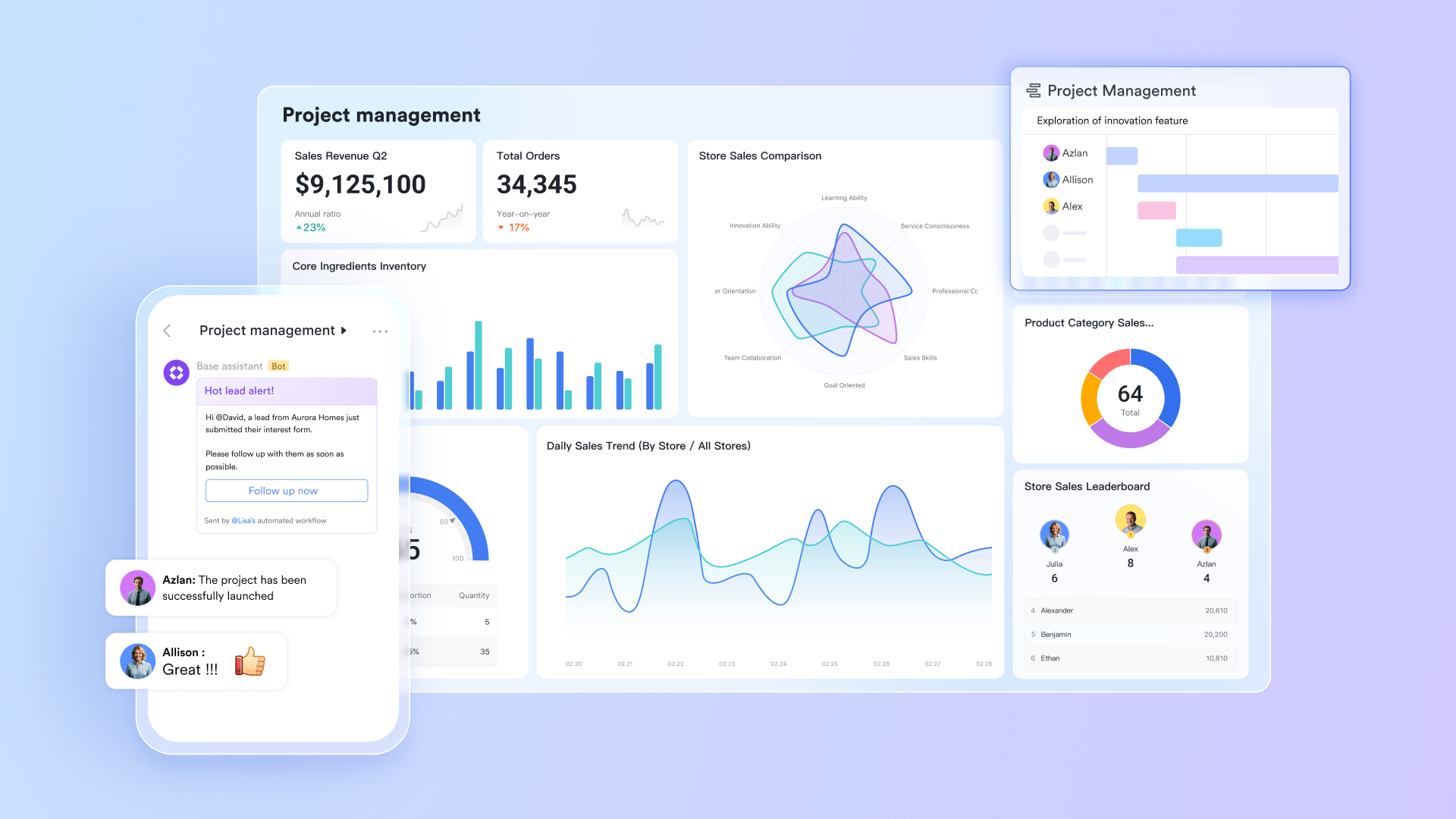
Lark's solution: Cloud‑native documents and spreadsheet tools hosted on secure architecture make real-time data sharing seamless. is designed to enhance data accessibility and collaboration across teams in an organization. One of its standout features is its ability to create interactive dashboards, allowing team members to visualize data quickly and efficiently. By importing with a single click, users can transform raw data into dynamic visual representations that facilitate understanding and analysis. Lark Base supports real-time collaboration, enabling multiple users to work simultaneously on data entries and projects without version conflicts.
When database updates occur—such as changed records, system alerts, or KPI metrics—manual follow‑ups can be error-prone or delayed.
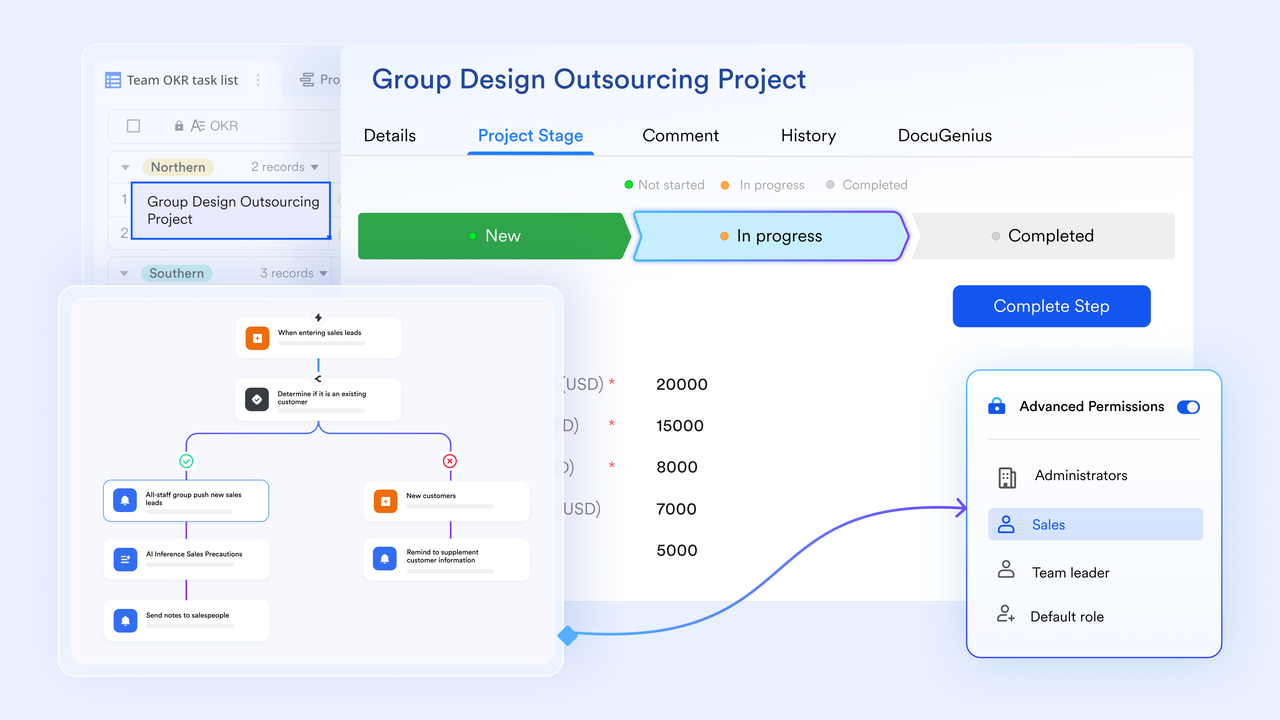
Lark's solution: features automated workflows that allow teams to create customized processes that respond to database triggers automatically with pre-set triggers and rules. For instance, when updated financial data is synced from a cloud warehouse, specific actions—like generating approval requests or sending notifications—can occur without manual intervention.
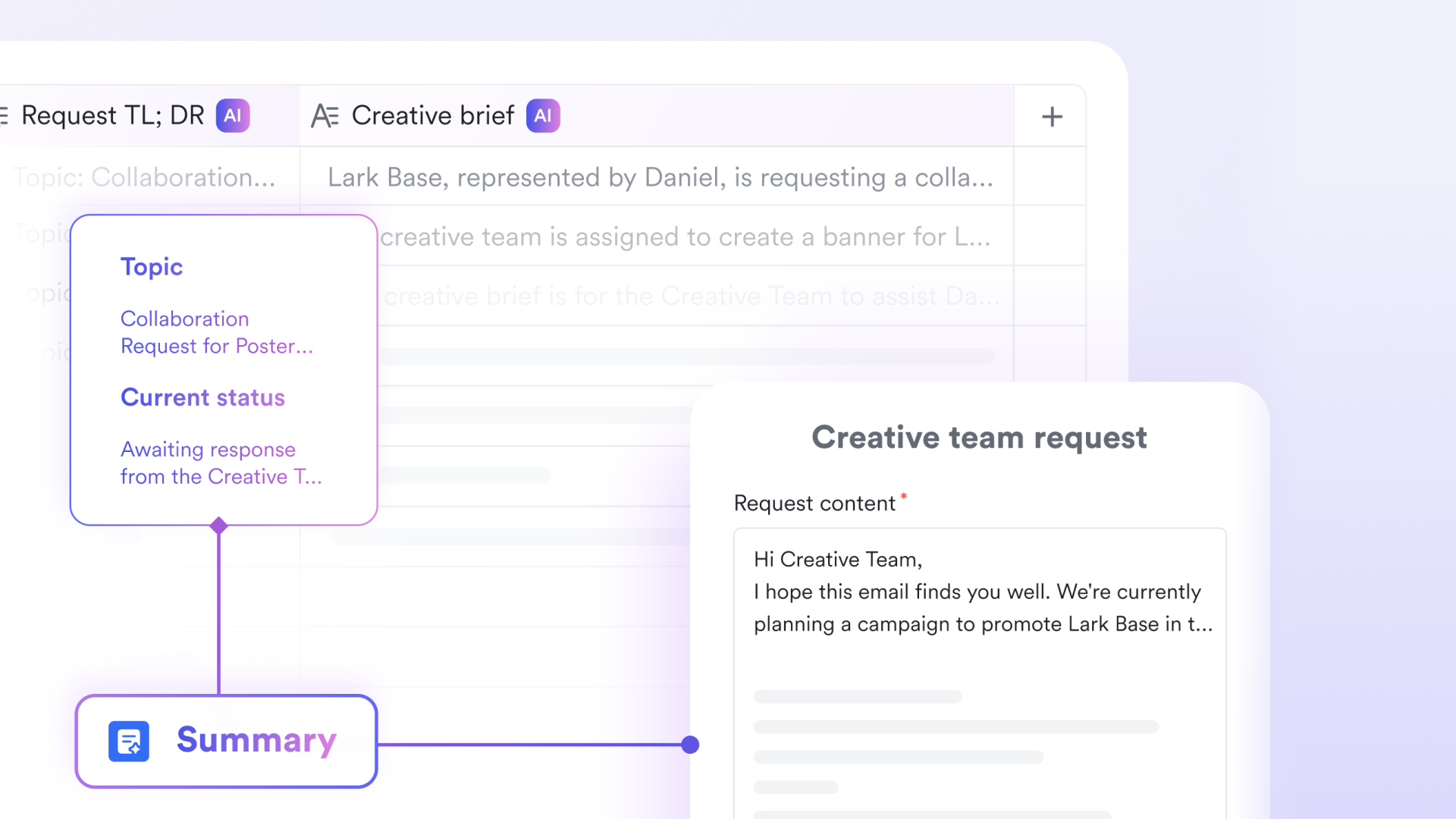
Smart AI fields simplifies bulk data processing and generates insights rapidly, making it easier for teams to manage and utilize their data effectively. This automation enhances operational workflows, ensuring that teams can respond proactively to changes and events, thereby improving responsiveness and collaboration across departments. Centralizing communication around data
A cloud database may efficiently handle structured data, but project communication often scatters across emails and chat tools. This disconnect creates version confusion and wasted time.
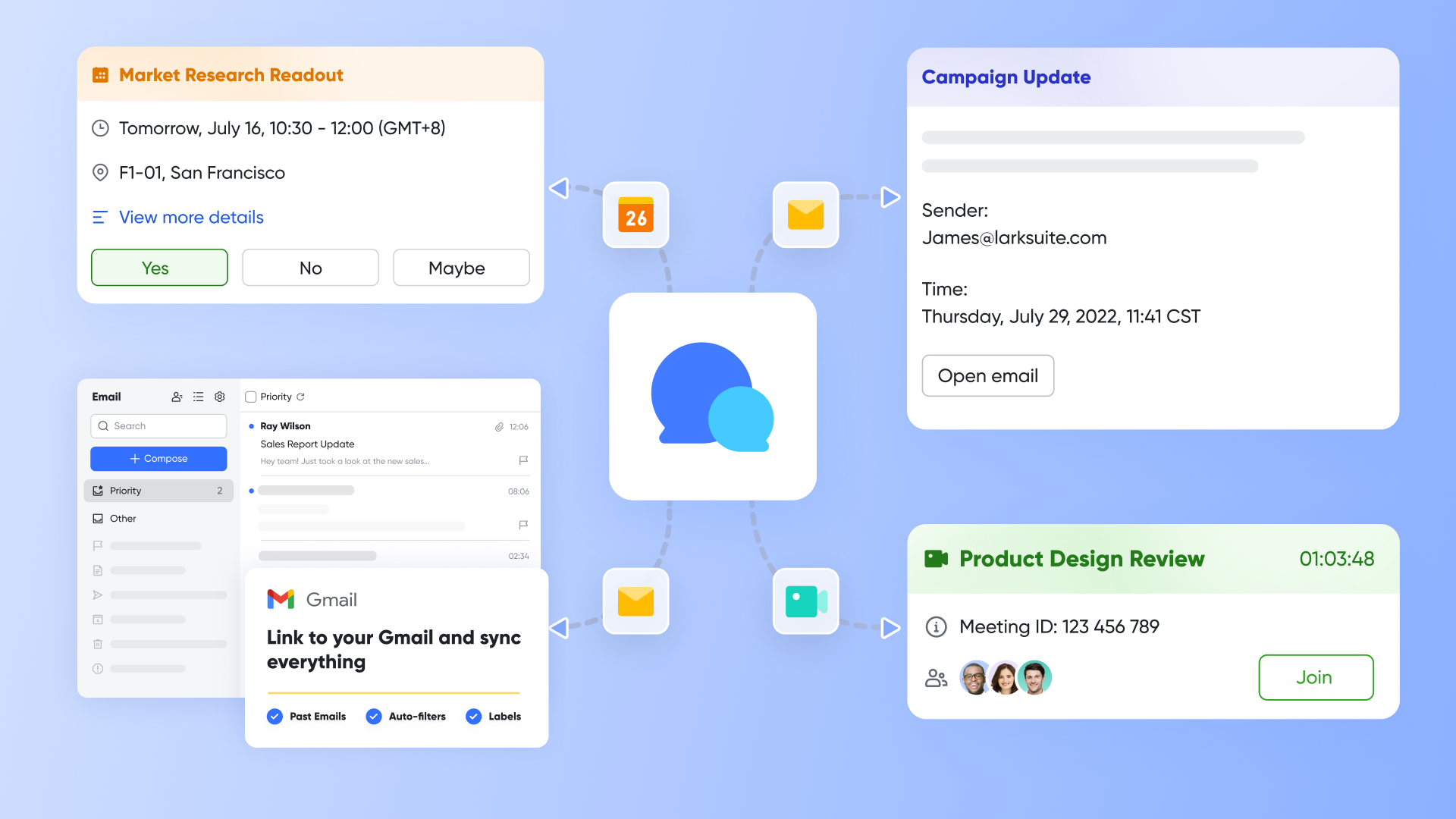
Lark's solution: Unified workspaces blend chat, documents, and dashboards into one environment, allowing contextual discussion tied directly to data. Teams gain a single source of truth—an organized space where analytics, commentary, and decisions coexist.
Enhancing governance and access control
As organizations adopt multi‑cloud databases, maintaining consistent access control and compliance becomes a growing challenge. 
Lark's solution: Through role‑based permissions, audit trails, and encrypted cloud storage, Lark ensures that access to shared data follows organizational policies. This structure empowers administrators to control information flow while enabling .
:
- Starter plan: Free forever plan that includes 11 powerful tools for up to 20 users. It also comes with 100GB of storage, 1,000 automation runs, AI translations, and more.
- Basic plan: $6/user/month (billed annually) for up to 500 users, including everything in Starter plus 1-on-1 video meetings, 5TB of storage, 1,000 automation runs, and more. To know more about Basic plan, .
- Pro plan: $12/user/month (billed annually) for up to 500 users. It includes everything in Basic plus a group calling for up to 500 attendees, 15TB of storage, 50,000 automation runs, and more.
- Enterprise plan: for custom pricing. Supports unlimited users and includes even more automation runs and advanced security, compliance, and management features.
For small teams with simple communication needs

18 months message history
1000 Base automation runs/month
2000 rows per table in Base
Most POPULAR
For companies with comprehensive collaboration and management needs
Unlimited message history
500-participant video meetings
50k Base automation runs/month
20k rows per table in Base
For large companies with advanced security and organizational management needs
Get a personalized demo and pricing
Unlimited message history
500-participant video meetings
15 TB storage + 30 GB storage/user
500k Base automation runs/month
50k Base automation runs/month
Most POPULAR
For companies with comprehensive collaboration and management needs
Unlimited message history
500-participant video meetings
50k Base automation runs/month
20k rows per table in Base
Collaboration tools do not replace cloud database management systems; they amplify their value. By connecting teams, processes, and insights, solutions like Lark help businesses translate complex technical data into collective, actionable intelligence. This human‑centric approach to cloud database operations complements technological sophistication, reflecting the direction highlighted in modern Gartner Cloud Database Management Systems discussions—where integration between people and platforms defines competitive advantage.
How to choose the right cloud database for your organization
Selecting the most appropriate cloud database management system is a strategic decision that shapes scalability, cost, security, and long‑term agility. However, every organization's needs differ.The key lies in evaluating your data characteristics, operational priorities, and consistent ecosystem.
Identify your company's data characteristics and volume
Before making any commitment, assess how your organization stores and processes data. Distinguish between structured and unstructured information, transaction frequency, and latency tolerances. For instance, an company handling millions of daily transactions might prioritize consistency and speed, whereas a research institution might focus on analytical depth and adaptability.
Experiment using free tiers or managed trials
Most top providers—AWS, Google Cloud, Azure, and Oracle—offer free trial options for their CDBMS platforms. These controlled environments allow teams to test compatibility with existing applications, confirm API communication reliability, and measure response times. MySQL is frequently included as a managed service in these free trial offerings, enabling users to explore scalable and in the cloud. A pilot project reveals both potential optimizations and hidden limitations before major investments.
Evaluate vendors for migration tools, integration APIs, and security posture
When considering vendors, use a structured evaluation:
- Migration capabilities: Verify data transformation tools support minimal downtime and hybrid deployment.
- Integration maturity: Ensure APIs can easily connect to your CI/CD pipelines, analytics layers, or collaboration platforms like Lark.
- Security commitment: Examine encryption options, compliance with regulatory frameworks, and ability to support fine‑grained access policies.
Checklist of technical and business factors for decision‑makers
Decision teams should evaluate a combination of performance, cost, and governance considerations.
- Performance: Query speed, replication options, and multi‑region resilience.
- Cost structure: Predictability, elasticity, and hidden transfer fees.
- Support & ecosystem: , customer support channels, and partner integration.
- Future growth: Compatibility with hybrid or multi‑cloud expansion plans.
Ultimately, choosing a database involves balancing innovation with stability. The organizations highlighted in Gartner Cloud Database Management Systems rankings often share a common trait: they align technical agility with business outcomes and clarity about total operational cost.
Get the best cloud database management system
Best practices for getting the most out of your cloud database management system
Once a platform is chosen, the next challenge is operational excellence. Maximizing the potential of cloud database management systems requires methodical practices that reinforce stability, efficiency, and collaboration.
Monitoring and performance optimization
Continuously observe workloads through integrated dashboards and monitoring tools. Regularly analyze query performance, , and latency to fine‑tune configurations. Automated alerts help proactively address anomalies before they impact business operations.
Backup scheduling and testing
Set up frequent, automated backups stored in multiple geographic locations. Just as important, test your recovery procedures to ensure data can be restored without disrupting critical workflows. Consistency checks protect against both physical and logical data loss. Enterprise backup software can help automate this scheduling and validate recovery points across environments, reducing the manual effort of running these tests regularly. Establishing a data governance framework
Governance defines how data is classified, secured, and accessed. By establishing clear ownership and visualization policies, teams reduce compliance risks. Structured governance also ensures data quality—crucial for machine learning and analytics.
Encouraging collaboration between technical and non‑technical teams
A cloud database alone cannot guarantee better decision‑making. Insight emerges when engineers, analysts, and business leaders communicate effectively. Here, information‑sharing platforms can help transform raw metrics into shared understanding. Stakeholders can discuss outcomes, document action items, and maintain an auditable trail—all without exporting sensitive data outside the secure workspace.
Integrating communication platforms for better visibility of performance and incidents
Integrating database monitoring systems with communication tools helps accelerate issue resolution. Automated notifications sent to the relevant chat or document channels keep everyone informed. Over time, this linkage builds an operational culture centered on transparency and accountability. Through continuous monitoring, structured governance, and integrated collaboration, businesses can increase resilience and derive genuine value from their cloud database management systems.
Conclusion
Cloud database management systems have become the technological heartbeat of digital enterprises. They merge scalability, automation, and security into flexible frameworks that power everything from analytics to customer personalization. As organizations pursue agility and real‑time insight, CDBMS platforms stand out as both strategic assets and operational necessities.
Yet, technology alone is not the ultimate differentiator. True innovation emerges when infrastructure connects seamlessly with people. Integrated collaboration tools such as Lark close the gap between database performance and decision-making by aligning data visibility, workflow automation, and secure communication across teams. The future of cloud database management is not just about where data lives—it's about how intelligently it moves through an organization to spark action and growth.
Improve your business with a cloud-based tool
FAQs
What are cloud database management systems?
Cloud database management systems (CDBMS) are platforms that allow organizations to store, manage, and access data through cloud infrastructure rather than on‑premises servers. They provide scalability, high availability, and built‑in automation for tasks like backups, replication, and security. The Gartner Cloud Database Management Systems reviews frequently highlight how these platforms enable enterprises to modernize operations and reduce maintenance overheads.
What is a cloud DB system?
A cloud DB system is the technical backbone of a cloud database—it consists of distributed computing nodes, storage engines, and orchestration services that collectively manage data in real time. It operates under the database‑as‑a‑service (DBaaS) model, meaning vendors handle system updates, scaling, and security, while users focus on building applications. This approach offers superior flexibility and simplified management compared to traditional systems.
What is the most popular cloud database?
There isn't a single universal leader, as popularity depends on workload type and use case. However, providers frequently recognized in the Gartner Magic Quadrant for Cloud Database Management Systems include Amazon Web Services (AWS) for its Amazon Aurora and DynamoDB services, Google Cloud for BigQuery, and Microsoft Azure for SQL Database. Oracle and emerging cloud providers also hold strong positions for specialized enterprise workloads.
What are the 4 types of database management?
The four general categories of database management are:
- Relational Database Management Systems (RDBMS): Manage structured data using SQL and relationships across tables—ideal for financial, transactional, and operational systems.
- NoSQL Systems: Handle unstructured data formats like JSON, enabling flexibility for web, IoT, and AI applications.
- In‑Memory and Time‑Series Databases: Optimize performance for analytics, telemetry, or real‑time data streams.
- Distributed or Multi‑Cloud Databases: Spread data across regions or providers to combine security, redundancy, and scalability.
Modern cloud database management systems often blend these models, giving businesses the agility to store and analyze multiple data types from a single, integrated environment.
Related reading