Project management is a multifaceted discipline, requiring careful planning, execution, and, critically, closure. Effective project closure is essential not only for finalizing tasks, but also for ensuring that all stakeholders have a clear understanding of the project outcomes and lessons learned. A well-structured project closure checklist can be the key to achieving this. It serves as a guide to wrap up the project systematically and ensures that no critical steps are overlooked. This blog aims to provide a comprehensive exploration of project closure, including its significance, the essential components of a project closure checklist, and practical tools to streamline the process.
Discover how to manage projects efficiently
Quick preview for project closure checklist
- Confirm deliverables are complete
- Obtain stakeholder sign-offs
- Finalize project documentation
- Conduct a lessons learned session
- Develop a project closeout report
- Release project resources
- Archive project documents
- Transition to ongoing operations
What is project closure?
Project closure refers to the final phase in the , where all activities tied to a project are completed and the project is officially deemed finished. This phase encompasses a variety of tasks, such as obtaining stakeholder approvals, finalizing all project documentation, and conducting post-project evaluations.
During project closure, project managers and teams must ensure that the established criteria and that all stakeholders are satisfied with the outcomes. It is also a time to reflect upon the project journey, capturing valuable insights that can be applied to future projects. Proper project closure involves not just completing tasks, but also tying up loose ends and ensuring that the project transitions smoothly into ongoing operations if applicable.
The importance of a project closure checklist
A project closure checklist is invaluable for ensuring that all necessary steps are followed during the project closure phase. Here are the key reasons why it is essential:
- Ensures thoroughness: A project closure checklist guarantees that all tasks are completed systematically, leaving no stone unturned. This thoroughness is crucial for finalizing deliverables and obtaining approvals from stakeholders. It's easy to overlook details when closing a project, but a checklist mitigates this risk.
- Promotes organization and efficiency: Using a checklist helps organize tasks in a logical sequence, streamlining the closure process. This organization saves time, allowing project managers and teams to focus on completing essential activities without unnecessary delays.
- Enhances communication: A project closure checklist serves as a among team members and stakeholders. By providing a shared reference, it helps ensure everyone is on the same page regarding expectations and responsibilities. This clarity is especially important in large projects where multiple teams may be involved.
- Facilitates lessons learned collection: One of the most significant benefits of a project closure checklist is its role in . By systematically reviewing what worked well and what didn't, project teams can gather insights that will improve future projects. This reflective process fosters continuous improvement in project management practices.
- Reduces project risks: Proper project closure associated with incomplete tasks or unresolved issues. A checklist helps project managers identify potential gaps or problems before closing, ensuring that all aspects of the project are addressed and preventing negative impacts on future operations.
Make sure your project closure success
Essential project closure checklist for success
A comprehensive project closure checklist is crucial for ensuring a methodical wrap-up of every project. This checklist helps to guarantee that all essential tasks are completed before officially closing a project, allowing you to transition smoothly into future initiatives. Here's an in-depth look at the main components that should be included in your project closure checklist:
1. Confirm deliverables are complete
Review each deliverable: Before considering a project closed, verify that all deliverables are not only completed but also meet the quality standards defined in your project plan. This may involve conducting final tests or quality assurance reviews to ensure everything functions as intended.
Client approval: Reach out to clients or stakeholders for their formal approval on deliverables. Make sure you gather feedback throughout the review process to address any issues before closure.
2. Obtain stakeholder sign-offs
Formal documentation: Create a document outlining all deliverables and seek signatures from key stakeholders confirming their satisfaction with the project's outcomes. This sign-off is often pivotal in establishing trust and transparency between project teams and stakeholders for future collaborations.
Stakeholder meeting: with stakeholders to discuss project outcomes and gather any closing remarks or suggestions. This engagement can solidify relationships and open avenues for future work.

3. Finalize project documentation
Comprehensive records: Gather all project-related documentation, including contracts, specifications, budget reports, and performance metrics. A standardized Project Closeout CHECKLIST PDF is a good choice. But like Lark can ensure that no important documents are left out.
Project closing report: Prepare a detailed project closing report that summarizes the project's objectives, results, challenges faced, and how they were overcome. This document serves as a reference for both your team and future projects.
4. Conduct a lessons learned session
Team engagement: Organize a dedicated meeting with your project team and to talk about what worked well and what didn't during the project lifecycle. Encourage open discussions to capture diverse perspectives.
Documentation of insights: Use to record these insights. Creating a structured document that summarizes lessons learned can provide immense value in enhancing project management practices in the future.
5. Develop a project closeout report
Content outline: The closeout report should include sections on , deliverables, stakeholder feedback, issues encountered, and lessons learned. This structured approach makes it easier for readers to understand the project's overall success and challenges.
Accessibility: Ensure this report is accessible to all team members and stakeholders, as it serves as a historical document for future reference. It can help inform decision-making in upcoming projects.
6. Release project resources
Resource reallocation: After project closure, review your team's roles to determine where . Communicate upcoming changes to your team to maintain clarity and avoid confusion about responsibilities.
Feedback for team members: Provide constructive feedback to team members regarding their contributions to the project. Recognizing individual efforts boosts morale and encourages continued excellence.
7. Archive project documents
Centralized storage: Organize and archive all project documents in a secure, easily accessible location. Digital tools can be incredibly effective for this purpose, allowing team members to reference important documents and reports in future projects.
Compliance considerations: Pay close attention to any compliance or regulatory requirements for document retention to avoid potential issues down the line.
8. Transition to ongoing operations
Smooth turnover: If the project results in , ensure a seamless transition. Provide adequate training for users and share necessary documentation to support ongoing operations.
Long-term support: Establish a support plan to help users troubleshoot or address any post-implementation challenges they may face. This support enhances project adoption and helps stakeholders realize benefits in the long term.
By following this detailed project closure checklist, you will not only ensure comprehensive project wrap-up but also set a solid foundation for future projects, capturing valuable learnings for continuous improvement.
Steps to effective project closure
Effective project closure isn't just a list of isolated tasks—it follows a clear flow: start the process → → hand over deliverables → embed learnings. The steps below focus on "smooth coordination and overall control," complementing the closure checklist. They're designed to be simple, easy to follow, and free of repetition.
Step 1: Kick off the closure process and clarify core boundaries
Confirm trigger conditions: Check against the project charter and contract terms to ensure "all deliverables have passed acceptance and key stakeholders have no major objections" before officially starting the closure process.
Form a dedicated closure team: Define roles (e.g., compliance checks, resource coordination, communication) and (including key dates: approval deadlines, document archiving, resource release) to avoid conflicts with daily work.
Step 2: Conduct compliance and risk checks to remove closure barriers
Close contracts and financial matters: Verify that all supplier contracts and service agreements are fully executed. Settle financial tasks like invoicing, payments, and security deposit refunds. Summarize the project budget execution.
Verify compliance and risks: Ensure the project meets industry regulatory requirements (e.g., data security, document retention rules). Identify potential disputes (e.g., deliverable disagreements, intellectual property ownership) and prepare action plans in advance.
Step 3: Coordinate stakeholder collaboration to finalize approvals
: Have one-on-one syncs with core stakeholders (clients, management) to share project outcomes and closure plans. Hold short coordination meetings with collaborating departments (e.g., tech, finance) to confirm no pending issues.
Address objections promptly: Collect feedback from stakeholders during the sign-off process. Ask the team to provide solutions within 3 working days to avoid delays. Finally, compile all signed documents into a "Project Closure Approval Summary."
Step 4: Facilitate deliverable handover and transition to daily operations
Transfer responsibilities and materials: Work with the operations/usage team to clarify who will manage the deliverables long-term (e.g., system maintenance, content updates). Hand over full operation manuals and maintenance documents, and organize 1-2 hands-on training sessions to ensure the receiving team can work independently.
Establish a transition support mechanism: Set up a 1-2 week "closure transition period." Arrange core project members to answer questions and quickly resolve early operational issues, ensuring the deliverables work as intended.
Step 5: Solidify lessons learned and optimize the management system
Categorize and organize lessons learned: Use insights from the "lessons learned session" in the checklist. Group them into "process improvements, risk avoidance, and tool enhancements" to create a "Project Lessons Learned Handbook."
Iterate the management system: Add reusable learnings (e.g., acceptance criteria for specific deliverables, efficient communication templates) to the company's project management knowledge base to improve future processes.
Step 6: Complete administrative closure and finalize resource/document handover
Release resources in an orderly manner: Gradually free up project team members, equipment, and office space according to the timeline. Update resource status in internal systems. Share with HR to support salary calculations.
Archive documents in a standardized way: Classify and store core documents (e.g., Project Closure Report, Completion Report, Lessons Learned Handbook) per company guidelines (including version labels and search tags) for easy retrieval later.
Step 7: Officially announce project closure and establish long-term support
Announce closure to all relevant parties: Officially declare the project closed via internal emails or team meetings. Share key outcomes, team contributions, and support details (e.g., after-sales contact, feedback channel).
Agree on long-term support arrangements: If the deliverables require ongoing maintenance, clarify the responsible department and contact information. For complex projects, reserve a small budget and resources to address potential future issues.
By following these steps for effective project closure, project managers can ensure that every aspect of the closure process is carefully handled. This organized approach will not only facilitate a smooth transition to new projects but also create a valuable repository of knowledge and experience, setting the stage for success in future initiatives.
Follow these steps with a powerful project management tool
Use Lark to transform your project closure
Project closure is far more than just announcing the project's end. It is a rigorous process to ensure complete delivery of outcomes, solidify lessons learned, and disband the team in an orderly manner. With its unified features, can transform the scattered tasks of this phase into a smooth, traceable, and systematic operation.
Centrally archive project assets and deliverables
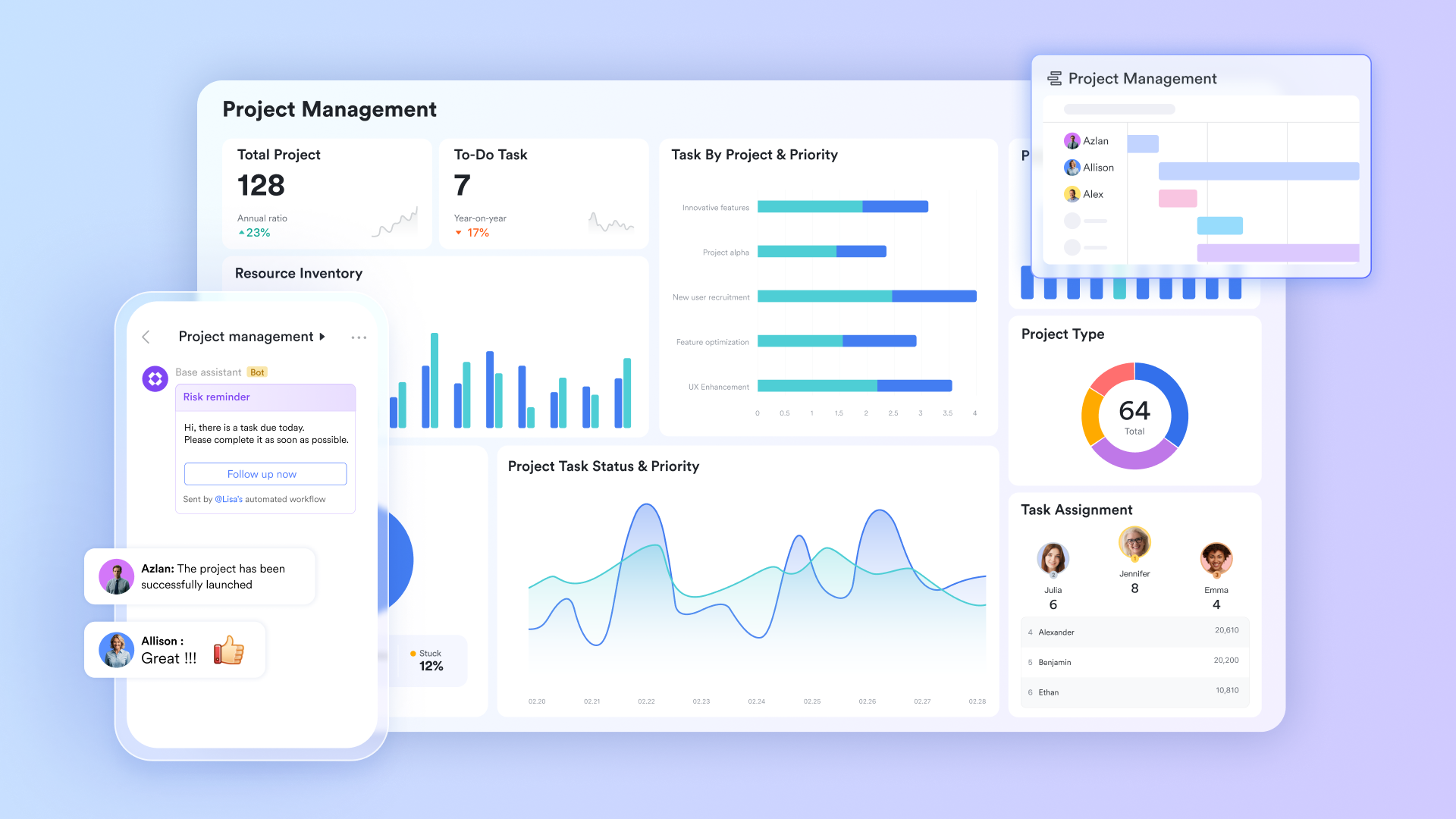
The primary task of project closure is to ensure all deliverables are completely archived to prevent knowledge loss. The traditional method of manually collecting various files into cloud drive folders is difficult to manage and search.
You can create a dedicated knowledge base page for the project in , serving as the "master catalog" for all outcomes. Here, you can link or embed categorized final versions of the project plan (), finalized designs, test reports (), acceptance records, and more. Lark Wiki also allows you to set member permissions, ensuring only authorized members can access or edit this unified knowledge center. This maintains information standards and provides a complete basis for future audits or maintenance.
Systematically complete financial and contract closure
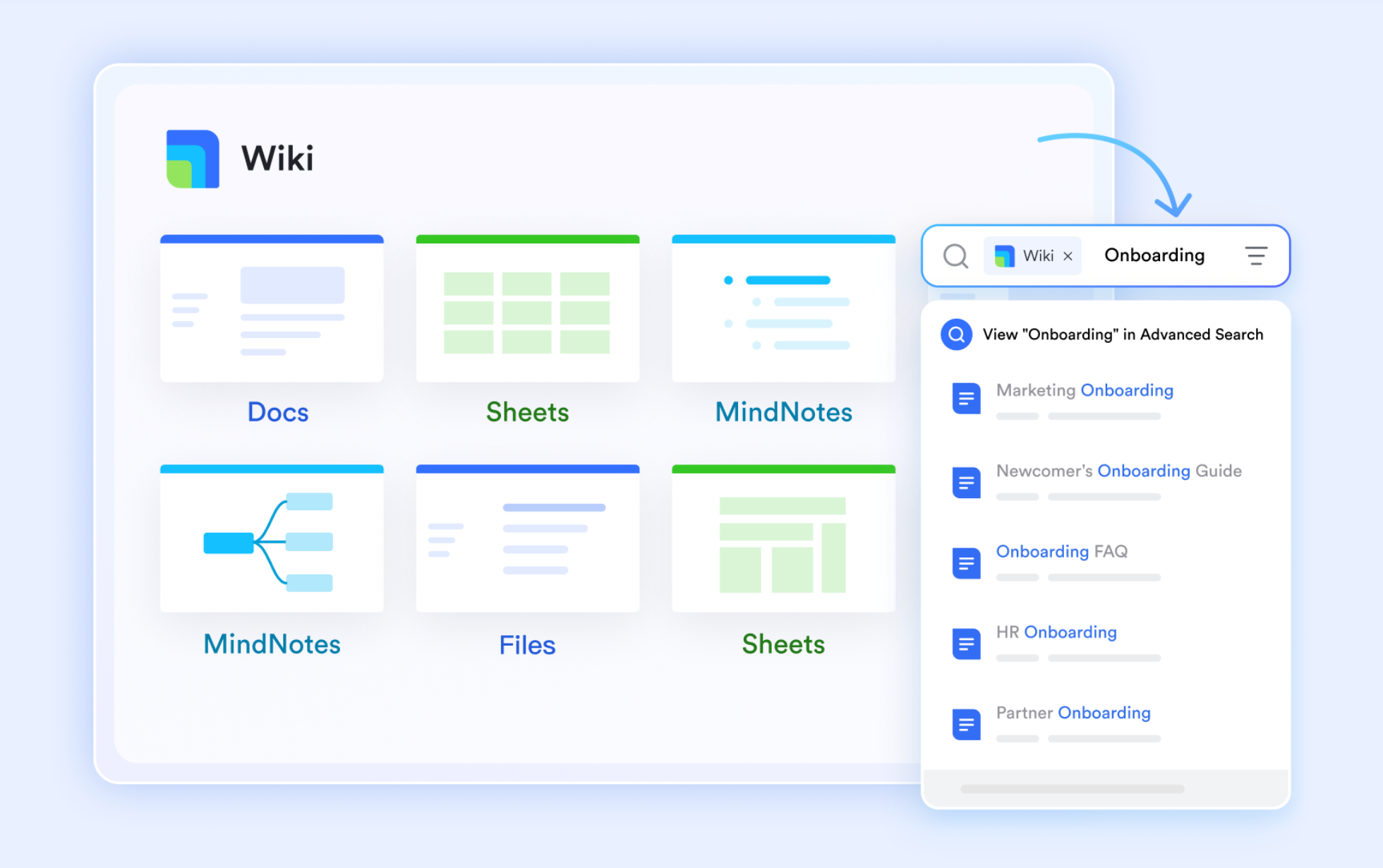
Financial settlement is a critical part of project closure, involving final payments, supplier settlements, and requires clear records and approvals. In the table used for financial management, create an independent view or filter tag for this project. Record all related purchase contracts, invoices, and payment requests here. 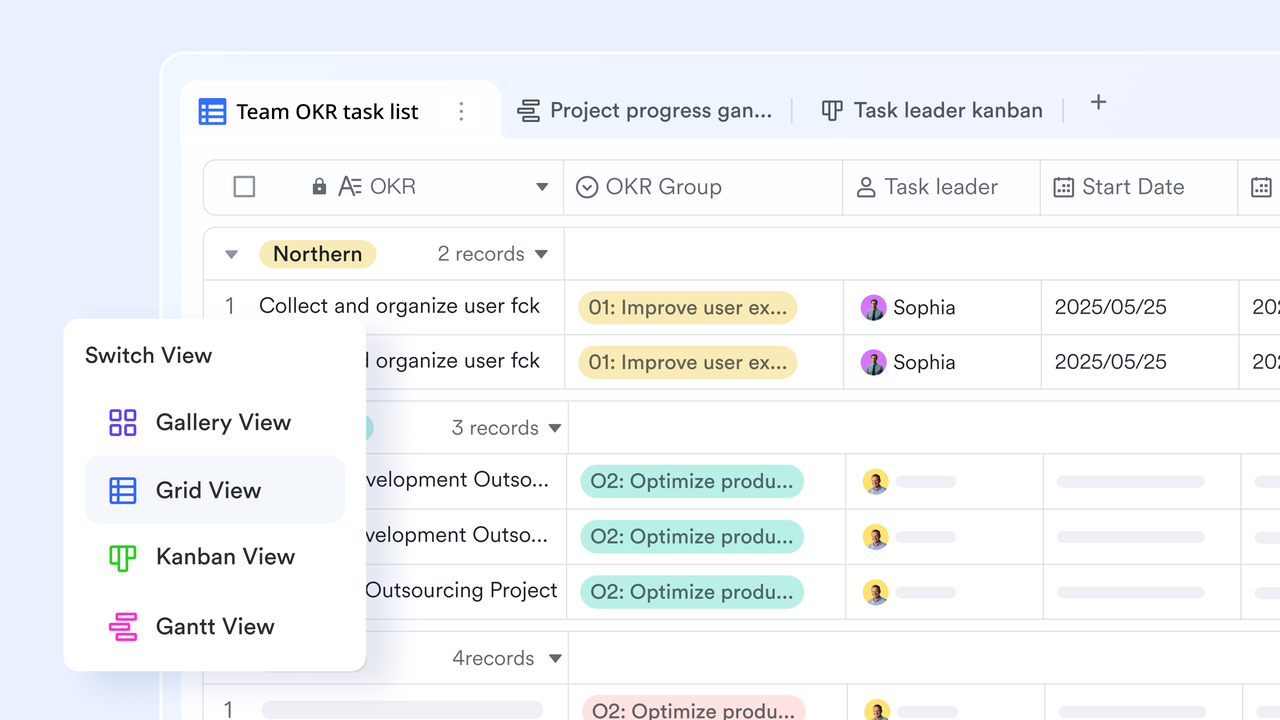
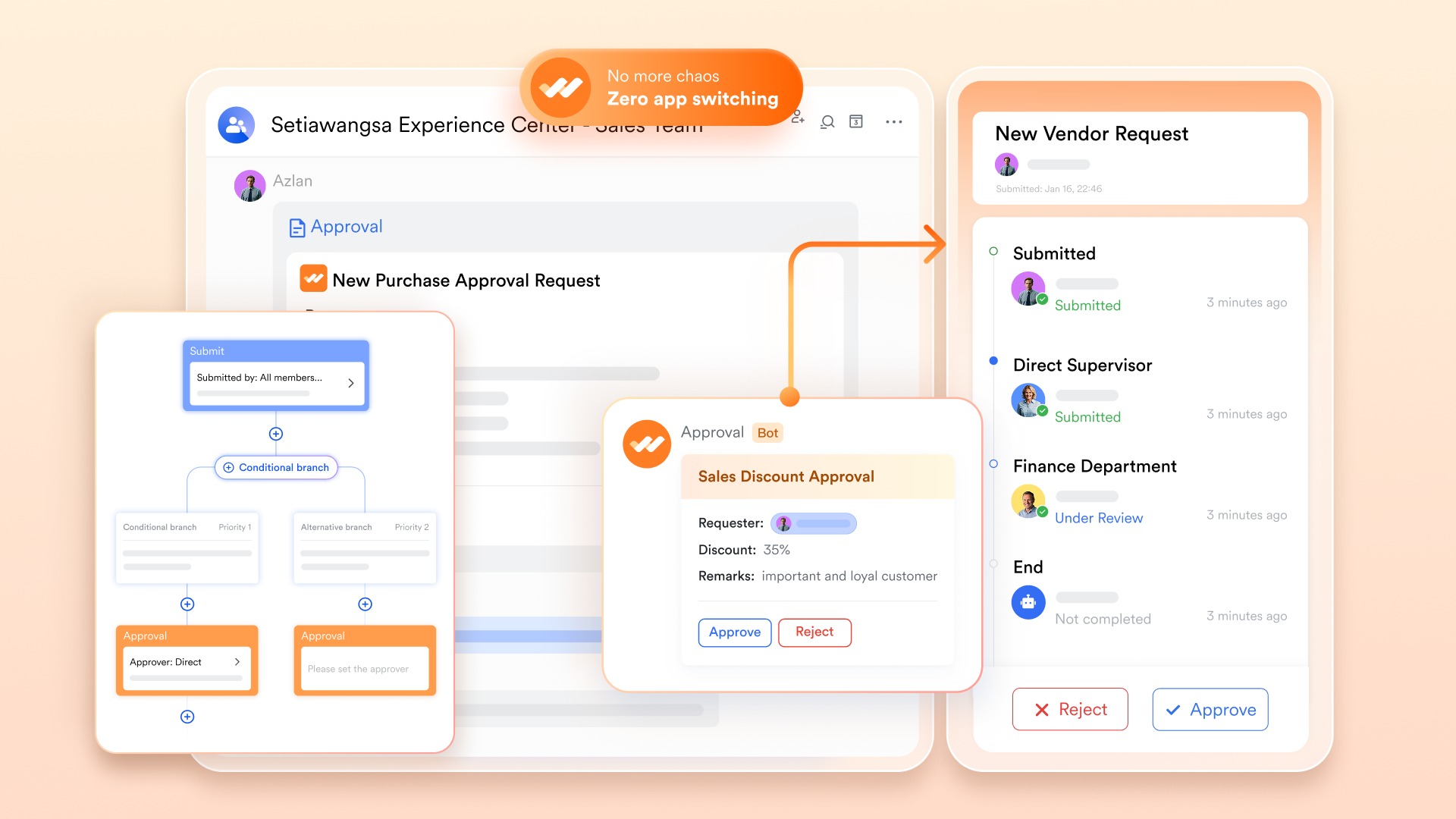
When it's time to process the final payment, you can collect all the information you need from Base and initiate a workflow, routing it to finance and the project director. The entire approval history and payment status are preserved within an approval workflow, forming a closed-loop financial audit trail that prevents oversights or confusion.
Efficiently organize project retrospectives and knowledge retention
Valuable retrospectives are the soul of project closure, aiming to convert implicit experience into explicit knowledge. However, organizing effective review meetings and solidifying conclusions is often challenging.
First, use to design an anonymous project retrospective questionnaire covering satisfaction, success factors, areas for improvement, etc., to collect team members' independent thoughts in advance. Then, schedule the retrospective meeting in , attaching the questionnaire results and relevant project documents as the meeting agenda. During the meeting, use features like and in Lark Meetings to automatically generate a complete record and summary of the discussion. These documents are finally stored in the project Wiki, becoming an asset for the team's continuous improvement.

Properly conclude team operations and provide recognition
Recognizing team members' contributions at project end is very important, while also clearly communicating the project's conclusion, team disbandment, or transition to new projects.
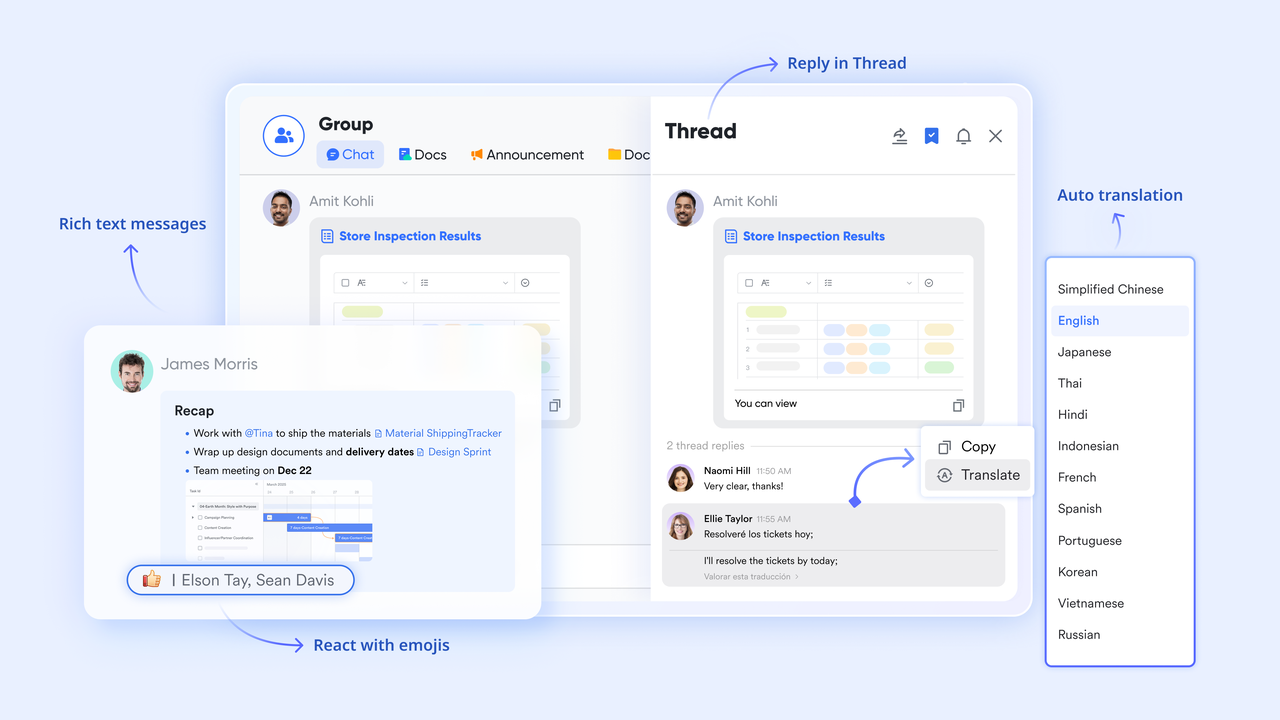
In the project's core group, the project manager can post a formal thank-you note, @mentioning all members to publicly acknowledge their efforts. The group announcement feature can be used to clearly communicate the group's archiving timeline, future support contacts, and the final location of relevant documents. For outstanding members, offer immediate, public praise directly within the chat. This ceremonial closure can boost team morale and a sense of belonging.
Generate a comprehensive project closure overview report with ease
Project managers often need to submit a final project closure report to stakeholders or management, summarizing all the above work.
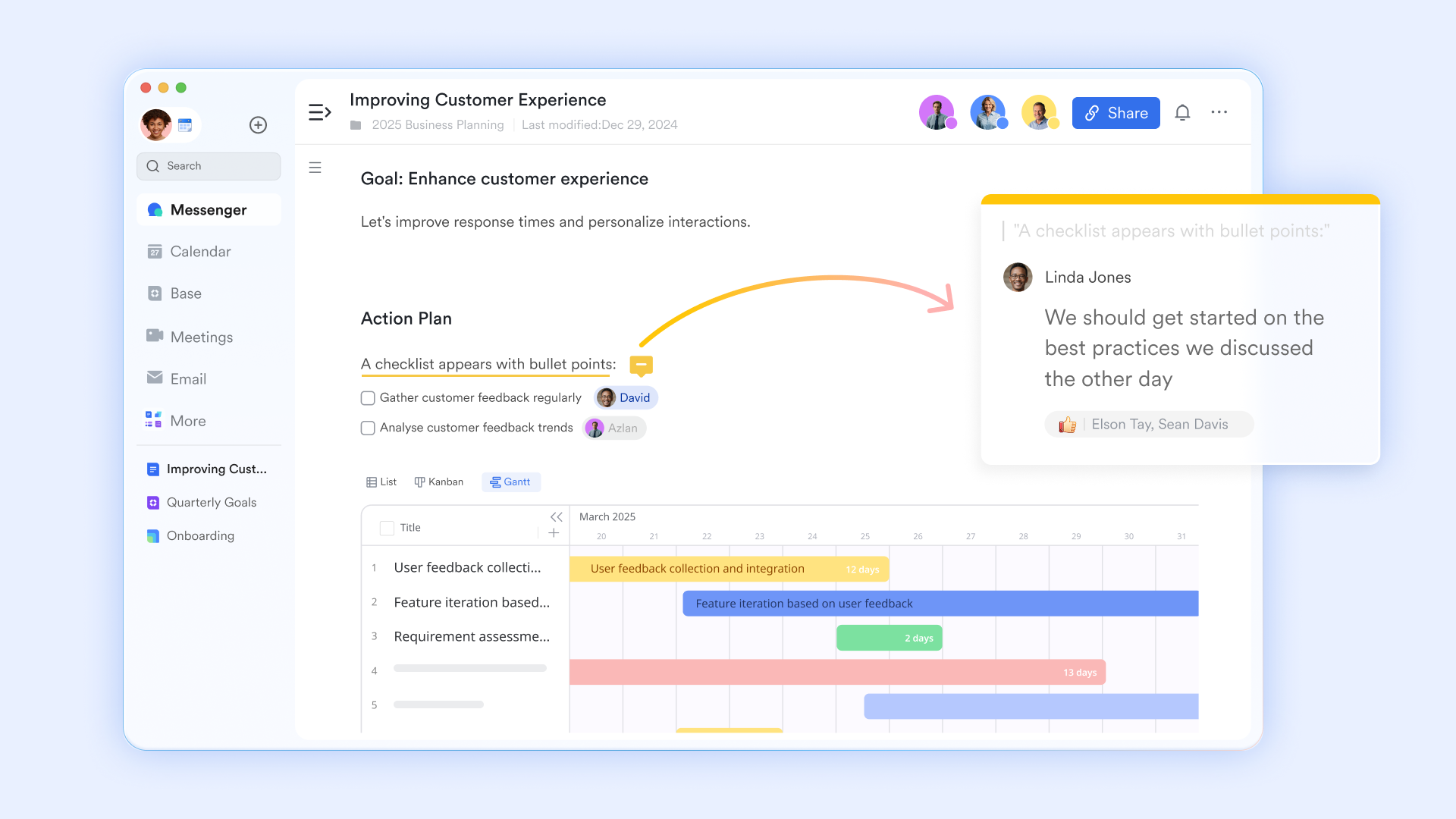
You don't need to write the report from scratch. Simply create a new document and use the "Insert" function to directly link to: 1) the outcomes catalog in Wiki; 2) the deliverables status table and financial settlement view in Base; 3) the retrospective summary document. More importantly, you can also edit this report with your team members in real time. Then, you only need to add a brief executive summary and the formal project closure announcement. The links in this report are "live"—management can click to view the latest, most detailed underlying data, making the report both concise and highly persuasive.
Here is Lark's detailed pricing plans:
- Starter plan: Free forever plan that includes 11 powerful tools for up to 20 users. It also includes 100GB of storage, 1,000 automation runs, AI translations, and more.
- Pro plan: $12/user/month (billed annually) for up to 500 users. It includes everything in Starter, plus group calling for up to 500 attendees, 15 TB of storage, 50,000 automation runs, and more.
- Enterprise plan: for custom pricing. Supports unlimited users and includes even more automation runs and advanced security, compliance, and management features.
For small teams with simple communication needs

18 months message history
1000 Base automation runs/month
2000 rows per table in Base
Most POPULAR
For companies with comprehensive collaboration and management needs
Unlimited message history
500-participant video meetings
50k Base automation runs/month
20k rows per table in Base
For large companies with advanced security and organizational management needs
Get a personalized demo and pricing
Unlimited message history
500-participant video meetings
15 TB storage + 30 GB storage/user
500k Base automation runs/month
50k Base automation runs/month
Most POPULAR
For companies with comprehensive collaboration and management needs
Unlimited message history
500-participant video meetings
50k Base automation runs/month
20k rows per table in Base
Examples of project closure in real-world scenarios
Understanding how project closure functions in real-world scenarios can provide valuable insights into best practices. Here are a few examples that illustrate effective project closure across various industries:
In a software development project, a leading tech company successfully implemented a customer relationship management (CRM) system for a major client. As the project approached closure:
- Completed deliverables: The project team ensured all features were implemented and functioned correctly through rigorous testing.
- Stakeholder sign-off: At the project conclusion, the client was invited for a demonstration. Stakeholders reviewed the system and provided valuable feedback, ultimately leading to their sign-off.
- Lessons learned: The project manager organized a reflective meeting where developers discussed challenges faced during integration and what could be improved in future projects.
In the construction industry, a multinational firm had just completed a significant office building. As part of their project closure:
- Final inspections: The project team conducted thorough final inspections to ensure that all construction specifications were met and that the building was safe for occupancy.
- Handover documentation: A Project closing report was prepared, including all design documents, maintenance guidelines, and warranty information. These project close out documents were handed over to the client.
- Celebration of success: The firm held an opening ceremony, celebrating the successful completion with the project team and stakeholders, fostering positive relations.
After launching a multi-channel marketing campaign, a marketing agency reached the closure phase by:
- Analyzing campaign performance: The team evaluated the campaign's impact by reviewing metrics such as engagement rates, lead generation, and return on investment (ROI).
- Documenting lessons learned: During a wrap-up meeting, the team discussed what strategies were effective and what lessons could be applied to future campaigns.
- Reporting to stakeholders: A comprehensive project management checklist was compiled to summarize the campaign results for the client, which depicted success and areas for future improvement.
These examples highlight different aspects of project closure, showing how structured processes can lead to successful project completions. By understanding these real-world applications, project managers can enhance their own closure practices.
Common mistakes in project closure and how to avoid them
Closing a project can be a complex task, and several common mistakes can hinder effective closure. Here are some pitfalls and strategies for avoiding them:
- Incomplete documentation: Failing to compile all necessary project documentation can create confusion and hinder future projects. To avoid this, utilize a standardized project closure checklist to guide documentation efforts, ensuring that all relevant documents, such as contracts, reports, and lessons learned, are collected and .
- Neglecting stakeholder feedback: Not seeking stakeholder feedback during project closure can lead to unresolved issues and dissatisfaction. Schedule final meetings to gather input from stakeholders and use this feedback to create a comprehensive project closing report that summarizes key insights, ultimately building stronger relationships for future collaborations.
- Lack of a final evaluation: Skipping a final evaluation of the project can result in missed opportunities for learning. Conduct a thorough project review to note what worked well and what didn't, documenting these insights in a “lessons learned” session to inform future projects and enhance overall project management practices.
- Inadequate resource transition: Not properly transitioning project resources can lead to confusion about roles and responsibilities in ongoing operations. Create a clear plan for at project closure, communicate changes to your team, and provide necessary training to ensure a smooth transition.
By being aware of these common pitfalls and implementing strategies to avoid them with like , project managers can enhance their project closure process, leading to improved satisfaction and long-term success.
Avoid these pitfalls in project closure
Metrics for evaluating project closure success
Measuring the success of project closure is essential for understanding how well it was executed. Here are several key metrics to consider:
- Stakeholder satisfaction: This can be assessed through surveys or feedback forms distributed to stakeholders post-closure. Evaluating whether their expectations were met can provide insight into project success.
- Completion rate of deliverables: Analyze the degree to which planned deliverables were completed on time and according to predefined quality standards.
- : Assess the thoroughness of the documentation collected throughout the project. This includes evaluating whether all critical documents are stored in an accessible format.
- Lessons learned implementation: Track how well lessons learned from past projects are applied to new projects. Are teams utilizing insights gained from previous experiences?
- Post-project performance: After the project is closed, monitor its ongoing impact, such as benefits realization and operational effectiveness. This could involve reviewing relevant to the project outcomes.
By focusing on these metrics, project managers can gain valuable insights into the effectiveness of their project closure practices. This evaluation not only contributes to personal growth but also helps advance the organization's project management maturity.
Conclusion
Effective project closure is vital for ensuring that every project reaches its full potential and leaves a lasting positive impact on stakeholders. By following a comprehensive project closure checklist and avoiding common pitfalls, project managers can enhance their processes and ensure continuous improvement. Embracing tools like can streamline communication and documentation throughout the closure phase, making project wrap-up smoother and more efficient. Make the most of your project management experience by incorporating Lark into your workflow today!
Enhance the efficiency of your project closure
FAQs
What are the 7 steps to closing a project?
The seven steps to closing a project include: 1) Confirming deliverables are complete, 2) Obtaining stakeholder approvals, 3) Finalizing project documentation, 4) Conducting a lessons learned session, 5) Closing all contracts, 6) Archiving project documents, and 7) Celebrating project success. Using Lark can streamline these processes, allowing for better collaboration and documentation.
What is a closure checklist?
A closure checklist is a structured tool that outlines all the tasks and activities that need to be completed to finalize a project. It helps ensure that nothing is overlooked during the closing phase, providing a systematic approach to project wrap-up. Leveraging Lark's collaborative features can assist teams in managing and updating their checklists effectively.
What are the 5 types of project closure?
The five types of project closure are: 1) Normal closure, where projects meet their objectives; 2) Premature closure, when projects are stopped early due to issues; 3) Perpetual closure, marking ongoing projects that never finalize; 4) Failed closure, where projects do not achieve intended outcomes; and 5) Administrative closure, focusing on formalizing documentation and approvals. Utilizing Lark helps facilitate communication during the closure process, regardless of the type.
What should be in a project closure report?
A project closure report should include key elements such as project objectives, a summary of deliverables, stakeholder feedback, performance metrics, lessons learned, and any unresolved issues. This comprehensive report serves as a valuable reference for future projects. Consider using Lark for easy sharing and commenting on reports within the team.
Related reading