In a bustling office environment, a project team gathers around a whiteboard, brainstorming ideas for a new product launch. As they discuss timelines and potential challenges, it becomes clear that a rigid project management approach won't suffice. They need a strategy that allows for both structure and flexibility to adapt to evolving market conditions.
This scenario highlights the growing reliance on hybrid project management methodology, which combines the structured phases of traditional methodologies, such as Waterfall, with the adaptability of Agile processes. This dynamic approach enables teams to tailor their strategies based on specific project demands, optimizing resource allocation and enhancing collaboration. As this guide unfolds, you'll discover the benefits of hybrid methodologies, the challenges organizations encounter during their adoption, and how tools like Lark can support seamless implementation, ensuring teams are well-equipped to navigate today's complex project landscape.
What is hybrid project management?
Hybrid project management is a versatile approach that strategically combines elements from various methodologies to best suit a project's unique demands. At its core, this often involves blending the structured, sequential planning of traditional methods like Waterfall with the iterative and flexible nature of Agile. This allows teams to benefit from predictability and comprehensive planning, while also maintaining adaptability for evolving requirements.
The power of a hybrid model lies in its ability to select and integrate the most effective practices from a diverse range of methodologies, creating a tailored framework for optimal project execution. It addresses the limitations of relying solely on one approach, especially in dynamic environments where strict linear progression or complete ad-hoc flexibility might prove insufficient. A truly hybrid strategy can draw upon principles from various sources, including:
- : For initial planning, scope definition, and fixed deliverables.
- Agile project management: For iterative development, continuous feedback, and rapid adaptation.
- (CPM): For identifying and managing key activities and timelines.
- : For quality control and process improvement, especially in complex manufacturing or service projects.
- PRINCE2: For robust governance, role definition, and project control.
- Outcome mapping: For focusing on behavioral changes and long-term impact.
By combining these, hybrid project management empowers organizations to improve resource allocation, enhance team collaboration, and respond effectively to changes, ultimately leading to more successful and resilient project outcomes.
Eager to try these methodologies in a smart tool?
Benefits of hybrid project management methodology
Balancing structure and agility
The hybrid project management approach strikes a balance between the rigidity of Waterfall and the fluidity of Agile. This balance leads to improved outcomes by leveraging the strengths of both methodologies.
- Clear project frameworks: By incorporating structured planning, teams can define clear project milestones, budgets, and timelines while still allowing for iterative feedback loops during execution. This dual approach ensures that projects remain on track while accommodating necessary adjustments along the way.
- : Hybrid approaches help organizations manage risks more effectively. The planning and risk assessment inherent in traditional methodologies provide crucial safeguards, while the adaptability of Agile allows teams to address emerging risks in real-time.
Improved stakeholder engagement
Incorporating a hybrid methodology enhances communication and collaboration among stakeholders, which is critical for project success.
- Frequent feedback: The iterative nature of Agile ensures regular check-ins with stakeholders, fostering open communication lines. This engagement allows teams to gather feedback and insights, helping to align project outcomes with stakeholder expectations.
- Collaborative culture: Hybrid methodologies promote a culture of collaboration, where teams work closely together to adjust project trajectories as needed. This involvement increases stakeholders' investment in the project, leading to greater overall satisfaction and positive outcomes.
Flexibility and responsiveness
One of the most pronounced benefits of hybrid project management is its inherent flexibility. The combination of traditional and Agile methodologies equips teams with the necessary to respond effectively to unexpected challenges and opportunities.
- Adaptability to change: The iterative nature of Agile allows for frequent reassessments and adjustments, enabling project teams to pivot quickly as requirements evolve. This flexibility is essential in today's dynamic environment, where market conditions and stakeholder needs are continually shifting.
- Tailored approaches: Projects can be managed using a methodology that best suits their specific requirements. For example, teams can utilize Agile approaches during development phases to foster innovation while employing in planning and deployment to ensure compliance with timelines and budgets.
Challenges of adopting hybrid project management
While hybrid project management offers numerous benefits, organizations often encounter specific challenges related to its implementation, especially when relying on various digital tools and platforms to support these methodologies.
Tool fragmentation and integration complexity
Adopting a hybrid approach often means combining different software tools, each potentially optimized for specific methodological elements (e.g., one for detailed planning, another for iterative work).
- Data silos and inconsistent views: Utilizing multiple, disparate digital tools can lead to fragmented data, making it difficult to gain a unified, real-time overview of . Inconsistent data entry or reporting across various platforms can obscure critical insights for hybrid project managers.
- Integration hurdles: Achieving seamless integration between various software applications to support a custom hybrid workflow can be complex, often requiring technical expertise, custom connectors, or reliance on third-party integration platforms, which can add overhead and introduce potential points of failure.
Customization limitations and platform lock-in
While many digital platforms offer configurability, they may not always provide the infinite flexibility needed to perfectly align with a highly tailored hybrid methodology.
- Rigidity in unique workflows: Organizations with very specific or evolving hybrid processes might find that off-the-shelf software tools struggle to fully accommodate their without significant workarounds or compromises, potentially limiting the true adaptability of their chosen methodology.
- Dependency on specific platforms: Relying heavily on particular software providers for core project management functionalities can create a dependency, making it challenging to switch tools or adapt the methodology if the chosen platform does not evolve with the organization's needs.
Data security, privacy, and compliance concerns
Migrating project data to cloud-based solutions, especially when dealing with multiple software vendors, introduces specific security and compliance challenges for hybrid projects.
- Ensuring data governance: Maintaining consistent data security standards and privacy protocols across a suite of applications, potentially hosted by different providers in various geographical locations, requires diligent oversight and due diligence.
- Regulatory adherence: Hybrid projects, particularly in regulated industries, must ensure that all chosen software tools comply with relevant data protection laws (e.g., GDPR, HIPAA). This involves understanding each vendor's security certifications and data handling policies.
Cost management and scalability challenges
While digital tools can offer efficiencies, managing a complex ecosystem of software for hybrid projects can present its own financial and operational complexities.
- Subscription sprawl: Managing multiple subscriptions, varying pricing tiers, and licensing models across several software platforms can become cumbersome and lead to unexpected costs, especially as project teams scale up or down.
- Evaluating return on investment (ROI): Quantifying the specific ROI for a multi-tool software strategy supporting a hybrid methodology can be challenging, as the benefits are often distributed and intertwined, making it hard to attribute success to individual platforms.
Training and adoption for complex tool ecosystems
Even with well-defined hybrid methodologies, effectively onboarding teams to a potentially complex digital tool ecosystem can be a significant hurdle.
- Steep learning curves: Teams may face a steep learning curve in mastering different interfaces, features, and workflows across multiple, potentially integrated, software tools, leading to initial productivity dips.
- Consistent usage and data integrity: Ensuring consistent and correct usage of all tools to maintain data integrity and accurate reporting for hybrid project metrics requires ongoing training, clear guidelines, and strong strategies.
Wondering how to address these challenges?
Best practices for implementing hybrid project management
Implementing a hybrid project management methodology effectively is crucial for organizations aiming to balance structured control with agile responsiveness. This approach enables teams to leverage the strengths of various methodologies to achieve optimal project outcomes. Here are some key steps for successful implementation:
Step 1: Define project context and requirements
Begin by thoroughly understanding the , scope, and specific requirements. This foundational step helps determine the most suitable blend of methodological practices, ensuring the hybrid methodology in project management aligns with project objectives from the outset.
Step 2: Select the optimal methodology blend
Identify which project management principles best suit different phases or aspects of your project. This might involve combining structured planning from Waterfall for initial phases, iterative development from Agile for execution, or even incorporating quality control elements from , risk management from PRINCE2, or dependency mapping from Critical Path Method. The key is to customize the hybrid project management approach based on the project's unique demands.
Step 3: Develop a dynamic project plan
Create a comprehensive project plan that clearly outlines tasks, milestones, and responsibilities, yet remains flexible. While providing a necessary framework, this plan should allow for adjustments based on iterative feedback and changing requirements, integrating both planned and adaptive elements.
Step 4: Cultivate a
Foster robust communication channels among team members, stakeholders, and clients. Regular meetings, clear documentation, and shared platforms are essential for maintaining alignment, facilitating knowledge exchange, and ensuring everyone understands their role within the chosen hybrid project management methodology.
Step 5: Embrace iteration and adaptability
Build in dedicated checkpoints and review cycles for continuous evaluation and adjustment. This allows teams to incorporate new insights, respond swiftly to challenges, and pivot strategies as needed, which is a hallmark of an effective hybrid methodology in project management.
Step 6: Continuously monitor and optimize performance
Regularly track key performance indicators against project goals. Use this data to assess the effectiveness of the chosen methodologies, make data-driven decisions, and refine processes for future projects. This iterative optimization ensures the hybrid approach remains efficient and relevant.
By following these best practices, organizations can effectively orchestrate their projects using a hybrid approach, resulting in enhanced outcomes that blend the strengths of both traditional and Agile methodologies.
Lark's solution for hybrid project management
As organizations increasingly adopt the hybrid project management methodology, leveraging tools that enhance collaboration, workflow flexibility, and documentation is essential. stands out as a solution tailored to support teams in navigating the complexities of hybrid methodologies.
Enhancing project oversight with Lark Base
serves as a comprehensive project management solution designed to enhance productivity through efficient task handling, dynamic views, and proactive management within a hybrid framework. It focuses on and fostering collaboration by combining multiple functionalities that cater to both structured and agile project management needs.
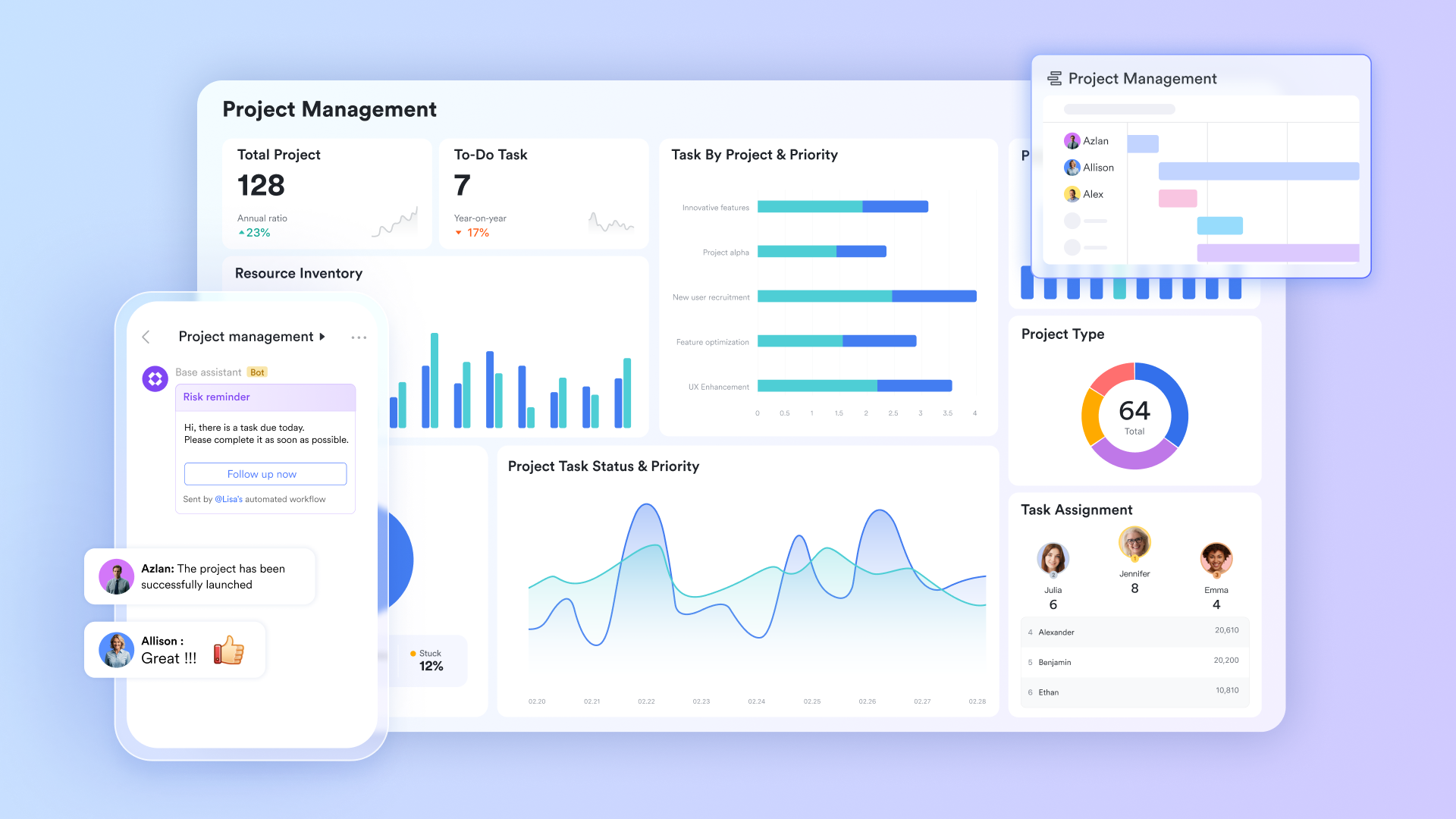
Optimized task organization for blended approaches: Lark Base offers customizable task boards with specific fields such as "task name", "due date", "status", "assignee", and "priority". This structured approach provides a solid foundation for tracking and accountability across all project tasks, whether they are part of a detailed or an Agile sprint backlog. It ensures every team member understands their responsibilities and deadlines, promoting ownership within a hybrid environment.
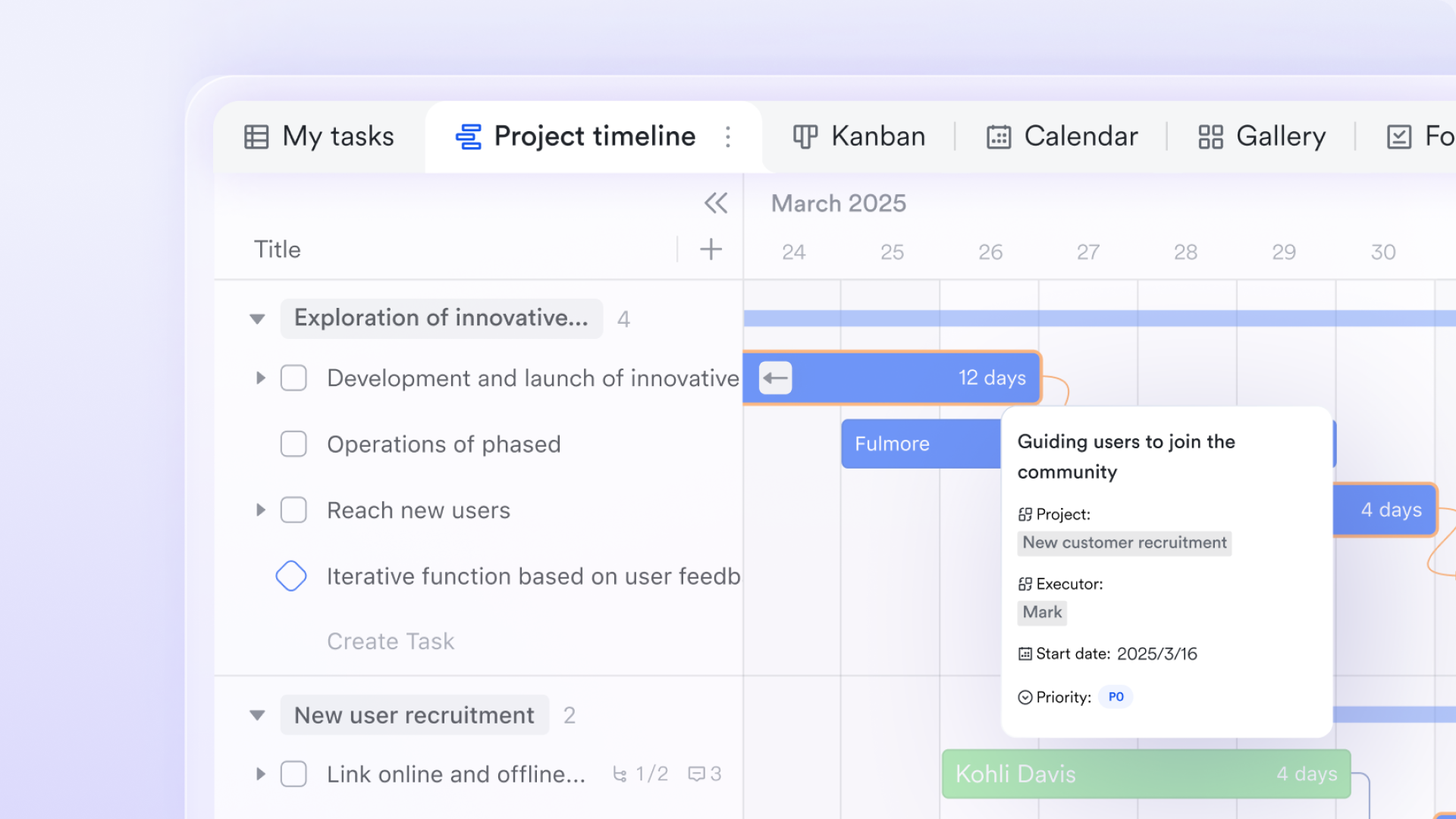
Flexible viewing options for diverse methodologies: Lark provides versatile perspectives on , crucial for managing projects that blend different methodologies. The Kanban view allows real-time visualization of task progression, helping agile teams identify bottlenecks in workflows. Meanwhile, the Gantt view displays the project timeline, making it easy to see and critical paths, which is invaluable for the structured planning elements of a hybrid project. Additional views, like calendar view and list view, enhance deadline awareness and facilitate task management, ensuring teams can track their progress from multiple angles and adapt dynamically to project changes.
Seamless communication and collaboration with Lark Messenger
Effective communication forms the backbone of successful project management, regardless of the methodology employed. Lark facilitates this by providing an all-in-one platform that centralizes communication and , ensuring that team members can easily connect and collaborate in real time across various project frameworks.
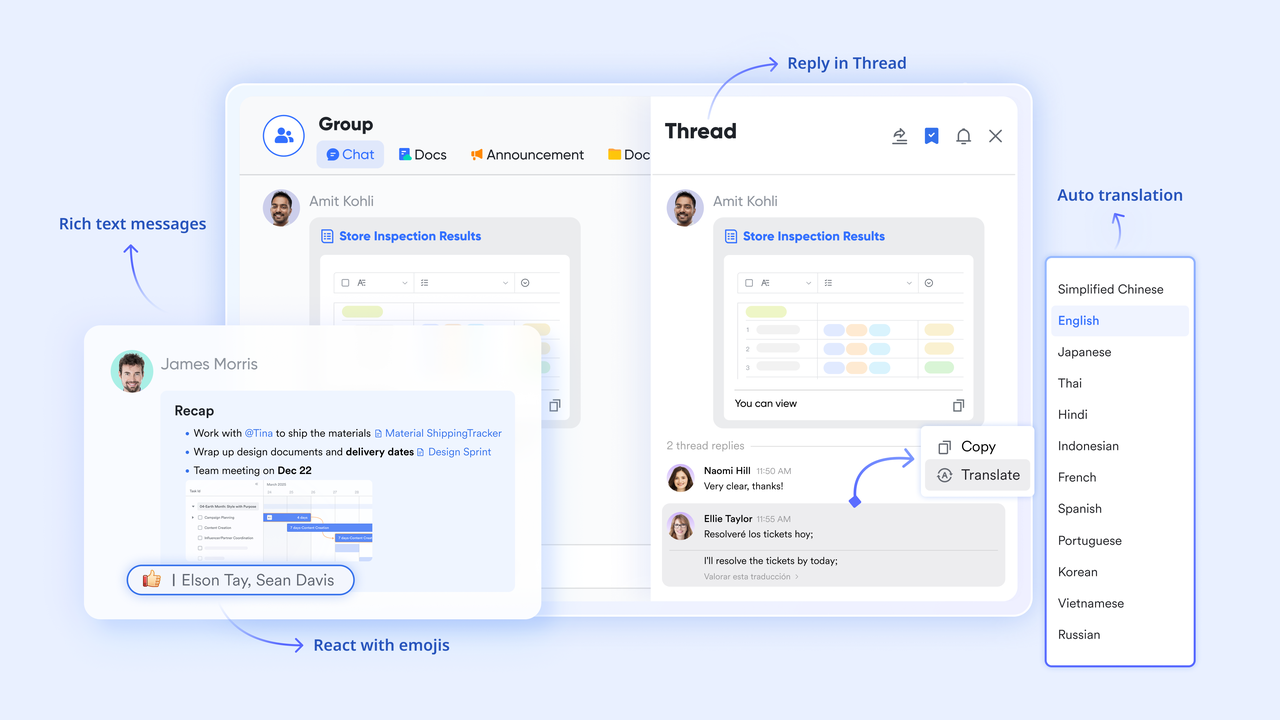
Streamlined communication with : Lark messenger significantly enhances by allowing updates from clients and team members to be effortlessly shared within relevant project chats. This keeps discussions focused and organized, enabling quick task assignments and informed decision-making. By minimizing potential delays, Lark helps maintain project momentum and fosters a collaborative environment that aligns all team members, whether they follow agile sprints or waterfall phases.
Enhanced documentation and tracking through Lark Docs
Documentation and consistent tracking play crucial roles in the success of any project. Lark supports robust documentation and thorough tracking across all project stages, a critical element for methodologies that emphasize control and visibility, as well as those that prioritize rapid adaptation.
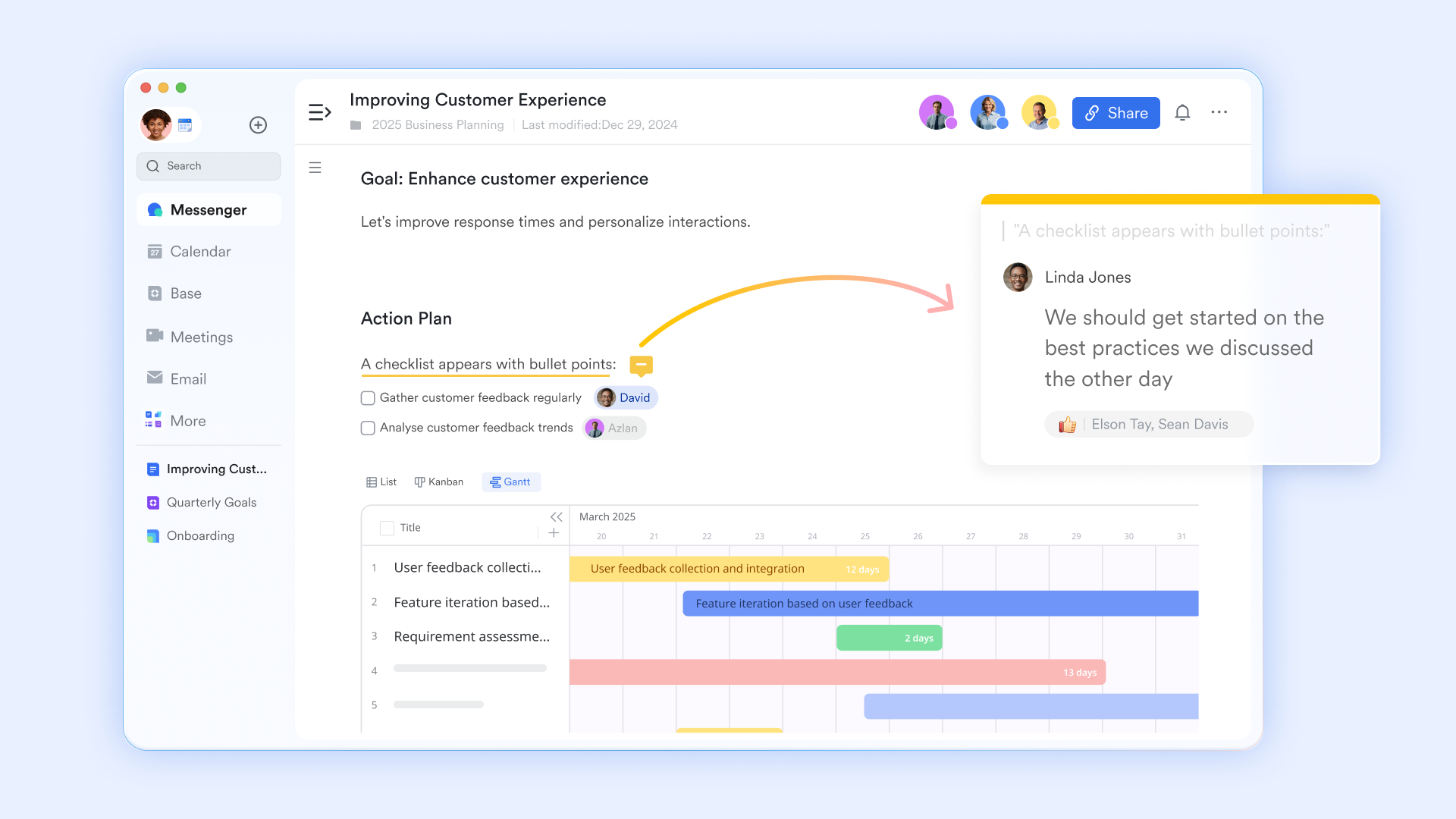
Unified document management through : Lark Docs acts as a central repository for all project-related information, eliminating confusion caused by scattered files. This unified platform allows teams to co-edit documents in real-time, leveraging features such as a table of contents, comment threads, and @mentions to facilitate streamlined feedback and revisions. Providing a single source of truth, Lark docs ensures everyone has access to the most up-to-date information, crucial for methodologies like PRINCE2 which emphasize rigorous documentation, or agile where quick iterations require accessible information.
Centralized storage and version control: Lark Docs provides team members with a centralized repository for all project-related documentation. This ensures easy access to critical information, promoting transparency and reducing the risk of miscommunication. Teams can track changes and updates made to documents throughout the , providing a clear audit trail essential for many structured methodologies. Customizable and flexible workflow
Ready-to-use templates: One of the advantages of modern project management is its adaptability; Lark enhances this feature with and customizable workflow templates that cater to the diverse needs of many methodologies. Whether adopting agile, waterfall, or a custom hybrid, Lark provides the flexibility required.
Tailored project plans: Lark Base's optimized task organization allows for custom task boards with fields like "task name", "due date", "status", and "priority", providing a solid foundation for tracking and accountability across various .
Flexible viewing options and adjustments: Lark offers versatile perspectives on project data through various view options, including Kanban for real-time visualization of task progression and Gantt for displaying and dependencies.
:
- Starter plan: Free forever plan with 11 powerful tools for up to 20 users, 100GB storage, 1,000 automation runs, AI translations, and more. No credit card needed.
- Pro plan: $12/user/month (billed annually) for up to 500 users. Includes everything in Starter plus group calling for up to 500 attendees, 15TB storage, 50,000 automation runs, and more.
- Enterprise plan: for custom pricing. Supports unlimited users and includes advanced automation, security, compliance, and management features.
For small teams with simple communication needs

18 months message history
1000 Base automation runs/month
2000 rows per table in Base
Most POPULAR
For companies with comprehensive collaboration and management needs
Unlimited message history
500-participant video meetings
50k Base automation runs/month
20k rows per table in Base
For large companies with advanced security and organizational management needs
Get a personalized demo and pricing
Unlimited message history
500-participant video meetings
15 TB storage + 30 GB storage/user
500k Base automation runs/month
50k Base automation runs/month
Most POPULAR
For companies with comprehensive collaboration and management needs
Unlimited message history
500-participant video meetings
50k Base automation runs/month
20k rows per table in Base
Industry-specific applications of hybrid project management
The versatility of hybrid project management methodologies makes them applicable across various industries. Each sector benefits from tailored approaches that cater to their unique project demands, effectively blending structure with adaptability.
IT and software development
In the IT and software development sector, hybrid methodologies are particularly effective due to the fast pace and ever-evolving nature of technology projects.
- Structured foundation, agile execution: Teams can leverage traditional project management principles, such as Waterfall, for the initial phases of a project, including detailed requirements gathering, system architecture design, and comprehensive planning. This ensures a solid, well-defined foundation. Once the core structure is established, Agile practices can be applied to manage iterative development cycles, allowing for continuous integration of user feedback, rapid bug fixes, and feature enhancements. This blend ensures that the remains stable while individual development sprints are highly responsive.
- Aligning technical delivery with business strategy: By combining Agile's flexibility with Waterfall's , IT teams can maintain alignment with long-term business goals while rapidly responding to changing market demands or new technological opportunities. This allows for frequent software releases that meet immediate user needs, all within a larger, governed framework.
Marketing and creative projects
For marketing and creative teams, hybrid methodologies offer the necessary flexibility to adapt to fast-changing market trends and client demands while maintaining strategic oversight.
- Campaign planning and content iteration: The strategic planning of a marketing campaign, including budget allocation, channel selection, and overall messaging, can benefit from a more traditional, structured approach. This ensures all stakeholders are aligned with the campaign's objectives and scope. Concurrently, can be applied to content creation, social media management, and advertising adjustments, allowing teams to rapidly prototype creative assets, A/B test different approaches, and quickly respond to real-time performance data or client feedback.
- Responsive branding and market adaptation: This hybrid approach enables marketing teams to develop a cohesive brand strategy and campaign timeline (structured) while remaining nimble enough to incorporate emerging trends or pivot campaigns based on market response (agile). It ensures that resources are effectively allocated towards a clear vision, even as remains highly adaptable.
Construction and engineering
In fields like construction and engineering, where project requirements are often more rigid due to safety, compliance, and large-scale physical deliverables, hybrid project management techniques provide essential structure with added flexibility.
- Phased execution with adaptive problem-solving: Large construction projects often follow a multi-stage, sequential process (design, procurement, construction, commissioning) that aligns well with Waterfall's structured phases, ensuring regulatory compliance, detailed blueprints, and robust . However, unexpected challenges like weather delays, material shortages, or unforeseen site conditions are common. Integrating Agile principles allows teams to rapidly assess, plan, and execute solutions for these localized problems, minimizing overall project impact and maintaining progress within a fixed schedule.
- Integrating new technologies and methods: Hybrid approaches can also facilitate the adoption of new construction technologies or modular building techniques within a traditional project. While the master plan remains consistent, agile sprints can be used to manage the implementation and integration of these innovative methods, allowing for quick learning and adaptation without disrupting the entire project lifecycle.
Future trends in hybrid project management
As organizations continue to navigate the complexities of modern projects, the hybrid methodology in project management is expected to gain even more traction. This approach merges the structured frameworks of traditional project management with the flexibility of Agile practices. Understanding future trends, especially concerning Software-as-a-Service (SaaS) solutions, helps and teams adapt and thrive in this evolving landscape.
Enhanced SaaS integration and AI-powered automation
One key trend is the increasing sophistication of SaaS project management platforms. These tools are moving beyond basic task tracking to offer highly integrated and intelligent functionalities:
- AI and machine learning: Expect more predictive analytics for project outcomes, automated task assignments based on historical data, intelligent risk detection, and AI-driven recommendations for .
- Seamless ecosystem integration: SaaS platforms will further deepen their connections with other business tools like CRM, ERP, and communication platforms, providing a truly unified project environment.
- Automated : Beyond simple reminders, SaaS will offer advanced automation of routine tasks, approval workflows, and data synchronization across different project phases, reducing manual effort.
Hyper-personalization and collaborative spaces
SaaS solutions will increasingly cater to diverse user needs and foster richer collaboration:
- Customizable user experiences: Platforms will offer highly personalized dashboards, views, and reporting tailored to specific roles (e.g., project manager, team member, stakeholder), ensuring relevant information is always at hand.
- Immersive collaborative environments: Beyond text-based chat, future SaaS tools will integrate more advanced virtual whiteboarding, real-time co-editing across various document types, and enhanced directly within the project context, supporting distributed hybrid teams.
Data-driven decision-making and advanced analytics
The reliance on data to inform project strategies will intensify, driven by powerful SaaS analytics:
- Real-time performance metrics: Project managers will access sophisticated, real-time dashboards consolidating key performance indicators, allowing for immediate assessment and agile adjustments.
- Proactive risk identification: Leveraging big data and machine learning, SaaS platforms will become even better at identifying potential risks and bottlenecks early, offering preventative insights to ensure successful project outcomes within hybrid methodologies.
- Resource forecasting: Advanced analytics will enable more precise forecasting of resource needs and availability, optimizing allocation across multiple projects and ensuring team well-being.
These advancements in SaaS will make hybrid project management more efficient, insightful, and adaptable, empowering teams to deliver complex projects successfully in an ever-changing business environment.
Get premium PM tool at bargain price
Conclusion
In conclusion, the future of hybrid project management methodology holds great promise as organizations increasingly embrace its ability to blend traditional and Agile practices. This adaptability is essential in today's fast-paced business environment, where technology, data-driven insights, and a focus on sustainability play pivotal roles. By fostering a culture of continuous learning and collaboration, teams can effectively navigate the complexities of their projects.
To enhance these efforts, organizations should consider using platforms like Lark, which offers streamlined communication and documentation tools that cater to the needs of hybrid project management. By leveraging Lark, project teams can boost their productivity and respond dynamically to challenges, paving the way for successful project outcomes.
FAQs
What are the four types of project management methodologies?
The four types of project management methodologies are Waterfall, Agile, Scrum, and Kanban. Each has unique strengths and suits different project types and industry requirements.
What is the difference between agile and hybrid methodology?
Agile methodology focuses entirely on flexibility and iterative progress, while hybrid methodology combines both Agile and traditional Waterfall elements, allowing for structured planning alongside adaptive execution.
What are the top 5 project management methodologies?
The top five project management methodologies are: Waterfall, Agile, Scrum, Kanban and Lean. These methodologies cater to various project types, offering unique benefits.
What are the 5 stages of the waterfall methodology?
The five stages of the Waterfall methodology are: Requirements, Design, Implementation, Verification, and Maintenance. These stages follow a linear progression, making it easy to track project progress but less adaptable to changes.
What are the challenges of using conventional project management software?
Conventional tools may require intricate setups or provide limited collaboration features. Lark, on the other hand, simplifies these processes, offering flexible workflows and enhancing team productivity without the complexity of traditional systems.
Related reading