The operational backbone of any modern organization is its IT infrastructure. This fundamental framework supports all digital activities, from routine tasks to complex strategic initiatives. When this essential foundation requires evolution, expansion, or significant updates, IT infrastructure project management becomes paramount. This discipline is not just about technology; it's about strategically building and maintaining the core systems that enable an organization to thrive, innovate, and maintain its security posture. This comprehensive guide will explore the intricacies of managing these critical projects, offering insights and best practices to navigate complexities and achieve lasting success. We aim to provide the knowledge needed to effectively advance IT infrastructure initiatives.
What is an IT infrastructure project
An IT infrastructure project focuses on planning, executing, and deploying the foundational tech components that support an organization's operations. Unlike (which may focus solely on software development), it covers underlying hardware, software, networks, data storage, and security systems—critical for the reliable functioning of other applications and services.
A clear IT plan addresses the unique needs of these efforts, including complex system interdependencies, high availability requirements, critical security concerns, and impacts on all users. Such projects often require significant capital investment, specialized regional expertise from partners like , and meticulous planning to minimize disruption to ongoing business operations.
In this context, infrastructure encompasses the entire IT ecosystem: physical assets (servers, networking devices, data centers) and virtual components (cloud services, virtualization platforms, OS, core security software). Effective management demands a strategic approach to ensure scalability, reliability, and security, aligned with business goals. The ultimate goal is to build a resilient, efficient, secure tech environment that meets current needs and adapts to future demands.
Types of IT infrastructure projects
IT infrastructure projects cover a wide array of activities critical for establishing and evolving an organization's technology backbone. Recognizing these distinct types helps in applying appropriate management strategies. Here are some key IT infrastructure project examples you might encounter:
- Network infrastructure upgrades and deployments: Enhance organizational communication backbones, e.g., upgrading networks for higher bandwidth, deploying firewalls/SD-WAN to boost multi-location connectivity. Example: Replacing legacy networks with faster, more secure fiber systems requires careful planning to reduce operational disruption during rollout.
- Server and storage infrastructure projects: Focus on core computing and data storage, including server refreshes, virtualization, SAN/HCI deployment, and storage expansion. Common efforts: Migrating on-prem apps to scalable virtual platforms or expanding storage for business intelligence needs.
- Cloud infrastructure adoption and migration projects: Focus on cloud adoption, covering public/private/hybrid cloud strategies (e.g., to cloud-native architecture). Specialized management addresses cloud-specific issues (cost governance, security, vendor integration).
- Security infrastructure projects: Critical for combating evolving cyber threats: deploying advanced threat detection, IAM, endpoint protection, and upgraded firewalls/IPS. Key examples: rolling out MFA company-wide or deploying SIEM for enhanced threat monitoring.
Benefits of IT infrastructure projects
Expertly managing IT infrastructure projects brings substantial advantages that are crucial for any organization's long-term success. These projects are strategic investments directly contributing to operational health, financial prudence, and market competitiveness.
- Enhanced operational efficiency and productivity: Modern IT infrastructure boosts speed and reliability. Upgrading networks, optimizing servers, or migrating to cuts latency and downtime, , streamlining processes, and improving service delivery. Seamless core systems let teams focus on innovation over troubleshooting, driving efficiency—tangible outcomes of effective IT infrastructure project management.
- Improved security posture and compliance: A robust security infrastructure is essential. Security-focused IT infrastructure projects (e.g., MFA, advanced threat detection, firewall upgrades) reduce cyber vulnerability. For industries with strict regulations (GDPR, HIPAA), these projects ensure system/data practices meet standards, mitigating legal risks and protecting reputation. Well-executed security projects under meticulous IT infrastructure project management are proactive defenses against evolving threats.
- Cost optimization and predictable spending: Though initial IT infrastructure project investments are significant, they deliver long-term savings. , server virtualization, or cloud optimization lower energy use, maintenance, and licensing costs, while proactive upgrades avoid costly emergency repairs. A sound IT infrastructure project management plan shifts organizations from unpredictable spending to strategic, planned capital expenditure.
- Scalability and agility for future growth: Businesses need an IT infrastructure that adapts. Scalability-focused projects (cloud migrations, virtualized environments) let organizations per demand. This agility supports responding to market shifts, launching products, or expanding regions without major core system overhauls. A flexible infrastructure, via diligent IT infrastructure project management, enables rapid responses and sustains growth.
See these benefits with a powerful project management tool
IT infrastructure project manager roles and responsibilities
The IT infrastructure project manager plays a central role in guiding complex infrastructural changes to successful completion. This position requires a unique blend of technical understanding, strong leadership, and strategic foresight. It is a specialized role, demanding a deep appreciation for the foundational technologies that support an entire organization. For those considering IT Infrastructure project manager jobs, understanding these responsibilities is essential.
Strategic planning and project definition: The project manager initiates by defining the , objectives, and deliverables. This includes translating business needs into technical requirements and to develop a clear IT infrastructure project management plan. They typically create the project charter, establishing the project's purpose and initial direction.
Team leadership and resource allocation: This role involves leading diverse project teams, often comprising various technical specialists and external vendors. The project manager assigns tasks, , resolves team conflicts, and motivates personnel. They ensure that appropriate technical talent, hardware, software, and financial resources are available and efficiently utilized throughout the project.
Risk management and mitigation: IT infrastructure projects inherently come with risks, from technical complexities to budget challenges. The IT infrastructure project manager systematically identifies, assesses, and . They then develop proactive strategies and contingency plans to minimize potential negative impacts, contributing to project stability and success.
Stakeholder communication and engagement: The project manager serves as the key liaison between technical teams, leadership, business units, and vendors. They are responsible for providing clear, regular updates on project status, risks, and changes. This involves translating complex technical details into understandable business language and managing expectations across diverse audiences.
Operational handover: A critical responsibility is ensuring a smooth transition of the new infrastructure to operational teams post-completion. This includes meticulous documentation, training for support staff, and establishing clear handover procedures to guarantee long-term stability and maintainability.
Budget management and oversight: These projects often involve significant financial commitments. The IT infrastructure project manager is accountable for developing, tracking, and . They manage vendor contracts and ensure financial viability within allocated constraints.
Lifecycle of IT infrastructure project management
Successfully navigating an IT infrastructure project requires a structured, multi-phase approach. While specific terminologies may vary, the fundamental stages of the consistently guide projects from their initial concept through to completion and ongoing operation. This framework ensures that every aspect of an IT infrastructure project management plan is addressed systematically.
Initiation
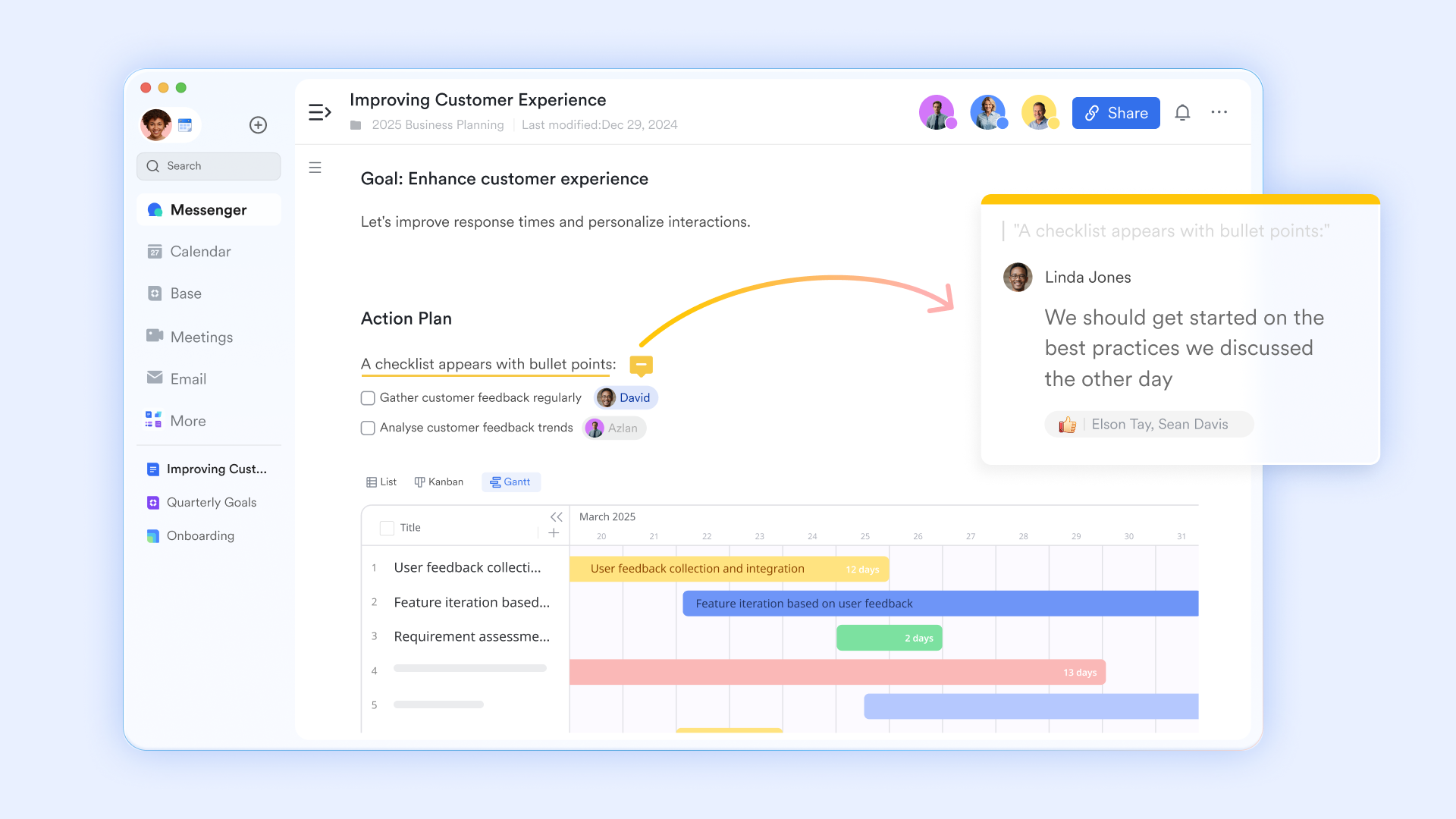
This is the phase where a project officially begins. It involves recognizing a business need or opportunity that requires an IT infrastructure solution. Key activities include defining the project's high-level objectives, identifying primary stakeholders, and securing preliminary authorization. The output is typically a , outlining the project's purpose and expected outcomes. For a cloud migration, for instance, initiation would confirm the business drivers for moving to the cloud and identify which critical applications to address first. Drafting and sharing these initial project charters can be efficiently managed using collaborative document tools like , which enables co-editing and real-time comments.
Planning
Often considered the most critical phase, planning transforms the initial concept into a detailed, . This involves defining a precise scope, breaking down tasks into manageable components, estimating human, financial, and technical resources, , and creating comprehensive risk, communication, and procurement plans. The choice of an appropriate IT infrastructure project management methodology (e.g., Waterfall, Agile, Hybrid) is typically made here. For a data center upgrade, planning would detail every piece of hardware to be procured, the exact installation sequence, and all testing protocols.
Execution
In this phase, the detailed plans are put into action. The project team, led by the IT infrastructure project manager, performs the work necessary to deliver the project's objectives. This includes acquiring hardware, configuring software, deploying network components, migrating data, and integrating systems. The project manager's role shifts to coordinating team activities, managing external vendors, and overseeing the actual implementation. Adherence to the plan, coupled with adaptability to minor changes, is paramount, aligning with best practices in IT infrastructure project management. and swift decision-making among distributed teams and vendors are often supported by unified and platforms during these critical phases.

Monitoring and controlling
This phase runs concurrently with execution and focuses on keeping the project on track. The project manager continuously monitors progress against the plan, , manages the budget, and proactively identifies and addresses any deviations or emerging risks. This involves regular status meetings, performance reporting, and implementing corrective actions. This continuous oversight is vital for complex IT infrastructure projects where unforeseen issues can quickly arise. Effective processes are also critical here for managing scope adjustments; these can be streamlined using to ensure all changes are reviewed and documented properly.
Closure
formally concludes the project. It involves verifying that all project objectives have been met and deliverables have been accepted by stakeholders. Key activities include final testing, performing operational handover (transferring knowledge and documentation to the operational team), securing formal sign-off, releasing resources, and conducting a post-implementation review (lessons learned). This review is essential for improving future IT infrastructure project management methodology and practices within the organization. This comprehensive approach ensures the project not only delivers its intended outcome but also contributes to organizational learning, with insights often documented within collaborative platforms for future reference.

Enhance management in the IT infrastructure projects
IT infrastructure project management plans
The core of any successful IT infrastructure project is a well-crafted plan. An IT infrastructure project management plan is more than a document—it's a comprehensive blueprint guiding all actions, decisions, and resource allocation throughout the . It turns abstract goals into concrete steps, keeping stakeholders aligned and the project on track. Creating this plan demands a thorough grasp of project management knowledge areas, tailored to IT infrastructure's unique needs.
: This crucial component defines precisely what the project will and will not deliver. For an infrastructure project, this means specifying the exact hardware, software, network configurations, or cloud services to be implemented or upgraded. A clear scope statement helps prevent "scope creep" – the uncontrolled expansion of a project's requirements – which can lead to budget overruns and delays.
: This section outlines the project timeline, including key milestones, phases, and task dependencies. It details the sequence of activities, estimated durations, and critical path analysis to ensure timely completion. An effective schedule helps teams prioritize work and allows project managers to track progress against established deadlines.
: IT infrastructure projects often involve significant financial investment. The cost management plan details the estimated budget, how costs will be tracked, and the mechanisms for controlling expenses. It includes forecasts for hardware, software licenses, labor, and vendor services.
: This involves identifying, acquiring, and managing all the necessary resources, which include human talent (engineers, technicians), equipment, and facilities. For complex infrastructure projects, securing specialized technical skills is paramount.
: Identifying potential risks—technical, operational, financial, or security-related—and developing strategies to mitigate or respond to them is essential. This might involve contingency plans for hardware failures, data migration issues, or security vulnerabilities that could impact the project.
: This component outlines the standards and procedures for ensuring that the project deliverables meet the required level of quality and performance. For infrastructure, this includes rigorous testing protocols for network speed, system reliability, security configurations, and application compatibility.
Communication management: A vital aspect is establishing how project information will be exchanged among stakeholders. This defines who needs to be informed, what information they need, when they need it, and through what channels. Clear and consistent communication prevents misunderstandings and fosters collaboration.
: Many infrastructure projects rely on external vendors for hardware, software, or specialized services. This plan outlines the process for acquiring these products and services, including vendor selection, contract negotiation, and managing vendor relationships.
An effective IT infrastructure project management plan is not a static document; it's a living guide that evolves with the project. It requires continuous review and adaptation. Using cohesive collaboration platforms can greatly streamline the creation and maintenance of these plans.
Key methodologies in IT infrastructure project management
Choosing the right IT infrastructure project management methodology is crucial for aligning the project approach with the specific goals and characteristics of the infrastructure initiative. There isn't a one-size-fits-all solution; the best choice often depends on factors like project complexity, requirement stability, and the level of stakeholder involvement. Understanding these methodologies allows project managers to select the most effective framework.
Waterfall methodology
This is a where project phases proceed sequentially: requirements, design, implementation, testing, deployment, and maintenance. Each phase must be completed and approved before the next one begins.
- Best suited for: Projects with very well-defined, stable requirements and minimal expected changes, such as a major data center build-out where the physical infrastructure elements are largely fixed from the outset. Its structured nature provides clear documentation and predictable stages.
- Considerations: Less flexible to changes late in the project, and can result in delays if issues are found late in the cycle.
Agile methodology
, while traditionally associated with software development, are increasingly adopted in IT infrastructure project management, particularly for areas involving cloud deployments, automation, and software-defined infrastructure. They emphasize iterative development, flexibility, collaboration, and continuous improvement.
- Best suited for: Projects where requirements are expected to evolve, or for those that can be broken down into smaller, manageable iterations, like migrating applications to a new cloud platform in phases, or implementing continuous integration/continuous deployment (CI/CD) pipelines for infrastructure as code.
- Considerations: Requires strong communication, self-organizing teams, and active stakeholder involvement.
Hybrid methodologies
In reality, many large-scale IT infrastructure projects often benefit from a hybrid approach, combining elements of both Waterfall and Agile. For instance, the initial planning and design of a new network architecture might follow a more sequential Waterfall-like process due to hardware dependencies, while the configuration and optimization of network services could adopt Agile sprints.
- Best suited for: Complex projects that have a mix of stable and evolving components, allowing project managers to leverage the strengths of different methodologies where they are most effective. This pragmatic approach is very common in modern infrastructure.
DevOps and SRE (Site Reliability Engineering) principles
While not strictly project management methodologies, DevOps and SRE are operational philosophies that heavily influence how IT infrastructure projects are managed and delivered, particularly in environments focused on automation and continuous delivery.
- DevOps emphasizes collaboration and integration between development and operations teams, aiming to automate and streamline the software , including infrastructure provisioning.
- SRE applies software engineering principles to operations, focusing on building highly reliable and scalable systems, often through automation and data-driven decision-making.
- Impact on projects: These principles push for infrastructure as code (IaC), automated testing, and continuous monitoring to be integrated from the project's inception, fostering a culture of rapid, reliable infrastructure deployment and management.
Choosing the right IT infrastructure project management methodology is a critical decision that impacts project success, team dynamics, and overall outcomes. A thorough understanding of each option allows project managers to make informed choices that best fit their specific project's needs and context.
Master critical chain management with Lark
Managing IT infrastructure projects with Lark
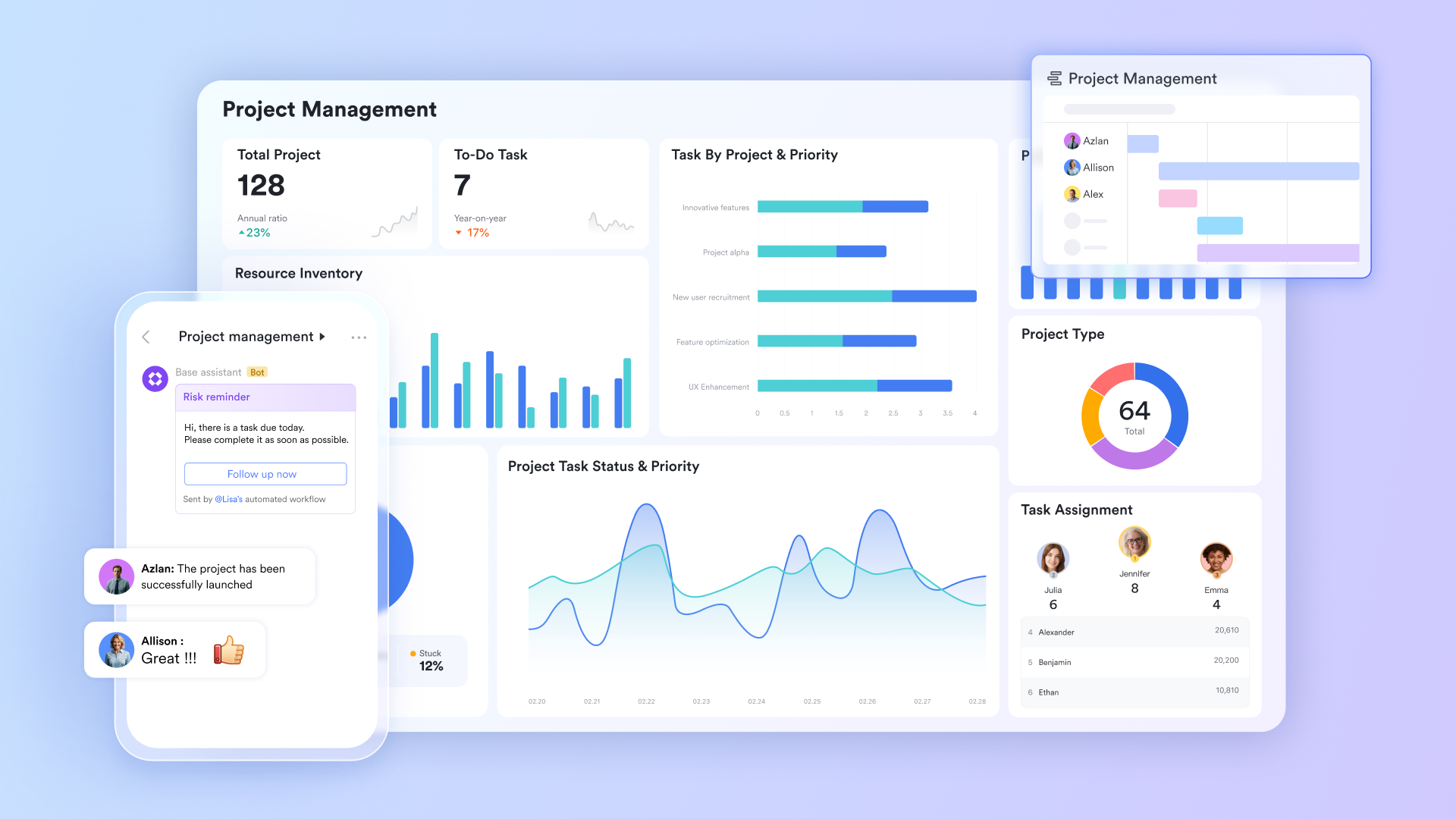
The complexities inherent in IT infrastructure projects—spanning diverse teams, intricate technical requirements, and stringent timelines—demand robust tools that can simplify management and foster seamless collaboration. A unified platform like can serve as a powerful ally for any IT infrastructure project manager, providing a workspace that addresses communication, documentation, data tracking, and . It moves beyond disparate , bringing essential functions together to enhance efficiency and visibility across the entire project lifecycle.
Fostering collaborative planning and centralized knowledge
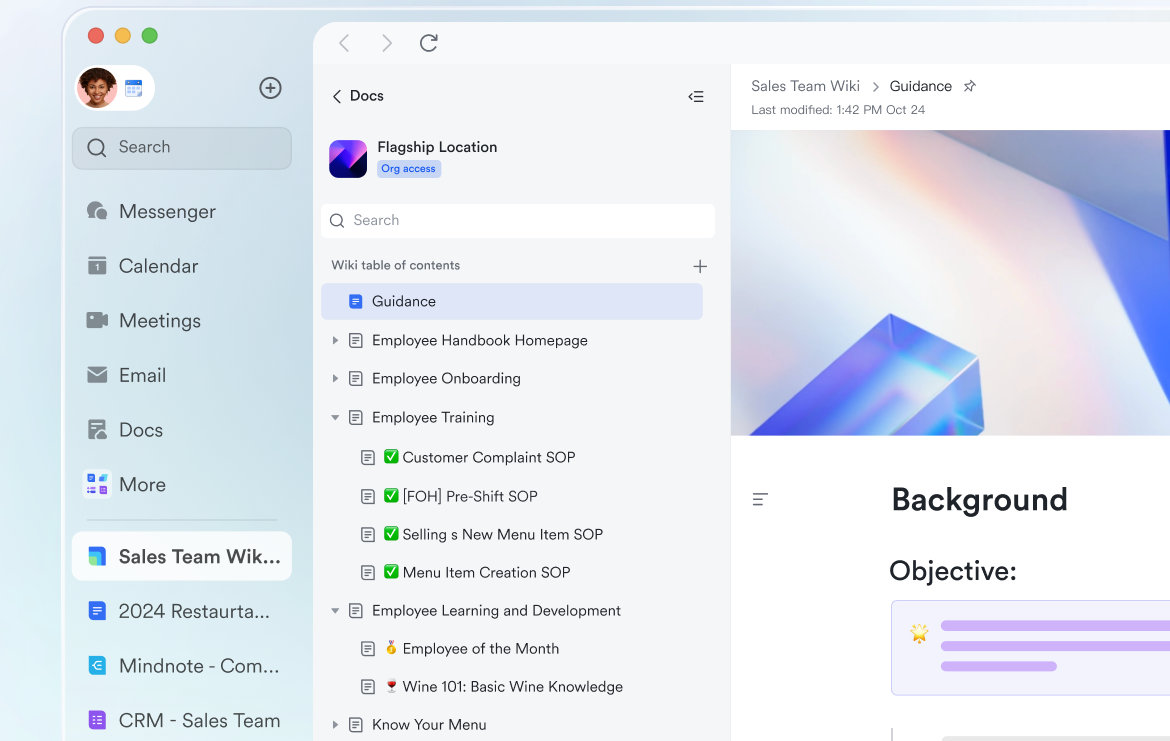
Effective IT infrastructure project management starts with meticulous planning and . offers a dynamic space for teams to co-create and manage all project documents—including drafting charters, detailing network upgrade specs, documenting cloud migration architectures, and outlining configurations. Instead of emailing multiple document versions, teams collaborate on one real-time document, keeping everyone updated. This is vital for building a thorough project plan, enabling real-time feedback, version control, and centralized . It cuts miscommunication and aligns all stakeholders (engineers to leadership) on key project details and progress.
Granular tracking of project data and resources
IT infrastructure projects involve diverse data points—asset inventories (servers, licenses, network devices), task assignments, risk logs, and budget details. Manual tracking is cumbersome and error-prone. lets project managers organize and manage this information efficiently. Tailored tables track hardware status, software license usage, vendor contracts, and project tasks with owners. This granular control supports IT infrastructure project managers’ core duties, delivering real-time insights into resource allocation, bottlenecks, and overall progress. Instead of managing multiple Excel templates for IT infrastructure project plans, critical data is linked and managed in one dynamic system—providing consolidated views and advanced filtering/reporting for stakeholders. 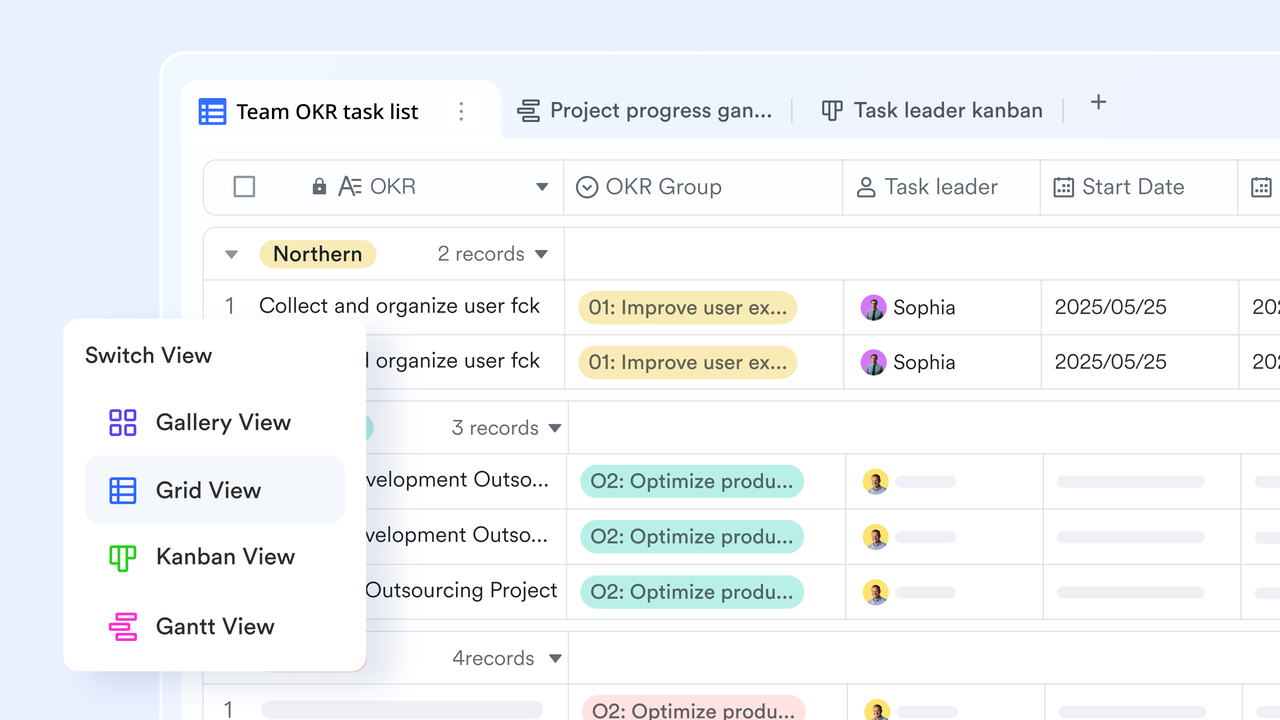
Accelerating real-time team communication
Communication is the lifeline of complex projects. For IT infrastructure project management, rapid determines proactive problem-solving rather than reactive crisis management. offers instant messaging for real-time team communication, file sharing, and geographically unrestricted discussions; dedicated project groups keep relevant stakeholders informed. Embedded also enables face-to-face talks, technical deep-dives, and stakeholder presentations without app-switching. This seamless communication environment helps managers coordinate complex deployments, resolve technical issues quickly, and align team members—critical for managing cross-timezone technical specialists.

Streamlining critical approval workflows
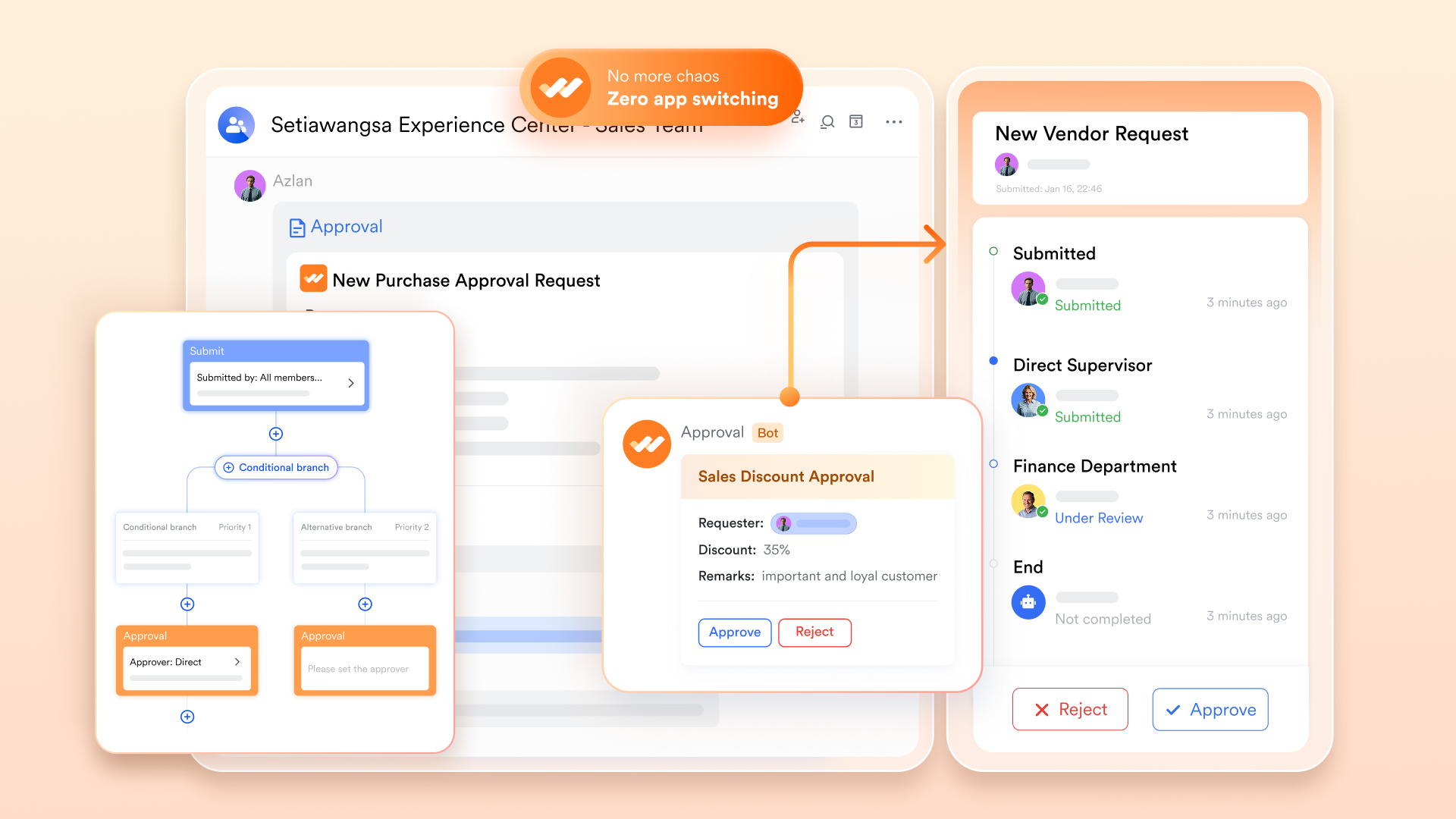
Many IT infrastructure project aspects (hardware procurement, system configuration changes, and budget approvals) require formal sign-offs. Traditional approval workflows are slow, opaque, and cause delays. digitizes and automates these processes, letting managers set custom approval flows with defined approvers, conditions, and deadlines for efficient, transparent sign-offs. For example, it can route major infrastructure change requests to network architects, security officers, and business leaders sequentially or in parallel. This speeds up approvals, creates an auditable trail to boost governance and compliance, cuts administrative overhead, and lets managers focus on strategic oversight.
:
- Starter plan: Free forever plan that includes 11 powerful tools for up to 20 users. It also comes with 100GB of storage, 1000 automation runs, AI translations, and more.
- Pro plan: $12/user/month (billed annually) for up to 500 users. It includes everything in Starter plus group calling for up to 500 attendees, 15TB of storage, 50,000 automation runs, and more.
- Enterprise plan: for custom pricing. Supports unlimited users and includes even more automation runs and advanced security, compliance, and management features.
For small teams with simple communication needs

18 months message history
1000 Base automation runs/month
2000 rows per table in Base
Most POPULAR
For companies with comprehensive collaboration and management needs
Unlimited message history
500-participant video meetings
50k Base automation runs/month
20k rows per table in Base
For large companies with advanced security and organizational management needs
Get a personalized demo and pricing
Unlimited message history
500-participant video meetings
15 TB storage + 30 GB storage/user
500k Base automation runs/month
50k Base automation runs/month
Most POPULAR
For companies with comprehensive collaboration and management needs
Unlimited message history
500-participant video meetings
50k Base automation runs/month
20k rows per table in Base
Common challenges and how to overcome them
Even with the most meticulous IT infrastructure project management plan, projects are bound to encounter hurdles. Recognizing these common challenges and proactively planning for them is key to ensuring successful outcomes.
Managing scope creep and evolving requirements
- Challenge: IT infrastructure projects often begin with a clear vision, but as technology evolves or business needs shift, requirements can expand, leading to "scope creep." This unchecked expansion can derail timelines and budgets significantly.
- Overcoming: Establish a stringent from the outset, requiring formal documentation and approval for any modifications. Regular, structured reviews with stakeholders can help catch potential scope shifts early, aligning with a robust IT infrastructure project management methodology that prioritizes disciplined change management.
Addressing technical complexity and interdependencies
- Challenge: Infrastructure components are rarely standalone; they are deeply interconnected. A change in one system, such as a network upgrade, can have unforeseen impacts on applications, security, or other services across the IT landscape.
- Overcoming: Conduct thorough and impact analysis during the initial planning phase, engaging subject matter experts from all affected areas. Utilize phased rollouts and comprehensive testing strategies in isolated environments to identify and address issues before they cascade into wider system disruptions.
Securing adequate resources and specialized skills
- Challenge: IT infrastructure projects often demand specialized technical expertise (e.g., cloud architects, cybersecurity specialists) that might not be readily available in-house. Budget constraints can also limit access to necessary hardware, software, or external consultants.
- Overcoming: Perform a thorough resource assessment early in the project to identify skill gaps and resource needs. Plan for necessary training to upskill internal teams, or strategically engage external vendors and consultants to fill critical roles. Build a compelling business case for project funding, highlighting the to secure the required budget. This proactive resource management is a core responsibility within IT Infrastructure Project Manager roles and responsibilities.
Overcome these challenges with Lark
IT infrastructure project management best practices
To navigate the intricacies of IT infrastructure project management successfully, adhering to established best practices is paramount. These guidelines help to mitigate risks, optimize resource utilization, and ensure projects deliver their intended strategic value.
- Start with a clear vision and defined scope: Before any technical work begins, clearly articulate the project's objectives, its measurable business value, and a that delineates what the project will deliver and, equally important, what it won't. Involve key business stakeholders from the outset to ensure alignment between technical solutions and overarching organizational goals, forming the foundational step of a solid IT infrastructure project management plan.
- Prioritize comprehensive planning and risk management: IT infrastructure projects are inherently complex and carry significant risks. Invest ample time in the planning phase, creating detailed schedules, realistic budgets, and thorough resource allocation plans. Crucially, identify potential technical, operational, and financial risks early through proactive assessments. Develop robust mitigation strategies and , documenting them in regularly updated risk registers, which is an essential component of any effective IT infrastructure project management methodology.
- Foster proactive communication and stakeholder engagement: Effective communication is the cornerstone of any successful project. Establish clear communication channels and a regular reporting cadence with all stakeholders, including technical teams, business leaders, and external vendors. Translate complex technical jargon into business-friendly language for non-technical audiences. Proactive and helps manage expectations, facilitates timely decision-making, and builds crucial trust across all parties, which is a vital part of IT Infrastructure Project Manager roles and responsibilities.
Conclusion
IT infrastructure project management is about strategically building and maintaining the technological backbone that powers an organization's present and future. From enhancing operational efficiency and bolstering security to enabling scalability and ensuring business continuity, the benefits of well-executed IT infrastructure projects are profound and far-reaching, directly impacting an organization's success.
The journey of an IT infrastructure project manager is filled with unique challenges, but by embracing robust planning, clear communication, and adaptable methodologies, these can be successfully navigated. Leveraging unified platforms that streamline collaboration, documentation, and communication can significantly enhance your project management capabilities. Consider how a tool like could empower your teams to overcome complexities, foster seamless teamwork, and ultimately ensure the successful delivery of your most critical infrastructure initiatives.
Start managing IT infrastructure projects effectively
FAQs
What is an IT infrastructure project manager?
An IT infrastructure project manager is a specialized professional responsible for planning, executing, and overseeing projects that build, upgrade, or maintain an organization's core IT systems. They lead technical teams, manage budgets and risks, and ensure projects align with business goals, often leveraging collaboration platforms to coordinate effectively.
What is an IT infrastructure project?
An IT infrastructure project is an initiative focused on developing, modifying, or maintaining the foundational hardware, software, network, and facilities that support an organization's IT services and operations. These projects are critical for ensuring system reliability, security, and scalability.
What is an example of an IT infrastructure project?
A common example is migrating an organization's on-premise data centers and applications to a cloud computing platform (like AWS or Azure). This involves extensive network reconfigurations, data transfer, security implementations, and application refactoring, often requiring detailed task tracking and documentation within tools like Lark.
What are the 7 components of IT infrastructure?
The 7 common components of IT infrastructure typically include hardware (servers, computers), software (operating systems, applications), networking (routers, cables, firewalls), data centers, virtualization, and cloud computing. People (IT staff) and services (training, support) are also often considered vital components.
Related reading